Choosing the best fly fishing hats for sun protection is not a style decision first; it is a safety decision that affects comfort, stamina, and long-term skin health on the water. Fly anglers spend long hours exposed to direct overhead sun, reflected ultraviolet radiation from water, and changing weather that can turn a pleasant day into a draining one. A good hat reduces glare, shields the face, ears, and neck, improves visibility when tracking drifts, and helps prevent sunburn during full-day sessions. In practical terms, the right fly fishing sun hat can be as important as polarized sunglasses, UPF clothing, and sunscreen.
When anglers talk about sun protection, several terms matter. UPF, or Ultraviolet Protection Factor, measures how effectively fabric blocks ultraviolet radiation; UPF 50 means the fabric allows only a small fraction of UV to pass through. A brim is the projecting edge that shades the forehead and eyes, while a cape or neck flap extends coverage to the ears and neck. Ventilation refers to mesh panels, perforations, or fabric construction that releases heat. Water resistance and quick-drying performance matter because hats regularly get splashed, rained on, or soaked with sweat. Fit systems, including drawcords and chin straps, determine whether a hat stays on in wind, while dark underbrims can reduce reflected glare that bounces into the eyes from bright water.
This hub article covers accessory reviews comprehensively because hats sit at the center of a larger protective system. In my own gear testing, hats often decide whether an angler finishes strong or starts seeking shade by noon. Different environments demand different designs: a drift boat on a broad Western river favors a full-brim sun hat, brushy Appalachian streams may reward a lower-profile cap, and saltwater flats usually require maximum brim width, neck coverage, and secure retention. The best choice depends on fishing style, climate, and how much exposure you face, not just on brand reputation.
As a sub-pillar under product reviews and recommendations, this page is built to help you compare categories, understand performance features, and identify which accessory review pages you should read next. It explains what makes a fly fishing hat effective, where common designs fall short, and which models have earned repeated trust among guides and experienced anglers. If you want one article that frames the entire accessory conversation around sun protection, this is the place to start.
What Makes a Fly Fishing Hat Effective for Sun Protection
The best fly fishing hats for sun protection combine coverage, UV-blocking fabric, comfort, and on-water stability. Coverage is the first priority. A baseball cap protects the forehead but leaves ears and neck exposed; a wide-brim hat or cape-equipped design covers more skin and usually performs better during long summer outings. For most anglers, a brim measuring roughly three inches provides a meaningful increase in shade without becoming unwieldy in moderate wind. On open rivers, lakes, and saltwater flats, that extra coverage is noticeable after several hours.
Fabric performance matters just as much as shape. Nylon and polyester dominate modern fishing hats because they dry quickly, resist stretching, and can be engineered to achieve UPF 40 or 50 ratings. Tightly woven fabrics generally block more ultraviolet radiation than thin, loosely knit materials. Mesh improves airflow, but too much open mesh on the crown can compromise protection if not carefully placed. Better hats vent heat through side panels or laser-cut openings while keeping the areas most exposed to sun fully covered. I have found that hats advertised as merely “sun friendly” are less reliable than those carrying a stated UPF rating from a recognized testing standard.
Comfort determines whether anglers actually keep the hat on. A technically excellent hat that feels hot, catches wind, or interferes with casting gets abandoned. Weight, sweatband quality, crown depth, and brim stiffness all matter. Stiff brims hold shape and maintain shade; very floppy brims can lift in wind or obstruct peripheral vision. Moisture-wicking sweatbands improve comfort and help keep sunscreen and perspiration out of the eyes. A secure chin strap is especially valuable in skiffs, drift boats, and breezy lakes, where a loose hat can disappear in seconds.
Another overlooked factor is visual performance. Underbrim color affects glare management. Dark underbrims, especially charcoal or black, absorb reflected light and can make spotting fish and tracking flies easier in bright conditions. This is a small feature with real fishing value. The most effective fly fishing sun hats do not simply block sunlight; they make the angling day more manageable from first cast to takeout.
Comparing the Main Types of Fly Fishing Hats
Not every angler needs the same design. The best fly fishing hats for sun protection generally fall into four categories: technical caps, wide-brim sun hats, boonie-style hats, and cape-equipped hats. Each serves a different use case, and choosing correctly starts with understanding the tradeoffs.
| Hat type | Best use | Strengths | Limitations |
|---|---|---|---|
| Technical cap | Small streams, cool weather, low brush | Lightweight, familiar fit, easy with hoods | Minimal ear and neck protection |
| Wide-brim sun hat | Rivers, lakes, warm full-day fishing | Excellent facial shade, balanced ventilation | Can catch wind, may feel bulky in tight cover |
| Boonie hat | General-purpose travel and mixed conditions | Good coverage, packable, usually affordable | Brim often shorter than dedicated sun hats |
| Cape-equipped hat | Saltwater flats, high UV exposure, desert climates | Maximum neck and ear coverage, best for all-day sun | Less stylish, warmer for some anglers, more fabric movement |
Technical caps remain popular because they are simple, breathable, and pair well with buffs or hooded sun shirts. They are often the preferred choice in wooded trout water where low branches snag wider brims. Still, from a pure sun-safety perspective, caps rank last unless combined with other protective layers. Many anglers underestimate how much sun the tops of ears and the back of the neck absorb, especially from reflected light.
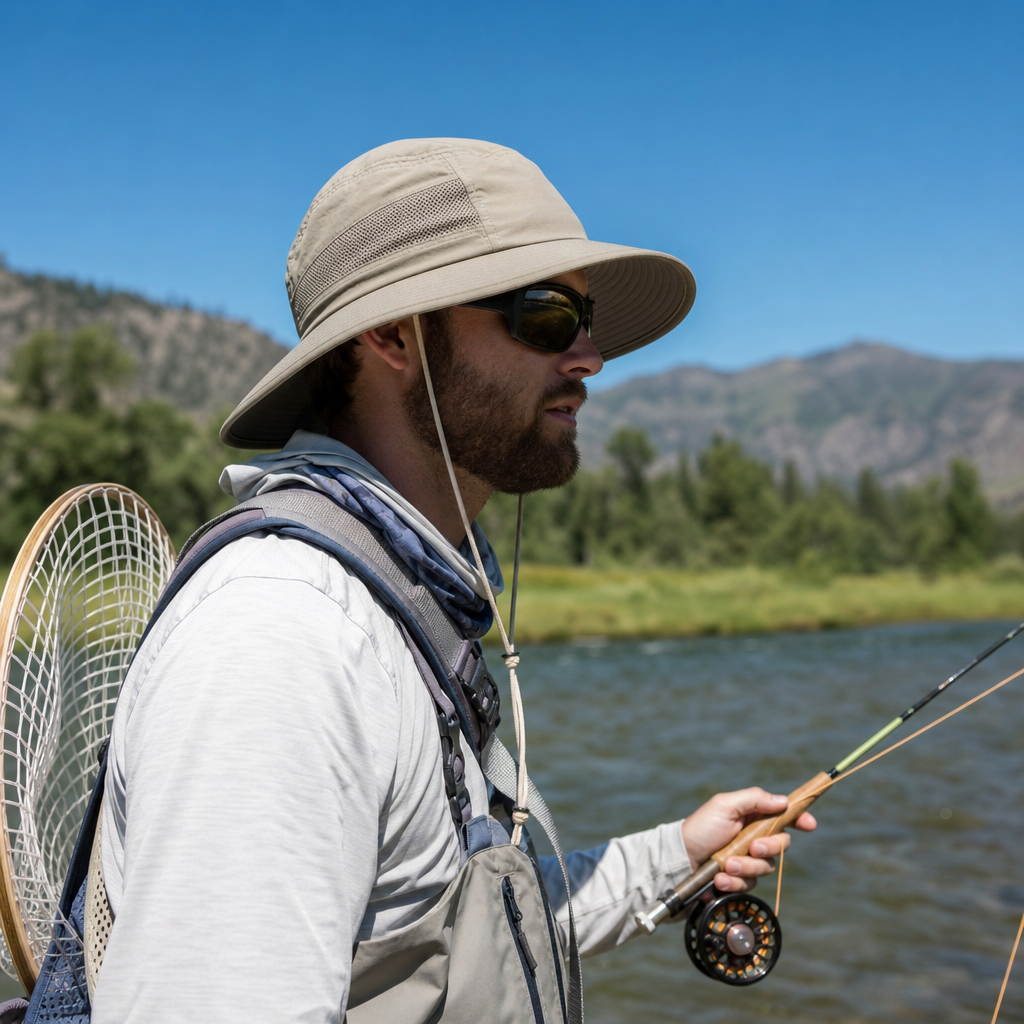
Wide-brim sun hats are the most versatile option for freshwater anglers. They provide meaningful shade across the face and often include better retention systems than casual outdoor hats. Models from Sunday Afternoons and Outdoor Research have become favorites because they balance broad coverage with practical ventilation. On rivers in the Rockies and tailwaters in the South, this style consistently performs well.
Boonie hats sit in the middle. They are usually easier to pack, less conspicuous, and less expensive than premium technical sun hats. They work well for anglers who want one multipurpose hat for hiking, camping, and fishing. However, the average boonie brim is shorter and softer than the brim on a dedicated fishing sun hat, so shade can be less complete during midday overhead sun.
Cape-equipped hats are the specialized solution. On saltwater flats in Florida, Belize, or the Yucatán, guides commonly wear hats with full neck capes because the exposure is relentless. These designs can look utilitarian, but they solve a real problem better than any other style. If you fish in extreme sun, function should win.
Best Materials, Features, and Fit Details to Prioritize
When I review fly fishing accessories, I look past marketing language and focus on construction details that influence real-world use. The best fly fishing hats for sun protection usually share five attributes: UPF-rated fabric, structured shade, ventilation, moisture control, and dependable fit. If a hat misses two or more of those, it rarely becomes a favorite.
UPF-rated synthetic fabric should be nonnegotiable. Nylon is durable and abrasion resistant, making it a strong option for anglers who stuff hats into packs or boats. Polyester often dries even faster and retains shape well after repeated soaking. Some premium hats blend both. Natural fibers can feel comfortable, but many do not perform as predictably when wet and may provide inconsistent ultraviolet protection unless specifically engineered for that purpose.
Brim design deserves close inspection. A brim that is too soft collapses when wet or windy. A brim that is too stiff can feel awkward and interfere with head movement. The best designs hold enough structure to cast shade across the cheeks without acting like a sail. For sight fishing, a dark underbrim is one of the smartest features available. It reduces bounce light from the water, particularly during high sun, and complements polarized lenses.
Ventilation should release heat without exposing vulnerable areas. Mesh crowns can feel cool, but if the mesh is overly open and directly exposed to intense sun, coverage suffers. Better solutions include side ventilation panels, perforated rear sections, and vented crowns with protected overlap. In humid climates, this distinction matters because hats that trap heat become sweat-soaked and uncomfortable quickly.
Fit is not just about head circumference. Crown depth affects how securely the hat sits when you look down to tie knots or move quickly on uneven banks. Adjustable rear cinches, internal sizing bands, and removable chin straps allow a better match. A hat that fits snugly but not tightly stays stable when poling a skiff or running a boat and is less likely to create pressure points during long wear.
Packability is the final practical issue. Anglers traveling to destination waters often need a hat that can survive luggage compression. Foam brims, foldable constructions, and crush-resistant synthetic blends are worth considering if the hat will live in duffels and carry-ons rather than on a truck dashboard.
Top Brands and Standout Hat Options Anglers Trust
Several brands consistently produce strong fly fishing sun hats, and they have earned that reputation through durable construction and thoughtful design rather than logo appeal. Sunday Afternoons remains one of the category leaders. Models such as the Ultra Adventure Hat are widely respected for broad brim coverage, neck protection, good ventilation, and light weight. Many anglers use them beyond fishing because they perform equally well for hiking and paddling, but on the water their balanced design stands out.
Outdoor Research is another dependable name, particularly for anglers who want technical fabrics and strong fit systems. Hats in the Sun Runner family have long been popular because they offer adaptable protection with removable capes, solid UPF ratings, and secure retention in wind. For guides and frequent flats anglers, that modular design solves a lot of problems without requiring multiple hats.
Simms deserves attention because it designs specifically for fishing use cases. Its technical caps, brimmed hats, and sun gaiter-compatible models integrate well with the rest of an angler’s kit. Simms products often show practical refinements such as darker underbrims, quick-drying headbands, and secure adjustments suited to boat and wade anglers. They are usually priced above general outdoor alternatives, but the fishing-specific details are real.
Patagonia, Columbia, and Huk also occupy important places in this category. Patagonia typically emphasizes durable materials, clean construction, and understated designs that travel well between fishing and general outdoor use. Columbia has broad market reach and often delivers good value, especially for anglers assembling a sun-protection system on a moderate budget. Huk is heavily oriented toward warm-weather fishing, particularly inshore and offshore environments, and its hats often prioritize aggressive ventilation and lightweight comfort.
No single model is perfect for everyone. A trout angler bushwhacking into shaded creeks may prefer a technical cap paired with a hooded sun shirt, while a guide on Louisiana marsh water may reasonably view a full-brim hat with cape as mandatory equipment. The point of accessory reviews is not to crown one universal winner; it is to match product design to fishing conditions accurately.
How to Choose the Right Hat for Trout, Bass, and Saltwater Fishing
The best fly fishing hats for sun protection vary by fishery because exposure patterns change with terrain and water type. For trout fishing on small, overgrown streams, a lower-profile cap or compact boonie can be practical. Wide brims snag branches, and shade from tree cover reduces direct exposure part of the day. Even there, I still recommend supplementing a cap with a neck gaiter or hood because reflected radiation from water is easy to underestimate.
On larger trout rivers, warmwater lakes, and bass fisheries, broad shade becomes more valuable. Anglers often stand in open water or on exposed decks for hours, and overhead sun is sustained. A wide-brim hat with a three-inch brim, UPF 50 fabric, and dark underbrim is usually the best all-around pick. If afternoon wind is common, prioritize a firm chin strap and a brim stiff enough to resist flutter.
Saltwater fly fishing is the most demanding scenario. Flats, beaches, marshes, and skiffs combine direct sun, reflected glare, heat, and wind. Here, maximum coverage wins. A cape-equipped sun hat or highly protective wide-brim model paired with a buff and polarized glasses is the standard system for a reason. The extra fabric may feel warmer on land, but under relentless exposure it preserves energy and prevents cumulative sun damage.
For travel anglers, versatility matters. If you want one hat for varied destinations, choose a lightweight wide-brim model with packable construction, strong ventilation, and removable retention. That style covers the widest range of conditions while remaining more adaptable than a specialized flats cape.
Accessory Reviews Hub: What to Read Next and How Hats Fit the System
As the hub for accessory reviews, this article connects the broader gear categories that determine comfort and protection on the water. Hats work best when evaluated alongside polarized sunglasses, neck gaiters, sun gloves, hooded shirts, rain shells, and wading layers. In real-world use, no hat protects every exposed surface, and glare control depends on eye protection as much as brim design. That is why anglers researching the best fly fishing hats for sun protection should also compare lens colors, glove coverage, and breathable UPF apparel.
From here, the most useful next reviews usually include best polarized sunglasses for fly fishing, best neck gaiters for hot weather, best sun gloves for anglers, best wading jackets, and best fishing shirts with UPF protection. Those accessory pages answer the practical follow-up questions buyers always have: which lenses improve contrast in shallow water, which gaiters stay cool in humidity, which gloves preserve knot-tying dexterity, and which shirt fabrics remain comfortable in ninety-degree heat. Building a complete system matters more than chasing a single hero product.
The key takeaway is straightforward. Choose coverage first, then fit, then ventilation and packability. For open water and long summer days, a wide-brim or cape-equipped hat is usually the best fly fishing hat for sun protection. For brushy water, a technical cap can work if paired with other protective layers. Buy a hat with a stated UPF rating, secure retention, and a design you will actually wear all day. Then continue through the rest of the accessory reviews hub to assemble a sun-protection kit that matches your fishing conditions and keeps you effective on the water year-round.
Frequently Asked Questions
What features matter most in the best fly fishing hats for sun protection?
The most important features are full coverage, dependable sun-blocking fabric, comfort over long hours, and stability in changing conditions. For fly fishing, a hat should protect more than just the top of your head. Look for a brim wide enough to shade the face, ears, and ideally part of the neck, because those areas take the most direct and reflected sun when you are standing on open water. Many anglers do best with wide-brim boonie-style hats, capes, or hats with extended neck coverage because ultraviolet exposure on the river comes from above and also bounces off the water’s surface.
Material matters just as much as shape. Lightweight synthetic fabrics with a strong UPF rating are usually the best choice because they block ultraviolet rays while drying quickly and staying relatively cool. Breathable mesh panels or strategically placed vents can help release heat, but the hat still needs enough structure to keep its shape and maintain shade. A dark underbrim is another overlooked but useful feature because it helps reduce glare, making it easier to track drifts, watch strike indicators, and see subtle movement on the water. That can improve both comfort and visibility during bright midday hours.
Fit and security are also essential. A fly fishing hat should stay in place during casting, hiking to the water, rowing, and windy conditions. Chin straps, adjustable headbands, and flexible but stable brims make a real difference. If a hat constantly shifts, blows off, or feels heavy when wet, you are less likely to wear it all day, which defeats the purpose. The best hat is one that gives broad, reliable protection without becoming a distraction from fishing.
Is a wide-brim hat better than a baseball cap for fly fishing in strong sun?
In most high-exposure situations, yes. A wide-brim hat is usually better than a standard baseball cap for sun protection because it covers more of the head and surrounding skin. A baseball cap can shield the forehead and eyes reasonably well, but it leaves the ears, sides of the face, and back of the neck exposed unless you add separate protection like a neck gaiter, buff, or hood. For anglers spending full days under summer sun, especially on open rivers, lakes, flats, or drift boats, that extra coverage is often the difference between manageable exposure and repeated sunburn.
Wide-brim hats are especially useful because they create a more complete shadow around the face and upper neck. That helps with comfort, reduces heat load, and cuts glare from multiple angles. When the sun is high overhead, a brim all the way around simply does more protective work than a front bill alone. Many anglers also find that a wider brim helps reduce eye strain, especially when paired with polarized sunglasses, because it limits harsh top-down light.
That said, baseball caps still have a place. Some fly anglers prefer them for cooler weather, tighter brush, or situations where a lower profile feels less cumbersome. A cap can work well if it is combined with a sun hoodie, neck gaiter, and good sunscreen on exposed areas. But if the goal is maximum built-in sun protection with less dependence on extra layers, a quality wide-brim hat is generally the better and safer choice for long days on the water.
How important is UPF fabric in a fly fishing hat, and what rating should I look for?
UPF fabric is very important because it gives you a measurable idea of how effectively the material blocks ultraviolet radiation. UPF stands for Ultraviolet Protection Factor, and in practical terms, higher-rated fabrics allow less UV to pass through. For fly fishing, where exposure can last for many hours and reflection from water increases the overall UV load, a hat with a UPF 30 to UPF 50+ rating is a smart choice. UPF 50+ is generally the best benchmark if you want strong protection and more confidence during full-day trips in bright conditions.
This matters because not all fabrics perform equally in sunlight. A hat may feel substantial or look protective, but if the material is thin, loosely woven, or not designed for sun protection, it may not block UV as effectively as expected. Technical fishing hats are usually made from tightly woven synthetics or treated fabrics that are specifically designed to provide consistent protection while remaining light enough for warm weather. That combination is ideal for anglers who need both coverage and breathability.
It is also worth remembering that UPF is only one part of the equation. The best fabric in the world cannot protect skin that the hat does not cover. A UPF 50+ baseball cap still leaves major areas exposed, while a slightly lower-rated but well-designed brimmed hat may offer better overall real-world protection because it shades more of the body. In short, look for a hat with a strong UPF rating, but make sure the design, brim size, and fit match the amount of time and intensity of sun you expect on the water.
How do I choose a fly fishing hat that stays cool and comfortable all day?
Comfort comes down to balancing protection, airflow, weight, and moisture management. A hat can offer excellent sun coverage, but if it traps too much heat or feels clammy after a few hours, it will become a burden. For warm-weather fly fishing, lightweight synthetic fabrics are usually the best option because they dry quickly, resist holding sweat, and stay lighter than heavy cotton when wet. Mesh ventilation panels, vented crowns, moisture-wicking sweatbands, and fast-drying construction all help reduce heat buildup during long hours under the sun.
The shape of the hat also affects comfort. A wide brim is helpful, but it should not be so floppy that it obstructs vision or whips around in the wind. A structured brim with enough flexibility to pack easily but enough stiffness to hold shade is often the sweet spot. The headband should feel secure without creating pressure points, especially if you wear sunglasses all day. If you fish in variable weather, features like an adjustable chin strap and water-resistant fabric can make the hat more versatile and less annoying when wind or spray picks up.
Personal fit matters more than many anglers realize. A hat that fits too tightly can create hot spots and headaches, while a loose hat shifts constantly and lets in more sun. If possible, choose an adjustable model that can accommodate changes in temperature, sweat, and layering. The most comfortable fly fishing hat is one you stop noticing after the first few minutes because it keeps you shaded, cool enough, and focused on fishing instead of fiddling with your gear.
Do I still need sunscreen and other sun protection if I wear a good fly fishing hat?
Yes. A good fly fishing hat is one of the most important pieces of sun protection you can wear, but it should be part of a broader system rather than your only defense. Even the best hat cannot fully protect every area all day. Your nose, cheeks, chin, neck, hands, and any skin exposed by changing sun angles can still receive significant UV exposure, especially when light reflects off the water. For that reason, sunscreen remains essential on exposed skin, and it is wise to reapply it during long outings according to the product directions.
Other protective layers help fill the gaps. Polarized sunglasses protect the eyes and reduce glare, which lowers fatigue and improves visibility. A neck gaiter or sun hood can cover the sides of the face and neck more completely, especially if you prefer a cap instead of a full-brim hat. Long-sleeve sun shirts, lightweight gloves, and UPF-rated clothing also make a major difference when you are spending a full day casting in open sun. Together, these items reduce cumulative exposure and make it easier to stay comfortable for longer.
Think of your hat as the foundation of your sun strategy, not the entire strategy. The right hat provides constant shade and helps prevent the most common burns on the face, ears, and neck, but full protection on the water comes from combining shade, fabric coverage, eyewear, and sunscreen. That layered approach is what keeps fly fishing enjoyable, sustainable, and safer over the long term.