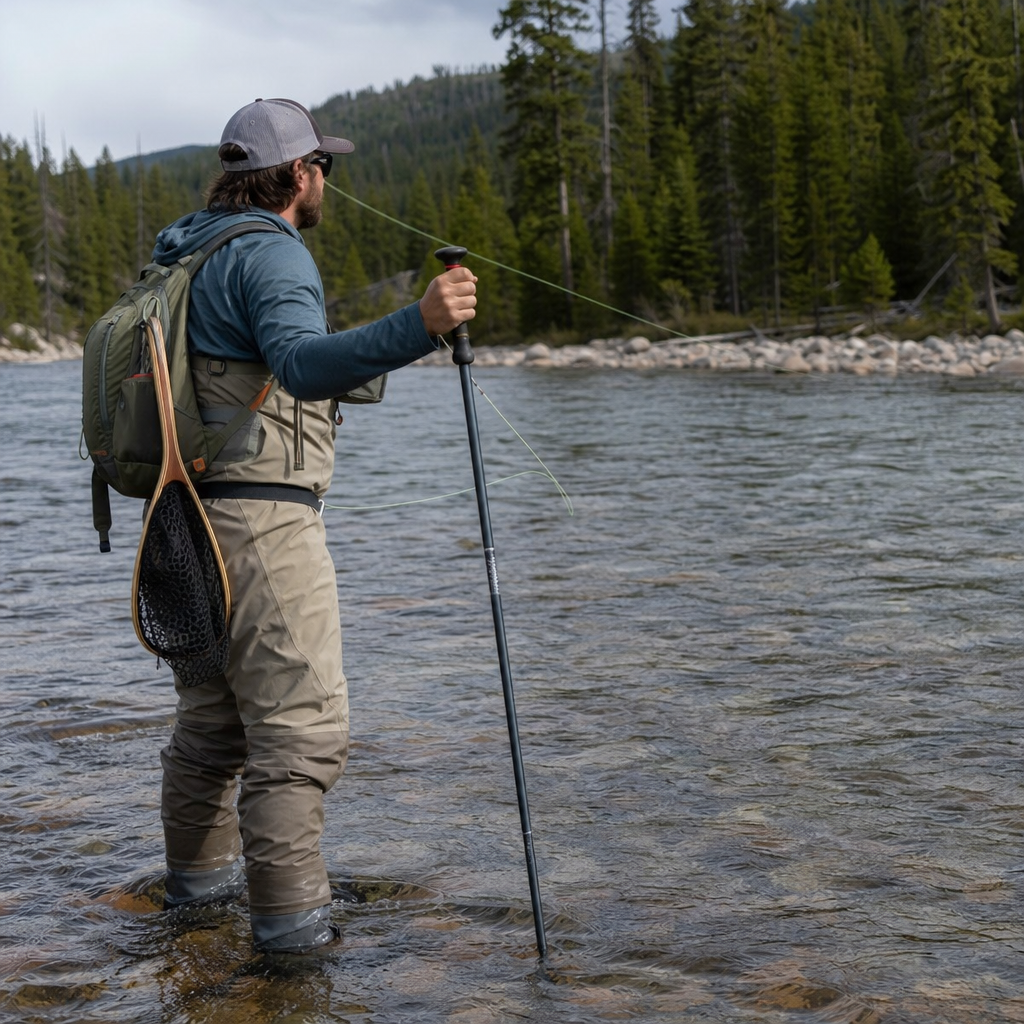
Choosing the right fly fishing wading staff can prevent falls, reduce fatigue, and turn risky crossings into controlled, confident steps. In fly fishing, a wading staff is a collapsible or fixed pole used for balance while walking through current, over slick rocks, and along uneven river bottoms. I have tested staffs on freestone rivers, tailwaters, and stillwater shorelines, and the difference between a dependable staff and a flimsy one becomes obvious the moment you step into pushy current with a heavy pack. This article reviews the top fly fishing wading staffs, explains what matters in real use, and serves as a hub for accessory reviews within a broader product recommendations library. If you are comparing staff materials, locking systems, grip designs, or carry methods, this guide answers those questions directly and gives you a framework for choosing the best model for your fishing conditions, budget, and mobility needs.
What makes a great fly fishing wading staff
A great fly fishing wading staff must do four things reliably: deploy quickly, lock securely, provide confident grip contact on the river bottom, and stay attached to your body without getting in the way of casting. Those basics sound simple, but design details matter. In testing, the best staffs balance stiffness and weight. Aluminum staffs usually feel more robust and resist impact well, while carbon fiber staffs reduce swing weight and are pleasant to carry all day, though some anglers prefer aluminum when fishing boulder-strewn streams where side loading and abrasion are common.
Locking style is the next decision point. Fold-out staffs with shock cords deploy fast and pack compactly, similar to avalanche probes. Telescoping staffs offer fine height adjustment but can slip if tolerances wear or grit enters the mechanism. A fixed-length wood staff remains traditional and very stable, yet it is less convenient when bushwhacking or traveling. Handle shape also matters more than many buyers expect. EVA foam stays comfortable when wet, cork feels familiar to fly anglers, and rubberized grips can be excellent in cold weather. Wrist lanyards, carbide tips, replaceable rubber feet, and durable sheath systems are not minor extras; they directly affect safety and long-term value.
For most anglers, the best wading staff is the one that can be deployed one-handed, stays quiet on your belt, and inspires immediate trust when crossing knee- to thigh-deep current. That trust is what separates an accessory from essential gear.
Top fly fishing wading staffs reviewed
The best-known premium option remains the Simms Wading Staff. It has earned that status because it solves the main field problems effectively: fast deployment, strong section connections, and a carry system that keeps the staff accessible without bouncing around. The aluminum construction gives it a solid feel in current, and the carbide tip bites well on slick rock. I have found its sheath and retraction setup among the most polished in the category. The downside is price. It sits in the premium tier, so value-minded anglers may hesitate, but its durability and confidence-inspiring rigidity justify the cost for frequent waders.
The Fishpond Slippery Rock Wading Staff is another standout, especially for anglers who prioritize refined design and lower carry weight. Fishpond built a strong reputation in fly fishing accessories, and this staff reflects that attention to detail. It folds compactly, deploys quickly, and includes thoughtful attachment hardware. On moderate gradient rivers and gravel-bottom runs, it feels light and nimble. Compared with the Simms model, it can feel slightly less bombproof under aggressive side pressure, but for most trout anglers it is more than capable and easier to appreciate during long days of walking.
For anglers who want a dependable staff without paying top-tier pricing, the Folstaf wading staff remains a respected name. Folstaf models have been around for years and have a loyal following among anglers who value simple, proven construction. They are not the sleekest or most modern-looking staffs, yet they tend to be sturdy and practical. I have seen many older Folstaf staffs still in use, which says a lot about build quality. They appeal especially to anglers who fish often and care more about function than branding.
Orvis also deserves attention in any serious fly fishing wading staff review. Orvis staffs typically blend clean design, reliable deployment, and broad compatibility with the rest of an angler’s kit. They often land between premium and midrange in feel and pricing. What Orvis usually gets right is ergonomics: comfortable grips, sensible carry integration, and a polished finish. If you already use Orvis packs or accessories, their staff options often fit naturally into that system.
Budget buyers frequently look at hiking-style staffs adapted for fishing. Some can work, especially on mild gradients or lake edges, but most are not ideal in stronger current because they lack purpose-built sheaths, corrosion-resistant components, or secure deployment systems. A wading staff is safety gear. Saving money is reasonable, but compromising on lock security is not.
How the leading models compare on the water
Real-world comparison is more useful than spec-sheet comparison because a staff’s value shows up in moments of instability. On a slick limestone shelf, a staff that transmits clear bottom feedback and plants without chatter feels dramatically safer than one that flexes excessively. On freestone rivers with bowling-ball rocks, rigid construction and a grippy tip matter more than shaving a few ounces. On sandy or silty bottoms, wider rubber feet can reduce skittering, though they may sacrifice bite on rock.
| Model | Best For | Strengths | Tradeoffs |
|---|---|---|---|
| Simms Wading Staff | Frequent river anglers, heavy current | Fast deployment, excellent rigidity, durable carry system | Premium price, slightly heavier than some rivals |
| Fishpond Slippery Rock | Mobile trout anglers, all-day carrying comfort | Lightweight feel, compact fold, thoughtful hardware | Less tank-like under hard side loading |
| Folstaf | Value-focused anglers who want proven reliability | Sturdy construction, long service life, practical design | Less refined styling and packability |
| Orvis Wading Staff | Anglers wanting balance between polish and performance | Good ergonomics, quality finish, versatile usability | Varies by model, not always category-leading in one trait |
In my experience, Simms leads when the river is pushy and consequences are higher. Fishpond wins points for carry comfort and packability. Folstaf remains a dependable workhorse, and Orvis offers a strong middle path. The right choice depends less on brand loyalty than on where and how you fish.
Key features to evaluate before you buy
If you want the best fly fishing wading staff for your needs, start with deployment speed. A staff left stowed because it is annoying to access is almost useless. The best systems let you deploy with one hand while the other hand controls a rod or stabilizes your body. Next, inspect section security. Whether the staff folds or telescopes, there should be minimal play when locked. Any rattle or looseness in the shop usually feels worse in current.
Tip design deserves close attention. Carbide tips excel on algae-coated rock, but they click loudly on hard surfaces and can wear over time. Rubber caps reduce noise and can add traction on certain bottoms, yet they may skid on slime-covered stones. Ideally, choose a model with replaceable tip components. Weight should be considered in context. An ultralight staff sounds appealing until it flexes under load. A slightly heavier staff that plants securely is often the better fishing tool.
Carry method can determine whether a staff becomes part of your routine. Belt-mounted sheaths are common and effective, but they must release cleanly and keep the staff from tangling with stripping baskets, net magnets, or pack straps. Retraction cords should be strong and quiet. I also look closely at corrosion resistance. Stainless hardware, anodized aluminum, and sealed internal cords hold up better after repeated wet-dry cycles, especially if the staff is used in brackish water or stored carelessly between trips.
Finally, think honestly about your body and fishing style. Anglers managing knee issues, ankle instability, or balance concerns should prioritize rigidity and handle comfort over packability. A wading staff is not only for older anglers or dangerous crossings. It is a practical tool for anyone who wants to fish longer with less strain.
Best picks by fishing style and conditions
The best wading staff for small-stream anglers is usually a compact folding model that stays out of the way when crawling through brush and stepping over logjams. In those environments, fast deployment and low snag potential matter more than maximum length. Fishpond is particularly strong here because of its compact carry profile. For larger western rivers, tailwaters with heavy flow, or freestones during runoff edges, a stiffer aluminum staff such as the Simms is the smarter choice. In those situations, support during side-hill crossings and midstream pivots matters far more than shaving ounces.
If you fish from drift boats but regularly hop out to wade gravel bars, a staff that stores quickly and survives repeated wet handling is ideal. Orvis and Simms both fit that use case well. If you are a budget-conscious angler building a kit from scratch, Folstaf offers a strong value proposition because durability matters more than cosmetic refinement in safety gear. If you are traveling frequently, look hard at collapsed length and sheath design. Airline-friendly packability and easy luggage storage become important fast.
There is also a place for traditional wooden staffs. They can be exceptionally stable and quiet, and some anglers like the natural feel. They are less common in modern reviews because portability is limited, but for local anglers who fish one home river and prioritize simplicity, they remain viable. The main point is this: match the staff to the riverbed, current speed, and how often you truly wade, not just to marketing claims.
Accessory reviews hub: what to pair with a wading staff
Because this page sits within an accessory reviews hub, it helps to place wading staffs in the broader system of safe and efficient fly fishing gear. The most important pairing is with quality wading boots. Studded boots or soles with strong traction compounds dramatically improve how well a staff performs, because the two work together as a three-point stability system. On rivers with greasy basalt or polished limestone, the difference between basic felt alternatives and modern sticky-rubber-plus-stud setups is substantial.
Waders are the next linked category. Poorly fitted waders restrict stride length and make safe planting harder, especially when layered for cold weather. Packs and vests also matter. A wading staff must integrate with your carrying setup so it can be reached instantly. I have seen excellent staffs become frustrating because a chest pack blocked the draw path or a net handle interfered with reholstering. In accessory reviews, these interactions matter as much as isolated product quality.
Other useful companions include waterproof phone pouches, retractors, landing nets, and wading belts with enough rigidity to support a staff sheath. For anglers building a complete setup, start with boots, then a wading staff, then pack organization accessories. That order reflects actual safety impact on the water. As you explore related accessory reviews, use this article as the anchor for balance and mobility decisions.
The best fly fishing wading staffs combine quick deployment, dependable lockup, solid bottom bite, and a carry system you will actually use every trip. Simms stands out for maximum confidence in demanding current, Fishpond excels in lightweight mobility, Folstaf remains a proven value choice, and Orvis offers balanced all-around performance. No single staff is perfect for every angler, but the right one will make crossings safer, reduce fatigue, and help you fish more effectively because you move with intention instead of hesitation. When you evaluate models, focus on river conditions, deployment speed, rigidity, tip traction, and integration with your boots, waders, and pack. Treat a wading staff as core safety equipment, not an optional extra. If you are building or upgrading your kit, use this hub as your starting point, then continue into the related accessory reviews to create a setup that works together on the water every season.
Frequently Asked Questions
What should I look for when choosing the best fly fishing wading staff?
The best fly fishing wading staff should give you immediate confidence the moment it touches the river bottom. In practical terms, that means prioritizing stability, durability, packability, and ease of deployment over gimmicks. A good staff needs to feel solid under load when you lean on it in current, not flex excessively or chatter across rocks. Materials matter here. Aluminum staffs are often favored for their durability and dependable strength, while carbon fiber models can reduce weight but may feel different under hard pressure depending on the design. Build quality is just as important as material, especially at the joints, locking mechanism, and grip.
Pay close attention to how the staff deploys and collapses. When you are stepping into fast water, you do not want to fight with a complicated system. Many anglers prefer collapsible, shock-corded staffs because they deploy quickly and stow easily when not in use. Others like fixed-length models for maximum rigidity. The right choice depends on how often you move between fishing and hiking, how much gear you already carry, and whether you need the staff ready in seconds. A dependable lanyard and holster system also make a major difference because they determine whether the staff is accessible when you need it or buried in the way.
Grip comfort is another feature that should not be overlooked. Cork, foam, and rubberized handles all have their fans, but the best grip is one that stays secure when wet and feels comfortable during long days on the water. A well-designed wrist strap can add control, though it should not become a snag hazard. Finally, inspect the tip. Carbide or reinforced rubber tips generally provide better bite on slick rocks and hard river bottoms than cheaper, generic ends. If you fish freestone rivers, tailwaters, and lake edges, a versatile tip design can noticeably improve traction across different surfaces.
In short, the best wading staff is the one that feels trustworthy in real fishing conditions. It should be easy to deploy, strong enough to support committed weight, comfortable to carry, and secure on uneven bottoms. If a staff seems light but flimsy, compact but awkward to use, or affordable but poorly built at the joints, those weaknesses tend to show up fast in pushy current.
Are collapsible wading staffs better than fixed staffs for fly fishing?
Neither style is automatically better for every angler, but collapsible wading staffs are often the more practical choice for fly fishing because they balance support with portability. A collapsible model can be stowed on your belt, pack, or vest when you do not need it, then deployed quickly for difficult crossings, steep banks, or slippery shoreline approaches. That convenience is a big advantage if you spend the day moving between runs, scrambling around boulders, or climbing in and out of the river. Many modern collapsible staffs are also far sturdier than older designs, especially when made with quality tubing, tight ferrules, and dependable internal cord systems.
Fixed staffs, on the other hand, tend to offer a more rigid and direct feel. Because they do not rely on multiple folding sections, there is often less play under pressure. Some anglers appreciate that extra solidity when crossing strong current or navigating especially rough bottoms. The downside is that a fixed staff is more cumbersome to carry when you are not actively using it. It can get in the way while casting, hiking, or working through brush, and that inconvenience may tempt some anglers to leave it behind when they actually need it most.
For most fly fishers, especially those who value mobility, a well-made collapsible staff is the more versatile option. It provides balance support when conditions demand it without becoming a burden during the rest of the day. The key phrase is well-made. Cheap collapsible staffs can rattle, bind, or feel unreliable under load, which defeats the purpose. A premium collapsible model with secure assembly, strong materials, and a solid grip can be every bit as confidence inspiring as many fixed staffs while being significantly easier to carry.
If your fishing involves frequent, technical wading and you want a staff available at all times but not constantly in your hand, collapsible is usually the winner. If maximum rigidity matters more than convenience and you do not mind carrying a full-length staff all day, a fixed model may suit you better. The best choice comes down to where you fish, how you move through the water, and whether portability or absolute stiffness matters more in your routine.
How important is a wading staff for safety when fly fishing?
A wading staff is one of the most useful safety tools a fly angler can carry, especially in rivers with strong current, slick rock, uneven bottoms, or sudden depth changes. It effectively gives you a third point of contact, which greatly improves balance and helps you test the riverbed before committing your weight. That matters more than many anglers realize. A river that looks manageable from the bank can feel completely different once current pushes against your legs and boots start searching for traction on algae-coated rocks or shifting gravel.
The safety benefit goes beyond simply preventing falls. A good wading staff reduces hesitation and helps you move deliberately, which lowers fatigue and improves decision-making. When you are less worried about slipping, you can focus more on foot placement and reading the water. It also allows you to probe for drop-offs, submerged ledges, deep pockets, and soft silt before stepping forward. That ability to gather information with the staff first can prevent the kind of sudden misstep that leads to twisted knees, soaked gear, or worse.
It is especially valuable in pushy crossings, cold water, and places where visibility is limited by glare, turbidity, or depth. On freestone rivers, where boulders and irregular current create tricky footing, a staff can be the difference between a controlled crossing and a dangerous stumble. On tailwaters, where slick rocks and steady current often combine, it becomes just as important. Even on stillwater shorelines, a staff helps with muddy edges, hidden holes, and unstable transitions from bank to water.
That said, a wading staff is not a substitute for judgment. It works best as part of a broader safety approach that includes proper wading boots, appropriate studding where legal and effective, a snug wading belt, and a willingness to avoid crossings that exceed your skill or conditions. The most experienced anglers use staffs not because they are uncertain, but because they understand how quickly river conditions can punish overconfidence. In that sense, a wading staff is not optional gear for many situations. It is practical insurance.
What features make a wading staff reliable in strong current and on slick rocks?
Reliability in difficult wading conditions comes down to how well a staff handles real pressure. In strong current, you need a staff that remains stable when you plant it firmly and shift meaningful body weight onto it. That means a strong shaft, secure section connections, and a locking or assembly system that does not loosen during use. Any weakness at the joints becomes obvious when the staff is braced against current and uneven rocks. A quality model should feel planted and predictable rather than wobbly or overly flexible.
The tip is one of the most important components. On slick rocks, a good tip can dramatically improve traction and feedback. Carbide tips are widely respected because they bite better into stone and hard bottom surfaces than softer materials. Some staffs also include replaceable tip designs, which can extend the lifespan of the product and allow better adaptation to different environments. If you fish a mix of rock, gravel, and shoreline mud, a durable, high-traction tip is a major advantage.
Handle design also contributes to reliability. A staff is easier to control when the grip stays secure in cold, wet conditions and provides a natural hand position. Ergonomic foam or cork grips are common, but the real test is whether the handle remains comfortable and non-slip after hours of use. A useful wrist strap can enhance retention, though it should be thoughtfully designed so it supports control without increasing snag risk in current or around brush.
Another often overlooked factor is deployment speed. In difficult water, gear must work without hesitation. A staff that deploys cleanly and locks into place quickly is more reliable in practice than one that is technically strong but awkward to assemble. A good lanyard and carrying sheath help here as well, ensuring the staff is accessible exactly when conditions worsen. The most dependable staffs combine strength, traction, comfortable handling, and fast usability. In real-world wading, reliability is not just about surviving abuse. It is about delivering steady, immediate support when a crossing starts to feel marginal.
Can a wading staff reduce fatigue during a full day of fly fishing?
Yes, a good wading staff can absolutely reduce fatigue, and that benefit becomes more noticeable over the course of a long day. Wading is physically demanding in ways that are easy to underestimate. Current constantly pushes against your legs, uneven bottoms force small stabilizing muscles to work overtime, and every cautious step requires extra effort from your hips, knees, ankles, and core. A wading staff helps distribute that workload by giving you another point of support, which reduces the strain of balancing on uncertain footing.
This matters most when you are covering a lot of water or fishing rivers that require repeated entries, exits, and crossings. Without a staff, your lower body