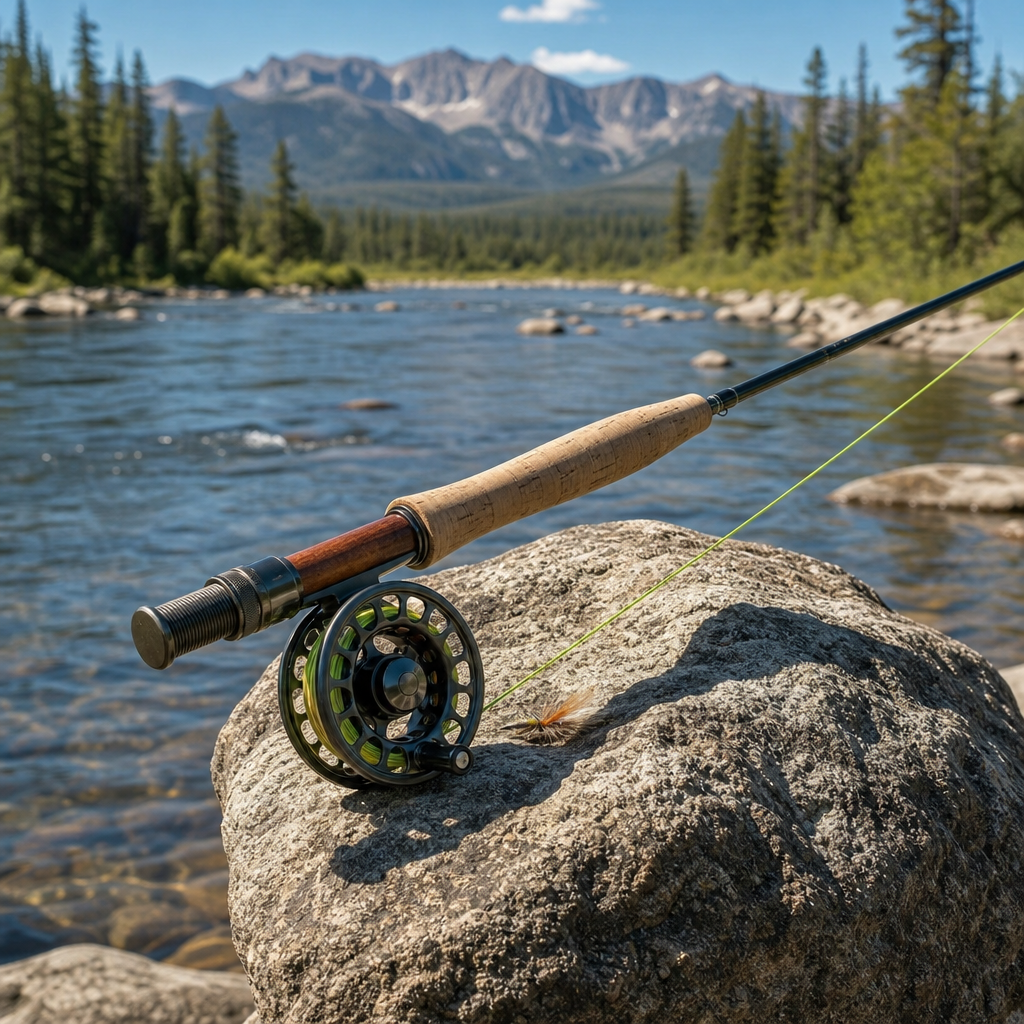
Fly fishing rod and reel combos simplify one of the most confusing parts of buying tackle: matching a balanced rod, reel, and often line for a specific style of fishing. In practical terms, a combo is a coordinated package designed to cast correctly out of the box, which matters because fly gear is highly weight-specific. A 5-weight rod performs best with a 5-weight line, and the reel must hold that line plus backing without making the outfit feel tip heavy. After testing entry-level kits with new anglers and comparing premium outfits on trout streams, bass ponds, and light saltwater flats, I have found that the best fly fishing rod and reel combos save time, reduce rigging errors, and help anglers fish effectively sooner.
This matters because fly tackle is expensive, technical, and easy to mismatch when purchased piece by piece. A poor match can create weak casting loops, bad line management, and fatigue over a long day. A good combo, by contrast, delivers proper balance, a drag suited to the target species, and a rod action that fits the intended use. For a reader browsing gear reviews, this hub should answer the main buying questions directly: what combo weight to choose, which brands are dependable, how premium models differ from budget kits, and which setups make sense for trout, bass, panfish, or inshore species. The goal is not simply to list products, but to explain why certain fly fishing rod and reel combos are the best options for real anglers.
How to Choose the Right Fly Fishing Rod and Reel Combo
The fastest way to choose a combo is to start with species, fly size, and fishing environment. For small trout streams, a 3-weight or 4-weight outfit excels with delicate dry flies and short casts. For general freshwater use, a 5-weight is the standard recommendation because it handles nymphs, dries, and small streamers with enough range to stay useful as skills improve. If bass, carp, or larger river trout are the target, a 6-weight often makes more sense because it turns over bulkier flies and manages wind better. For light saltwater or heavy freshwater streamers, a 7-weight or 8-weight becomes the practical starting point.
Rod action is the next decision. Moderate or medium-fast rods load more easily at short distance and help beginners feel the cast. Fast-action rods generate higher line speed, tighter loops, and better wind penetration, but they usually demand cleaner timing. I often steer newer anglers toward medium-fast designs unless they fish open water where distance and wind control dominate. Reel quality becomes increasingly important as fish size and run length increase. On small trout water, the reel mainly stores line. On rivers with big trout, steelhead, salmon, or saltwater species, drag smoothness, startup inertia, arbor size, and corrosion resistance matter immediately.
Line quality is the overlooked factor in many combos. Some excellent rods feel mediocre when packaged with entry-level line, while others cast well specifically because the manufacturer included a true premium taper. Sage, Orvis, Redington, Echo, TFO, and Clearwater-level outfits often stand apart because the line selection is deliberate. When evaluating a combo, check whether it includes a weight-forward floating line from a recognized line maker such as Scientific Anglers, Rio, or Airflo. Also confirm whether backing, leader, and a case are included, because those items affect the real value of the package far more than marketing claims about cosmetics.
Best Fly Fishing Rod and Reel Combos by Use Case
The best all-around option for most anglers remains a 9-foot 5-weight combo. This length and line weight cover the broadest range of trout techniques, from indicator nymphing to dry-dropper rigs and small streamers. In current retail lineups, the Orvis Clearwater combo consistently earns its reputation because the rod is crisp without being punishing, the reel is reliable, and the package is backed by strong customer support. Redington’s original path into the market came through beginner-friendly kits, and current field-ready options such as the Redington Original or Crosswater combinations still offer straightforward value for anglers who want a competent trout setup without premium pricing.
For budget-conscious buyers, the Echo Lift combo and TFO NXT Black Label series deserve attention. I have used both with anglers learning double haul mechanics, and each delivers predictable casting with enough durability for car trunks, canoe trips, and frequent travel. The Echo Lift leans toward easy loading and practical simplicity. The TFO NXT Black Label feels more refined than many starter outfits and often arrives with useful accessories and a line that does not need immediate replacement. These are the kinds of combos that help a new angler stick with the sport instead of fighting a poor setup.
If the goal is bass and larger warmwater fish, a 6-weight or 7-weight combo is usually the better answer. Bass bugs, weighted crawfish patterns, and deer hair poppers create air resistance that overwhelms ultralight trout outfits. A 9-foot 6-weight from Temple Fork Outfitters, Redington, or Orvis gives enough lifting power for boat fishing, ponds, and rivers while remaining manageable for casual casting sessions after work. For anglers throwing larger streamers or fishing windy reservoirs, a 7-weight setup reduces frustration dramatically. It is also a smart crossover choice for carp and light inshore use.
Saltwater-ready combos must be judged more harshly because the environment exposes weaknesses quickly. Corrosion resistance, sealed drag systems, anodized reels, and line management all matter. An 8-weight package from Orvis, TFO, or Redington is the standard recommendation for redfish, schoolie stripers, and bonefish-level applications. Entry-level saltwater combos can work, but only if the reel drag is smooth and the hardware stands up to rinsing, transport, and repeated exposure. I have seen inexpensive freshwater reels fail after a short beach season, so buyers planning true inshore use should prioritize reel construction over cosmetic extras.
| Use Case | Best Weight | Recommended Length | What Matters Most |
|---|---|---|---|
| Small stream trout | 3WT-4WT | 7’6″-8’6″ | Delicate presentation, easy loading |
| All-around trout | 5WT | 9′ | Versatility, line quality, balance |
| Bass and carp | 6WT-7WT | 9′ | Power for larger flies, wind control |
| Inshore saltwater | 8WT | 9′ | Sealed drag, corrosion resistance |
What Separates Premium Combos From Budget Kits
The gap between a budget combo and a premium outfit is not just branding. It usually shows up in three places: rod recovery, reel drag performance, and fly line quality. Premium rods recover faster after the cast, which means less tip bounce, cleaner tracking, and tighter loops. That translates into better accuracy and easier distance, especially in wind. You also tend to get better guide spacing, higher grade cork, straighter blanks, and ferrules that hold securely through a full day of casting. On the water, these differences feel subtle at first and obvious after a few hours.
Premium reels improve fish-fighting consistency rather than raw fish-catching probability in every scenario. Trout anglers on small streams can absolutely fish with simple click-and-pawl or basic disc drag reels. However, once fish make longer runs, or when anglers target carp, steelhead, or saltwater species, better machining and sealed drag systems become worth the money. A quality drag starts smoothly, resists surging, and remains dependable when wet, sandy, or hot. Large arbor designs also speed line pickup, which matters when a fish turns and runs toward you.
Fly line may be the single most important performance upgrade in any combo. I have cast modestly priced rods that felt excellent once paired with better line, and expensive rods that felt strangely dull with generic line. Premium lines generally shoot farther, float higher, mend better, and maintain coating integrity longer. They also use more intentional tapers, such as overweight heads for quick loading or long front tapers for technical presentation. If you are comparing two combos and one includes a recognized premium line while the other includes an unbranded option, the line package may justify the higher price on its own.
Best Brands and Models Worth Reviewing Across This Gear Hub
As a hub for gear reviews, this page should point readers toward the brands that consistently produce reliable fly fishing rod and reel combos across price tiers. Orvis remains one of the easiest brands to recommend because the Clearwater series covers the mainstream trout market extremely well and benefits from broad dealer support. Sage offers higher-end precision and often appeals to anglers who prioritize blank technology and refined rod feel, though complete combos sit at a more premium price. Redington continues to serve a wide audience with accessible kits that often punch above their class in fishability.
Temple Fork Outfitters deserves serious consideration because TFO rods are practical fishing tools first and marketing stories second. The company’s combos have long been useful recommendations for anglers who want dependable performance without luxury pricing. Echo occupies a similar space, especially for beginners and intermediates who value forgiving actions and straightforward packaging. Greys, Fenwick, and Wild Water also appear in the conversation, particularly for entry-level buyers shopping online, but their value depends heavily on the included line and after-sale support. Availability, warranty responsiveness, and replacement parts matter more in fly gear than many first-time buyers realize.
For this gear reviews subtopic, it also makes sense to branch into adjacent articles that support combo buyers: best fly lines for 5-weight rods, best waders for trout fishing, best beginner fly reels, and best travel fly rods. These supporting pages strengthen the usefulness of the hub because combo shoppers often need the rest of the system explained. In practice, a reader choosing between a Clearwater, NXT Black Label, and Echo Lift package is usually also asking what flies to start with, what leaders to buy, and whether a 4-piece travel rod affects performance. A strong hub answers the buying journey, not just the product title.
Common Buying Mistakes and How to Avoid Them
The most common mistake is buying a combo that is too specialized too early. New anglers often think they need the lightest trout rod possible or the fastest rod available because it sounds advanced. In reality, a 9-foot 5-weight remains the safest first purchase for the largest number of people. Another mistake is underestimating fly line quality. If a combo is attractively priced but the line performs poorly, the entire outfit may feel harder to cast than it should. Replacing the line can fix the problem, but that changes the true budget immediately.
Another frequent error is choosing a reel based on appearance instead of function. Large porting patterns, bright anodizing, and oversized handles do not compensate for inconsistent drag startup or poor frame rigidity. This matters most when targeting stronger fish, but it affects overall user experience even on trout water. Buyers also overlook warranty terms and service access. A broken tip section on a supported brand can be an inconvenience; the same break on a no-name imported combo can end the outfit’s useful life. Finally, anglers sometimes buy by online rating averages alone without asking whether reviewers fished the combo in the intended conditions.
Matching the outfit to actual fishing conditions solves most of these problems. If most trips are on smaller creeks, do not buy an 8-weight because it seems more powerful. If windy lakes, hoppers, and streamers dominate, do not force a 4-weight into that role because it looks refined. Consider casting distance, fly size, fish size, and how often the outfit will travel. A well-chosen combo should feel balanced in hand, load naturally at common fishing distances, and include components good enough that you do not need immediate upgrades. That is the standard readers should apply across every gear review linked from this hub.
How to Judge Value Before You Buy
Value is the intersection of performance, durability, included accessories, and support. Before buying, check the exact contents of the package: rod, reel, spooled line, backing, leader, case, and warranty. Compare whether the reel uses cast or machined construction, whether the drag is sealed, and whether the rod action matches your casting ability. Read reviews that discuss on-water use instead of unboxing impressions. If possible, cast the combo with thirty feet of line beyond the tip, because that is where many trout setups live most of the day. Good combos feel composed there, not just at maximum distance.
Also evaluate the upgrade path. Some combos are best viewed as complete starter systems to be fished for years. Others are worthwhile because the rod is strong enough to keep while the line or reel can be upgraded later. I often recommend buyers spend slightly more for a combo with a sound rod blank and good service backing, then improve line later if needed. That approach preserves long-term value better than repeatedly replacing cheap kits. If you are researching fly fishing rod and reel combos, start with your target species, narrow by rod weight, then compare included line, reel quality, and support from established brands before placing the order.
The best fly fishing rod and reel combos are the ones that match your fishing, not the ones with the loudest marketing. For most anglers, that means a reputable 5-weight trout combo from Orvis, Redington, Echo, or TFO, with a quality floating line and dependable warranty support. Move to a 6-weight or 7-weight for bass and larger flies, and to an 8-weight when inshore saltwater becomes the plan. Premium combos justify their price through better rod recovery, stronger reels, and better lines, while budget kits can still be excellent if the fundamentals are right.
As this gear reviews hub expands, use it as the starting point for deeper comparisons on rods, reels, lines, waders, and accessories. The benefit of choosing well now is simple: less frustration, better casting, and more time actually fishing. Identify your primary species, set a realistic budget, and shortlist two or three proven combos from established brands. Then buy the outfit that fits your water and start building experience on the stream.
Frequently Asked Questions
What is a fly fishing rod and reel combo, and why is it often the best option for beginners?
A fly fishing rod and reel combo is a matched package that typically includes a fly rod, a compatible reel, and often pre-selected fly line, backing, and leader. The biggest advantage is balance. In fly fishing, gear needs to work together very precisely. A 5-weight rod is designed to cast a 5-weight line properly, and the reel needs to hold that line and backing without making the setup feel too heavy in the hand. When those pieces are mismatched, casting becomes harder, line control suffers, and beginners often assume the problem is their technique when it is really the equipment.
That is why combos are so useful, especially for new anglers. They remove much of the guesswork from the buying process and provide an outfit that is intended to perform correctly right out of the box. Instead of trying to compare rod actions, reel sizes, arbor designs, and fly line tapers separately, you get a coordinated setup built around a specific type of fishing. For someone just learning how to cast, mend, and manage line on the water, that simplicity matters a lot.
Good combos also tend to be more cost-effective than buying every component individually. Manufacturers often package a solid rod and reel together at a better value than you could assemble on your own at the same price point. That does not mean every combo is equal, though. The best ones feel balanced in hand, have smooth reel function, include a line that actually matches the rod well, and are ready for real fishing rather than just backyard practice. For beginners who want to get on the water quickly with confidence, a quality combo is usually the smartest starting point.
What is the best fly rod weight and combo size for most anglers?
For most anglers, the most versatile starting point is a 9-foot, 5-weight fly rod combo. This setup is widely considered the all-around standard because it can handle a broad range of freshwater fishing situations without feeling too specialized. A 5-weight is light enough for trout, panfish, and small-stream presentations, but it still has enough backbone to cast larger dry flies, nymph rigs, and small streamers on rivers, ponds, and many lakes. If someone wants one combo that can do the most things reasonably well, this is usually it.
The reason this size is so popular comes down to casting ease and flexibility. A 9-foot rod gives most anglers good line control for mending, roll casting, and managing drifts, while the 5-weight line provides enough mass to load the rod predictably without feeling overly heavy. That makes learning easier. It also means the same outfit can stay useful long after the beginner stage, which is important if you do not want to outgrow your first combo too quickly.
That said, the “best” combo depends on where and what you fish. A 3-weight or 4-weight combo is excellent for small creeks, tiny flies, and smaller trout where delicacy matters more than distance. A 6-weight is often better if you expect wind, larger trout, bass, or heavier flies. A 7-weight or 8-weight enters the territory of bass, pike, steelhead, and light saltwater use. The key is to match the combo to your primary fishing style, not the widest possible list of hypothetical situations. If you are unsure, a well-balanced 5-weight combo remains the safest and most practical recommendation for the majority of freshwater anglers.
How can I tell if a fly rod and reel combo is actually well matched and balanced?
A well-matched fly combo should feel comfortable, cast cleanly, and function as a unified system rather than a collection of separate parts. Balance is the first thing to notice. When you hold the rod near the grip in a normal fishing position, the outfit should not feel dramatically tip heavy or awkwardly butt heavy. Some degree of forward weight is normal with fly rods, but the combo should still feel controlled and natural in hand. If the reel is too small or too light, the rod may feel tiring to cast over time. If the reel is too large or too heavy, the setup can feel clumsy and less responsive.
Line matching is equally important. The rod should be paired with the correct fly line weight, because fly rods are designed to load and recover based on that line mass. A rod marked as a 5-weight should usually be paired with a 5-weight line, unless the manufacturer specifically recommends otherwise. In lower-end combos, the rod and reel may be acceptable, but the included fly line can sometimes be the weak point. A poor-quality line can make even a decent rod feel dull, inconsistent, or hard to cast. That is why many experienced anglers pay close attention to whether a combo includes a genuinely fishable line rather than just a placeholder.
You should also evaluate reel capacity and drag quality. The reel needs enough room for the fly line and appropriate backing, and it should retrieve smoothly without wobble or excessive play. For trout fishing, drag sophistication matters less than general reliability, but the reel should still have decent fit and finish. Finally, look at practical readiness: is the combo pre-spooled, are the guides aligned, is the leader included, and is the package intended for actual fishing rather than just entry-level marketing? The best combos make setup easy while still delivering dependable on-water performance.
Are pre-spooled fly fishing combos worth it, or should I replace the included line and backing?
Pre-spooled fly fishing combos are often worth it, especially for beginners, because they remove one of the more technical and intimidating steps in setting up fly tackle. A combo that comes with backing, fly line, and leader already installed allows you to focus on learning knots, casting, and presentation instead of wondering whether you assembled everything correctly. For someone new to fly fishing, that convenience can be a major benefit, and in many cases the included setup is perfectly adequate for getting started and catching fish.
However, not all included lines are created equal. In many budget combos, the rod and reel may be surprisingly solid while the factory line is simply serviceable. It may cast well enough at short distances and perform fine for casual use, but it might lack the slickness, taper quality, durability, or floatation of a better aftermarket line. If a combo feels underwhelming despite decent reviews of the rod itself, the line is often the first component worth upgrading. Replacing the line can noticeably improve rod loading, turnover, shooting ability, and overall casting feel.
Whether you should replace the included line immediately depends on your goals. If you are brand new, there is no problem using the stock setup first. It gives you a baseline and helps you understand what you may want to improve later. If you plan to fish frequently, want the best performance from the outfit, or notice memory, poor floatation, or inconsistent casting, upgrading to a higher-quality line is usually money well spent. In short, pre-spooled combos are absolutely worthwhile for convenience and beginner-friendliness, but the included line is often the component most likely to be upgraded as your experience grows.
What features should I look for when choosing the best fly fishing rod and reel combo?
When choosing the best fly fishing rod and reel combo, start with intended use rather than brand name alone. Think about the species you are targeting, the size of the water, the typical fly sizes, and whether you will deal with wind, current, or larger fish. Once that is clear, look for a rod weight and length that match those conditions. For many anglers, a 9-foot 5-weight remains the best all-purpose choice, but more specialized fishing may call for something lighter or heavier. A combo should be built around a realistic fishing purpose, not just broad marketing claims.
Next, pay attention to rod action and overall feel. Moderate to medium-fast actions are often excellent for beginners because they load more easily and provide helpful feedback during the cast. Faster rods can be powerful and versatile, but they can also feel less forgiving for someone still developing timing. Build quality matters too. Look for solid guide wraps, a comfortable cork grip, secure reel seat hardware, and ferrules that fit properly. These details affect durability and long-term satisfaction more than many buyers realize.
The reel should be appropriately sized for the rod and capable of holding the correct line and backing without excess bulk. For trout and general freshwater use, reliability and balance are usually more important than having an ultra-advanced drag system. If you are targeting stronger fish, drag smoothness becomes more important. Also consider what is included in the package. A quality fly line, backing, leader, and a protective rod tube add real value. Some of the best combos stand out because they are truly ready to fish, not because they have the most aggressive marketing language.
Finally, evaluate the combo in terms of progression. A good outfit should be easy enough for a beginner to learn with but capable enough that it still feels useful after a season or two. That means looking for dependable casting performance, sensible component choices, and a balanced design that supports actual fishing, not just a low sticker price. The best fly fishing rod and reel combos save time, reduce setup mistakes, and give anglers a confident, functional starting point that can remain enjoyable well beyond the first trip.