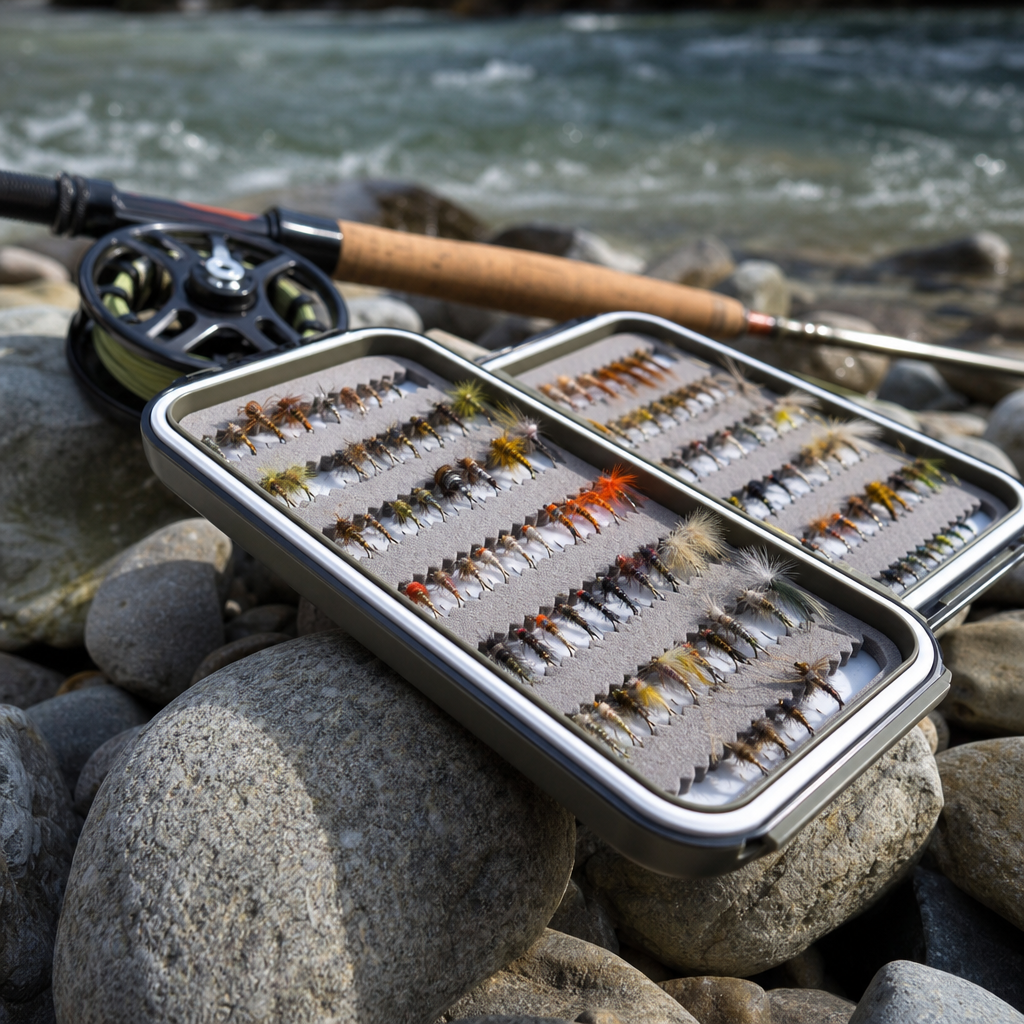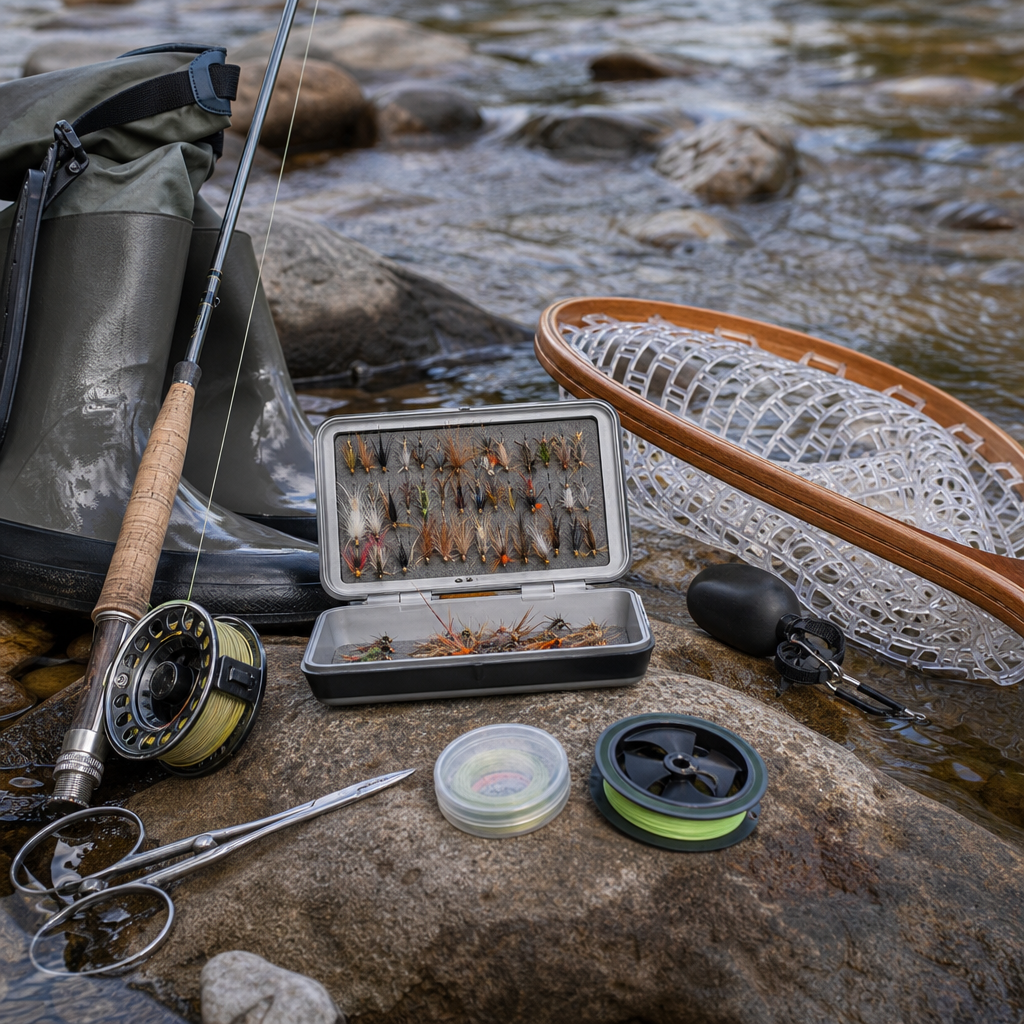
Low water conditions expose every weakness in fly selection, presentation, and angling discipline, which is why the top fly patterns for low water conditions deserve careful study by any trout angler building a reliable fly box. In practical terms, low water usually means reduced streamflow, thinner current seams, clearer visibility, warmer temperatures, and fish that have more time to inspect a drifting fly. Those changes alter trout behavior dramatically. Fish slide into shaded pockets, tighten to depth or structure, feed in shorter windows, and reject bulky or overly flashy patterns that might work during runoff or after rain. Choosing the right low water fly patterns is not about carrying hundreds of options. It is about understanding profile, scale, sink rate, color restraint, and how natural food sources appear when rivers shrink. After years of guiding and testing flies through late summer tailouts, spring creeks, and boulder-pocket freestones, I have found that low water success usually comes from smaller, cleaner, more exact patterns presented with minimal disturbance. This article serves as a complete hub for fly reviews within the broader product reviews and recommendations category, showing which fly styles consistently earn space in a serious box, why they work, and when each pattern should move from backup to first choice.
Low water also forces honest gear and fly evaluations. A pattern that looks impressive in a catalog may twist tippet, land heavily, or fish bigger than its stated hook size. By contrast, proven low water flies share a few practical traits: consistent proportions, durable tying materials, sparse silhouettes, and enough visibility for the angler without alarming the fish. Reviews matter here because small differences in hackle density, bead size, thread color, hook wire, or foam thickness can change whether a fly rides correctly and gets eaten. Trout in diminished flows often inspect flies from inches away, so a product review mindset helps. Instead of asking whether a fly is popular, ask whether it solves a specific low water problem: matching tiny mayflies, imitating terrestrials during bank falls, suggesting emergers in flat glides, or delivering subtle weight in knee-deep slots. The best fly patterns for low water conditions are dependable tools, not trend items. The sections below break down the core categories every angler should review, from dry flies and terrestrials to nymphs, small streamers, and presentation-focused selection criteria.
What low water changes in trout feeding behavior
Low water compresses habitat and makes trout more efficient, selective, and cautious. On freestone rivers, reduced current strips away many soft lies and leaves fewer oxygen-rich positions. On tailwaters and spring creeks, clear stable flows amplify visibility, so fish can inspect a fly for longer before committing. I regularly see trout in low water refuse patterns that are only slightly overdressed or one size too large, especially in slicks and tailouts. This is why fly reviews for low water should begin with behavior rather than brand. A trout holding in a twelve-inch-deep seam cannot tolerate much error. It wants food that arrives naturally, at the right depth, with no drag and no excessive flash.
Food availability also narrows. During lower flows, many drifting nymphs and drowned terrestrials move through predictable lanes near undercut banks, weed edges, and shallow drop-offs. Midges and small mayflies become more important than large stonefly imitations in many systems. Terrestrial inputs increase during late summer, especially ants, beetles, hoppers, and inchworms. That means your best patterns are often modest in size and sharply defined in purpose. Instead of generic attractors, think category leaders: a size 20 RS2 for technical feeding, a black foam ant for bankside falls, or a slim pheasant tail for sparse mayfly nymph imitation. Fish become location-specific and pattern-specific at the same time.
Best dry flies for low water conditions
Dry fly selection in low water is mostly a lesson in restraint. The top performers are low-riding, lightly dressed patterns that match common insects without creating a noisy landing. Parachute Adams remains one of the most versatile choices because it suggests a wide range of mayflies and lands softly. In sizes 16 through 22, it excels on riffle-to-glide transitions where trout are taking duns but refusing heavier-bodied dries. CDC Comparaduns are another standout, especially on spring creeks and smooth tailouts. Their sparse deer hair and CDC wing create a flush-floating silhouette that looks natural from below. For selective fish keying on emergers, a Film Critic, CDC emerger, or a simple Sparkle Dun often outfishes higher-floating patterns because low water trout frequently feed in the meniscus.
Midge-focused dry flies deserve an entire row in a low water box. Griffith’s Gnat, small midge clusters, and tiny parachute midges can save a day when the river appears lifeless but fish are sipping minute insects. On technical tailwaters, I have seen size 22 and 24 midge dries produce when larger Blue Winged Olive patterns were ignored. The review standard here is simple: the fly must remain visible enough for the angler while still appearing delicate to the trout. That is why posts in subdued white, gray, or pink can be useful if they do not bulk up the thorax. During terrestrial season, beetle and ant dries become first-string choices. A black foam beetle in size 14 to 18 and a cinnamon or black ant in 16 to 20 are among the most consistently effective low water dry flies because they offer fish a high-protein meal that often enters the stream with little warning.
Terrestrials: the most dependable low water fly category
When anglers ask me for one low water confidence category, I usually say terrestrials. They remain effective even when aquatic hatches are sparse, they produce along banks and under overhangs, and trout often take them with less scrutiny than perfectly matched mayflies. Ants are the most universal option. Black flying ant patterns and simple fur ants both work, but foam versions usually win in practical reviews because they float longer, survive more fish, and stay visible in broken surfaces. Beetles rank next. In small clear streams, a size 16 black beetle with a thin strip of foam and a subtle indicator post can fish all afternoon without needing constant dressing. Hoppers are useful too, but in true low water they should be downsized and de-bulked. The giant, leggy patterns sold for summer attractor fishing often spook trout in ankle-deep edge lanes.
The reason terrestrials dominate low water conditions is ecological as much as tactical. Bankside grasses, shrubs, and trees continue dropping insects into the river regardless of whether the flow is 300 cfs or 80 cfs. Trout learn that these accidents are predictable feeding opportunities, especially near shade lines and cutbanks. Product reviews should therefore focus on realism of footprint rather than decorative detail. A good beetle should land quietly and ride flush enough to look trapped. A good ant should separate cleanly at the waist and avoid oversized hackle. A good hopper should combine foam for flotation with a slender body and trimmed rubber legs. For anglers building a hub-level low water fly assortment, terrestrials are not optional additions. They are core patterns that solve more conditions than any other dry fly class.
Nymphs that consistently produce in clear, thin flows
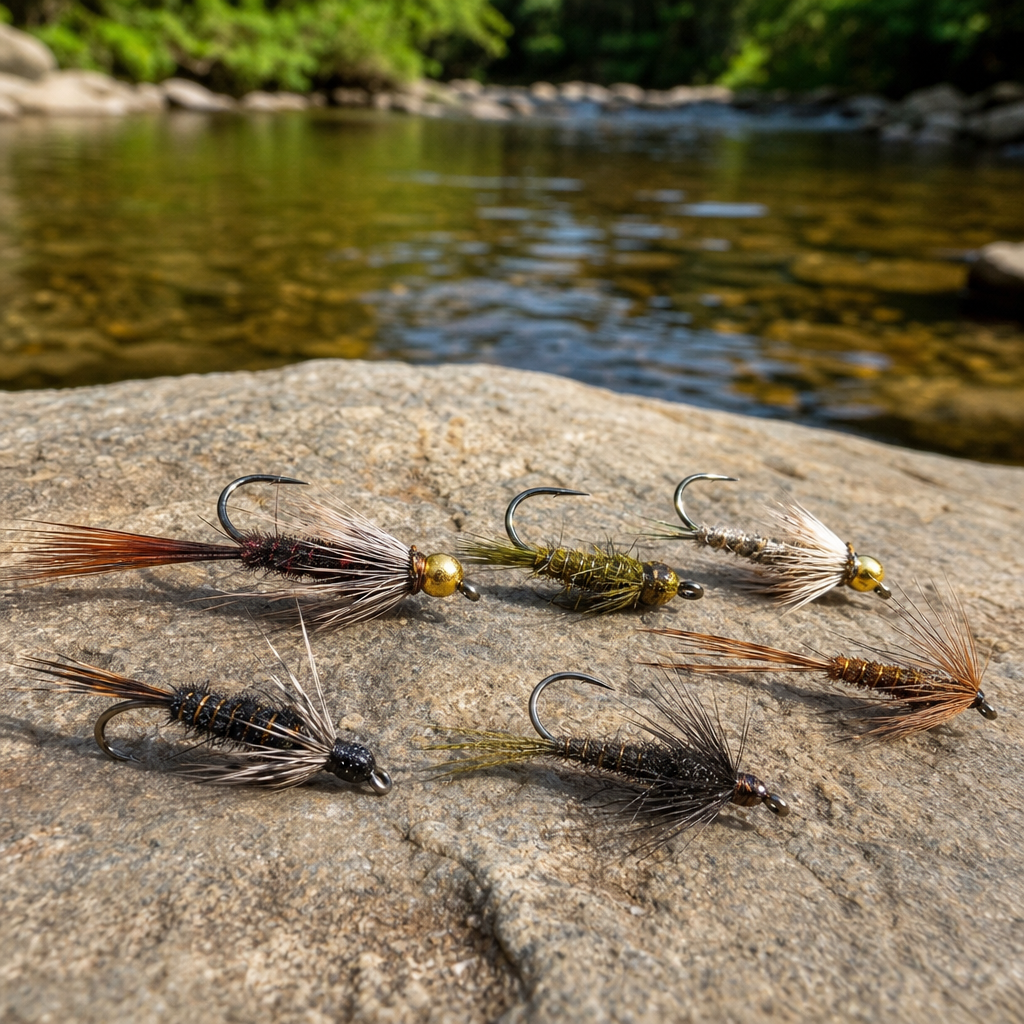
The best low water nymphs are sparse, narrow, and appropriately weighted. Classic pheasant tails, thread midges, zebra midges, RS2 nymphs, tiny hare’s ears, and midge larvae all belong near the top of any reviewed list. These patterns work because they imitate the smaller food items trout see most often in clear summer and fall water. A size 18 unweighted pheasant tail can be more effective than a flashy size 14 tungsten nymph simply because it enters the water softly and drifts at the level fish expect. Zebra midges in black, red, olive, and gray remain standard on tailwaters for good reason. Their segmentation, slim profile, and compact bead create a clean shape trout recognize immediately. On spring creeks, RS2 patterns imitate both emergers and drowned adults, making them unusually versatile.
Weight control is critical. Many anglers over-weight in low water and drag flies unnaturally along the bottom. Instead, carry the same pattern in unweighted, brass bead, and tungsten versions. That lets you match depth without changing silhouette. Hook choice matters too. Heavy-wire jig hooks are excellent in some scenarios, but fine-wire straight hooks often make more sense in skinny flats where a slower sink and lighter touchdown improve natural drift. The best-reviewed low water nymphs are usually the least dramatic. They use slim dubbing, natural tail fibers, subtle ribbing, and only enough flash to suggest life. In practical terms, if a nymph looks good in your hand but bulky underwater, it is probably too much fly.
| Pattern | Best Sizes | Primary Use | Why It Works in Low Water |
|---|---|---|---|
| Parachute Adams | 16-22 | General mayfly dry | Soft landing, versatile silhouette, easy dead drift |
| Foam Ant | 16-20 | Bankside terrestrial | Natural summer food, high visibility, strong flotation |
| Black Beetle | 14-18 | Slow seams and undercuts | Flush profile, reliable in clear water, durable pattern |
| Zebra Midge | 18-22 | Tailwater and spring creek nymphing | Slim shape, subtle flash, consistent sink control |
| RS2 | 18-24 | Emerger or nymph | Matches tiny insects trout inspect closely |
| Soft Hackle | 14-20 | Swing or lift presentation | Suggests emergence without exact matching |
| Small Woolly Bugger | 8-12 | Predatory or opportunistic takes | Offers motion without overwhelming fish |
Emergers and soft hackles for selective trout
Some of the best low water fish I have seen were taken not on visible dries or bottom-hugging nymphs, but on flies suspended in the in-between zone. Emergers and soft hackles excel there. Trout in clear, reduced flows often feed just beneath the surface where insects struggle to escape their shucks. Patterns like the RS2, Barr Emerger, Shuttlecock emerger, and CDC loop-wing emerger imitate that vulnerable stage with remarkable accuracy. Because these flies sit partly in the film, they trigger fish that refuse fully floating dries. This matters most during Blue Winged Olive hatches, midge activity, and calm evening spinner or emerger events when trout are feeding rhythmically in flats.
Soft hackles add movement without bulk. A simple partridge and orange, olive soft hackle, or sparse pheasant tail soft hackle can be dead-drifted, swung, or lifted at the end of the drift to imitate ascending insects. In low water, that lift often triggers aggressive takes from trout that ignore static presentations. Reviews of soft hackles should look at hackle density and body taper. Too much soft hackle creates a parachute effect and overstates the fly. The best versions pulse lightly, sink evenly, and suggest life rather than announcing themselves. For anglers who struggle when trout are visibly feeding but refusing dries, emergers and soft hackles are usually the missing link.
When small streamers outperform delicate imitations
Low water does not eliminate streamer fishing; it refines it. Big articulated flies with oversized dumbbell eyes often move too much water and scare trout in thin, clear conditions. Smaller streamers, however, can be deadly. Think size 8 to 12 Woolly Buggers, sparse sculpin imitations, mini leeches, and unweighted or lightly weighted baitfish patterns. These flies work best around undercut banks, plunge pools, woody cover, and the deeper heads of runs where larger trout stay hidden through bright hours. In late summer, when juvenile fish, crayfish, and leeches are concentrated in shrinking habitat, a restrained streamer offers protein worth chasing. The key is moderation in both size and retrieve.
I prefer olive, black, and natural tan because they create believable contrast without excessive flash. Marabou tails should be short enough to avoid fouling, and coneheads should be small. Stripping style matters more than pattern name. In low water, two-inch darts and pauses usually outfish long aggressive pulls. Often the best move is a tight-line swing beside structure rather than a full streamer rip across shallow flats. Product reviews should reward streamers that maintain shape when wet, cast cleanly on lighter leaders, and move with minimal rod input. For anglers targeting one larger trout in pressured water, a compact streamer can still be the highest-value fly in the box.
How to choose reviewed flies that truly belong in your box
A useful fly review hub does more than list famous patterns. It helps anglers decide what earns permanent space. For low water, choose flies by role. Carry one mayfly dry family, one midge dry family, two terrestrials, three core nymphs, one emerger system, and one compact streamer style in multiple sizes and weights. That structure covers most clear-water trout situations without creating clutter. Also evaluate tying quality. Look for proportionate tails, clean hook eyes, centered wings, trimmed foam, and bead sizes that match hook gap. Poorly tied small flies fail faster and drift worse. Brand matters less than consistency, although trusted commercial producers such as Umpqua, Fulling Mill, and Orvis often offer more reliable sizing and durable finishes.
Finally, test patterns in context. A fly that looks perfect in packaging may sink too slowly, twist 6X tippet, or disappear on the water. Keep notes on where each pattern succeeded: tailouts at dusk, undercut banks at noon, or weed lanes during midge hatches. Over time, your low water box should become narrower and stronger. The top fly patterns for low water conditions are the ones that solve repeated problems with minimal adjustment. Build that box deliberately, review every pattern by performance rather than hype, and you will fish clearer water with far more confidence. Start by stocking a dozen proven low water flies, then refine your selection on the river where the only review that matters is a confident rise or a tight line.
Frequently Asked Questions
What makes a fly pattern effective during low water conditions?
An effective low-water fly pattern does two things at once: it looks believable at close range, and it lands with minimal disturbance. When streamflows drop, trout usually have more time to inspect what drifts over them. Clearer water, softer current seams, and reduced surface chop all make fish more cautious, so oversized, overly flashy, or badly drifting flies tend to get refused quickly. That is why the best low-water flies are often smaller, slimmer, and more natural in profile than the patterns many anglers rely on during higher water.
In practical terms, effective low-water flies usually match the insects trout are already seeing in size, silhouette, and behavior rather than simply standing out. Sparse mayfly imitations, small parachutes, low-riding caddis, tiny terrestrials, and unweighted or lightly weighted nymphs all shine because they fit the quiet, technical nature of the conditions. Fish holding in skinny runs or shaded edges are not usually looking for a big meal charging through heavy current. They are often stationed in subtle feeding lanes, picking off dependable food items that drift naturally and do not scream danger.
Presentation is also inseparable from pattern choice in low water. A fly can be perfectly selected and still fail if it lands too hard, drags immediately, or crosses over the fish with a visible leader. The most effective patterns are those you can present delicately on light tippet and control well in short, precise drifts. In that sense, the best low-water fly is not just the one that resembles food. It is the one that lets you fish quietly, naturally, and confidently under conditions where trout notice nearly everything.
Which dry flies are best for trout in clear, skinny water?
The best dry flies for clear, skinny water are usually modest, realistic patterns that sit naturally and do not create too much surface disturbance. Parachute Adams in smaller sizes remains one of the most dependable choices because it suggests a wide range of mayflies without looking overly specific or unnatural. Comparaduns, CDC emergers, and lightly dressed mayfly duns are also excellent because they provide a low profile and a believable footprint on the surface. In low water, that low-riding look often matters more than a heavily hackled dry that appears too stiff or buoyant.
Small caddis patterns can be just as important, especially in freestone streams where caddis remain active through warm, reduced summer flows. An Elk Hair Caddis can still work, but in technical water many anglers do better with more refined caddis adults, CDC caddis, or sparse X-caddis patterns that sit closer to the film. Trout in low water often key on vulnerable insects, so cripple and emerger styles frequently outperform high-floating attractors. If fish are inspecting but refusing a standard dry, switching to a film-riding pattern is often the right move.
Terrestrials deserve a place near the top of the list as well. Foam can be useful, but in truly low, clear conditions it often pays to scale down and fish simple ants, beetles, and small hoppers that do not slap the water. A black ant, cinnamon ant, or tiny beetle can be deadly along grassy banks, under overhanging limbs, and near undercut edges where trout shelter from bright sun and thin current. The main idea is to choose dries that match the quiet mood of the water: smaller sizes, subtler profiles, and patterns that drift like something the trout already trusts.
What nymph patterns should anglers carry for low water trout fishing?
For low water trout fishing, the strongest nymph selection usually centers on small, slim, natural-looking patterns rather than large, heavily weighted flies. Pheasant Tail nymphs, Hare’s Ear nymphs in sparse dressings, Zebra Midges, small Baetis nymphs, and tiny soft hackles are all proven options because they imitate common subsurface food without appearing bulky or unnatural. In reduced flows, trout often feed in slower lanes and softer pockets, where they can closely examine drifting insects. A compact nymph with a clean silhouette often gets far more attention than a bigger fly designed for fast, turbulent water.
Weight matters, but moderation matters more. Many anglers make the mistake of fishing too much tungsten in shallow, low flows. Heavily weighted nymphs can splash on entry, snag constantly, and drift below the level where fish are feeding. Light beadheads or even unweighted flies often produce better results because they enter quietly and move more naturally in thin current. If depth is needed, adding just enough weight to reach the feeding lane is usually better than overpowering the drift. Low water is often a game of precision, not force.
It also helps to think beyond exact hatch matching and focus on confidence categories. A reliable low-water nymph box should include small mayfly nymphs for general searching, midge patterns for clear tailwaters and spring creeks, caddis larvae or pupae for streams with active caddis populations, and a few soft hackles for fish feeding just under the film. These patterns cover the most common subsurface food sources while still allowing delicate presentations. If trout seem wary, downsizing one step and reducing flash often makes a bigger difference than changing pattern families entirely.
Should you downsize your flies in low water, or is presentation more important?
In most low water situations, the honest answer is that both matter, but presentation usually matters first. Trout in reduced flows become difficult because they can inspect a fly more closely, but many refusals come from drag, poor angle, line flash, or a heavy landing rather than from the fly being slightly too large. A correctly presented size 16 may outfish a poorly drifted size 20 every time. Before obsessing over micro-adjustments in pattern size, it is smart to ask whether the fly is landing softly, drifting naturally, and reaching the fish without exposing the leader or line.
That said, downsizing is often a very effective adjustment once presentation is under control. In low, clear water, trout commonly prefer smaller flies because the natural insects available to them are often smaller and because a slim, subtle offering feels safer. If fish are rising but refusing, following but not taking, or eating naturals in calm glides, dropping one or two sizes can make an immediate difference. This is especially true with dries, emergers, and midge-style nymphs, where proportion and silhouette are easy for trout to judge.
The best approach is progressive rather than extreme. Start with a reasonable pattern for the conditions, make the best presentation you can, and then refine from there. First improve your position, casting angle, and drift. Then consider reducing fly size, trimming flash, switching to a sparser tie, or lengthening tippet. Low water rewards anglers who adjust in small, thoughtful steps. Downsizing can absolutely help, but it works best when it supports a presentation that already looks calm, controlled, and natural.
How should anglers fish top fly patterns differently when water levels are low?
When water levels are low, even the best fly patterns need to be fished with more restraint and precision than they would in average or high flows. The first adjustment is stealth. Trout in skinny, clear water are often holding in places that leave them exposed, such as shaded banks, pocket depressions, undercut edges, tailouts, and narrow seams beside structure. That means anglers need to approach from farther away, stay lower, wade less, and cast only when they are in a strong position. A perfect fly pattern loses its value quickly if the fish sees the angler first.
The second adjustment is drift management. In low water, the strike window is often small, and the current transitions can be subtle. Long drag-free drifts are important, but so is placing the fly exactly where fish feel safe feeding. With dry flies, that often means short, accurate casts to shaded lies, foam lines, or under overhanging vegetation. With nymphs, it means using just enough weight to enter the feeding lane naturally without ticking the bottom through every foot of the drift. Mends should be minimal and intentional, because exaggerated line movement can pull the fly unnaturally in slow currents.
Finally, anglers should fish low-water patterns with patience and discipline. Cover less water and read it more carefully. Focus on prime windows such as early morning, evening, cloud cover, or shaded stretches when trout are more comfortable moving to feed. Rotate through likely patterns logically instead of changing flies every few minutes. A small parachute, ant, beetle, Pheasant Tail, Zebra Midge, or soft hackle can all be excellent in low water, but each works best when paired with thoughtful timing, quiet positioning, and realistic presentation. In these conditions, success usually goes to the angler who fishes simply, lightly, and deliberately.