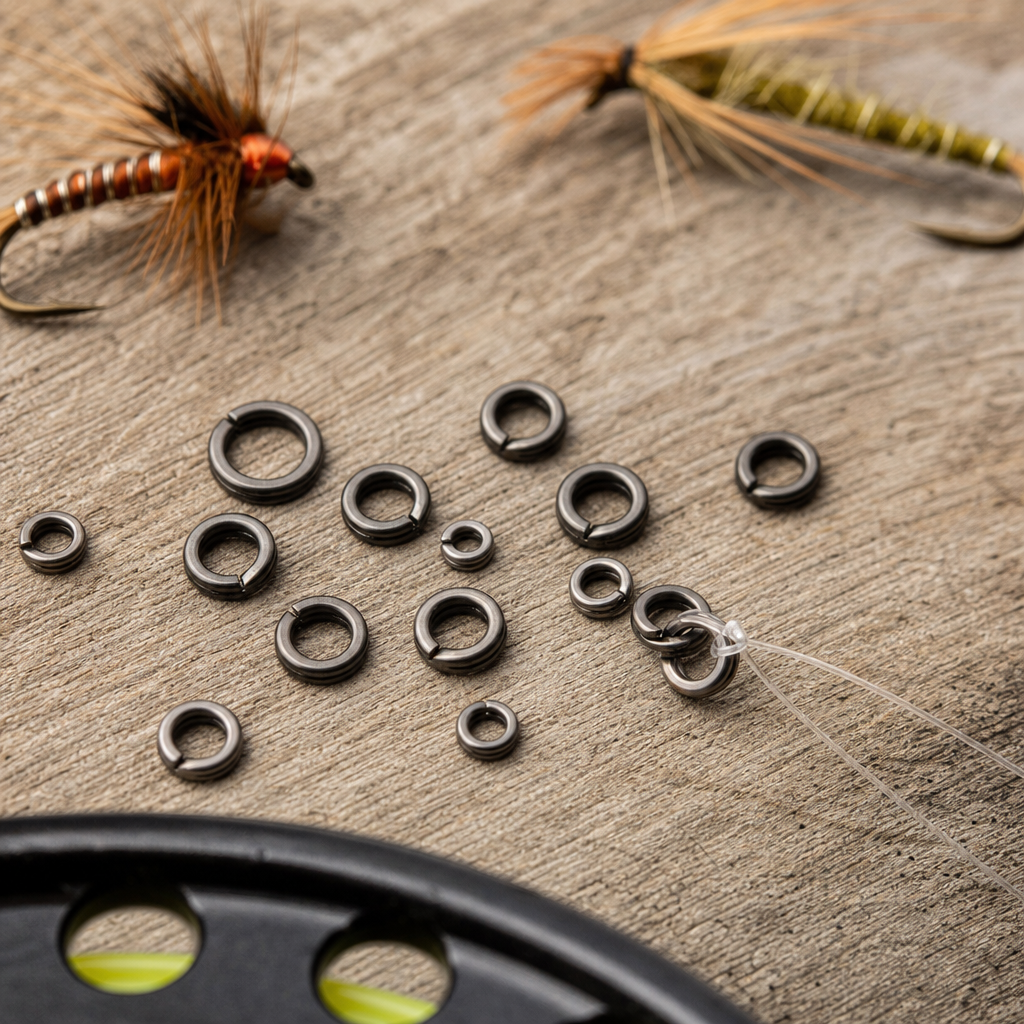
Best fly fishing tippet rings improve rigging efficiency, protect expensive leaders, and make on-stream adjustments faster, especially for anglers who change tippet often or fish multiple fly sizes in a day. A tippet ring is a tiny metal ring, usually stainless steel or nickel alloy, tied to the end of a leader so fresh tippet can be attached without repeatedly shortening the tapered leader. In practical terms, that means better leader longevity, cleaner transitions, and less time rebuilding rigs beside the water. For a sub-pillar hub focused on accessory reviews, tippet rings deserve special attention because they sit at the intersection of convenience, presentation, and terminal tackle reliability.
I started treating tippet rings as essential rather than optional after too many guide days spent cutting back hand-tied leaders to swap from dry-fly nylon to nymphing fluorocarbon. Once I standardized ring use across trout, euro nymph, and light stillwater setups, leader waste dropped noticeably and rig consistency improved. That experience mirrors what many experienced anglers discover: the best fly fishing tippet rings are not gimmicks. They are a small component with outsized effects on durability, knot management, and versatility. Because this page serves as the hub for accessory reviews, it also connects the logic behind rings to forceps, nippers, floatant systems, strike indicators, and leader wallets.
Choosing the right ring requires more than buying the smallest option on the shelf. Size, finish, metallurgy, package consistency, and how easily the ring passes through guides all matter. So does the style of fishing. A 2 mm ring that works beautifully on a 4X dry-fly leader may be less suitable for ultra-fine spring-creek presentations, while a stronger ring can be ideal for heavy nymph rigs or compact streamer leaders. Brand quality matters too, because inferior rings can have rough welds, inconsistent diameters, or coatings that corrode after repeated exposure to moisture. This guide reviews the best fly fishing tippet rings, explains what separates good from mediocre options, and helps you decide which models belong in your accessory kit.
What makes a fly fishing tippet ring worth buying
The best fly fishing tippet rings share five traits: smooth finish, accurate sizing, reliable strength, corrosion resistance, and easy handling streamside. Smoothness matters because your leader knot cinches directly to the ring. If the ring has a burr or rough weld seam, knot strength can suffer and fine tippet can abrade. Accurate sizing matters because many rings are labeled similarly, yet actual diameter and wire thickness vary enough to change sink rate, visibility, and how well they integrate into a leader taper. Reliable strength is non-negotiable. A tiny ring should break well above the tippet class most trout anglers use, giving confidence that the tippet or knot fails first.
Corrosion resistance separates premium products from throwaway tackle. Quality rings are commonly made from stainless steel or plated alloys designed to tolerate repeated wet-dry cycles. In my own use, cheap rings stored damp in foam dispensers developed discoloration and stickiness faster, while premium rings stayed smooth season after season. Handling also matters. Rings are microscopic, so packaging and dispenser design affect usability more than many anglers expect. Good dispensers release one ring at a time, reducing fumbling in wind or low light. Poor packaging spills rings into gravel or boat carpet, where they effectively disappear.
The final buying factor is fit for purpose. Dry-fly anglers often prioritize the smallest practical ring to minimize splash and maintain delicate turnover. Euro nymph anglers may prefer slightly larger, stronger rings that anchor sighter systems cleanly and support frequent tippet replacement. Stillwater anglers using long leaders under indicators often value durability and easy re-rigging over absolute stealth. The right ring is therefore the one that complements your most common leader systems rather than the one with the flashiest marketing.
Best fly fishing tippet rings by use case
For most trout anglers, the best overall choices come from proven brands with consistent quality control, especially RIO, Orvis, Scientific Anglers, Fulling Mill, and TroutHunter. These companies tend to offer rings with dependable finish quality and realistic strength ratings. RIO tippet rings are widely available, easy to find in shops, and dependable for standard trout applications. Orvis tippet rings are similarly consistent and often packaged in user-friendly dispensers that make on-stream access simple. Scientific Anglers rings integrate well into modern technical leader systems and have earned trust among anglers who fish a mix of dry flies and nymphs.
For technical presentations, TroutHunter tippet rings are often favored because the brand’s broader leader and tippet ecosystem is built around precise diameters and knot performance. When I am building leaders for spring creeks or picky tailwater fish, that consistency is valuable. Fulling Mill rings are another strong option, especially for competition-style nymphing rigs, where repeatability matters and terminal connections get changed often. If your fishing leans toward euro nymphing, look for rings that are small enough to pass cleanly but robust enough to withstand split shot, sighter materials, and frequent knot turnover.
Budget options exist, but they are where inconsistency appears first. Some no-name rings sold online work adequately, yet package-to-package variance is common. I have seen oversized welds, irregular internal diameters, and dispenser designs that release several rings at once. Saving a few dollars is rarely worth the lost confidence when fishing 6X to selective trout. On the other hand, warmwater and panfish anglers can often tolerate less refinement because tippet is heavier and presentation is less exacting. The best approach is simple: buy trusted rings for trout and technical freshwater use, then experiment with cheaper alternatives only after you understand what good quality looks like.
| Brand | Best For | Typical Strength Profile | Key Advantage | Potential Limitation |
|---|---|---|---|---|
| RIO | All-around trout fishing | Balanced for 3X-6X systems | Wide availability and consistent finish | Not always the smallest option for ultra-fine leaders |
| Orvis | General freshwater use | Strong enough for dry-dropper and nymph rigs | Easy-to-use dispensers | Price can be slightly higher per pack |
| Scientific Anglers | Technical leader builds | Reliable for mixed dry and subsurface tactics | Good compatibility with modern leader systems | Selection may be limited in some local shops |
| TroutHunter | Spring creek and technical trout fishing | Precise for light tippet applications | Excellent consistency across leader components | Can be harder to source locally |
| Fulling Mill | Euro nymph and competition-style rigs | Strong for frequent re-rigging | Very dependable for sighter-based setups | Less familiar to casual anglers |
How to match ring size to leader and fishing style
The most common mistake with tippet rings is choosing by brand alone instead of matching size to leader design. As a rule, the ring should be small enough not to disrupt turnover yet large enough to tie comfortably and pass through guides when needed. For standard trout leaders in the 9 to 12 foot range, many anglers settle on rings around 2 mm. That size is a practical middle ground for 4X, 5X, and 6X tippet systems. For technical dry-fly work on flat water, smaller rings may be preferable if your knots remain secure and your eyesight and dexterity allow efficient rigging.
For euro nymphing, a slightly stronger or larger ring often makes sense because the ring becomes an anchor point between butt material, sighter, and tippet sections. In that context, durability and ease of handling often matter more than ultimate invisibility. For streamers or warmwater leaders, rings can also be useful, but the need is less about preserving delicate taper and more about fast changeovers between fluorocarbon sections. If your leader regularly turns over indicators, split shot, or tandem nymph rigs, the tiny added mass of a ring is usually irrelevant compared with the convenience gained.
There are limits. On very short leaders for big streamers, loop-to-loop systems or direct blood knots may be simpler. On extremely fine, presentation-critical leaders, a ring can create a hinge if placed poorly or paired with mismatched materials. The solution is not to avoid rings entirely but to test them within your actual fishing systems. Build one leader with a ring and one without, fish both, and compare turnover, drift, and ease of repair. Most anglers who run that side-by-side test keep the ring on at least part of their lineup.
Best applications for tippet rings on the water
Tippet rings are most valuable when you expect repeated tippet changes. Dry-dropper fishing is a classic example. You may start with 5X nylon to a dry fly, then decide the fish are eating subsurface and switch to fluorocarbon for a pair of nymphs. With a ring, you swap only the tippet section. Without one, every adjustment shortens the tapered leader and gradually changes turnover. The same advantage appears during hopper-dropper fishing, indicator nymphing, and stillwater chironomid setups, where exact leader length and taper matter over a full day.
Euro nymphing may be the clearest proof of ring utility. Rings create a clean junction between colored sighter material and sacrificial tippet sections, making break-offs easier to repair without rebuilding the entire system. Competition anglers have relied on this logic for years because seconds matter and consistency matters more. In guided fishing, rings also simplify client rigs. Newer anglers frequently tangle, snag, and retie. A ring preserves the expensive butt and midsection materials while keeping repairs straightforward enough to do quickly under pressure.
They are also useful in stillwater and lake fishing, particularly with long leaders under indicators or washing-line setups. In those systems, leader replacement can be frustrating in wind, and the ability to swap terminal material efficiently is a genuine advantage. Saltwater fly anglers use rings less often in standard flats setups, though they can have niche uses in certain bite-tippet arrangements. For the core freshwater accessory category, however, tippet rings remain one of the most practical upgrades available for the money.
How tippet rings compare with knots, swivels, and micro hardware
Anglers often ask whether a tippet ring is better than tying blood knots, triple surgeon’s knots, or using micro swivels. The direct answer is that each has a place. A blood knot creates an elegant, slim transition and remains a standard for building tapered leaders from scratch. A surgeon’s knot is faster and easier for dissimilar diameters. Tippet rings do not replace those knots entirely; they replace the need to repeatedly cut into a finished taper. If you build custom leaders once and never change tippet until the day ends, knots alone may be enough. If you adapt constantly, rings are more efficient.
Micro swivels solve a different problem: line twist. They are useful in situations involving spinning flies, droppers that helicopter, or certain stillwater retrieves. But swivels are bulkier, heavier, and more visible than tippet rings. In delicate trout fishing, a swivel is usually overkill unless twist is severe. Likewise, snap hardware speeds fly changes but adds mass and visibility that most fly anglers want to avoid on fine leaders. The best fly fishing tippet rings therefore occupy a sweet spot: smaller than swivels, more durable than repeated knot trimming, and easier to maintain than constantly rebuilding a leader from the butt section down.
From an accessory-review perspective, this matters because rings complement rather than replace other tools. Good nippers make clean tag cuts at the ring. Fine-point forceps help when threading tiny tippet in cold weather. Leader straighteners and wallets keep pre-rigged systems organized so rings can do their job. If you are building a coherent accessory kit, tippet rings are one of the highest-value additions because they improve the usefulness of everything around them.
What to look for in accessory reviews and hub-page recommendations
Because this page functions as a hub for accessory reviews, the most useful recommendation framework is consistency across the entire system, not isolated product hype. When reviewing tippet rings, I look at packaging, streamside handling, compatibility with common leader materials, knot security, and long-term resistance to rust or deformation. I also consider whether the brand offers complementary accessories that solve related problems. For example, a strong ring matters more when paired with reliable fluorocarbon, sharp nippers, and storage that keeps tiny terminal tackle dry and accessible.
That same review lens applies across accessory categories. Forceps should align precisely and lock without sticking. Nippers should cut cleanly across nylon, fluorocarbon, and light wire. Floatants should match the fly type and avoid matting delicate hackle. Strike indicators should land softly and adjust without damaging leader material. Leader wallets should separate pre-rigged systems logically. By evaluating accessories together, anglers avoid the common mistake of buying one premium component and surrounding it with mediocre support gear that erodes the benefit.
If you are building your kit from scratch, start with accessories that save time, reduce waste, and increase repeatability. Tippet rings rank high by that standard. They are inexpensive, simple to learn, and useful across many trout tactics. From there, expand into nippers, forceps, floatant, indicator systems, and leader storage based on how you actually fish. That approach creates a smarter accessory lineup and makes every future product review easier to interpret through real on-water needs.
The best fly fishing tippet rings are small, durable tools that solve a real problem: preserving leader integrity while making tippet changes faster and cleaner. For most trout anglers, trusted options from RIO, Orvis, Scientific Anglers, TroutHunter, and Fulling Mill are the safest choices because they deliver smooth finish quality, dependable strength, and practical packaging. The right size depends on your leader system, but in general, standard trout setups benefit from compact rings around the 2 mm class, while euro nymph and heavier subsurface rigs may justify slightly stronger or more handle-friendly models.
The larger lesson for accessory buying is that quality matters most when a product touches knots, leader taper, and repeated rigging. Cheap rings can work, but inconsistent welds, poor dispensers, and questionable corrosion resistance make them a weak gamble for technical fishing. Premium rings cost little in absolute terms and usually repay that cost through leader longevity, less streamside frustration, and more consistent presentations. That is why tippet rings deserve a central place in any serious accessory review discussion and why they fit naturally as a hub topic within product reviews and recommendations.
If you want a simple next step, buy one trusted pack, add rings to your two most-used leader setups, and fish them for a month. Pay attention to how often you retie, how much tapered leader you save, and how easily you switch tactics during the day. Then use that experience to build out the rest of your accessory kit with the same standard: practical performance that holds up on the water.
Frequently Asked Questions
What are fly fishing tippet rings, and why do anglers use them?
Fly fishing tippet rings are tiny metal rings, typically made from stainless steel or a corrosion-resistant nickel alloy, that are tied to the end of a tapered leader. Their main purpose is simple: they create a permanent connection point where you can attach fresh tippet material without trimming back the leader every time you change flies, adjust diameter, or rebuild part of your rig. That matters because leaders are designed with a taper for a reason, and repeated cutting gradually shortens that taper, changing how the leader turns over and forcing you to replace it sooner than necessary.
Anglers use tippet rings because they make rigging more efficient and far more economical over time. Instead of sacrificing expensive leader material whenever conditions change, you tie the ring on once and then replace only the tippet section as needed. This is especially useful if you switch between fly sizes throughout the day, move from dry flies to nymphs, or need to adjust for changing water clarity, current speed, or fish behavior. A tippet ring also makes it easier to step down in diameter cleanly, so you can move from a heavier butt or midsection to a finer tippet without awkward knots or excessive leader rebuilding.
In practical terms, tippet rings help preserve leader longevity, speed up on-stream adjustments, and create a neat, reliable transition point in your setup. For many anglers, they are one of those small accessories that do not look like much but quickly become indispensable once used consistently.
Do tippet rings affect presentation, drift, or fish-spooking potential?
In most real-world fly fishing situations, a properly sized tippet ring has little to no negative effect on presentation. Tippet rings are extremely small and lightweight, often so subtle that they do not interfere with leader turnover or natural drift when matched appropriately to the leader and fishing style. Good rings are designed to be compact and smooth, allowing them to pass energy cleanly through the leader system without creating a bulky hinge point. For trout anglers in particular, that means a well-built rig can still land delicately and fish effectively, even in technical water.
That said, presentation always depends on scale and application. If you use a ring that is too large for a fine dry-fly setup, or if the leader is poorly balanced, the connection can become more noticeable and may slightly alter how the leader behaves. In highly pressured, ultra-clear water where fish inspect every detail, some anglers prefer the simplest possible leader formula with no added hardware. But even then, many experienced fly fishers still use micro tippet rings successfully because their advantages outweigh the minimal visual footprint.
As for spooking fish, the ring is usually positioned high enough in the leader that it is not the first thing a fish sees. Most of the time, drag, poor fly choice, unnatural drift, or sloppy casting are much bigger concerns than the ring itself. If stealth is a priority, the best approach is to choose a small, high-quality ring, keep your knots trimmed neatly, and use a leader length and tippet diameter suited to the conditions. When used intelligently, tippet rings are unlikely to cost you fish and often improve your setup enough to help you catch more.
How do you tie a tippet ring onto a leader correctly?
The most common way to tie a tippet ring onto a leader is to attach it at the end of the tapered section, right where you want the replaceable tippet to begin. Many anglers use an improved clinch knot, an Orvis knot, or another trusted terminal knot to secure the ring to the leader. The key is to use a knot you tie confidently and consistently, because knot reliability matters far more than theoretical strength on paper. Once the ring is fixed in place, you then tie your tippet material to the other side of the ring using another terminal knot, creating a clean junction between leader and tippet.
One of the easiest mistakes is placing the ring too far up or too far down the leader. If it is positioned poorly, you can affect turnover or end up with a system that does not match your intended fly size and tippet strength. In general, the ring should sit where the taper has effectively finished and where ongoing tippet replacement makes sense. For dry-fly anglers, that may mean attaching it to a fairly fine leader end. For nymphing or indicator setups, it may sit at a stronger transition point depending on the overall rig.
It is also important to lubricate the knot before tightening, cinch it smoothly, and inspect the tag ends and ring opening carefully. Because tippet rings are so small, handling them can be tricky, especially in wind or cold weather, so many anglers carry them on a snap holder or safety-pin style dispenser. After tying, test the connection with a firm pull before fishing. If the ring is properly attached and the knots are seated neatly, the system is extremely dependable and makes future tippet changes much faster and cleaner.
What size tippet ring should you choose for trout, nymphing, and general fly fishing?
The best tippet ring size depends on your target species, leader diameter, fly size, and the style of fishing you do most often. For standard trout fishing, many anglers prefer micro rings in the roughly 2 mm range because they are small enough to stay unobtrusive but still large enough to tie easily with cold fingers or light tippet. These sizes work very well for general-purpose trout leaders, dry-dropper rigs, and light nymphing applications. If you regularly fish very fine tippet and technical dry flies, smaller rings can make sense, while anglers using heavier leaders or multi-fly setups may want slightly larger rings for easier handling.
For nymphing, especially when making frequent adjustments to depth, fly size, or tippet diameter, tippet rings are particularly helpful. In those cases, anglers often choose a size that balances stealth with usability. A ring that is too tiny can be frustrating to tie on stream, while one that is too large may feel unnecessary and clunky. Euro nymph anglers, indicator anglers, and those fishing tandem rigs often appreciate a ring that offers a solid transition point and simplifies repeated re-rigging throughout the day.
Strength rating matters just as much as physical size. A good tippet ring should comfortably exceed the breaking strength of the tippet and leader materials you plan to use. Most quality rings are far stronger than the trout tippets attached to them, which means the tippet will usually fail before the ring does. In general, choose the smallest ring you can comfortably tie and manage, make sure it comes from a reputable brand, and match it to the overall scale of your leader system rather than chasing the absolute smallest option available.
Are tippet rings worth it, and when should you use them instead of tying leader-to-tippet knots directly?
For many anglers, tippet rings are absolutely worth using because they save time, reduce waste, and protect the life of expensive tapered leaders. If you fish often, change tippet regularly, or move between different fly sizes and techniques in a single outing, the convenience alone can justify carrying them. Rather than cutting your leader shorter every time you need a fresh section of tippet, you preserve the taper and simply replace the terminal portion. Over the course of a season, that can mean fewer leader replacements, faster transitions on the water, and less frustration when conditions change quickly.
Tippet rings are especially valuable in situations where adaptability matters. If you are switching from dries to nymphs, adjusting for spooky fish with finer tippet, or rebuilding a broken section after snagging or landing fish, a ring makes the process cleaner and more efficient. They are also useful for anglers still refining their knot system, because tying tippet to a small ring can sometimes be simpler and more repeatable than tying two different line materials directly together in poor weather or fading light.
That said, there are still times when direct leader-to-tippet knots make perfect sense. If you are building an ultra-refined leader for delicate dry-fly fishing, or if you simply prefer a minimalist setup with no added connection point, a blood knot or double surgeon’s knot may still be your choice. Neither approach is universally right or wrong. The better question is whether a tippet ring solves a practical problem in your fishing. For most anglers who value efficiency, consistency, and leader longevity, the answer is yes.