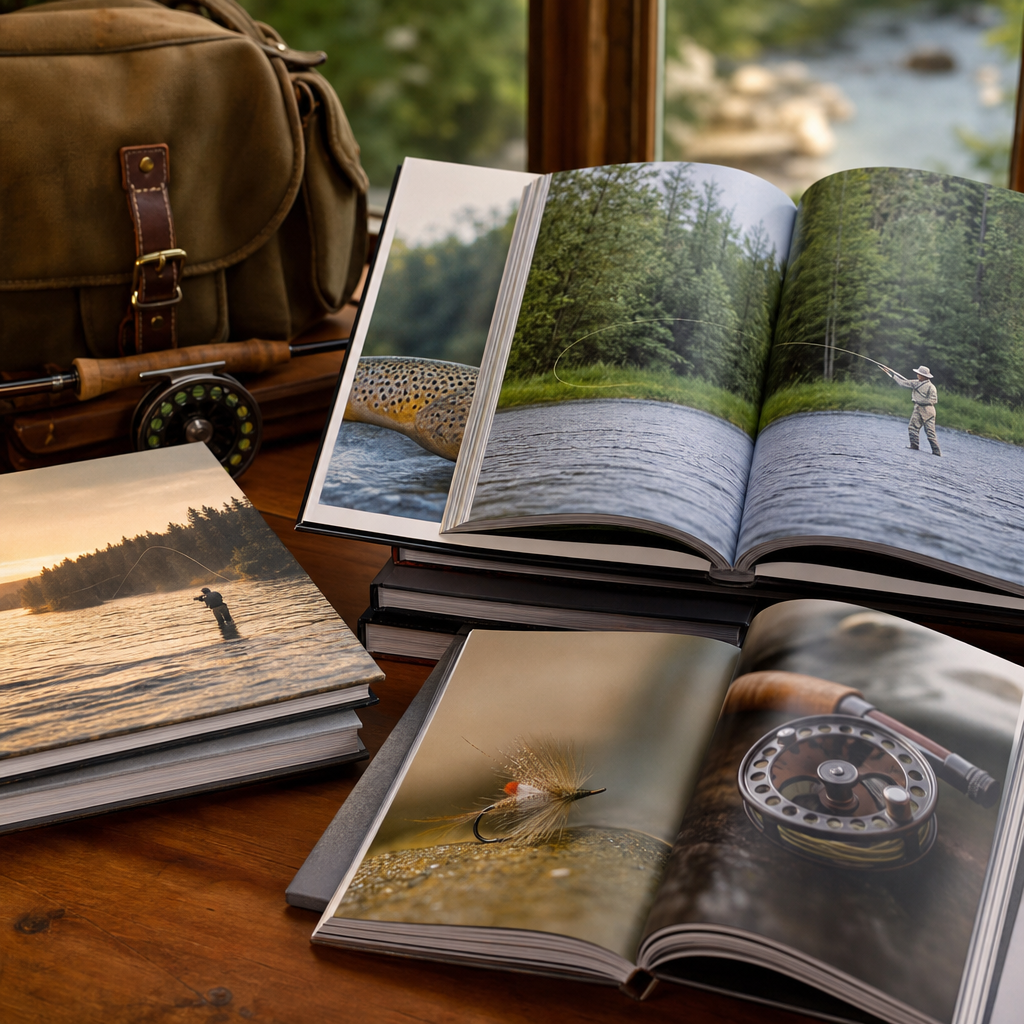
Fly fishing photography books occupy a special place in angling culture because they do more than show attractive fish pictures; they preserve rivers, techniques, personalities, and the emotional rhythm of time on the water. In a strong review of the best fly fishing photography books, the goal is not simply to rank coffee-table titles by visual appeal. It is to assess which books teach observation, capture the ethics of the sport, document important fisheries, and reward repeated study by anglers, guides, conservationists, and collectors. That matters because books remain one of the few formats where imagery, captions, essays, and sequencing work together without the distractions of a feed-based platform.
In my own work reviewing outdoor media, I have found that the best fly fishing photography books consistently do four things well: they establish a clear point of view, pair technical image quality with field authenticity, include writing that adds context rather than filler, and leave the reader with a stronger understanding of place. Key terms are useful here. A fly fishing photography book centers images of angling, rivers, fish, or the culture surrounding them. A field-driven documentary style emphasizes real conditions, imperfect weather, and lived experience. A fine-art approach prioritizes composition, light, texture, and visual storytelling. Some books blend both approaches, and those hybrids often become the most valuable long-term additions to a serious angling library.
This hub article covers book and media reviews within the broader product reviews and recommendations category, so the scope is intentionally comprehensive. It highlights standout fly fishing photography books, explains how to evaluate them, identifies who each type of book serves best, and points toward the kinds of related media a reader may want next. If you are deciding whether to buy one title, build a reference shelf, choose a gift, or find visual inspiration before a trip, this guide is built to answer those questions directly and help you spend money on books you will actually return to.
What Makes a Fly Fishing Photography Book Worth Buying
The first test is visual consistency. Many fishing books contain a handful of excellent images surrounded by generic grip-and-grin shots, weak printing, or repetitive layouts. The best books maintain a clear standard from cover to closing page. Look for intentional sequencing, varied focal lengths, moments beyond the fish itself, and images that reveal weather, current seams, camp details, boat handling, insect life, and the hands of anglers at work. Those details separate a true photography book from a souvenir album.
The second test is editorial substance. Captions should identify rivers, species, seasons, locations when appropriate, and the circumstances behind a photograph. Essays should deepen the imagery by discussing conservation pressure, regional culture, guiding realities, or technical decisions. Books that combine visual excellence with strong written framing tend to hold value longer because they can be read as well as viewed. This is especially important for fly fishing, where context shapes meaning: a brown trout in Patagonia tells one story, while a wild steelhead in British Columbia or a brook trout in the Adirondacks tells another entirely.
Printing and production quality matter more than many buyers expect. Paper stock affects tonal depth. Binding affects longevity and whether a book can lie flat for close study. Color reproduction is critical when evaluating water tones, low-light scenes, and subtle textures in fish, reeds, and cloud cover. Publishers such as Abrams, Rizzoli, and niche outdoor presses often outperform mass-market imprints on these details. When I review photography books, I always treat print fidelity as part of the product itself, not an afterthought.
Best Overall Fly Fishing Photography Books
The strongest all-around titles usually blend iconic imagery, credible writing, and a clear identity. Among the safest recommendations is The History of Fly-Fishing in Fifty Flies by Ian Whitelaw, which is not purely a photography book but deserves mention because its visual treatment, archival imagery, and object photography make it one of the most accessible visual entries into fly fishing media. For readers who want images tied tightly to angling tradition, this kind of book bridges history and aesthetics exceptionally well.
For pure modern outdoor imagery, books associated with angling photographers such as R. Valentine Atkinson stand out because they understand motion, landscape scale, and the social life around fishing. Atkinson’s published work and collaborations often capture not just fish but campfires, skiffs, weather fronts, and anglers in relation to remote water. That balance is central to a top-tier fly fishing photography book. Readers do not remember only the fish; they remember the dawn fog, the guide pushing a bow into current, and the body language of expectation.
Another high-value category includes destination-driven anthologies from lodges, outfitters, and traveling photographers. The best of these avoid becoming brochures. Instead, they document fisheries with restraint and credibility. Books focused on tarpon in the Florida Keys, Atlantic salmon in Iceland, or trout in New Zealand can be outstanding when they include ecological detail and honest depictions of conditions. If every image looks staged for a catalog, the book usually has limited shelf life. If the book shows blown casts, rain squalls, boat rash, and exhausted happiness alongside success, it tends to feel real and enduring.
Best Books for River Sense, Conservation, and Sense of Place
Some of the finest fly fishing photography books are less about individual catches and more about rivers as living systems. These are often the most important books to own because they age well. A conservation-centered title can document habitat before restoration, during conflict over access or dams, or after policy changes. That makes the book valuable as visual history, not just recreation media. Strong examples often include essays from writers, biologists, or guides who know the watershed intimately.
Look for books that treat anglers as participants in a larger landscape rather than heroes standing above it. Effective river photography includes wide environmental frames, spawning habitat, insect hatches, erosion, woody structure, estuaries, and human infrastructure. In practical terms, that helps readers understand why certain fisheries fish well, why others decline, and why stewardship matters. Books about steelhead and salmon often excel here because the migratory life cycle naturally pushes the story beyond a single day of fishing.
When reviewing these titles, I favor books that acknowledge tension. A river can be beautiful and threatened. A fishery can be productive and fragile. A lodge can support local conservation while also increasing pressure. The best photography books do not flatten those tradeoffs. They present enough detail for readers to admire the place and think critically about what sustains it. For serious anglers, that honesty gives the book more authority than polished imagery alone ever could.
Best Fly Fishing Photography Books by Reader Type
Different readers want different things from a fly fishing book, so a useful review should match titles to actual needs rather than pretend there is one universal best option.
| Reader type | Best book style | Why it fits |
|---|---|---|
| Beginner angler | Visual overview with short essays | Builds familiarity with species, landscapes, and culture without requiring technical background |
| Experienced trout angler | River-specific documentary photography | Offers deeper appreciation of water types, seasons, and regional nuance |
| Travel planner | Destination-focused anthology | Shows access style, weather, boats, lodges, and realistic expectations |
| Collector or gift buyer | Large-format fine-art hardcover | Delivers premium print quality, display value, and long-term shelf appeal |
| Conservation-minded reader | Watershed and habitat-centered title | Connects angling imagery to science, policy, and stewardship |
For beginners, a balanced book with clear captions is ideal because it provides visual literacy. New anglers often do not yet recognize the difference between spring-creek water, tailwater structure, salt flats, or spey casting environments. Good photography can teach those distinctions quickly. For advanced readers, subtlety matters more. They will notice whether an image reflects actual reading of water, proper fish handling, realistic weather, and the unglamorous details that mark authentic time afield.
Gift buyers often overvalue size and undervalue content. A large format hardcover can impress at first glance, but if the sequencing is weak or the text is generic, the book rarely gets revisited. A better gift is a book with a defined voice and strong production. The recipient should feel that the photographer knows what it means to wait through bad light, fish changing flows, and respect the places being documented.
How to Judge Authenticity in Fly Fishing Media
Authenticity is the dividing line between books that serious anglers recommend and books that stay decorative. The first clue is whether the photography includes process. Real fly fishing images show knot tying, line management, boat positioning, fly changes, net work, and the small pauses between action. A book composed only of hero shots usually signals a shallow edit. In contrast, documentary-rich books show the rhythm of a day on the water from launch to takeout.
Ethics are another indicator. Readers should examine fish handling, river crowding, and the treatment of sensitive locations. Responsible books avoid glamorizing stressed fish in warm water conditions, over-disclosing fragile fisheries, or normalizing poor handling simply because the image is dramatic. This is one place where the best modern books have improved noticeably. Many now reflect stronger catch-and-release practices and greater awareness of conservation messaging than comparable titles from decades past.
Writing also exposes authenticity quickly. Specific references to hatch timing, light angles, current speed, guide decisions, regional weather patterns, or migratory runs signal that the creators know the subject from experience. Vague text about adventure, passion, and pristine wilderness usually indicates marketing language, not field knowledge. In my reviews, I consistently rate books higher when they trust the reader with specificity. Concrete details build credibility.
Print Books Versus Digital Fly Fishing Media
Print books still offer the best experience for serious fly fishing photography. Large pages allow landscapes to breathe, sequencing creates narrative momentum, and high-quality printing reveals texture in water, feathers, skin, and weather that most screens compress. Books also slow the viewer down. That matters in a subject built on observation. Many of the strongest images in angling are quiet frames that reveal themselves over time, not instant-impact thumbnails.
Digital media still has a role. Magazine archives, documentary films, online galleries, and lodge journals can expand a reader’s understanding of destinations and photographers before purchase. Video is particularly useful for evaluating casting styles, current speed, and species behavior. However, digital work often lacks permanence and consistent editing standards. Links disappear, platforms change, and image compression can flatten strong work. A good book remains stable, citable, giftable, and easy to revisit years later.
For this reason, the smartest media buyers build in layers. Start with one or two anchor books that define your interests, then supplement with films, podcasts, and online essays. If you are creating a subtopic hub under book and media reviews, this is the logical structure: books for depth, films for motion, digital content for discovery, and magazines for seasonal updates. Each medium does a different job, but books remain the foundation.
How to Build a Strong Fly Fishing Book Collection
A useful collection should include more than beautiful trout portraits. Start with one general fly fishing visual title, one river or conservation-focused book, one destination-specific book, and one cross-disciplinary title that leans into history, flies, or outdoor culture. That combination gives a shelf both aesthetic and practical range. Over time, add regional works that match the fisheries you actually care about. Someone who fishes the Northeast should own different books than someone dedicated to flats or anadromous fish.
It is also smart to mix older and newer publications. Older books often preserve access, gear styles, and river conditions that no longer exist. Newer books tend to offer stronger ethics, better color management, and more current conservation framing. Together, they create a fuller picture of how fly fishing culture has changed. Collectors who buy only new titles often miss that historical depth.
Finally, buy selectively. A smaller shelf of well-chosen books will outperform a large stack of interchangeable titles. Read sample pages, inspect publisher quality, and prioritize authors, photographers, and editors with a clear record in the sport. If a book teaches you how to see water, understand place, and appreciate the people around the fish, it is doing more than decorating a table. It is earning its place in your library.
The best fly fishing photography books succeed because they combine art, field knowledge, and honest storytelling in a way that short-form media rarely can. A worthwhile title does not merely display fish; it explains rivers, preserves angling culture, and gives readers a credible sense of what time on the water actually feels like. Across this review, the strongest books shared the same strengths: consistent visual standards, meaningful captions and essays, high production quality, and a clear respect for both fish and place.
As a hub for book and media reviews under product reviews and recommendations, this page should guide readers toward smarter choices across the entire category. The practical takeaway is simple. Buy books that match your purpose. Choose broad visual overviews if you are new, conservation-centered titles if you care about watersheds, destination books if you are planning travel, and premium hardcovers if you want lasting gift or collector value. Evaluate authenticity carefully, and favor specificity over generic adventure branding.
If you are ready to build a better angling library, start with one excellent fly fishing photography book that reflects the way you fish or the water you dream about, then expand into adjacent book and media reviews from there. The right first title will not sit untouched on a coffee table. It will send you back to the river with sharper eyes.
Frequently Asked Questions
What should I look for when reviewing the best fly fishing photography books?
The best fly fishing photography books should be judged on much more than whether the images are attractive. A strong review starts with photographic quality, but it should also examine storytelling, subject matter, historical value, and the book’s ability to deepen a reader’s understanding of fly fishing itself. The strongest titles do not just present glossy river scenes and hero shots of trout. They show light, weather, water texture, casting posture, river habitat, fly selection, fish handling, and the subtle human moments that define the culture of the sport.
It is also important to look at whether a book rewards repeated study. The best books reveal more over time. On a first pass, a reader may notice dramatic landscapes or beautifully lit fish portraits. On later readings, the value often comes from composition, timing, body language, environmental detail, and how the photographer interprets the relationship between angler and water. A truly worthwhile title teaches observation. It trains the eye to notice currents, seasonal conditions, and the emotional tempo of a day on the river.
Another major factor is authenticity. The strongest fly fishing photography books feel rooted in the real experience of angling rather than staged around a luxury outdoor image. They reflect ethical fish handling, respect for fisheries, and an understanding of why certain rivers and species matter. Books that document notable destinations, regional traditions, famous anglers, guides, conservation stories, or changing fisheries often have more lasting value than books built only around visual spectacle.
Finally, consider production quality and editorial intent. Image sequencing, captions, essays, printing, paper stock, and layout all affect how the photographs are received. A well-made book can turn a collection of excellent images into a coherent visual narrative. In a serious review, the best fly fishing photography books are the ones that succeed as art, as cultural records, and as tools for deeper appreciation of the sport.
Why do fly fishing photography books matter beyond being coffee-table books?
Fly fishing photography books matter because they preserve a way of seeing the sport that can easily be lost in fast digital media. Online images are often disposable, viewed for a few seconds and forgotten. A carefully produced book asks the reader to slow down. It creates space for reflection, and that matters in fly fishing, where patience, observation, and memory are central to the experience. The best books do not just decorate a room. They document rivers, hatches, techniques, personalities, and places that shape angling history.
These books also serve as cultural archives. They capture how anglers dressed, how they fished, what gear they used, how certain waters looked before environmental change, and how regional traditions evolved. In many cases, a strong fly fishing photography book becomes a historical record of fisheries that have since improved, declined, or changed dramatically. That gives the work significance beyond aesthetics. It allows readers to compare eras and better understand conservation challenges, habitat loss, access issues, and the long-term health of the waters they love.
There is also an educational dimension. Good fly fishing photography can sharpen an angler’s awareness in ways that written instruction alone cannot. A photograph can reveal line control, stance, drift angle, light conditions, insect activity, or river structure in an immediate and memorable way. Even when a book is not framed as instructional, it often teaches by example. Readers absorb details about behavior on the water, the pace of a day’s fishing, and the ethics of interacting with fish and landscape.
Most importantly, the best titles preserve emotion. They communicate solitude, anticipation, failure, beauty, humor, and reverence for wild places. That emotional record is part of angling culture. A book that captures the rhythm of dawn launchings, long wades, changing weather, and quiet moments between casts can say more about fly fishing than a gear guide ever will. That is why the finest fly fishing photography books deserve to be taken seriously as lasting contributions to the sport.
Can fly fishing photography books actually help improve my skills as an angler or photographer?
Yes, the best ones absolutely can, although they usually do so indirectly rather than through step-by-step instruction. For anglers, strong photography books build visual literacy. They train readers to see water more carefully, to notice seams, depth changes, bank structure, insect conditions, and how fishable water looks under different light and weather. A great image can reveal how an angler positions for a cast, manages line, approaches a run, or moves through a river without disturbing fish. Over time, those visual lessons improve judgment on the water.
These books can also reinforce good angling ethics. Images of proper fish handling, appropriate release practices, and respectful interaction with habitat help define what responsible fly fishing looks like. In that sense, a good photography book teaches standards as much as technique. It shows that the sport is not only about catching fish but also about posture, patience, awareness, stewardship, and restraint.
For photographers, the value is equally strong. Fly fishing is notoriously difficult to photograph well. Water reflects harsh light, anglers move unpredictably, weather changes fast, and the most meaningful moments are often subtle rather than dramatic. Studying excellent books helps photographers understand timing, framing, lens choice, environmental composition, and how to balance scenic grandeur with intimate storytelling. Readers can learn how professionals handle backlit rivers, mist, overcast days, wet textures, motion, and portraits in visually chaotic natural settings.
Perhaps the biggest lesson these books offer is narrative discipline. The strongest fly fishing images are not just technically sharp; they belong to a larger story. They connect river, angler, insect life, fish, weather, and mood. A reader who studies top-tier books begins to understand how to build a sequence rather than chase isolated “perfect shots.” That perspective can improve both a person’s photography and their appreciation of what makes a day of fly fishing visually meaningful.
How can I tell whether a fly fishing photography book is truly authentic and respectful of the sport?
Authenticity in a fly fishing photography book usually comes through in the details. Books that feel genuine tend to show the full experience of angling rather than just polished trophy moments. They include preparation, travel, missed opportunities, weather, fatigue, river conditions, insects, hands, gear in use, and the landscape as habitat rather than background decoration. When a photographer understands fly fishing deeply, the images reflect that understanding. The reader can sense whether the work comes from lived time on the water or from a more superficial outdoor lifestyle aesthetic.
Respect for the sport also shows in how fish are portrayed. In the best books, fish are handled carefully, photographed efficiently, and presented as living creatures rather than props. Images do not glorify poor treatment, needless stress, or careless grip-and-grin habits. The same standard applies to rivers and wild places. A credible book acknowledges that fisheries are precious and often vulnerable. It may include captions or essays that touch on conservation, access, restoration, or the history of a watershed. That context gives the photography moral weight.
Another sign of authenticity is whether the book recognizes the human side of fly fishing culture. The strongest titles often feature guides, local anglers, camp rituals, weathered boats, old lodges, lesser-known waters, and moments of stillness that are familiar to real fishermen. They do not reduce the sport to luxury branding or endless trophy imagery. Instead, they capture humility, process, and place. This is especially important in reviews, because a visually impressive book can still feel hollow if it misses the character of the sport.
Finally, consider the voice behind the book. If the essays, captions, sequencing, and photographic choices suggest knowledge of seasons, fisheries, regional traditions, and angling ethics, that is usually a good sign. Authentic books respect the idea that fly fishing is both recreation and inheritance. They understand that photographs are not just there to impress; they are there to witness, document, and preserve what matters.
Are older fly fishing photography books still worth buying, or should I focus on newer releases?
Older fly fishing photography books are often absolutely worth buying, and in many cases they offer value that newer titles cannot match. A well-made older book may document rivers before major environmental changes, show gear and techniques from another era, and preserve the atmosphere of a period in angling history that modern books can only reference. If your goal is to understand the broader culture of fly fishing, older books can be essential because they reveal how the sport has evolved visually, ethically, and geographically.
They also tend to have a different photographic sensibility. Many older titles emphasize patience, fieldcraft, natural light, and documentary realism over hyper-saturated editing or commercial outdoor styling. That can make them especially rewarding for readers who want a deeper, more timeless portrayal of the sport. Even when the image quality reflects the technical limitations of the era, the strongest older books compensate with mood, composition, and historical significance.
That said, newer releases have clear advantages too. Contemporary books may feature improved printing, broader geographic coverage, stronger conservation context, and a more modern understanding of fish care and environmental responsibility. They may also include updated perspectives on overlooked fisheries, diverse angling communities, and current threats facing rivers and habitat. In that sense, newer books can be more relevant to today’s reader, especially if the review is meant to guide active anglers