Top fly fishing magazines remain one of the most practical ways to sharpen technique, track gear trends, and stay connected to rivers, hatches, and conservation issues throughout the year. In this guide, I cover subscriptions worth considering for anglers who want better information, not just more content. A fly fishing magazine is any recurring print or digital publication focused on tactics, destinations, equipment, fish biology, travel, and the culture surrounding the sport. The best titles do more than entertain. They teach casting, explain entomology in plain language, review rods and reels with useful detail, and highlight access, ethics, and habitat protection. That matters because anglers today have endless videos, forums, and social feeds competing for attention, yet much of that information is fragmented, promotional, or difficult to verify. Well-edited magazines still offer an advantage: experienced contributors, consistent editorial standards, seasonal planning, and photography that helps readers understand water, flies, and presentation. I have used magazines for trip preparation, hatch timing, and gear shortlists for years, and the difference between a publication that serves anglers and one that merely sells ad space becomes obvious quickly. This hub article on book and media reviews explains which fly fishing magazines deserve a place in your reading rotation, what each publication does best, how to compare print and digital subscriptions, and when a niche title may be more valuable than a broad national one.
What makes a fly fishing magazine worth subscribing to
A subscription is worth considering when a magazine consistently helps you fish better, plan trips smarter, or understand the resource more deeply. In practice, I judge fly fishing magazines on six factors: editorial quality, technical accuracy, contributor expertise, balance between storytelling and instruction, conservation coverage, and the usefulness of gear reviews. Good editorial quality shows up in tight writing, coherent article structure, and photographs that illustrate a lesson rather than simply decorate the page. Technical accuracy matters because poor advice about tippet, presentation angle, trout behavior, or knot strength can waste time on the water. Contributor expertise also matters. A respected guide writing about mending in complex currents, or a fisheries biologist explaining water temperature thresholds, adds credibility that short-form social content often lacks.
The strongest publications also respect different reader goals. Some anglers want tactical, fish-catching instruction. Others value travel inspiration, profile pieces, and essays about the places and people behind the sport. A worthwhile magazine blends those elements without losing focus. It should also acknowledge tradeoffs. For example, a gear review that praises a premium fast-action rod should note whether it demands better timing, favors distance over close-range delicacy, or performs poorly with lighter line loads. Finally, the best magazines provide durable reference value. When I am organizing shelves or digital archives, I keep issues that explain streamer retrieves in cold water, compare Euro nymphing leader formulas, or map out Western salmonfly timing by river system. Those become working resources, not disposable reading.
Top fly fishing magazines to put on your shortlist
The fly fishing magazine landscape is smaller than it was two decades ago, but several titles still stand out. Fly Fisherman is one of the broadest and most established options in the category. It regularly covers trout, bass, steelhead, salmon, saltwater species, travel, casting instruction, fly tying, and new tackle. For anglers who want a national overview and dependable technique articles, it is usually the first subscription I recommend. Its strength is range. You can find a piece on indicator adjustments for tailwaters in one issue and a destination story on Belize permit flats in the next. That breadth makes it a strong hub publication for readers building a foundational library.
American Angler is another respected choice, especially for readers who appreciate a polished mix of instruction, profiles, travel, and conservation. It tends to lean slightly more into thoughtful long-form storytelling while still providing practical content. If you enjoy the culture and history of fly fishing as much as the mechanics, this title earns serious consideration. The magazine often features experienced guides, anglers, photographers, and writers whose work carries authority without reading like a catalog.
Fly Tyer serves a more specialized audience, but for anglers who tie their own flies, it can be indispensable. Rather than trying to cover everything in the sport, it concentrates on materials, pattern design, step-by-step tying, hooks, proportions, and practical innovation at the vise. A dedicated tier may get more value from Fly Tyer than from a general-interest fly fishing title because each issue can influence what goes into the box for an entire season. For example, one well-explained article on sparse soft hackles, balanced leeches, or CDC emergers can alter both confidence and results on the water.
Tail Fly Fishing Magazine deserves attention if visual quality and destination-driven editorial are high priorities. It is known for strong photography and an independent feel that appeals to anglers who want a modern, design-forward publication. Depending on the issue, it may feel less like a pure tactics manual and more like a blend of travel journal, culture magazine, and field notebook. That is a strength for readers who already have basic skills and want richer storytelling.
| Magazine | Best For | Primary Strength | Possible Limitation |
|---|---|---|---|
| Fly Fisherman | Broad audience | Wide range of techniques, species, and destinations | Less depth on niche topics in any single issue |
| American Angler | Readers who like instruction plus culture | Strong writing and balanced editorial mix | May feel less tactical than highly specialized titles |
| Fly Tyer | Dedicated fly tiers | Deep, practical tying content | Narrower appeal for anglers who do not tie |
| Tail Fly Fishing Magazine | Travel and photography oriented readers | Distinctive visual presentation and destination features | Instructional density can vary by issue |
Regional magazines can also be subscriptions worth considering, especially if most of your fishing happens in one area. A Rocky Mountain, Pacific Northwest, or Southeastern publication may provide more relevant hatch charts, access updates, and river-specific seasonal timing than any national title. In my experience, regional publications often outperform national magazines when you want information that converts directly into local success, such as when caddis pupae become more important than mayfly dries on a specific watershed.
How print and digital subscriptions compare in real use
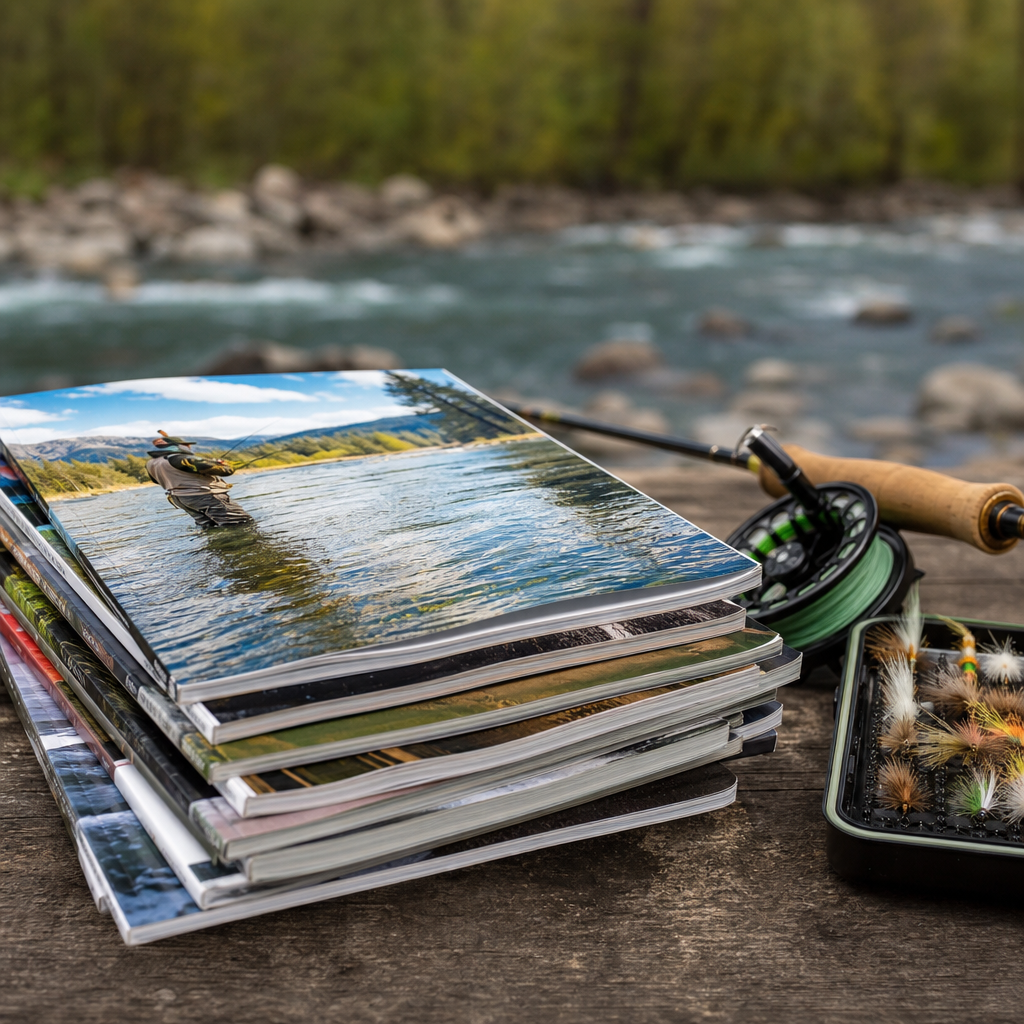
Print versus digital is not just a format preference; it changes how you use the information. Print magazines are easier to browse deeply, annotate, and revisit by season. Many anglers retain print issues in stacks organized by topic or time of year. I still pull winter issues before spring runoff because flipping through marked pages is faster than searching scattered bookmarks. Print also gives photography room to work. Reading a piece on reading seams, side channels, and foam lines is simply easier when the image layout is spacious and intentional.
Digital subscriptions, however, have practical advantages. They save storage, offer immediate access, and often include searchable archives. If you travel frequently or fish many regions, having years of issues on a tablet is genuinely useful. Searchability is the biggest advantage. When you can instantly find every archived article on small-stream terrestrials, Skagit heads, or carp flies, the subscription becomes a research tool. Digital access can also broaden the economics of niche publishing by lowering distribution costs, which helps some titles survive and maintain editorial quality.
The downside to digital is retention. Many readers skim rather than study on screens, which reduces the teaching value of long-form instruction. Pay attention to access terms before subscribing. Some magazines bundle print and digital. Others provide app-based access that can be clunky or limit offline reading. If your main goal is building a dependable reference library, print or combined plans often provide the best value. If your goal is convenience and rapid search, digital usually wins. For many serious readers, the best answer is one general-interest print title plus one specialized digital subscription.
How to choose the best fly fishing magazine for your style and skill level
The best fly fishing magazine depends on where you are as an angler and what information gap you need to fill. Beginners usually benefit most from a broad title with regular basics on casting, leaders, knot systems, insect identification, and gear selection. A magazine that assumes too much prior knowledge can be discouraging, while a solid all-around publication builds vocabulary and confidence. Intermediate anglers often get the most value from magazines that explain adjustment: how to change depth, angle, fly size, shot placement, or retrieve when fish refuse standard presentations. At that stage, nuance matters more than basics.
Advanced anglers should look for specialization and originality. If you already understand drag-free drift, reach casts, and hatch matching, you need magazines that offer sharper distinctions, such as when to fish a jig streamer on a tight line versus a swung presentation, or how water clarity changes the ideal profile of a sculpin pattern. Saltwater fly anglers may need an entirely different editorial focus from trout anglers. The same goes for readers primarily interested in warmwater species, Atlantic salmon tradition, spey casting, or tying exact imitations.
Also consider your reading intent. If you want one title that keeps you current across the whole sport, subscribe broadly. If you want to improve one part of your game fast, subscribe narrowly. Another useful filter is ad-to-editorial balance. Every magazine needs advertising revenue, but the strongest publications separate reviews from promotion and provide enough comparative detail to help buyers make sound decisions. I trust a rod review more when the writer discusses swing weight, recovery speed, grain window, and line pairing instead of generic claims about power and feel. That level of precision usually signals a publication worth keeping.
Why magazines still matter in a video-first fishing media landscape
Many anglers now learn from YouTube, Instagram, podcasts, and online forums, so it is fair to ask whether fly fishing magazines still matter. They do, because magazines organize knowledge in a way faster media usually does not. A good article has an editor, a beginning, a tested thesis, supporting examples, and enough space to explain why a tactic works under certain conditions and fails under others. Short video can demonstrate a cast or knot well, but it often skips context. Magazines preserve context.
They also create a durable record of the sport. Conservation fights over dam removal, access law, native fish protection, and warming rivers unfold over years, not posts. Magazine archives capture those developments with more continuity than social feeds ever will. For destination planning, magazines also outperform algorithm-driven content because the best writers include shoulder seasons, crowd patterns, permit requirements, local guide expectations, and weather windows instead of chasing only the most photogenic weeks. In that sense, subscribing is not just about entertainment. It is about building an informed relationship with fisheries and with the broader culture of angling.
For a book and media reviews hub, magazines also connect naturally to adjacent resources. Readers who enjoy detailed destination writing often graduate to travel anthologies and memoirs. Fly tiers often move from magazine patterns to full tying manuals. Anglers interested in river ecology may branch into fisheries science books, conservation journalism, and documentary films. A strong magazine subscription acts like an anchor for that entire learning ecosystem.
Final recommendations for building a useful subscription lineup
If you want the simplest recommendation, start with one broad, reputable fly fishing magazine and add one specialized title that reflects your actual habits on the water. For many readers, that means a subscription to Fly Fisherman or American Angler, then a second subscription such as Fly Tyer if you spend winter at the vise. If travel and visual storytelling are your priority, add Tail Fly Fishing Magazine instead. If most of your fishing is concentrated in one region, seriously consider replacing the second national title with a regional publication that tracks your home water more closely.
The main benefit of subscribing to top fly fishing magazines is not volume. It is having curated, credible information arrive consistently enough to improve decisions over a full season. Better decisions mean smarter fly selection, more efficient trip planning, better gear purchases, and a deeper understanding of rivers and fish. That is why subscriptions are still worth considering, even in a crowded digital media environment. Choose publications that match your species, water types, and learning style, then read them actively by saving useful issues and revisiting seasonal material before each trip. If you are building out your book and media reviews library, start with one subscription this month and evaluate it after a season on the water.
Frequently Asked Questions
What should I look for when choosing a fly fishing magazine subscription?
The best fly fishing magazine for you depends on what you actually want to improve. Some titles focus heavily on on-the-water tactics such as reading currents, matching hatches, nymphing systems, streamer presentation, and seasonal approaches for trout, bass, or saltwater species. Others lean more toward destination travel, conservation reporting, gear reviews, photography, and the broader culture of fly fishing. A good subscription should match your experience level and the kind of fishing you do most often, whether that is small-stream trout, western rivers, warmwater, steelhead, or flats fishing.
It is also smart to evaluate the quality of the writing and editorial standards. Strong magazines publish instruction from credible guides, experienced anglers, biologists, and well-respected outdoor writers rather than filling pages with generic advice. Look for issues that consistently offer useful, specific information you can apply on the water, not just broad inspiration. Regular features on entomology, fly patterns, knot systems, rigging, fish behavior, access issues, and conservation can make a subscription much more valuable over time.
Format matters too. Some anglers still prefer print because it is easier to read closely, save for later, and reference before trips. Others prefer digital access for convenience, searchable archives, and reading on phones or tablets. If a publication offers both, that can be the best of both worlds. Finally, consider whether the magazine stays current with changing gear trends, fisheries management issues, and regional opportunities. The most worthwhile subscriptions help you become a better-informed angler month after month, not just entertain you for an afternoon.
Are print fly fishing magazines still worth subscribing to in the digital age?
Yes, for many anglers they absolutely are. While there is no shortage of online fly fishing content, magazines still provide something increasingly rare: curated, edited, and organized information. Instead of sorting through scattered blog posts, videos, and social media opinions, a quality magazine delivers a deliberate mix of instruction, gear analysis, destination features, seasonal tactics, and conservation reporting in one place. That editorial filtering is valuable because it often means the content has been checked, refined, and presented with more depth than you typically find online.
Print magazines also encourage a slower, more focused kind of learning. A detailed feature on midge tactics, leader design, stillwater strategy, or fish handling practices often lands better when you can sit down and read it without digital distractions. Many anglers keep back issues for years because they become a library of references on fly patterns, hatch timing, river profiles, and equipment comparisons. That long-term usefulness is one reason print still holds up well in a niche sport like fly fishing.
That said, digital subscriptions can be equally worthwhile if convenience is your priority. Digital editions are easier to access while traveling, often cost less, and may include archives that let you search past issues by topic. For anglers who want portability and instant access, that can be a major advantage. In practical terms, the value is less about print versus digital and more about whether the magazine consistently delivers trustworthy, actionable information. If it does, the subscription is worth considering in either format.
Can a fly fishing magazine actually help me become a better angler?
It can, especially if you treat it as a learning tool instead of casual reading. The strongest fly fishing magazines break down skills in ways that are useful for anglers at nearly every level. They often cover topics such as rigging adjustments, presentation angles, line control, strike detection, fly selection, seasonal fish movement, and reading water under different flows and light conditions. Those details matter because small technical improvements are often what separate random success from consistent results.
Magazines are also helpful because they expose you to patterns and ideas outside your normal routine. An angler who mostly fishes local trout water may learn valuable lessons from articles on carp behavior, saltwater strip sets, warmwater structure, or steelhead swing speed. Even when the species differ, the underlying principles of observation, presentation, and fish behavior often carry over. Good publications also introduce you to better questions, such as why fish hold in one seam over another, when to shorten a leader, or how water temperature changes feeding windows.
Another benefit is repetition. Seeing recurring advice across issues from different experts reinforces sound fundamentals. Over time, that builds judgment. You start recognizing common patterns in insect activity, gear choice, approach angles, and fish response. Of course, reading alone will not replace time on the water, but it can make your time on the water far more productive. A magazine subscription is often most valuable when it helps you test smarter ideas, avoid common mistakes, and continue learning between trips.
What kind of content separates the best fly fishing magazines from average ones?
The best fly fishing magazines balance instruction, reporting, and storytelling without becoming too shallow in any one area. Strong tactical articles are a big differentiator. Instead of saying to “fish deeper” or “match the hatch,” top publications explain how to adjust weight, indicator spacing, leader construction, retrieve speed, fly size, drift angle, and water coverage based on real conditions. That level of specificity gives readers information they can actually use.
Reliable gear coverage is another sign of quality. The best magazines do more than repeat manufacturer claims about rods, reels, waders, boots, packs, lines, and accessories. They compare performance, discuss trade-offs, and explain which products suit different budgets and fishing styles. Good destination features also stand out because they go beyond scenic descriptions to cover timing, access, species, regulations, weather patterns, guide considerations, and practical trip planning.
Just as important is thoughtful conservation coverage. Fly fishing is closely tied to habitat quality, water access, native fish protection, river restoration, and fisheries policy. The strongest titles treat these topics as central to the sport rather than side issues. Add in compelling photography, strong editing, respected contributors, and a tone that informs rather than oversells, and you have the kind of magazine that earns repeat reading. In short, the best publications help anglers fish smarter, buy more carefully, travel more intentionally, and understand the resource more deeply.
How often should I read fly fishing magazines, and how can I get the most value from a subscription?
You will get the most value from a fly fishing magazine if you read it with purpose instead of skimming it once and setting it aside. A good approach is to read each issue in layers. Start with the seasonally relevant pieces, such as early spring nymphing, summer terrestrials, stillwater tactics, fall streamer fishing, or winter midge strategies. Then go back to the gear reviews, conservation reports, destination features, and longer essays. That helps you immediately apply what is timely while still absorbing the broader knowledge in the issue.
It also helps to save and organize articles that match your fishing goals. If you are working on euro nymphing, dry-dropper setups, streamer retrieves, or saltwater fundamentals, keep a few standout articles bookmarked or clipped for future reference. Many anglers build their own mini library this way. Before a trip, revisit pieces on local insects, seasonal flows, destination logistics, and recommended gear systems. Before buying equipment, compare review language across multiple issues instead of reacting to one headline or one ad-heavy feature.
For the best results, pair reading with practice. Pick one concept from an article and test it on your next outing, whether that is changing tippet length, adjusting your wading angle, fishing a different seam, or simplifying your fly selection. That process turns passive reading into measurable improvement. A magazine subscription is most valuable when it becomes part of your regular fishing rhythm: read, note, test, adjust, and repeat. Done that way, even a handful of strong issues per year can improve your knowledge and sharpen your decisions on the water.