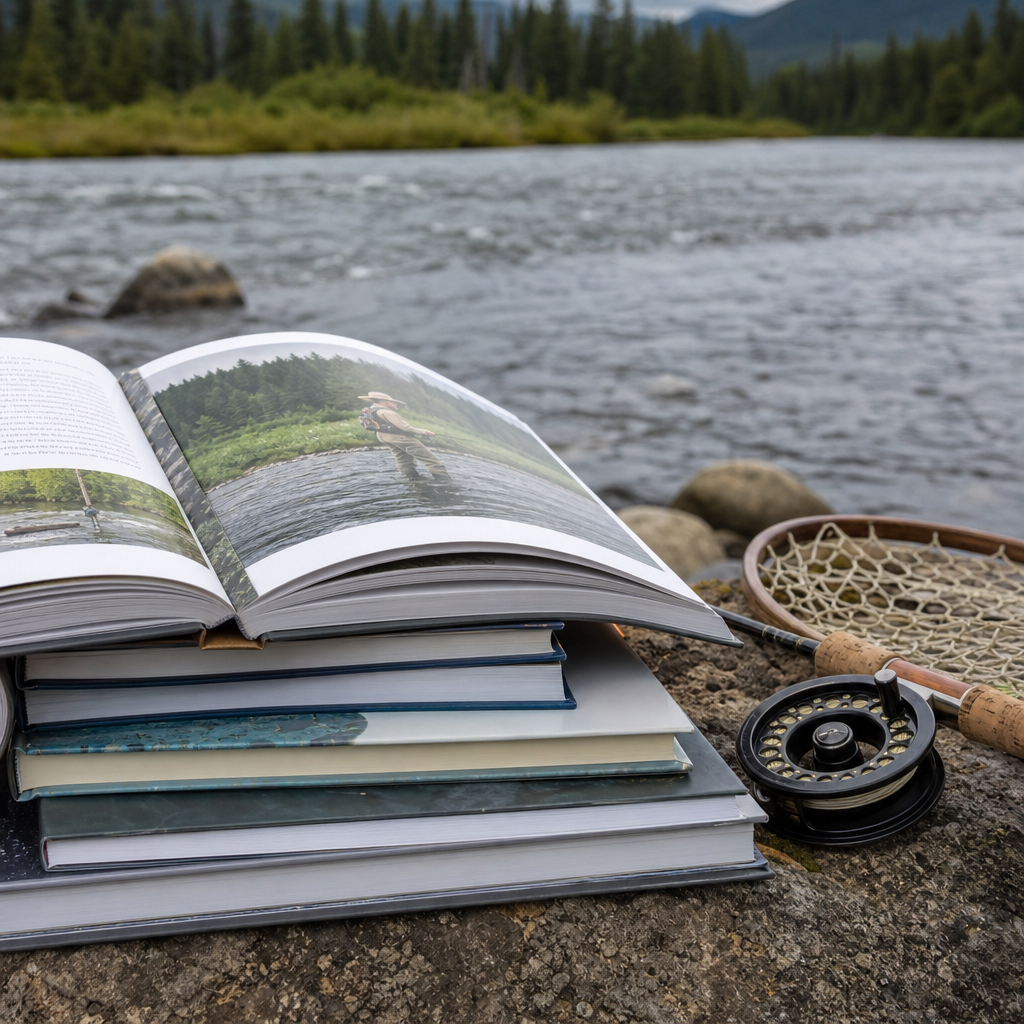
Best advanced fly fishing technique books do more than list clever tricks; they teach anglers how to think on the water, diagnose failure, and adapt presentations to current, insects, structure, weather, and fish behavior. In the book and media reviews corner of product reviews and recommendations, this hub matters because experienced fly fishers rarely plateau from lack of effort. They plateau because they keep repeating familiar methods instead of studying better ones. Advanced technique books close that gap. They translate river hydraulics, entomology, casting mechanics, leader design, and tactical decision-making into repeatable systems. I have used many of these titles while guiding, preparing for difficult tailwater days, and troubleshooting my own bad habits, and the difference between average books and genuinely useful ones is obvious after a few hard seasons. The best titles hold up on the river, not just in an armchair.
For this hub, advanced means the material goes beyond beginner casting, basic knot instruction, and generic “match the hatch” advice. Technique books in this category focus on specialized skills such as contact nymphing, streamer presentation, dry-fly drag control, reading complex seams, fishing spring creeks, stillwater strategy, and saltwater sight-fishing. They may also cover supporting disciplines like fish vision, aquatic insect lifecycles, or line control under changing current speeds. Media includes traditional print books, field manuals, annotated photography, and, where relevant, companion video resources from recognized instructors. A useful review hub must tell readers which books deserve shelf space, why they matter, and how each fits a larger learning path. That is what this page does: it explains the standards for evaluating fly fishing books, highlights the strongest advanced technique titles, and shows how to build a serious angling library that improves performance rather than collecting dust.
What Makes an Advanced Fly Fishing Technique Book Worth Buying
The best advanced fly fishing books solve real fishing problems with enough detail that you can apply the lesson on your next trip. I look first for clarity around conditions, because “use a nymph rig” is not instruction. Good authors explain where the method fits: pocket water versus broad riffles, winter midge activity versus summer caddis emergence, high-stick contact in shallow runs versus indicator suspension in deep slots. Authors such as George Daniel, Gary Borger, and Kelly Galloup stand out because they define variables, then show how to adjust angle, depth, speed, and fly choice. That specificity is what separates a serious technique manual from a coffee-table fishing book.
Durability of information also matters. Tactics should rest on principles that survive changes in gear trends. Euro nymphing books, for example, are strongest when they explain strike transmission, leader sag, fly density, and positioning relative to current speed, not just brand-specific rods or competition jargon. The same standard applies to dry-fly or streamer texts. A useful book teaches line control, fish behavior, and presentation logic in a way that remains valuable whether you fish bamboo, graphite, mono rigs, or integrated lines. In my experience, books built on first principles become references for years, while trend-driven books fade quickly.
Finally, strong reviews must judge evidence and usability. Does the author use diagrams, stream photographs, leader formulas, and fly illustrations that actually clarify technique? Are there case studies from pressured rivers, not only idealized situations? Does the book acknowledge tradeoffs, such as the reduced margin for error in long-leader nymph systems or the fatigue and fly-loss associated with heavy streamer fishing? Trusted recommendations should answer those questions directly because anglers shopping in the book and media reviews category want practical value, not broad enthusiasm.
Core Titles Every Serious Angler Should Know
If you want a short list of foundational advanced fly fishing books, start with George Daniel’s Dynamic Nymphing, Gary Borger’s Presentation, Kelly Galloup’s streamer-focused works including Modern Streamers for Trophy Trout, and Dave Hughes’s selective dry-fly titles. Each contributes a distinct tactical framework. Daniel breaks down contact nymphing systems with exceptional detail on leader design, sighter use, weighting, and maintaining direct connection in varying current speeds. Borger remains essential because he treats presentation as the central problem in fly fishing. His discussions of drag, slack, reach, aerial mends, and angle changes still explain why fish reject flies that appear otherwise correct.
Galloup is indispensable for anglers targeting larger trout with articulated patterns and aggressive retrieves. What makes his books valuable is not simply that he recommends big streamers; it is the way he pairs fly design with water type, light levels, fish mood, and retrieve cadence. He is especially strong on reading ambush water and changing rod movement to trigger following fish. On the dry-fly side, authors like Hughes and Borger remain useful because they explain refusal analysis. When a fish rises but does not eat, the problem may be profile, footprint, drift path, micro-drag, tippet diameter, or timing. Good books separate those variables clearly.
Readers building a hub-level fly fishing library should also include books that widen technique beyond trout. Lefty Kreh’s casting and saltwater texts sharpen loop control, accuracy, and fish-fighting fundamentals that transfer directly to freshwater. Bob Popovics’ work on saltwater flies and presentation develops a more disciplined understanding of profile, sink rate, and current movement. Even if your primary fishing is for trout, exposure to multiple fisheries makes you more tactically flexible, and the best product recommendations reflect that broader value.
Best Books by Technique Category
Choosing the best advanced fly fishing technique books becomes easier when grouped by fishing style. Different books answer different on-the-water questions, and a smart media hub should help readers match their next purchase to the skill gap causing the most missed fish.
| Technique category | Recommended title | Why it stands out |
|---|---|---|
| Contact nymphing | Dynamic Nymphing by George Daniel | Detailed leader systems, strike detection, weighting logic, and positioning for tight-line control. |
| Presentation fundamentals | Presentation by Gary Borger | Still one of the clearest explanations of drag prevention, slack management, and drift engineering. |
| Streamer tactics | Modern Streamers for Trophy Trout by Kelly Galloup | Strong on fly design, retrieve cadence, predator behavior, and reading ambush structure. |
| Stillwater strategy | Stillwater Fly-Fishing Secrets by Hal Janssen | Excellent treatment of depth control, chironomids, structure, and lake-season behavior. |
| Saltwater sight-fishing | Books by Lefty Kreh and Bob Popovics | Authoritative on casting accuracy, current awareness, line speed, and baitfish imitation. |
For nymph anglers, no category offers faster measurable improvement than contact-system instruction. Daniel’s work gives anglers an actionable framework for leader formulas, rod angle, and fly placement that reduces guesswork. On pressured tailwaters, the ability to maintain near-direct contact without dragging flies unnaturally often determines whether you detect soft takes at all. For streamer anglers, Galloup’s books are most useful when fish are following but not committing. His explanation of figure-eight finishes, hang-down awareness, and directional changes has helped many anglers convert inspection into strikes.
Stillwater and saltwater books deserve more attention in advanced trout circles than they usually get. Hal Janssen’s lake material is rigorous on depth, temperature bands, and invertebrate behavior, which trains anglers to think in three dimensions. Saltwater books by Kreh and Popovics improve casting discipline under wind and time pressure. That matters when a twenty-inch brown appears against the far bank for only two seconds; your “trout cast” is suddenly a sight-fishing cast, and saltwater instruction becomes directly relevant.
How to Read Technique Books So They Improve Your Fishing
Buying excellent books is only the start. Most anglers absorb too little because they read passively. The most effective method I have found is to read with a specific recurring problem in mind: missed takes on the sighter, trout refusing downstream emergers, poor depth control on indicator rigs, blown shots at moving fish, or streamers tracking too high. Then mark the exact passages that diagnose that issue. Good books become much more useful when tied to one performance problem at a time rather than treated as general inspiration.
Translate every chapter into field experiments. If a book recommends changing leader butt stiffness to improve turnover under wind, test that change on your next outing and record what happened. If an author argues that your body position should be more square to the drift in contact nymphing, fish two runs that way before returning to your old stance. I keep notes on rig formulas, successful drifts, and failed adjustments because memory overstates what worked. Serious anglers benefit from treating books the way coaches treat training plans: as hypotheses to test under varied conditions.
It also helps to pair books with maps, hatch charts, and video from reputable instructors. A text on mending becomes far clearer when you compare its diagrams with actual current seams on your home river. A chapter on caddis behavior gains value when checked against stream samples and observed emergence timing. The strongest learning path in book and media reviews is not book versus video; it is book plus river observation plus deliberate practice. That combination produces durable skill.
How This Hub Connects Book and Media Reviews
As a sub-pillar hub under product reviews and recommendations, this page should help readers navigate future reviews across book and media formats. Individual articles can branch from here into focused reviews of nymphing books, streamer books, stillwater manuals, saltwater classics, casting DVDs, entomology references, and digital video courses. That internal structure matters because anglers often search by immediate need rather than by format. One reader wants the best euro nymphing book. Another wants the best fly casting video for advanced loop control. A useful hub connects both intents through clear categories and shared evaluation criteria.
Those criteria should remain consistent across every review in this section. Assess instructional clarity, transferability to real fisheries, depth of illustrations, quality of sequencing, evidence from field use, and relevance to different skill levels. Also note whether the resource is tactical or conceptual. Tactical books tell you exactly how to rig, cast, or present in specific situations. Conceptual books explain fish behavior, hydraulics, or entomology that support many tactics. The strongest angling libraries include both. Readers should know whether they are buying a direct problem-solver or a deeper framework builder.
This hub is also the right place to set expectations about limitations. No single book covers every river style, species, or regional hatch pattern. Competition-derived nymph books may underemphasize traditional indicator methods. Streamer books focused on trophy trout may not serve small-stream anglers. Saltwater titles may assume access to flats skiffs or coastal species. Honest recommendations make those boundaries clear so buyers spend wisely and build a library that matches their water, goals, and budget.
Choosing the Right Book for Your Water and Goals
The best advanced fly fishing technique book for you depends less on prestige than on where and how you fish. If you spend most days on freestone trout streams, prioritize books on current reading, short-line control, and dry-dropper adjustments. If your home water is a technical tailwater, books on small-fly nymphing, midge behavior, fluorocarbon diameters, and precise drag reduction will pay off faster. For lake anglers, a stillwater text that teaches shoal structure, chironomid depth, and retrieve pacing can improve catch rates more than another river book ever will.
Think about learning style as well. Some books are dense manuals with formulas, diagrams, and competition-level detail. Others teach through stories and on-stream examples. Neither approach is inherently better, but your retention matters. I recommend one foundational presentation book, one specialization book tied to your primary fishery, and one stretch book outside your comfort zone. That mix keeps skill development balanced. It gives you durable principles, immediate tactical help, and exposure to new ways of solving problems.
Price should be a secondary factor. A well-used $35 technique book that helps you interpret current seams, improve drift quality, and detect subtle takes is one of the least expensive upgrades in fly fishing. It often returns more value than a premium fly line or another rod for a niche use case. Start with a shortlist, buy intentionally, annotate heavily, and revisit the best chapters before demanding trips. That habit turns a shelf of books into a working system for better fishing.
The best advanced fly fishing technique books earn their place by making anglers more observant, more adaptable, and more precise. They explain not just what to do, but why a method works in one seam, season, or hatch and fails in another. For a book and media reviews hub under product reviews and recommendations, that is the standard that matters most. Readers need guidance that separates foundational references from attractive but shallow titles, and they need a clear path to related reviews across nymphing, streamer fishing, casting, stillwater, saltwater, and entomology resources.
If you build your library around proven authors such as George Daniel, Gary Borger, Kelly Galloup, Lefty Kreh, Bob Popovics, Dave Hughes, and Hal Janssen, you will cover the major advanced disciplines with credible instruction. Then the real work begins: study one problem, test one adjustment, and let results on the water decide what stays in your system. That process is how technique books become fish in the net rather than ideas on a page.
Use this hub as your starting point, then move into the specific reviews that match your home water, target species, and next skill goal. Choose deliberately, read actively, and fish with intention.
Frequently Asked Questions
What makes a fly fishing book truly “advanced” rather than just intermediate or beginner-friendly?
An advanced fly fishing technique book goes beyond basic casting mechanics, simple fly selection, or introductory water reading. Instead of telling you what to do in a general sense, it explains why a specific approach works under certain conditions and fails under others. The best advanced titles teach anglers how to make decisions in real time by connecting fish behavior, current seams, insect activity, seasonal timing, weather changes, water temperature, structure, and presentation angles. They are less about memorizing fixed rules and more about building a problem-solving framework you can apply on any river, lake, or tailwater.
Another clear difference is depth. Beginner books often focus on the fundamentals of gear, knots, basic entomology, and standard presentations. Advanced books assume you already know those basics and are ready to refine drift control, line management, leader design, streamer manipulation, nymphing systems, dry fly drag prevention, mending strategy, and tactical adjustments based on fish response. They often include nuanced discussions of failure points such as micro-drag, conflicting currents, poor angle of approach, unnatural speed, or choosing a fly pattern that looks correct but behaves incorrectly in the water.
The strongest advanced books also teach observation. They help experienced anglers diagnose situations rather than rely on habit. If trout refuse an otherwise accurate imitation, an advanced book helps you consider whether the issue is depth, drift speed, silhouette, emergent stage, light level, pressure from other anglers, or your position relative to the fish. That is what separates an advanced resource from a book that simply compiles tips. The best ones sharpen judgment, increase adaptability, and help anglers stop repeating the same familiar methods when conditions demand a more thoughtful response.
How can advanced fly fishing books help experienced anglers improve if they already spend a lot of time on the water?
Time on the water is essential, but experience alone does not always lead to improvement. Many skilled anglers hit a plateau because they keep practicing the same strengths instead of confronting their weaknesses. Advanced fly fishing books can break that cycle by exposing blind spots. A good book can reveal why a proven angler consistently struggles in complex currents, misses streamer follows without converting them to eats, fails to detect subtle takes on pressured fish, or cannot adjust effectively when a hatch changes stage. In that way, a strong technique book acts almost like a coach, helping you interpret your own fishing more accurately.
These books are especially useful because they compress years of hard-earned insight into a form you can study repeatedly. On the water, even excellent anglers may misread cause and effect. They may think a pattern change solved the problem when the real difference was depth, angle, or timing. Advanced books slow the game down. They explain systems, variables, and recurring scenarios in a way that lets you review them before and after a trip. That reflection is powerful because it turns random experience into deliberate learning.
They also broaden your tactical range. An angler who mainly succeeds with one nymphing style, one streamer retrieve, or one dry fly setup may do well in familiar conditions but stall when faced with difficult fish or new water types. Advanced books push you to think in terms of options. They show when to change leader length, adjust weight placement, alter casting angle, target softer edges of structure, fish a different layer of the water column, or modify presentation speed. That versatility is often what separates very good anglers from consistently excellent ones. Reading the right books will not replace time on the water, but it can make every hour on the water far more productive.
What topics should I look for in the best advanced fly fishing technique books?
The best advanced fly fishing books usually cover more than one narrow technique, even if they specialize in a particular discipline. At a minimum, look for strong material on reading water, current interaction, fish positioning, presentation control, strike detection, leader and tippet strategy, fly behavior in the water, and how environmental changes affect feeding. Books that explain the relationship between current speed and drag, or between insect stage and trout feeding lane, tend to be much more useful than books that only list patterns or anecdotal success stories.
If you are evaluating a title for serious value, pay attention to whether it teaches diagnostic thinking. For example, does it explain why trout may refuse a dead-drift nymph in one run but chase a slightly animated pattern in another? Does it discuss how fish shift lies under changing light, flow, and angling pressure? Does it cover when to fish deeper versus shallower, slower versus faster, or more aggressively versus more subtly? Advanced readers benefit most from books that address not just methods but decision-making triggers. That is where lasting improvement comes from.
It is also worth seeking books with detailed treatment of specialized areas such as advanced nymphing systems, tight-line methods, dry-dropper refinements, technical dry fly presentations, streamer line and sink-rate choices, stillwater depth control, and hatch-specific tactics. Books that include diagrams, drift paths, rigging setups, and scenario-based examples are often especially valuable because they help translate abstract concepts into practical action. The strongest titles will make you rethink familiar water, notice details you used to overlook, and approach each fishing situation with a more disciplined and adaptable tactical plan.
Are advanced fly fishing books still useful now that there are so many videos, podcasts, and online tutorials?
Yes, absolutely. Videos, podcasts, and online tutorials are excellent supplements, but advanced books still offer major advantages that shorter media often cannot match. A well-written book gives a complete framework instead of isolated tips. It allows an expert angler to move through a topic in a structured way, seeing how observation, strategy, rigging, presentation, and adaptation connect. That depth matters because advanced fly fishing is rarely about one trick. It is about integrating many small decisions that influence one another.
Books also encourage slower, more analytical learning. A short video may show how to perform a reach mend or animate a streamer, but it often does not fully explain when that tactic is appropriate, what problem it solves, how current speed changes the outcome, or what signs indicate you should abandon it. A strong technique book usually explores those layers in detail. You can highlight sections, revisit diagrams, compare passages, and use the material as a reference before trips or during post-trip analysis. That kind of study is especially valuable for experienced anglers trying to refine judgment rather than merely copy a visible motion.
Another benefit is credibility and coherence. The best advanced books are usually built from a long track record of guiding, competition, scientific observation, or decades of focused angling. They tend to present tested systems rather than scattered opinions. Online content can be helpful, but it is often fragmented, rushed, or geared toward quick consumption. A quality book gives you a more stable learning foundation. In practice, the best approach is not choosing books instead of other media. It is using books as the backbone of your learning, then reinforcing the concepts with videos, podcasts, and time on the water.
How do I choose the right advanced fly fishing technique book for my goals and fishing style?
Start by identifying where you actually need improvement, not just what seems interesting. Many anglers buy books on popular topics without considering whether those subjects address their real limitations. If you struggle with strike detection, depth control, and rig efficiency, a deep nymphing book may help more than a broad general title. If your challenge is technical surface fishing on flat water, look for books focused on dry fly drag, leader construction, hatch behavior, and trout feeding rhythm. If you fish large rivers or chase aggressive predators, a sophisticated streamer title may be the better investment. Matching the book to your most common fishing situations will usually produce the fastest gains.
You should also consider the author’s perspective and teaching style. Some advanced books are highly technical and analytical, which is ideal for anglers who like systems, diagrams, and detailed rigging logic. Others are more tactical and situational, built around reading water, adjusting to fish mood, and making on-the-fly decisions. Neither style is automatically better. The right choice depends on how you learn best. Look for authors who explain not only what they do, but why they do it, when they change it, and what signs tell them a tactic is not working. That explanatory depth is one of the strongest indicators of a worthwhile advanced book.
Finally, choose books that challenge your assumptions. The best advanced fly fishing technique books do not just confirm what you already believe. They give you a new way to interpret refusal, inactivity, changing current, insect transitions, structure, weather shifts, and angling pressure. In the product reviews and recommendations space, that matters because experienced anglers usually do not need more generic advice. They need resources that help them think more clearly, adapt more quickly, and stop falling back on familiar methods when the fish demand something better. If a book makes you reconsider how, where, and why you present a fly, it is probably worth your time.