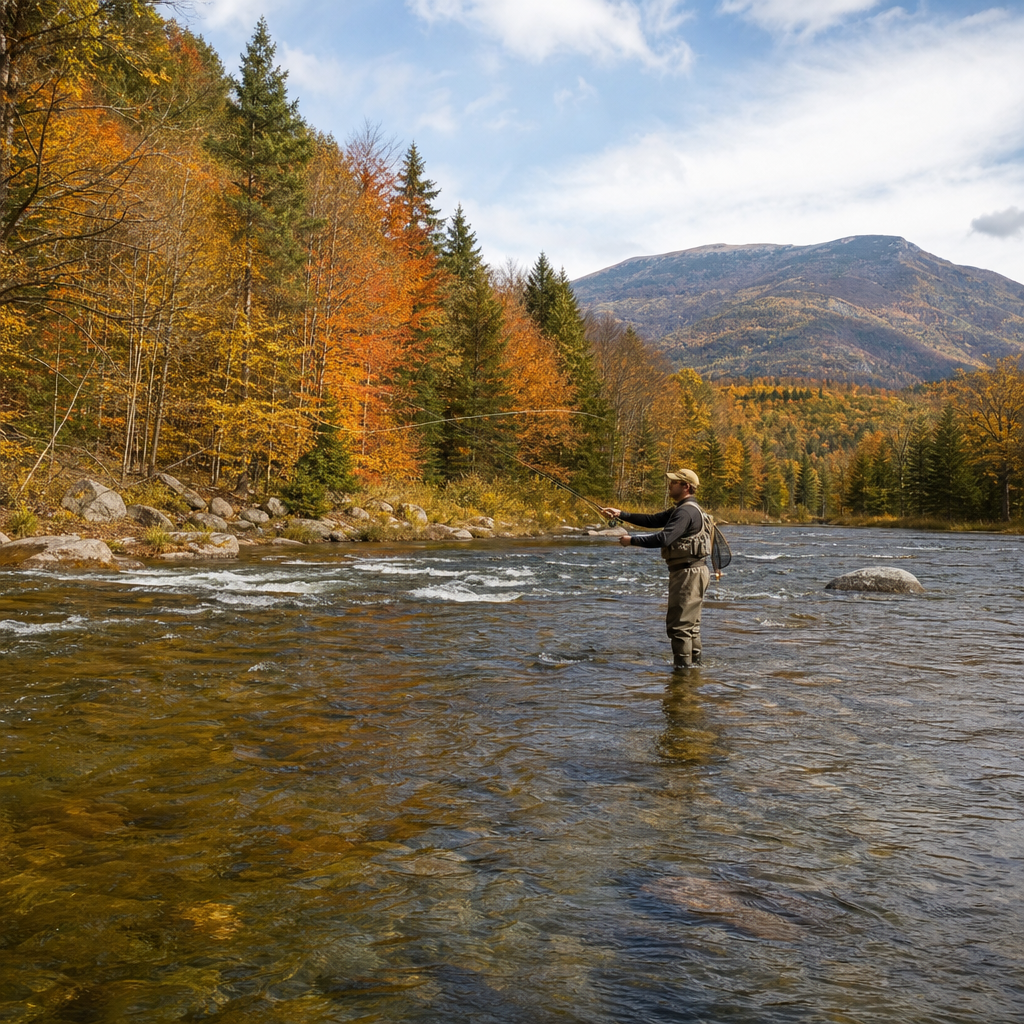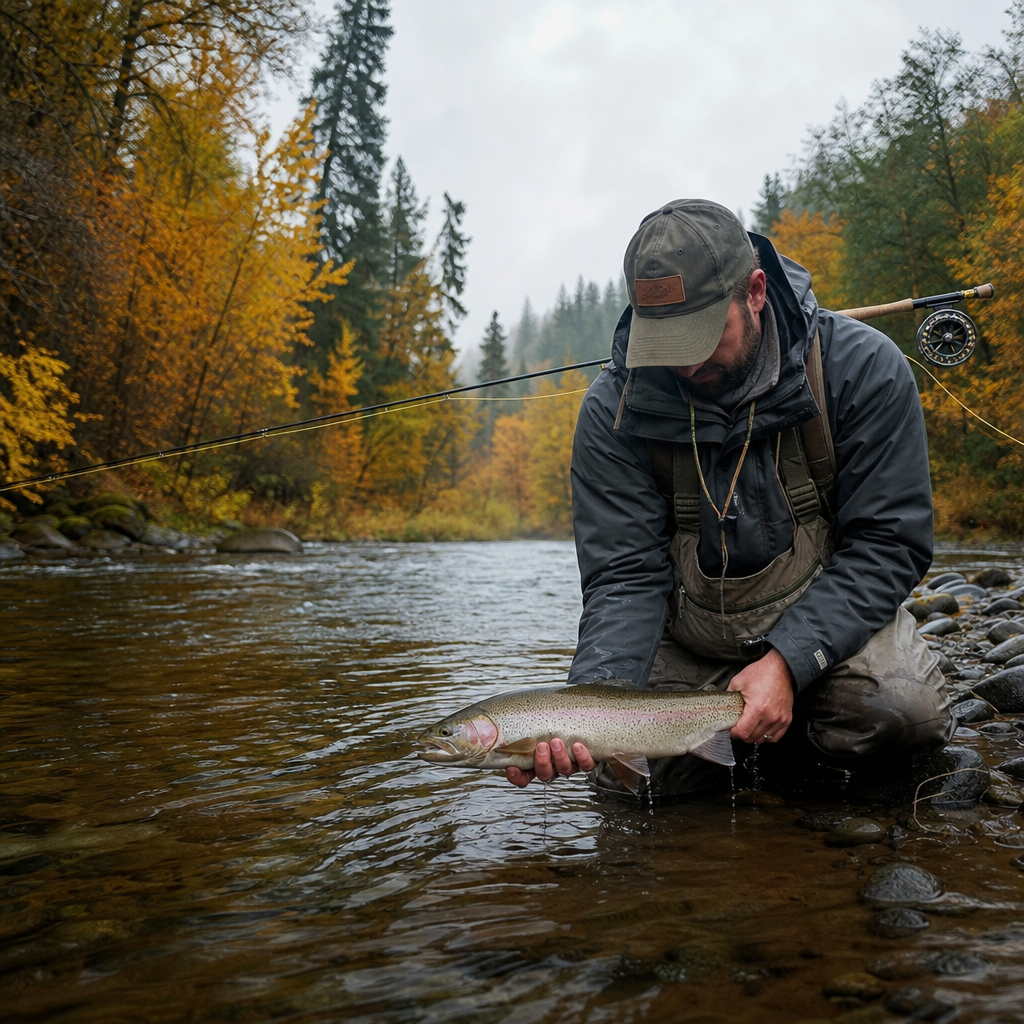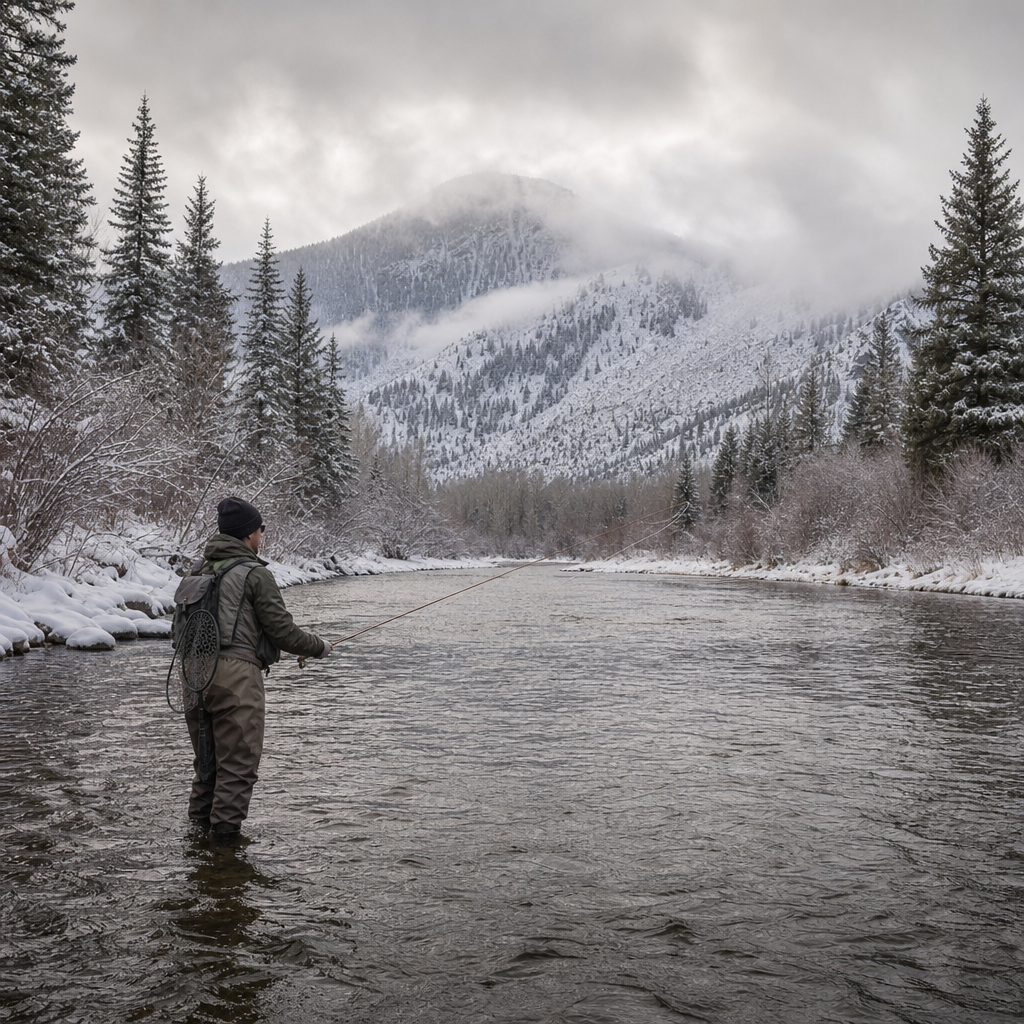
Fly fishing in rivers during winter rewards anglers who understand cold-water trout behavior, adjust presentations precisely, and dress for long hours in harsh conditions. Winter fly fishing means targeting trout and other river fish when water temperatures are low, insect activity is reduced, and fish conserve energy by holding in slower current seams, deeper runs, tailouts, and soft pockets near structure. It matters because many rivers are quiet in winter, larger fish are often catchable with disciplined tactics, and clear seasonal patterns make success more predictable than many anglers expect. I have spent enough winter days breaking ice from rod guides, watching fish slide six inches to eat a midge, and learning which gear failures end a trip early to know that winter success is rarely about luck. It comes from reading temperature, flow, light, and fish metabolism together.
The core challenge of winter river fly fishing is biological, not simply meteorological. Trout are ectothermic, so their activity level is governed by water temperature. In many trout streams, feeding windows narrow significantly when water falls below about 45 degrees Fahrenheit, while sustained temperatures in the upper 30s can make fish selective and reluctant to move far for a fly. At the same time, winter often brings low, clear flows that expose anglers who wade carelessly or cast heavy shadows across holding water. Yet these same conditions concentrate fish in predictable lies and make certain tactics especially effective. Midges, small mayflies such as Blue-Winged Olives, eggs, scuds, and attractor nymphs all become central parts of the winter fly fishing playbook. Streamers can also excel, especially during warming trends or stained water.
As a hub page for winter fly fishing, this guide covers the techniques, flies, tackle, clothing, and safety principles that consistently matter on rivers. It explains where trout hold in winter, when during the day to fish, how to build practical nymph, dry-dropper, and streamer rigs, and which waders, boots, lines, and accessories actually improve performance. It also addresses limitations and tradeoffs. Heavier flies help reach depth but can spook fish in skinny water. Thick gloves protect hands but compromise knot tying. Felt or rubber soles each have traction pros and cons depending on local regulations and riverbed composition. If you want a dependable framework for winter fly fishing in rivers, start with fish behavior, then let every gear and presentation choice support that reality.
How Trout Behave in Winter Rivers
Winter trout typically seek the lowest-energy water that still delivers food. In practical terms, that means soft seams beside stronger current, deeper buckets at the head or tail of pools, eddies below midstream boulders, inside bends, spring inflows, and transition lanes where oxygen, cover, and current speed balance out. Fish often pod up in a handful of wintering lies, especially on tailwaters and stable freestone rivers. Instead of roaming broadly, they hold close to the bottom and make short feeding moves. Many anglers overestimate how far a trout will travel for a fly in 38-degree water. In my experience, if your drift misses the fish by even a foot, you may as well have cast to another run.
Time of day matters more in winter than in many other seasons. Water is usually coldest in the early morning, especially after clear nights. By late morning and early afternoon, even a one- or two-degree temperature increase can improve trout activity noticeably. A river at 39 degrees may fish very differently at 42 degrees, particularly if sunlight reaches the water and invertebrate drift increases. Tailwaters below dams can be more temperature-stable and fish well all day, while freestones often reward patience and a later start. Watch for subtle signs: a few midge adults in the air, a single rise in a foam line, or small nymph shucks on streamside rocks. Those details often signal the day’s best window.
Best Winter Fly Fishing Techniques for Rivers
The most reliable winter fly fishing technique on rivers is dead-drift nymphing close to the bottom. Since trout hold deep and conserve energy, your flies need to enter the feeding lane quickly and drift naturally at current speed. Strike indicators, tight-line methods, or hybrid approaches all work if they maintain contact without dragging the flies. A standard winter setup might include a weighted point fly such as a size 14 pheasant tail, hare’s ear, or perdigon, followed by a smaller midge pupa or zebra midge on lighter tippet. Split shot should be adjusted constantly. If you are not ticking bottom occasionally, you are probably too high in the column; if you snag every cast, you are too deep or too slow.
Streamer fishing can be excellent in winter, but it requires a narrower, more deliberate mindset than in autumn. Fast, aggressive strips sometimes move fish during warm spells, high water, or low-light periods, yet a slow swing, short twitch, or near-static presentation often produces more takes in truly cold conditions. Smaller streamers usually outperform oversized patterns unless you are targeting migratory browns, bull trout, or pre-spawn fish on systems that support them. White, olive, black, and natural baitfish tones are consistent choices. Sink-tip lines help maintain depth, but on moderate runs I often prefer a weighted streamer on a floating line because mending control is better and the fly can hover naturally through soft pockets.
Winter dry-fly fishing is limited but real. Midge hatches and Blue-Winged Olive emergences can bring selective surface feeding, especially on overcast afternoons. Success depends on fine tippet, accurate drag-free drifts, and the discipline to target visible risers rather than prospect blindly. Many winter rises are subtle head-and-tail sips in flat water, not splashy takes. A dry-dropper rig can bridge uncertainty when fish show mixed surface and subsurface behavior. Use a small, visible dry with enough buoyancy to suspend a tiny midge pupa beneath it. This approach is particularly effective on spring creeks and tailwaters where trout feed consistently on small insects through winter.
Choosing Winter Flies and Building Effective Rigs
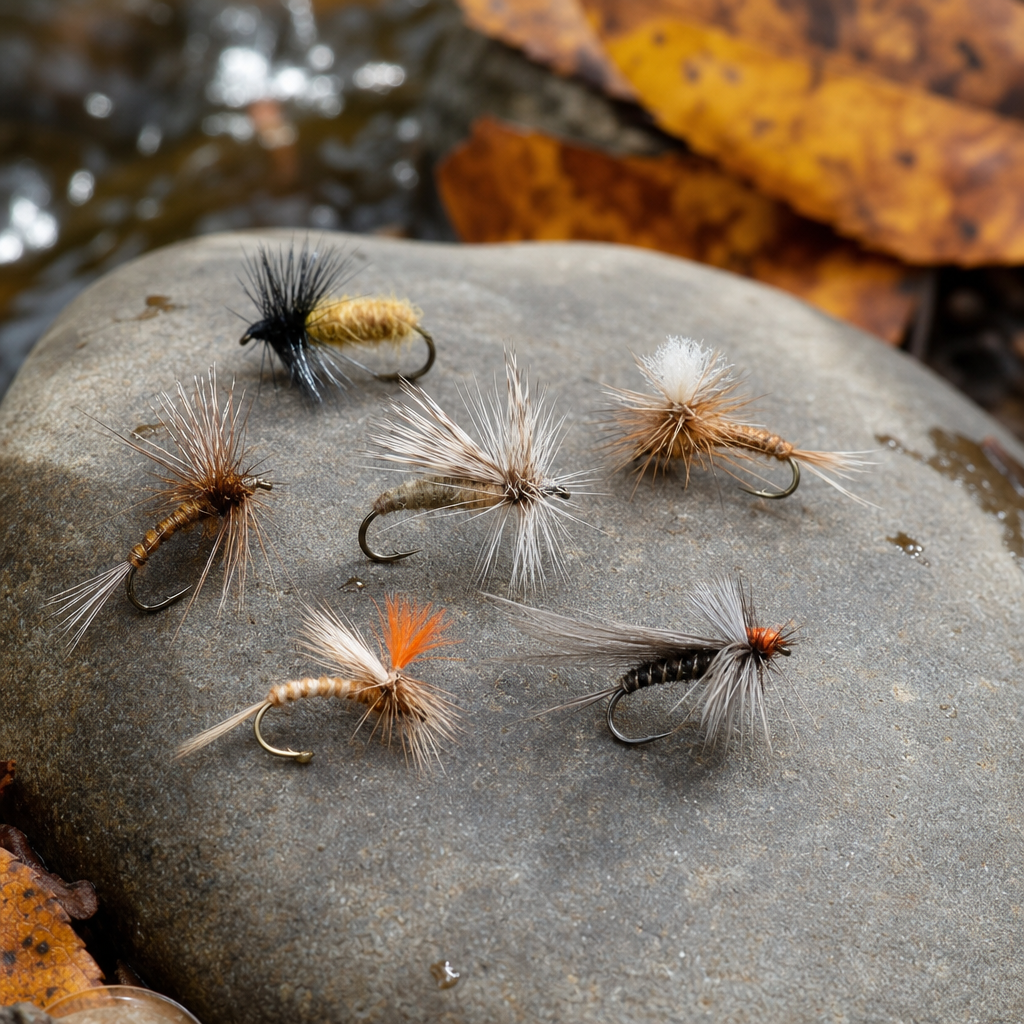
Winter flies should match the season’s dominant food sources and the fish’s reduced willingness to chase. In most rivers, that means small profiles, sparse materials, and colors that fit local drift. Midge larvae and pupae in sizes 18 to 24 are staples. Zebra Midges, RS2s, Top Secret Midges, and simple thread midges catch fish because they imitate common winter forage and sink efficiently. Small mayfly nymphs, especially pheasant tails and Baetis patterns, cover Blue-Winged Olive activity. Egg patterns are important below spawning areas or where trout, whitefish, or salmonids leave loose eggs in the drift. Scuds and sowbugs dominate some tailwaters with aquatic vegetation or nutrient-rich flows.
Rig construction should reflect water type, depth, and fish pressure. A common two-fly indicator rig starts with a 9-foot leader to 4X or 5X, adds enough split shot to reach the strike zone, then places the indicator one and a half to two times the water depth above the bottom fly. The point fly carries most of the weight, while the tag or trailer fly is smaller and more naturalistic. On technical water, longer leaders and fluorocarbon tippet help with stealth and sink rate. On pocket water or deeper winter runs, a shorter, more direct setup turns over better and keeps contact with the flies. The goal is not elegance; it is repeatable depth control and drift quality.
| Winter Condition | Primary Technique | Useful Flies | Key Adjustment |
|---|---|---|---|
| Low, clear river at 38 to 42 degrees | Indicator or tight-line nymphing | Zebra Midge, RS2, small pheasant tail | Lengthen leader, reduce fly size, improve stealth |
| Overcast afternoon with light hatch | Dry fly or dry-dropper | Griffith’s Gnat, BWO emerger, midge pupa | Target individual risers and eliminate drag |
| Warming trend or slightly stained flow | Streamer fishing | Small woolly bugger, sculpin, baitfish pattern | Fish slower and deeper before speeding retrieve |
| Below spawning activity | Nymphing | Egg pattern with midge trailer | Drift close to bottom through soft seams |
Essential Winter Fly Fishing Gear
The best winter fly fishing gear keeps you warm, mobile, and able to present flies with precision. Rod choice starts with your river and methods. For general winter trout fishing, a 9-foot 5-weight remains the most versatile tool because it handles indicator rigs, moderate streamers, and occasional dry flies. On larger rivers, a 10-foot 4- or 5-weight improves reach, line control, and strike detection during nymphing. For dedicated streamer work, a 6-weight gives better lifting power with sink tips and weighted flies. Reels matter less for drag than for reliability in cold conditions. A large-arbor reel with a smooth sealed drag, good tolerances, and easy line pickup is practical, especially when ice and grit are present.
Fly lines should match techniques, not marketing claims. A weight-forward floating line covers most winter river situations because it supports nymphing, dry-dropper rigs, and smaller streamers. Add a sink-tip or poly leader when deeper streamer presentations are needed. Leaders and tippet deserve more attention than many anglers give them. Supple nylon helps dry flies and tiny emergers drift naturally, while fluorocarbon sinks faster and resists abrasion when nymphing close to rocks. Sizes 4X through 6X cover most winter trout applications. Because cold fingers make streamside rerigging slower, I carry pre-tied leader sections and multiple indicator sizes in a waterproof pouch. That simple habit saves time and keeps me fishing through the warmest part of the day.
Clothing and wading gear determine how long you can fish safely. Breathable chest waders layered over moisture-wicking base layers and insulating midlayers provide the best temperature control for active winter fishing. Cotton has no place in a winter kit because it holds moisture and accelerates heat loss. Wading boots should fit with thick socks without constricting circulation. Rubber soles with studs are widely effective and comply with regulations where felt is restricted for invasive-species control, though felt still grips certain slimy rock surfaces exceptionally well where legal. Neoprene gloves or fold-back fingerless gloves, a warm hat, polarized glasses, and a waterproof shell are nonnegotiable. Carry extra socks and a spare pair of gloves in the vehicle. If one set gets soaked, your day can end quickly.
Reading Winter Water, Wading Safely, and Planning the Day
Reading winter water starts with eliminating unlikely lies. Fast riffles that hold eager fish in summer may be nearly empty during severe cold because the current demands too much energy. Instead, focus on depth, shelter, and moderate current speed. The inside edge of a run, the trough below a ledge, the foam seam entering a tailout, and the soft pillow beside a boulder all deserve repeated drifts. Winter trout often stack in specific slots, so once you hook one fish, fish the same lane carefully before moving. On many rivers, a ten-yard section can hold most of the active fish in an entire pool. Slow down enough to prove whether a spot is empty before writing it off.
Safety deserves the same planning as fly selection. Cold water robs strength rapidly, and winter rocks are less forgiving when coated with shelf ice or frozen algae. Use a wading staff in deep or uneven runs, shuffle rather than stride, and avoid crossing where a downstream fall would carry you into heavy current. Check weather, flows, and access before leaving home. Generation schedules on tailwaters can turn a manageable seam into a dangerous channel within minutes, while anchor ice on freestones can change footing through the day. Fish with a partner when possible, tell someone your plan, and keep dry layers in the car. Thermos drinks are not just comfort items; warm fluids help maintain core temperature and decision-making.
Trip planning also improves catch rates. I rely on stream gauges, water-temperature reports, and local hatch information before choosing a river. A one-degree difference between two nearby tailwaters can decide the better option. Cloud cover, wind, and recent meltwater influence both insect activity and presentation difficulty. Build the day around the most productive window: arrive late enough to avoid the coldest morning period, start with deep nymphing, switch to dries if fish rise, and test streamers during low light or stained water. Keep notes on temperature, flow, flies, and productive holding water. After a few winters, patterns emerge that are more valuable than any single hot fly recommendation.
Winter fly fishing in rivers is at its best when every choice reflects cold-water reality. Trout feed, but they do so on tighter schedules, in narrower lanes, and with less tolerance for sloppy drifts than they show in warmer months. The anglers who succeed consistently are not necessarily the ones with the most expensive gear; they are the ones who understand where fish hold, wait for the warmest and most biologically active part of the day, and adapt rig depth with discipline. Start with nymphs near the bottom, stay alert for midge or Blue-Winged Olive activity, and use streamers strategically when conditions support movement. Keep fly sizes honest, presentations subtle, and expectations focused on quality rather than numbers.
The gear side is equally practical. A reliable 5-weight or longer nymphing rod, floating line, layered clothing, stable wading boots, and a compact selection of midges, small mayflies, eggs, and streamers will cover most winter situations. Comfort and safety are performance tools, not luxuries. Warm hands tie better knots, dry feet maintain focus, and cautious wading prevents the one mistake that can end a trip. If you are building out your winter fly fishing knowledge under the broader seasons and conditions category, use this guide as the starting framework, then go deeper on rigs, flies, river types, and hatch timing. Pick a moderate winter day, fish methodically, and let the river teach the rest.
Frequently Asked Questions
What are the best places to find trout in rivers during winter?
In winter, trout usually shift away from fast, turbulent water and hold in places where they can conserve energy while still having access to food. The most reliable areas are slower current seams, deeper runs, tailouts, inside bends, soft pockets behind rocks, and water near submerged structure. These locations give fish protection from heavy current and allow them to feed without burning unnecessary calories. In very cold conditions, trout often settle close to the bottom because water temperatures are more stable there and drifting food naturally travels near the riverbed.
Focus on water that is slow enough for fish to hold comfortably but not completely dead. A deep run with a gentle walking-speed current is often more productive than a shallow riffle in midwinter. Tailouts can be especially effective during the warmest part of the day, while slower pools and soft seams near depth changes are strong options in the morning when temperatures are lowest. If a river has woody debris, boulders, cut banks, or ledges, work those areas carefully because winter fish commonly stack in these protected lies. Cover water methodically, but when you find one fish, slow down and fish the area thoroughly, since several trout may be concentrated in the same winter holding zone.
What fly patterns work best for winter river fishing?
Winter fly selection is usually less about matching heavy insect hatches and more about presenting natural, easy-to-eat food in the strike zone. Nymphs are the foundation of most successful winter river fishing. Small mayfly nymphs, midge larvae and pupae, caddis larvae, scuds, sowbugs, and stonefly nymphs can all produce, depending on the river. In many systems, sizes 16 through 22 are especially effective for midges and mayfly imitations, while slightly larger stoneflies or attractor nymphs can help get attention in deeper water. The key is not just the pattern itself, but whether it drifts at the correct depth with a convincing, drag-free presentation.
On some winter days, streamers can be excellent, particularly when targeting larger trout. Bigger fish are often willing to eat a substantial meal even when overall feeding activity is low. A slowly stripped or swung streamer through deeper runs, undercut banks, or soft edges can trigger aggressive responses. Dark streamers, natural baitfish tones, and modest-sized articulated patterns all have a place. Dry-fly opportunities are less common in winter, but they do happen, especially during midge or blue-winged olive activity in the warmest afternoon hours. If fish begin rising, a small midge cluster, emerger, or delicate mayfly dry can be the right answer. In general, winter success comes from carrying a compact but smart selection: small nymphs, a few heavier anchor flies, midge patterns, and a handful of streamers for probing bigger fish water.
How should you adjust your presentation when fly fishing in cold winter water?
Presentation becomes even more important in winter because trout are typically less willing to move far for a fly. In cold water, fish conserve energy, so your drift needs to put the fly close to their holding lie and keep it there naturally. That usually means fishing deeper, reducing drag, and slowing everything down. If you are nymphing, adding enough weight to reach the bottom third of the water column is often essential. Many anglers underfish depth in winter, which causes flies to pass above inactive trout. Indicators, tight-line methods, or contact nymphing approaches can all work well, as long as they maintain control while allowing a natural drift.
Short casts are often more productive than long ones because they improve strike detection and line control. Position yourself to drift flies through likely holding water from the best angle, then make repeated passes before moving on. Mends should be subtle and purposeful, minimizing unnatural tension. With streamers, the most effective retrieve is usually slower than it would be in warmer months. Instead of fast, erratic strips, think about controlled swings, gentle pulses, and pauses that keep the fly in front of fish longer. Also pay attention to time of day. A presentation that gets ignored early in the morning may work perfectly in early afternoon, when slightly warmer water temperatures can increase fish activity. Precision, patience, and disciplined depth control are what separate average winter days from very good ones.
What gear is most important for fly fishing rivers in winter?
Winter river fishing demands gear that helps you fish effectively while staying warm, dry, and safe for long hours in harsh conditions. A versatile rod in the 4- to 6-weight range is a strong choice for most trout rivers, depending on water size and the techniques you plan to use. A 9-foot rod is standard, though many anglers prefer a longer rod for nymphing because it improves line control and strike detection. Floating lines handle most winter situations, especially when paired with long leaders and tippet setups suited to nymph rigs or small dries. If you plan to fish streamers in deeper runs, sink-tip options can also be useful.
Terminal tackle matters a great deal. Carry split shot or tungsten-weighted flies to reach the proper depth, along with indicators if you prefer suspension nymphing. Tippet should match both water clarity and fly size; in winter, clear water often calls for finer tippet and more refined presentations. Clothing is just as critical as fishing tackle. Layering is essential: moisture-wicking base layers, insulating mid-layers, and a waterproof outer shell help regulate temperature throughout the day. Quality breathable waders, warm socks, finger-friendly gloves, and a hat that protects against wind can make the difference between fishing comfortably and cutting the day short. Studded boots or other traction aids are especially important because icy rocks and frozen banks create real hazards in winter. A thermos, hand warmers, and dry storage for spare gloves or clothing are also practical additions that experienced winter anglers rarely overlook.
What is the best time of day to fly fish rivers in winter, and what safety concerns should anglers keep in mind?
The best time of day for winter river fishing is usually late morning through midafternoon, when air temperatures rise and the water warms slightly. Even a small temperature increase can improve trout metabolism and feeding activity. Early mornings tend to be the slowest period, especially after very cold nights, because fish are often less active and remain tightly tucked into energy-saving lies. By waiting for the sun to reach the water, anglers often find more responsive fish, occasional insect activity, and generally more comfortable conditions. If a winter hatch occurs, it is most likely to happen during this warmer window, making midday and early afternoon the prime period for both nymphing and any possible dry-fly action.
Safety should be treated as a top priority in winter because cold weather magnifies every mistake. Slippery rocks, shelf ice, snow-covered banks, and strong current can turn a simple wade into a dangerous situation very quickly. Move slowly, test each step, and avoid aggressive crossings unless they are absolutely necessary. Hypothermia is a serious risk, especially when wind, wet clothing, and low temperatures combine. Dress in layers, keep spare dry items available, and know when to stop if you begin losing dexterity or body heat. Fishing with a partner is wise, particularly on remote stretches. It is also smart to tell someone where you are going and when you expect to return. Winter rivers can offer exceptional solitude and excellent trout fishing, but the best approach is always a disciplined one that balances opportunity with sound judgment and preparation.