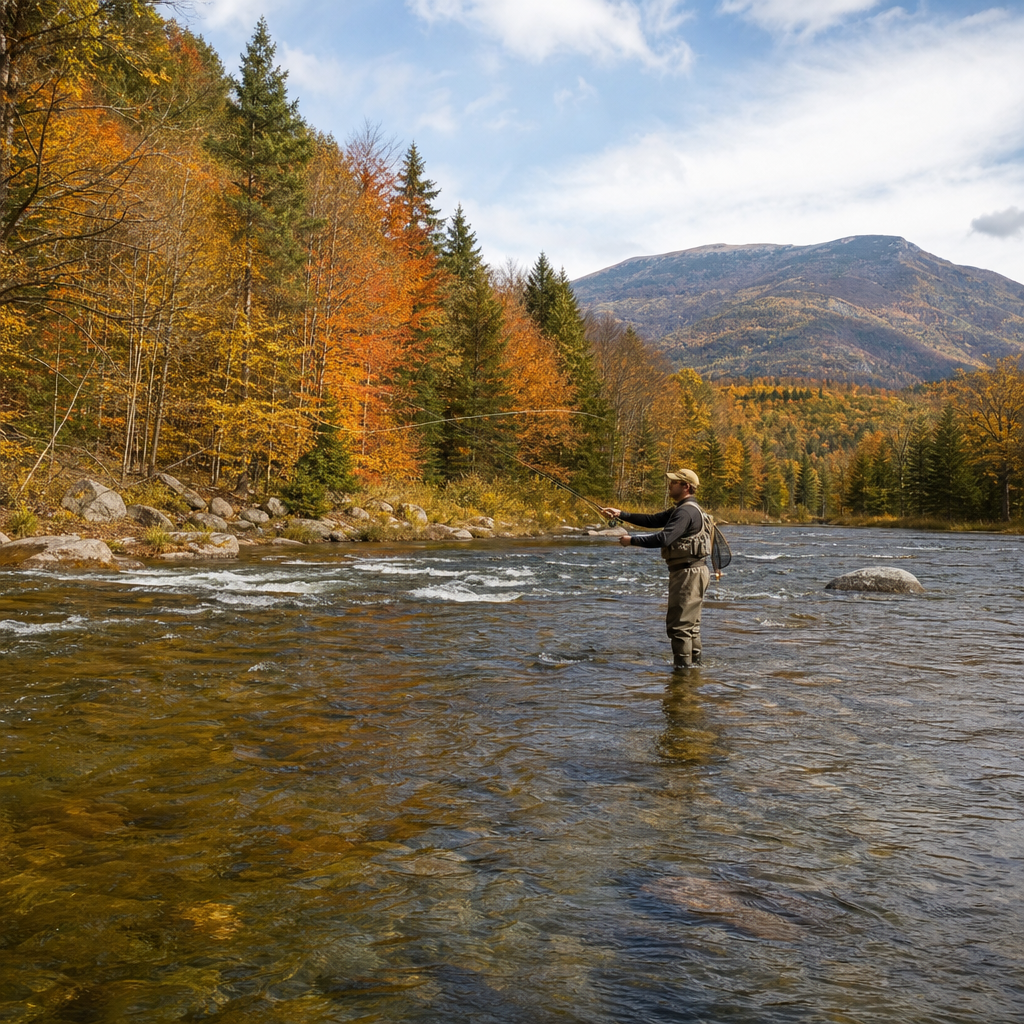
Winter fly fishing for pike is one of the most overlooked cold-season opportunities in freshwater angling, yet it can produce some of the heaviest, most aggressive fish of the year when approached correctly. In this context, winter fly fishing means targeting pike during late fall through ice-up, and in open-water periods throughout winter, with tackle, flies, presentation, and safety adapted to cold water conditions. Pike remain apex predators when temperatures drop, but their behavior changes in predictable ways: they conserve energy more carefully, hold near stable forage and warmer microzones, and often feed in shorter but more decisive windows. For anglers willing to slow down, fish deeper edges, and use larger but easier-to-capture patterns, winter can be remarkably consistent.
I have found that anglers who struggle in summer often do better in winter once they stop treating pike like warm-water sprinters. The fish are still opportunistic, but cold water reduces chase distance and punishes sloppy presentations. That matters because pike are built for ambush, not endless pursuit. Their elongated shape, rear-set fins, and explosive acceleration let them attack vulnerable prey in bursts. In winter, those bursts are still violent, but usually triggered by a fly that hovers, stalls, or tracks slowly through a strike lane. Understanding that shift is the foundation of winter pike fly fishing.
This topic matters because pike stay available when many other fisheries are limited by temperature, weed die-off, or seasonal closures. In many lakes, reservoirs, and slow rivers across northern regions, pike become one of the most practical fly targets of the season. They are also ideal for anglers exploring winter fly fishing as a broader skill set. The lessons transfer: how cold water changes metabolism, how bait concentrates, how light and pressure systems influence feeding, and why line control becomes more important than speed. As a hub page for winter fly fishing, this article covers where pike hold, what gear works, how to choose flies, how to retrieve them, and how to land fish safely in low temperatures.
There is also a clear tactical advantage to winter conditions. Aquatic vegetation thins, boat traffic disappears, and many shallow flats become easier to read. Baitfish schools become more concentrated, and pike often set up along drop-offs, creek mouths, marinas, springs, bridge basins, and soft-bottom bays with dying weed remnants. That compression can make a large body of water fish smaller. Instead of searching miles of shoreline, you can focus on key temperature, depth, and forage intersections. Done right, winter pike fly fishing is not random prospecting. It is a deliberate search for stable water, available prey, and short feeding windows, followed by precise presentations that stay in front of the fish long enough to force a decision.
How Winter Changes Pike Behavior
Pike do not become inactive in winter; they become selective about energy use. Biologically, colder water slows digestion and reduces the value of long chases. A pike that spends too much energy pursuing one baitfish may lose the equation. As a result, winter fish commonly hold near ambush points with access to deeper water, where they can intercept perch, roach, shad, suckers, juvenile panfish, or trout depending on the system. In natural lakes, I consistently look first for the outside edge of remaining weeds near a basin. In reservoirs, I focus on tapering points, timber edges, and creek-channel swings that pin bait.
Water temperature is the main driver, but oxygen, light, and forage density matter too. In early winter, pike may still cruise surprisingly shallow during midday if sun warms dark-bottom bays by even a fraction of a degree. In prolonged cold, they usually favor stable depth rather than the absolute warmest surface layer. That is why a six- to twelve-foot shelf adjacent to a fifteen-foot basin can outperform a shallow flat that looks attractive but swings too much in temperature. In rivers, winter pike often slide into slower side channels, backwaters, marinas, and eddies where current costs less energy and bait collects naturally.
Feeding windows tend to narrow, but they are often repeatable. Many winter pike eat best during the warmest part of the day, around incoming weather changes, or when a small shift in wind pushes bait into a protected shoreline. I have also seen low, stable cloud cover improve the bite because it lets fish roam a little farther from cover. Bright bluebird days can still produce, but usually reward slower retrieves and more precise depth control. If you contact one fish in winter, treat that location seriously. Pike commonly stack by size class around the same structural feature when conditions are stable.
Where to Find Winter Pike on Lakes and Rivers
The best winter pike locations combine three features: forage, nearby depth, and a place to ambush prey without burning energy. On lakes, start with dying cabbage beds, reed edges, submerged timber near basins, inflowing creeks, marinas, and soft-bottom bays that hold panfish or coarse fish. Weed decay changes the picture from summer, but do not ignore vegetation entirely. A sparse band of still-living weeds can be a magnet because it shelters bait and provides contrast. Electronics help, but even from shore you can identify promising water by watching birds, bait dimples, and shoreline contours that suggest a quick drop.
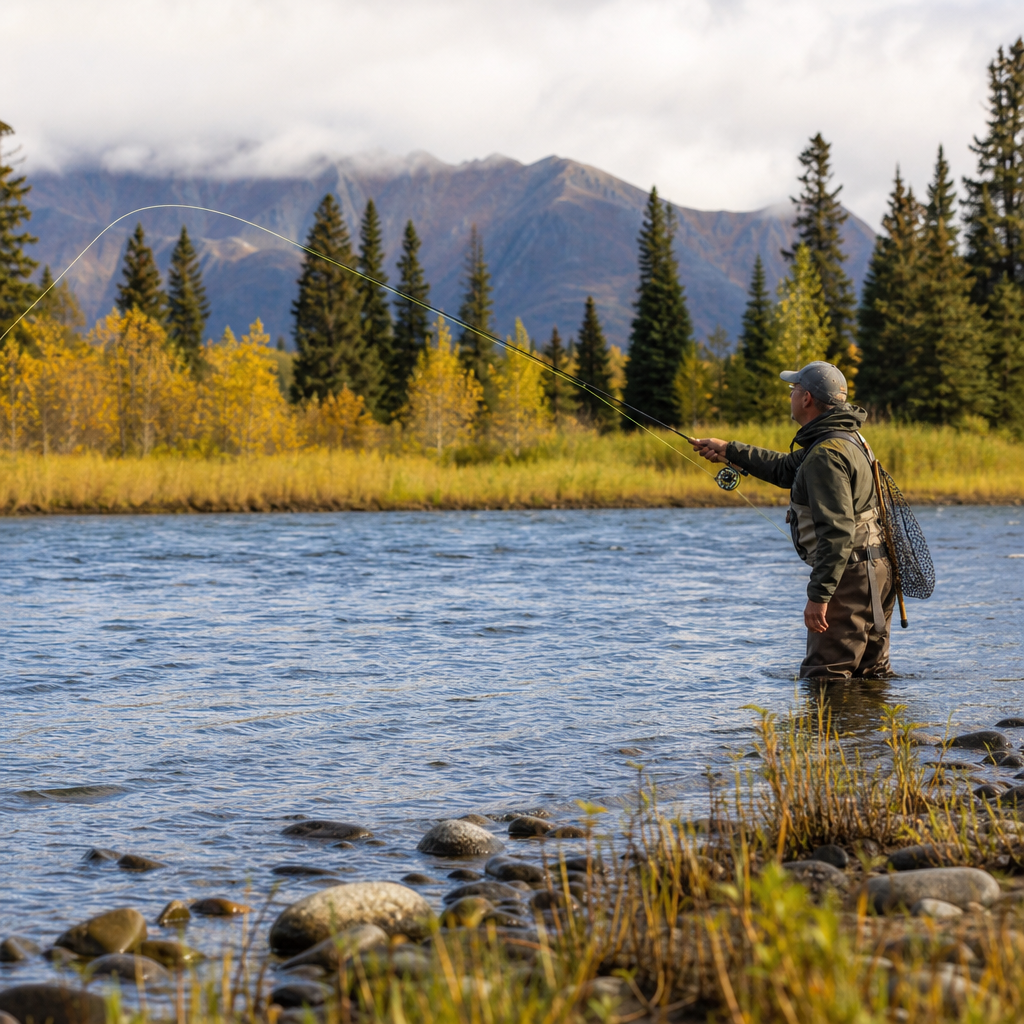
On rivers, winter pike are usually less interested in heavy current than in adjacent slow water. Target slack marinas, canal mouths, creek confluences, flooded backwaters, and broad eddies below current seams. These areas collect injured or disoriented baitfish and let pike sit almost motionless before striking. In tailwaters, warm discharge zones can concentrate fish, but local regulations vary and ethical spacing matters when fish are stacked. If you are fishing from a boat, use the electric motor sparingly and make longer drifts. In clear winter water, hull noise and repeated passes can shut down a small area fast.
Depth is relative to the waterbody, not a fixed number. In a shallow fenland drain, winter pike may hold in four feet all season because that is the deepest structure available. In a natural lake with a twenty-foot basin, they may spend prime feeding periods in seven to ten feet, sliding shallower only when bait rises or sun warms the flat. The most consistent rule is adjacency. Pike want an easy route between resting water and feeding water. Find that edge, and your odds climb sharply.
| Water Type | High-Percentage Winter Location | Why It Works |
|---|---|---|
| Natural lake | Remaining weed edge near basin | Bait shelter, ambush cover, quick access to depth |
| Reservoir | Creek-channel swing with timber | Concentrates shad and gives pike a structural edge |
| Slow river | Backwater or marina mouth | Reduced current, warmer stable water, trapped forage |
| Tailwater | Eddy near soft current seam | Low energy cost and steady food delivery |
Tackle, Leaders, and Cold-Weather Setup
For winter fly fishing for pike, an 8- to 10-weight rod covers most situations, with a 9-weight as the best all-around choice. It has enough backbone to cast bulky flies and drive hooks home through a hard mouth, yet remains manageable when hands are cold and layers restrict movement. Pair it with a large-arbor reel carrying a reliable drag, though pike are more often controlled by strip pressure and rod angle than by long reel runs. A warmwater taper line works in mild conditions, but cold-rated coatings shoot and handle better when temperatures approach freezing.
Line selection determines depth and efficiency. I carry three systems: a floating line for shallow bays and reeds, an intermediate for slow presentations over weeds or shelves, and a sink-tip or full sinking line for channels, basins, and steep breaks. Intermediate lines are especially valuable in winter because they keep the fly in the strike zone without forcing an excessively fast retrieve to maintain tension. For many anglers, the mistake is fishing too high in the water column. If bait is suspended at six feet and your fly tracks at two, you are effectively absent.
Leaders should be short and purposeful. A common setup is four to six feet of 30- to 40-pound monofilament or fluorocarbon butt material, attached to a bite tippet of wire or knotable trace. For bite protection, 20- to 30-pound knottable wire, seven-strand coated wire, or 40- to 60-pound hard mono can work, but each has tradeoffs. Wire offers the most security against bite-offs. Hard mono is stealthier and can hinge less with some flies, but it is not foolproof against large pike with deep takes. In winter, when fish may eat slowly and inhale a paused fly, I prefer wire. Losing a fish with a fly in its mouth is avoidable and not worth the gamble.
Cold-weather setup extends beyond rod and line. Keep pliers, hook cutters, jaw spreaders if you use them, and a rubberized net accessible with one hand. Barbless or debarbed hooks simplify releases, especially when fingers are numb. Fingerless gloves layered under a waterproof shell glove are far more practical than one heavy pair. Bring a spare stripping basket if fishing from shore in slush or snow. Most importantly, check guides often. Ice buildup kills distance and can crack inserts.
Best Winter Pike Flies and Why They Work
Winter pike flies should suggest a substantial meal without demanding a long, fast chase. That usually means patterns between six and ten inches tied with mobile materials that breathe on the pause: rabbit strips, marabou, ostrich, schlappen, and modern synthetic blends. Hollow-tied baitfish, Buford-style divers for shallower work, and articulated streamers with broad profiles all have a place. Color depends on water clarity and forage. In clear water, white, gray, olive, perch bars, and natural roach tones are dependable. In stained water, black, firetiger, chartreuse-white, and orange accents improve visibility.
The key is not just size but sink behavior and motion at low speed. A winter pike fly that collapses when stripped and opens when paused often outperforms a stiff profile that looks big only in the vice. I rely heavily on weighted streamers with balanced materials so the fly glides level rather than nosediving. Pike often track a fly for several feet before committing. A level, wounded-bait posture keeps them interested. If fish are nipping short, add a trailing hook only if local rules allow and the pattern remains safe to unhook; otherwise, shorten the profile and sharpen the front hook obsessively.
Do not assume bigger is always better. A ten-inch fly can trigger giants, but when forage is concentrated in small perch or young shad, a six-inch pattern may double your eats. Match the meal that is easiest to catch. I have had standout winter days with simple white-and-silver baitfish flies on intermediate lines because they matched stunned roach perfectly. Confidence matters, but confidence should come from observation, not habit.
Retrieve, Hook Set, and Presentation Tactics
The best retrieve for winter pike is usually slower than anglers expect and more varied than a straight hand-over-hand pull. Start with long strips and deliberate pauses, or a slow strip-strip-pause cadence that keeps the fly hovering near cover. The pause is often the trigger. In cold water, pike commonly follow first, then eat when the fly appears vulnerable. If you see a fish behind the fly, do not rip it away. Maintain speed or slightly accelerate into a wide figure-eight at boatside. Large pike can eat inches from the rod tip, and winter fish often commit late.
Depth control is inseparable from retrieve. Count the fly down, watch the angle of your line, and make each cast answer a question. Are fish hugging the weed tops, suspending off the break, or lying on the first drop? Once you get a follow or strike, repeat the same countdown and track. In winter, a productive lane can be narrow. A cast six feet to either side may look identical but pass outside the strike corridor. Precision beats coverage once you locate fish.
Use a firm strip set, not a trout lift. Pike have bony jaws, and a cold-water eat can still feel soft. When the line comes tight, drive the hook with one or two hard strips while keeping the rod low, then raise pressure smoothly. During the fight, avoid high sticking and keep steady side pressure to turn the fish. Most lost pike on fly are dropped during poor hook sets or at the net when anglers relax too early. Stay connected until the fish is controlled.
Fish Handling, Safety, and Seasonal Limits
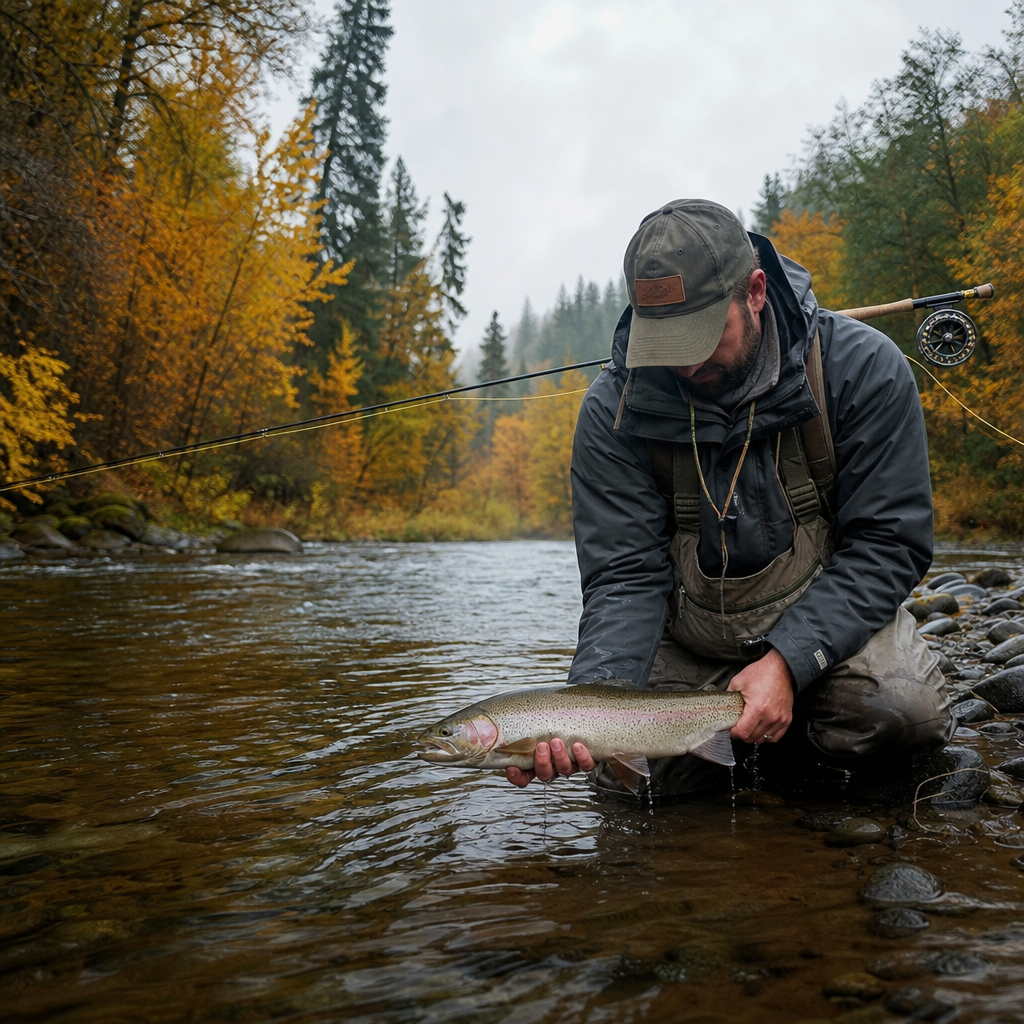
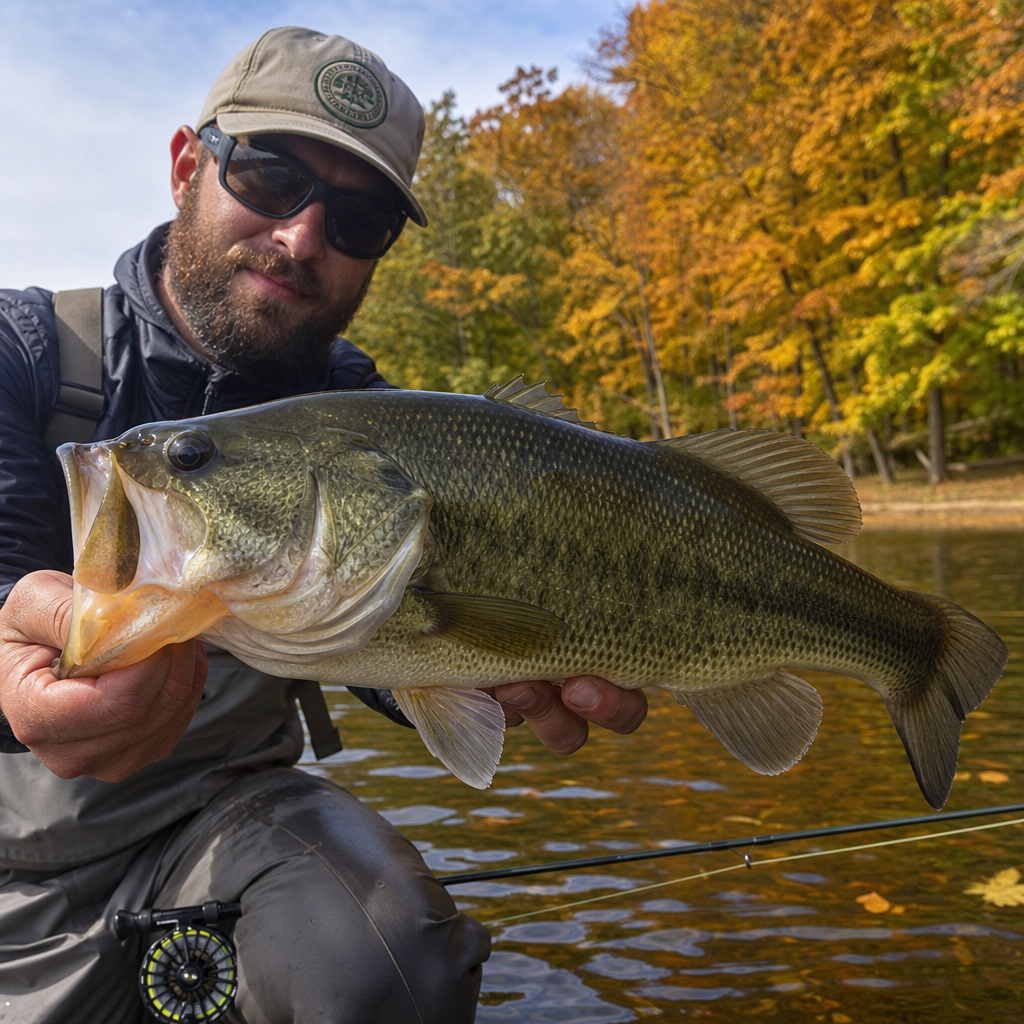
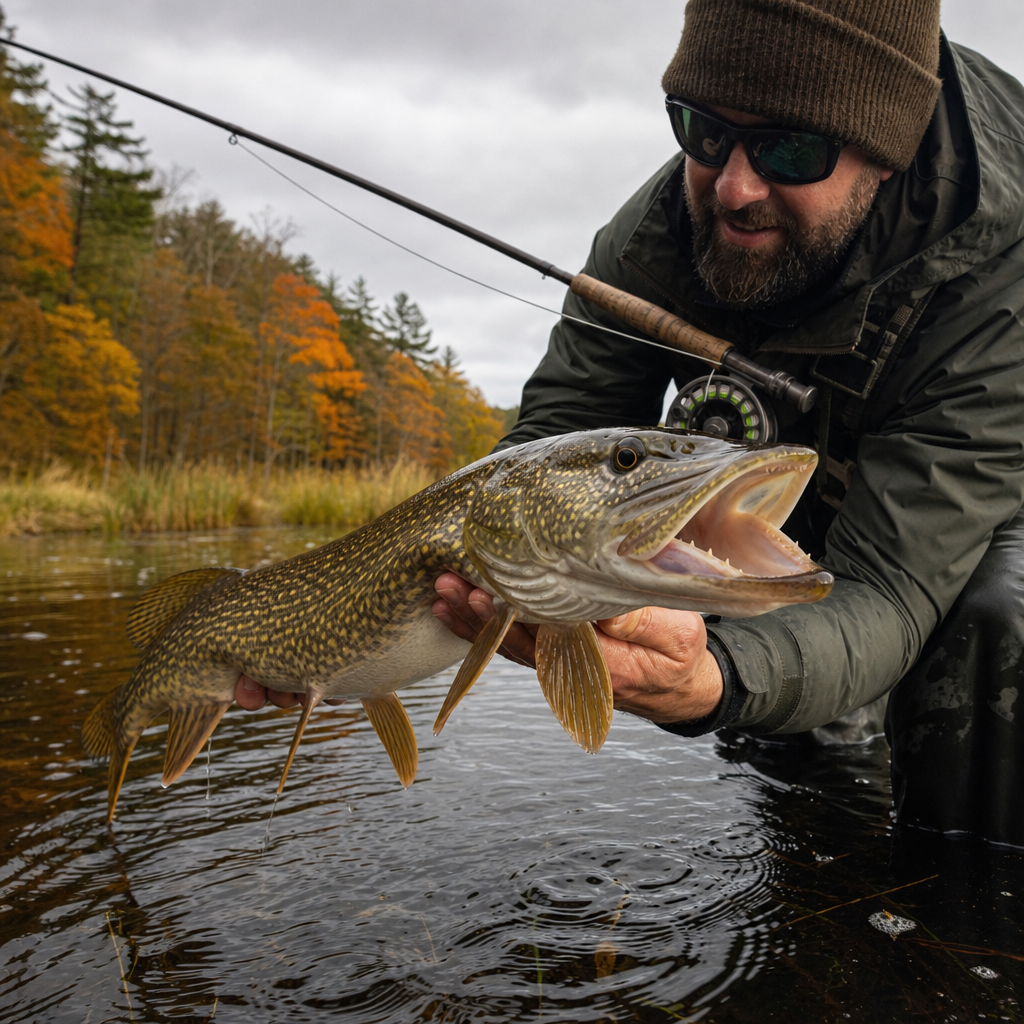
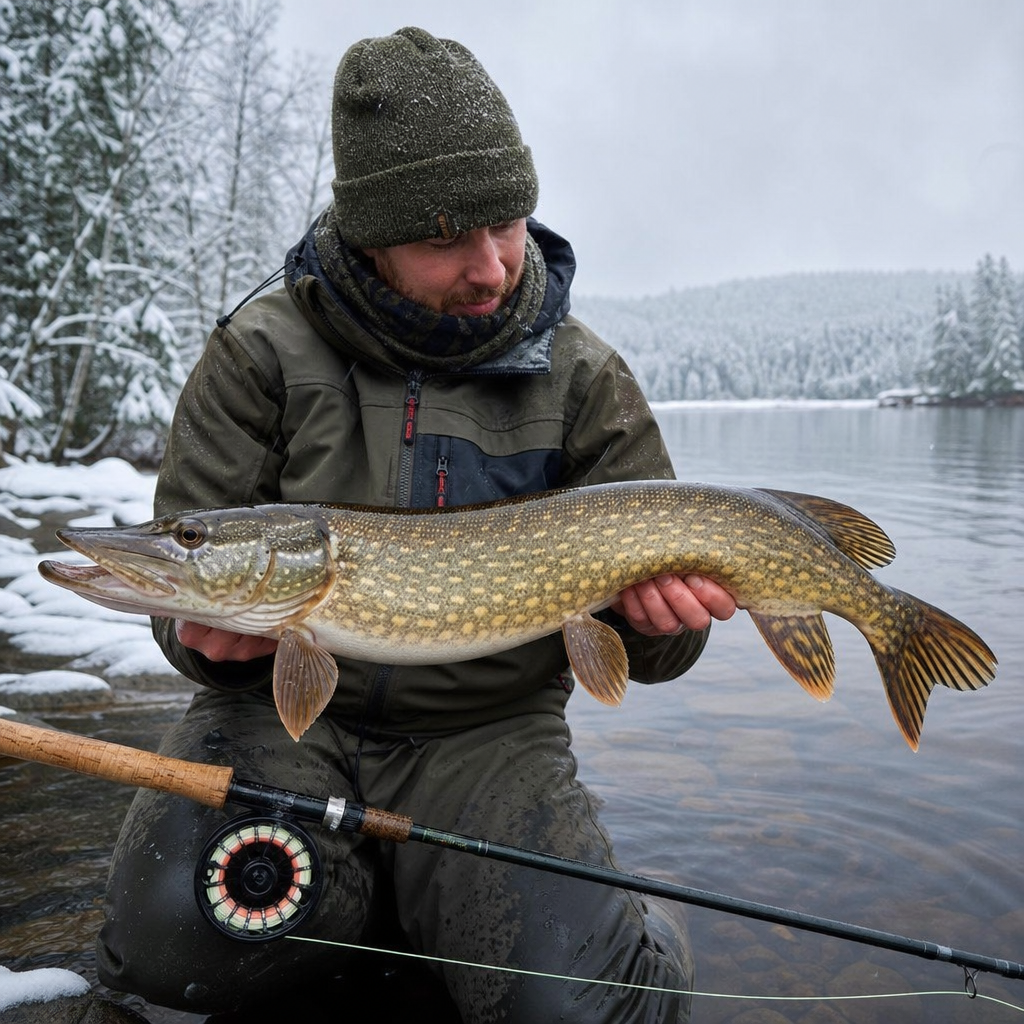
Winter pike deserve careful handling because cold conditions add stress for fish and angler alike. Use a large rubber net to support the body, keep the fish in the water while preparing tools, and unhook quickly with long pliers. If a fly is buried, cut the hook rather than wrestling with it. Esox teeth, large hooks, and cold hands are a bad combination, so control the head before reaching in. Support horizontal holds for photos, limit air exposure to a few seconds, and release the fish upright once it kicks strongly.
Safety is part of winter fly fishing, not a side note. Hypothermia risk increases in boats, on icy banks, and in float tubes that should generally be avoided in severe winter conditions. Wear a life jacket at all times, carry dry gloves, and tell someone your launch and return plan. Wading staffs, studs, and layered waterproof clothing reduce preventable accidents. Local regulations may include closed seasons, baitfish area restrictions, single-hook rules, or special handling requirements for pike and associated species. Check them before every trip, especially on mixed fisheries where trout or salmon regulations affect streamer tactics.
Winter fly fishing for pike rewards anglers who think like hunters rather than casters. Find stable water near forage, use depth-appropriate lines, present flies that move naturally at slow speed, and expect short but meaningful feeding windows. The fish are powerful, available, and often less pressured than at any other time of year. As the hub for winter fly fishing in this seasonal series, this guide gives you the framework: understand cold-water behavior, focus on adjacency and ambush structure, fish methodically, and handle pike with care. Apply those principles on your next cold-weather session, then build from there by exploring your local waters one high-percentage winter spot at a time.
Frequently Asked Questions
Is winter really a good time to fly fish for pike?
Yes, winter can be an excellent time to fly fish for pike, and in many waters it is one of the most underappreciated periods of the year. As water temperatures fall in late autumn and into winter, pike do not stop feeding. They remain apex predators, but they typically shift from covering water aggressively to feeding in more calculated windows. That change often works in an angler’s favor. There is usually far less fishing pressure, less boat traffic, and less disturbance overall, which means large fish can settle into predictable areas and feed with confidence.
Another major advantage is fish quality. Winter often produces some of the heaviest pike of the season because these fish are feeding around available forage and conserving energy in ways that make them easier to pattern. While you may not see constant action all day, the bites you do get are often from better fish. The key is adjusting expectations and tactics. Winter pike fishing is usually less about numbers and more about timing, location, and precision. If you approach it with the right tackle, flies, and a slower cold-water presentation, winter can offer outstanding opportunities when many other freshwater fly options are limited.
Where do pike hold in cold water during late fall and winter?
In cold water, pike generally look for places that allow them to feed efficiently without burning unnecessary energy. That usually means areas near deep water, soft-bottom basins, channel edges, current seams with reduced flow, marinas, backwaters, creek mouths, and the edges of remaining green weed beds. In late fall, pike often key on dying vegetation zones and adjacent drop-offs because baitfish continue to use those areas. As winter progresses and vegetation collapses, the fish may slide deeper or hold along structure that concentrates prey, such as submerged timber, breaklines, points, and holes near slow current.
Open-water winter periods can be especially productive in systems that have stable temperatures and access to forage. Rivers, slow reservoirs, and natural lakes with delayed ice-up often provide reliable windows. The most important thing to remember is that winter pike do not always pin themselves to the absolute deepest water. They commonly position where they can move a short distance to intercept food. That could be a shelf beside a basin, a sun-warmed shallow pocket during a stable weather window, or a current-softened eddy where prey is funneled past them. If you are searching, focus on transition zones first: shallow to deep edges, weed edge to open basin, and slack water beside flow. Winter pike are often more location-specific than summer fish, so once you find one productive area, it is worth working it thoroughly.
What fly tackle and leaders work best for winter pike fishing?
A dependable winter pike setup starts with tackle that can cast large flies, manage wind, and still give you control over a strong fish in cold conditions. Most anglers are well served by an 8- to 10-weight rod, with a 9-weight being a particularly versatile choice. It has enough power to throw bulky streamers and handle big pike, but it is still comfortable enough for repeated casting. Pair that rod with a large-arbor reel holding a quality drag system and a fly line suited to the water depth you are fishing. In shallow, slow water, an intermediate line often shines because it keeps the fly below the surface without hanging up too badly. In deeper channels, basins, or river edges, sink-tip or full sinking lines can be extremely effective for keeping the fly in the strike zone longer.
Leader construction matters just as much in winter. You do not need an especially long leader for pike, especially when throwing big flies on sinking lines. In many cases, 4 to 6 feet of heavy mono or fluorocarbon butt material connected to a bite tippet is enough. The bite tippet is essential because pike teeth can slice standard leader material instantly. Many anglers use knotable wire, coated wire, or heavy fluorocarbon specifically designed for toothy predators. The exact choice depends on personal preference, water clarity, and how you want the fly to move, but whatever you choose must be abrasion-resistant and reliable. Cold weather also makes gear handling tougher, so simplify your system. Use strong connections, keep extra leaders pre-rigged, and avoid unnecessary complexity. Winter fishing is easier and more productive when your setup is efficient and durable.
What flies and presentations are most effective for winter pike on the fly?
Winter pike flies should create a strong profile, move water, and stay fishable at slower retrieve speeds. Large streamers, baitfish patterns, rabbit-strip flies, synthetic pike flies, and articulated designs are all proven options. Colors depend on water clarity and forage, but natural baitfish tones, white, olive, black, yellow, and combinations with a bit of flash are all strong starting points. In stained water or low light, darker flies can produce a clear silhouette, while brighter patterns may help fish locate the fly more easily. Size matters, but bigger is not always better in winter. Pike still eat substantial meals, yet there are times when a slightly smaller, easier target gets more consistent attention, especially in very cold water.
Presentation is where winter success is often decided. In cold conditions, pike usually respond best to a slower, more deliberate retrieve than they do in warm seasons. Long strips, short pulses, pauses, and hovering movements tend to outproduce fast, erratic retrieves. Think about putting the fly in front of the fish and giving it time to commit. Many strikes happen on the pause or immediately after the fly changes speed, so staying connected and ready is critical. Depth control is equally important. If fish are holding close to bottom or suspended just off a drop, your fly needs to spend time at that level rather than passing through it too quickly. Cover water methodically, vary your retrieve cadence, and do not abandon a good spot after only a few casts. Winter pike are often willing to eat, but they usually want the meal presented in a way that matches cold-water metabolism and lower chase speed.
What safety and fish-handling considerations matter most when fly fishing for pike in winter?
Winter pike fishing demands more attention to safety than many other seasons. Cold water can become life-threatening very quickly, whether you are wading, fishing from a boat, or working near icy shorelines. Start by treating every launch, bank, and deck surface as slippery. Wear layered clothing that protects you from wind and moisture, and strongly consider flotation gear or an inflatable life vest if you are afloat. If you are wading, use a wading staff where appropriate, move slowly, and avoid aggressive crossings in cold current. Weather can shift fast in late fall and winter, so monitor forecasts carefully and leave yourself a margin for changing wind, snow, or dropping temperatures. A short trip in stable conditions is usually smarter than forcing a long day in marginal weather.
Fish handling is equally important, especially because pike are powerful, heavily toothed predators that can injure both themselves and the angler if rushed. Keep long pliers, hook cutters, and a proper landing net ready before you ever make the first cast. Fight fish efficiently on tackle strong enough to bring them in without unnecessary exhaustion. Once landed, keep the fish in the water as much as possible while removing the fly. Support the pike horizontally if you need a quick photo, and avoid hanging large fish vertically by the jaw, which can stress or damage them. In freezing air, be especially mindful of exposing gills and eyes for too long. Cold-weather catch-and-release should be quick, organized, and deliberate. The goal is to enjoy one of the best overlooked predator fisheries of the year while protecting both your own safety and the health of the fish.