Fly fishers play a significant role in wildlife conservation because they spend time on rivers, notice ecological change early, fund habitat work, and often become long-term advocates for wildlife protection. In the broader context of conservation and ethics, fly fishing is not only a recreation centered on trout, salmon, bass, and bonefish; it is also a practical gateway into stream restoration, water policy, species recovery, and responsible outdoor stewardship. Wildlife protection, in this setting, means safeguarding fish populations, aquatic insects, birds, mammals, riparian vegetation, and the ecological processes that connect them. A healthy trout stream, for example, depends on cold clean water, stable banks, intact floodplains, insect diversity, and migration access. When any of those elements fail, fish suffer, but so do kingfishers, otters, amphibians, and entire food webs.
I have seen this connection repeatedly on working rivers where a decline in mayfly hatches signaled sediment problems long before casual visitors noticed anything unusual. That direct, repeated exposure gives fly fishers a unique conservation value. They are often the first to recognize low flows, thermal stress, fish kills, invasive species, illegal harvest, or damaged spawning habitat. Many also support the financial backbone of conservation through license fees, excise taxes on fishing equipment under the Federal Aid in Sport Fish Restoration framework, nonprofit memberships, guide-led cleanups, and local watershed donations. As a hub topic within wildlife protection, this article explains how fly fishers contribute, where their influence is strongest, what ethical responsibilities they carry, and why effective conservation requires more than catch-and-release slogans.
Understanding this role matters because freshwater biodiversity is under exceptional pressure. Habitat fragmentation, warming water, altered flow regimes, pollution, nonnative species, and shoreline development are changing rivers faster than many management systems can respond. According to widely cited global assessments, freshwater species have experienced steeper declines than many terrestrial groups. For fly fishers, that reality turns every outing into more than a sporting decision. It becomes a choice about access, impact, and advocacy. Wildlife protection is strongest when anglers connect fish behavior to ecosystem health, support science-based management, and act consistently on and off the water. This hub article covers the core pillars: habitat conservation, monitoring and citizen science, ethical angling, policy engagement, invasive species prevention, community education, and the future challenges facing river-dependent wildlife.
How Fly Fishers Protect Habitat and Whole Ecosystems
Habitat protection is the most important conservation contribution fly fishers make because fish populations cannot remain healthy without functioning ecosystems. Productive waters require suitable temperature, dissolved oxygen, cover, spawning gravel, invertebrate prey, and seasonal connectivity. Fly fishers who work with watershed groups quickly learn that “fish habitat” is really shorthand for a complete ecological network. Restoring a streambank with willows does more than shade trout; it stabilizes soil, filters runoff, provides bird nesting structure, supports insects, and improves flood resilience. Reconnecting side channels gives juvenile fish refuge, but it also benefits amphibians, waterfowl, and riparian mammals.
In practice, anglers often help fund or volunteer for projects such as culvert replacement, barrier removal, fencing sensitive riparian areas from livestock, large woody debris installation, and meadow restoration. A perched culvert can block spawning migration for years; replacing it with a fish-passable structure can reopen miles of habitat. On Western coldwater streams, I have watched seemingly small actions, such as planting native sedges along eroded banks, reduce sediment loads enough to improve insect life within a few seasons. Groups including Trout Unlimited, Backcountry Hunters & Anglers chapters, local land trusts, and watershed councils frequently translate angler concern into measurable habitat gains. The wildlife benefit extends beyond target fish because rivers are corridor systems. Protecting one stream mile can improve movement, feeding, and breeding opportunities for multiple species at once.
Citizen Science, Monitoring, and Early Detection
Fly fishers are unusually effective observers because they return to the same water in different flows, seasons, and light conditions. That repeated contact creates a valuable record of ecological change. While professional biologists rely on electrofishing surveys, macroinvertebrate sampling, redd counts, PIT tagging, and thermal loggers, they cannot be everywhere all the time. Anglers help fill that gap through structured reporting and informal field intelligence. They document invasive plants at access points, note algae blooms, photograph dewatered reaches, report fish with lesions, and flag barriers after floods. When observations move through a credible system, they become useful management data rather than anecdote.
Several organizations have built practical models around this. State agencies use angler creel surveys and volunteer observations to understand effort, catch trends, and seasonal use. Waterkeeper groups, river alliances, and local conservation districts often train volunteers in basic water quality sampling for temperature, turbidity, pH, or nutrient indicators. Community science platforms such as iNaturalist also help track species presence, especially birds, amphibians, and riparian plants associated with fishing corridors. The key is disciplined observation: note location, time, conditions, and photographic evidence. In my experience, the best angler reports are specific enough for managers to verify quickly. Wildlife protection improves when fly fishers treat what they see on the water as field evidence that can support timely conservation action.
Ethical Angling as Direct Wildlife Protection
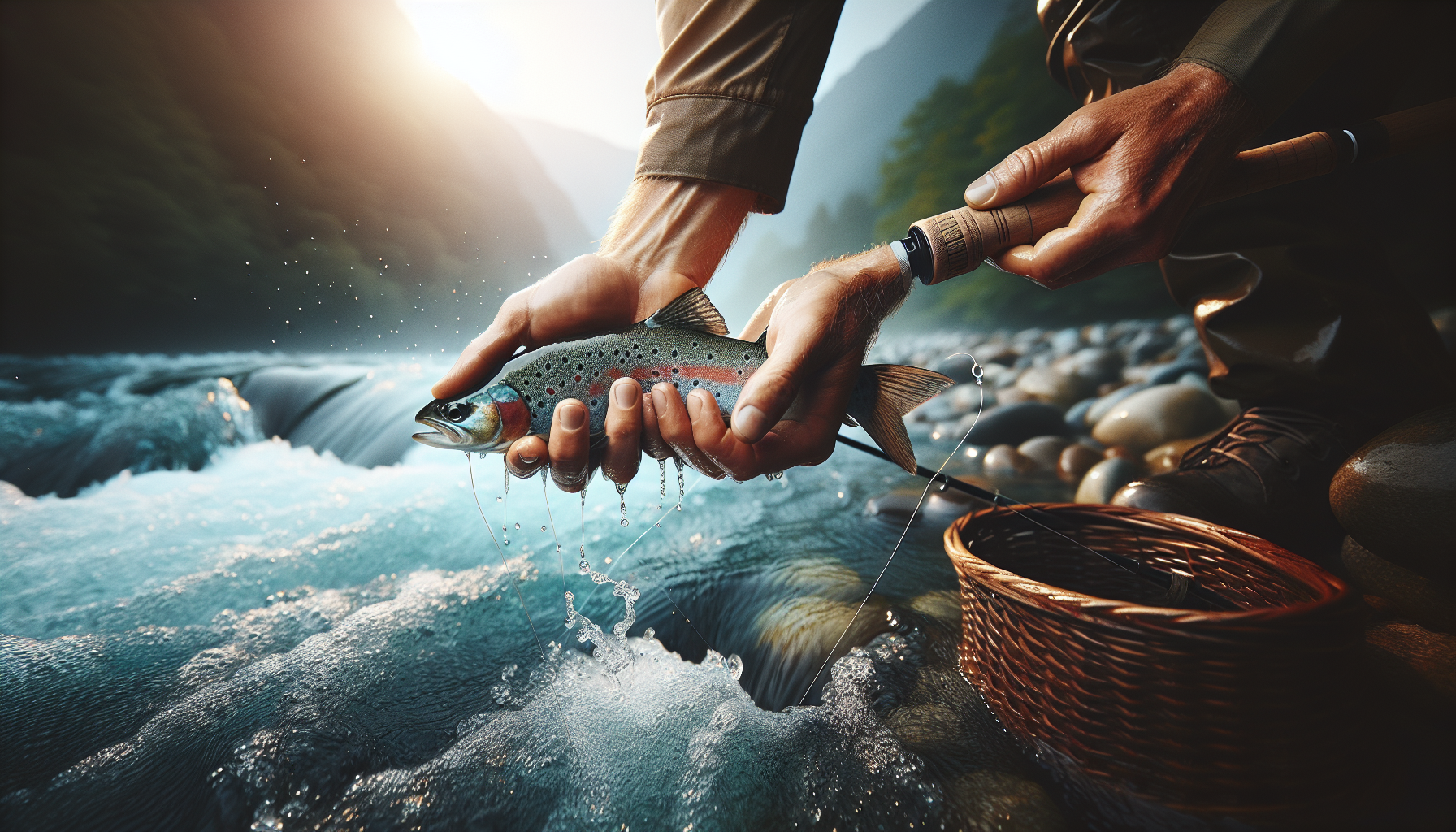
Ethical fly fishing protects wildlife when it reduces stress, injury, and mortality during and after capture. Catch-and-release is valuable, but it is not automatically harmless. Fish physiology matters. During periods of high water temperature and low dissolved oxygen, playing a trout too long can push it beyond recovery. Handling with dry hands removes protective mucus; lifting fish for extended photos can damage gills and internal organs; targeting spawning fish on redds disrupts reproduction even if the fish swims away. Effective wildlife protection therefore depends on technique, restraint, and situational judgment.
Best practice is clear: use tackle strong enough to land fish quickly, keep fish in the water, pinch barbs where regulations and conditions support it, avoid fishing during thermal closures, and leave actively spawning fish alone. Many experienced anglers now carry stream thermometers and stop targeting coldwater fish when temperatures approach stress thresholds commonly used by agencies and guides, often around the upper sixties Fahrenheit depending on species and local conditions. Ethical choices also include respecting seasonal closures, limiting wading through nursery habitat, disinfecting gear to prevent pathogen transfer, and not “hero shot” handling for social media. These practices benefit more than individual fish. They protect year classes, reduce disease risk, and reinforce a culture where recreation is compatible with wildlife conservation rather than in conflict with it.
Funding, Policy, and Collective Influence
Fly fishers influence wildlife protection not only through personal behavior but through money and policy. In the United States, fishing license revenue and equipment excise taxes contribute substantially to fisheries management, access projects, hatchery operations, habitat work, and research. Similar funding relationships exist in other countries through licenses, stamps, or user fees. Those mechanisms are imperfect, but they create a direct link between angler participation and conservation capacity. When well managed, that funding supports stream surveys, dam removal planning, flow studies, fish passage engineering, and enforcement.
Policy engagement often matters even more. Rivers are shaped by water allocation, land use, mining permits, forestry practices, agricultural runoff rules, dam operations, and public land management plans. Fly fishers who comment on environmental reviews, attend commission meetings, support conservation ballot measures, or back instream flow protections can affect outcomes at watershed scale. I have seen anglers shift from talking only about hatches and access to learning the language of total maximum daily loads, riparian buffers, and environmental impact statements. That transition is powerful because wildlife protection depends on decisions made far from the riverbank. A healthy fishery can disappear without obvious poaching or overharvest if withdrawals warm the water, sediment buries spawning gravel, or development severs floodplain function. Effective fly fishers understand that advocacy is part of stewardship.
Key Areas Where Fly Fishers Contribute to Wildlife Protection
The most durable conservation outcomes come from consistent work across several fronts rather than one-time volunteer days. The table below summarizes the main areas where fly fishers have influence and the direct wildlife value of each action.
| Conservation area | Typical fly fisher action | Wildlife protection benefit |
|---|---|---|
| Habitat restoration | Plant riparian vegetation, fund barrier removal, join streambank projects | Improves water quality, shade, cover, spawning access, and biodiversity |
| Monitoring | Report low flows, fish kills, invasive species, temperature stress, pollution events | Enables faster agency response and better data for management |
| Ethical fishing | Use low-stress handling, avoid spawning fish, stop during warm-water periods | Reduces mortality, protects reproduction, lowers cumulative stress |
| Invasive species prevention | Clean boots, waders, nets, and boats; avoid moving organisms between waters | Limits spread of whirling disease vectors, didymo, New Zealand mudsnails, and other threats |
| Education | Mentor new anglers, support clinics, promote regulations and river etiquette | Builds a stewardship culture that reduces careless harm |
| Policy advocacy | Support water protection, public access, and science-based regulations | Addresses systemic threats at watershed and regional scales |
Each area reinforces the others. Monitoring identifies problems, advocacy addresses causes, habitat work repairs damage, and ethical angling prevents additional pressure on already stressed wildlife. That integrated approach is what makes fly fishers especially useful in wildlife protection compared with users who interact with water only occasionally.
Invasive Species, Biosecurity, and Responsible Access
One of the most practical ways fly fishers protect wildlife is by not transporting harmful organisms from one watershed to another. Felt soles, boot treads, nets, boats, and damp gear can move invasive species and pathogens with surprising efficiency. New Zealand mudsnails, didymo, zebra mussels in some boating contexts, and whirling disease vectors are not abstract threats; they alter food webs, compete with native species, and complicate management for years. Biosecurity starts with cleaning, draining, drying, and when recommended, disinfecting gear according to agency guidance. Many experienced anglers now rotate equipment to ensure complete drying time between waters.
Responsible access also matters. Trampling banks can destroy vegetation that stabilizes habitat. Entering sensitive side channels can crush eggs or juvenile fish. Chasing rising fish into nesting bird habitat or wintering areas for ungulates creates unnecessary disturbance. Good wildlife protection means reading the entire landscape, not only the river current. On pressured waters, the most conservation-minded choice is sometimes to walk away from a vulnerable reach, use established trails, or fish a more resilient warmwater system instead. Restraint is a conservation tool.
Education, Culture, and the Next Generation of Stewardship
Wildlife protection becomes durable when it is taught, modeled, and repeated. Fly fishers shape conservation culture every time they introduce someone to a river. A newcomer who learns proper fish handling, stream etiquette, knot rigging that shortens fight time, and respect for closures will carry those habits forward for decades. Clubs, guides, outfitters, and conservation nonprofits are influential here because they convert interest into disciplined stewardship. Many youth programs now combine casting instruction with bug sampling, river cleanup, and lessons about native fish recovery. That pairing is effective because it links enjoyment directly to responsibility.
Storytelling matters as much as rules. When anglers explain how restored floodplains cooled a stream, how beaver activity improved overwinter habitat, or why native cutthroat occupy only a fraction of their historic range, people understand that wildlife protection is not sentimental; it is practical land and water management. The future of fly-fishing conservation will depend on climate adaptation, stronger watershed coalitions, and anglers willing to support science even when it limits opportunity through hoot owl restrictions, seasonal closures, or gear rules.
That is the central lesson of this wildlife protection hub: fly fishers matter most when they see themselves not as users of a resource but as caretakers of an ecosystem. Their greatest contribution is not simply releasing fish. It is protecting the cold water, migration routes, insect life, riparian cover, and public policies that make wild fisheries possible in the first place. If you fish, treat every trip as a conservation opportunity: learn your watershed, follow best practices, support local restoration, report problems, and help the next angler do the same.
Frequently Asked Questions
How do fly fishers contribute to wildlife conservation beyond simply fishing?
Fly fishers often contribute to wildlife conservation in ways that go far beyond recreation. Because they spend repeated, close-up time on rivers, streams, estuaries, and coastal flats, they become highly aware of changing water conditions, insect activity, fish behavior, bank erosion, invasive species, and habitat degradation. That regular presence makes them some of the first people to notice early warning signs of ecological stress, such as unusually warm water, low flows, sediment buildup, algae blooms, or declining spawning activity. In many cases, these observations help inform local conservation groups, fisheries biologists, watershed councils, and public agencies.
They also support conservation financially and practically. Through fishing license fees, excise taxes tied to equipment, donations to nonprofits, and participation in volunteer restoration events, fly fishers help fund streambank stabilization, culvert replacement, riparian planting, fish passage improvements, and water quality monitoring. Just as important, many become advocates for stronger river protections, science-based fisheries management, and long-term habitat stewardship. In that sense, fly fishing can serve as a gateway into broader wildlife protection, connecting people not only to trout, salmon, bass, or bonefish, but also to the entire ecosystems those species depend on.
Why are fly fishers often well positioned to notice environmental change early?
Fly fishers are unusually well positioned to detect environmental change because their sport depends on reading subtle details in natural systems. Success in fly fishing often requires attention to water temperature, flow levels, aquatic insect hatches, seasonal timing, fish distribution, and habitat structure. As a result, anglers who spend years on the same waters develop a strong sense of what is normal and what is not. They may notice that a side channel has dried earlier than usual, that gravel beds are covered in fine sediment, that native fish are being displaced, or that hatches are becoming inconsistent from season to season.
This kind of field-based awareness can be valuable for conservation. While it does not replace formal scientific study, it can complement it by highlighting patterns that deserve investigation. In many watersheds, angler observations have helped draw attention to pollution events, barriers to migration, shrinking cold-water refuges, and habitat damage from development or poor land management. Because fly fishers return to the same rivers over long periods, they often provide a practical, place-based perspective that supports both research and public accountability. Their familiarity with local ecosystems can make them effective advocates when conservation concerns need to be documented, communicated, and addressed.
What is the connection between fly fishing and habitat restoration?
The connection is direct and significant. Healthy fly fishing depends on healthy habitat, and healthy habitat supports much more than game fish. When fly fishers invest in restoration, they are often helping entire food webs that include aquatic insects, amphibians, birds, mammals, and native plants. Restoration work commonly supported by fly fishing communities includes replanting streamside vegetation, reconnecting floodplains, improving spawning gravel, removing migration barriers, restoring wetlands, and increasing shade along damaged river corridors. These efforts improve water quality, stabilize streambanks, reduce erosion, and create better conditions for both fish and other wildlife.
Habitat restoration also reflects a broader conservation ethic within fly fishing. Many anglers recognize that sustainable fisheries cannot exist without functioning ecosystems. That understanding has helped build support for projects that may not seem directly related to catching fish at first glance, such as protecting headwaters, improving irrigation practices, conserving estuaries, or restoring marshes used by juvenile fish and migratory birds. In this way, fly fishers often help move conservation conversations beyond a single target species and toward long-term ecosystem health. Their involvement can bring funding, volunteer labor, local knowledge, and public visibility to restoration efforts that benefit biodiversity as a whole.
Can catch-and-release fly fishing still be considered part of ethical wildlife conservation?
Catch-and-release fly fishing can align with ethical wildlife conservation when it is practiced responsibly and within biologically appropriate limits. The key point is that ethics in conservation are not defined by good intentions alone, but by outcomes. When anglers use proper fish handling techniques, minimize air exposure, avoid overplaying fish, fish with appropriate tackle, and stop fishing during periods of extreme heat or low water, they can reduce stress and post-release mortality. In well-managed fisheries, responsible catch-and-release can allow public engagement with wild fish while supporting population sustainability and reinforcing the social value of protecting aquatic habitat.
At the same time, ethical conservation requires honesty about impacts. Catch-and-release is not harmless under all conditions, and responsible fly fishers increasingly recognize that stewardship sometimes means choosing not to fish. Seasonal closures, temperature restrictions, sanctuary areas, and species-specific regulations exist for a reason. Ethical anglers support those protections because they understand that conservation is about safeguarding wildlife first, not maximizing recreation at any cost. In that broader context, fly fishing can be part of conservation when it encourages restraint, habitat advocacy, respect for wild animals, and a long-term commitment to ecosystem health rather than short-term personal success.
How do fly fishers influence water policy and long-term wildlife protection?
Fly fishers can have substantial influence on water policy because they are often deeply invested in the health of rivers, wetlands, estuaries, and coastal habitats over time. Many become active in public comment periods, local planning processes, watershed partnerships, and campaigns related to clean water protections, dam removal, minimum flow standards, public access, and habitat preservation. Their voices can be especially effective because they combine firsthand experience on the water with a clear understanding that fish populations reflect broader ecological conditions. When anglers advocate for colder flows, cleaner tributaries, floodplain protection, or reduced pollution, they are often advocating for the needs of many species at once.
Long-term wildlife protection also depends on building a durable public constituency for conservation, and fly fishers often play that role. People who develop a strong connection to a river system are more likely to support science-based management, defend vulnerable habitat, and invest time and money in restoration. In many regions, fly fishing communities have helped advance species recovery efforts for native trout, salmon, and other fish while also supporting protections that benefit otters, waterfowl, insects, and riparian wildlife. Their influence matters not simply because they fish, but because repeated experience in natural places can turn recreation into stewardship, and stewardship into lasting conservation action.