Water conservation is not a side issue in fly fishing; it is central to whether rivers, spring creeks, tailwaters, and stillwaters remain fishable at all. For fly fishers, water conservation means protecting both water quantity and water quality so trout, salmon, bass, carp, and the aquatic insects they depend on can survive seasonal stress, reproduce successfully, and maintain healthy habitat. In practical terms, it includes how much water stays in a watershed, how clean that water remains, how streambanks function, how floodplains absorb and release flow, and how anglers behave on the water. I have spent enough dawns watching low summer flows expose gravel bars that were submerged a month earlier to know the difference between a resilient river and one that is barely holding on. The best water conservation tips for fly fishers are not abstract environmental slogans. They are field-tested habits: fish at cooler times, avoid stressing fish during low flows, keep wading disturbance low, support instream flow policy, and treat every access point as part of a living system. This matters because water scarcity, warming temperatures, groundwater depletion, stormwater runoff, and fragmented habitat now shape angling conditions as much as hatches or fly selection. A river can look fishable and still be ecologically fragile. Fly fishers are uniquely positioned to notice changes early, reduce harm immediately, and advocate for long-term watershed protection.
Why Water Conservation Matters to Fly Fishers
Healthy fisheries begin with hydrology. Fish need enough water moving through a system at the right times of year to maintain dissolved oxygen, moderate temperature, transport sediment, connect spawning habitat, and sustain aquatic food webs. When flows drop too low, pools shrink, water warms faster, oxygen falls, and fish become concentrated and vulnerable. Trout are especially sensitive. Many coldwater species experience increasing physiological stress as water temperatures approach the upper 60s Fahrenheit, and mortality risk rises sharply when fish are played and handled in warm water. That is why responsible anglers increasingly carry thermometers and stop fishing when temperatures become unsafe, often around 68 degrees Fahrenheit for trout, though local guidance and species-specific conditions matter.
Water conservation also matters because angling pressure amplifies stress during drought and heat. A river running at half its normal late-summer flow has less margin for disturbance. Repeated wading can crush redds, dislodge aquatic insects, and erode banks at access points. Improper fish handling in low, warm water can turn catch-and-release into delayed mortality. Boat traffic in shallow reaches can strand fish, scour vegetation, and disturb spawning beds. Even small decisions, such as crossing a side channel instead of using an established path, affect how a watershed absorbs pressure over a season.
At the watershed scale, environmental impact extends far beyond the stream corridor. Irrigation withdrawals, municipal demand, groundwater pumping, forestry practices, road density, mining legacies, wetland loss, and urban runoff all influence fisheries. A fly fisher who understands water conservation learns to read upstream causes, not just downstream symptoms. If a freestone river turns turbid after moderate rain, the issue may be bank instability or poor road drainage. If a spring creek loses summer flow, groundwater recharge may be compromised by development or overpumping. These patterns connect ethics to ecology. Conservation-minded anglers do more than avoid obvious harm; they help maintain the physical processes that keep fish habitat functioning.
Recognize the Main Environmental Impacts on Fisheries
The first step in effective stewardship is knowing what damages water systems most. Low flow is often the most visible problem, but it rarely acts alone. Elevated water temperature, sedimentation, nutrient loading, altered hydrographs, invasive species, and habitat simplification usually combine to reduce fish survival and recruitment. In many trout rivers, the stress sequence is predictable: reduced snowpack or groundwater recharge lowers summer flow, slower water warms more quickly, algae expands under nutrient-rich conditions, dissolved oxygen declines overnight, and fish move into limited coldwater refuges where they face crowding and repeated angling pressure.
Sediment is a major but underestimated threat. Fine sediment fills spaces between cobble and gravel, reducing oxygen flow to incubating eggs and smothering benthic macroinvertebrates. It often comes from eroding roads, unstable banks, poorly managed construction, livestock access, or post-fire runoff. Nutrient pollution, especially nitrogen and phosphorus from fertilizer, septic failure, and wastewater inputs, can trigger excessive plant and algal growth that shifts stream metabolism. In tailwaters and spring creeks, altered nutrient levels can completely change aquatic insect communities, which in turn affects trout growth and feeding behavior.
Channel modification causes long-term damage even when water looks clear. Straightened reaches lose complexity, floodplains disconnect, woody debris is removed, and side channels disappear. The result is faster runoff, weaker summer baseflow, less cover, and fewer thermal refuges. I have seen heavily engineered urban streams where fish persisted only in isolated pockets under culverts and bridge shade. By contrast, rivers with intact riparian buffers, large wood, and connected floodplain habitat recover better after drought, because they store and slowly release water rather than flushing it away.
Climate shifts intensify every one of these pressures. Earlier snowmelt can advance peak runoff by weeks, leaving lower late-season flows. More precipitation falls as rain instead of snow in many mountain basins, which changes storage dynamics. Warmer nights prevent streams from cooling adequately. Extreme storms increase erosion, while longer dry periods reduce dilution of pollutants. For fly fishers, understanding these drivers turns conservation from a broad ideal into practical judgment about when, where, and how to fish.
Best On-the-Water Water Conservation Tips for Fly Fishers
The most immediate way to reduce environmental impact is to fish according to conditions, not convenience. Start by checking streamflow gauges through USGS or local water management dashboards and pair that data with water temperature. If flows are unusually low or temperatures are rising into the stress range, fish early, target more resilient species, move to higher elevation water where legal and appropriate, or skip the outing. Voluntary restraint is one of the strongest water conservation tips for fly fishers because it reduces cumulative stress exactly when fish have the least capacity to recover.
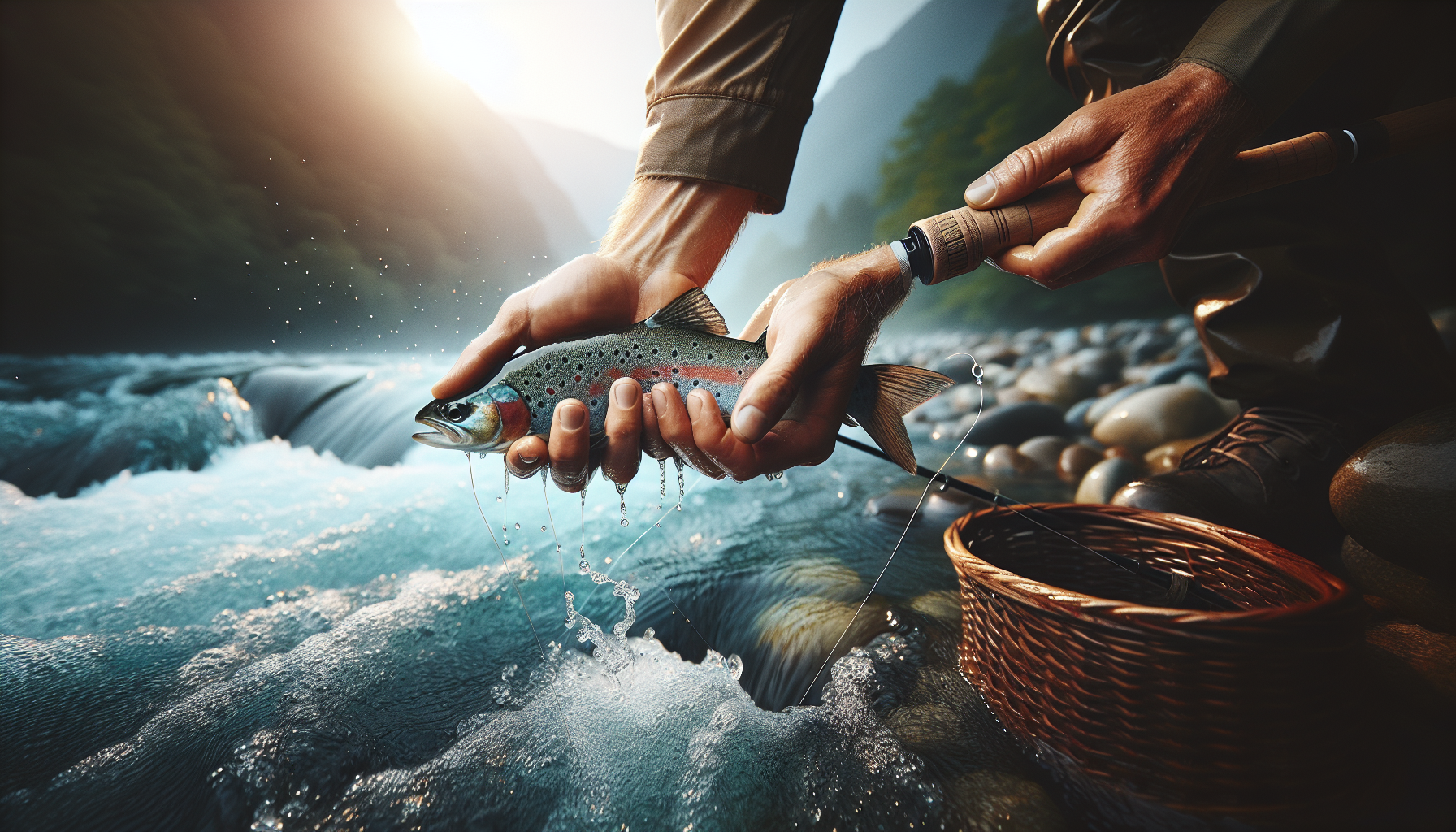
Use gear that shortens fight time. A rod with enough backbone, a strong tippet matched to conditions, and a rubber net reduce exhaustion and injury. Keep fish in the water during release, limit air exposure to a few seconds at most, and avoid handling fish with dry hands. During heat or drought, do not repeatedly target fish stacked in obvious coldwater refuges at tributary mouths or spring seeps. Those areas are life-support zones, not dependable hotspots to exploit.
Wading discipline matters more than many anglers realize. Avoid spawning gravel, especially in fall and spring, and learn what redds look like in your home waters. Enter and exit at durable access points rather than trampling banks. On meadow streams and spring creeks, a single steep shortcut can start erosion that worsens with every visit. Clean boots, nets, and boats between watersheds using protocols promoted by agencies and groups such as Trout Unlimited and state fish and wildlife departments. Aquatic invasive species including didymo, New Zealand mudsnails, and zebra mussels can spread through small amounts of retained water or sediment.
| Situation | Best Practice | Why It Conserves Water Resources |
|---|---|---|
| Low summer flows | Fish at dawn or stop entirely | Reduces stress on fish when oxygen is lowest and temperatures rise fastest |
| Warm water above safe trout thresholds | Switch species or waters | Prevents delayed mortality in heat-stressed fish |
| Crossing the stream | Use shallow, durable bottoms and avoid spawning gravel | Protects eggs, insect habitat, and bank stability |
| Landing fish | Use heavier tippet and a rubber net | Shorter fights mean less metabolic stress and faster recovery |
| Moving between rivers | Clean, drain, and dry gear | Limits spread of invasive species that alter habitat and water quality |
Finally, think beyond your own footprint and model good practice. If you guide, fish with friends, or belong to a club, normalize carrying a thermometer, discussing closure thresholds, and choosing not to fish marginal conditions. River culture changes when experienced anglers make conservation visible and routine rather than optional.
Protect Habitat Beyond the Cast
Water conservation is strongest when anglers support the landscape features that keep streams alive between storms and seasons. Riparian vegetation is one of the most important. Trees and shrubs shade water, stabilize banks, contribute terrestrial insects, and help moderate temperature swings. Root systems slow erosion and improve infiltration, which supports baseflow. Wetlands, beaver complexes, side channels, and intact floodplains act like natural storage infrastructure. They spread high water, trap sediment, recharge groundwater, and release moisture slowly later in the year. In degraded watersheds, restoring these functions often produces greater fisheries benefit than any single in-channel project.
Beaver restoration is a useful example. In the right settings, beaver dams reconnect floodplains, raise local water tables, and create habitat diversity. They can increase late-season water retention and provide refuge for juvenile fish, amphibians, and waterfowl. They are not appropriate everywhere; irrigation conflicts, road crossings, and certain channel types require careful planning. But where they fit, they show how storing water in the landscape can support both biodiversity and angling quality.
Anglers can help by joining stream cleanups, planting riparian buffers, supporting conservation easements, and reporting erosion or pollution issues to local watershed groups. Many effective projects are surprisingly practical: fencing livestock out of vulnerable reaches, replacing undersized culverts that block fish passage, decommissioning erosion-prone roads, or reintroducing large wood to simplify channels. These are not glamorous actions, yet they are often what turns a declining fishery into a stable one over five to ten years.
It is also worth paying attention to land use near your favorite water. New subdivisions, gravel extraction, intensive agriculture, and clear-cut logging each affect runoff timing and sediment delivery differently. Learning the watershed map changes how you fish. You stop seeing a river as a strip of public access and start seeing it as the downstream expression of every decision made uphill.
Advocacy, Policy, and Community Action
Individual ethics matter, but durable water conservation depends on policy and community institutions. Instream flow protections, water-right leasing, drought management plans, dam operations, stormwater controls, and wetland regulations directly affect fisheries. In the western United States, for example, water law often determines whether enough cold water remains in a river during late summer. Voluntary angler restraint helps, but it cannot substitute for keeping water in the channel. Supporting organizations that negotiate water transactions, restore habitat, and monitor flows is one of the highest-leverage steps a fly fisher can take.
Pay attention to public comment periods for river management plans, hydropower relicensing, and land-use proposals. Agencies do read specific, informed comments, especially when they reference temperature data, fish passage, spawning timing, or documented recreation impacts. Local watershed councils, Trout Unlimited chapters, Backcountry Hunters and Anglers, and state-level conservation groups often provide action alerts and project summaries that make engagement easier. If you own riverfront property or belong to a club with access agreements, advocate for erosion control, septic maintenance, native planting, and clear low-water fishing rules.
Citizen science is another practical tool. Anglers can contribute temperature logs, macroinvertebrate observations, redd counts under supervision, invasive species reports, and photographic records of changing channel conditions. Long-term local knowledge has real value. Some of the clearest evidence of ecological decline comes from consistent volunteer monitoring paired with agency datasets. When you can say a tributary that once held summer brook trout now exceeds thermal thresholds by mid-July, you move the conversation from opinion to evidence.
Build a Conservation Mindset Into Every Trip
The best water conservation tips for fly fishers are ultimately habits of attention. Check conditions before leaving home. Carry a thermometer. Learn your watershed’s seasonal vulnerabilities. Respect closures, and create your own stricter limits when needed. Fish with gear and techniques that minimize fight time and handling. Stay on established access routes. Clean your equipment. Support habitat work and sound water policy. Teach newer anglers that success is not measured only by fish landed, but by whether the river is left healthier or at least no worse because you were there.
This environmental impact hub exists for a simple reason: conservation and ethics become meaningful when they shape daily decisions on real water. Fly fishers see drought, warming, sediment, and habitat loss up close. That access creates responsibility, but it also creates influence. Small choices on the bank protect fish today, while advocacy and restoration protect watersheds for decades. If you want better fishing in the future, start by making water conservation part of every outing, then explore the related guides in this Conservation and Ethics section and put one new practice to work on your next trip.
Frequently Asked Questions
Why is water conservation so important for fly fishers specifically?
Water conservation matters to fly fishers because fishable water depends on more than just having a river or lake on a map. Healthy fisheries require enough cold, clean, oxygen-rich water moving through a watershed at the right times of year. When flows drop too low, water temperatures rise, dissolved oxygen falls, and fish experience significant stress. Trout and salmon are especially vulnerable, but warmwater species such as bass and carp also depend on stable habitat, adequate water quality, and functioning food webs. For fly fishers, that means water conservation is directly tied to whether hatches occur normally, spawning areas stay connected, juvenile fish survive, and fish can hold in predictable lies rather than being pushed into marginal habitat.
It also matters because fly fishing is closely linked to the full ecology of a waterbody, not just the fish themselves. Aquatic insects, baitfish, amphibians, streamside vegetation, and groundwater inputs all respond to changes in water quantity and quality. A spring creek with reduced recharge, a tailwater affected by poor release management, or a freestone stream suffering from late-season withdrawals can all fish very differently from one year to the next. In that sense, water conservation is not an abstract environmental concern for anglers; it is a practical, day-to-day issue that affects access, timing, fish behavior, catch-and-release survival, and the long-term resilience of the places people care about most.
What are the biggest threats to water quantity and water quality in fly fishing waters?
The biggest threats usually come from a combination of overuse, pollution, and habitat disruption across the watershed. On the quantity side, excessive water withdrawals for irrigation, municipal use, industry, and development can reduce streamflows to levels that harm fish and aquatic insects, especially during summer and drought periods. Groundwater pumping can be just as damaging because many rivers, spring creeks, and wetlands depend on groundwater inputs to maintain cold, stable flows. Dams and poorly timed releases can also alter natural hydrographs, affecting spawning, insect emergence, water temperature, and the seasonal cues fish rely on.
On the quality side, sediment, nutrient runoff, warm water inputs, road runoff, wastewater issues, and chemical contamination can all degrade fisheries. Fine sediment can smother spawning gravel and insect habitat. Excess nutrients may lead to algae blooms and oxygen problems. Loss of streamside vegetation exposes water to more solar heating and increases bank erosion. Urbanization adds polluted runoff and reduces infiltration, while poorly managed agriculture can contribute both temperature and nutrient stress. These pressures rarely occur in isolation. A river with low flow is more vulnerable to warming, and warm, shallow water is less able to absorb pollution without ecological consequences. That is why effective water conservation for fly fishers means looking upstream, upland, and across the whole watershed rather than focusing only on the reach being fished.
What can individual fly fishers do to help conserve water and protect fisheries?
Individual fly fishers can make a meaningful difference by combining on-the-water ethics with off-the-water advocacy and personal water stewardship. On the water, one of the most important steps is adapting to current conditions. Avoid fishing during extreme low flows or high water temperatures, particularly for coldwater species. Fish early when water is coolest, minimize fight times, keep fish in the water during release, and be willing to stop altogether when conditions become unsafe for the fish. Respect closures, hoot owl restrictions, spawning closures, and access rules designed to reduce stress on vulnerable fisheries.
Off the water, anglers can support conservation groups, watershed councils, trout and salmon organizations, and local habitat projects that work on flow protection, riparian restoration, dam operations, and water policy. Reporting pollution, illegal diversions, fish kills, or habitat damage can also have real value. At home, reducing personal water use matters more than many anglers realize. Efficient landscaping, smarter irrigation, fixing leaks, and supporting local water policies that prioritize stream health all contribute to healthier watersheds. Fly fishers also have influence through education: encouraging catch-and-release best practices, sharing temperature awareness, and helping others understand that water conservation includes both quantity and quality can shift angling culture in a very positive direction.
How do low flows and warm water affect fish, insect life, and overall fishing conditions?
Low flows and warm water change nearly every part of a fishery. For fish, reduced water volume means less available habitat, fewer deep holding areas, greater crowding, and more exposure to predators. As water warms, fish metabolism increases while oxygen availability decreases, creating a stressful imbalance. Trout and salmon may stop feeding normally, abandon preferred lies, seek out tributary mouths or spring inputs, or become lethargic and highly vulnerable to post-release mortality. Even species that tolerate warmer conditions can still be affected if habitat shrinks, food availability changes, or pollution becomes more concentrated.
Aquatic insects are also affected because flow and temperature influence emergence timing, egg survival, larval development, and the quality of riffle habitat. Productive insect communities need stable substrates, good oxygen levels, and clean water. When flows drop, shallow riffles can become disconnected or degraded, algae may increase, and fine sediment can accumulate. These changes can reduce hatch consistency and alter the kinds of bugs available to fish. From an angling perspective, fishing conditions may look deceptively good because fish become concentrated in smaller areas, but that concentration often reflects stress rather than abundance. Responsible fly fishers recognize that vulnerable fish are not always fishable fish and that good conservation sometimes means walking away during critical conditions.
How can fly fishers support long-term water conservation beyond their own fishing trips?
Supporting long-term water conservation means thinking like a watershed advocate, not just a recreation user. The most effective approach is to stay engaged with the policies and projects that determine how much water remains in rivers and how clean it stays. That can include supporting instream flow protections, improved dam release management, wetland restoration, groundwater recharge efforts, riparian planting, culvert replacement, and stronger safeguards against pollution and over-allocation. Public meetings, comment periods, local conservation board decisions, and state water planning processes may seem far removed from fishing, but they often shape the future of a fishery more than any single hatch or season.
Fly fishers can also help by supporting businesses, guides, lodges, and brands that take conservation seriously and by contributing time or funding to stream cleanups, monitoring efforts, restoration workdays, and citizen science programs. Educating newer anglers is another important piece of long-term stewardship. When experienced fishers explain why temperature checks matter, why spawning fish should be left alone, or why streamside vegetation should never be trampled unnecessarily, they help build a stronger conservation ethic across the community. In the long run, fisheries remain healthy when anglers see themselves as participants in watershed protection. That mindset turns water conservation from a talking point into an everyday responsibility that keeps rivers, creeks, tailwaters, and stillwaters fishable for future generations.