Fly fishing puts anglers in intimate contact with rivers, trout streams, alpine lakes, spring creeks, and fragile shorelines, which makes ethical fishing practices inseparable from good fishing. Leave No Trace principles, originally developed for backcountry travel, provide a practical framework for reducing damage to land, water, wildlife, and other visitors while still enjoying the sport. In fly fishing, those principles apply not only to camping and hiking but also to wading, fish handling, access decisions, gear selection, and the way anglers move through a watershed. Practicing Leave No Trace while fly fishing matters because fisheries are finite, riparian habitats recover slowly, and poor behavior by a few anglers can degrade habitat, stress fish, and close public access for everyone.
When I teach new anglers, I define ethical fishing practices as the combination of legal compliance, ecological restraint, and respect for other people. Legal compliance means following seasons, licensing requirements, tackle restrictions, and private property boundaries. Ecological restraint means minimizing avoidable harm, especially during spawning periods, warm-water stress events, and low-flow conditions. Respect for other people means sharing water courteously, keeping noise down, yielding space, and leaving access points cleaner than you found them. Leave No Trace strengthens all three. It gives fly anglers a clear way to think before they cast: plan carefully, avoid damaging habitat, manage waste, limit unnecessary fire or disturbance, protect wildlife, and be considerate of other visitors.
This hub article covers the full scope of ethical fishing practices through that lens. It explains how to prepare for a low-impact trip, how to move through rivers without trampling habitat, how to handle fish responsibly, how to manage leaders, tippet, and other waste, and how to make sound decisions when conditions are poor. It also addresses common questions anglers ask: Can catch and release still harm fish? When should you stop fishing because water is too warm? What does respectful stream etiquette look like on crowded water? The answers depend on context, but the core principle is consistent: take only the experience, leave the ecosystem functioning as if you had barely been there.
Plan ahead for low-impact fly fishing
The most effective Leave No Trace decision is usually made before you leave home. Planning ahead reduces improvisation, and improvisation is what leads anglers to crush streamside vegetation, park illegally, wade through redds, or fish stressed trout in unsafe temperatures. Start by checking regulations from the relevant state or provincial agency. Look for seasonal closures, gear restrictions, invasive species rules, and emergency hoot owl restrictions that limit fishing during hot afternoons. Review stream gauges through the USGS, weather forecasts, and water temperatures from local shops, guide reports, or your own thermometer. If trout water is approaching 68 degrees Fahrenheit, especially during prolonged summer heat, ethical anglers should consider stopping or switching to coldwater species in safer conditions.
Access planning matters just as much. Use official trailheads, marked pullouts, and established angler paths rather than creating social trails that widen banks and accelerate erosion. If a fishery crosses private land, confirm legal access points and respect posted signs. In the West, stream access laws vary widely by state; assumptions can lead to trespass and permanent conflict with landowners. Pack gear that supports low-impact choices: forceps for quick hook removal, a rubber or knotless landing net, barbless hooks or pliers to pinch barbs, reusable water bottles, and a small trash pouch for tippet clippings and food wrappers. Good planning is not glamorous, but it prevents most ethical mistakes before boots touch the river.
Travel and wade without damaging habitat
Riverside habitat is productive precisely because it is vulnerable. Riparian plants stabilize banks, shade water, filter sediment, and create insect habitat that supports fish. Repeated foot traffic through willows, sedges, and undercut bank edges breaks stems, compacts soil, and widens access scars. Stick to durable surfaces whenever possible: gravel bars, established trails, bedrock, and bare ground. Enter and exit the water at hardened points instead of sliding down fresh banks. If you fish small streams, avoid bushwhacking along the edge for every cast; often the least damaging route is to stay in the channel on firm gravel or to retreat to a trail and reenter farther upstream.
Wading requires the same discipline. Trout spawn in redds, shallow gravel nests that are lighter in color and often appear as clean patches in riffles or tailouts. Stepping on redds crushes eggs and can wipe out an entire spawning effort. During spring and fall, study the bottom before each step and give spawning fish wide berth. On freestone streams, avoid repeatedly crossing side channels and soft margins where juvenile fish shelter. Felt soles once offered superior grip, but because of invasive species concerns many regions discourage or ban them; modern rubber soles with studs often provide safer traction while reducing the risk of transporting organisms between watersheds. Clean, drain, and dry boots, nets, and waders thoroughly to avoid spreading whirling disease, didymo, New Zealand mudsnails, and other aquatic hitchhikers.
Catch, release, and fish handling done responsibly
Catch and release is only ethical when it is done in a way that keeps post-release mortality low. That starts with tackle. Use a rod strong enough to land fish quickly instead of prolonging the fight for sport. Match tippet strength to the fish and current so you can control the fish efficiently. Barbless hooks penetrate well, release quickly, and reduce handling time. Circle hooks are uncommon in fly fishing, but hook geometry still matters; many standard nymph and dry-fly hooks remove cleanly when kept barbless. Once hooked, keep the fish in the water as much as possible. A rubber net supports the body, protects the slime coat, and limits fin abrasion better than coarse nylon mesh.
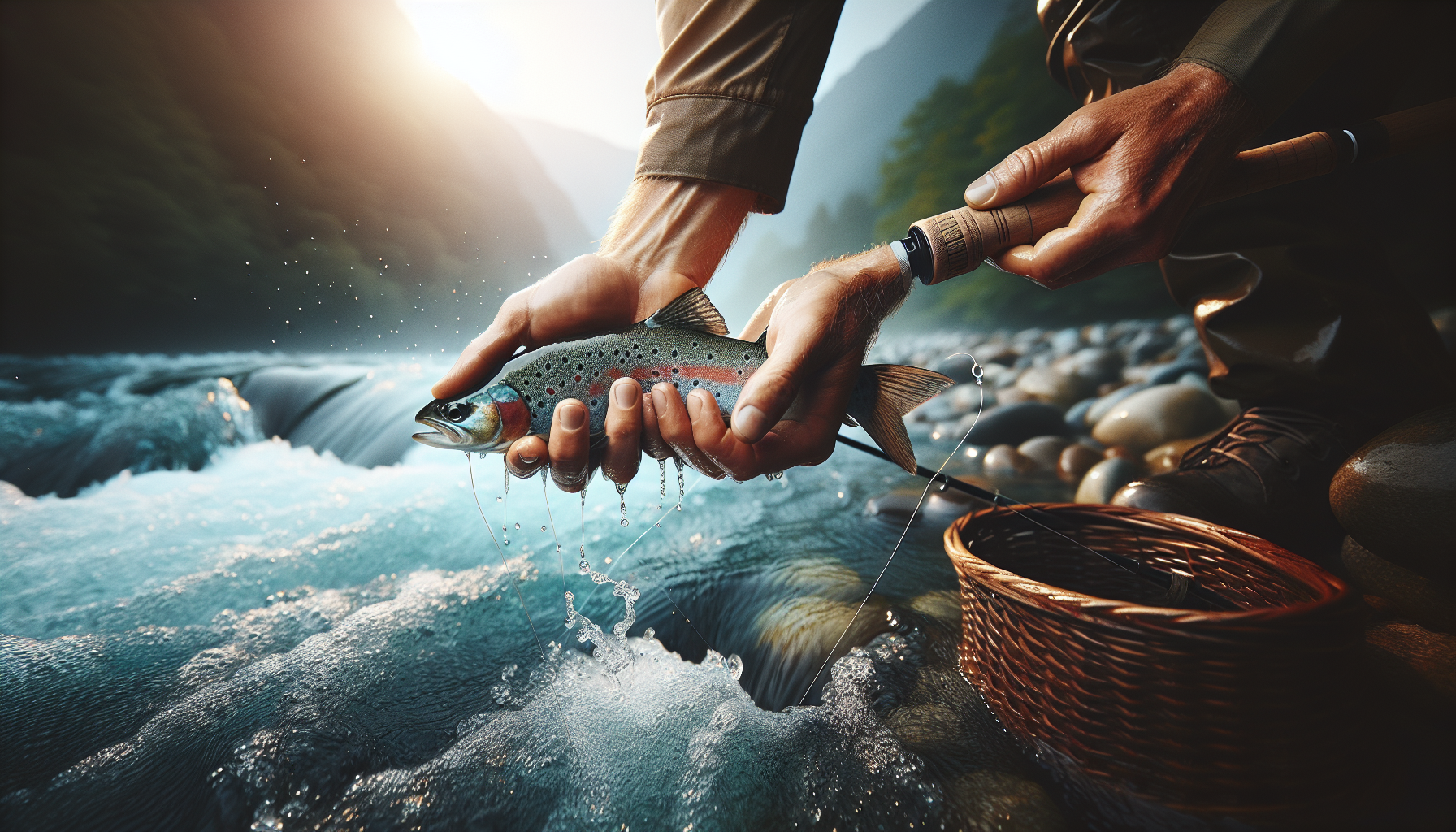
Hands should be wet before touching the fish. Never squeeze the abdomen, clamp the jaw on larger trout, or drag fish onto rocks, sand, or dry grass for photographs. If you want a picture, have the camera ready, lift the fish briefly, and return it to the water within seconds. Research has repeatedly shown that air exposure increases mortality, especially when combined with high temperatures and exhaustive fights. On warm days, even robust fish can appear to swim away and still die later from metabolic stress. Revival should happen in calm current with the fish facing naturally into the flow; do not pump it back and forth. If a fish is deeply hooked, cutting the tippet is often less damaging than aggressive hook removal. Ethical fishing practices prioritize the fish’s survival over landing every individual or documenting every catch.
Manage waste, fishing line, and streamside gear carefully
Leave No Trace in fly fishing is often most visible in what anglers leave behind. Monofilament, fluorocarbon, and fly line fragments persist for years, entangle birds, and can be ingested by wildlife. Every tippet clipping belongs in a pocket, a zip bag, or a dedicated line container, never on the ground or in the current. The same standard applies to strike indicators, split shot packaging, leader sleeves, drink containers, and cigarette butts. Soft plastics are less common in fly fishing than in conventional angling, but foam, chenille, and synthetic tying materials still become litter when damaged flies are discarded streamside. Pack them out.
Human waste also needs deliberate management, especially on remote walk-in fisheries. At developed access sites, use toilets whenever available. In the backcountry, follow local rules for catholes or pack-out systems and stay well away from water, camps, and trails. Soap, even biodegradable soap, should not enter streams. Wash dishes and hands at least 200 feet from the water and scatter strained wastewater on soil where microbes can break it down. Food scraps do not belong in riverside bushes; they attract raccoons, bears, rodents, and scavenging birds, changing animal behavior around access points. The best anglers I know always carry an extra bag and leave with more trash than they brought in. That habit protects fisheries and signals to landowners and agencies that fly anglers are responsible stewards.
Protect wildlife beyond the fish you target
Ethical fishing practices extend beyond trout, bass, steelhead, or carp. Rivers are connected habitats used by nesting birds, amphibians, aquatic insects, mammals, and spawning forage species. Disturbance at the wrong time can have outsized effects. Avoid repeated approaches to nesting waterfowl, heron rookeries, or bank swallows using exposed cutbanks. Keep dogs under control near wildlife and spawning areas; an off-leash dog racing through a redd or bird nest site is not harmless fun. If you see moose, bears, elk, or other large animals near the river corridor, give them substantial space and change your route rather than forcing an encounter.
Insect life deserves attention too because it drives the food web fly anglers depend on. Turning over rocks to inspect nymphs is useful, but those rocks should be returned gently to their original position. Wholesale rock rolling in shallow riffles can crush invertebrates and expose eggs. The same mindset applies to baitfish and amphibians along margins and side channels. Avoid beaching drift boats or rafts on vegetated islands where ground-nesting birds may be present. On stillwaters, use existing launch sites rather than dragging craft through reeds and emergent plants. Small acts of care preserve the broader system that makes good fishing possible year after year.
Respect other anglers, landowners, and local communities
Courtesy is a conservation issue because social conflict often leads to access restrictions, crowding pressure, and poor on-water decisions. Good stream etiquette starts with spacing. Do not step into a run directly above or below another angler without asking. On many trout rivers, a polite check-in at the access point prevents hours of frustration: ask which direction someone is moving, how far they plan to fish, and whether they mind you starting elsewhere. On swinging water for salmon or steelhead, follow the established rotation rather than anchoring in place and interrupting the line of anglers. On drift-boat fisheries, give wade anglers room and avoid repeated close passes through occupied water.
Landowner relations are equally important. Close gates, park without blocking roads, keep noise low at dawn, and do not leave boot tracks across hayfields simply because the river is visible beyond them. Buy flies, licenses, shuttle services, and meals locally when possible; healthy fishing towns are more likely to support access and restoration. If you post online, avoid geotagging fragile small waters that cannot absorb sudden pressure. Sharing a region, a drainage, or a fly pattern is usually enough. Ethical anglers understand that information can impact fish just as surely as footsteps can.
Know when not to fish and how to make better decisions
One of the hardest Leave No Trace skills is restraint. The fact that fishing is legal does not always mean fishing is responsible. Low summer flows, high water temperatures, icy anchor shelves, active spawning periods, and winter refuges all demand judgment. I rely on a simple decision framework before every trip: current conditions, species sensitivity, expected fight time, and cumulative pressure. If temperatures are high, if fish are already concentrated in limited cold water, or if every angler in town is hammering the same reach, the ethical choice may be to fish early, target a hardier species, or skip the outing entirely.
| Situation | Why It Matters | Better Ethical Choice |
|---|---|---|
| Trout water above 68°F | Lower oxygen and higher stress increase post-release mortality | Stop fishing for trout or switch to cooler water/species |
| Visible redds and spawning fish | Wading can crush eggs and disrupt reproduction | Avoid the area and fish different water |
| Crowded access point | Pressure leads to conflict and repeated fish handling | Walk farther, change beats, or return another time |
| Deeply hooked fish | Forced hook removal can cause lethal injury | Cut the tippet close and release quickly |
This judgment is what separates rule-following from true stewardship. Ethical fishing practices are not a checklist you complete once. They are a pattern of choices that protect habitat, fish populations, and public trust over time. If you want to become the kind of angler who improves every river you visit, start by applying Leave No Trace principles on your next trip. Plan carefully, tread lightly, handle fish as if their survival depends on you, pack out every scrap, and be the person others are glad to meet at the water’s edge.
Frequently Asked Questions
What does Leave No Trace mean in the context of fly fishing?
In fly fishing, Leave No Trace means making every reasonable effort to enjoy the water without degrading the river, lake, bank, trail, or surrounding habitat. While the concept began as a framework for backcountry travel, it fits fly fishing naturally because anglers often move through sensitive environments such as trout streams, alpine lakes, spring creeks, wetlands, and riparian corridors. Practicing it well involves more than packing out snack wrappers. It also includes choosing durable access points, avoiding trampling streamside vegetation, minimizing erosion on muddy banks, respecting private property and local regulations, handling fish in ways that reduce stress and mortality, and avoiding behaviors that disturb wildlife or diminish other people’s experience.
For anglers, Leave No Trace is best understood as a mindset of low-impact decision-making. Every step into a riffle, every place you set down a pack, every fish you release, and every route you take to the water has an effect. Ethical fly fishing means noticing those effects and adjusting your behavior before damage occurs. That can be as simple as using established trails, entering the water where banks are already hardened, keeping voices low in quiet areas, and leaving a run cleaner than you found it. The goal is not just to avoid obvious littering, but to preserve the health, appearance, and wild character of fisheries so that the resource remains productive and enjoyable for fish, wildlife, and future anglers.
How can I avoid damaging riverbanks, streambeds, and shoreline habitat while wading or accessing the water?
One of the most important Leave No Trace habits in fly fishing is controlling how you approach and move through the water. Riverbanks and shorelines are often more fragile than they look. Repeatedly scrambling down steep edges, sliding on muddy slopes, or pushing through streamside grasses can break down root systems that hold soil in place. Once vegetation is damaged, banks erode faster, sediment enters the water, and spawning habitat can suffer. The best approach is to use established access points, angler trails, gravel bars, boat ramps, or naturally durable surfaces whenever possible. If an area is obviously soft, undercut, or heavily vegetated, look for a better entry rather than creating a new one.
While wading, move carefully and pay attention to where you place your feet. In some waters, especially during spawning periods, trout and other fish build redds in shallow gravel. These nests can be hard to see, but stepping on them can crush eggs and reduce recruitment. Learn how redds appear in your local fishery and avoid wading through likely spawning zones, especially in tailouts and shallow riffles during seasonal closures or known spawn windows. Even outside spawning areas, excessive wading can dislodge aquatic insects, stir up sediment, and alter holding water. Often the lowest-impact choice is also the best fishing strategy: stay on shore longer, fish from a distance when you can, and wade only as much as necessary to make effective presentations.
On stillwaters and small creeks, the same principles apply. Avoid dragging float tubes, kayaks, or boots through reeds and emergent vegetation. Don’t crush shoreline plants just to gain a cleaner casting lane. If you need to move, retreat to a durable surface and re-enter at a better spot. These habits may seem minor in isolation, but heavily fished waters accumulate damage quickly. By concentrating travel on existing routes and minimizing unnecessary wading, you help protect the physical structure of the fishery that makes good fly fishing possible in the first place.
What are the best Leave No Trace practices for handling and releasing fish responsibly?
Fish handling is a core part of Leave No Trace in fly fishing because the ethical impact of a day on the water is measured not only by what you leave on shore, but also by the condition of the fish after release. Responsible catch-and-release starts before the hookup. Use tackle appropriate for the species and conditions so fish can be landed efficiently rather than fought to exhaustion. Pinching barbs, using strong enough tippet, and choosing hooks that are less damaging can shorten release time and reduce injury. In warm water or low-flow conditions, consider whether targeting trout or other coldwater species is appropriate at all, since fish already under thermal stress may not recover well even when released carefully.
Once a fish is hooked, keep it in the water as much as possible. Wet your hands before touching it, support it gently, and avoid squeezing the body or inserting fingers into the gills. Rubber or knotless nets are generally safer than abrasive mesh because they help protect the fish’s slime coating and reduce fin damage. If you want a photo, prepare everything in advance so the fish is out of the water for only a second or two, if at all. The longer a fish is exposed to air, especially after a hard fight, the greater the stress. A good rule is to prioritize the release over the image.
Hook removal should be quick and calm. Use hemostats or forceps, and if the hook is deeply embedded, cutting the line may be better than causing major trauma trying to remove it. During release, hold the fish upright in gentle current and allow it to recover on its own rather than pushing it back and forth aggressively. If it cannot maintain balance or swims away weakly, give it more time. In especially warm temperatures, during spawning, or in heavily pressured fisheries, the most ethical choice may be to stop fishing altogether or switch to a species less vulnerable to stress. Leave No Trace in this sense means leaving the fishery biologically intact, not just visually clean.
How should fly anglers manage trash, tippet, flies, and other gear waste on the water?
Proper waste management is one of the most visible and practical parts of Leave No Trace, and it matters greatly in fly fishing because even small items can harm wildlife and spoil the experience for others. Monofilament, fluorocarbon tippet, strike indicators, split shot packaging, hook wrappers, leader tabs, drink containers, and broken flies are all common forms of angling litter. Unlike a dropped leaf or twig, these materials do not belong in the ecosystem. Birds, fish, and mammals can become entangled in line, ingest small plastics, or be injured by hooks left behind. That is why every angler should carry a simple system for waste: a dedicated pocket, zip bag, or tippet scrap holder for line and a small trash pouch for everything else.
Good habits make a major difference. Clip tippet cleanly and immediately stow the scraps rather than tucking them into a vest ring or stuffing them into a random pocket where they may blow away later. If you change flies, secure old patterns in a patch or box rather than dropping them on the bank while re-rigging. Be especially careful in wind, from boats, and on rocky shorelines where small items disappear easily. If nature calls during a long day afield, follow standard sanitation guidelines for the setting: use established facilities when available, or dispose of human waste properly and well away from water sources, trails, and campsites according to local recommendations.
Many conscientious anglers adopt the rule of packing out more than they packed in. Picking up discarded line, cans, bait containers, or other litter left by less careful visitors improves the fishery immediately and reinforces a culture of stewardship. It also sets a visible example for newer anglers. Leave No Trace is not limited to your own waste stream; it includes contributing to the long-term cleanliness and safety of the places you fish. A riverbank free of tangles, plastic, and metal is better for wildlife, better for water quality, and better for everyone who comes after you.
How can I respect wildlife and other people while still enjoying a productive day of fly fishing?
Leave No Trace includes social and ecological awareness, which means understanding that you are sharing the landscape with both wildlife and other visitors. Around the water, that begins with giving animals space. Nesting birds, amphibians in wetlands, spawning fish, waterfowl, and mammals using stream corridors can all be disrupted by close approach, loud voices, unleashed dogs, or repeated movement through feeding and resting areas. Observe wildlife quietly and from a distance, and never chase fish into shallow water for easier photos or follow animals for a better look. Secure food and avoid leaving scent-laden trash behind, especially in bear country or areas with raccoons and other habituated wildlife. The less wildlife associates anglers with food or disturbance, the healthier those ecosystems remain.
Respect for people is just as important. Crowding another angler’s run, wading through water someone is clearly fishing, blasting music at a trailhead, or monopolizing a small access point all create unnecessary conflict. A good rule is to communicate early, give generous space, and assume others came for quiet and immersion as much as you did. On technical waters and small streams, courtesy often matters more than formal rules. If another angler reached a stretch first, move on or ask politely before entering nearby. If you are fishing from a drift boat or raft, be especially careful not to cut off wading anglers or anchor where you block access.
Leave No Trace also means considering the cumulative experience of a place. Wild fisheries feel wild partly because visitors behave with restraint. Keep noise low, avoid unnecessary trail cutting or shoreline clearing, obey seasonal closures and special regulations, and leave gates, fences, and