Fly fishing in crowded waters tests more than casting skill; it reveals an angler’s ethics, judgment, and respect for both fish and people. Ethical fishing practices are the habits and decisions that minimize harm, share limited space fairly, and protect the long-term health of a fishery. In the context of fly fishing, ethics go beyond legal compliance. Regulations set a floor, but good conduct often requires more restraint than the rulebook demands. On popular trout rivers, urban tailwaters, stocked ponds, and famous salmon runs, the challenge is the same: how do you pursue fish responsibly when access is tight, pressure is heavy, and every pool may already hold another angler?
I have fished enough crowded rivers to know that conflict rarely starts with one dramatic act. More often, it builds from small lapses: stepping into water directly above someone, repeatedly casting over active spawners, fighting fish too long on light tippet for sport, or posting exact locations online after a strong hatch. These choices seem minor in isolation, yet they compound. In pressured fisheries, fish become harder to catch, more vulnerable to mishandling, and more likely to encounter anglers during sensitive periods. People become less patient, less willing to mentor, and more likely to treat a public resource as private territory.
This matters because crowding is now normal in many fisheries. Better gear, stronger destination marketing, social media hotspotting, and easier access have concentrated pressure on well-known reaches. At the same time, climate stress, low flows, warming water, and habitat loss have made many fisheries less resilient. Ethical fishing practices are therefore not an abstract code; they are practical conservation tools. They reduce mortality in released fish, lower conflict at access points, protect spawning success, and preserve the quality of the experience for everyone on the water. For a conservation and ethics hub, this is the core principle: in crowded waters, every angler’s choices affect the fishery and the community around it.
To fish ethically in these settings, anglers need a framework. First, protect the resource: avoid unnecessary mortality, respect closures, and adapt to conditions such as high water temperatures. Second, respect space: communicate clearly, ask before entering a run, and do not claim more water than you are actively fishing. Third, handle information responsibly: celebrate places without exposing fragile fisheries to sudden pressure. Fourth, support stewardship: report violations, volunteer for habitat work, and follow guidance from biologists, guides, and local organizations. When practiced together, these habits define ethical fly fishing in crowded waters and connect directly to broader conservation goals.
Protecting Fish Comes First
The first duty in ethical fishing practices is to protect fish, especially when angling pressure is high. Catch-and-release is not automatically harmless. Scientific studies on salmonids consistently show that mortality increases when fish are played too long, exposed to warm water, handled excessively, or removed from the water for photographs. On rivers where summer temperatures climb above about 68 degrees Fahrenheit, trout physiology is already stressed; by 70 degrees and higher, post-release survival can decline sharply. In crowded waters, where a fish may be hooked multiple times in a day, the cumulative impact matters even more.
That is why ethical anglers adjust tactics to conditions instead of insisting on the same approach all season. If water temperatures rise, fish early, switch to warmwater species, or stop entirely. Use tippet heavy enough to land fish quickly. Pinch barbs for faster releases. Keep fish wet, support them gently, and skip hero shots that require extended air exposure. If a fish shows severe exhaustion, revive it in moderate current only as long as needed and release it once it can hold itself upright. The point is not to maximize landings; it is to minimize damage while participating in a shared fishery.
Spawning periods demand even more restraint. Trout redds often appear as clean, bright patches of gravel in shallow current. Wading through them crushes eggs. Targeting fish visibly paired on redds may be legal in some places, but legality does not make it ethical. The same principle applies to salmon and steelhead stacked in migration bottlenecks or bass guarding beds in shallow water. In crowded conditions, one person’s choice to fish vulnerable fish often invites imitation. Ethical leadership sometimes means walking past catchable fish because the reproductive value of leaving them undisturbed is greater than the satisfaction of one more hookup.
Sharing Water Without Conflict
Crowded water has its own etiquette, and anglers who ignore it create conflict faster than almost anything else. The simplest rule is also the most important: never assume. Ask before entering a run, before stepping in above or below another angler, and before anchoring, beaching a boat, or swinging through a seam someone is clearly covering. On drift fisheries, boats should yield adequate space to wading anglers and avoid dropping clients into water already occupied. On foot, anglers should not leapfrog one another without consent. A thirty-second conversation prevents most problems.
In practice, ethical spacing varies by technique and river size. Indicator nymphing a short slot may require less room than swinging flies for steelhead through a broad run where anglers rotate down one step per cast. Dry-fly fishing to rising trout near a bank may demand quiet and distance that are not obvious from across the river. The ethical standard is not a fixed number of yards. It is whether your presence changes another person’s opportunity, drift, swing, or fish behavior without their agreement. If it does, you are too close.
Courtesy also includes pace. In popular water, some anglers camp on one pod of fish for hours while others wait for access. There is no universal time limit, but monopolizing a community resource is poor form, especially on obvious public pools. Fish the water in front of you, enjoy it, and move on when appropriate. If someone arrived first and is working methodically downstream, do not slip in below them because you found a visible riser. First in line does not mean ownership of the river, but it does earn temporary priority within the run being fished.
| Situation | Ethical Choice | Why It Matters |
|---|---|---|
| Another angler is in a run you want to fish | Ask where they are headed and enter only with clear agreement | Prevents crowding, crossed lines, and resentment |
| Water temperature is high in late summer | Fish at dawn or stop targeting trout | Reduces post-release mortality under thermal stress |
| You see trout on redds | Walk around the area and do not cast to them | Protects spawning success and eggs in gravel |
| A guide boat approaches wading anglers | Yield room and avoid anchoring in occupied water | Respects existing use and reduces user conflict |
| You catch several fish from a fragile small stream | Share the experience, not the exact location online | Limits sudden pressure on sensitive fisheries |
Handling Fish, Gear, and Technique Responsibly
Ethical fishing practices are expressed through gear choices as much as intention. Tackle should fit the species, current, and likely fish size. I routinely see anglers fish undersized rods or ultra-light tippet in heavy current because they enjoy long fights. That may feel sporting, but in crowded waters it is often irresponsible. Extended fights elevate lactate, reduce recovery, and increase the chance that a released fish becomes easy prey for birds, seals, or larger fish. A better ethic is efficient pressure: enough strength to control the fish, enough finesse to protect the tippet, and enough experience to end the fight promptly.
Hooks matter too. Barbless or debarbed hooks simplify release and reduce tissue damage, particularly when multiple fish are caught quickly during hatches or runs. Rubber-mesh nets protect slime better than knotted nylon. Long forceps, hemostats, and hook removers shorten handling time. When targeting pike, musky, or saltwater species with teeth, proper jaw spreaders and heavy pliers are not optional accessories; they are part of humane fish handling. The ethical standard is preparedness. If your setup does not let you land and release fish efficiently, it is not complete.
Technique choices also carry ethical weight. Fishing streamers in deep summer pools where trout stack under low oxygen can be productive, but repeated aggressive chases may compound stress. High-stick nymphing through obvious redds can produce easy hookups at the expense of future year classes. Sight fishing to carp in shallow mud is generally low impact if fish are hooked cleanly and released quickly, yet doing the same to bedding bass during peak spawn raises more serious questions. Ethical anglers ask not only, “Can this be done?” but “What are the biological consequences if many people do it here today?”
Local Rules, Informal Norms, and Gray Areas
One reason fly fishing ethics can feel confusing is that every fishery has both formal regulations and informal norms. Regulations are clear: seasons, bag limits, fly-only sections, single-hook restrictions, hoot owl closures, and trespass boundaries. Informal norms are learned on the water: whether anglers rotate through a steelhead run, whether a spring creek demands especially long spacing, whether boats customarily avoid certain bank lanes during a hatch. Ethical fishing practices require attention to both. Ignoring local custom because it is not printed in a pamphlet is a common way visitors create tension.
Guides and outfitters play a major role here. Good guides teach clients how a river works socially as well as technically. They explain boat ramps, side channels, private-land issues, and spacing expectations. They also model restraint by skipping overcrowded ramps, avoiding weak fish during warm spells, and declining to pound on visibly stressed fish just to fill a scorecard. Poor guide behavior, by contrast, normalizes entitlement. When paying clients see professionals crowding waders or racing to social-media spots at dawn, they absorb the message that access and revenue matter more than ethics.
Gray areas still exist. Is it ethical to fish stocked trout ponds aggressively because the fish are put there to be caught? Often yes, but not if handling is careless or if beginners around you are learning harmful habits from what they see. Is euro nymphing through a busy dry-fly flat unethical? Not inherently, but it may be inconsiderate if your approach repeatedly blows out fish others are stalking. Is fishing from a boat through a run full of waders wrong? Usually it depends on river culture, flow, and whether the boat is merely passing or actively taking water from people already there. Ethics live in these specifics.
Digital Etiquette and the Problem of Hotspotting
Modern crowding is not caused only by physical access. It is amplified by digital visibility. A single geotagged photo, river-name hashtag, or hero shot beside a recognizable bridge can send hundreds of anglers to a small reach within days. For robust destination rivers, that may be manageable. For spring creeks, cutthroat headwaters, or urban ponds with limited habitat, sudden attention can degrade the fishery fast. Banks erode, parking conflicts escalate, fish become conditioned, and nearby landowners grow hostile to public access.
Ethical fishing practices now include information ethics. Share techniques, conservation concerns, seasonal patterns, and general regions without publishing exact access points to fragile waters. Celebrate the fish, the insect life, or the watershed rather than turning every post into a map. If you write reports, describe conditions responsibly and with time lag when appropriate. I have seen overlooked fisheries transformed almost overnight by a few viral posts, and local clubs then spent years rebuilding trust with agencies and landowners after the crowds arrived.
This does not mean secrecy or gatekeeping. Public waters belong to the public, and new anglers need places to learn. The ethical balance is to educate without exploiting. Point beginners toward durable fisheries, community ponds, larger tailwaters, and state-managed access sites designed for heavier use. Save vulnerable tributaries, spawning refuges, and small wild-fish streams from unnecessary exposure. In conservation terms, dispersing pressure is often as important as reducing it.
Stewardship Beyond the Cast
The strongest ethical anglers contribute to the fishery even when they are not fishing. That starts with compliance and observation. Know how to identify invasive species, aquatic nuisance plants, and diseases such as whirling disease concerns in some trout regions. Clean, drain, and dry gear, especially felt soles, boots, and nets moved between watersheds. Report poaching, illegal snagging, or harassment of spawning fish to wardens with location, time, and details. Agencies cannot protect fisheries they do not know are being damaged.
Stewardship also means supporting the institutions that keep crowded waters fishable. Trout Unlimited chapters, watershed councils, salmon recovery groups, and local land trusts often fund riparian planting, culvert replacement, barrier removal, and water-quality monitoring. State wildlife agencies depend on license sales and public support, but they also need anglers who show up at meetings, comment on management plans, and advocate for science-based policy. When I look at rivers that remain productive despite heavy use, they almost always have active local stewardship behind them.
The ethic is simple: take less, notice more, and leave the fishery better than you found it. Pick up monofilament and tippet scraps. Yield a good run to a beginner after you have had your chance. Explain redds to someone who does not recognize them. Respect landowners, gates, and parking rules so access remains open. In crowded waters, small acts scale. If enough anglers practice them consistently, the culture shifts from competition to care.
The ethics of fly fishing in crowded waters come down to restraint, awareness, and responsibility. Protect fish by adapting to temperature, season, and spawning cycles. Share water through clear communication, fair spacing, and respect for first arrival and local customs. Choose gear and techniques that reduce fight time and handling damage. Treat digital information carefully so fragile fisheries are not overwhelmed. Support stewardship organizations and follow agency guidance so today’s pressure does not become tomorrow’s decline.
As a hub for ethical fishing practices, this principle ties every related topic together: conservation is not separate from angling behavior; it is expressed through it. Every cast, wading step, photo, and post has consequences in a crowded fishery. When anglers accept that reality, they fish better, argue less, and help keep public water healthy and welcoming.
The next time you reach a packed river, slow down before you string up. Check water conditions, look for redds, speak to nearby anglers, and ask what choice will best protect the fishery. Then fish with intention. That is the standard crowded waters demand, and it is the ethic that keeps fly fishing worth sharing.
Frequently Asked Questions
What does ethical fly fishing in crowded waters actually mean?
Ethical fly fishing in crowded waters means making choices that respect three things at once: the fish, the resource, and the other people sharing it. In practical terms, it goes beyond simply following posted regulations. A river may legally allow certain techniques, continued fishing during stressful conditions, or close proximity to other anglers, but ethical judgment asks whether those actions are fair, responsible, and necessary. In busy trout streams, urban tailwaters, and popular public access points, good ethics often show up in small decisions: giving others enough room, avoiding water that another angler is clearly working, limiting fish handling, and stepping away when conditions put too much strain on trout.
At its core, ethics in fly fishing is about restraint. It means recognizing that your right to fish does not override the experience of everyone else, and that catching one more fish is rarely worth damaging a fragile fishery or creating conflict. Ethical anglers read the water, but they also read the room. They notice whether a run is occupied, whether fish are stressed by heat or low flows, and whether their own behavior is adding pressure to a crowded area. That awareness is what separates merely legal fishing from responsible fishing.
How much space should I give other anglers on a crowded river?
There is no universal yardage that works on every river, but the ethical standard is simple: give more room than you think you need, and never assume access to water another angler is actively fishing. The amount of space depends on current speed, casting style, visibility, and how anglers are moving through the water. Someone swinging flies may cover water differently than someone nymphing a seam or targeting rising fish in a narrow lane. In crowded conditions, etiquette starts with observation. Before stepping in, watch the direction the other angler is fishing, how far they are casting, and whether they are moving up or down through a run.
If there is any doubt, ask politely. A quick conversation can prevent frustration and preserve everyone’s experience. Phrases like “Which way are you working?” or “Do you mind if I step in below you?” go a long way. What is not ethical is slipping into water just above or below someone because there happens to be physical room to stand there. Crowding another angler can alter fish behavior, disrupt their drift, and create unnecessary tension. In heavily pressured fisheries, courtesy often matters more than distance alone. If your presence changes how someone else has to fish, you are likely too close.
It is also worth remembering that popular water does not mean first-come, first-owned forever. Ethical use balances respect for someone already engaged with a spot and awareness that public water is shared. Fish your water thoughtfully, keep moving when appropriate, and avoid planting yourself in high-demand water for excessive periods when others are waiting. Good spacing is not just about avoiding conflict; it is about distributing opportunity fairly.
Is it ethical to keep fishing for trout when conditions are tough, such as high water temperatures or low flows?
Often, no. One of the clearest examples of ethics exceeding regulations is choosing not to fish when trout are under environmental stress, even if the river remains legally open. Warm water, low flows, low dissolved oxygen, and prolonged fighting times can dramatically increase post-release mortality. Trout may swim away after release and still die later from accumulated stress. Ethical anglers understand that “catch and release” is not automatically harmless, especially during summer heat, drought, or other difficult conditions.
A responsible approach begins with paying attention to water temperature, seasonal closures, and local fishery guidance. Many experienced anglers use a stream thermometer and set conservative personal limits, especially for coldwater species. They fish early in the day when water is coolest, shorten fights, and stop altogether if temperatures climb into stressful ranges. They may switch targets and pursue warmwater species instead, or avoid sensitive stretches entirely. On crowded waters, this matters even more because cumulative pressure from many anglers can magnify the impact on fish populations.
Low flows raise similar ethical concerns. Fish become concentrated, more visible, and more vulnerable. Repeatedly casting to exposed trout in shallow water may be technically effective, but it can border on exploitation when fish have little refuge. Ethical fishing under these conditions means asking not “Can I catch them?” but “Should I be pressuring them at all?” In many cases, the most responsible decision is to walk away and wait for better conditions. That kind of restraint protects the long-term quality of the fishery and reflects a deeper respect for the resource.
How should I handle fish ethically when many anglers are targeting the same water?
In crowded waters, ethical fish handling becomes even more important because individual impacts add up quickly. The goal is to reduce stress, avoid injury, and return fish in the best condition possible. That starts before the hook-up. Use tackle strong enough to land fish efficiently, pinch barbs when appropriate, and avoid overly prolonged fights for the sake of sport or photographs. A fish exhausted by a long battle is less likely to recover well, especially in warm water or heavy current.
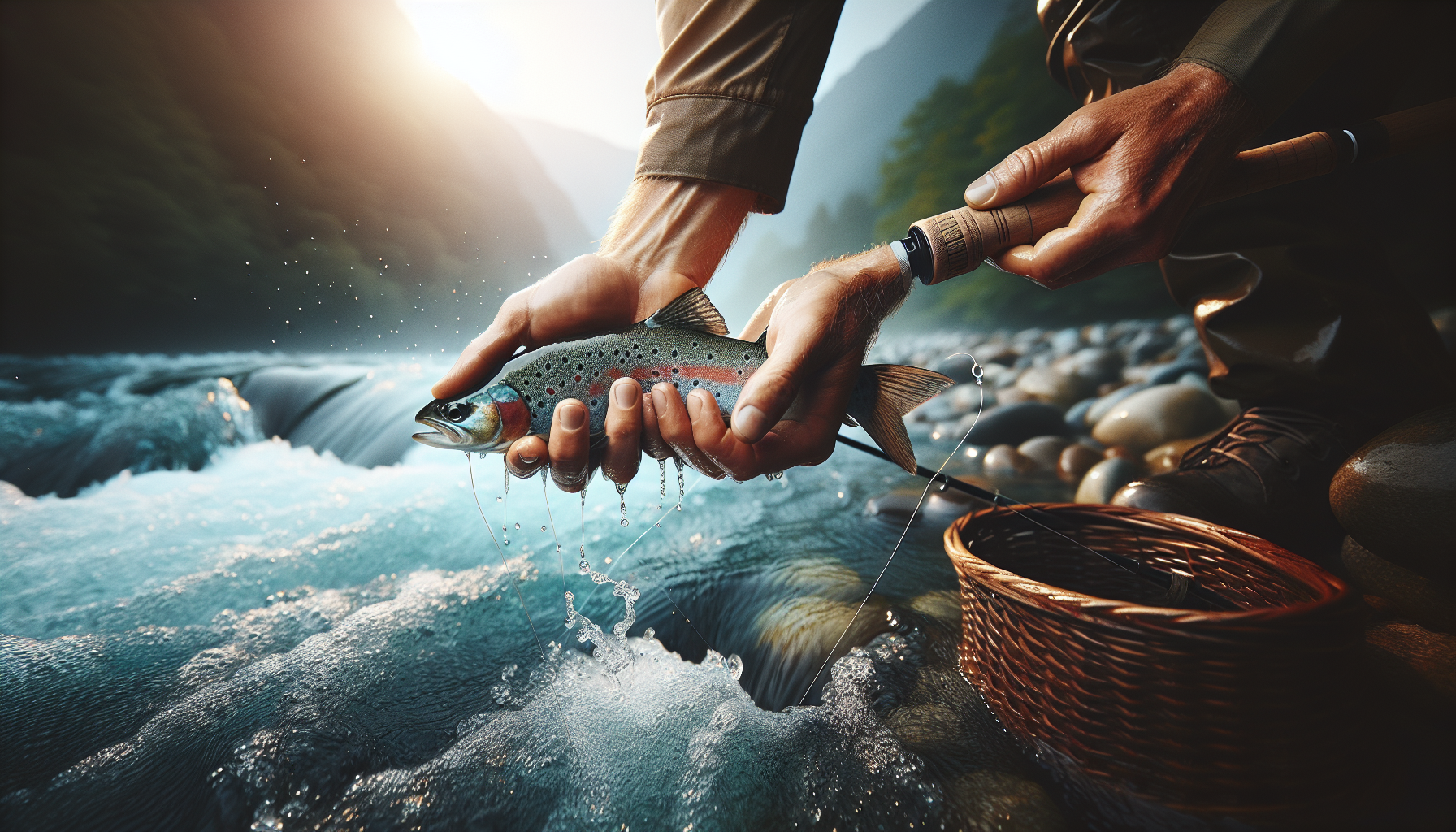
Once the fish is close, keep it in the water as much as possible. Wet your hands before touching it, avoid squeezing the body, and never hold trout by the gills. If you want a photo, prepare quickly in advance so the fish is not kept out of the water while you fumble with a phone or camera. Better yet, take a quick in-water photo or skip the picture entirely. On pressured fisheries, repeatedly beaching fish on rocks, dragging them onto dry banks, or staging elaborate photo sessions is a clear ethical lapse because it prioritizes content or ego over fish survival.
Ethical handling also includes knowing when not to target certain fish. Spawning trout on redds, fish stacked in extreme low water, or fish showing clear signs of stress should generally be left alone. Just because a fish is visible and catchable does not mean it is fair game. In crowded areas, setting a good example matters. When one angler treats fish carefully, it reinforces better norms for everyone around them. Good handling is not just a private choice; it is part of the shared culture that determines how healthy and sustainable a fishery remains.
What is the best way to deal with conflicts or poor etiquette from other anglers?
The best response is calm, direct, and proportionate. Crowded waters create misunderstandings easily. Someone may not realize they cut in too close, waded through a run you were working, or stepped into fish you had been targeting. Start by assuming ignorance before malice. A polite, clear statement such as “I’m working down through this run” or “Would you mind giving me a little more room?” resolves many problems without escalation. Tone matters. A respectful approach protects your own credibility and lowers the odds of turning an annoying moment into a hostile confrontation.
At the same time, ethics do not require passivity. If someone is repeatedly disrupting others, fishing carelessly around spawning fish, or acting aggressively, it is reasonable to set boundaries or disengage and move on. Public water is shared, but it is not a free-for-all where courtesy disappears. In serious cases involving harassment, dangerous behavior, or clear violations of regulations, contacting local authorities or river stewards may be more appropriate than arguing streamside. Not every conflict can or should be solved person-to-person.
One of the most ethical habits in crowded fishing is refusing to let frustration dictate your behavior. Retaliatory crowding, casting over someone’s line, yelling across the river, or intentionally burning a run helps no one. The goal is to preserve the experience and the fishery, not win a streamside dispute. Skilled anglers are remembered for more than how well they cast; they are remembered for how they carry themselves under pressure. In crowded waters, composure is part of ethical fly fishing.