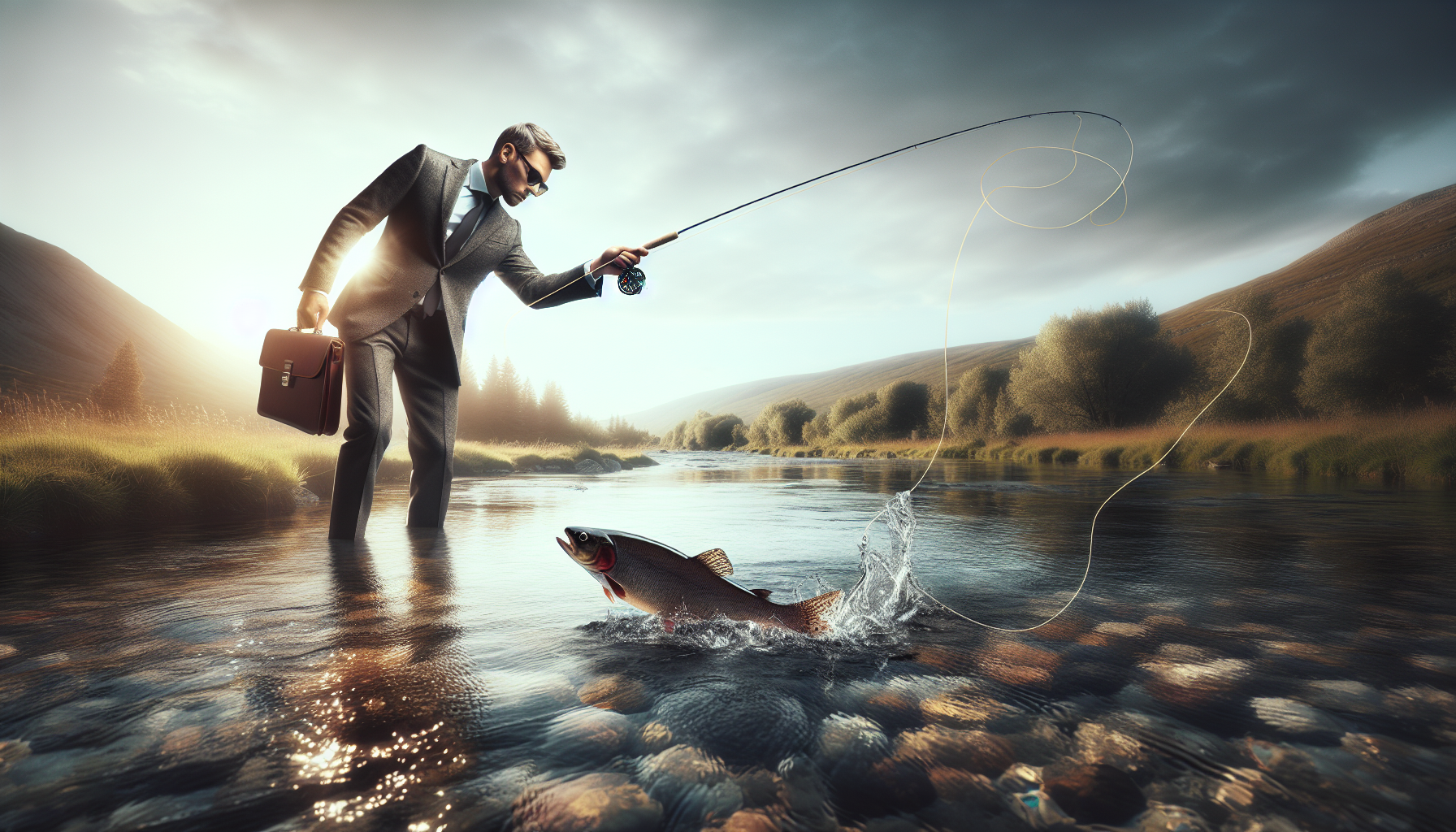
Respect is the skill that separates a pleasant day on the river from a frustrating one, and it is central to ethical fishing practices in fly fishing. When anglers talk about etiquette, they often mean simple courtesies such as giving space, waiting your turn, and speaking politely, but respectful behavior goes further. It includes understanding how your presence affects other anglers, fish, guides, boaters, landowners, and the water itself. In my own seasons on crowded trout rivers and small spring creeks, I have seen great fishing ruined less by poor conditions than by people who ignored these basics. The good news is that respectful habits are learnable, practical, and immediately useful.
Fly fishing creates unique social pressure because success often depends on stealth, rhythm, reading water, and repeating controlled drifts through a narrow lane. One person stepping into that lane, anchoring above a run, or cutting through a pool can disrupt hours of careful effort. Unlike many outdoor activities, anglers often share limited productive water at the same time, especially during hatches, salmon runs, or seasonal closures that compress effort onto fewer legal stretches. That is why ethical fishing practices matter. They protect access, reduce conflict, improve safety, support fish welfare, and preserve the quality of the experience for everyone.
Respectful fly fishing starts with three ideas. First, space matters. Fish are not evenly distributed, and anglers need enough room to cast, swing, strip line, fight fish, and move through water without interference. Second, intent matters. A person standing quietly at the tail of a pool may be waiting to rotate into position; a guide boat slipping down a bank may be setting up a client’s drift; a wading angler staring at one seam may be targeting a single rising trout. Third, impact matters. Wading through redds, blasting music, crowding a bank angler from a drift boat, or posting someone’s secret access point online can all cause harm even if no rule is technically broken.
This article serves as a hub for ethical fishing practices within conservation and ethics. It covers the core standards every fly angler should know: streamside etiquette, sharing water fairly, communicating clearly, respecting access and private property, handling fish responsibly around others, and using judgment in crowded or sensitive conditions. If you want a simple definition, respecting other anglers while fly fishing means pursuing your own day on the water without diminishing someone else’s opportunity, safety, or enjoyment. That standard sounds broad because it is. It applies before you arrive, while you fish, when you move, what you say, how you photograph fish, and even what information you share afterward.
Give Space, Read the Water, and Understand Right of Way
The first rule of respectful fly fishing is to give more room than you think is necessary. On a small trout stream, that might mean yielding an entire pool or at least several casting lengths. On larger rivers, it may mean preserving a whole run for an angler who is working downstream methodically. There is no universal distance because water size, casting style, and target species differ, but crowded behavior is easy to recognize. If your line, fly, shadow, boat, or wading path can affect another person’s drift or fish, you are too close.
Reading the water includes reading the angler. Someone nymphing from a fixed position needs a compact lane. Someone swinging soft hackles or steelhead flies may cover a broad arc and step down after every cast. Someone sight fishing to carp or a single rising trout is often focused on one fish and can be disrupted by footsteps or a false cast fifty feet away. Before entering, pause and observe. Ask yourself where that person is likely to move in the next ten minutes. Most etiquette problems happen because someone notices only where an angler is standing, not where that angler is fishing.
Right of way is partly local custom and partly common sense. In many trout streams, the angler already in a run has priority. In swing fisheries, anglers typically enter at the head, cast, step, and allow the next person to follow after a respectful interval. Drift boats generally should not cut directly between a wading angler and the bank, because that destroys the productive zone the wader is covering. Waders should also avoid stepping into a drift lane being floated repeatedly by boats where local rules or heavy use have created an established pattern. Respect means adapting to the fishery, not assuming your home-water habits apply everywhere.
A simple way to avoid conflict is to ask early and specifically: “Mind if I start below you and work down?” or “Are you rotating through this run?” Those questions do two things. They show respect, and they uncover expectations before anyone feels challenged. If the answer suggests the water is spoken for, move on. A few extra minutes of walking is always better than three hours of tension.
Communicate Clearly and Prevent Streamside Conflict
Most etiquette breakdowns are not caused by malice. They come from assumptions, distance, current noise, and different local norms. Clear communication prevents nearly all of them. Keep your voice calm, direct, and brief. If you need to pass behind someone, say so. If you are putting in a boat near bank anglers, explain your plan. If you accidentally approach too close, apologize immediately and back out. Defensiveness escalates minor mistakes into arguments.
I have found that the best anglers on busy water are rarely the loudest or most territorial. They are observant and precise. They wave, make eye contact, and ask one clarifying question before stepping in. That is especially important during technical dry-fly fishing, salmon and steelhead rotations, or when multiple parties converge at a famous access point before dawn. If everyone communicates their intended direction of travel, where they plan to fish, and how long they expect to occupy a spot, the whole river functions better.
Conflict also drops when anglers avoid ambiguous behavior. Do not leave a rod on the bank to “claim” a run while you return to the truck. Do not stand at the head of a pool chatting while others wait, then object when someone asks whether you are fishing it. Do not motor repeatedly through a flat where people are stalking fish. Respect includes signaling your intentions through action. Be either actively fishing, clearly moving, or clearly yielding.
When conflict does arise, solve the practical issue instead of debating moral superiority. Offer a specific compromise: “I’ll finish this seam and slide down,” or “You take the top half and I’ll fish the tail.” If another angler remains aggressive, disengage. No fish is worth a confrontation, and many waters are remote enough that safety should come first. Document serious harassment only if necessary, and involve local authorities or access managers when behavior crosses into threats or trespass disputes.
Share Productive Water Fairly in Different Fly Fishing Situations
Different fisheries demand different etiquette. On hatch-driven trout rivers, anglers often wait for rising fish, and pressure concentrates on obvious foam lines, slicks, and slow banks. In that setting, do not rush a pod because you see open water nearby; those fish may all be feeding in a lane another angler has watched for twenty minutes. On streamer water, a faster pace is normal, but that does not justify jumping ahead and pounding the next bank twenty yards in front of someone who is covering water methodically.
Stillwater adds another layer. Anglers in float tubes, pontoon boats, prams, and anchored boats all create casting zones that can overlap. Respect means avoiding the temptation to anchor on top of a productive shoal someone is already working. If chironomid anglers are set up with long leaders and indicators, passing too close can foul lines and spook fish over a broad area. On lakes, distance often needs to be wider than people expect because wind, anchor swing, and trolling paths expand everyone’s footprint.
Coldwater migratory fisheries usually require the most formal rotation. Steelhead and salmon anglers often fish one pass, take a step, and continue moving. Breaking that rhythm by planting yourself in the middle or stepping in below someone who has nearly reached the tail is one of the fastest ways to create resentment. Learn the local pattern before entering. Watch for ten minutes. Ask who is last in line. Then join properly.
| Fishing situation | Respectful behavior | Common mistake |
|---|---|---|
| Rising trout in a pool | Ask before entering and preserve the casting lane | Wading into the feeding line from below |
| Swing run for steelhead | Join the rotation at the top and step down consistently | Standing still mid-run and blocking everyone |
| Drift boat passing waders | Row wide and avoid cutting between angler and bank | Sliding through the exact water being fished |
| Stillwater shoal | Anchor outside another angler’s casting and drift zone | Setting up directly beside productive structure |
Fair sharing also means knowing when not to compete. If a river is shoulder to shoulder during a famous hatch or run, your ethical choice may be to fish a less obvious section, change your hours, or come back another day. Respect is not only about what you can claim. It is about whether your presence improves or degrades the fishery’s social quality.
Respect Access, Landowners, Guides, and Local Regulations
Ethical fishing practices extend beyond angler-to-angler courtesy. Access is fragile, and many fisheries depend on informal tolerance from private landowners, easements with specific conditions, club rules, or state-managed walk-in programs. If an angler parks across a gate, leaves trash, cuts fences, tramples crops, or wanders above the high-water mark where state law does not allow it, everyone pays later. Lost access rarely returns quickly. Respecting other anglers therefore includes protecting the places they rely on.
Learn the legal boundaries before you fish. In the United States, stream access laws differ dramatically by state. Some allow public use below the ordinary high-water mark; others restrict contact with the streambed on private reaches. On famous Western trout rivers, boat rights and bank rights may differ. In the United Kingdom, beats and club water can impose strict boundaries and rotation systems. Ignorance is not a defense, and arguing based on what is normal elsewhere only inflames tension. Use official maps, agency notices, county parcel tools, and access apps such as onX or TroutRoutes where available, but verify app data against current regulations.
Guides deserve specific mention. A guide does not own public water, but a guide managing clients, safety, and boat position operates under constraints that other anglers may not see. At the same time, guided parties should not act as though paying for a trip gives them authority over a public run. Respect works both ways. Independent anglers should avoid crowding a guide’s active drift or novice client, and guides should communicate politely, avoid leapfrogging, and refrain from “low-holing” waders simply because they can row faster.
Regulations are the floor, not the ceiling. Legal conduct can still be inconsiderate. For example, fishing a legal section immediately below a spawning closure may be lawful but still create concentration and conflict if fish stack unnaturally there. Likewise, handling fish legally for photos in a narrow run can monopolize water and stress fish while others wait. Ethical anglers look at the broader effect of their actions, not just the rulebook.
Handle Fish, Information, and the Environment Responsibly Around Others
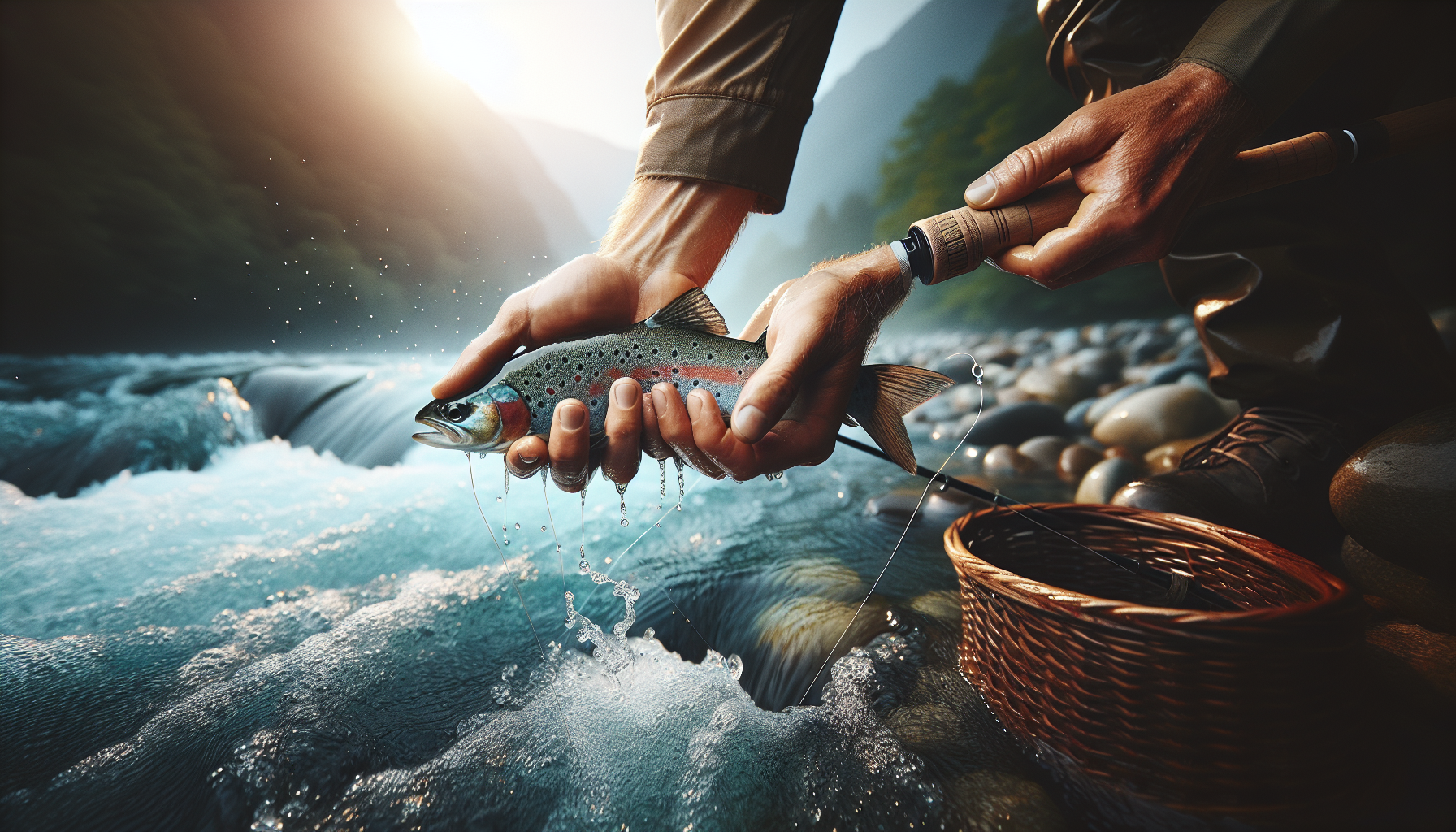
How you treat fish in front of other anglers sets a visible standard. Quick fights on appropriate tackle, knotless rubber nets, wet hands, minimal air exposure, and in-water releases are not only better for fish; they also show consideration for the shared resource. On pressured trout streams, one angler beaching fish on hot rocks or repeatedly lifting them for photos can sour the mood of everyone nearby because the damage is obvious. During warm-water stress periods, common on trout rivers above roughly 68 degrees Fahrenheit, the respectful choice may be to stop targeting trout entirely.
Information etiquette matters too. Do not broadcast someone else’s spot in a parking lot, on social media, or in a fishing report without permission. A geotag, bridge number, or recognizable bank can overwhelm small water quickly. I have watched tiny access sites become crowded within a week after online exposure, with resulting litter, trespass, and hostility. Sharing general conditions, public access advice, or hatch timing is fine. Sharing another angler’s hard-earned location is not.
Environmental respect is inseparable from social respect. Avoid walking on redds, aquatic vegetation, and fragile banks. Pack out tippet, leaders, and food wrappers. Keep dogs under control around nesting birds and occupied runs. If you smoke, every butt must leave with you. Small acts matter because other anglers experience the accumulated result. Clean water, intact banks, and quiet surroundings are part of the courtesy you owe strangers sharing the fishery.
Build a Reputation as the Angler Others Want Nearby
The best compliment in fly fishing is not that you cast far or catch a lot. It is that people are happy to share water with you. That reputation comes from habits: arriving prepared, watching before entering, asking instead of assuming, yielding when appropriate, following local patterns, and leaving a place cleaner than you found it. These behaviors cost little, but they consistently improve access, relationships, and the quality of fishing.
Respectful fly fishing is practical ethics. Give space. Communicate clearly. Share water according to the fishery, not your ego. Protect access, obey local rules, and treat fish carefully. Be cautious with location details, especially on small or sensitive waters. When conditions are crowded or stressful for fish, reduce your impact or choose another plan. Those choices support both conservation and courtesy, which is why this topic sits at the center of ethical fishing practices.
If you want to fish more effectively and enjoy the day more, start with respect. Make it your default on every river, lake, and flat. Observe first, ask simple questions, and give others room to succeed. Do that consistently, and you will not only avoid conflict—you will help protect the experience that makes fly fishing worth returning to.
Frequently Asked Questions
What does respecting other anglers actually look like while fly fishing?
Respect on the water starts with awareness. In practical terms, it means noticing where other anglers are fishing, how much room they need, and how your own movement might affect their experience. A respectful fly angler does not walk into a run someone is clearly working, anchor a boat directly above a wade angler, or begin casting close enough to disrupt another person’s drift. It also means thinking beyond your own immediate goal of catching fish. If your approach pushes fish out of a pool, sends wakes through a seam, or crowds a shoreline another angler has been stalking carefully, your presence has changed the day for someone else.
Good etiquette also includes patience and communication. On busy trout rivers, spring creeks, and smaller streams, many conflicts can be avoided simply by asking, “Mind if I step in below you?” or “Which direction are you working?” That short conversation shows courtesy and helps everyone understand expectations. Respectful behavior extends to tone as well. Fly fishing culture often values independence, but politeness matters. Speaking calmly, avoiding confrontational language, and giving others the benefit of the doubt goes a long way, especially when access is limited or conditions are crowded.
Most importantly, respecting other anglers is part of ethical fishing, not just social niceness. It reflects an understanding that rivers are shared spaces involving anglers, guides, rowers, landowners, and fish habitat. A person who respects others leaves room, minimizes disturbance, handles disagreements maturely, and acts as though the resource belongs to everyone, not just whoever got there first or fishes hardest.
How much space should I give another angler on a river or stream?
There is no single distance that works in every situation, because the right amount of space depends on water type, visibility, current speed, fishing method, and how fish are holding. On a small stream, respectful spacing may mean waiting until an angler finishes a short stretch before entering at all. On a broad river, it may mean giving enough room so your casts, wading line, or boat path do not interfere with the water another person is actively covering. A good rule is simple: give more room than you think is necessary, especially when conditions are technical or fish are easily disturbed.
Think in terms of effective fishing water, not just physical distance. An angler swinging flies may need a long lane downstream. Someone nymphing a seam needs uninterrupted drifts through a defined corridor. A dry fly angler targeting rising trout may be focused on a single pod of fish, and entering above or below can ruin the setup even if you are not standing particularly close. Respecting space means recognizing the full area another person is working, including approach routes, casting angles, and fish behavior.
When in doubt, ask before stepping in. A quick, friendly question can prevent misunderstandings and shows maturity. If you are floating, the same principle applies: do not row through the exact water a wade angler is fishing if there is a reasonable way to pass without disrupting them. If you arrive at a popular run and someone is already in it, the respectful move is usually to wait, choose another piece of water, or ask where they plan to finish. Space is one of the most valuable courtesies in fly fishing, and generous spacing is almost never regretted.
What is the proper etiquette when approaching a spot someone else may already be fishing?
The first step is to slow down and observe. Before gearing up and entering the water, look carefully for signs that a run, bank, or pool is already being worked. An angler may be farther upstream than you first notice, or they may be moving methodically through a section in a way that is not obvious from a distance. Boats, gear on the bank, or an angler’s line angle can all tell you which water is in use. Walking directly into a spot without checking is one of the fastest ways to create frustration.
If someone is clearly there first, acknowledge that they have priority in the water they are actively fishing. That does not mean they own the whole river for the day, but it does mean you should not cut in, leapfrog ahead of them, or enter in a way that ruins their drift or presentation. The best approach is direct and polite communication. Ask where they are headed, how far they plan to work, or whether they mind if you start well below them. Most anglers respond well when they see that you are trying to be considerate rather than opportunistic.
It is also important to accept “no” gracefully. If access is tight or the water is small, the respectful answer may be to move on and find another place. That can be disappointing, especially after a long drive or on a crowded weekend, but handling that moment well is part of true etiquette. Respect is tested most when the fishing is good and space is limited. A calm attitude, a willingness to wait, and an understanding that no single run is worth an argument will make you a better fishing partner and a more welcome presence on any river.
How should I behave around guides, drift boats, and other river users while fly fishing?
Respectful fly fishing includes much more than interactions between individual wade anglers. Guides, clients, rowers, rafters, kayakers, and other legitimate river users all share the same water, often under different constraints. A guide managing clients from a boat may need room to maneuver safely through current, while a wade angler may be carefully fishing a seam the boat should avoid crossing too closely. Good etiquette comes from recognizing those realities rather than assuming your style of fishing should always take priority.
If you are wading, stay aware of approaching boats and avoid placing yourself in dangerous or difficult spots where a rower has limited control. If you are in a drift boat, avoid dropping anchor or setting clients up directly on top of wade anglers. Passing should be done with as much distance as conditions allow, and a brief, courteous exchange can make a big difference. In many situations, there is no perfect answer, only the most considerate available option. That is why communication and judgment matter so much on busy water.
Respect also extends to noise, wake, access points, and ramps. Do not block launches while rigging. Do not blast music across a quiet stretch of river. Do not assume shoreline anglers can simply move because you are floating through. Likewise, wade anglers should not treat boaters as intruders simply because they fish differently. The healthiest river culture is one where people acknowledge one another, share space with as little disruption as possible, and remember that safety and courtesy matter as much as fishing success.
Why is respect for landowners, fish, and the river itself part of respecting other anglers?
Because poor behavior toward the resource eventually harms everyone who uses it. Respecting other anglers is not limited to avoiding crowding or speaking politely; it includes protecting access, fish populations, and the quality of the experience on the water. If anglers leave trash, cut fences, trespass, trample banks, mishandle fish, or ignore local regulations, they damage relationships with landowners, stress fisheries, and create the kinds of problems that lead to closures, conflict, and fewer opportunities for everyone.
Landowner respect is especially important. Many excellent fly fishing waters depend on public easements, informal tolerance, or legal access points bordered by private property. Closing gates, staying within legal boundaries, parking responsibly, and avoiding damage are not minor details. They are essential habits that help preserve access. One careless angler can create resentment that affects an entire community of fishermen. Acting responsibly on private or mixed-ownership water is one of the clearest ways to show respect for both current and future anglers.
The same goes for fish and habitat. Ethical catch-and-release practices, proper fish handling, limiting air exposure, avoiding spawning fish, and being willing to stop when water temperatures are dangerously warm all reflect a broader understanding of respect. Healthy fisheries support good fishing for everyone. When you protect the river and the fish in it, you are also respecting the unknown angler who will show up tomorrow, next week, or next season hoping for the same chance you had. That long view is at the heart of fly fishing etiquette done right.