Sustainable fly fishing protects fish populations, habitats, and the future of the sport by aligning tackle choices, angling methods, travel decisions, and stewardship with conservation goals. In practical terms, it means catching fish in ways that reduce injury, respecting seasonal closures and local regulations, limiting avoidable waste, and supporting healthy rivers, lakes, and coasts beyond the day’s catch. I have guided and fished waters where a single heat wave, careless wading pass, or mishandled trout changed the quality of an entire beat, and that experience makes one point clear: sustainability in fly fishing is not abstract ethics. It is fieldcraft.
Fly fishing has always carried a conservation identity, but that reputation only holds if anglers understand what “sustainable practices” actually include. The term covers catch-and-release methods, gear selection, fish handling, invasive species prevention, habitat protection, access etiquette, low-impact travel, and participation in restoration. It also requires recognizing tradeoffs. A remote destination may offer pristine water, yet reaching it by multiple flights has a carbon cost. Barbless hooks reduce handling time, but poor technique with any hook still harms fish. Wading gives access, yet repeated pressure can crush redds, disturb aquatic insects, and erode banks.
This matters because fly fishing depends on ecosystems that are increasingly stressed by warming water, altered flow regimes, pollution, hatchery-wild fish interactions, shoreline development, and crowding. Coldwater species such as trout and salmon are especially vulnerable when water temperatures rise and dissolved oxygen drops. Warmwater and saltwater fisheries face their own pressures, from habitat loss to spawning disruption and bycatch. Sustainable practices give anglers a direct way to reduce mortality and cumulative stress while strengthening the social license that keeps fisheries accessible.
As a hub for sustainable practices, this guide explains the core decisions that shape impact on the water. It answers the questions most anglers ask: What gear is least harmful? When should you stop fishing? How do you release fish properly? What rules matter most? Which habits protect habitat? And how can one angler contribute to conservation in a meaningful, measurable way? The goal is not perfection. The goal is a disciplined approach that leaves fisheries healthier, or at minimum no worse, because you were there.
Choose gear and techniques that reduce fish stress
The most sustainable fly fishing setup is the one that lands fish efficiently, minimizes injury, and matches the species and conditions. That starts with rod strength, tippet diameter, hook choice, and net design. Undergunning a large fish on too-light tackle may feel sporting, but prolonged fights increase lactate buildup, exhaustion, and post-release mortality. In warm water, even an extra minute matters. I routinely step up tippet and rod power when flows are low or temperatures climb because shortening the fight is often the single biggest improvement an angler can make.
Hooks deserve special attention. Barbless hooks or crimped barbs are standard best practice because they penetrate cleanly, come out faster, and reduce tissue damage. Circle hooks are uncommon in traditional fly fishing but can be useful in certain bait-like presentations in saltwater because they tend to lodge in the jaw rather than deep in the throat. For most freshwater fly anglers, the key decision is simple: fish barbless, check your points often, and replace damaged hooks. A dull hook creates harder hooksets, more tissue tearing, and longer handling.
Nets and terminal tools matter too. A rubber or silicone net bag is better than abrasive knotted nylon because it protects the fish’s slime layer and reduces fin fraying. Hemostats, forceps, and line cutters should be accessible before the fish is landed, not buried in a vest pocket while the fish thrashes. If you know a fish may need a quick photo, prepare the camera first. Sustainable technique is mostly preparation. The less improvisation at the critical moment, the less time the fish spends out of water.
Fly choice also affects outcomes. Oversized streamers, heavily weighted nymphs, and multi-hook rigs can increase injury risk if anglers fish them carelessly around small or stressed fish. In some situations, a single unweighted pattern is the better option because it is easier to remove and less likely to cause eye damage. In others, using a larger attractor fly discourages small fish from taking the hook at all. Sustainable anglers think in probabilities, not absolutes, and choose methods that lower likely harm under the day’s specific conditions.
Practice catch and release that actually works
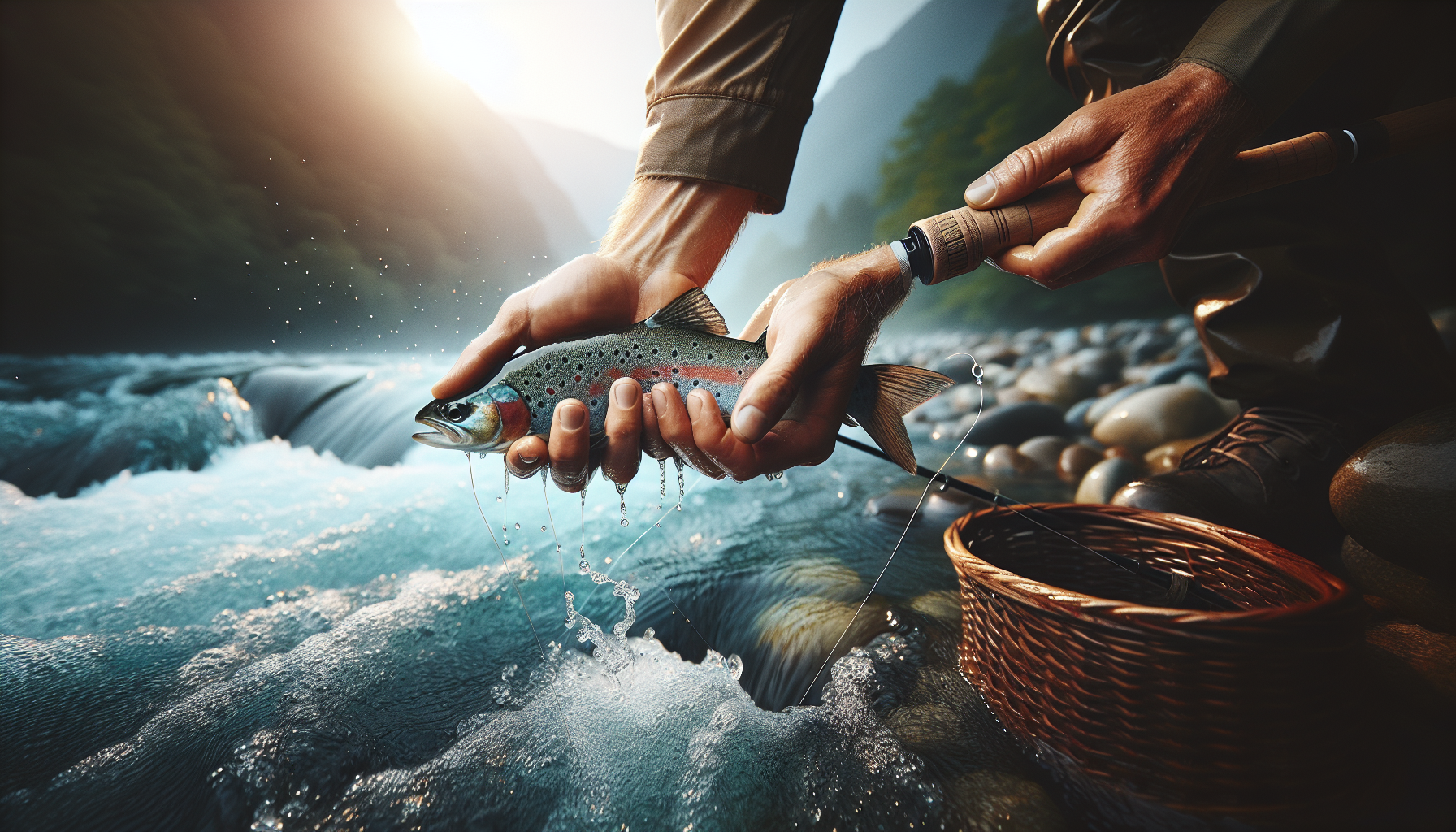
Catch and release only supports conservation when release survival is high. That means keeping fish wet, limiting fight time, avoiding contact with dry surfaces, and releasing fish before exhaustion becomes irreversible. The ideal release often happens without removing the fish from the water at all. Guide the fish into a rubber net, let it settle facing current, remove the hook quickly, and allow it to swim off under its own power. If a fish rolls over repeatedly or cannot maintain balance, it has been pushed too far and needs more in-water recovery time.
Handling rules are straightforward but often ignored. Wet your hands before touching the fish. Never squeeze the abdomen or clamp the gill plate unless dealing with a large species requiring specific support techniques. Keep fingers away from the gills and eyes. Support the fish horizontally rather than hanging it vertically from the jaw, which can injure connective tissue and internal organs. For trout, salmon, char, and many panfish, horizontal support is the safest standard. For larger species such as steelhead or bonefish, support under the belly while controlling the tail wrist.
Photos are where many sustainable intentions fail. A responsible fish photo is quick, planned, and secondary to the release. I tell anglers to think in seconds, not poses: lift, click, back in the water. If the fish is highly stressed, skip the photo. If multiple shots are needed, the fish is out too long. Air exposure is a documented risk factor for release mortality, especially after exhaustive fights or in warm water. One clean image is enough to remember the fish; prolonged staging is not.
Deep-hooked fish create difficult choices. For small hooks embedded in critical tissue, cutting the tippet close can be preferable to aggressive extraction that tears organs. Regulations and species status matter here. On some endangered stocks, every individual is too valuable to risk with rough handling. The sustainable response is not always dramatic heroics; often it is accepting a less invasive option, learning from the mistake, and changing the presentation that caused the deep take.
Know when not to fish: temperature, seasons, and spawning periods
One of the most important sustainable practices is choosing not to fish under harmful conditions. Water temperature is the clearest example. For trout, many anglers use 68 degrees Fahrenheit as a practical upper warning threshold, with some fisheries agencies and conservation groups recommending stopping earlier depending on species, elevation, and dissolved oxygen. By the upper 60s, fish recover poorly from exertion. On rivers with afternoon warming, the sustainable adjustment is to fish early, carry a thermometer, and quit once temperatures rise.
Seasonal timing matters beyond summer heat. Spawning fish are energetically stressed and behaviorally vulnerable. Walking through redds can crush eggs; repeatedly targeting paired fish can disrupt reproduction even if the fish are released. On salmon and steelhead systems, ethics often go beyond legal minimums. A stretch may be open, yet local anglers know to avoid fish actively on redds or resting in shallow tailouts. Sustainable fly fishing includes reading not only regulations but also fish behavior and life history.
Closures, hoot owl restrictions, sanctuary areas, and gear rules exist for reasons grounded in biology and enforcement practicality. Anglers who treat them as optional damage more than fish populations; they erode trust within the community. I have watched fisheries improve after temporary restrictions because enough anglers respected the pause. Giving fish space during heat, low flow, or spawning windows is not lost opportunity. It is deferred opportunity, and healthy fisheries repay restraint.
| Condition | Primary risk | Sustainable response |
|---|---|---|
| Warm summer water | Low oxygen and high release mortality | Fish at dawn, monitor temperature, stop early |
| Visible spawning activity | Disturbed reproduction and crushed redds | Avoid redds, target different water, or leave |
| Low clear flows | Concentrated fish and prolonged stress | Use stronger tackle, shorten sessions, reduce pressure |
| After heavy rain | Bank erosion and habitat disturbance | Use established access points and avoid fragile edges |
Protect habitat through wading, access, and invasive species prevention
Habitat protection begins with where you place your boots. Wading carelessly can dislodge invertebrates, damage aquatic vegetation, and crush eggs in gravel. The solution is not never wading; it is wading with intent. Enter and exit at durable access points, avoid side channels during spawning periods, and shuffle slowly only where substrate and species behavior make that appropriate. On spring creeks and tailwaters, repeated angler traffic can create obvious wear paths and undercut banks. If a bank is soft, vegetated, or crumbling, back off and cast from a stable angle.
Bank-side behavior matters as much as what happens in the current. Trampled riparian vegetation reduces shade, increases erosion, and weakens the root systems that hold soil during high water. Many of the best insect-producing margins are also the easiest to damage. I try to rotate access spots, use established trails, and resist the temptation to cut a new shortcut to a run. Over a season, small choices determine whether a path remains a path or becomes a scar.
Invasive species prevention is now part of basic angling competence. Didymo, New Zealand mudsnails, whirling disease vectors, and aquatic hitchhikers moved on boots, nets, and boats have changed fisheries across regions. Many states now advise or require clean, drain, and dry protocols. Felt soles, once prized for traction, are restricted or banned in some places because they retain moisture and organisms. Sustainable fly fishing means disinfecting gear when moving between waters, fully drying equipment, and never transporting bait, plants, or standing water across drainages.
Watercraft and shoreline etiquette also affect habitat. Beaching drift boats on sensitive gravel bars, dragging kayaks across vegetation, or anchoring on eelgrass beds can damage nursery zones used by fish and invertebrates. On salt flats, prop scars can persist for years. Sustainable anglers learn the habitat map of their fishery and adapt their approach accordingly, even when the legal line does not capture the full ecological cost.
Reduce waste, travel impact, and consumption without sacrificing performance
Sustainable practices extend beyond fish handling into what anglers buy, use, and throw away. Fly fishing generates waste through tippet clippings, leader packets, fly packaging, worn waders, and travel emissions. Monofilament and fluorocarbon scraps are especially problematic because they persist, entangle wildlife, and are easy to overlook. A simple tippet trash holder is one of the highest-value tools you can carry. On guided days, I have collected handfuls of nearly invisible line at popular access points, and every piece was preventable.
Gear purchasing deserves scrutiny. Durable products with repair support are almost always more sustainable than cheaper items replaced every season. Wader patching, boot resoling, and reel servicing reduce material waste and usually save money over time. Several established brands now offer repair programs, PFAS-free or reduced-chemical waterproofing approaches, and recycled fabrics, though claims vary and should be read carefully. The sustainable question is not whether a product has a green label. It is whether it lasts, can be fixed, and performs well enough that anglers do not treat it as disposable.
Travel is often the largest environmental footprint associated with fly fishing. Long-haul flights to destination fisheries can outweigh years of local driving. That does not mean destination travel is inherently wrong; it means local and regional fishing should be part of a balanced practice. Fishing closer to home builds watershed knowledge, supports nearby communities, and lowers emissions. When travel is necessary, consolidating trips, sharing transport, and choosing outfitters with clear conservation standards can reduce impact. I increasingly advise anglers to know one local river deeply rather than chase constant novelty.
Even fly tying can be made more sustainable. Using legally sourced materials, avoiding species of conservation concern, and organizing hooks and beads to prevent overbuying are practical steps. Synthetic materials are not automatically better or worse; they may reduce pressure on wildlife but introduce plastics. The best answer is thoughtful moderation: buy what you will use, favor versatile patterns, and treat tying benches like workshops rather than accumulation zones.
Support fisheries through compliance, community, and restoration
The strongest sustainable anglers do more than minimize harm; they actively improve fisheries. Start with compliance. Licenses, stamps, and access fees fund management, habitat work, and enforcement. Reading annual regulations should be a preseason habit, not a response to being checked. Rules change because conditions change, and responsible anglers keep up. If a fishery has single-hook restrictions, bait bans, or seasonal closures, those are management tools tied to survival, not bureaucratic inconveniences.
Community involvement multiplies individual effort. Local watershed groups, Trout Unlimited chapters, salmon trusts, backcountry angler organizations, and estuary nonprofits often run cleanup days, culvert surveys, riparian plantings, and advocacy campaigns on flow management or dam passage. These groups matter because many threats to fisheries are structural: warm runoff from development, blocked migration corridors, sedimentation from roads, and water withdrawals cannot be solved one fish at a time. They require collective pressure and long-term monitoring.
Citizen science is another powerful avenue. Anglers can report invasive species, log water temperatures, contribute observations through apps such as iNaturalist in appropriate contexts, or assist creel surveys when agencies request data. Good observations help managers see patterns they cannot monitor continuously. The key is data quality. Record location accurately, note conditions, and avoid public posting that exposes vulnerable spawning areas or rare fish concentrations.
Sustainable fly fishing also depends on culture. Experienced anglers set norms every time they teach a beginner how to net a fish, pinch a barb, avoid redds, pick up litter, or speak respectfully to landowners. Ethics spread person to person faster than regulations do. If you want healthier fisheries, model the behavior visibly and explain why it matters in plain language. Start with your next outing: carry a thermometer, fish barbless, keep fish wet, clean your gear, respect closures, and join one local conservation effort this season.
Frequently Asked Questions
What does sustainable fly fishing actually mean?
Sustainable fly fishing means pursuing fish in a way that protects the long-term health of fish populations, the waters they live in, and the broader experience of the sport for future anglers. It goes beyond simply practicing catch and release. A sustainable approach includes using tackle and techniques that reduce fish stress and injury, following seasonal closures and local regulations, avoiding unnecessary habitat damage, and making thoughtful choices about travel, gear, and waste. The goal is not just to catch fish responsibly in the moment, but to support resilient rivers, lakes, and coastal systems over time.
In practical terms, that can mean switching to barbless hooks for easier releases, landing fish quickly with appropriately sized tippet, keeping fish wet during handling, and choosing not to fish when water temperatures are dangerously high. It also means reading the water with more awareness: avoiding trampling spawning beds, minimizing repeated pressure on vulnerable holding areas, and understanding that even a well-intended angler can do harm if conditions are poor. Sustainable fly fishing is really a mindset. It asks anglers to think beyond the day’s catch and consider how each decision affects fish survival, habitat quality, and the future of the fishery.
How can I reduce harm to fish when catching and releasing them?
The most important way to reduce harm during catch and release is to shorten the fight and minimize handling time. Use tackle that matches the size and strength of the fish you are targeting so you can land them efficiently rather than exhausting them. Overplaying fish builds up stress and can reduce post-release survival, especially in warm water or during low-flow periods. Barbless hooks are another major advantage because they are easier to remove and typically cause less tissue damage. A rubber or knotless landing net helps protect the fish’s slime coat and reduces fin wear compared with abrasive mesh materials.
Once the fish is close, keep it in the water as much as possible. Wet your hands before touching it, avoid squeezing the body, and support it gently if you need to control it for hook removal. If you want a photo, prepare everything in advance so the fish spends only a second or two out of the water, if at all. Never hold fish by the jaw in species that are not suited to that handling, and be especially careful with larger trout, salmon, and wild fish during stressful environmental conditions. If a fish is deeply hooked, it is often better to cut the line than force a difficult extraction that causes more damage. Release should be deliberate, not rushed: let the fish recover in calm water and swim off under its own power. Sustainable catch and release is less about a single trick and more about stacking many small best practices together.
Why do water temperature, seasonal closures, and regulations matter so much?
These factors matter because fish survival is tightly linked to environmental stress, reproductive timing, and cumulative angling pressure. Water temperature is especially important. As water warms, dissolved oxygen levels decline and fish already operate under greater physiological stress. A fish that might recover quickly in cool water can struggle or die after release during a heat wave. That is why responsible anglers monitor water temperatures, avoid fishing during the hottest parts of the day, and sometimes choose not to fish at all when conditions become unsafe. Walking away is often one of the most sustainable choices an angler can make.
Seasonal closures and local regulations are just as critical because they are usually designed to protect spawning fish, juvenile recruitment, vulnerable stocks, or habitat recovery. Ignoring them can disrupt reproduction, concentrate pressure on weakened populations, and undermine broader conservation efforts. Regulations governing hook types, bait restrictions, access points, and harvest limits are not just red tape; they are management tools informed by biology, monitoring, and local conditions. Sustainable anglers do more than comply at the minimum level. They learn why the rules exist, stay current as conditions change, and respect the intent behind them. That attitude supports healthier fisheries and also strengthens the culture of stewardship within the sport.
What gear choices make fly fishing more sustainable?
Sustainable gear choices start with selecting equipment that helps you fish effectively while reducing waste and fish injury. Barbless or de-barbed hooks are among the simplest upgrades because they improve release efficiency and reduce handling time. Matching rod, reel, line, and tippet strength to the target species is also important; tackle that is too light can prolong fights and increase stress, while the right setup allows for a quicker, cleaner landing. Landing nets made from rubber or knotless materials are easier on fish, and carrying basic tools like forceps or hemostats makes hook removal safer and faster.
Beyond fish handling, sustainability also includes what gear is made of, how long it lasts, and how it is disposed of. Durable, repairable equipment generally has a lower long-term footprint than cheap items that are frequently replaced. Anglers can reduce waste by maintaining lines, patching waders when possible, reusing leaders appropriately, and properly disposing of clipped tippet, damaged flies, and packaging. Lead-free alternatives are worth considering where appropriate, especially in waters or regions where lead tackle poses risks to wildlife. Even travel gear and clothing choices matter: buying fewer, better items and using them for years is often more sustainable than constantly chasing the newest product. The best sustainable setup is not necessarily the most expensive one, but the one that supports low-impact fishing and responsible long-term use.
How can fly anglers help protect habitat and support conservation beyond their own fishing day?
Protecting habitat starts with how you move through the water and the shoreline. Careless wading can crush spawning redds, disturb aquatic vegetation, erode banks, and displace juvenile fish or invertebrates that are essential to the food web. Stay on established access paths when possible, avoid soft or visibly sensitive areas, and take extra care during spawning seasons when fish nests may be difficult to see. Pack out every piece of waste, including tippet clippings and broken flies, and leave places cleaner than you found them. If you are using a boat, kayak, or raft, operate it in ways that avoid bank damage, prop scarring, or repeated disturbance to shallow habitat.
Long-term stewardship also means supporting the systems and communities that keep fisheries healthy. That can include volunteering for stream cleanups, habitat restoration projects, fish counts, or local watershed groups. It may mean donating to conservation organizations, supporting guides and businesses that prioritize ethical practices, or speaking up for sound water policy and habitat protection. Travel choices matter too: combining trips, respecting local capacity, and choosing operators with strong environmental standards can reduce pressure and spread benefits more responsibly. Sustainable fly fishing is strongest when anglers see themselves not only as participants in the sport, but as caretakers of the places that make it possible. The healthiest fisheries are rarely accidents; they are usually the result of informed management, healthy habitat, and anglers willing to act like stewards both on and off the water.