Technology is reshaping sustainable fly fishing by helping anglers reduce harm, measure impact, and make better decisions on the water. In practical terms, sustainable fly fishing means pursuing fish in ways that protect habitats, maintain healthy populations, and respect the wider ecosystem that supports rivers, lakes, estuaries, and coastal flats. It includes catch-and-release methods that improve post-release survival, gear choices that limit injury, travel habits that cut emissions, and data collection that informs conservation. I have watched this shift firsthand over years of fishing coldwater streams and saltwater flats: the sport still depends on skill, observation, and restraint, but the tools around it have become more precise. Better materials, mapping, weather forecasting, fishery science, and digital reporting now influence almost every step of a trip. For anglers, guides, clubs, and fishery managers, this matters because pressure on fisheries is rising while climate variability, habitat loss, and invasive species are making conditions less predictable. Technology does not make fly fishing sustainable by itself. What it does is sharpen choices, reduce avoidable mistakes, and connect individual behavior to long-term conservation outcomes. That is why it belongs at the center of any serious discussion of sustainable practices in modern fly fishing.
Smarter gear design reduces fish stress and habitat damage
The most visible role of technology in sustainable fly fishing is in the equipment anglers carry. Hook design is a clear example. Chemically sharpened barbless hooks penetrate quickly and are easier to remove, which shortens handling time and lowers tissue damage. Circle-style patterns are not standard in every fly category, but where regulations and target species allow, they can reduce deep hooking. Modern tippet materials also help. Fluorocarbon and advanced nylon formulas offer higher abrasion resistance and more consistent breaking strength, allowing anglers to land fish faster when used appropriately. A shorter fight usually means less lactate buildup and better recovery, especially in warm water.
Rod and reel technology matter as well. Faster recovery blanks, sealed drags, and smoother startup inertia let anglers apply pressure more efficiently without overplaying fish. In my experience guiding newer anglers, equipment that balances correctly and casts cleanly does more than improve accuracy; it also reduces repeated false casting over fish, limits snagging in bankside vegetation, and keeps wading movements to a minimum. Wader and boot design has also improved. Felt sole restrictions in many jurisdictions pushed manufacturers toward sticky rubber compounds and stud systems that reduce the transport of invasive organisms between waters while still providing traction. Mesh-heavy, quick-dry packs and boatside storage now make it easier to keep nets, forceps, and thermometers accessible, which encourages better fish handling.
Materials science extends beyond tackle. Lead-free split shot alternatives made from tin, tungsten, or bismuth reduce toxic contamination risks for waterfowl and scavengers. Synthetic fly-tying materials are more durable than many older options, cutting replacement rates, while responsibly sourced natural materials and verified substitutes help reduce pressure on wildlife products. None of these innovations excuse careless angling, but they remove many of the small frictions that once made best practice harder to follow consistently.
Digital mapping, sensors, and forecasting improve on-water decisions
Sustainable practices begin before the first cast, and planning tools have become much more sophisticated. GPS mapping platforms such as onX, TroutRoutes, Navionics, and regional agency map layers help anglers identify public access points, seasonal closures, spawning tributaries, private boundaries, and sensitive wetlands. That matters because a large share of avoidable habitat damage happens through poor access decisions: trampling redds, crossing unstable banks, or parking in riparian vegetation. Good mapping reduces those mistakes. It also helps disperse pressure by showing alternative reaches instead of funneling everyone to the same easy pull-off.
Weather and hydrology tools are equally important. USGS stream gauges, Environment Agency river levels, NOAA tide forecasts, river temperature dashboards, and dissolved oxygen monitors allow anglers to judge whether conditions are safe for target species. When water temperatures climb above species-specific stress thresholds, responsible anglers should stop targeting those fish. For trout, many clubs and guide operations use 68 degrees Fahrenheit as a practical upper limit for catch-and-release, though local conditions and species differences matter. On warm afternoons, I have canceled trips despite willing clients because a thermometer gave a clearer answer than optimism. Technology makes that decision easier to defend and easier to repeat.
Sonar and fish-finding electronics require nuance. In fly fishing, especially from skiffs, rafts, and stillwater craft, they can help identify depth, structure, and forage zones without blind searching that disturbs fish repeatedly. However, advanced electronics can also increase efficiency to the point that ethical restraint becomes the limiting factor. Sustainable use means relying on these tools primarily for habitat awareness, navigation, and safety, not as a means to pressure vulnerable concentrations during spawning runs, heat events, or low-water bottlenecks.
Data collection turns anglers into useful conservation partners
One of the most valuable contributions of technology is that it converts observations from thousands of anglers into structured information. Mobile apps, digital logbooks, geotagged photos, and online creel surveys can reveal trends in catch rates, size classes, water temperatures, insect timing, and invasive species sightings. Fisheries agencies, NGOs, and watershed groups increasingly use citizen science platforms to supplement electrofishing surveys and formal stock assessments. Anglers are often the first to notice a fish kill, a barrier failure, a new algal bloom, or didymo on gear. When reporting tools are simple and standardized, response time improves.
This participation works best when the data are disciplined rather than anecdotal. Date, location, species, water temperature, handling time, and release condition are more useful than generic claims about a river fishing poorly. Standardized forms reduce bias, and privacy controls protect sensitive locations. The strongest systems aggregate data at a scale useful for management while limiting the spread of exact coordinates for fragile fisheries.
| Technology | Sustainable use | Conservation benefit |
|---|---|---|
| Digital logbook app | Record species, size, temperature, and release condition | Supports trend analysis and seasonal management |
| Water thermometer | Check conditions before and during fishing | Reduces effort during high-stress temperature windows |
| GPS mapping | Use legal access and avoid closed areas | Protects habitat, redds, and private land relationships |
| Invasive species reporting tool | Submit photos and exact observations to agencies | Speeds containment and monitoring responses |
Tagging and telemetry sit at the more advanced end of the spectrum. PIT tags, acoustic transmitters, and radio telemetry have transformed what managers know about migration, survival, thermal refuge use, and post-release behavior. Research on species from bonefish to steelhead has shown that handling methods, fight time, and water conditions can materially affect outcomes. Those findings then flow back into angler education, regulation design, and guide standards. In other words, technology closes the loop between field science and daily practice.
Catch-and-release is more ethical when informed by measurement
Catch-and-release is often presented as automatically sustainable, but that is only partly true. Its value depends on release survival, and technology has made that easier to evaluate. Underwater cameras, timing functions on phones and watches, infrared thermometers, and post-release tracking studies all reveal where anglers commonly go wrong. Fish held out of the water too long, fought on undersized tippet, squeezed for photos, or angled in warm, low-oxygen conditions face higher mortality. Once you see those patterns repeatedly in data and on camera, there is little excuse for pretending all releases are equal.
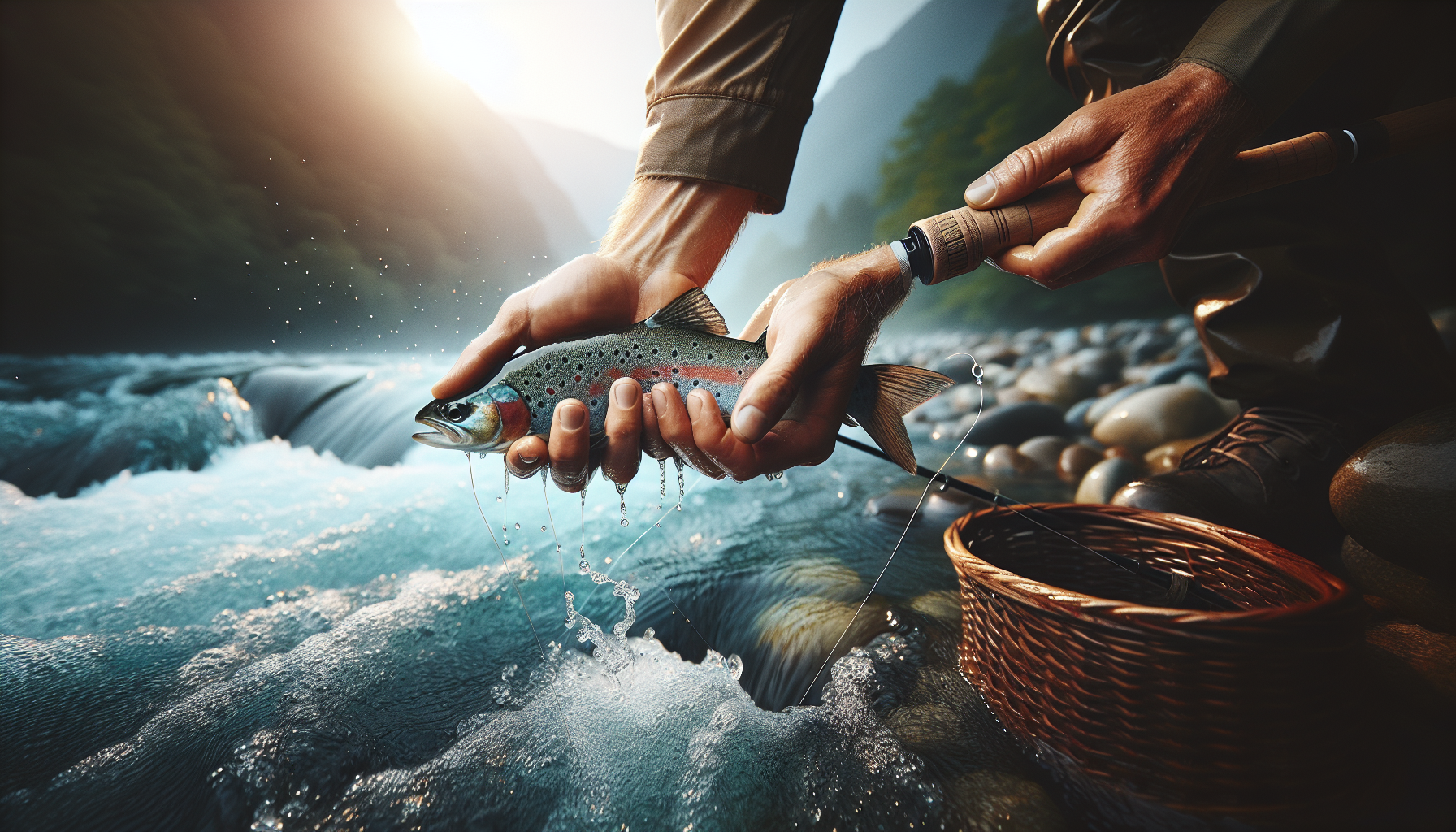
Modern best practice is straightforward. Use tackle strong enough to land fish quickly. Keep fish in the water while removing the fly. Wet hands before contact. Support the fish gently without compressing the abdomen or gills. Limit air exposure to only a few seconds if a photo is truly necessary. Revive fish facing into current only as long as needed; excessive “revival” can become handling stress of its own. Knotless rubber nets, now widely available, reduce fin abrasion and slime loss compared with older coarse mesh designs.
Technology also helps answer a hard question: when should anglers not fish at all? Thermal stress alerts, drought dashboards, and fishery closure notices provide objective triggers. Voluntary “hoot owl” restrictions that end fishing in the afternoon during hot periods have become more common in trout regions because temperature records and mortality studies support them. Similar logic applies to low dissolved oxygen events in stillwaters and estuaries. Sustainable fly fishing is not just about how to fish better; it is about knowing when restraint is the best available practice.
Manufacturing, travel, and supply chains shape the real footprint
The sustainability conversation often stops at fish handling, but technology influences the broader environmental footprint of fly fishing through manufacturing and travel. Rods, reels, lines, waders, boots, packs, flies, and boats all carry material and energy costs. Brands now use recycled fabrics, PFAS-free durable water repellent finishes, repair programs, and modular designs that extend product life. These are meaningful improvements because the greenest item is often the one not replaced. In my own gear rotation, products with replaceable soles, serviceable zippers, and rebuildable drags have lasted years longer than disposable alternatives, which reduces waste and lowers total cost over time.
Supply chain tracking is improving as well. Companies increasingly publish sourcing policies, factory standards, and material certifications such as bluesign, OEKO-TEX, and Global Recycled Standard where relevant. Those labels are not perfect guarantees, but they help buyers compare products on more than marketing language. Packaging has changed too, with less plastic, more recycled paper, and concentrated or refillable maintenance products.
Travel remains one of the largest hidden impacts, especially for destination fisheries that require flights, long boat runs, or repeated vehicle shuttles. Technology can reduce that footprint through route optimization, electric outboards on some inland waters, more efficient four-stroke engines, and trip planning that favors nearby fisheries when conditions are suitable. Remote work tools and real-time reports have also changed behavior by letting anglers choose shorter, better-timed trips instead of speculative long drives. Sustainable practice here is not abstinence; it is informed substitution, longer gear life, and fewer wasteful miles per successful outing.
Education, enforcement, and community norms now scale faster
Perhaps the most underestimated role of technology is cultural. Best practices spread faster when they are visible, repeatable, and easy to teach. Short instructional videos, QR-linked regulation summaries, guide school modules, and club webinars now train anglers on fish handling, invasive species cleaning protocols, and access etiquette before mistakes happen. A printed sign at a boat ramp still matters, but a regulation app with location-aware alerts is far more likely to be checked in the moment.
Enforcement also benefits. Digital licensing, geofenced closure notifications, and timestamped reporting make compliance simpler for honest anglers and more transparent for agencies. Image sharing can support accountability, although it has downsides when social media encourages hero shots, overcrowding, or spot burning. Responsible use means emphasizing methods and stewardship over exact locations and trophy obsession.
This hub page connects the main sustainable practices that every serious fly angler should understand: low-impact access, fish-friendly tackle, water-temperature awareness, invasive species prevention, ethical catch-and-release, durable gear purchasing, and useful citizen science. Each of those topics deserves its own deep article, but the pattern is consistent. Technology works best when it supports judgment rather than replacing it. The angler still decides whether to fish a stressed river, post a sensitive location, buy another unnecessary item, or report a problem that could help a watershed group act quickly.
The role of technology in sustainable fly fishing is not abstract. It is visible in the hook that releases cleanly, the map that keeps boots off spawning gravel, the thermometer that ends a trip before fish are overstressed, and the reporting app that turns one observation into management insight. Across sustainable practices, the central lesson is simple: better tools create better options, but only disciplined anglers create better outcomes. Use technology to reduce damage, verify conditions, extend gear life, and support conservation with real data. If you want your fishing to align with the future of healthy fisheries, start by auditing your own system: the gear you carry, the temperatures you tolerate, the access routes you choose, and the information you share. Then build from there, one better decision at a time.
Frequently Asked Questions
How is technology making fly fishing more sustainable?
Technology is making fly fishing more sustainable by giving anglers better tools to reduce fish stress, avoid unnecessary habitat damage, and make more informed decisions before, during, and after a trip. Modern weather apps, river flow monitors, water temperature sensors, and mapping platforms help anglers choose when and where to fish responsibly. For example, if a stream is running dangerously warm or low, technology allows anglers to recognize those conditions in advance and avoid targeting already stressed fish. That simple shift in timing can have a meaningful effect on post-release survival and overall fish health.
It also improves how anglers interact with fish directly. Barbless-hook designs, stronger but lighter rod materials, knotless rubber nets, and fish-friendly landing tools all reflect technological progress that supports cleaner releases and less injury. In addition, digital education platforms have made best practices more accessible than ever, from proper fish handling techniques to species-specific conservation guidelines. Technology is not a substitute for ethics, but it does make ethical choices easier, more precise, and more consistent. In that sense, its role in sustainable fly fishing is both practical and preventive: it helps anglers avoid harm before it happens and reduce impact when they are on the water.
What kinds of fishing technology help protect fish during catch and release?
Several categories of technology directly support safer catch-and-release fishing. Advances in rod and reel performance help anglers land fish faster, which reduces exhaustion and lowers the chance of delayed mortality after release. Stronger tippet materials, smoother drag systems, and more responsive rod actions allow for efficient fights without relying on overly heavy pressure or dragging out the encounter. This matters because the longer a fish is played, especially in warm water, the greater the physiological stress it experiences.
Landing and handling tools have also improved substantially. Rubberized, knotless nets are widely recognized as a better option than abrasive traditional netting because they reduce scale loss, fin damage, and slime coat disruption. Hemostats, hook-removal tools, and barbless or micro-barb hook designs help anglers remove flies quickly and with less tissue damage. Waterproof thermometers and fish temperature guidance apps can further support good judgment by alerting anglers when conditions may be too stressful for safe catch and release. Even compact cameras and phone mounts can play a role if they help anglers document a catch quickly and return the fish to the water without prolonged air exposure. The best technology in this category is not flashy; it is effective because it shortens handling time, limits injury, and supports a release process that prioritizes survival over convenience.
Can digital tools and data actually help anglers make better conservation decisions?
Yes, and this is one of the most important ways technology contributes to sustainable fly fishing. Access to real-time and historical data allows anglers to move beyond guesswork. Stream gauges, temperature dashboards, tide charts, weather radar, dissolved oxygen reports, and satellite-based mapping all help anglers understand environmental conditions that affect fish behavior and fish vulnerability. Instead of asking only, “Will the fishing be good?” responsible anglers can now also ask, “Are conditions healthy enough to fish without causing avoidable harm?” That change in mindset is significant.
Data also supports broader conservation efforts. Citizen science platforms, creel surveys, tagging programs, and habitat reporting apps allow anglers to contribute useful observations on fish populations, invasive species, spawning activity, and water quality concerns. When managed properly, these data streams can help scientists, guides, outfitters, and local agencies identify trends and make better policy or restoration decisions. At the same time, there is an important balance to strike. Technology should not be used to overexpose sensitive fisheries or turn fragile waters into high-pressure “hotspots” through excessive social sharing. Used responsibly, digital tools help anglers become better stewards by aligning fishing choices with ecological realities rather than impulse or convenience.
How does technology affect the environmental footprint of fly fishing beyond the fish itself?
Technology influences sustainability far beyond catch-and-release practices. It can reduce the overall environmental footprint of how anglers travel, equip themselves, and interact with fishing destinations. Route-planning apps, fuel-efficient transportation tools, electric vehicle trip support, and better trip logistics can lower emissions by helping anglers consolidate travel, choose closer waters, or avoid unnecessary scouting drives. Remote condition checks are especially useful because they reduce the need to physically visit multiple rivers just to see if they are fishable. In many cases, one smart decision made at home can save fuel, time, and pressure on local access points.
Gear innovation matters too. Manufacturers are increasingly using recycled fabrics, PFAS-free waterproofing, lower-impact packaging, and longer-lasting materials in waders, outerwear, packs, and fly lines. Durable products that perform well over time are often more sustainable than gear that must be replaced frequently. Digital product information and supply-chain transparency also make it easier for consumers to support companies with stronger environmental practices. In addition, technology can support habitat protection indirectly through fundraising platforms, conservation memberships, and awareness campaigns that connect anglers to restoration work. Sustainable fly fishing is not only about what happens at the moment of release; it includes transportation, purchasing decisions, waste reduction, and support for the ecosystems that make fishing possible in the first place.
Are there any downsides to using technology in sustainable fly fishing?
There can be, especially when technology is used without restraint or without a conservation ethic. One major concern is pressure concentration. Highly detailed maps, spot-sharing apps, social media geotagging, and instant fishing reports can send large numbers of anglers to small or sensitive waters very quickly. That can lead to overcrowding, trampling of banks, stress on fish, conflicts at access sites, and increased pressure during vulnerable periods such as spawning runs or warm-water events. In other words, technology can improve efficiency for anglers while unintentionally increasing risk for fisheries if information spreads too widely or too quickly.
There is also the problem of overreliance. No app can replace on-the-water judgment, local regulations, or a basic understanding of fish biology and habitat sensitivity. Conditions can change rapidly, and data may be incomplete, delayed, or misunderstood. In addition, some high-tech gear can encourage a mindset focused more on optimization than stewardship, where success is measured only by catch numbers rather than by low-impact behavior. The solution is not to reject technology, but to use it with discipline. Responsible anglers treat technology as a decision-support tool, not a license to fish every opportunity. The healthiest approach is to combine digital information with restraint, local knowledge, respect for seasonal closures, careful fish handling, and a willingness to walk away when conditions are not right. That balance is where technology becomes a genuine asset to sustainable fly fishing rather than a source of unintended harm.