Fly fishing is an exciting and rewarding sport that combines the serenity of nature with the thrill of the catch. Among the various casting techniques used in fly fishing, roll casting stands out as one of the essential skills every angler should master. Roll casting is particularly effective in situations where traditional backcasts are not possible due to obstructions or limited space. Whether you are fishing in a densely wooded area, by a riverbank with overhanging branches, or in heavy winds, roll casting offers a reliable solution.
In this article, we will delve into the basics of roll casting, its specific applications, step-by-step technique, common mistakes and how to avoid them, and some advanced tips to enhance your efficiency. So, grab your fly rod, and let’s get started!
Understanding Roll Casting
Roll casting is a fly fishing technique where the angler uses the water’s resistance to help load the rod and generate a forward cast without a backcast. This cast is especially useful when there is little room behind you to perform a traditional fly fishing cast. It involves creating a D-loop with the fly line and then using a forward stroke to cast the line out.
The primary merit of roll casting lies in its simplicity and effectiveness in tight spaces. It minimizes the risk of getting tangled in vegetation or disturbing the water around you, making it an indispensable technique for fishing in overgrown areas. Roll casting can be performed with a variety of fly rods and lines, but it works exceptionally well with a weight-forward floating line.
When to Use Roll Casting
Roll casting is an excellent technique to use in several scenarios:
- Obstructions Behind You: When fishing in areas with bushes, trees, or rocks behind you, a roll cast allows you to place the fly where you want without needing backcasting space.
- Shallow Waters: In shallow waters, a roll cast keeps the line close to the water’s surface, preventing disturbances that might spook the fish.
- Windy Conditions: When casting against the wind, a roll cast provides greater control and accuracy, reducing the chances of the fly being blown off course.
- Nymphing: In nymph fishing, where you want to keep the fly line off the water, roll casting helps deliver delicate presentations.
- Quick Casts: Roll casting is useful for quick, short casts when you need to reposition the fly or follow the movements of a fish.
By understanding these scenarios, you can make better decisions about when to utilize the roll cast, enhancing your overall fly fishing experience.
How to Perform a Roll Cast
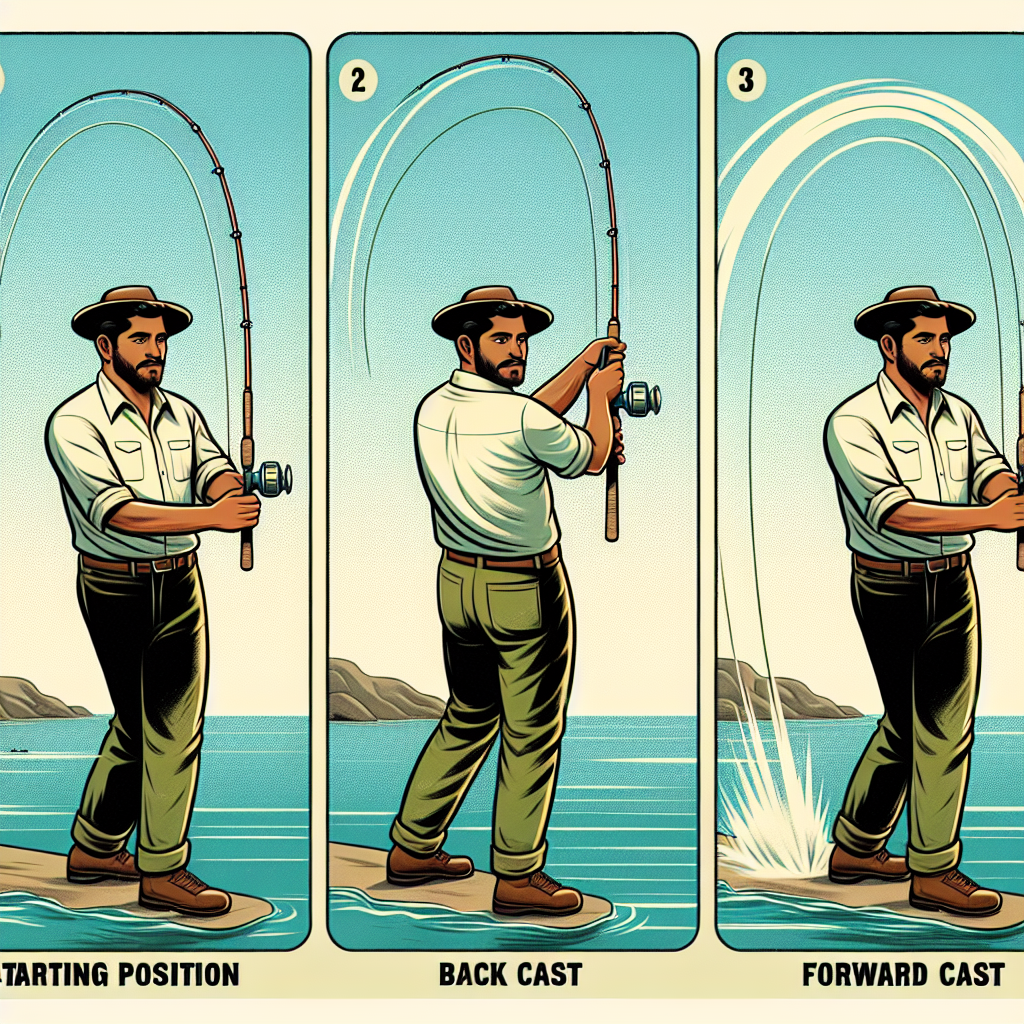
The roll cast technique involves several crucial steps that anglers must follow to achieve effective and accurate casts. Here’s a step-by-step guide:
- Setup: Start by positioning yourself with the rod tip low and the fly line on the water in front of you. Ensure there is enough line out to create a decent loop.
- D-Loop Formation: Slowly bring the rod tip up and back, creating a D-loop with the fly line. The fly line should form a curve resembling the letter ‘D’ when viewed from above.
- Forward Cast: Once the D-loop is formed, accelerate the rod forward with a swift, controlled motion. The fly rod should move in a straight line path. Focus on snapping the rod tip forward to generate enough energy to propel the fly line.
- Line Release: Timing is crucial here. As you thrust the rod forward, release the line at the right moment to send it sailing towards the target.
- Follow Through: After the line is cast, lower the rod tip to follow through, allowing the line to lay out smoothly on the water.
Practice these steps diligently to perfect your roll cast. Remember, it’s all about smooth, coordinated movements and proper timing.
Common Mistakes and How to Avoid Them
Even experienced anglers can make mistakes while roll casting. Awareness of these errors and understanding how to fix them can significantly improve your technique:
- Poor D-Loop Formation: A weak or malformed D-loop will lead to inefficient casts. Make sure your D-loop is properly shaped and positioned for a strong cast.
- Improper Rod Angle: The rod should move in a straight line during the forward cast. Avoid dipping the rod tip or moving it in an arc.
- Rushing the Cast: Patience is key. Ensure you’ve formed a proper D-loop before initiating the forward cast. Hasty movements can ruin the accuracy and power of the cast.
- Line Management: Having too much or too little line out can hinder your roll cast. Practice managing your line to have the right amount for an efficient cast.
- Poor Timing: Releasing the line too early or too late can lead to erratic casts. Practice to develop a sense of perfect timing for the line release.
Advanced Roll Casting Techniques
Once you are comfortable with basic roll casting, you can experiment with advanced techniques to further enhance your skill set:
- Double Roll Cast: The double roll cast involves performing two successive roll casts to extend the range. After the initial roll cast, create another D-loop and follow through with a second. This technique is useful for reaching greater distances.
- Roll Cast Pick-Up: This technique combines a roll cast with a pick-up to get the line off the water for a subsequent overhead cast. It’s especially effective for changing casting directions.
- Spey Casting: While more complex, incorporating elements of Spey casting can significantly boost your roll casting efficiency. Spey casting uses large D-loops and a continuous motion to perform long-distance casts with minimal space.
- Switch Casting: Switch casting merges elements of both overhead casting and roll casting. It involves transitioning from a roll cast to an overhead cast seamlessly, offering flexibility in tight casting scenarios.
Practicing these advanced techniques will expand your casting repertoire, allowing you to adapt to a broader range of fishing conditions.
Recommended Equipment for Roll Casting
Having the right equipment can make a significant difference in the ease and effectiveness of your roll casts. Consider the following when choosing your gear:
- Fly Rod: A medium to medium-fast action rod is ideal for roll casting. The rod should have enough flexibility to create a proper D-loop but enough stiffness to generate power during the forward cast. Rod lengths between 9 to 11 feet are commonly preferred.
- Fly Line: Weight-forward floating lines work best for roll casting. The added weight at the front of the line helps load the rod effectively. Consider lines specifically designed for roll and Spey casting for optimal performance.
- Leader and Tippet: Use a leader length of around 7.5 to 9 feet, tapering down to an appropriate tippet size based on the fish species and conditions. Avoid excessively long leaders that can make forming a D-loop difficult.
- Reel: While reel selection is less critical for roll casting, ensure it balances well with your rod for comfortable casting. The drag system should be reliable to handle the targeted species.
Experiment with different setups to find the combination that best complements your casting style and fishing conditions.
Conclusion
Mastering roll casting can significantly enhance your fly fishing proficiency, especially in challenging environments. Whether dealing with obstructions, shallow waters, windy conditions, or the need for delicate presentations, roll casting serves as a versatile and indispensable technique.
As with any aspect of fly fishing, practice is essential. Start with the basics, focusing on the critical elements of D-loop formation, forward cast, timing, and follow-through. Gradually, as you become more confident, experiment with advanced techniques like the double roll cast and switch casting to broaden your skills.
Remember to invest in suitable equipment tailored for roll casting to streamline your learning process and improve your performance. With dedication and practice, you’ll soon be able to execute efficient roll casts with precision and confidence, enhancing your success on the water.
So next time you find yourself in tight quarters or challenging conditions, remember the roll cast and watch your fly fishing experience soar to new heights!