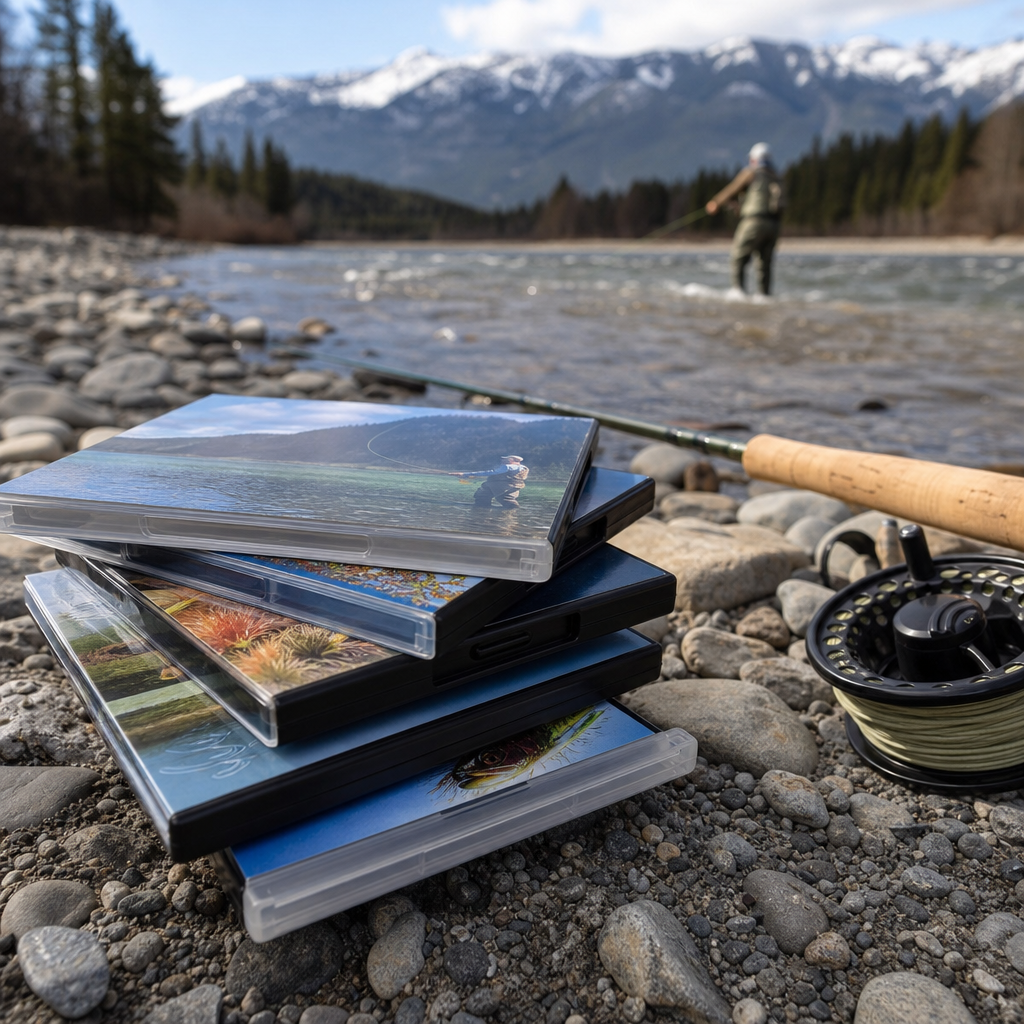
Fly fishing instructional DVDs still earn a place on the shelf because they teach visual timing, line control, and on-water decision making in a way many anglers absorb faster than text alone. In this review of the best fly fishing instructional DVDs, the goal is not nostalgia; it is to identify which titles still deliver clear instruction, durable techniques, and useful demonstrations for anglers building a practical learning library under the broader product reviews and recommendations category. Within book and media reviews, DVDs sit beside books, streaming courses, and magazine archives, but they remain uniquely effective for teaching casting mechanics, knot sequences, rigging steps, and fish-fighting angles frame by frame.
When I evaluate fly fishing media, I use the same standards I use when testing rods or lines: technical accuracy, teaching clarity, production quality, and whether the information transfers to the water. A strong instructional DVD does more than entertain. It answers basic and advanced questions directly: how should a back cast look, what causes tailing loops, when should you mend upstream versus downstream, how do you fish nymphs in pocket water, and what mistakes should beginners expect. The best programs show cause and effect, not just polished casts from expert anglers who make everything appear effortless.
For this hub page on book and media reviews, “best” does not mean newest. Many respected fly fishing DVDs were produced before streaming became dominant, yet they remain relevant because casting physics, drift control, reading seams, and presentation fundamentals have not changed. Great instruction ages well when it is rooted in principles rather than trends. Some titles here focus tightly on casting, while others cover trout tactics, saltwater presentations, fly tying, or destination-specific problem solving. Together, they form a media library that can support a beginner’s first season and still help an experienced angler refine stubborn weaknesses.
This article reviews standout fly fishing DVDs, explains who each one serves best, and shows how to choose the right title for your goals. If you are assembling a reference shelf for trout, bass, steelhead, or saltwater, this guide will help you buy fewer, better resources and build a training progression that actually improves your fishing.
What makes a fly fishing instructional DVD worth buying
A worthwhile fly fishing instructional DVD must do three things clearly: demonstrate technique from useful angles, explain why the technique works, and show how to correct common errors. Production polish matters, but coaching structure matters more. I have watched beautiful fishing films that taught very little, and modestly produced instructionals that immediately improved a student’s loop shape or drift management. The best DVDs break motions into checkpoints: rod path, stop, pause, tracking, line hand timing, body position, and expected line behavior.
Look for instruction built around named techniques and observable outcomes. Good casting programs discuss loop control, the straight-line path of the rod tip, creep, shock waves, and tailing loops. Strong tactics DVDs explain strike detection, split-shot placement, leader formulas, swing speed, fly depth, and how current lanes affect drag. If a video stays at the level of “make a nice cast” or “get a good drift,” it is too vague to justify purchase. You need concrete instruction that can be tested on grass or water within the same day.
Another buying factor is whether the teacher matches your experience level. Some DVDs are ideal for first-time anglers because they emphasize grip, stance, basic overhead casting, and simple trout rigging. Others assume you already cast competently and need help with double hauling, reach mends, spey anchor placement, or saltwater quick shots. The wrong level wastes money. A complete book and media reviews hub should help readers sort resources by actual use case, not just reputation.
Finally, older media should be judged fairly. A DVD from fifteen years ago may lack high-definition drone shots, yet still offer better instruction than many modern productions because the teacher uses repeatable drills and clear diagnosis. In fly fishing, fundamentals outlast format changes.
Best fly fishing instructional DVDs by use case
Rather than naming a single universal winner, it is more useful to match titles to the problems anglers are trying to solve. The programs below are consistently valuable because they teach durable skills and remain widely respected among casting instructors, guides, and committed anglers.
| DVD | Best for | Key strengths | Limitation |
|---|---|---|---|
| Joan Wulff’s Dynamics of Fly Casting | Core casting mechanics | Precise fundamentals, legendary instructor, excellent fault correction | Older production style |
| Lefty Kreh on Fly Casting | Beginners and intermediates | Simple language, practical teaching, efficient saltwater and freshwater crossover | Less structured than some modern courses |
| Rio Modern Spey Casting | Two-handed casting | Named casts, anchor concepts, line system context | Best after basic single-hand competence |
| Mendel’s Master Class series | Technique-specific trout skills | Clear demonstrations on nymphing, dry flies, and reading water | Varies by title and topic depth |
| Flip Pallot saltwater instruction titles | Saltwater fly fishing | Presentation, fish behavior, flats strategy, guide-level nuance | Less useful for pure trout anglers |
Joan Wulff’s Dynamics of Fly Casting remains one of the best instructional DVDs ever made for anglers who want mechanics rather than motivational scenery. Wulff teaches with exceptional precision, and her explanations of timing, acceleration, and loop formation hold up against modern casting curricula used by certified instructors. If you struggle with tailing loops, inconsistent back casts, or poor distance, this is a foundational purchase. It is especially strong for self-diagnosis because she connects each visible line problem to a specific rod-hand cause.
Lefty Kreh’s casting instruction is ideal for anglers who learn best from practical simplification. Lefty had a rare gift for removing intimidation from fly casting. His programs usually emphasize efficiency over style, which helps beginners progress quickly. I often recommend his material to anglers crossing over from spinning gear because he explains what matters most without burying the viewer in jargon. His saltwater perspective also broadens the value of the instruction, since hauling, quick delivery, and wind management help trout anglers too.
For spey and switch anglers, Rio’s instructional material stands out because modern two-handed casting depends heavily on matching head design, sink tips, anchor placement, and cast choice. A good spey DVD must explain not only movements but also system compatibility. Rio’s programs do this well. They make terms like Skagit, Scandi, sustained anchor, and touch-and-go less mysterious, which shortens the learning curve dramatically.
Mendel’s Master Class titles are useful for anglers who want topic-specific trout instruction. Instead of treating fly fishing as one broad skill, these programs often isolate nymphing, dry-fly presentation, reading currents, or seasonal trout behavior. That focus makes them effective supplements after you have basic casting under control. For trout anglers building a serious reference library, these are often the most rewatchable titles because they solve the situations encountered on ordinary local rivers.
Flip Pallot’s instructional videos deserve special mention for saltwater fly fishing. Flats fishing compresses time: spotting, line management, quick shots, and presentation must happen in seconds. Pallot excels at explaining fish movement, boat positioning, and how to make the first cast count. Even if you mainly fish freshwater, studying his emphasis on angles, stripping control, and visual feeding behavior can sharpen your presentations everywhere.
How the top DVDs compare to books and streaming courses
DVDs are strongest when motion is the lesson. Casting, line management, mending, stripping cadence, fish fighting, and rowing angles are easier to learn visually than through still photos. In my own coaching and tackle recommendations, I have seen anglers improve faster after repeatedly watching a five-minute casting segment than after reading an entire chapter on loop dynamics. Repetition is the advantage. A learner can replay the same haul timing or mend sequence until the movement becomes familiar.
Books still outperform video in some areas. They are better for dense information such as entomology, leader formulas, fly pattern recipes, regional hatch charts, or deep technical theory. A strong trout tactics book can organize a season’s worth of concepts more efficiently than a DVD. That is why the best book and media reviews strategy is not to choose one format over another, but to pair them. Use books for system knowledge and DVDs for visible mechanics and tactical sequences.
Streaming courses offer convenience, mobile access, and frequent updates. They also avoid the compatibility problems that sometimes affect older discs. However, many streaming products are fragmented into short clips without the editorial discipline that made classic DVDs so coherent. A well-produced DVD often feels like a complete curriculum with a beginning, middle, and end. That structure helps anglers build skills in order rather than hopping randomly among tips.
For buyers deciding between formats, the simplest answer is this: choose DVDs when you need to see timing and movement, choose books when you need depth and reference value, and choose streaming when portability matters most. The smartest anglers build a blended library.
Choosing the right instructional DVD for your fishing goals
If you are new to fly fishing, start with a casting-focused DVD from Joan Wulff or Lefty Kreh before buying highly specialized content. Most fishing problems begin with line control. Poor casting creates bad drifts, noisy presentations, missed shots, and weak hook sets. Fixing mechanics first makes every later tactic easier. A beginner should look for titles covering grip, stance, pickup and laydown cast, false casting, shooting line, roll casting, and basic mending.
If you already cast competently but struggle to catch more trout, shift toward tactical DVDs. Look for programs on indicator nymphing, dry-dropper rigs, streamer retrieves, reading pocket water, and adjusting weight or depth. These titles help anglers who can deliver the fly but are not yet making smart presentation choices. On most trout rivers, depth control and drag reduction matter more than elegant distance casting.
For steelhead, salmon, and large-river anglers, invest in two-handed instruction early. Spey casting is technical enough that bad habits become expensive. A quality DVD can save hours of frustration and reduce the temptation to blame the line, rod, or tip system for what is really an anchor or timing issue. Similarly, saltwater anglers should prioritize titles that teach line management, wind casting, and target-leading rather than general inspiration films.
One final buying tip: choose instructors with a proven teaching record, not just celebrity status. Great anglers are not always great teachers. The best fly fishing instructional DVDs come from instructors who can diagnose mistakes in plain language and demonstrate corrections that ordinary anglers can copy.
Building a complete book and media review library
As a hub page for book and media reviews, this topic should lead anglers toward a complete learning system, not a stack of random purchases. A balanced library usually includes one foundational casting DVD, one trout tactics DVD, one reference book on entomology or reading water, and one specialized resource matched to your local fishery, such as bass bugs, Great Lakes steelhead, saltwater flats, or European nymphing. That combination covers mechanics, strategy, and regional application.
It also helps to revisit instructional media seasonally. In spring, review nymphing and high-water presentations. In summer, revisit dry-fly drag control and terrestrial tactics. Before saltwater travel, rewatch double-haul, quick-shot, and deck management lessons. Media becomes more valuable when watched with an immediate purpose. I keep notes after each rewatch and usually pull one drill or rigging adjustment to test on the next outing. That habit turns passive viewing into measurable improvement.
The best fly fishing instructional DVDs remain relevant because they solve repeat problems with clear demonstrations and trustworthy teaching. Start with fundamentals, add specialized titles only when your fishing demands them, and treat DVDs as working references rather than collectibles. If you are building your product reviews and recommendations library, begin with one top casting title and one tactics-focused program, then expand your book and media reviews shelf around the species and waters you fish most often.
Frequently Asked Questions
Are fly fishing instructional DVDs still worth buying when so much casting advice is available online for free?
Yes, the best fly fishing instructional DVDs can still be well worth buying, especially for anglers who want structured learning instead of random tips gathered from short online clips. A strong DVD program usually walks through skills in a deliberate sequence, starting with grip, stance, rod loading, and casting mechanics before moving into line management, presentation, mending, fish fighting, and on-water strategy. That kind of progression matters because fly fishing is a chain of connected skills. If a beginner skips the fundamentals and jumps straight to advanced tactics, bad habits often develop and become difficult to fix later.
Another reason DVDs remain useful is visual timing. In fly casting, the pause, the stop, the acceleration, and the rod path all happen quickly. Quality instructional DVDs often slow those moments down, show multiple casting angles, and repeat demonstrations enough for the viewer to see exactly what the instructor is doing. That is especially helpful for learners who absorb movement better by watching complete sequences rather than reading descriptions. Many anglers also appreciate being able to replay a lesson in the garage, on the couch, or in a cabin without relying on internet access.
The key is to buy selectively. Not every older title has aged well. Some DVDs are overly broad, while others focus too much on personalities and not enough on teachable technique. The best ones still hold value because they present timeless fundamentals clearly, use good camera work, and explain not just how to make a cast, but why certain choices work on specific water types. In that sense, a well-made instructional DVD is less about nostalgia and more about building a reliable learning library with lessons you can revisit for years.
What should I look for when choosing the best fly fishing instructional DVD?
The first thing to look for is clarity of instruction. The best fly fishing instructional DVDs do not assume too much, but they also do not waste time with filler. They explain casting mechanics in plain language, demonstrate each motion from useful angles, and connect technique to actual fishing situations. If a title promises to teach fly fishing but spends most of its runtime on scenery or storytelling, it may be entertaining without being especially instructive. For a review-based buying decision, clarity should carry more weight than production flash alone.
You should also look at the instructor’s credibility and teaching style. A great angler is not automatically a great teacher. The most useful DVDs are led by instructors who break down complex actions into manageable parts and anticipate common mistakes. Good teachers explain issues like tailing loops, poor tracking, rushed timing, drag, mending errors, and line control in ways that beginners and intermediate anglers can both understand. A conversational but precise teaching style tends to be more effective than a highly technical presentation that overwhelms new viewers.
Scope matters too. Some DVDs are best for complete beginners, while others are aimed at anglers refining specialty casts, improving trout tactics, or learning saltwater presentations. Before buying, it helps to know whether you need core instruction, advanced casting refinement, species-specific tactics, or on-water problem solving. The strongest titles often combine foundational technique with practical fishing application, showing how casting and line control influence drift, presentation, and hook-up success.
Finally, pay attention to production quality in ways that directly affect learning. Good close-ups, slow motion, clear audio, chapter organization, and logical lesson flow all make a major difference. A DVD that lets you quickly revisit roll casts, double hauls, mending, or reading seams is more useful than one long, loosely organized presentation. In short, the best choice is the title that teaches durable fundamentals, demonstrates them clearly, and matches your current skill level and fishing goals.
Can instructional DVDs really help improve casting technique, or do you still need in-person lessons?
Instructional DVDs can absolutely improve casting technique, particularly when they are used with focused practice. Many anglers make significant progress simply by watching a well-taught explanation of rod loading, casting arc, tempo, stopping positions, and line path, then immediately practicing what they have seen. A good DVD can help a caster understand why the line is collapsing, why loops are too wide, why accuracy is inconsistent, or why distance feels forced. For visual learners, that alone can unlock progress faster than written instruction.
That said, DVDs and in-person lessons serve slightly different roles. A DVD is excellent for repeated demonstration, foundational understanding, and self-paced review. You can pause, rewind, compare your motion to the instructor’s, and revisit the same lesson as your skills develop. In-person lessons, however, provide immediate correction. A qualified casting instructor can see subtle errors in tracking, wrist movement, grip tension, drift, or power application that you may not notice on your own. That kind of real-time feedback is hard to replace.
The most effective approach for many anglers is to use both. A high-quality instructional DVD can build your understanding of the mechanics and vocabulary of casting, making any future lesson more productive. Instead of arriving at a lesson with only vague questions, you arrive already familiar with concepts like false casting, loop control, hauling, and presentation angles. Then the instructor can refine your execution rather than starting from zero.
So yes, DVDs can be highly effective, particularly for beginners and intermediate anglers who need clear demonstrations and repetition. But if you reach a plateau or struggle to diagnose persistent casting problems, even one quality in-person lesson can accelerate improvement. The best fly fishing learning library often includes both instructional media and occasional live coaching.
Are older fly fishing instructional DVDs outdated, or do they still teach useful techniques?
Many older fly fishing instructional DVDs still teach very useful techniques because the core principles of fly casting and presentation have not changed. A tight loop still depends on clean rod tracking and an efficient stop. Good drag-free drift still relies on reading current speed and mending appropriately. Effective line control, knot basics, hook-setting discipline, and fish-playing fundamentals remain highly relevant. In other words, if a DVD teaches sound mechanics and practical on-water decision making, age alone does not make it obsolete.
What can feel dated is the presentation style, pacing, or equipment references. Some older titles may feature slower editing, older rod materials, or terminology that is not as common today. That does not necessarily reduce instructional value. In fact, many classic DVDs are respected precisely because they focus more on timeless technique than on trendy gear talk. When reviewing older fly fishing instructional DVDs, the best question is not whether they are modern in appearance, but whether the teaching remains clear, transferable, and technically sound.
There are cases where age matters. If a DVD includes gear recommendations that are highly specific to obsolete setups, ignores newer fly line designs, or lacks modern filming angles that make motion easier to understand, it may be less useful for today’s buyer. Some older productions also assume prior knowledge and may not teach beginners as thoroughly as newer instructional programs. That is why strong reviews often separate enduring educational value from dated production elements.
Overall, the best older fly fishing instructional DVDs still deserve shelf space when they offer durable fundamentals, credible instruction, and demonstrations that help anglers fish more effectively. For someone building a practical learning library, a classic title with excellent teaching can be every bit as valuable as a newer release with slicker production.
Which topics should the best fly fishing instructional DVDs cover for beginners and improving anglers?
For beginners, the best fly fishing instructional DVDs should start with the fundamentals that shape everything else. That includes rod grip, stance, basic overhead casting, line control, timing, and how the rod loads and unloads. A beginner-friendly DVD should also explain loop formation, false casting without overdoing it, and how to deliver the fly with control rather than simply throwing line. These basics are essential because most early frustration in fly fishing comes from mechanics and timing problems, not from a lack of enthusiasm.
Beyond casting, a strong instructional program should cover practical fishing skills that help an angler actually catch fish. That means reading water, identifying seams and holding lies, approaching without spooking fish, choosing presentation angles, mending line, controlling drift, setting the hook properly, and fighting fish with balance and restraint. Many new anglers focus heavily on casting distance, but in real fishing situations, accuracy, drift quality, and line management usually matter more. The best DVDs make that clear and show how casting serves presentation rather than existing as an isolated skill.
For improving anglers, the most valuable titles go further into troubleshooting and adaptability. They should address common casting faults, roll casts, reach casts, curve casts, line pickup, shooting line efficiently, fishing in wind, and adjusting for tight quarters or varied current speeds. Species-specific or water-specific instruction can also be very helpful, whether the focus is trout streams, lakes, warmwater fishing, or saltwater flats. The strongest instructional DVDs show how techniques change depending on conditions instead of presenting one rigid method for every situation.
Ideally, the best fly fishing instructional DVDs combine fundamentals, correction, and application. They should teach not only what to do, but when to do it and why. That is what separates a casual overview from a truly useful addition to a product review and recommendations library. A well-rounded DVD gives beginners a solid start and gives developing anglers techniques they can continue refining on the water.