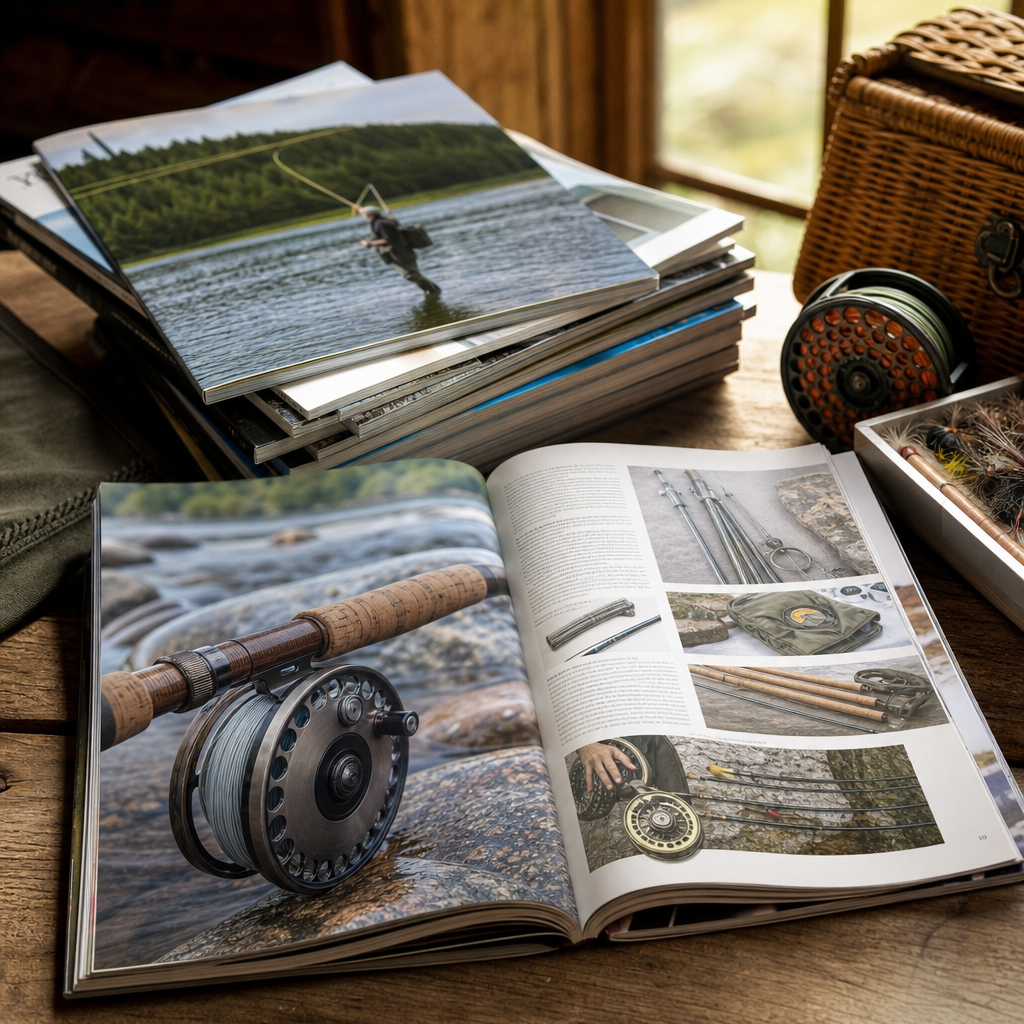
Best fly fishing magazines for gear reviews serve a practical role for anglers who want informed buying guidance before spending on rods, reels, lines, waders, packs, boots, or accessories. In this context, a fly fishing magazine is any recurring print or digital publication that combines editorial reporting, field testing, photography, and product analysis for the fly fishing audience. Gear reviews are the most useful part of that mix because they translate manufacturer claims into on-the-water performance. I have used these publications to compare rod actions, check wader durability notes, and spot patterns in line recommendations long before placing orders. For anglers building a first setup or upgrading a specialized one, the right magazine shortens research time and reduces expensive mistakes.
This topic matters because fly fishing gear is expensive, technical, and often marketed with language that hides tradeoffs. A nine-foot five-weight rod can be promoted as versatile, but one review may reveal it excels only at close-range dry-fly work, while another may show it struggles in wind with weighted nymph rigs. The same applies to reels marketed as saltwater ready, boots claimed to have superior traction, or breathable jackets described as stormproof. Good magazines test these claims against real conditions, and the best ones explain who a product fits, where it performs well, and when a cheaper alternative makes more sense. That kind of editorial discipline is what separates useful gear coverage from catalog copy.
As a hub for book and media reviews within product reviews and recommendations, this article covers more than a simple list of titles. It explains which magazines are strongest for gear reviews, what editorial signs indicate trustworthy testing, how print and digital formats differ, and how to use magazine coverage alongside books, videos, and retailer reviews. The goal is not to crown a single winner. It is to help you choose the right information source for your fishing style, budget, and skill level. For someone researching a first trout outfit, the best publication may be different from the one a steelhead angler or saltwater traveler should prioritize.
What makes a fly fishing magazine reliable for gear reviews
A reliable fly fishing magazine does three things consistently: it discloses enough testing context, it compares products within a realistic use case, and it separates editorial judgment from advertising pressure. In practice, that means a rod review should note line weight, casting distance, fly size, and water conditions, not just praise “feel” and “accuracy.” A wader review should discuss seam construction, gravel-guard fit, puncture resistance, and whether the tester hiked in warm weather or stood in cold tailwater conditions. Without that context, a review may sound polished but still tell you very little.
The best editorial teams also understand category-specific benchmarks. For rods, they discuss swing weight, recovery speed, blank stability, ferrule fit, and practical versatility. For reels, they address startup inertia, drag smoothness, arbor design, and frame rigidity. For lines, they mention head length, taper profile, grain windows, and how honestly the product matches industry standards. When magazines use this vocabulary accurately and explain it in plain language, they become more useful to both beginners and experienced anglers. I trust a publication more when its reviewers clearly know what a product is supposed to do before judging whether it does it well.
Another reliability signal is comparative framing. A strong review rarely evaluates gear in isolation. Instead, it tells you whether a premium rod genuinely outperforms a mid-priced model such as an Echo, Orvis Clearwater, or Redington setup, or whether the extra cost mostly buys finish quality and branding. The same principle applies to boots, packs, and technical apparel. If a magazine never references competing products, readers cannot tell whether “excellent” means best in class or simply acceptable. Trusted magazines place gear on a spectrum of price, performance, and intended use.
Best fly fishing magazines for gear reviews and editorial depth
Fly Fisherman remains one of the strongest all-around choices for gear reviews because it combines broad category coverage with technically competent analysis. Its reviews often sit within a larger educational context, so a rod or line test is not isolated from tactics and species-specific applications. That matters because a streamer angler, spring-creek dry-fly angler, and warmwater bass angler do not ask the same things of a fly rod. When a magazine connects products to techniques, readers make better decisions. Fly Fisherman also benefits from long-standing industry access, which helps it review significant launches across major brands rather than focusing narrowly on entry-level products.
American Angler is especially valuable for readers who want a balanced mix of destination content, instruction, and product coverage. Its gear sections are often practical rather than overly technical, which makes them accessible for intermediate anglers comparing categories like waders, packs, and reels. In my experience, this kind of publication is most useful when you are not chasing the newest launch but trying to understand where a product sits in the current market. American Angler can help answer the everyday buyer question: is this gear actually better, or just newer?
Field & Stream and Outdoor Life are not fly-fishing-only titles, yet they can still be useful because their review frameworks tend to be structured, comparative, and buyer oriented. When they cover fly rods, sunglasses, rain gear, or travel-friendly tackle, the writing often focuses on value, test criteria, and ranked recommendations. That style benefits readers who want quick purchase guidance without reading ten pages of narrative. The tradeoff is depth. Niche fly fishing magazines usually provide better context on line matching, trout versus salt applications, and casting character, while broader outdoor publications are stronger at comparison lists and general-use recommendations.
Regional magazines deserve attention as well. Publications centered on the Rocky Mountains, Pacific Northwest, or Northeast often produce the most relevant gear commentary for local anglers because they evaluate equipment against actual regional conditions. A boot review written by someone hiking slick basalt and mossy freestone banks in Washington may tell you more about traction than a generic national roundup. Likewise, a winter steelhead outerwear review from the Great Lakes or Pacific Northwest carries more practical weight than a studio-style overview. If you fish one region heavily, local magazines can outperform national titles in usefulness.
How to evaluate magazine gear reviews before trusting a recommendation
The first question to ask is simple: who tested the gear, and under what conditions? If the review names the tester, includes photos from actual use, and specifies water type, weather, and rigging, confidence goes up. If it reads like a product summary built from a press release, confidence drops. Serious reviews often mention exactly how a rod was lined, what species were targeted, or how many days a pair of waders saw use. Those details are not cosmetic. They are what make a recommendation transferable to your own purchase decision.
The second question is whether the review identifies limitations. Every good piece of gear has tradeoffs. Fast-action rods can deliver line speed but punish poor timing. Lightweight boots hike well but may sacrifice underfoot support. Packable rain shells travel easily but often wet out sooner than heavier options. When a magazine points out those drawbacks clearly, it demonstrates editorial independence. I am more persuaded by a review that says a product is excellent for drift-boat trout fishing but less ideal for bushwhacking small streams than by one that praises everything equally.
The third question is whether the publication has a coherent testing method. Not every magazine runs a formal lab, but strong ones still organize comparisons in a repeatable way.
| Review signal | What it tells you | Why it matters |
|---|---|---|
| Named tester | The writer is accountable for the judgment | Anonymous praise is harder to verify |
| Use-case detail | The gear was tested in specific conditions | You can match the review to your fishing style |
| Comparative references | The product was weighed against alternatives | Ratings become meaningful, not isolated |
| Tradeoff discussion | The review is willing to criticize | Balanced analysis is more trustworthy |
| Price context | Value is considered, not just performance | Most buyers need fit by budget |
If a review checks most of those boxes, it is usually worth reading closely. If it checks none, treat it as promotional media rather than editorial guidance.
Print versus digital magazines for fly fishing product research
Print magazines still have strengths. They are curated, edited tightly, and often present reviews in a calmer format than web publishing, where urgency can push shallow listicles. Print also encourages feature-length testing pieces that explain categories well, such as what differentiates a euro nymphing rod from an all-purpose trout rod, or why line taper matters more than advertised weight in some casts. For many anglers, print issues become reference libraries. I still keep older issues because they capture how products performed over time and show which brands maintained consistency across generations.
Digital magazines, however, are better for timeliness, searchability, and linking out to related coverage. If a new reel launches before tarpon season, a digital review can appear immediately and connect readers to line guides, maintenance tutorials, and prior-generation comparisons. Digital archives also make hub-style research far easier. You can read one current boot roundup, then follow linked stories on felt versus rubber soles, regional traction laws, and wet-wading accessories. That interconnected structure is ideal for a book and media reviews hub because readers are rarely researching a product in total isolation.
The best approach is hybrid. Use digital publishing to identify current contenders and category trends, then use print-style long-form features to judge fit and durability. When a publication offers both, it usually serves gear buyers well. You get fast updates without losing editorial depth.
How magazines fit into broader book and media reviews
Magazines are only one part of serious fly fishing media research. Books provide lasting value when they explain foundational concepts that make gear reviews easier to interpret. A casting book, for example, helps you understand why one reviewer prefers a medium-fast rod with deeper loading while another favors a tip-fast blank for carrying longer line. Technique books on nymphing, streamer fishing, or saltwater flats also clarify what features actually matter in a product category. Without that framework, readers may chase highly rated gear that does not match how they fish.
Video and podcast media add another layer. Magazine reviews are efficient for structured analysis, while video can reveal motion, sound, and fit. A reel review becomes more convincing when you can hear startup smoothness, watch drag adjustment, or see line pickup speed demonstrated. Wader and boot reviews gain credibility when media shows mobility on uneven banks or how quickly components fail after abrasion. Podcasts are weaker for pure product testing but useful for hearing guides, shop owners, and designers explain why certain design choices exist. Combined with magazine reviews, that commentary helps readers separate innovation from marketing spin.
Retailer reviews and forum posts also have value, especially for long-term durability patterns. If a magazine gives a boot high marks but fifty owners report sole delamination within a season, that matters. If a line is praised editorially yet many anglers report inconsistent factory loops, that matters too. The smartest research process blends professional magazine testing with owner feedback and foundational books. That is the central lesson of this subtopic hub: no single media format is sufficient by itself, but magazines are often the most efficient starting point because they organize the field.
Best practices for using magazine reviews to choose fly fishing gear
Start with your fishing problem, not the product category. Ask what you actually need to do more effectively: cast farther in wind, reduce fatigue on long hikes, stay drier in winter, carry gear for ten-mile days, or protect fly line on rocky banks. Then read magazines that cover that use case deeply. A trout generalist may need one publication; a saltwater traveler or two-handed angler may need another. This prevents the common mistake of buying the highest-rated item instead of the right item.
Next, compare at least three reviews before spending serious money. Look for agreement on measurable traits such as rod feel, drag consistency, fit, or material durability. If several credible magazines independently say a boot runs narrow, believe them. If one publication calls a rod forgiving and two others call it demanding, investigate further before buying. Consensus matters more than star ratings.
Finally, keep perspective on magazine economics. Advertising exists, access matters, and not every review can be fully independent in tone. That does not make magazines useless; it means readers should use them intelligently. The best fly fishing magazines for gear reviews are still among the most valuable resources available because they combine experience, technical language, comparative thinking, and organized editorial judgment in one place. Use them as your research hub, then expand outward to books, videos, and owner reports before making the final call.
The best fly fishing magazines for gear reviews are the ones that give you enough context to match a product to your fishing, not just enough praise to notice a new release. Reliable publications explain testing conditions, compare alternatives honestly, and acknowledge tradeoffs in plain language. Titles such as Fly Fisherman and American Angler are strong starting points, while broader outdoor publications and regional magazines can add useful perspective depending on species, geography, and budget. Print remains valuable for depth and curation, while digital publishing improves timeliness and cross-referencing.
As the hub page for book and media reviews within product reviews and recommendations, this article’s main benefit is simple: it helps you build a smarter research process. Use magazines first to understand the market, books to strengthen your technical foundation, videos and podcasts to see gear in action, and owner feedback to confirm durability over time. That layered approach leads to better purchases and fewer regrets on the water. If you are comparing gear now, start by selecting two trusted magazines that match your style of fishing, then read their latest category reviews before you buy.
Frequently Asked Questions
What makes a fly fishing magazine reliable for gear reviews?
A reliable fly fishing magazine does more than repeat product descriptions from a manufacturer. The best publications explain how gear performs in real fishing conditions, not just in controlled demonstrations or marketing photos. That means reviewers should discuss how a rod casts at different distances, how a reel handles drag pressure on strong fish, how waders hold up after repeated use, and whether boots, packs, lines, and accessories remain comfortable and functional over time. When a magazine includes details about field testing, water conditions, angler skill level, species targeted, and the type of fishing involved, its reviews become much more useful to readers making buying decisions.
Editorial independence is another major sign of reliability. Strong magazines separate advertising from review content and are transparent about how products are selected and tested. The most trustworthy gear reviews acknowledge tradeoffs instead of labeling every new product as outstanding. For example, a review may note that a premium rod is extremely accurate but too stiff for beginners, or that lightweight wading boots are comfortable for travel but may sacrifice long-term durability. That kind of balanced analysis helps anglers understand whether a product is actually right for their needs.
It also helps when a magazine compares gear across categories and price points. Instead of reviewing a single reel in isolation, a useful publication may explain how it stacks up against similarly priced alternatives or where it fits within a broader market segment. Good fly fishing magazines often build credibility by combining professional expertise, on-the-water testing, quality photography, and clear writing that translates technical details into practical guidance. In short, the most reliable magazines help anglers answer the real question behind every gear purchase: will this equipment improve my experience on the water, and is it worth the money?
Are print or digital fly fishing magazines better for comparing rods, reels, and other gear?
Both formats can be valuable, but they serve slightly different purposes. Print magazines often feel more curated and editorially polished. Because space is limited, the gear reviews that make it into print tend to be selected carefully and presented with stronger structure, better photography, and clearer summaries. Many anglers also find print easier to read deeply, especially when comparing several products side by side. A well-produced print issue can be excellent for seasonal gear guides, buyer’s roundups, and long-form reviews that put products into context.
Digital magazines, however, usually have an advantage when it comes to timeliness and convenience. Gear categories change fast, and digital publications can update reviews more quickly when new rods, reels, fly lines, waders, or accessories are released. They may also offer searchable archives, embedded videos, product comparison tables, and links to related reviews, which makes research more efficient. If an angler wants to compare several products before a purchase, digital access often saves time because it allows readers to move between reviews, brand coverage, and category-specific recommendations without waiting for the next issue.
The best approach for many anglers is to use both. Print is excellent for discovering gear through thoughtful editorial packages, while digital is often better for drilling into the latest releases, checking updates, and reviewing multiple opinions before buying. What matters most is not the format alone but the quality of the review process. A digital magazine with shallow, recycled product copy is less useful than a print publication with genuine field testing, but the reverse is also true. The smartest readers focus on how the review is built: whether it explains performance, durability, value, and intended use in a way that helps match gear to real fishing situations.
How should anglers use magazine gear reviews before buying expensive fly fishing equipment?
Magazine gear reviews are best used as a filtering tool, not as the only source of truth. Before spending serious money on a rod, reel, wader system, or premium fly line, anglers should use reviews to narrow the field to a few strong candidates. A good review can quickly tell you whether a product is designed for fast-action distance casting, delicate dry-fly presentations, cold-water durability, travel convenience, or technical nymphing performance. That kind of insight prevents buyers from wasting time on gear that does not match how or where they actually fish.
It is also important to read reviews with your own priorities in mind. An advanced angler may love an ultra-fast rod that demands precise timing, while a beginner may find the same rod unforgiving and tiring. A magazine might praise lightweight boots for mobility, but if you hike over sharp rock and fish hard all season, durability may matter more than weight savings. The most effective way to use reviews is to identify the criteria that matter most to you, such as comfort, versatility, drag smoothness, packability, waterproofing, line control, or value for money, and then see how each publication addresses those points.
After using magazines to create a shortlist, anglers should cross-check findings with hands-on testing, retailer expertise, warranty information, and, when possible, reviews from anglers with similar fishing styles. Magazines are especially strong at giving structured, comparative insight, but personal fit still matters. Rod feel, boot fit, sling pack layout, and even reel ergonomics can be highly individual. The best buying decisions happen when magazine reviews provide the framework, and real-world testing or informed follow-up confirms which option fits the angler best.
Do the best fly fishing magazines review more than just rods and reels?
Absolutely, and that broader coverage is part of what makes a fly fishing magazine truly useful for gear buyers. While rods and reels get much of the attention, many anglers spend just as much time evaluating fly lines, leaders, tippet, waders, boots, jackets, packs, nets, glasses, tools, and smaller accessories that directly affect comfort and performance on the water. A strong magazine understands that a successful fly fishing setup is a complete system, not just a premium rod paired with a good reel.
The best gear-review magazines often stand out because they explain how all of these components work together. For example, they may point out that a rod’s performance depends heavily on line pairing, or that the best wading boots for freestone rivers may not be ideal for long hike-in trips. They may compare chest packs to sling packs, discuss whether a rain jacket breathes well enough for summer fishing, or evaluate whether a pair of polarized glasses delivers practical visual clarity in changing light. These are exactly the kinds of details that help anglers avoid making purchases based solely on brand reputation or marketing buzz.
Broader gear coverage is also important because accessories often represent the most practical opportunities to improve a day on the water. A magazine that reviews only flagship rods and reels may be appealing, but one that also tests boots, packs, layering systems, tools, and everyday accessories is often more helpful to real anglers. Those publications tend to offer more complete buying guidance because they address the entire fishing experience, from casting and fish fighting to walking, wading, weather protection, and gear organization. For anyone looking for practical gear reviews, that full-spectrum approach is a major advantage.
Can magazine gear reviews help beginners, or are they mainly useful for experienced fly anglers?
Magazine gear reviews can be extremely helpful for beginners, provided the publication explains gear in practical terms rather than assuming advanced knowledge. In fact, newcomers often benefit the most from well-written reviews because they are trying to sort through a crowded market full of premium claims, technical language, and wide price ranges. A good fly fishing magazine helps simplify that process by explaining what a product is designed to do, who it suits, and where it may not be the best fit. That kind of clarity is invaluable when a beginner is choosing a first rod outfit, entry-level waders, or an all-purpose line.
For beginners, the most useful reviews are the ones that connect product features to real outcomes. Rather than simply saying a rod has fast recovery and high line speed, a strong review might explain that it performs well in wind but may be harder for a new caster to load at short range. Instead of calling a pair of boots “technical,” the review may explain how the sole grips on slick rocks, how the fit feels after several hours, and whether the support is sufficient for uneven terrain. These practical interpretations help newer anglers make sense of equipment without needing years of experience.
Experienced anglers also benefit, but often in a different way. They may use magazines to compare refinements in drag design, line taper behavior, rod tracking, material durability, or specialized performance for certain fisheries. Beginners are usually looking for confidence and clarity, while advanced anglers are often seeking nuance. The best fly fishing magazines manage to serve both audiences by combining accessible explanations with enough technical depth to support more informed buying decisions. When done well, gear reviews are not just for experts; they are one of the best educational tools available to anyone building or upgrading a fly fishing setup.