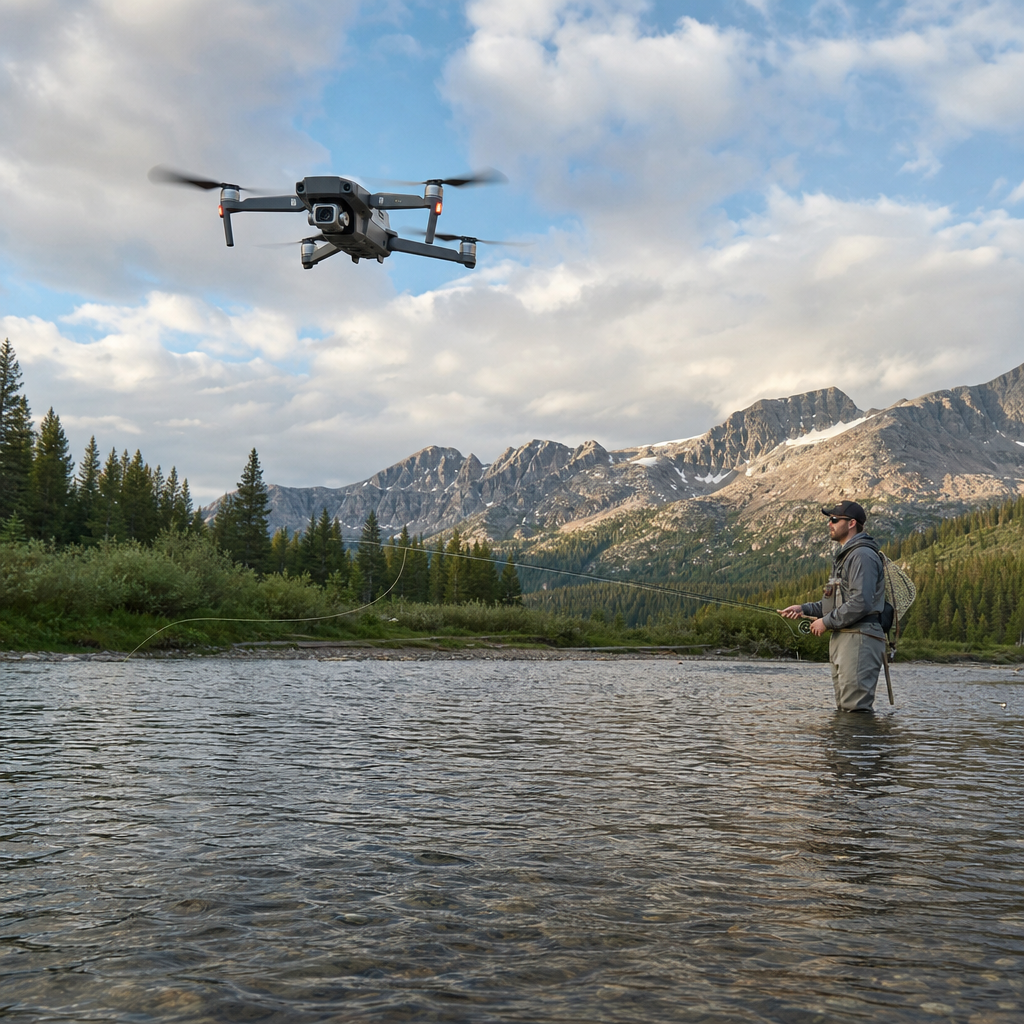
Fly fishing footage is hard to capture well because the sport unfolds in wide landscapes, changing light, and brief, precise moments when a cast straightens, a trout rises, or a fish breaks the surface at the net. The best fly fishing drones solve that problem by giving anglers and creators stable aerial video, safer tracking shots, and a broader view of rivers, lakes, flats, and shoreline structure. In practical terms, a fly fishing drone is a compact unmanned aircraft used to film fishing sessions, scout water from legal heights, and document trips without forcing a second person to carry a dedicated camera rig. For this technology reviews hub, the goal is not simply to list popular models. It is to explain which drone features matter on the water, where each platform fits, and how to choose equipment that holds up in wind, glare, moisture, and travel conditions.
After testing drones around streams, drift boats, reservoirs, and windy coastal access points, I have found that fly fishing places unusual demands on camera aircraft. You are often launching from uneven gravel bars, balancing rods and packs, and trying to preserve battery life during long hikes. You also need footage that shows line control and fish behavior clearly, not just cinematic scenery. That means gimbal stability, obstacle sensing, subject tracking, transmission reliability, and practical battery management matter more than headline speed alone. It also means compliance matters. In the United States, the Federal Aviation Administration requires recreational pilots to follow registration and Remote ID rules where applicable, maintain visual line of sight, and avoid flying over restricted areas. Similar rules apply in many other countries. A drone that looks impressive on paper but is hard to deploy quickly, hard to see in bright skies, or too fragile for repeated riverside use will frustrate most anglers.
This article covers the top fly fishing drones for capturing footage across budgets and use cases, while also serving as the central guide for technology reviews within product reviews and recommendations. You will see how camera size affects image quality, why tracking can fail over reflective water, when a sub-250-gram drone is the smartest buy, and where premium drones justify their price. You will also get a framework for comparing drones, action cameras, polarized filters, spare batteries, and field charging options in related gear guides. If you want clean 4K footage of casts, fish fights, and remote water without carrying a full production kit, the right drone can become one of the most useful tools in your system.
What Makes a Drone Good for Fly Fishing Footage
The best drone for fly fishing balances four priorities: image quality, portability, flight safety, and ease of use near water. Image quality starts with sensor size and lens behavior. A larger sensor, such as a 1-inch or Four Thirds sensor, captures more dynamic range than a tiny sensor, which helps retain detail in bright skies and dark tree-lined banks during sunrise and sunset sessions. Resolution matters, but not as much as stability and bitrate. Crisp 4K at a healthy bitrate is usually more useful than inflated marketing around 5.1K or 8K if the camera struggles with noise, rolling shutter, or overprocessed sharpening.
Portability matters because fly anglers walk. A foldable drone under 900 grams packs into a sling, boat bag, or backpack more realistically than a heavy cinema platform. Safety features matter because rivers are full of visual traps. Downward sensors can misread reflective surfaces, side sensors can help around trees, and return-to-home performance can save a drone if wind shifts in a canyon. Ease of use is the deciding factor for most people. Reliable automated tracking, quick launch, predictable controller ergonomics, and batteries that deliver actual flight time close to the rated estimate determine whether you film often or leave the drone at home.
Top Fly Fishing Drones Compared
For most anglers and creators in 2026, five models stand out. DJI dominates this category because its camera quality, transmission systems, and software maturity remain ahead of most competitors. Autel still deserves consideration for pilots who prefer an alternative ecosystem and strong imaging performance. The right choice depends on how serious your footage goals are, how much editing latitude you need, and whether you value minimum pack weight over sensor size.
| Drone | Best For | Key Strengths | Main Tradeoff |
|---|---|---|---|
| DJI Mini 4 Pro | Most fly anglers | Sub-250g portability, excellent tracking, strong obstacle sensing, sharp 4K HDR | Smaller sensor than premium models |
| DJI Air 3S | Balanced performance | Dual-camera flexibility, better wind handling, longer real-world endurance | Heavier and more expensive than Mini class |
| DJI Mavic 3 Pro | High-end filmmaking | Superb image quality, multiple focal lengths, strong low-light results | High price and larger kit burden |
| Autel EVO Lite+ | Alternative to DJI | Large sensor, capable low-light footage, solid color rendering | Tracking and ecosystem less polished |
| DJI Avata 2 | Immersive action sequences | Dynamic FPV perspective, protected design, dramatic follow lines | Not ideal for conventional scenic coverage |
The DJI Mini 4 Pro is the safest recommendation for most readers. I have used it on small trout streams and larger western rivers, and it consistently delivers the best mix of weight, speed, and usable automation. Its omnidirectional obstacle sensing is especially useful when a river corridor narrows under cottonwoods or alders. The sub-250-gram class also simplifies travel and regulation in some jurisdictions, though local rules still apply. If you want one drone for hiking to water, filming overhead casting sequences, and capturing establishing shots without overcommitting money or pack space, this is the benchmark.
The DJI Air 3S is the upgrade path when wind resistance and camera flexibility matter more than minimum size. Its dual-camera setup gives you a wider field for landscapes and a tighter perspective for isolating an angler in a drift boat or on a gravel bar. That matters because fly fishing footage often looks better when the environment and subject are separated deliberately. The Air series also tends to feel more planted in gusty conditions than Mini models, which can be a decisive advantage on reservoirs, salt flats, or broad tailwaters.
The DJI Mavic 3 Pro remains the premium choice for creators producing branded destination content, lodge marketing, or serious YouTube films. The image quality jump from a small sensor to a larger Hasselblad-branded main camera is visible in backlit water, sunrise contrast, and color depth. You pay for that quality in both cost and carrying burden. It is not the drone I recommend to the average weekend angler, but it is the model that most clearly rewards disciplined shooting and color grading.
The Autel EVO Lite+ appeals to anglers who want strong low-light footage and a non-DJI option. Its 1-inch-class imaging is credible, and the footage can look natural in dawn and dusk conditions. The hesitation is software polish. In repeated field use, DJI’s subject tracking and app ecosystem have been more predictable, which matters when you only have one chance to capture a fish release or a fast moving run downstream.
The DJI Avata 2 is a niche tool, but it deserves mention because FPV fly-through footage can transform a fishing film when used selectively. It excels at dramatic passes over riffles, along cliff walls, and behind moving anglers on open banks. It is not the primary drone for top-down fish fighting footage or broad scenic coverage, but as a secondary platform it produces perspectives that standard camera drones cannot match.
Best Drone by Use Case and Budget
If your budget is under the premium tier, the DJI Mini 4 Pro is still the value leader because it avoids the compromises common in cheaper drones. Many low-cost models advertise 4K, but use small sensors, weak stabilization, and short transmission range that break down around trees and water glare. For beginners, that means frustration and unreliable footage. Spending a little more on a mature platform usually saves money because you keep the drone longer, get better resale value, and avoid replacing poor accessories.
For the mid-range buyer, the DJI Air 3S is the sweet spot. It is the model I would choose for someone who wants to shoot a full season of trout, bass, and saltwater fly content with room to grow. The stronger wind handling alone justifies the jump for anglers fishing open terrain. The second lens also helps create a more polished sequence because you can intercut a sweeping wide shot with a compressed shot of line pickup or a fish landing without repositioning dangerously close.
For premium productions, the DJI Mavic 3 Pro is the best fly fishing drone for capturing footage when quality is the priority. It is especially strong for destination storytelling, lodge reels, conservation films, and hero shots intended for commercial use. If your workflow includes D-Log M or more advanced grading, the extra latitude is real. The drawback is obvious: larger batteries, a larger case, and a much higher replacement cost if something goes wrong.
If you want first-person action rather than classic aerial cinematography, the Avata 2 is the right specialist option. It should not be your only drone unless your channel depends on speed and immersion. Most fly fishing creators need smoother, more observational footage first.
Camera Performance on Water: What Actually Matters
Water exposes camera weaknesses quickly. Bright reflections can clip highlights, ripples can confuse exposure metering, and mixed light under tree canopies can push a small sensor into noisy shadows. In practice, the most useful drone camera features for fly fishing are wide dynamic range, reliable auto exposure compensation, 10-bit color for grading, and controllable shutter speed. Neutral density filters are often necessary in bright midday conditions if you want natural motion blur while shooting 24, 30, or 60 frames per second.
Polarizing filters are less common on drones than on handheld lenses because of weight and angle limitations, but quality ND/PL combinations from brands like Freewell and PolarPro can reduce glare in certain sun positions. They will not magically reveal fish through every surface reflection, and they can create uneven sky polarization on very wide lenses, but they can improve water detail when used carefully. I recommend testing filter orientation before a trip rather than assuming it will help every scene.
Tracking over water is another major issue. Reflective surfaces and low-contrast subjects can break visual tracking systems, especially if the angler wears muted clothing that blends into shoreline rock or vegetation. The fix is simple: do not depend entirely on automation. Use tracking as an aid, not a substitute for planning. Set clean flight paths, maintain altitude buffers, and record extra establishing shots so you are not forced to chase action aggressively.
Field Workflow, Battery Strategy, and Safe Operation
Most lost drone footage is not caused by poor camera hardware. It is caused by rushed launches, weak battery planning, and bad recovery decisions in wind. A practical field workflow starts before you hike in. Update firmware at home, calibrate the compass only when needed, format cards in camera, and pack batteries in a way that makes rotation obvious. On the water, I mark used batteries with a simple orientation change in the case so I never relaunch on a partially depleted pack.
Battery claims are always optimistic. If a drone is rated around forty minutes, expect considerably less when filming in wind, climbing, tracking, or returning against a headwind. For a half-day trip, three batteries is the minimum. For a full-day trip with multiple fishing locations, four or five is more realistic unless you carry a high-output USB-C power bank or vehicle charger. DJI’s charging hubs are worth buying because they simplify rotation and help top off packs efficiently between stops.
Launching and landing demand discipline. Avoid hand launches unless you have practiced them in calm conditions. Gravel bars, boat decks, and sparse grass are safer than mud, reeds, or sloped rock. Never rely on automatic landing directly over water. Give yourself a visible landing zone and monitor altitude manually during the final approach. If wind is increasing, land early. Fish can be replaced; drowned aircraft and risky retrieval attempts are never worth it.
How This Hub Connects to Broader Technology Reviews
This guide sits at the center of technology reviews for anglers because drones intersect with action cameras, smartphone editing apps, waterproof storage, power management, and polarized optics. If you are building a content kit, the next logical comparisons are drone versus action camera for solo fishing footage, best microSD cards for high-bitrate 4K capture, portable battery stations for vehicle-based trips, and editing software such as DaVinci Resolve, Final Cut Pro, or Adobe Premiere Pro for color correction and sequence assembly. Drone footage becomes more valuable when it fits into a complete system rather than acting as a standalone gadget.
The strongest setups are often modular. A Mini 4 Pro paired with an action camera on a chest mount covers nearly every angle a solo angler needs. An Air 3S plus a compact tripod and wireless lav microphone creates a strong small-channel production kit. A Mavic 3 Pro plus a mirrorless camera becomes a professional lodge or guide service package. The key is matching the drone to the rest of your workflow so the technology serves the fishing story instead of distracting from it.
The top fly fishing drones for capturing footage are not simply the most expensive drones on the market. They are the models that launch quickly, hold steady in wind, protect highlights on reflective water, track reliably enough to reduce workload, and fit the way anglers actually travel. For most people, the DJI Mini 4 Pro is the best overall choice because it combines portability, intelligent flight features, and image quality at a practical size. The DJI Air 3S is the best step-up option for creators who need stronger wind performance and more framing flexibility. The DJI Mavic 3 Pro is the premium pick for serious filmmaking, while the Autel EVO Lite+ and DJI Avata 2 fill specific alternative and FPV roles.
When choosing a fly fishing drone, start with your real use case. Ask where you fish, how far you hike, how often you film in wind, how much grading you plan to do, and whether you need automated tracking or manual control. Then budget for the full kit: extra batteries, charging hub, ND filters, spare props, a bright-screen controller if available, and a case that survives wet travel. That full-system thinking produces better footage than chasing the biggest spec sheet.
If you are building out your product reviews and recommendations toolkit, use this hub as your starting point for technology reviews, then compare supporting gear that improves capture, storage, power, and editing. Choose the drone that matches your water, your workflow, and your skill level, and you will come home with footage that finally shows fly fishing the way it feels on the river.
Frequently Asked Questions
What features matter most when choosing a fly fishing drone for capturing footage?
The most important features are image stabilization, obstacle sensing, wind resistance, battery life, subject tracking, and overall portability. Fly fishing rarely happens in controlled conditions. You may be filming over moving water, in uneven light, with trees, canyon walls, reeds, or shoreline structure nearby, so a drone needs to stay stable and predictable. A 3-axis gimbal is essential because it keeps footage smooth when the aircraft is hovering in gusts or following an angler through changing terrain. Strong wind performance also matters more than many buyers expect, since open rivers, alpine lakes, saltwater flats, and reservoir shorelines can all create sudden crosswinds that lighter drones struggle to handle.
Camera quality is another major factor, but it should be viewed in practical terms rather than marketing terms alone. A larger sensor generally handles reflections, shadows, and bright sky better, which is especially useful when filming water at sunrise, midday, or evening. Resolution such as 4K is now a baseline for serious footage, but dynamic range and low-light performance often make a bigger real-world difference than raw megapixels. If you want cinematic content, adjustable aperture, D-Log or flat color profiles, and high bitrate recording can give you more flexibility in editing.
Tracking and safety features are also important because fly fishing includes brief moments that are easy to miss. A drone with intelligent subject tracking can help follow an angler during a wade, drift, or shoreline walk while maintaining consistent framing. At the same time, obstacle avoidance helps reduce risk around trees, bluffs, docks, and bridge spans. Finally, portability matters because many fly fishing trips involve hiking, launching from gravel bars, or packing gear into a drift boat, kayak, or skiff. A compact folding drone with multiple batteries is often the best balance between professional-looking footage and field convenience.
Are smaller portable drones good enough for fly fishing videos, or do you need a premium model?
Smaller portable drones are often good enough for many fly fishing creators, especially if the goal is clean, stable footage for YouTube, social clips, travel films, or trip recaps. Modern compact drones can produce excellent 4K video, reliable stabilization, and useful tracking modes in a package that is easy to pack into a vest bag, sling, boat compartment, or backpack. For anglers who hike to remote streams or move frequently between access points, a lightweight drone can actually be the better choice because it is faster to launch, easier to carry, and less intimidating to use in the field.
That said, premium models usually justify their price when footage quality is the top priority. Higher-end drones tend to offer better performance in wind, stronger transmission range, more advanced collision sensing, and improved camera systems with larger sensors. Those upgrades matter when you are filming in bright glare off water, deep canyon shade, over broad flats, or during the low-angle light that often makes fishing footage look dramatic. Premium models also tend to produce cleaner footage in difficult lighting, preserve more detail in highlights and shadows, and give editors more room to color grade without the image falling apart.
The right answer depends on how serious your filming goals are. If you are documenting personal trips or creating polished but practical content, a compact midrange drone is usually enough. If you are building a professional fishing channel, shooting commercial work, or trying to capture cinematic sequences where water, sky, and anglers all need to look excellent in the same frame, a premium drone is worth considering. In fly fishing specifically, reliability and ease of use are often just as valuable as top-end specs, because a missed shot of a rise, hook set, or net release cannot be recreated.
How do you safely film fly fishing with a drone without spooking fish or distracting anglers?
Safe and effective drone filming starts with distance, altitude, and restraint. In most situations, the best approach is to launch well away from the water, climb to a safe height, and approach gradually rather than hovering low over a run or directly above an angler. Fish can react to shadows, noise, and sudden movement, especially in clear shallow water or on calm days. Even when fish are not visibly disturbed, a low drone can distract the angler and disrupt the natural rhythm of casting, mending, stripping, or fighting a fish. Keeping the drone higher and farther back often results in better footage anyway because it shows the broader landscape and the angler’s position within it.
It also helps to plan shots before the fishing starts. Decide whether you want a wide establishing shot, a slow reveal of a river bend, a follow shot down a bank, or a top-down look at current seams and structure. Pre-planning reduces the temptation to improvise dangerously when the action begins. If a fish is hooked, the safest move is usually to maintain a stable position and let the moment play out, rather than trying to rush the drone into a dramatic angle. Fast, reactive flying near rods, lines, trees, or boats creates unnecessary risk.
Communication is essential when filming another person. The angler should know where the drone is, what shot is being attempted, and whether they need to pause before a cast. It is also important to respect other anglers, boaters, and wildlife in the area. Avoid buzzing crowded access points, nesting birds, or quiet water where drone noise carries easily. Good drone etiquette in fly fishing means getting the shot without becoming the main event. The best footage feels immersive and natural, not intrusive.
What camera settings and flight techniques work best for capturing high-quality fly fishing footage?
For most fly fishing footage, smooth movement and exposure control matter more than flashy flight maneuvers. A good starting point is to film in 4K, use a frame rate that matches your editing style, and keep shutter speed under control with ND filters when shooting in bright conditions. Many creators use 24 or 30 frames per second for cinematic sequences and 60 frames per second for action moments that may need slight slow motion, such as casts, hook sets, or fish releases. Because water reflects so much light, exposure can change quickly between sky, trees, and river surface, so checking highlights is important to avoid blown-out footage.
Flat color profiles or log profiles can be useful if you know how to color grade, especially when filming scenes with bright clouds and dark banks in the same shot. If you prefer a simpler workflow, a standard or slightly softened profile can still look excellent as long as exposure is accurate. Polarization is not typically available on standard drone lenses the way it is on handheld cameras, so composition and angle become especially important for managing glare. Changing your flight path slightly can dramatically improve visibility into the water and reduce harsh reflections.
In terms of flight technique, slower is usually better. Gentle push-ins, lateral tracking along a shoreline, high reveals over bends, and steady overhead drifts tend to suit fly fishing well because they match the pace and atmosphere of the sport. Avoid rapid yaw movements or aggressive banking unless the shot truly calls for energy. Wide shots establish the setting, medium follow shots show the angler in action, and occasional top-down views can highlight seams, drop-offs, weed lines, or flats structure. The strongest fly fishing edits usually combine scenic context with a few well-timed action clips instead of relying on nonstop movement.
Are there legal or practical restrictions to know before using a drone while filming fly fishing trips?
Yes, and they should be taken seriously. Drone laws vary by country and region, but common requirements include registration, line-of-sight operation, altitude limits, and restrictions around airports, parks, wildlife areas, and certain public lands. Some places that are popular for fly fishing may have drone-specific prohibitions even if fishing itself is allowed there. That means you should check local aviation rules, park regulations, and land management policies before launching. If you are filming for a business, brand, monetized channel, or client, there may also be additional certification or licensing requirements depending on where you operate.
Practical restrictions are just as important as legal ones. Weather is a major factor in fishing environments, and river valleys, coastal flats, and mountain lakes can all produce strong gusts, shifting wind directions, mist, or sudden rain. Batteries also drain faster in cold weather, which matters during trout seasons in spring, fall, and winter. Signal interference can occur near steep terrain, bridges, or dense tree cover, so it is wise to maintain conservative flight paths and plenty of return margin. Launching and landing can be tricky on gravel bars, muddy banks, drift boats, and uneven shorelines, which is why many operators use a landing pad or hand launch when conditions allow and it is safe to do so.
There is also a practical ethics component. Not every good fishing moment needs a drone overhead. If the location is crowded, sensitive, or wildlife-heavy, it may be better to skip aerial filming entirely. Responsible use protects not only your equipment and legal standing, but also the experience of the angler, the resource, and everyone else on the water. In fly fishing, the best drone operator is usually the one who knows when to fly, when to hold back, and how to capture the scene without compromising it.