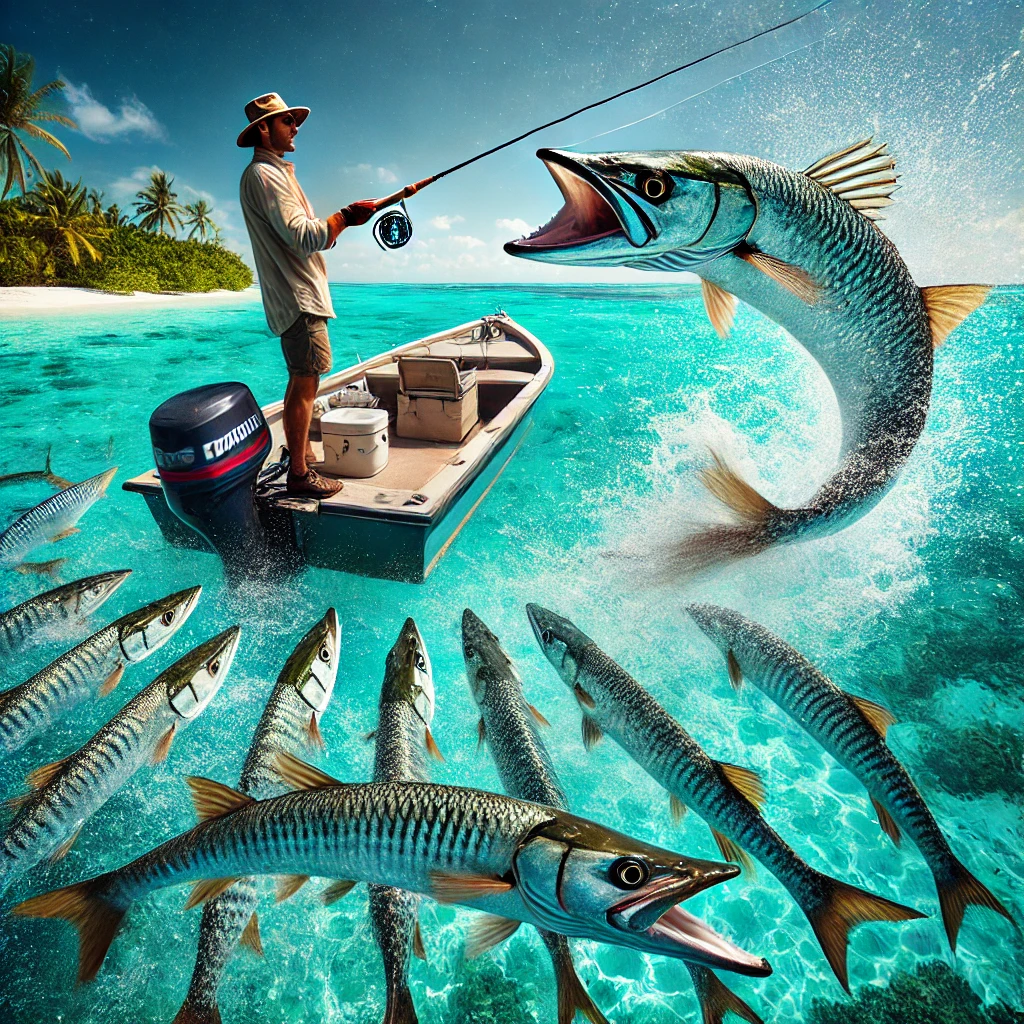
Fly fishing for barracuda is both an exhilarating and rewarding experience that all avid anglers should try at least once. Known for their impressive speed, agility, and ferocity, catching a barracuda on a fly offers thrills and challenges that few other saltwater species can match. With their powerful jaws and razor-sharp teeth, barracudas present a high-stakes battle that requires skill, knowledge, and a bit of luck. As a top predator in their habitat, these sleek, torpedo-shaped fish demand respect and expertise from those who seek to hook them.
In this comprehensive guide, we’ll dive into the essentials of fly fishing for barracuda, focusing on the techniques, gear, and strategies that can help you succeed. Whether you’re a novice or a seasoned fly fisher, understanding the unique characteristics and behaviors of barracuda will enhance your chances of landing one of these formidable fish. We’ll explore the best locations to find barracuda, the optimal times to target them, and the specific fly patterns that tend to attract their attention.
By mastering the basics and refining your approach, you’ll be well-prepared to tackle the challenges that come with fly fishing for barracuda. So, let’s gear up and head to the saltwater flats and deeper waters where these predators lurk, ready to test your angling skills and provide an unforgettable adventure.
Understanding Barracuda Behavior and Habitat
To successfully fly fish for barracuda, it’s crucial to understand their behavior and habitat preferences. Barracudas are typically found in warm, tropical, and subtropical waters around the world, including the Atlantic, Pacific, and Indian Oceans. They are often seen patrolling coral reefs, mangroves, and shallow coastal waters, but they can also be found in deeper offshore areas.
Barracudas are ambush predators, relying on their speed and stealth to catch their prey. They are known for their sudden bursts of speed, which can reach up to 27 miles per hour, allowing them to quickly close the distance on unsuspecting fish. This predatory behavior makes them particularly exhilarating to target with a fly rod, as they tend to strike with incredible force and speed.
When it comes to locating barracuda, look for areas with plenty of baitfish, as barracudas will often be nearby, waiting to pounce on their next meal. Seagrass beds, drop-offs, and sand flats are prime spots to find these predators. Pay attention to tidal movements and water clarity, as barracudas prefer clear water where they can easily spot their prey. Early morning and late afternoon are typically the best times to fish for barracuda, as they are most active during these periods.
Essential Gear for Fly Fishing Barracuda
Having the right gear is essential for a successful and enjoyable fly fishing experience with barracuda. Here’s a rundown of the key equipment you’ll need:
- Rod and Reel: A fast-action, 9 to 10 weight fly rod is ideal for casting large, heavy flies and handling the powerful runs of a barracuda. Pair it with a sturdy saltwater reel with a smooth drag system to withstand the fish’s explosive runs.
- Fly Line: Choose a weight-forward, floating fly line designed for saltwater use. Barracudas are often found in shallow waters, so a floating line will help you effectively present your fly. In some situations, an intermediate or sinking line may be necessary if targeting deeper areas.
- Leader and Tippet: Use a strong, abrasion-resistant leader, typically around 9 to 12 feet in length, with a breaking strength of 20 to 40 pounds. Attach a wire tippet to prevent the barracuda’s sharp teeth from cutting through your line.
- Flies: Opt for large, flashy flies that mimic baitfish, such as Deceivers, Clouser Minnows, and Needlefish patterns. Incorporating materials like flashabou and epoxy can help create the lifelike movement and shimmer that attract barracuda.
- Polarized Sunglasses: These are essential for spotting barracudas in the water and reducing glare from the sun, enhancing your ability to locate and cast to fish.
Techniques for Fly Fishing for Barracuda
Now that you have the gear, let’s explore some techniques that can improve your chances of hooking a barracuda on the fly:
1. Sight Fishing: Barracudas are often spotted cruising through clear, shallow waters. Use your polarized sunglasses to scan for their distinctive shape and movement. Once you spot a fish, position yourself to make an accurate cast in front of it. The key is to lead the fish, casting your fly a few feet ahead of its path and stripping it quickly to imitate a fleeing baitfish.
2. Fast Retrieves: Barracudas are attracted to fast-moving prey. When you strip your fly, use quick, jerky motions to create the illusion of a panicked baitfish. Vary the speed and length of your strips to trigger a reaction from the fish. Once the barracuda starts following your fly, maintain a consistent retrieve to keep it interested.
3. Striking and Setting the Hook: Barracudas have hard mouths, so it’s crucial to set the hook firmly when you feel a strike. Use a strip strike rather than lifting the rod to ensure the hook penetrates their tough jaw. Keep the line tight and be prepared for a powerful initial run.
4. Playing the Fish: Barracudas are strong, acrobatic fighters. Let them run when they need to, using your reel’s drag to apply consistent pressure. Be cautious of their sharp teeth when handling them and use a dehooking tool to safely remove the fly.
Best Locations for Barracuda Fly Fishing
Barracudas can be found in various saltwater environments, but certain locations are renowned for their abundant and aggressive populations. Here are some top destinations for fly fishing for barracuda:
1. Florida Keys, USA: The shallow flats, mangroves, and coral reefs of the Florida Keys provide ideal habitats for barracuda. The warm, clear waters and abundant baitfish make it a prime location for sight fishing and targeting large barracudas.
2. Bahamas: The Bahamas offer a range of fishing opportunities, from shallow flats to deeper offshore waters. The islands’ crystal-clear waters and diverse marine life attract barracudas in large numbers, making it a popular destination for fly anglers.
3. Belize: With its extensive network of flats, mangroves, and coral reefs, Belize is a hotspot for barracuda fishing. The country’s commitment to conservation and sustainable fishing practices ensures healthy fish populations and excellent angling experiences.
4. Mexico’s Yucatan Peninsula: The waters off the Yucatan Peninsula, including areas like Ascension Bay and Isla Mujeres, are known for producing trophy-sized barracuda. The region’s diverse ecosystems provide ample opportunities for fly fishermen to target these voracious predators.
Safety Tips and Ethical Considerations
Fly fishing for barracuda can be an intense and rewarding experience, but it’s important to prioritize safety and ethical practices while enjoying this challenging pursuit:
1. Use Appropriate Gear: Ensure your gear is suitable for handling barracudas, including using heavy-duty leaders and wire tippets to prevent losing fish or injuring them unnecessarily.
2. Handle Fish Carefully: Barracudas have sharp teeth and can inflict serious injuries. Use a dehooking tool or pliers to safely remove the fly, and avoid handling the fish near its mouth. Support the fish’s body when lifting it out of the water.
3. Practice Catch and Release: Barracudas play a vital role in maintaining the balance of their ecosystems. Whenever possible, practice catch and release to ensure their populations remain healthy and sustainable.
4. Be Respectful of the Environment: Minimize your impact on the environment by avoiding fragile habitats, such as coral reefs and seagrass beds. Dispose of any trash or fishing-related debris properly and follow local regulations and guidelines.
5. Stay Aware of Weather Conditions: Saltwater environments can be unpredictable, so always check weather forecasts before heading out. Be prepared for sudden changes in weather and have a plan in case of emergencies.
Conclusion
Fly fishing for barracuda is an exhilarating challenge that tests an angler’s skill, patience, and determination. With their aggressive nature, impressive speed, and razor-sharp teeth, barracudas offer a thrilling and rewarding experience that few other saltwater species can match.
By understanding their behavior and habitat, selecting the right gear, and employing effective techniques, you can increase your chances of landing one of these formidable predators. Whether you’re sight fishing in the clear waters of the Florida Keys or testing your mettle in Belize’s extensive flats, the pursuit of barracuda on the fly is an adventure you’ll never forget.
As you embark on your barracuda fly fishing journey, always prioritize safety and ethical practices to ensure a positive impact on the environment and the fish populations. By doing so, you’ll contribute to the conservation of these remarkable fish and their habitats, allowing future generations of anglers to enjoy the same thrilling experiences.
So, grab your fly rod, tie on your best baitfish pattern, and prepare for the excitement and challenges that come with fly fishing for barracuda. With the right preparation and mindset, you’ll be well on your way to landing one of these iconic saltwater predators and creating memories that will last a lifetime.