Choosing the best fly fishing chairs for comfort is not a trivial gear decision, because long hours on a riverbank, drift boat ramp, tailwater access point, or alpine lake shoreline will test your back, hips, and patience as much as your casting arm. In practical terms, a fly fishing chair is any portable seat designed to provide stable, packable support in wet, uneven, and often remote fishing environments. Comfort, in this context, means more than soft padding. It includes seat height, lumbar support, weight distribution, arm position, leg stability on mud or gravel, carry efficiency, drying speed, and how easily you can stand up while wearing waders. After testing chairs on trout streams, salt marsh edges, and stillwater banks, I have learned that the wrong seat turns a relaxing day into a constant series of posture corrections, while the right one helps you stay focused, conserve energy, and fish longer with less fatigue.
This equipment reviews hub covers the full landscape of fly fishing chairs, from ultralight stools and collapsible backpacking seats to framed camp chairs and elevated models built for older anglers or anyone managing knee and lower back strain. It matters because fly anglers often spend significant time waiting, observing water, changing rigs, tying flies, or pausing between hatches. During those periods, seating becomes part of your fishing system just like your boots, pack, and rain shell. A good chair should match your water type, transport method, and body needs. If you hike miles into small streams, your priorities differ from someone fishing a car-accessible reservoir. If you target carp or steelhead and sit for long stretches scanning water, support matters more than minimum weight. This guide explains what to look for, which chair categories perform best, how materials and design affect field comfort, and where each option fits within a broader equipment reviews strategy for serious anglers.
What makes a fly fishing chair comfortable in real use
The most comfortable fly fishing chairs solve three field problems at once: unstable ground, restricted movement, and repeated transitions between sitting and standing. In product testing, the first specification I check is seat height. Seats under about 12 inches pack small, but they force a deep knee bend that can be tiring in waders and risky on slick banks. Most anglers find a seat height of 15 to 18 inches easier for frequent stand-ups, especially when carrying layers or a hip pack. A slight rearward seat angle can feel secure, yet too much sag makes tying knots and stripping line awkward. Seat width also matters; narrow sling seats save ounces but create pressure points over a full day.
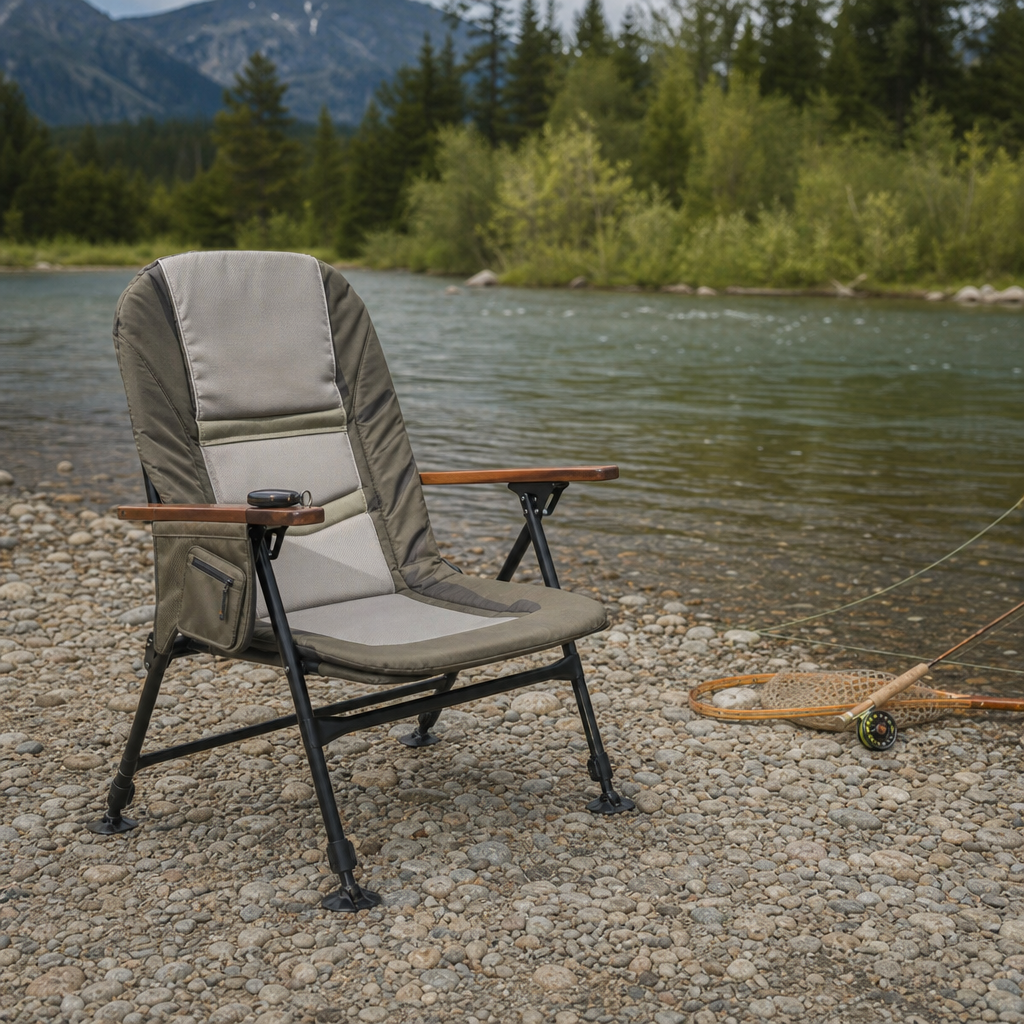
Frame design is equally important. Aluminum remains the standard because it balances weight, corrosion resistance, and price. Steel frames can feel more planted and often carry higher load ratings, but they are heavier and more prone to rust if coatings chip. Fabric choice affects both comfort and drying time. Polyester is common and affordable, while ripstop nylon often saves weight. Mesh panels improve breathability in summer and help chairs dry after rain or spray. Feet and leg geometry are often overlooked, yet they determine whether a chair sinks into mud or skates on rounded cobble. Wider feet, cross-bracing, and a lower center of gravity usually increase stability. Comfort is therefore a systems issue, not a cushion issue. The chair has to support your body, your fishing rhythm, and the terrain beneath you.
Key categories in equipment reviews: stools, compact chairs, and full-support models
When reviewing seating for fly anglers, I group products into three practical categories. Ultralight stools are the minimum-seat option. They typically use three or four legs, weigh very little, and strap easily to a daypack. Their advantage is portability, particularly for walk-in access on creeks or mountain lakes. Their weakness is limited back support and lower stability on sloped ground. Compact collapsible chairs add a backrest while still keeping pack size manageable. These are often the sweet spot for anglers who hike moderate distances but want enough support for lunch breaks, fly changes, and hatch watching. Full-support camp chairs deliver the highest comfort, with wider seats, stronger frames, armrests, and sometimes cup holders or storage pockets. They suit roadside spots, stillwater sessions, or guide days where transport weight is less critical.
In equipment reviews, no single category wins outright because use case drives value. A backpacking-style chair such as the Helinox Chair Zero offers remarkable portability, but at lower seated heights it can be harder to exit in chest waders. A more traditional option like the GCI Outdoor Freestyle Rocker feels excellent during stationary sessions and is easier on the back, yet it is bulky for walk-in fishing. The right recommendation depends on whether comfort means mobility, posture support, or ease of movement. Hub pages like this should help anglers navigate those tradeoffs before narrowing to model-specific reviews. That is why category understanding comes first: it prevents buyers from chasing five-star ratings on chairs designed for the wrong kind of fishing.
Best fly fishing chairs for comfort by use case
The best fly fishing chairs for comfort are usually the ones matched carefully to how you actually fish. For hike-in trout anglers, the best choice is often a compact collapsible chair under roughly 2.5 pounds with a real backrest, solid hub design, and durable feet. Helinox, REI Co-op, and Nemo all make respected models in this class, and their chairs routinely outperform generic imports in fabric tension, frame precision, and long-term reliability. For bank anglers near vehicle access, a framed camp chair from GCI Outdoor, ALPS Mountaineering, or Coleman can be the better comfort pick because seat height, arm support, and broader dimensions reduce strain over several hours. For older anglers or anyone recovering from hip or knee issues, higher chairs with firmer seats are often dramatically better than low sling styles.
Stillwater anglers who spend time watching indicators or waiting on chironomid rigs benefit from a chair that supports an upright posture and allows clean line management. On uneven reservoir banks, anti-sink feet and a stable footprint are worth prioritizing over minimum packed size. For saltwater flats edges or estuary sessions, corrosion resistance becomes more important. Anodized aluminum, stainless hardware, and quick-drying mesh fabrics hold up better against salt exposure. If you fish in cold climates, avoid chairs with excessively tensioned narrow seats that compress bulky clothing and reduce circulation. In every case, the best product reviews judge chairs in the same conditions anglers face: wet gravel, windy shorelines, muddy launch areas, and repeated setup and teardown, not only clean campground turf.
| Use Case | Best Chair Type | Why It Works | Main Tradeoff |
|---|---|---|---|
| Hike-in small streams | Compact collapsible chair | Low weight, decent back support, easy to strap to a pack | Lower seat height |
| Car-accessible lakes | Full-support camp chair | Better posture, wider seat, easier standing | Bulkier transport |
| Quick bank stops | Ultralight stool | Fast setup, minimal carry weight | No back support |
| Older anglers or sore knees | Higher framed chair | Less strain during sit-to-stand movement | Heavier and larger |
| Saltwater shore fishing | Mesh aluminum chair | Corrosion resistance and faster drying | Usually higher cost |
Materials, durability, and weather resistance that affect comfort over time
Comfort changes as a chair ages. In many field reviews, a chair feels good on day one but loses tension, develops frame flex, or absorbs moisture after a season of use. That is why material quality should be central to any recommendation. DAC aluminum poles, used by several premium outdoor brands, are a good benchmark for strength-to-weight performance. Lower-cost chairs often use heavier, less refined tubing and weaker hubs that loosen with repeated packing cycles. Fabric denier is not a perfect durability predictor, but it does provide a useful clue. A 600D polyester seat generally resists abrasion better than ultralight fabric, though stitching quality and reinforcement at stress points matter just as much. Double bartacks, corner patches, and replaceable shock-cord assemblies are all signs of better engineering.
Weather resistance matters because wet gear is uncomfortable gear. Chairs used around fly fishing water are routinely exposed to spray, rain, muddy ground, and prolonged UV exposure. Powder-coated steel can perform acceptably for occasional use, but once coatings wear through, corrosion follows quickly. Aluminum resists that better, especially in humid or coastal environments. Mesh inserts promote drainage and reduce clamminess in summer, while solid fabrics can feel warmer in cold weather. Rubberized or high-surface-area feet improve grip, but they should be attached securely; some budget chairs lose foot caps early and become unstable. A durable chair maintains its original sit profile, stays square under load, and dries quickly enough that you do not dread packing it into your vehicle after a wet evening hatch.
How to evaluate fit, ergonomics, and packed carry before you buy
Reading equipment reviews is useful, but comfort remains personal, so buyers should interpret specifications through their own body size and fishing style. Start with listed seat height, total width, and weight capacity. A chair rated to 300 pounds is not automatically more comfortable than one rated to 265, yet higher capacity often signals a stiffer frame and less fabric sag. If you are tall, look for backrest height that supports at least the lower shoulder blades rather than only the lumbar area. If you wear stockingfoot waders and gravel guards, picture how easily your feet can plant under you during a stand-up. Armrests can help, but some interfere with line control or rod handling, so they are beneficial mainly for passive waiting periods rather than active stripping and mending.
Packed carry deserves more attention than many anglers give it. A chair that is technically light but awkwardly long may snag brush or throw off balance when lashed to a pack. Carry bags with daisy chains, compression straps, or shoulder slings are more practical near the water than slick sleeves with weak zippers. Setup speed matters too. Chairs with intuitive hub systems or pre-attached frames tend to get used more often than fussy designs requiring careful pole insertion with cold hands. I also recommend checking replacement part availability. Premium brands often support shock cords, seat skins, and pole segments, extending usable life significantly. In short, the best fly fishing chair should fit your body, your carry system, and your tolerance for setup complexity, not just your budget.
Common mistakes when choosing a fly fishing chair
The most common buying mistake is choosing by campsite comfort alone. Many chairs feel excellent on flat grass but become frustrating on rocky banks or mud. Another frequent error is underestimating the importance of seat height. Anglers often buy the lightest chair available, then discover that getting out of it repeatedly while managing a rod, net, and layers is exhausting. Overbuilt chairs create the opposite problem: they are comfortable once opened, but so bulky that anglers leave them at home. I have also seen buyers ignore corrosion resistance, then wonder why hinges seize after a season of coastal use or why steel legs begin rusting in damp garages. Product reviews should flag these failure points early because they determine real satisfaction more than small differences in padding.
A final mistake is expecting one chair to cover every scenario. Most serious anglers eventually separate seating into at least two kits: a highly portable chair or stool for hike-ins and a more supportive option for vehicle-based days. That approach usually delivers better comfort and value than trying to find a perfect compromise. It also helps to think about related gear. A stable chair works better with a small ground mat on muddy banks, and a compact side table or gear bucket can reduce constant bending. If you are building out a broader equipment system, connect this decision with your packs, waders, wading boots, and shelter choices. Comfort on the water is cumulative, and your chair should support that larger setup instead of fighting against it.
The best fly fishing chairs for comfort are the ones that respect the realities of fishing terrain, body mechanics, and transport limits. A good chair should keep you stable on uneven ground, support an efficient posture for rigging and observation, and let you stand up easily in waders. For hike-in days, compact collapsible chairs usually offer the best balance of carry weight and real support. For car-accessible lakes and long bank sessions, full-support framed chairs are often worth the extra bulk. Ultralight stools still have a place for quick stops and minimalist kits, but they are rarely the top answer for all-day comfort.
As this equipment reviews hub shows, smart buying starts with use case, then moves to seat height, frame material, fabric durability, stability, and packed carry. Premium brands often justify their higher cost through better pole construction, stronger stitching, replacement parts, and more dependable long-term comfort. Budget chairs can work well if their design matches your fishing style, but they should be judged hard on stability, weather resistance, and setup ease. Use this page as your starting point for comparing chair categories and narrowing the options that fit your water, your body, and your gear system. Then choose a chair you will actually carry, actually use, and appreciate at the end of a long day on the water.
Frequently Asked Questions
What makes a fly fishing chair comfortable enough for long days on the water?
A truly comfortable fly fishing chair does more than add a little cushioning under you. For long sessions on a riverbank, drift boat launch, tailwater access area, or lakeshore, comfort comes from the way the entire chair supports your body over time. Seat height matters because a chair that sits too low can strain your knees and hips when standing up repeatedly to cast, change flies, or move to a better position. A slightly higher seat is often easier for anglers with back stiffness, limited mobility, or anyone wearing waders and boots. Back support is equally important. Chairs with structured back panels or mild lumbar support help reduce the slouched posture that causes lower back fatigue after several hours.
Comfort also depends on stability. A padded chair that rocks, sinks, or shifts on uneven ground will feel tiring fast, even if the seat fabric seems soft at first. Wide feet, reinforced frames, and a design that handles gravel, mud, and grassy banks can make a major difference. Breathable fabric is another overlooked feature. Materials that trap water or heat can become uncomfortable during warm weather or after exposure to spray, rain, or wet gear. Finally, packability matters because a chair that is too bulky or heavy may technically be comfortable once set up, but not practical for anglers who hike into remote water. The best fly fishing chairs balance support, stability, portability, and weather resistance so your body stays fresher throughout the day.
Is a higher chair or a lower chair better for fly fishing?
The better choice depends on where and how you fish, but for pure comfort, many anglers prefer a chair with moderate seat height rather than one that sits extremely low to the ground. A higher chair is generally easier to get in and out of, which matters when you are standing often to cast, reposition, land fish, or adjust gear. It can also reduce strain on the knees, hips, and lower back, especially for older anglers or anyone dealing with stiffness after long sessions. If you fish in waders, heavier boots, or layered clothing, extra seat height can make transitions smoother and less awkward.
Lower chairs do have advantages. They are often more compact, lighter to carry, and sometimes more stable in windy conditions because of their lower center of gravity. They can work well on flat shorelines, gravel bars, or situations where you plan to stay seated for long periods rather than getting up constantly. The downside is that very low chairs can be difficult to use on uneven terrain and can feel uncomfortable over time if they force your knees too high or make standing up a chore. For most anglers focused on comfort, the sweet spot is a chair that is high enough to allow natural sitting posture and easy standing, but still low and stable enough to handle uneven outdoor conditions. In other words, the best seat height is one that supports your mobility as much as your relaxation.
Which chair features matter most when fishing on wet, uneven, or rocky ground?
When you are fishing in real-world conditions rather than on a flat campsite pad, several chair features become especially important. First is leg and foot design. Chairs with wider feet or anti-sink foot caps perform better on soft banks, mud, and sandy edges because they are less likely to dig in. On rocky or uneven surfaces, a strong frame with a little flex can help maintain stability without wobbling excessively. Some premium chairs are built with terrain-adaptive leg geometry, which can make them feel noticeably more secure on sloped or irregular ground.
Frame material is another key factor. Aluminum is popular because it resists rust and keeps weight manageable, while steel can offer strength but may add bulk and become less appealing for anglers who carry gear over longer distances. Fabric choice matters too. Quick-drying, durable mesh or synthetic panels handle splash, light rain, and damp clothing better than materials that hold water. This improves both comfort and longevity. Look for reinforced stress points where the seat meets the frame, since repeated use on rough terrain can wear out poorly made chairs quickly.
Back support, armrests, and storage features also become more valuable in rugged settings. A supportive back helps you stay comfortable even when the ground beneath the chair is less forgiving. Armrests can make standing up easier on unstable terrain. Side pockets, cup holders, or gear pouches are useful, but they should not compromise balance or catch excessively on brush when packed. Overall, the most important features are stability, weather-resistant materials, supportive ergonomics, and a design rugged enough to handle the kind of shoreline conditions anglers actually face.
Are padded chairs better than breathable mesh chairs for fly fishing comfort?
Not always. More padding does not automatically mean more comfort, especially in fishing environments where moisture, temperature swings, and long sitting periods come into play. Padded chairs can feel great at first, particularly in cool weather or during shorter outings. They may provide a softer sitting experience and can be appealing for anglers who prioritize cushioning over minimal weight. However, thick padding can absorb water, dry slowly, and become clammy if exposed to rain, river spray, or wet waders. In hot weather, it can also trap heat and reduce airflow, making the chair less comfortable over time.
Breathable mesh chairs often perform better for all-day fishing because they allow air circulation and tend to dry faster. This helps regulate body temperature and prevents that damp, sticky feeling that can develop during humid or wet conditions. Mesh can also contour to the body in a way that feels supportive without relying on bulk. The tradeoff is that some mesh chairs may feel firmer, especially if the design lacks tension support or proper shaping in the seat and backrest.
For many anglers, the best option is a hybrid design that combines moderate padding with breathable materials and solid structural support. That kind of chair can provide softness where it helps most while still remaining practical in outdoor conditions. The real measure of comfort is not whether a chair feels plush for five minutes, but whether it still feels supportive, dry, and stable after hours beside the water. In fly fishing, functional comfort usually beats overbuilt cushioning.
How do I choose the best fly fishing chair for my body type and fishing style?
The best chair for you depends on a mix of fit, environment, and how you actually fish. Start with body size and mobility. If you are taller, broader, or simply want more room to shift positions, look for a chair with a wider seat, higher weight capacity, and a backrest that supports more of your torso. If you have knee, hip, or back issues, prioritize seat height, ease of entry and exit, and lumbar support over ultra-light packability. A chair that is slightly heavier but far easier on your body can be a better long-term choice than a minimalist model that saves a pound but adds strain all day.
Next, match the chair to your fishing style. If you mostly drive to access points and fish close to the vehicle, you can comfortably choose a larger, more supportive chair with armrests, better back structure, and extra storage features. If you hike into alpine lakes, remote streams, or walk long shorelines, weight and packed size become much more important. In that case, a compact chair or stool-chair hybrid may be the smarter option, provided it still gives enough support for your usual sitting time. Bank anglers often benefit from stable, all-terrain feet and weather-resistant materials, while anglers who fish around boat ramps or staging areas may place more value on convenience and setup speed.
It is also wise to think about session length. A chair that feels acceptable for a quick evening outing may not hold up through a full-day hatch watch or long break between casts. Read dimensions carefully, pay attention to seat depth and back height, and if possible test how natural it feels to sit down and stand up while wearing your fishing gear. The right fly fishing chair is the one that matches your body, your access style, and the conditions you fish most often. Comfort is personal, but the best choices are always built around support, stability, and realistic use on the water.