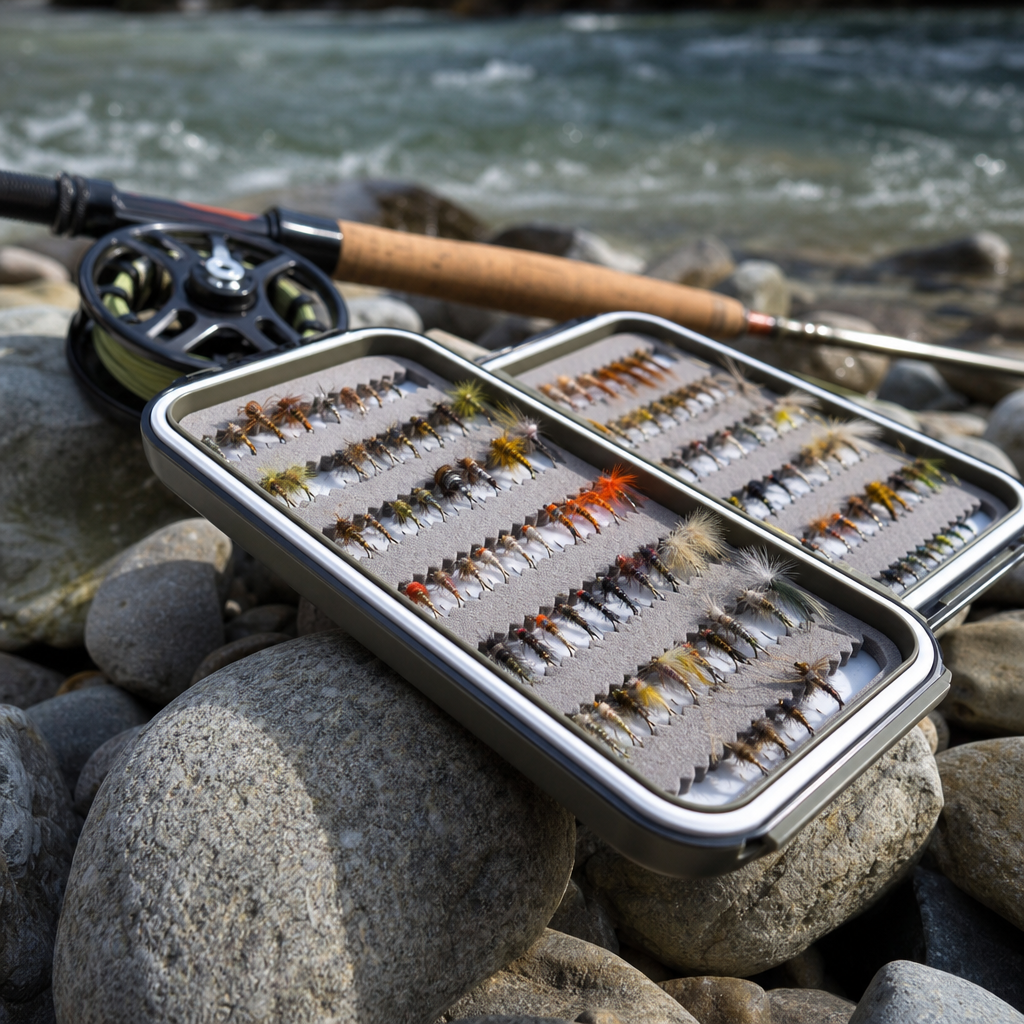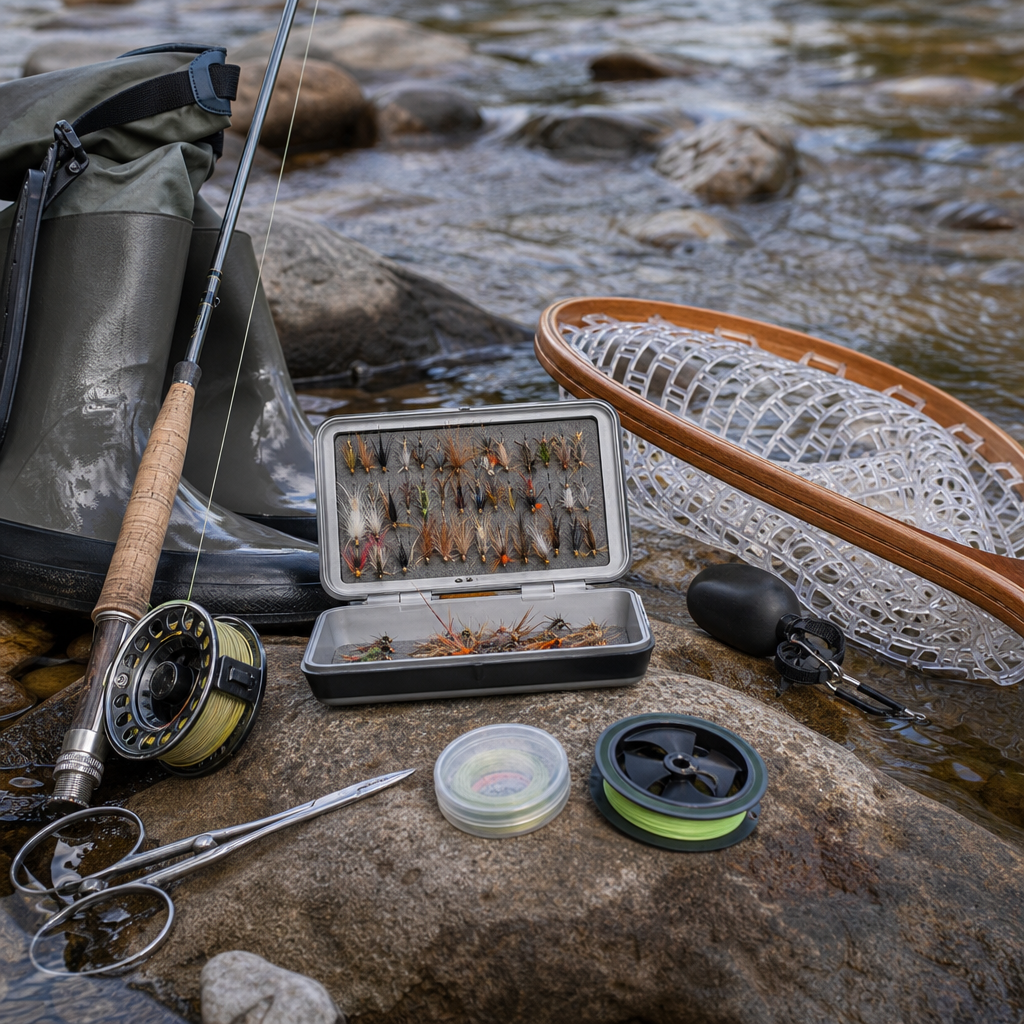
Choosing the best fly patterns for salmon is rarely about finding one magic lure; it is about matching water temperature, river height, light levels, and fish mood with a pattern that triggers a confident take. In salmon fly fishing, a “pattern” means the design recipe of the fly: hook style, wing material, body color, profile, weight, and movement in current. “Fly reviews” in this context are not simple rankings. They are practical evaluations of how specific salmon flies perform across common fishing scenarios, from low summer water to cold autumn flows. This matters because salmon are expensive and time-consuming to pursue, and small tackle decisions can determine whether a week on a famous beat ends with follows, pulls, or fish on the bank.
I have fished and tested these patterns on Atlantic salmon rivers and on Pacific salmon systems where presentation, profile, and sink rate mattered more than trend or marketing. Some days a sparse tube fly outfishes a classic featherwing by a wide margin; other days a traditional hairwing swung broadside at the right depth gets the only response. Serious anglers need a hub page that reviews the best fly patterns for salmon in plain terms, explains when each style works, and points to the strengths and limitations of popular categories. That is the purpose of this guide. It covers proven salmon fly patterns, how they behave in the water, where they fit in a fly box, and how to choose among them with confidence rather than guesswork.
What Makes a Salmon Fly Pattern Effective
The best salmon fly patterns share four traits: a clear silhouette, controlled movement, appropriate sink characteristics, and enough contrast to be seen without looking unnatural. Salmon do not feed in freshwater the way trout do, so the fly is usually provoking aggression, curiosity, or territorial response rather than matching an active hatch. That changes how you review a fly. Instead of asking whether it “matches” prey, ask whether it presents a believable trigger in the fish’s lane. A compact black and blue tube fly, for example, consistently works because it offers contrast, movement, and a slim profile that fishes cleanly at many speeds.
Hooking efficiency also matters. Many modern salmon anglers prefer tube flies or shank systems because a small trailing hook often pins fish more securely than a long single or double integrated into the body. On several rivers I have seen anglers raise more fish on large dressed irons yet land a lower percentage than anglers fishing tubes with short-shank trebles where legal. Pattern review therefore includes fishability, not just attractiveness. Materials matter too. Arctic fox, temple dog, bucktail, ostrich, and flash each create different movement signatures. Stiffer wings hold shape in heavy current, while softer materials breathe better in slower, warmer conditions.
Classic Hairwing and Featherwing Patterns
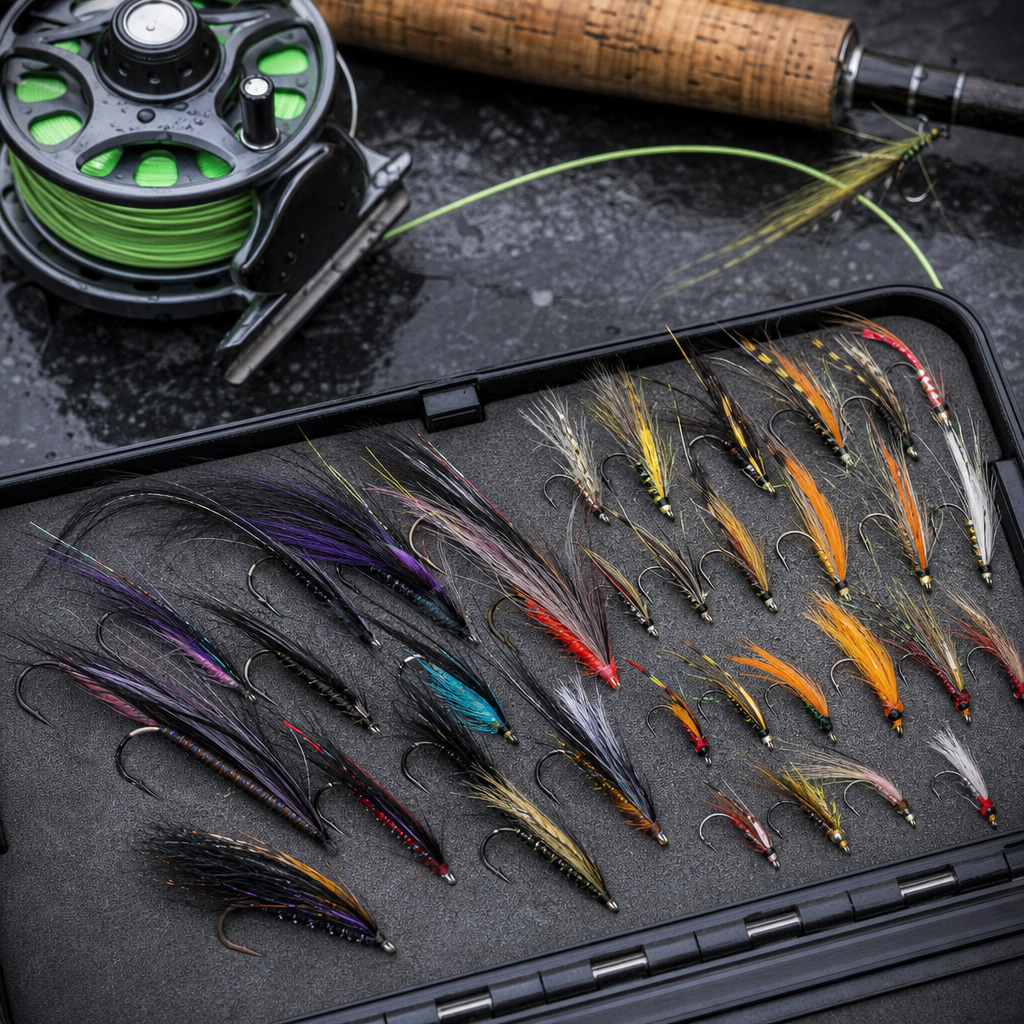
Classic salmon fly patterns remain relevant because they solve presentation problems elegantly. Hairwings such as the Blue Charm, Cascade, Ally’s Shrimp, and Willie Gunn continue to produce fish on major Atlantic salmon rivers. The Blue Charm is a benchmark review pattern because it works in varied water colors and light conditions. Its dark body and blue highlights create strong contrast without becoming gaudy. The Cascade adds yellow, orange, and black, giving extra visibility in peat-stained water. Ally’s Shrimp, often tied in hot orange or pink, excels in colored water and can be especially effective for fresh-running fish.
Featherwing patterns, including the Jock Scott and Silver Doctor, are historically important and still catch salmon, especially when tied in practical fishing versions rather than oversized exhibition dressings. Their drawback is durability and cost relative to simpler hairwings. For a working fly box, I generally treat classic featherwings as specialty flies for lower, steadier currents or for anglers who fish traditional tackle and value profile over convenience. If you are building a productive review list rather than a display case, hairwings deserve priority. They are faster to dry, easier to tie consistently, and generally more resilient after repeated fish and rock contact.
Modern Tube Flies and Intruder-Style Salmon Flies
Tube flies changed salmon fishing because they separate the hook from the body, improve landing rates, and let anglers vary hook size without changing the fly profile. Many of the best fly patterns for salmon today are tied on plastic or metal tubes in black, blue, copper, orange, and chartreuse combinations. A small black tube with a mobile wing of fox or temple dog is one of the most dependable flies ever made for Atlantic salmon. It can be fished shallow on a floating line, then adapted with a sink tip or cone for deeper runs, all while keeping the same general triggering profile.
Intruder-style flies, developed for steelhead and readily adapted for Pacific salmon and larger Atlantic salmon situations, bring a larger silhouette with minimal bulk. Composite loops, ostrich stations, and flowing synthetic or natural wings create motion that remains visible in cold, pushy water. They are particularly strong when targeting Chinook or late-season salmon holding deep. Their weakness is that oversized profiles can become too much in low clear water, where a sparse micro tube or hitch fly often performs better. In honest fly reviews, tube systems score highest for versatility, especially for anglers traveling between rivers with different regulations and water conditions.
Best Salmon Fly Patterns by Water Condition
Water condition should drive fly selection more than brand loyalty or fashionable color schemes. In low, clear water, choose smaller patterns with restrained flash and slim profiles. Black, black and silver, micro Sunray Shadow variants, and small hitch tubes are reliable because they suggest life without overwhelming fish. In medium summer flows, flies like the Stoat’s Tail, Blue Charm, or a modest black and blue tube cover most situations well. In high or colored water, increase profile and contrast. Orange, yellow, pink, and black combinations, including Cascade and Ally’s Shrimp variants, become much easier for salmon to track.
| Condition | Recommended Patterns | Why They Work |
|---|---|---|
| Low, clear water | Micro tube, Sunray Shadow, small black fly | Subtle profile, less flash, easier to accept |
| Medium, steady flow | Blue Charm, Stoat’s Tail, black and blue tube | Balanced visibility and movement |
| High or colored water | Cascade, Ally’s Shrimp, bright tube fly | Strong contrast and larger tracking target |
| Cold deep pools | Weighted tube, intruder-style pattern | Gets down fast and holds silhouette |
Temperature changes the equation. In cold water below roughly 45 degrees Fahrenheit, salmon often respond better to slower presentations and flies that hold shape at depth, such as weighted tubes with compact wings. In warmer water, fish may move farther and react to skated or lightly dressed patterns. On Icelandic and Scandinavian-style summer fisheries, riffling hitch tubes can be devastating because they create a waking disturbance that fish attack from distance. On larger Canadian rivers after rain, a brighter fly with a defined shoulder and moderate weight is usually the higher-percentage choice.
Top Reviewed Patterns Every Salmon Angler Should Carry
If I had to narrow a broad salmon fly review into a compact working selection, I would carry six categories. First, a black tube fly in small, medium, and large sizes. Second, black and blue variants for general use. Third, a Willie Gunn or similar yellow-black-orange pattern for changing light and tea-colored water. Fourth, Ally’s Shrimp in orange or pink for fresh fish and color. Fifth, a Sunray Shadow style tube for low water, riffling hitch, and aggressive takes. Sixth, a weighted intruder-style or conehead tube for deep, cold pools. This is not romantic, but it is efficient and highly practical.
Within those categories, certain named patterns repeatedly earn their place. Blue Charm remains one of the best all-around salmon flies because it scales well from doubles to tubes and continues to produce in varied conditions. Willie Gunn is excellent when rivers carry color or the sky is dull. Sunray Shadow is indispensable for low-water Atlantic salmon because its long mobile wing creates a fleeing impression unlike conventional winged flies. Cascade and Ally’s Shrimp are confidence patterns when visibility drops. None of these flies works every day, but all of them have long records on productive rivers, which is exactly what a review page should prioritize.
How to Evaluate Fly Reviews and Build a Smarter Box
Not every fly review is useful. Many are based on one successful trip, one guide’s local confidence pattern, or promotional language from tackle sellers. Better reviews explain the river type, season, water clarity, line system, and presentation used. A fly that excels on a medium-sized spate river may be less relevant on a broad glacial system where depth and current speed demand heavier dressings. When comparing recommendations, look for repeated evidence across regions. If a pattern like Blue Charm, Sunray Shadow, or a black tube keeps appearing in Norway, Scotland, eastern Canada, and Russia, that consistency tells you something important.
Build your fly box around function rather than dozens of near-duplicates. I advise anglers to organize salmon flies by role: low clear water, standard summer swing, colored water search pattern, and cold deep option. Then vary size before color. Too many anglers buy twenty shades of the same fly yet lack the same pattern in the smaller or heavier form they actually need on the river. It also helps to review hook legality before you travel. Some fisheries restrict trebles or weighted flies. Tubes simplify compliance because you can swap hooks and junction setups quickly without abandoning proven patterns.
Durability, too, deserves more attention in fly reviews. A fly that tracks beautifully but collapses after one fish is expensive dead weight on a remote trip. Fox wings, bucktail, and well-tied synthetics often outlast delicate feather constructions, especially when fish are rolled from heavy current or flies are repeatedly dried and re-used. Check whether the wing fouls around the hook, whether flash dominates the profile when wet, and whether the body materials hold color after hours in silty water. These are field issues, not tying-bench aesthetics, and they separate a collectible fly from a dependable salmon catcher.
Final Verdict on the Best Fly Patterns for Salmon
The best fly patterns for salmon are not the most elaborate or expensive; they are the patterns that solve common fishing problems consistently. For most anglers, that means carrying a disciplined mix of black tubes, black and blue flies, one or two bright confidence patterns, a proven hairwing like Blue Charm or Willie Gunn, and a low-water specialist such as Sunray Shadow. Those patterns cover the majority of salmon conditions because they offer the right combination of silhouette, contrast, movement, and adaptable depth control. If you fish them at the proper angle, speed, and level, they will continue to outproduce novelty flies sold on trend.
As a hub for salmon fly reviews, this guide should help you make better choices across the broader fly review category. Start with versatile patterns that have decades of evidence behind them, then refine by river and season. Keep notes on water height, temperature, and which profile moved fish, because your own records become more valuable than any catalog description. If you are updating your box before the next trip, begin with the core patterns covered here and build outward only when a specific fishery demands it. Smart selection saves time, money, and missed chances when the run finally comes through.
Frequently Asked Questions
What makes a salmon fly pattern “the best” in real fishing conditions?
The best salmon fly pattern is not simply the one with the most praise or the brightest appearance in the fly box. In practical salmon fishing, the most effective pattern is the one that matches the conditions in front of you and gives fish a clear reason to take. That means considering water temperature, river height and clarity, current speed, depth, light levels, and how actively salmon are responding on that particular day. A pattern that fishes brilliantly in cold, high, slightly colored water may be far less convincing in a low, clear river under bright sun.
When anglers review salmon flies seriously, they usually focus on several core performance traits. First is profile: how large or compact the fly appears in the water. Bigger, fuller patterns can help fish notice the fly in stained or high water, while slimmer, more understated designs often excel in clearer and lower flows. Second is movement. Materials such as marabou, temple dog, fox, or soft hackle can create lifelike motion that makes a fly seem alive even on a slow swing. Third is visibility, which comes from color contrast, flash, and silhouette rather than brightness alone. A fly that shows up well against the water column often outperforms one that simply looks attractive in the hand.
Weight is another major factor. Some of the best salmon patterns are effective because they get into the right zone quickly without losing their action. Tubes, weighted bodies, coneheads, and different hook styles all affect how the fly fishes, not just how it looks. Finally, confidence matters. If a pattern repeatedly performs in a range of conditions and gives the angler flexibility in presentation, it earns a place among the best. So in a true review, a top salmon fly is judged less by hype and more by consistency, adaptability, and how reliably it draws a response when fished correctly.
Which fly patterns are most reliable for salmon across different water and weather conditions?
No single pattern dominates every salmon river, but several categories of flies have built a reputation for reliability because they cover a wide range of conditions. Ally’s Shrimp, Sunray Shadow, Willie Gunn, Cascade-style patterns, Stoats Tail variants, and classic hairwing or tube flies are often mentioned because they each solve a different fishing problem. Rather than thinking in terms of one “winner,” it is smarter to think in terms of a compact group of dependable patterns that can be rotated as conditions change.
For higher or colored water, many anglers trust flies with stronger silhouettes and bolder color combinations. Willie Gunn is a classic example because its black, yellow, and orange tones remain visible in peat-stained or turbulent water. Larger shrimp-style flies and temple dog tubes can also be highly effective when salmon need help locating the fly. In medium flows with moderate clarity, general-purpose patterns such as Ally’s Shrimp and Cascade variations often shine because they offer enough color and movement to attract attention without appearing too aggressive. These are the flies that many anglers start with because they are versatile and fish well on a standard swing.
In low, clear water or bright conditions, slimmer and more restrained patterns tend to become more reliable. Smaller hairwings, lightly dressed doubles, and reduced-profile tubes can persuade salmon that might reject bulkier flies. Sunray Shadow deserves special mention because it is both distinctive and adaptable. Fished stripped, waked, or swung, it can trigger reaction takes from fish that ignore more conventional presentations. That said, reliability depends on how the pattern is used. A trusted fly is not just one with a strong reputation; it is one that consistently performs when paired with the correct size, depth, and presentation for the day’s water and fish behavior.
How should I choose salmon fly size, color, and profile for the conditions?
Choosing fly size, color, and profile is one of the most important parts of salmon fishing, and it is where many successful fly reviews become especially useful. Size usually follows water level, clarity, and temperature. In colder water or higher flows, salmon are often less willing to move far, so larger flies can help by creating a stronger visual target and more water disturbance. In warmer water or low, clear summer conditions, smaller flies generally look less intrusive and are more likely to be accepted by fish that have time to inspect what is swinging past them.
Color selection is best approached as a visibility and contrast decision rather than a matter of personal preference. Bright patterns with orange, yellow, chartreuse, or fluorescent hot spots often perform well in dirty water, heavy cloud cover, or when a little extra attraction is needed. Darker flies such as black, blue, purple, and deep red can be excellent in clear water, at dawn or dusk, or whenever a strong silhouette matters more than flash. Black flies in particular remain a staple because they show up clearly in many light conditions and can be fished with great confidence. On some rivers, subtle combinations outperform louder ones, especially where fish are pressured.
Profile ties everything together. A fly can be large in length but still appear slim and elegant in the current, or it can be short but bulky and highly visible. Sparse dressing often gives a more natural swim and avoids overloading the fly with unnecessary material. Fuller patterns can slow the sink rate slightly and create a larger footprint in the water. The best approach is to make deliberate adjustments: if fish are not responding, change one element at a time. Start with a reasonable pattern for the water, then alter size first, depth second, and color or profile third. This method helps you understand why a fly works instead of changing randomly and losing the logic of your presentation.
Are modern tube flies better than traditional salmon flies on singles, doubles, or trebles?
Tube flies are often considered better by modern salmon anglers, but “better” really depends on your goals, local regulations, and the type of fishing you do most. Tube flies offer several practical advantages that show up repeatedly in honest fly reviews. They are highly adaptable, allow hook sizes to be changed independently of the fly body, and tend to hold up well because the fish cannot use the weight of the dressing as leverage in the same way it can with a fixed-hook fly. Tubes also make it easy to fish the same pattern at different depths and profiles by changing tube size, weight, or hook arrangement.
Traditional flies on singles, doubles, or trebles still have important strengths. Many classic salmon patterns were designed around these hook styles, and they often swim beautifully with a balanced, refined profile. Doubles and singles remain popular for their hooking efficiency and more elegant presentation, while trebles, where legal, can improve contact rates in certain circumstances. However, many fisheries now encourage or require singles for conservation reasons, and a lot of anglers prefer them because they are easier on fish and simpler to remove during catch-and-release fishing.
In practical terms, tube flies have become favorites because they combine durability, flexibility, and fishability. They can be dressed sparsely or boldly, weighted or unweighted, and paired with strong modern hooks suited to the river and fish size. That said, traditional flies are far from obsolete. In low-water conditions, when a neat small double or lightly dressed single presents perfectly, many anglers still trust them completely. The best choice is not ideological. It comes down to what presents cleanly, hooks well, complies with the rules, and gives you confidence in the specific conditions you are facing.
How do I properly evaluate and fish a salmon fly pattern instead of just swapping flies constantly?
To evaluate a salmon fly pattern properly, you need to look beyond first impressions and fish it with intent. A single cast or a quick change tells you very little. Good salmon fly reviews are built on repeated use in defined conditions: a certain water height, temperature range, clarity level, and style of presentation. If you want to know whether a fly truly works, fish it for a meaningful stretch of water, at the right depth, and with consistent control over angle and speed. Only then can you judge whether the pattern itself is underperforming or whether the issue is presentation, depth, or fish mood.
A sound process starts by selecting a fly that logically matches the conditions. Then fish it through several lies with discipline. Adjust your casting angle, mend if needed, manage swing speed, and make sure the fly is actually traveling where salmon can intercept it. If the fly is too high in the water column, changing color may do less than simply adding a little weight or using a different line tip. If the fish are showing but refusing, downsizing or switching to a sparser profile might make more sense than reaching for something radically different. The key is to isolate variables rather than changing everything at once.
It also helps to keep mental or written notes. Over time, patterns emerge. You may notice that one fly excels in cold spring water, another becomes dependable in warm summer glides, and a third consistently produces in peat-stained rivers under cloud cover. That is the difference between collecting flies and building a working system. Constantly swapping patterns without structure can destroy confidence and prevent you from learning what is really happening. A much better approach is to rotate with purpose: test a fly, adjust depth and presentation, then make a measured change in size, color, or profile. This turns fly selection from guesswork into informed decision-making, which is exactly what separates serious salmon anglers from those chasing a