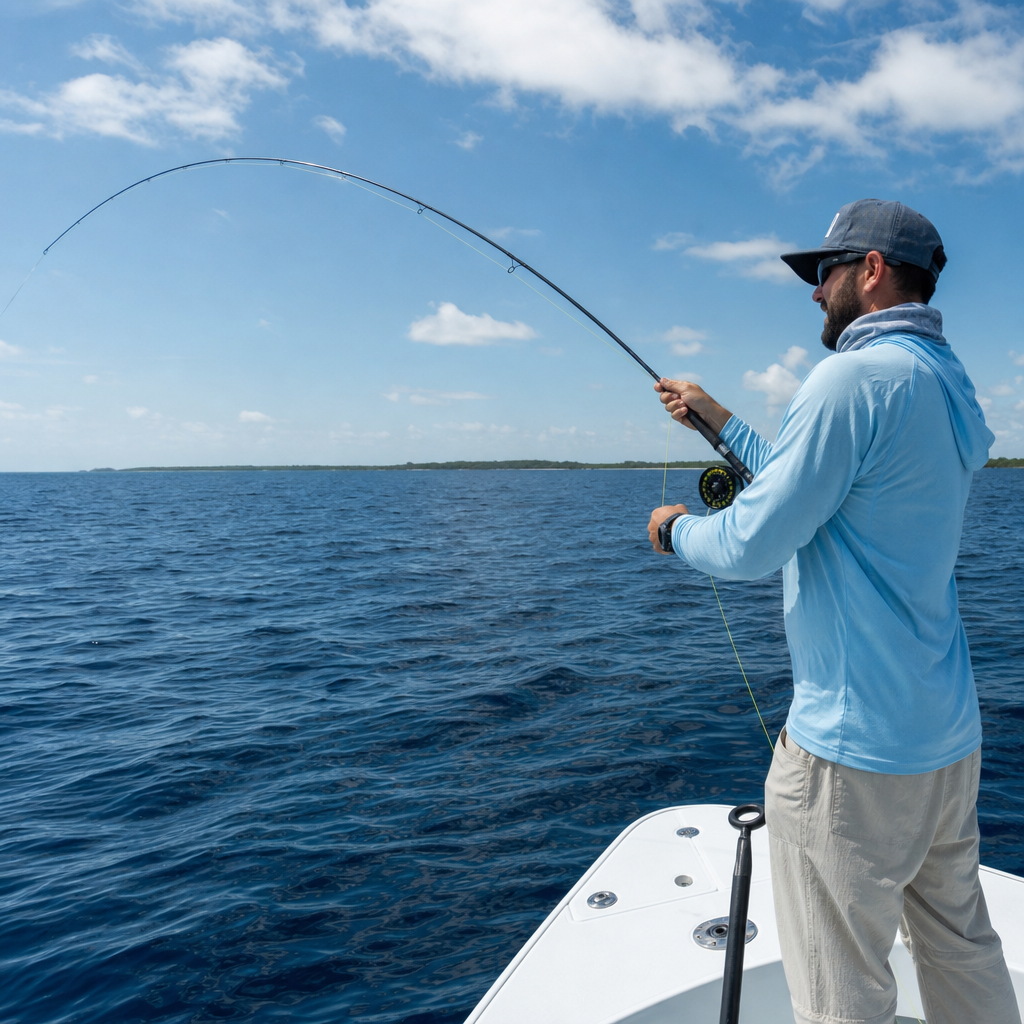
Fly fishing in offshore waters blends bluewater hunting with the precision of a fly rod, creating one of the most demanding and rewarding forms of saltwater angling. In this context, offshore usually means fishing beyond the beach, inlet, bay, or nearshore bar in open water where currents, bait movement, weather, and pelagic species dictate the day. Special conditions refers to the variables that make offshore fly fishing either exceptional or difficult: wind strength, sea state, cloud cover, water clarity, tide interaction, current lines, bait concentrations, temperature breaks, floating structure, and seasonal migrations. As a hub within the broader seasons and conditions topic, this guide explains how those variables shape strategy and when each one should change your tackle, boat positioning, fly choice, and presentation.
I have learned offshore fly fishing is rarely about blind casting into empty ocean. Success comes from reading conditions faster than they change and understanding how fish use edges. Tuna, mahi, sailfish, cobia, false albacore, tripletail, and even king mackerel are not randomly distributed. They gather where food is compressed or exposed by a condition you can identify. A rip line, a weed mat, a color break, birds picking, or current pushing over hard bottom can all become fish-holding features. When anglers miss fish offshore, the problem is often not casting skill alone; it is failing to interpret the water correctly, setting up the drift poorly, or bringing tackle that cannot deliver a fast cast under pressure. Mastering special conditions matters because offshore opportunities are brief, highly visual, and often expensive in fuel, time, and logistics.
This article covers the offshore conditions that deserve the most attention and serves as a practical starting point for deeper subtopic pages on wind, current, temperature breaks, rough seas, floating weeds, low-visibility water, and migratory windows. If you want a simple rule, it is this: offshore fly fishing rewards preparation more than improvisation. You should launch with a plan for where fish will likely feed, how the weather may compress the window, what species are seasonally present, and how to adjust when the ocean does not match the forecast. The sections below break down those decisions in plain terms and with methods that hold up on real boats, not only in ideal conditions.
Reading Offshore Water: What Special Conditions Really Mean
Special conditions offshore are combinations of environmental signals that alter bait behavior and fish accessibility. Unlike river fly fishing, where current seams and structure are fixed, offshore structure may be temporary and moving. A color change can shift a mile by midday. A weed line can fragment. A slick may disappear when wind rises. The practical job is to find convergence: two or three productive signs stacked together. For example, clean blue water meeting greener water, with scattered sargassum and terns dipping, is far more valuable than any one sign alone. Pelagic fish use these intersections because bait loses room to scatter.
Water color is one of the first filters. Clear cobalt water can be ideal for sighting mahi, sailfish, and tuna around debris or bait schools, but overly sterile blue water without life often fishes poorly. Slightly green water with good clarity can be better because it holds plankton and forage. Current lines are equally important. Where two water masses meet, foam, grass, and bait stack up. On many days, the best fly presentations happen by running parallel to a current edge and casting ahead of visible fish moving along it. This keeps the fly in the productive lane longer than simply crossing the line.
Bird behavior is another high-value signal. Frigatebirds tracking from height often indicate mahi under flying fish or larger predators pushing bait near the surface. Terns and gulls working tightly can reveal small tuna or bonito feeding on anchovies. A single bird dipping repeatedly in the same patch may be worth more than a noisy flock miles away. I prioritize bird posture over sheer numbers: hovering and committed diving tell you bait is pinned, while wandering birds usually mean the feed is over or too deep for fly tackle.
Surface texture also communicates. Slick patches can indicate current convergence, oil from bait, or feeding activity below. Choppy water may hide fish but can also make them less leader-shy. In calm conditions, fish inspect flies longer, which raises the importance of leader length, accurate imitation, and quiet presentations. In rougher water, a bigger profile and stronger strip often outperform finesse. The key is not treating offshore water as one uniform environment. Every shift in texture, color, and life should trigger a tactical adjustment.
Seasonal Windows and Migratory Patterns Offshore
Seasonality offshore is less about a date on the calendar than about water temperature, bait availability, and migration timing. That said, patterns repeat consistently enough to plan around them. Along the U.S. Atlantic coast, spring often brings cobia migrations, early mahi around weed lines, and false albacore in selected zones where bait gathers. Summer typically expands the bluewater menu with stronger mahi numbers, school tuna in temperature breaks, and billfish opportunities in warm current edges. Fall can be excellent where baitfish migrations compress predators closer to shore, making fly tackle more practical. Winter offshore action depends heavily on latitude, with South Florida, the Gulf Stream, and tropical waters offering more stable possibilities.
Temperature breaks are one of the clearest seasonal markers. A one- to three-degree change can concentrate life, especially where warm current pushes against cooler nutrient-rich water. Offshore captains often use charting services such as RipCharts, SiriusXM Marine, Hilton’s, and ROFFS to identify these edges before leaving the dock. Those tools are not magic, but they narrow the search. On a fly trip, that matters because you need fish that will rise, stay within casting range, or hold around visible features long enough for repeated shots. Chasing deep marks all day is rarely efficient with a fly rod.
Matching species to seasonal conditions prevents wasted effort. School-size yellowfin or blackfin tuna feeding on tiny rain bait may require 10- to 12-weight rods and sparse anchovy patterns, while late-summer mahi around heavy weed mats may reward brighter baitfish flies on 11- or 12-weight setups. Cobia often favor rays, buoys, and color changes during migration and call for slower, deliberate presentations. Sailfish in cooler months can be teased close and switched onto large flies, but that is a specialized game requiring coordinated boat handling and experienced crew. The broader lesson is simple: know which species are realistically fly-catchable in your region and season, then build the day around those windows.
Wind, Sea State, and Boat Positioning
Wind is the condition that most often decides whether offshore fly fishing is efficient, frustrating, or unsafe. A ten-knot breeze can be manageable and even helpful by breaking the surface and reducing fish wariness. Once wind rises into the mid-teens with a sharp chop, casting windows shrink, line control deteriorates, and many sight-fishing opportunities vanish. Safety comes first. NOAA marine forecasts, buoy reports, radar, and local knowledge should all be checked, because offshore forecasts often hide uncomfortable short-period seas that make fly casting nearly impossible. A six-foot swell with a long interval can be workable; a tighter three- to four-foot chop can be worse.
Good boat positioning solves many offshore fly problems. Rather than driving directly into fish, the best captains set a drift or approach angle that places the caster on the upwind or up-current side with one clean shot lane. For mahi on weed lines, I prefer sliding in parallel from ahead and letting the boat drift naturally so the fly lands before the fish see hull movement. For busting tuna, the boat should stop outside the feed and allow a quick cast into the travel path rather than plowing through the school. Engines, wake, and poor angles kill more opportunities than imperfect fly choice.
Deck organization matters more offshore than inshore because you often get only one shot. Clear the casting deck, strip line into a large basket or onto a clean mat, and assign one person to watch the fly line during fights or sudden boat maneuvers. Line under a cooler latch or cleat can end a fish instantly. I also favor rods rigged before reaching the grounds: one setup for smaller bait situations and one for larger flies or heavier leaders. Re-rigging in rolling seas wastes prime time and raises the chance of mistakes.
Tackle, Leaders, and Fly Selection for Variable Offshore Conditions
Most offshore fly fishing falls into the 10- to 12-weight range, though 8- and 9-weight outfits have niche use for smaller false albacore, bonito, or schoolie mahi in calm weather. Twelve-weight rods remain the all-around choice because they cast large flies, pressure strong fish, and perform better in wind. Reels need sealed drags with smooth startup inertia and enough backing for fast pelagic runs; 250 to 350 yards of gel-spun or dacron backing is common depending on species. Floating lines are standard for surface feeds, teasers, and debris-related fishing, while intermediate lines help when fish refuse to rise or bait sits a few feet down.
Leader design should match both species and water clarity. In calm clear water, a 10- to 12-foot leader tapered to 16- to 20-pound class tippet may improve eats from line-shy tuna or dolphin. Around debris or for sailfish, heavier shock tippets are essential. For toothy fish such as king mackerel, wahoo, or large bluefish, short wire traces prevent bite-offs but will reduce strikes from selective fish. The Offshore World Championship, IGFA class-tippet rules, and standard bluewater practices all influence how serious anglers tie leaders, especially when targeting records or tournament fish.
| Condition | Rod and Line | Leader Range | Effective Fly Types |
|---|---|---|---|
| Calm, clear water with small bait | 10-11 weight, floating or intermediate | 10-12 ft, 16-20 lb class | Sparse anchovy, glass minnow, small Deceiver |
| Windy chop around weed lines | 11-12 weight, floating | 7-9 ft, 20-30 lb | Bright baitfish, poppers, gurglers, EP-style flies |
| Tuna feeding just below surface | 10-12 weight, intermediate | 9-12 ft, 20 lb class | Slim baitfish, sand eel, epoxy minnow patterns |
| Cobia around rays or structure | 11-12 weight, floating | 8-10 ft, 20-40 lb | Crab, eel, large shrimp, baitfish patterns |
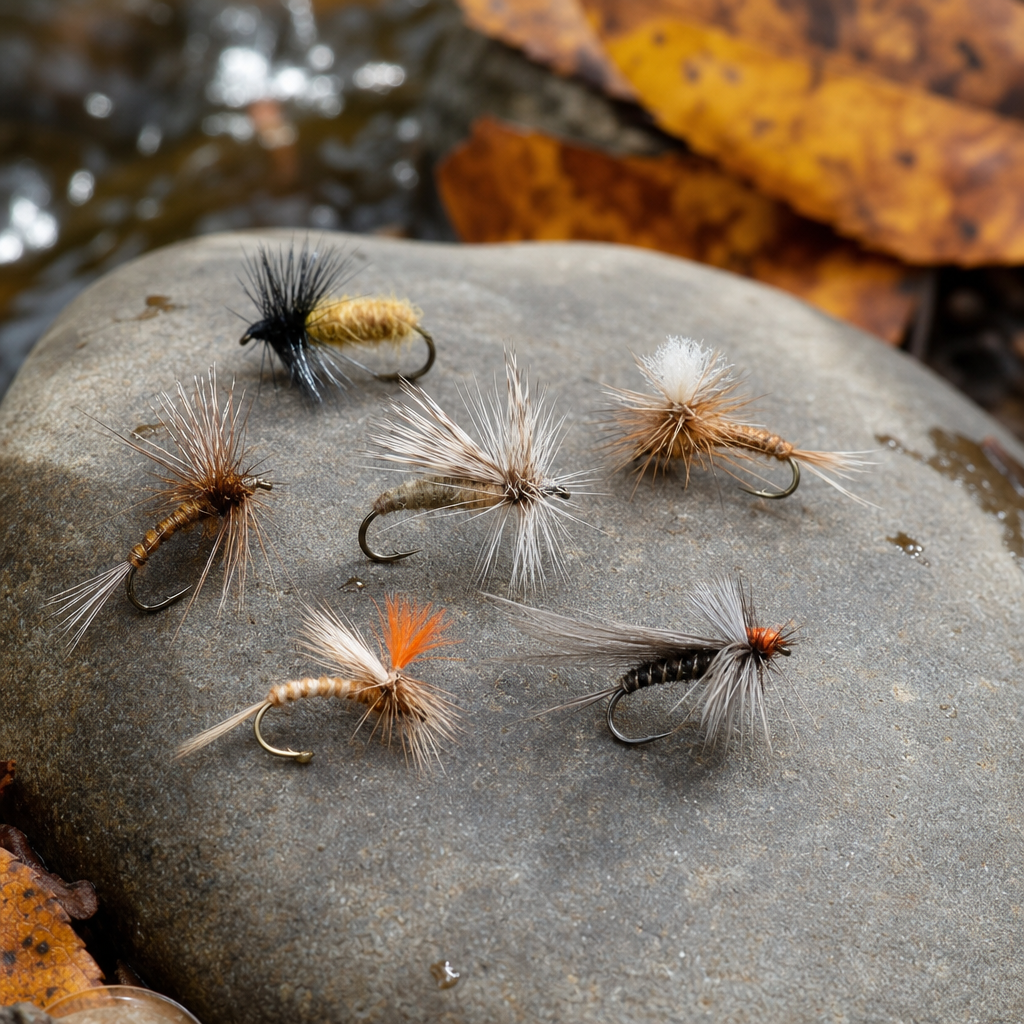
Fly selection offshore is less about carrying hundreds of patterns than covering profile, size, sink behavior, and visibility. White, chartreuse, blue, pink, olive, and tan handle most situations. EP baitfish patterns, Lefty’s Deceivers, Clousers, tube flies, gurglers, and poppers all earn space. If fish are keyed on flying fish, a broader-winged surface pattern may outproduce standard streamers. If tuna are on microbait, the winning fly might be tiny and nearly weightless. In practice, the best offshore anglers change fly size before they change color.
Presentation, Hookups, and Fighting Fish in Open Water
Presentation offshore must match fish mood and boat speed. Mahi often respond to an active strip, especially around floating debris or pitch baits already in the water. Tuna can demand speed one hour and a nearly dead-drifted fly the next. Cobia frequently inspect a fly before eating, so a slower retrieve with controlled pauses is usually better. The shortest useful answer is this: if fish are tracking but not committing, alter retrieve pace first, then fly size, then angle. Many refusals are caused by a fly moving unnaturally across rather than with the fish’s line of travel.
Strip-setting is mandatory. Raising the rod on a fast offshore eat pulls the fly away or creates a weak hookup. Keep the rod low, drive the hook with the line hand, and clear slack immediately onto the reel. Once the fish is on, the crew’s role becomes critical. The captain should chase when necessary, avoid crossing running lines around engines, and keep the angler positioned at the stern quarter with the cleanest angle. High-sticking breaks rods. Short pumps with the butt section, then gaining line on the downstroke, beat dramatic lifts every time.
Landing and release deserve equal attention. Pelagics build heat and lactic acid quickly, especially on under-gunned tackle. Use enough rod to finish the fight efficiently. Keep fish in the water when possible, support their body, and avoid dragging them over hot decks for photos. Circle hooks dominate live-bait offshore fishing, but fly hooks still require careful handling and pliers-ready crews. Ethical offshore fly fishing is not only about the take; it is about choosing shots and gear that let fish survive after the release.
Planning an Offshore Fly Trip Around Special Conditions
The best offshore fly trips are built backward from conditions, not from optimism. Start with the seasonally likely species in your region, then layer in SST charts, chlorophyll breaks, moon phase, tide timing at the inlet, buoy data, and a realistic wind threshold for your boat and casting skill. If your target requires calm visual conditions, reschedule rather than force it. Keep backup plans. A rough forecast may eliminate sailfish teasing offshore but still leave a productive near-edge trip for albies, bonito, or cobia around structure.
This subtopic hub should guide every later decision you make on wind, clarity, current, floating cover, and migratory timing. Offshore fly fishing rewards anglers who think in conditions, not just locations. Read the water, position the boat deliberately, carry tackle matched to the likely bait and species, and adapt quickly when the ocean shows you a better pattern than the one you expected. If you want more consistent offshore shots, use this guide as your checklist, then explore each special-condition article in the seasons and conditions series before your next trip.
Frequently Asked Questions
What makes fly fishing in offshore waters different from inshore or nearshore fly fishing?
Offshore fly fishing is a very different game because everything happens on a larger, faster, and less predictable scale. Instead of working shorelines, marsh edges, channels, or visible structure, you are usually targeting pelagic fish in open water where bait movement, currents, wind, weather, and boat positioning matter as much as casting skill. Fish such as tuna, mahi-mahi, sailfish, false albacore, and other bluewater species often feed aggressively, but they may appear only briefly, move fast, and change direction without warning. That means opportunities can be short-lived, and anglers need to be ready to cast immediately and accurately.
Another major difference is the physical demand. Offshore conditions often involve a moving deck, rolling seas, stronger wind, longer runs, and heavier tackle than many fly anglers are used to. Casting a large fly into a stiff breeze while balancing on a pitching boat is far more demanding than making repeated presentations in protected water. Line management also becomes much more critical offshore because loose fly line can tangle around cleats, shoes, rod holders, and deck hardware in seconds. Success depends on preparation, teamwork with the captain, quick target recognition, and the ability to adapt to changing conditions instead of relying on a fixed pattern or location.
Perhaps most importantly, offshore fly fishing is driven by timing and observation. You are often hunting signs such as birds working, bait showering, current edges, floating debris, color changes, rips, and surface feeds. Inshore fishing often rewards methodical coverage of likely habitat, but offshore fly fishing rewards anglers who can read the water quickly and capitalize on short feeding windows. That combination of speed, precision, and uncertainty is what makes it both difficult and deeply rewarding.
What tackle setup works best for fly fishing offshore species?
A practical offshore fly setup starts with matching the rod to the fish you realistically expect to encounter, not just the species you hope to see. For many offshore situations, 10- to 12-weight rods are the backbone because they provide enough lifting power, line control, and fish-fighting ability for strong saltwater species while still allowing repeated casting. A 9-weight may work for smaller false albacore, schoolie mahi, or light-tackle situations in calm weather, but once wind increases or larger fish show up, most anglers appreciate the extra authority of a heavier rod. For bigger tuna, billfish, or other hard-running pelagics, 12- to 14-weight outfits may be appropriate.
Your reel matters just as much as the rod. Offshore fish can accelerate instantly, and a reel with a smooth, sealed drag and substantial backing capacity is essential. Bluewater species expose any weakness in a drag system, especially during the first powerful run. Most anglers prefer large-arbor reels because they pick up line faster and reduce line memory. Backing capacity should be generous, often several hundred yards, because fish in open water are not limited by shallow flats or confined channels. Strong gel-spun or dacron backing paired with a tropical saltwater fly line gives you a dependable system that can handle heat, pressure, and sustained runs.
Line choice should fit the scenario. Intermediate and clear-tip lines are versatile for many offshore applications because they keep the fly just under the surface where a lot of bait-focused feeding happens. Fast-sinking lines are useful when fish are holding deeper around structure, temperature breaks, or subsurface bait schools. Floating lines still have a place when fish are busting on top, especially around weed lines, floating debris, or teaser-and-switch situations. Leaders are typically shorter and stronger than freshwater fly anglers expect, often built to turn over large flies in wind and withstand abrasive mouths or rough body contact. Fluorocarbon shock tippets may be needed for species with sharp jaws, abrasive bills, or raspy mouths. In short, the best setup is durable, simple, and built for quick presentations under pressure.
How do you locate fish and know when offshore conditions are truly favorable?
Finding fish offshore starts with understanding that open water is rarely featureless, even when it looks empty at first glance. Productive offshore anglers look for life and movement. Bird activity is one of the best indicators because diving birds, circling birds, or birds picking at the surface often signal bait being pushed upward by feeding predators. Weed lines, current rips, temperature breaks, foam lines, slicks, and floating debris can all concentrate bait, which in turn attracts game fish. Color changes in the water may mark the edges of different water masses, and these transitions frequently hold feeding activity. Electronics help, but visual awareness is still one of the most important tools in offshore fly fishing.
Favorable conditions are not always the same as comfortable conditions, but there are some clear advantages to certain weather patterns. Moderate seas, manageable wind, and enough visibility to spot birds, bait, or fish movement make a huge difference. Cloud cover can be helpful or harmful depending on the target species and how you are fishing. Bright light often improves your ability to see fish and bait from the boat, while overcast conditions can reduce glare and make some fish feed more confidently near the surface. Water clarity also matters. Clean blue water can be excellent for sight-based presentations, but slightly green water with active bait can fish very well too. The key is not chasing a single ideal condition but understanding how the current mix of wind, sea state, light, and water quality affects bait concentration and fish behavior.
One of the biggest mistakes anglers make is assuming offshore success comes from running far rather than reading clues. Some of the best fly opportunities happen around current edges, pressure points, or floating structure much closer than expected, while some long runs produce little if the signs are absent. A favorable day offshore is one where bait is present, surface or subsurface life is visible, and the captain can position the boat safely and effectively for presentations. If you see repeated signs of organized feeding activity and can make controlled casts, conditions are favorable enough to fish well.
What casting and presentation strategies work best when targeting fast-moving offshore fish?
Offshore fly casting is all about efficiency. You usually do not have time for false casts, long adjustments, or perfect setup. Fish may appear for only a few seconds, and by the time an angler strips line, picks up slack, and forms a full casting sequence, the opportunity may be gone. That is why experienced offshore fly anglers keep the rod ready, the line organized, and the cast compact. A quick pickup and delivery with minimal false casting is the standard. Distance helps, but accuracy and timing usually matter more. A 50-foot cast that lands in front of moving fish at the right angle beats a rushed 75-foot cast that lands behind them or tangles on the deck.
Presentation depends on the species and the feeding mood. When fish are keyed in on fleeing bait, your retrieve often needs to be fast, erratic, and purposeful. When fish are tracking but not committing, a steadier retrieve or brief pause can trigger the eat. In teaser-and-switch situations, the goal is often to drop the fly naturally into the lane where the fish expects the teased bait to be, then move it just enough to keep it alive without making it look unnatural. For fish feeding on small, scattered bait, matching the profile and speed of the prey can be more important than exact color. In all cases, leading the fish is critical. Casting directly on top of busting fish often spooks them or pulls the fly out of the feeding lane. Presenting ahead of the direction of travel gives the fish a chance to intercept the fly naturally.
Boat positioning is part of presentation, not a separate issue. Offshore fly fishing works best when the captain and angler operate as a team. The captain should line up the drift or approach so the angler can cast with the wind when possible, avoid crossing the fly line underfoot, and present to fish before the boat crowds them. Communication should be simple and immediate: distance, angle, species, and direction of movement. When that coordination is sharp, even difficult fish become more attainable. The most effective offshore fly anglers are not just strong casters; they are disciplined, prepared, and able to execute quickly when a brief window opens.
What are the biggest mistakes anglers make in special offshore conditions, and how can they avoid them?
The biggest mistakes usually come from failing to adapt to changing offshore conditions. Wind is a prime example. Many anglers try to cast as if they were standing on a calm flat, using too many false casts and exposing too much line to the air. In offshore wind, that often leads to tailing loops, blown presentations, and dangerous fly trajectories. The solution is to shorten the casting stroke, keep loops tight, use the wind intelligently, and rely on quick deliveries rather than elegance. Sea state creates another common problem. On a rolling boat, anglers often wait too long to cast or lose balance while tracking fish. A better approach is to stay planted, maintain a clear stripping area, and be mentally ready to cast as soon as the captain calls the shot.
Another mistake is poor line management. Offshore decks are full of hazards, and loose fly line can instantly wrap around hardware, feet, or anything sticking up. In a critical moment, one tangle can cost the fish of the day. Anglers should strip line into a basket