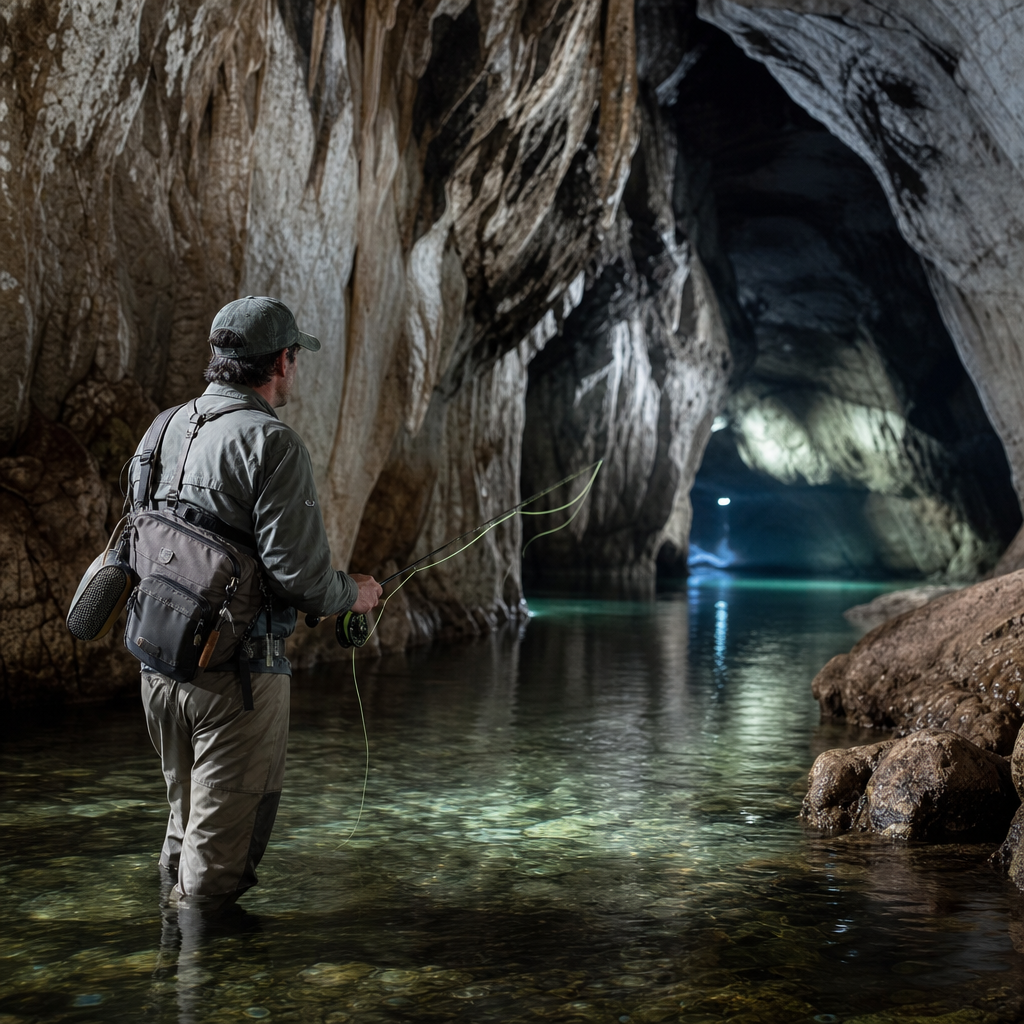
Fly fishing in caves demands a different mindset than river, lake, or surf angling because the environment changes how fish behave, how casts travel, and how safely you can move. In practical terms, cave fly fishing means presenting artificial flies in subterranean waters, spring caves, lava tubes, karst systems, mine adits where legal access exists, or partially enclosed grottos connected to rivers and coastlines. The special conditions that define this niche are low light, compressed casting space, uneven footing, cold stable water, echoing acoustics, and often unusually cautious fish. Those variables make standard advice incomplete. Anglers who succeed underground adapt line control, fly selection, wading, and risk management to the cave itself.
This topic matters because cave systems concentrate fish, challenge assumptions, and reward precise technique. I have fished spring-fed chambers where trout held inches from darkness lines and ignored textbook dry-fly drifts, yet took a sparse nymph swung across a mineral shelf. In sea caves, I have watched current rebound off rock walls and pin bait in corners that looked impossible from the entrance. These are not edge cases. Cave environments create consistent patterns once you understand the mechanics. As the hub for special conditions, this guide explains the core decisions that carry into related scenarios such as low light fishing, spring creeks in extreme cold, flood-altered channels, enclosed shoreline structure, and high-humidity tackle management.
Three foundations shape every session. First, fish use cave structure for security, temperature stability, and food funnels. Second, anglers lose efficiency when they cast too long, move too quickly, or bring the wrong rod and line system. Third, safety outranks opportunity. A productive cave is still a hazardous place if water levels rise, surfaces slick over, or a headlamp fails. If you want a reliable framework for fly fishing in caves, start by reading water differently, simplifying your rig, and planning every step before the first cast.
How cave water changes fish behavior
Fish in caves position according to light, oxygen, flow, and available forage. In freshwater cave mouths, trout, char, and bass often hold at transition zones where dim light meets open water. They can inspect silhouettes from cover, intercept drifting insects, and retreat with minimal energy. In fully enclosed spring caves, resident fish may key less on surface hatches and more on scuds, sowbugs, amphipods, leeches, small baitfish, and dislodged nymphs. Stable water temperatures, often in the 48 to 58 degree range in many spring-fed systems, reduce seasonal extremes, so feeding windows can be more consistent than in shallow freestone streams.
Saltwater cave and grotto fishing follows similar principles but adds tide, surge, and bait movement. Snook, juvenile tarpon, sea-run trout, and rock-oriented species patrol shadow lines because darkness gives them ambush cover. Predators face outward when current pushes food in, then slide deeper when boat traffic or sunlight increases. In my experience, the biggest mistake anglers make is casting into the darkest void first. Fish usually set up where food arrives, not where visibility disappears completely. Start at seams, wall edges, submerged ledges, and inflow points before probing deep recesses.
Sound also matters more underground. Footsteps, dropped pliers, and hull slap can transmit sharply in enclosed chambers. Fish that tolerate moderate pressure outside often spook quickly in caves because echoes amplify disturbance. That is why short controlled casts, quiet line pickup, and slow repositioning consistently outfish aggressive covering tactics.
Essential gear for fly fishing in caves
The best cave gear is compact, durable, and simple to manage in confined space. For most freshwater caves, a 8-foot to 9-foot rod in 4- to 6-weight handles nymphs, small streamers, and occasional dry-dropper rigs without demanding a wide backcast. In tighter chambers, an 7-foot 6-inch rod can be easier to load with roll casts and bow-and-arrow casts. For sea caves or large grottos, an 8- or 9-weight with corrosion-resistant components gives enough lifting power for snook, schoolie stripers, or juvenile tarpon around rock edges.
Lines should match presentation more than distance. Weight-forward floating lines are the default because they roll cast well and allow quick mends in short drifts. Euro-nymph style mono rigs can excel in narrow spring channels where overhead casting is impossible. Sink-tip lines earn their place in coastal caves with deeper slots or when streamer control matters more than stealth. Leaders should generally be shorter than your open-water setup. A 7.5-foot leader often turns over more predictably under a ceiling than a 9- or 12-foot leader. Tippet strength depends on abrasion risk. Around limestone shelves, lava rock, barnacles, or concrete remnants, stepping up one size is usually wise.
| Condition | Recommended Setup | Why It Works |
|---|---|---|
| Narrow freshwater cave | 7’6″ to 8’6″ 4-5 wt, floating line, 7.5′ leader | Easier roll casting and line control in confined space |
| Spring cave with deep slot | 8’6″ to 9′ 5-6 wt, floating line or mono rig, weighted nymphs | Precise drifts near bottom where scuds and nymphs drift |
| Sea cave or rocky grotto | 9′ 8-9 wt, intermediate or sink-tip line, short abrasion-resistant leader | Controls streamers in surge and turns fish away from rock |
Beyond the rod, the most important pieces of gear are a waterproof headlamp with spare batteries, studded boots where legal, a compact sling rather than a bulky vest, and hemostats on a retractor so you are not fumbling in darkness. Polarized glasses still help at cave entrances, even in low light, because they cut glare over shallow shelves. A waterproof phone case, whistle, and dry bag are not optional in remote systems.
Casting and presentation in confined space
Cave fly fishing is won with efficient casts, not heroic ones. Roll casts, switch casts, water loads, and bow-and-arrow casts cover most freshwater situations. The reason is simple: cave ceilings and walls punish traditional backcasts. A fly touching rock can crack off, collect moss, or ricochet dangerously. Keep false casting to a minimum and use the water tension beneath your line to load the rod. In chambers with enough clearance for an overhead cast, shorten the stroke and aim for a lower tighter loop to avoid clipping formations.
Presentation must also account for swirling hydraulics. Water rebounding from stone walls creates micro-eddies that can drag a fly unnaturally within a few feet. Instead of long dead drifts, fish short lanes thoroughly. High-stick nymphing, tight-line contact, and controlled swings are especially effective because they let you correct drift instantly. If fish are holding near the cave mouth, cast from bright water into shade, then let the fly cross the transition naturally. Predators often strike at the edge where contrast is strongest.
Streamer fishing underground benefits from restraint. Strip lengths should be short and pauses deliberate because cave fish frequently attack on the stall. In sea caves, angle your cast so the current sweeps the fly along the wall rather than straight into it. That path imitates bait trapped by surge and keeps the hook away from rock. For dries, focus on entrance pools, skylights, and chambers with visible insect activity. Fully enclosed sections rarely justify a dry-first approach unless bats, spiders, or dripping ceilings are dropping food consistently.
Productive flies and how to match cave forage
Fly choice in caves should follow the available food, not the novelty of the setting. In freshwater systems, proven patterns include scuds in gray, tan, and olive; sowbugs; Hare’s Ear and Pheasant Tail nymphs in smaller sizes; Zebra Midges; leech patterns; and sparse streamers such as Woolly Buggers, Sculpzillas, or baitfish imitations tied with minimal flash. Cave fish often see less varied drift than river fish, so overdone patterns can look wrong fast. Natural profiles, moderate weight, and subtle movement outperform flashy options in many spring-fed caves.
For coastal caves, Clouser Minnows, EP-style baitfish, Deceivers, small crab flies, and shrimp patterns cover most situations. Color selection is more about silhouette than exact shade in dim light. Black, olive, white, and tan all produce because they create distinct outlines against cave openings or pale stone backgrounds. If the water carries tannin or sediment, add contrast with barred rubber legs or a small hotspot at the throat rather than using excessive flash that can twist or foul on short casts.
A practical rule I use is to fish weighted flies only as heavy as needed to maintain contact. In rocky chambers, overweight flies wedge into cracks and kill efficiency. Tungsten beads, slim jig hooks where regulations allow, and lightly weighted streamers give enough depth without constant snagging. Keep fly boxes narrow in focus. A small selection of confidence patterns in multiple weights usually beats carrying fifty niche options you cannot sort easily in poor light.
Safety, access, and environmental ethics
The hardest truth about cave fly fishing is that some water should not be fished at all. Flash flooding, tide surges, oxygen-poor pockets, unstable rock, and restricted access can turn a routine outing serious within minutes. Check weather not only at the cave but across the entire upstream drainage. In karst country, rainfall miles away can raise water underground after local skies clear. In coastal caves, tide charts are mandatory, and swell direction matters as much as height. A modest swell from the wrong angle can make an exit ledge unusable.
Never fish a cave alone if the route involves technical scrambling, boating, or moving beyond visible daylight. Tell someone your entry point and return time. Use a helmet in low-ceiling or rockfall-prone systems. Respect closures protecting bats, endemic cave fauna, archaeological sites, or drinking-water sources. Many cave systems host species found nowhere else, and careless wading can damage habitat that recovers slowly. Felt soles may grip well but can spread invasive organisms; many anglers now prefer studded rubber paired with rigorous cleaning using hot water or approved disinfection methods.
Ethics also extend to fish handling. Cave and spring fish can be unusually vulnerable because populations are localized and water temperatures stable. Use barbless hooks where possible, fight fish firmly, and release them without beaching on abrasive rock. If a cave pool is clearly a refuge during drought or heat, treat it as a sanctuary first and a fishing opportunity second.
Planning trips under special conditions
As a hub for special conditions, cave fly fishing teaches a broader lesson: success comes from adapting to constraints instead of forcing standard tactics. Before any trip, assess five variables in order: access, water level, light, casting room, and target species. Then build your setup backward from the most limiting factor. If the ceiling is low, choose the shorter rod first. If abrasion is severe, choose leader strength before fly size. If fish are concentrated in spring outflows during winter, prioritize stealth over range. This framework transfers directly to related situations such as fishing under bridges, in canyon slots, during heavy overcast, around ice shelves, or inside mangrove tunnels.
Keep notes after each outing. Record air and water temperature, tide or flow, light penetration, productive lanes, and how fish reacted to sound. Patterns emerge quickly. You may find, for example, that trout in a limestone spring cave feed best during the first hour after sunlight reaches the entrance shelf, or that snook in a sea cave only commit when the outgoing tide pulls shrimp past a specific corner. Those observations become more valuable than generic advice because cave systems are small, distinct, and repeatable.
If you are building out your special-conditions knowledge, use cave fishing as a foundation for studying low-visibility presentation, structure-oriented predator behavior, compact tackle systems, and risk-aware trip planning. Start with accessible cave mouths and grottos, not deep technical systems. Fish short, observe carefully, and let the cave teach you where food moves and where fish feel safe. That approach produces more fish, fewer mistakes, and a clearer understanding of how to adapt anywhere conditions become tight, dark, cold, or complex.
Fly fishing in caves rewards anglers who trade distance for precision, complexity for control, and urgency for observation. The core takeaways are straightforward. Fish the transition zones first, because food and visibility usually intersect there. Use compact gear that roll casts cleanly and survives abrasion. Match flies to stable cave forage such as scuds, small nymphs, leeches, and baitfish rather than relying on bright attractors. Keep drifts short, maintain direct contact, and expect strikes near shadow lines, ledges, and current seams. Most important, treat safety as part of the technique, not as a separate checklist.
The main benefit of learning cave tactics is broader adaptability. Once you can read dim water, manage line in confined space, and move quietly through hazardous structure, you become a better angler in every special condition. Bridge shadows, winter springs, rock jetties, undercut banks, and mangrove tunnels all start to look more legible. Cave fishing sharpens decision-making because every cast has to be intentional. There is little room for waste, and that discipline carries everywhere.
Approach this subtopic as a progression. Begin with legal, accessible cave mouths, refine one or two reliable rigs, and build a written log of conditions and results. From there, explore the related special-conditions articles in this hub and apply the same framework of observation, simplified gear, and disciplined presentation. If you prepare carefully and fish methodically, caves can become some of the most memorable and instructive water you will ever wade or drift.
Frequently Asked Questions
What makes fly fishing in caves different from traditional river or lake fly fishing?
Fly fishing in caves is fundamentally different because the environment reshapes nearly every part of the angling process, from how fish position themselves to how you cast, wade, and retrieve. In open water, anglers often rely on long back casts, visual line tracking, natural daylight, and broad reading of currents. In a cave, those assumptions usually disappear. Low light reduces visibility for both angler and fish, overhead rock limits casting space, acoustics amplify noise, and footing can become dangerously slick or uneven. Even when the water itself looks calm, cave systems often create subtle hydraulics, narrow channels, undercut walls, and pockets of current that affect presentation in ways that are easy to miss.
Fish behavior also changes in subterranean or partially enclosed environments. In caves, spring grottos, lava tubes, and mine adits with legal access, fish frequently hold tight to seams, rock edges, inflows, outflows, or shafts of available light. Some feed opportunistically on insects washed in from connected streams, while others key in on small baitfish, crustaceans, or aquatic life adapted to the darkness. Because visibility is limited, fish may react more to vibration, profile, and the accuracy of a fly’s placement than to long drag-free drifts seen in classic dry-fly situations. That means success often comes from stealth, shorter controlled casts, and careful line management rather than distance.
Safety and pace are also major differences. Cave fly fishing requires a slower, more deliberate mindset. You are not just trying to catch fish; you are constantly assessing ceiling height, drop-offs, water depth, oxygen flow in enclosed spaces, access legality, and your route back out. In short, cave fly fishing is not simply regular fly fishing done in the dark. It is a technical niche where environmental awareness, compact presentation, and risk management matter just as much as fly selection.
What casting techniques work best when space is tight and there is little or no back-cast room?
In cave settings, compact casting techniques are essential because traditional overhead casts often fail when ceilings are low, walls are close, or rock formations sit behind you. The most dependable approach is to think in terms of efficient line control rather than elegant distance casting. Roll casts are often the first tool to master because they allow you to reposition line and deliver a fly forward without needing a full back cast. A well-executed roll cast can be surprisingly accurate in narrow channels, small chambers, and spring-fed cave pools.
Bow-and-arrow casts are especially useful in extreme confinement. This method involves gripping the fly or leader carefully, loading the rod by bending it backward, and then releasing to shoot the fly forward into tight targets. It is highly effective for placing small flies under ledges, near rock openings, or into short feeding lanes where fish are tucked close to structure. Water-loading casts, short sidearm casts, and modified Belgian-style continuous-motion casts can also help when there is partial room but not enough for a conventional stroke. In some situations, simply dappling the fly or making very short controlled flips is more productive than forcing a full cast.
Accuracy matters more than distance in most cave scenarios. Keep false casting to an absolute minimum, both to avoid snagging rock and to reduce disturbance. Shorten your leader if turnover becomes inconsistent in humid, still air or cramped quarters, and choose line weights that load quickly at close range. Practice casting from awkward body positions too, because you may need to kneel, cast from a crouch, or work from the side of a wall opening. The anglers who do best in caves are usually those who can deliver a fly cleanly within a rod length or two of structure, manage slack instantly, and adapt their stroke to the space available rather than trying to impose open-water mechanics on a confined environment.
What gear is most important for cave fly fishing, and how should it differ from a standard setup?
The best cave fly fishing gear emphasizes control, durability, visibility, and safety over maximum casting range. Rod choice is a great place to start. In many cave environments, a shorter rod in the roughly 7- to 8 1/2-foot range is easier to maneuver around rock walls and low ceilings than a standard 9-foot setup. A moderate or medium-fast action can be especially forgiving at close distances and better suited to roll casting, water-loading, and quick placement shots. Line selection should favor easy loading at short range, and many anglers prefer a weight-forward floating line for versatility, though sink-tip or full-sinking options may be useful in deeper grotto pools or submerged passage edges.
Leader and tippet setups should match the fish species and the confined nature of the water. In caves, fish are often close, so there is less need for excessively long leaders unless the water is exceptionally clear and calm. Shorter leaders can improve turnover and reduce tangles when casting space is limited. Fly selection should cover a compact but practical range: streamers for low-light predatory response, nymphs for spring-fed or connected systems, and patterns that imitate cave-access prey such as minnows, shrimp, scuds, or terrestrials washed in from outside. In darker water, silhouette, movement, and contrast often outperform overly delicate detail.
Just as important as the fishing tackle is the safety equipment. A reliable headlamp with a backup light source is non-negotiable, and many experienced cave anglers carry two backups in addition to fresh batteries. Studded boots or high-grip wading footwear can be critical on algae-coated rock, though local regulations and rock sensitivity should always be considered. A helmet is strongly advisable in low-ceiling or unstable areas. A waterproof pack, minimalist fly storage, forceps on a retractor, and a stripping setup that prevents line from tangling around rocks all make a major difference. In cave fishing, the right gear is not just about catching fish efficiently; it is about staying mobile, organized, and safe in an environment that punishes clutter and poor preparation.
How do you find fish and choose flies in dark or partially enclosed cave waters?
Finding fish in caves starts with understanding that even in darkness, fish still relate to structure, current, oxygen, food, and security. They tend to hold where these factors overlap. That often means entrances where daylight fades into shadow, spring inflows that bring colder oxygen-rich water, pinch points where food funnels through, deeper slots beside rock walls, and transitions between moving and still water. In coastal grottos or cave-connected river systems, fish may patrol edges where bait or invertebrates get trapped by the contours of the rock. Instead of scanning wide open water the way you might on a river flat, focus on high-percentage lanes and fishable pockets one section at a time.
Because visual feedback is reduced, fly choice should be guided by profile, motion, and sink behavior. Streamers are often excellent because they push water, create a defined silhouette, and can trigger reaction strikes in low light. Dark flies can stand out well against dim overhead light, while pale or slightly reflective patterns may perform better in mineral-clear spring caves where subtle visibility exists. Weighted nymphs, scuds, small baitfish imitations, and shrimp-like patterns are all strong candidates depending on the system. If the cave connects directly to a surface river, use what the fish are already accustomed to eating outside, but adjust size and presentation for the tighter environment inside.
Presentation is usually more important than constantly changing flies. Make short, deliberate casts, let the fly enter quietly, and cover depth methodically. Count down streamers or weighted flies to track where strikes occur. In clear cave pools, fish may inspect a fly longer than you expect, so pauses, subtle strips, and controlled swings can outperform aggressive retrieves. In murkier or fully shaded water, a more pronounced strip-pause cadence may help fish locate the offering. If you are not seeing activity, work from the light transition zones inward, paying close attention to any seam, drop, undercut, or inflow. In caves, fish are often there for a reason, and once you identify the pattern of current, cover, and available forage, the water becomes much more readable.
What safety precautions should anglers take before and during a cave fly fishing trip?
Safety should be the first priority in cave fly fishing because the risks are more complex than in most standard angling situations. Before you even rig a rod, confirm that access is legal and appropriate. Not every cave, adit, grotto, or partially enclosed waterway is open to the public, and some are protected for ecological, historical, or structural reasons. Research local rules, water conditions, tides if applicable, and weather upstream, especially in karst systems or spring caves where water levels can change quickly. Flash flooding is a serious hazard in some underground or semi-enclosed environments, even if skies are clear where you are standing.
Never rely on a single light source. Carry a primary headlamp, at least one backup light, and spare batteries stored in a waterproof container. A helmet is a smart precaution in any place with low ceilings, unstable rock, or narrow passage movement. Footwear must provide dependable traction on slick surfaces, and a wading staff can help probe depth and maintain balance where visibility is poor. It is also wise to travel light and keep both hands as free as possible