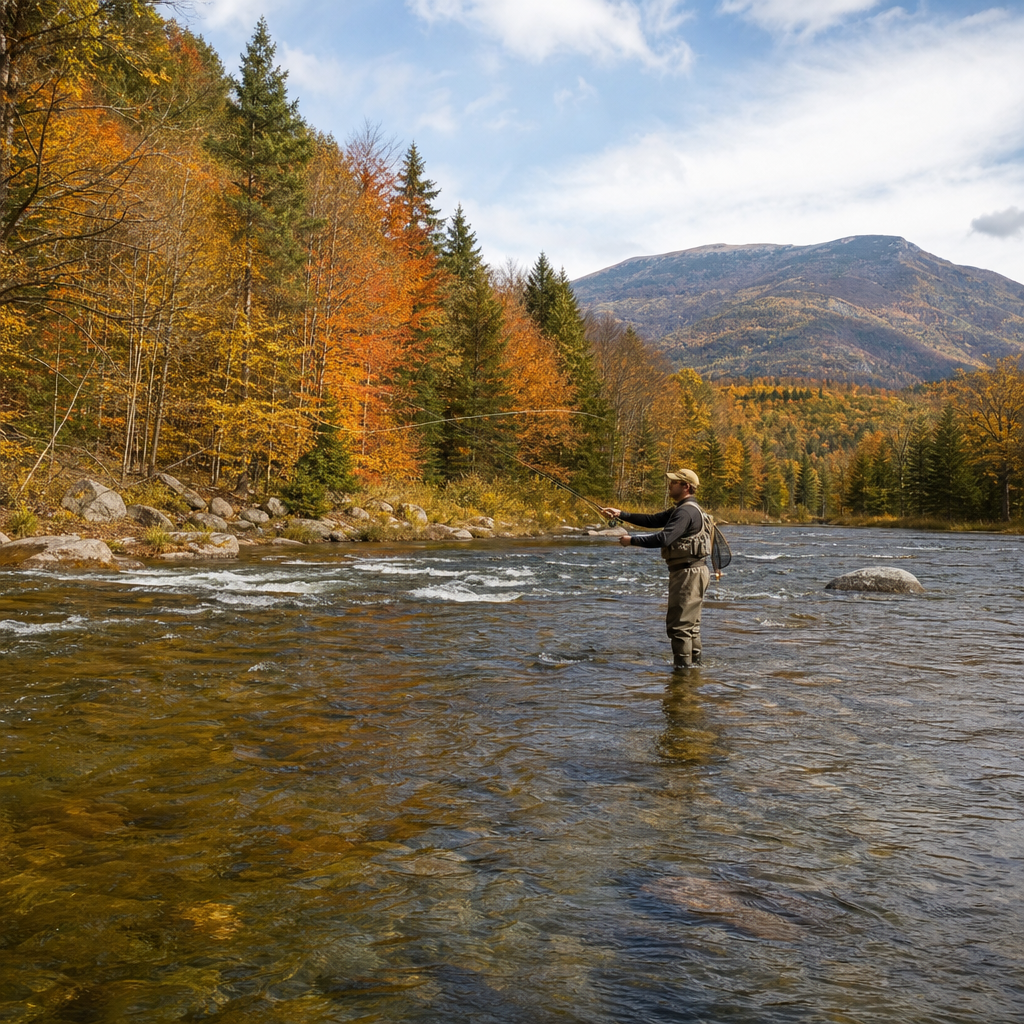
Spring fly fishing is the season when rivers wake up, water temperatures climb into productive ranges, insect life accelerates, and trout shift from winter conservation mode into more regular feeding patterns. For anglers, it is one of the most dynamic times of year because conditions can change by the hour. Snowmelt can raise flows, sunlight can trigger hatches, and a cold front can slow everything down overnight. That volatility is exactly why spring deserves a full overview rather than a short checklist.
In practical terms, spring fly fishing covers the transition from late winter through early summer, though the exact timing depends on latitude, elevation, and watershed type. A tailwater in March may fish like a freestone in May. Key terms matter here. A hatch is the emergence of aquatic insects such as mayflies, caddisflies, and midges. Runoff is the seasonal increase in streamflow driven by snowmelt and rain. A freestone river is largely shaped by precipitation and melt, while a tailwater is moderated by dam releases. Understanding those distinctions helps anglers choose where, when, and how to fish.
I have always treated spring as a season of observation first and casting second. The anglers who do best are usually the ones who watch water color, check temperatures, turn over streamside rocks, and notice whether fish are rising with purpose or just rolling in current seams. Spring rewards that discipline because trout behavior is more tied to environmental signals than to fixed calendar dates. A five-degree swing in water temperature can completely change the productive fly, depth, and pace of presentation.
This matters because spring often delivers the year’s best combination of opportunity and challenge. Fish feed more consistently than in winter, but they are also affected by unstable flows, muddy water, and spawning behavior. New anglers see the season as hopeful; experienced anglers respect it because small mistakes become obvious fast. A good spring strategy helps you locate fish, match prevalent food sources, and avoid wasting time on water that looks attractive but is functionally empty. As a hub topic, spring fly fishing connects insect hatches, runoff tactics, weather interpretation, gear selection, and fish handling into one seasonal system.
How spring changes trout behavior
Spring trout behavior is driven by metabolism, current, food availability, and reproduction. As water warms out of winter lows, trout generally feed more often and move farther to intercept drifting insects. In many trout streams, feeding activity improves noticeably once water temperatures settle roughly into the upper 40s and low 50s Fahrenheit, though exact thresholds vary by species and river type. Brown trout, rainbow trout, and cutthroat all respond to warming water, but local forage and flow conditions shape how aggressively they feed.
Positioning changes too. In late winter, trout often hold in slower, softer water to conserve energy. In spring, they begin using riffle edges, transitional seams, submerged structure, and feeding lanes below gravel runs more consistently. On cloudy afternoons with a hatch underway, fish may slide into shallower water than many anglers expect. On bright mornings after a cold night, they may remain near slower depths until the river gains a degree or two. Reading this movement is central to successful spring fly fishing.
Spawning adds nuance. In many rivers, rainbow trout spawn in spring, while brown trout are usually recovering from fall spawning. Anglers should recognize redds, the clean gravel nests where trout deposit eggs, and avoid wading through them or targeting fish actively paired on spawning beds. Ethical spring fishing means focusing on staging or post-spawn fish in adjacent lies rather than stressing vulnerable fish on redds. Healthy fisheries depend on that restraint.
Where to fish in spring: freestones, tailwaters, lakes, and small streams
Not all water behaves the same in spring. Freestone rivers can be exceptional before runoff, difficult during peak melt, and surprisingly good along edges when flows are high but manageable. Tailwaters often provide the most stable option because dam releases moderate temperature swings and preserve clarity. That is why many guides shift clients to tailwaters during heavy runoff periods. Spring creeks are another strong choice; their groundwater influence keeps temperatures consistent and supports dependable midge and mayfly activity.
Small streams warm quickly and can offer short but excellent windows, especially in the afternoon. Lakes and ponds also deserve attention. Ice-out periods can concentrate trout in the shallows where warming water, chironomids, leeches, and baitfish create simple feeding opportunities. In reservoirs and stillwaters, a slow hand-twist retrieve with a balanced leech or chironomid pupa often outperforms the faster strips anglers use in summer.
The smartest way to choose water is to match the season’s stage. Early spring often favors tailwaters, spring creeks, and lower-elevation freestones. Mid-spring can be excellent almost everywhere if flows remain stable. Peak runoff usually pushes anglers toward tailwaters, lakes, and tributaries less affected by melt. Late spring frequently reopens freestone options, particularly during morning lulls before snowmelt surges or on cool overcast days when runoff intensity drops.
Core spring hatches and what trout eat
Spring food sources are diverse, but several patterns matter nearly everywhere. Midges remain important all season, especially during cold mornings and on technical tailwaters. Blue-winged olives, often from the Baetis group, are classic spring mayflies that hatch in cool, cloudy weather and can produce blanket emergences. March Browns, Hendricksons, caddis, and stoneflies become relevant depending on region. In some waters, skwala stoneflies or salmonflies define the season. In others, the entire spring game revolves around small mayflies and subsurface nymphs.
Trout are not only eating hatching insects. They also feed on immature nymphs dislodged by increased current, worms washed in by rain, sculpins, eggs drifting below spawning fish, and streamers that imitate baitfish or leeches. This is why spring anglers should think in categories rather than single flies: attractor nymphs, specific mayfly imitations, caddis pupae, eggs, worm patterns, and streamers all have a place.
| Spring condition | Likely food source | Effective approach |
|---|---|---|
| Cold morning on clear tailwater | Midges, small Baetis nymphs | Deep nymph rig with fine tippet and subtle weight |
| Cloudy afternoon before runoff peak | Blue-winged olives | Dry-dropper or emerger with reach cast and dead drift |
| Rising stained freestone | Worms, stonefly nymphs, baitfish | High-stick nymphing or streamer along soft edges |
| Warm evening on moderate flows | Caddis pupae and adults | Swing pupa, then skate or dead-drift an adult |
The lesson is straightforward: ask what food is easiest for trout to capture under current conditions. In spring, opportunistic feeding often beats perfect imitation. If water is off-color and fast, a precise size 20 dry fly is rarely the answer. If fish are sipping in a slick during a Baetis hatch, a bulky stonefly nymph is equally wrong. Match conditions first, insects second.
Tactics that work when spring conditions change fast
The most reliable spring tactic is controlled subsurface fishing. Indicator nymphing, tight-line nymphing, and short-line high-sticking all catch fish because trout spend much of the season feeding below the surface. Depth matters more than pattern selection on many days. I routinely see anglers change flies five times when the real fix is another split shot, a longer leader, or a drift that stays in the seam an extra second. Contact, drift angle, and depth control are not glamorous, but they decide spring results.
Dry-fly opportunities are real, especially during mayfly and caddis hatches, but they are usually window-based rather than all-day events. Watch for consistent rises, floating duns, and fish taking in rhythm. Emergers are often the best bridge between nymphing and dry-fly fishing because trout commonly feed just under the film before adults fully appear. A soft hackle swung through the top of the water column can be deadly during caddis activity.
Streamer fishing is another major spring tool. Pre-spawn aggression, stained water, and higher flows all make larger presentations effective. Use streamers to probe banks, ledges, flooded grass, and soft water beside heavy current. In cold water, slower strips and pauses usually outperform frantic retrieves. In warmer water after a weather stabilization, trout may chase more decisively. Spring streamer fishing is not random power casting; it is targeted, angle-conscious coverage of ambush water.
Reading water, weather, and runoff
Successful spring fly fishing depends on prediction. Water temperature tells you when fish are likely to feed. Stream gauges from the USGS or local agencies reveal whether flows are stable, rising, or blown out. Weather forecasts show overnight lows, cloud cover, barometric changes, and rain events that affect clarity and safety. I consider these tools as essential as a fly box.
Runoff does not mean fishing is impossible. It means fish relocate. During high water, target banks, inside bends, back eddies, side channels, foam lines, and seams where fast current meets softer holding water. Trout still need oxygen and food, but they avoid unnecessary energy expenditure. A river at 2,000 cubic feet per second may be unfishable mid-channel yet excellent six inches off the bank. That is one of the most useful spring lessons for developing anglers.
Weather windows create opportunities. Overcast days often improve mayfly hatches. Warm afternoons can trigger stronger insect activity than cold mornings. After a sudden freeze, expect slower fishing until the water recovers. After rain, a slight stain is often ideal because it gives trout confidence while preserving visibility. Chocolate-brown water with heavy debris is a different story. Good spring anglers distinguish between fishable color and true blowout conditions.
Gear, safety, and seasonal fish care
A practical spring setup balances sensitivity, reach, and adaptability. For most trout rivers, a 9-foot 5-weight is the default rod, with a 4-weight useful for technical dry-fly work and a 6-weight better for streamers or windy conditions. Floating lines cover the majority of situations. Leaders should range from stout, shorter nymphing setups to longer, finer leaders for selective surface feeders. Waders, layered insulation, and a waterproof shell are standard because hypothermia risk remains real even on mild days.
Wading safety becomes more important in spring than many anglers realize. Snowmelt makes current stronger than it appears. Use a wading staff in heavy flows, cross only where consequences are low, and avoid aggressive diagonal crossings during runoff. Felt or rubber soles with studs can improve traction depending on local regulations. A personal rule I follow is simple: if I cannot clearly identify a safe exit before stepping in, I do not wade that line.
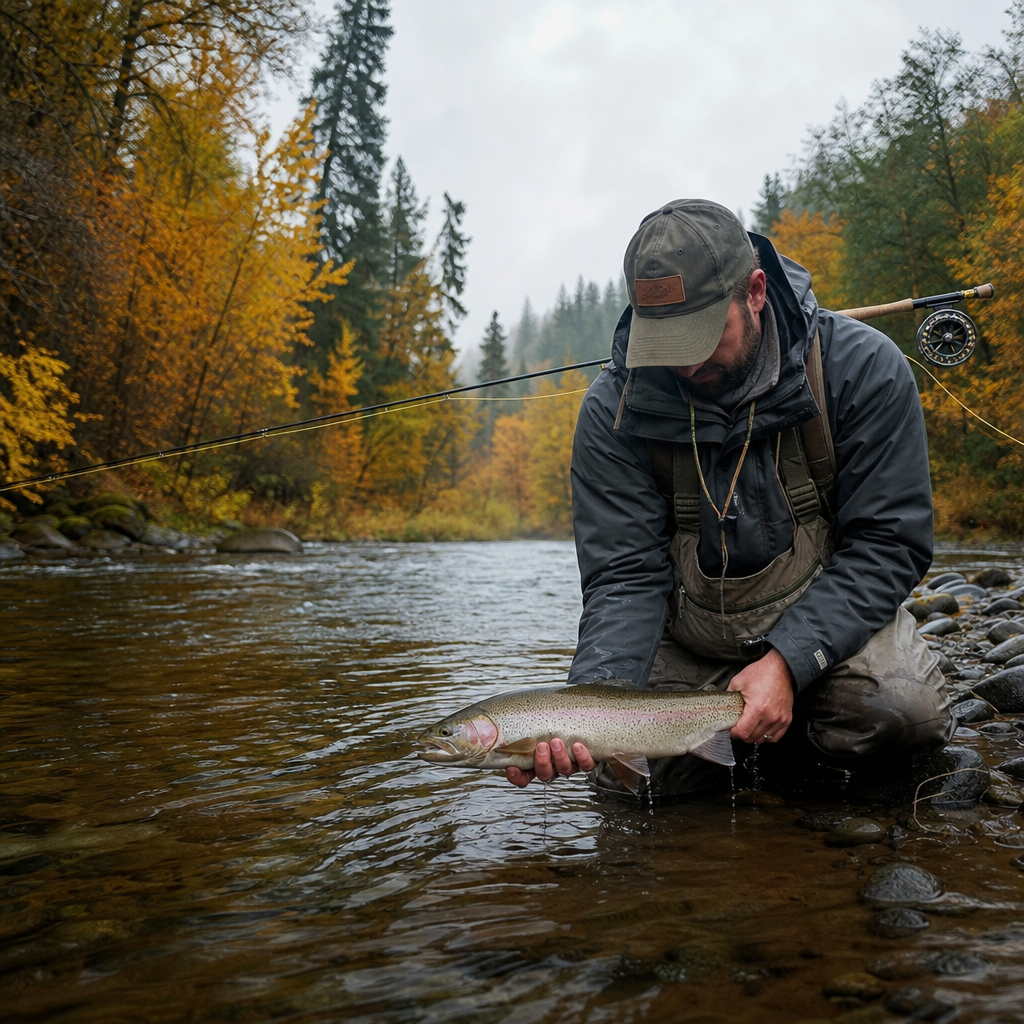
Fish care also changes with the season. Post-spawn trout can be stressed. Trout staged near redds are vulnerable. Keep fish wet, use rubber nets, minimize air exposure, and release them quickly. If you photograph a fish, prepare first, lift briefly, and return it immediately. Spring may feel cool to anglers, but ethical handling is still essential to protect fish that are rebuilding condition or reproducing.
Building a spring plan that actually works
A strong spring plan starts before you leave home. Check streamflows, weather, and likely hatch timing. Pick a primary river and a backup option with different hydrology, such as a tailwater if your first-choice freestone blows out. Carry flies that cover the major spring categories rather than dozens of slight variations. On the water, begin by measuring conditions: clarity, temperature, current speed, and visible food. Then choose one of three approaches—deep nymphing, hatch-focused dry-dropper fishing, or streamers—and change only when observations justify it.
This hub article should help you connect every major part of spring fly fishing into one system. Trout location, runoff timing, insect activity, and presentation are linked. When you understand those links, the season stops feeling unpredictable and starts feeling readable. Use this overview as your baseline, then explore the deeper subtopics it points toward: spring hatches, fishing during runoff, targeting pre-spawn and post-spawn trout responsibly, and adjusting tactics for tailwaters, freestones, and stillwaters. Start with conditions, fish the easiest water first, and let the river tell you what spring pattern is happening today.
Frequently Asked Questions
Why is spring considered such an important season for fly fishing?
Spring is one of the most important fly fishing seasons because it marks the transition from winter’s slow, energy-conserving conditions into a much more active and responsive period for trout and other coldwater species. As water temperatures gradually rise, fish begin feeding more consistently, insect life becomes more abundant, and rivers shift from dormant-looking systems into highly dynamic environments. In practical terms, that means anglers often see more regular opportunities to fish nymphs, emergers, dry flies, and streamers all in the same season, sometimes all in the same day.
What makes spring especially valuable is the combination of biological activity and changing water conditions. Trout that spent much of winter holding in slower, deeper water to conserve energy start moving into more favorable feeding lanes as temperatures enter productive ranges. At the same time, aquatic insects such as mayflies, caddis, and midges become more active, creating dependable feeding windows that can be matched with the right fly patterns and presentation styles. This period rewards anglers who pay attention to water temperature, light levels, current speed, and weather patterns rather than relying on a fixed routine.
Spring also teaches some of the most important lessons in river reading and adaptation. A river may be clear and manageable in the morning, then rise or discolor as snowmelt increases later in the day. A sunny afternoon can trigger a hatch, while a sudden cold front can shut surface activity down almost immediately. Because of that volatility, spring fly fishing is often seen as a season that sharpens an angler’s judgment. It is not always easy, but it is often highly productive and deeply instructive.
How do changing water temperatures affect trout behavior in spring?
Water temperature is one of the biggest drivers of spring trout behavior because it influences metabolism, feeding activity, insect development, and where fish choose to hold in the river. During winter, trout typically minimize energy use and feed less aggressively, especially when water temperatures are very low. In spring, even modest temperature increases can make a meaningful difference. As temperatures climb into more favorable ranges, trout become more willing to move for food, hold in faster current seams, and feed during longer portions of the day.
Early in the season, the warmest part of the day is often the most productive. Cold mornings may keep fish sluggish, but by late morning or early afternoon, sunlight can warm shallow runs and edges enough to stimulate insect movement and trout feeding. This is why many experienced spring anglers focus less on dawn patrol and more on timing their fishing around the daily warming trend. If a river is still cold from snowmelt or recent freezing nights, patience and timing become just as important as fly selection.
Temperature changes also affect where fish position themselves. In colder spring water, trout often remain near softer current, depth transitions, and protected holding lies where they can feed without expending too much energy. As conditions improve, they may slide into riffle edges, seams, tailouts, and other feeding lanes with better drift opportunities. Understanding these shifts helps anglers present flies more effectively. Rather than casting blindly, it is smarter to think about what the fish need at that exact temperature: safety, efficiency, access to food, and minimal energy cost.
What are the biggest challenges anglers face during spring fly fishing?
The biggest challenge in spring is inconsistency. Unlike the more stable conditions anglers sometimes find in summer or early fall, spring is famous for sudden change. Snowmelt can increase flows dramatically, rain can stain tributaries overnight, and warm weather can accelerate runoff faster than expected. In addition, fish behavior may change quickly as barometric pressure shifts, cloud cover comes and goes, or a cold front pushes through. All of this means that a productive pattern one day can be mediocre the next if conditions are different.
High or off-color water is another major hurdle. Rising flows can make access more difficult, reduce visibility, and push trout into softer edges, backwater pockets, and inside seams that many anglers overlook. Wading can become significantly more dangerous in spring than in lower-water seasons, especially when snowmelt is strong. Smart spring anglers place a premium on safety, reading current carefully, and choosing water they can fish effectively without taking unnecessary risks. Success often comes from adjusting locations and tactics rather than trying to force classic mid-summer holding water to produce.
The third challenge is matching the river’s mood. On some days trout may key on subsurface insects and ignore dries completely. On others, a hatch can turn fish upward for a short but intense window. Streamers may work well during higher water or when fish are opportunistic, but become less effective if the river cools suddenly. This unpredictability is not a flaw of spring fishing; it is the defining feature of the season. Anglers who carry a flexible mindset, a range of fly types, and a willingness to slow down and observe usually do far better than those who expect a single tactic to work all month.
What flies and techniques work best for spring fly fishing?
There is no single best spring setup because the season covers a wide range of water temperatures, flow levels, and feeding behaviors, but several categories of flies consistently matter. Nymphs are often the foundation of spring success because trout feed subsurface for much of the season, especially when water is cold, slightly stained, or running high. Patterns that imitate mayfly nymphs, caddis larvae, midges, and general attractor nymphs can all be productive. A well-drifted nymph rig allows anglers to cover the depth zone where fish are most likely feeding even when no surface activity is visible.
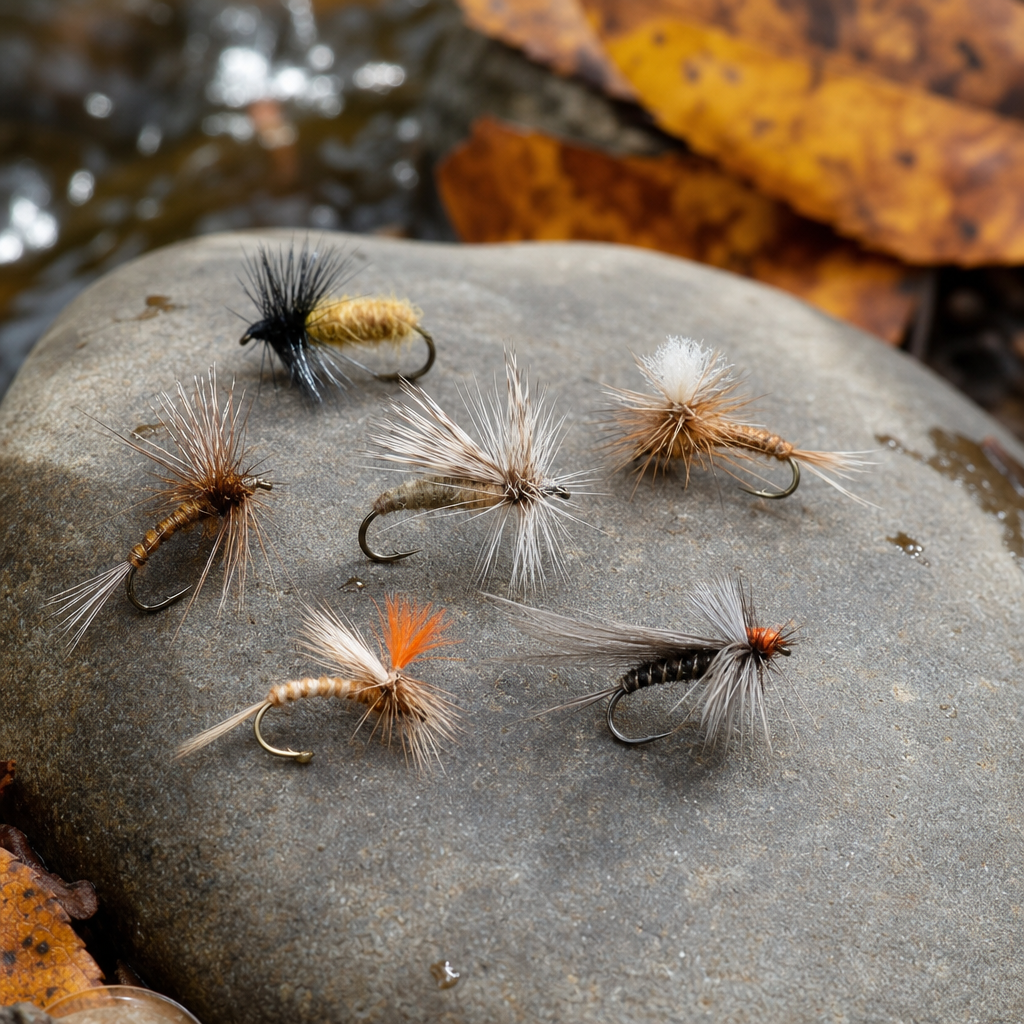
Dry flies become increasingly important as spring hatches develop. Depending on region and timing, anglers may encounter midges, Blue-Winged Olives, caddis, March Browns, Hendricksons, and other local emergences. During these windows, presentation is often more important than having an exact imitation. A natural drift, careful approach, and attention to where fish are rising can outperform constantly changing patterns. Emergers are especially valuable in spring because many trout feed just below the surface film before or during a hatch rather than taking fully emerged adults.
Streamers also deserve a place in the spring lineup. Higher flows, aggressive pre-spawn or post-winter behavior, and reduced water clarity can make larger baitfish imitations very effective. They are particularly useful when trout are not feeding selectively on insects or when anglers want to target larger fish holding near banks, structure, or softer water adjacent to heavier current. The best overall spring technique is to let river conditions guide the method: nymph deeper and slower when the water is cold, switch to dries or emergers when hatches appear, and use streamers when fish are opportunistic or visibility is limited.
How should anglers adjust their approach as spring conditions change throughout the day?
Adjusting throughout the day is one of the most important spring fly fishing skills because rivers often behave differently from morning to afternoon and sometimes from one hour to the next. Early in the day, especially after a cold night, trout may hold deep and feed sparingly. That usually calls for a slower, more deliberate approach with nymphs fished near the bottom in softer seams, pools, and transitional water. During this period, anglers often do best by covering water methodically rather than expecting immediate visible activity.
As the day warms, both insect activity and trout metabolism can increase. This is often when feeding lanes expand, fish shift into more moderate current, and hatch windows begin to open. Late morning through afternoon is commonly the prime period in many spring fisheries, particularly when sunshine raises water temperatures just enough to trigger movement. At that point, anglers should actively watch for emerging insects, subtle rises, swirls, and changes in trout positioning. A river that seemed lifeless earlier can suddenly become highly productive once the right combination of temperature and light is in place.
Later in the day, adjustment may be needed again if runoff increases, cloud cover moves in, or temperatures drop. If the water rises or colors up, trout often slide toward banks, slower inside water, and current breaks where they can feed efficiently out of the main push. If a cold front arrives, surface activity may fade and subsurface tactics become more important again. The key is to treat spring as a moving target. Instead of deciding on one plan at the start of the day and sticking with it no matter what, successful anglers keep reading the river, tracking temperature trends, and letting fish behavior tell them when to change depth, speed, location, or fly type.