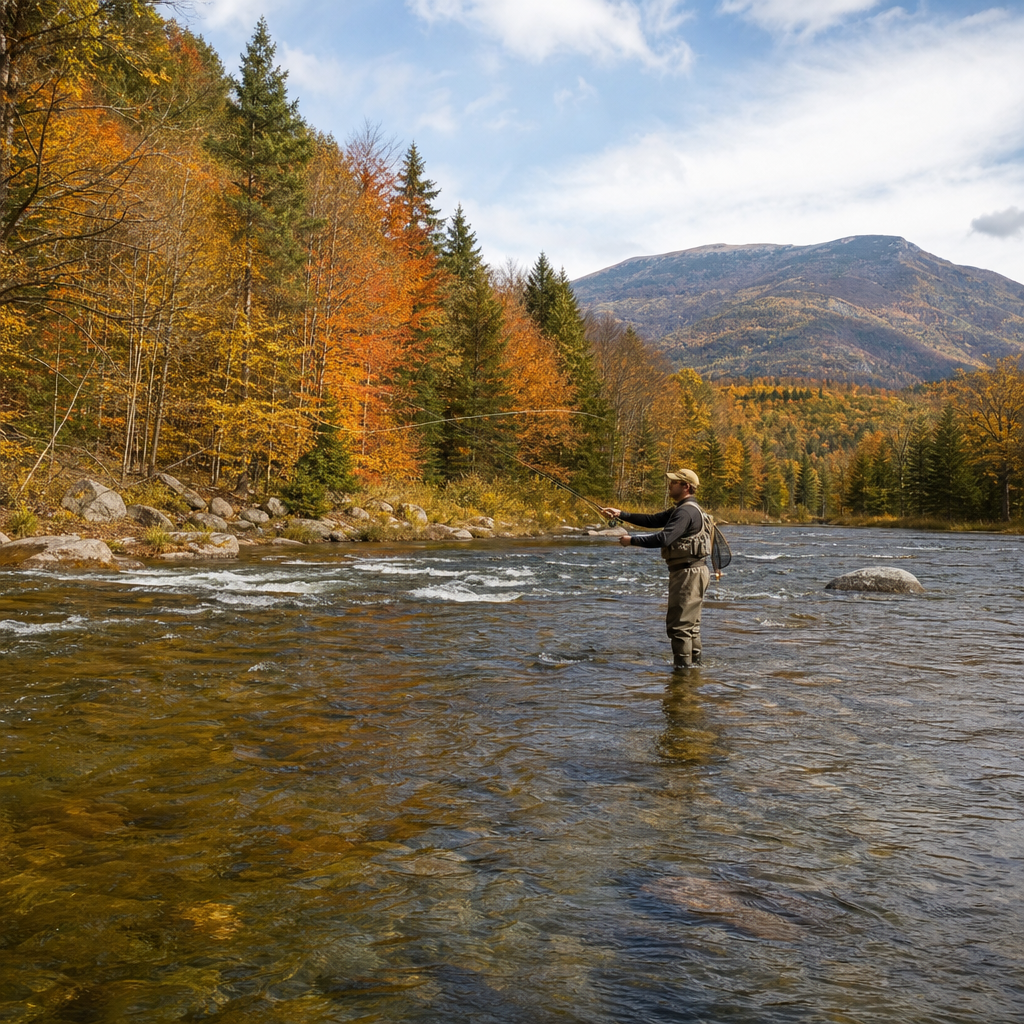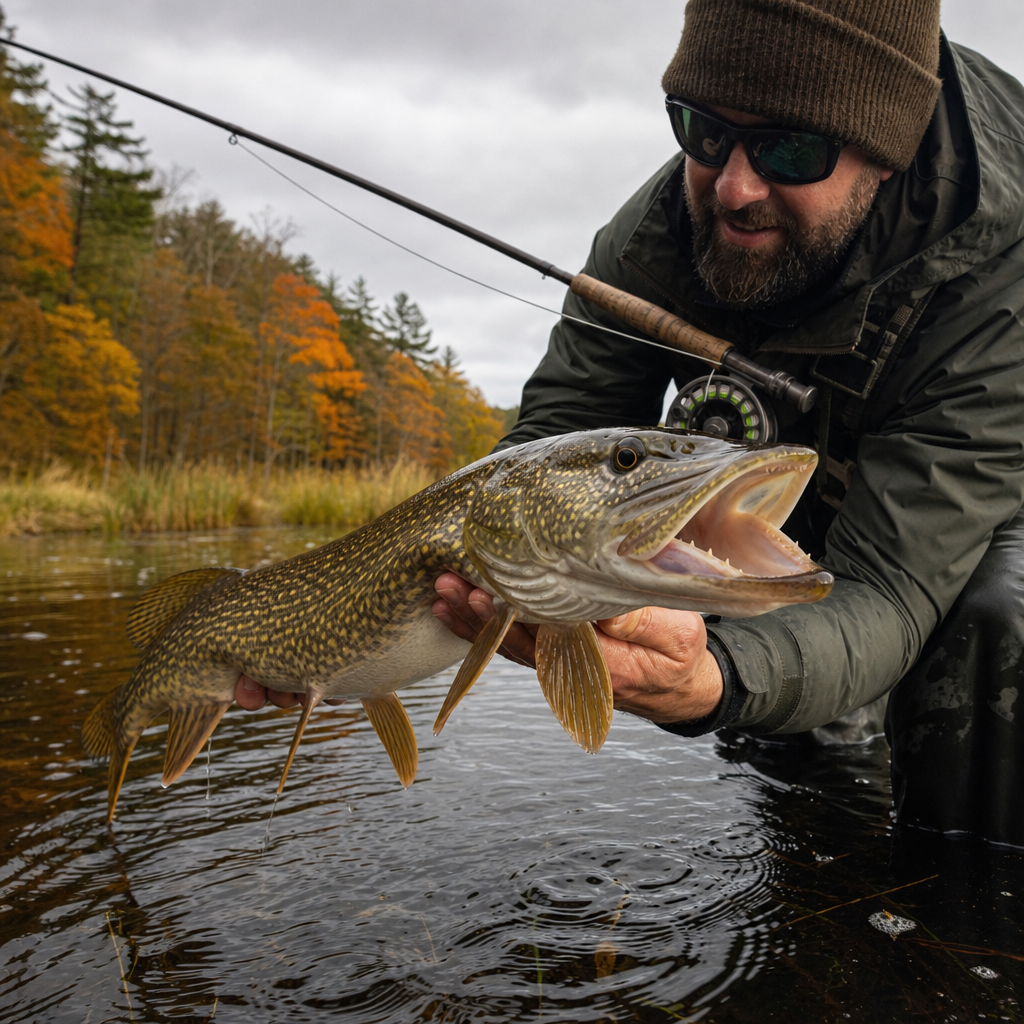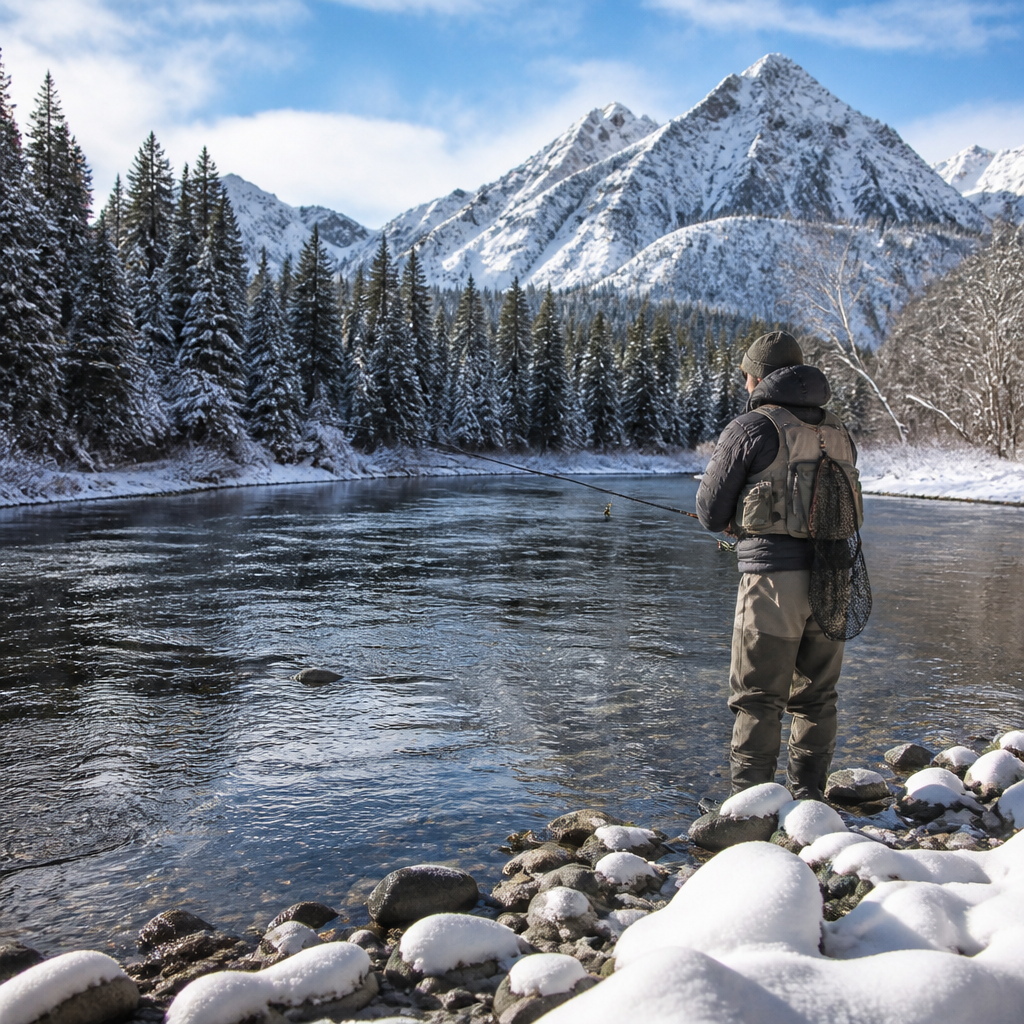
Fly fishing in cold weather demands a different mindset than a warm spring hatch, but winter can deliver some of the most rewarding days of the year for anglers willing to adapt. Winter fly fishing means pursuing trout and other coldwater species when air temperatures, water temperatures, insect activity, and fish metabolism all shift downward. Success depends less on covering miles of river and more on understanding where fish conserve energy, what limited food they still accept, and how weather changes affect each feeding window. I have spent many winter mornings breaking ice from rod guides, watching a dead drift crawl through a seam that looked lifeless, and then seeing a heavy trout slide six inches to eat. Those days taught me that cold-weather fly fishing is not about heroic endurance. It is about precision.
Cold weather matters because it compresses fish behavior into narrower patterns. Trout do not stop feeding in winter, but they feed more selectively and move less because colder water slows digestion and reduces the value of chasing every calorie. Insects still hatch, especially midges and winter stoneflies, yet the timing is tighter and often linked to the warmest part of the day. River conditions also become more consequential. Tailwaters can remain stable and productive, while freestone rivers may swing from clear and low to slushy and unfishable overnight. Safety becomes part of the equation as well. Hypothermia, shelf ice, and slick banks turn a casual outing into something that requires planning. A winter fly fishing hub therefore needs to answer the practical questions anglers ask most: where fish hold, which flies work, when to fish, how to dress, what gear changes help, and when not to force the day.
For anglers building out their broader knowledge of seasons and conditions, winter is the clearest test of fundamentals. Good drifts, water reading, knot reliability, and fish handling all matter more when opportunities are fewer. The upside is significant. Rivers are quieter, large trout are often less pressured, and anglers who understand winter can catch fish consistently while others stay home. Cold-weather fly fishing rewards discipline, observation, and efficient choices.
Where trout hold in winter and how to find them
The fastest route to winter success is learning where trout save energy. In cold water, fish typically avoid heavy current because maintaining position there burns calories they cannot easily replace. On most rivers, the best winter lies are slower seams beside the main flow, tailouts with moderate depth, deep buckets below riffles, soft inside bends, and runs with walking-speed current. Trout still need oxygen and food, so they rarely stack in dead water with no drift. The ideal spot combines depth, reduced current, and a conveyor belt of nymphs or midges passing close to the fish. On bright afternoons, I often find better fish on the softer edge of a deep run rather than in the deepest central slot. They want access to food without working for it.
Water type changes by river class. Tailwaters, fed from the bottom of dams, usually stay more temperature-stable and can fish well all winter. Trout there may hold in predictable feeding lanes, and midges or small baetis can create regular windows. Freestone streams react more sharply to cold snaps, snowmelt, and anchor ice. In those systems, winter trout often cluster in slower wintering water and may leave summer riffles almost entirely. Spring creeks can be excellent because groundwater moderates temperature. Lakes and stillwaters are a different game, but near inlets, channels, and drop-offs, fish may still cruise if dissolved oxygen and forage align.
Observation matters. If you see shelf ice, slush, and no midges in the air, start deep and slow. If the sun has warmed a run for several hours and tiny adults appear over the water, check softer flats and tailouts for subtle rises. In winter, finding one productive lane can be enough for the day.
Best times, weather windows, and water temperature cues
The best time for winter fly fishing is usually late morning through midafternoon, not dawn. Overnight cold often pushes water temperatures to their lowest point near sunrise. After several hours of sunlight, even a small increase of one or two degrees can improve insect activity and trout willingness to feed. On many trout streams, the prime window runs from about 11 a.m. to 3 p.m., though tailwaters can extend longer if conditions are stable. I regularly plan winter trips around the warmest part of the day and leave the river before the evening refreeze turns access points dangerous.
Air temperature matters less than water temperature, cloud cover, and recent trends. A sunny 28-degree day after a stable week can fish better than a windy 40-degree day following a hard freeze. Warming trends are usually favorable because fish acclimate and become slightly more active. Sudden cold fronts can shut down surface activity and concentrate fish in deeper lies. Snow itself is not necessarily bad; in fact, light snowfall can coincide with steady nymphing if flows remain clear. Wind is often the bigger problem because it increases exposure, ices guides faster, and destroys drift control with light indicators and small flies.
A stream thermometer is one of the most useful winter tools an angler can carry. Trout can feed in very cold water, but as temperatures dip toward the mid-30s Fahrenheit, movement usually declines. As the river inches toward the upper 30s and low 40s, feeding often improves. This does not mean there is a universal magic number for every watershed, but tracking temperature helps explain why one run turns on at noon while another stays dull. Keeping a simple log of water temperature, weather trend, and successful flies will improve your winter decisions faster than constantly changing patterns.
Fly selection for winter: small food, precise presentation
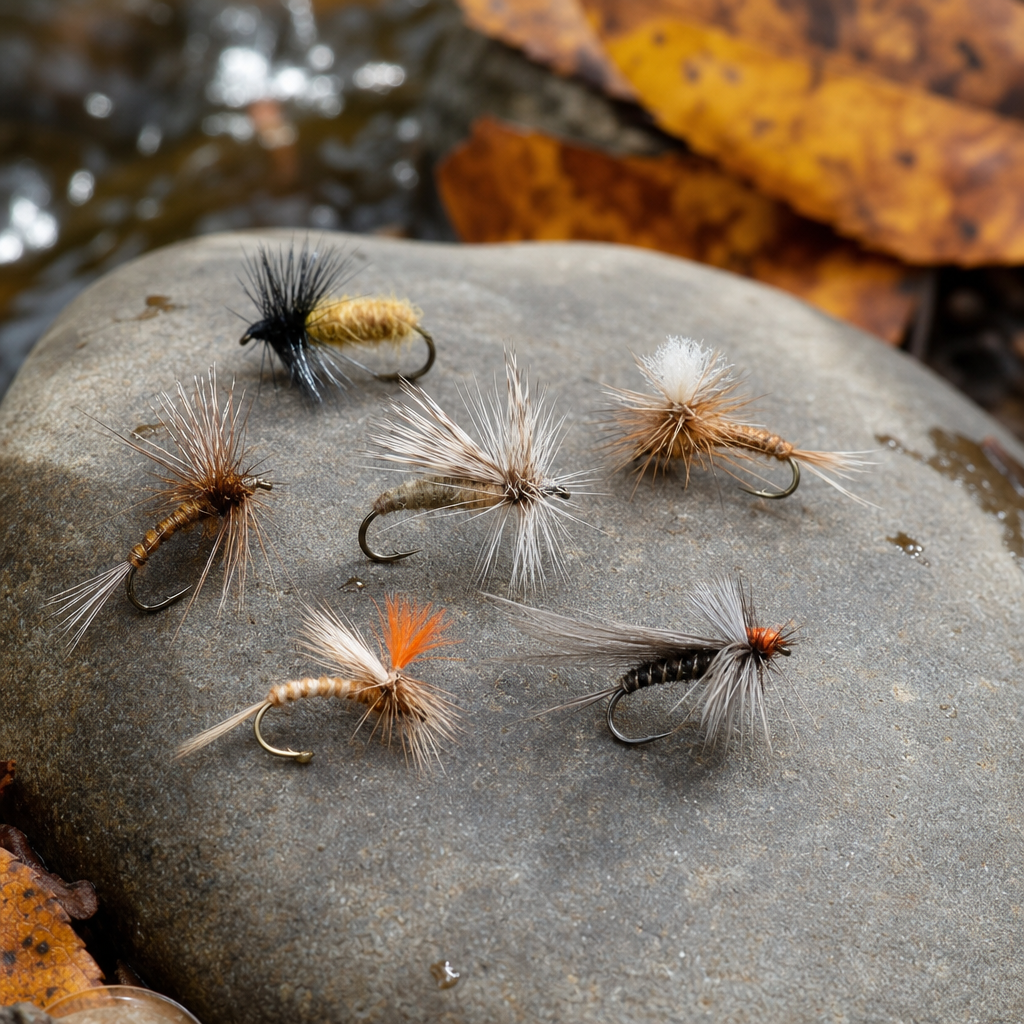
The best winter flies are usually smaller than what many anglers tie on first. Midges, small mayfly nymphs, baetis emergers, scuds, sowbugs, eggs where legal and appropriate, and winter stonefly nymphs make up the core menu on most trout waters. Sizes 18 through 24 are common for midge patterns, while baetis nymphs often fall in the 18 to 20 range. On tailwaters with rich invertebrate populations, a simple zebra midge, thread midge, RS2, pheasant tail variation, or tiny sowbug can outfish larger attractors all day. In freestones, a small stonefly or perdigon paired with a midge often covers both anchor and snack.
Presentation matters more than pattern names. In cold water, trout are less willing to move far, so the fly needs to pass close to the fish at the right depth and speed. That usually means fishing slower and deeper than you think. A two-fly nymph rig with enough split shot or tungsten weight to tick bottom occasionally is often the most consistent approach. Strike indicators should be adjusted until the drift tracks naturally without dragging. If fish are rising, switch quickly to midge clusters, Griffith’s Gnats, small parachutes, or emerger patterns. Winter dry-fly fishing can be excellent during concentrated midge or baetis events, but the riseforms are often subtle. Trout may simply dimple the film.
| Winter condition | Primary fly choice | Typical size | Best method |
|---|---|---|---|
| Cold morning, no hatch | Zebra midge, perdigon, small stonefly | 16–22 | Deep nymphing in slow seams |
| Tailwater with steady subsurface food | Sowbug, scud, RS2 | 18–22 | Dead drift near bottom |
| Midday midge hatch | Midge pupa, Griffith’s Gnat | 20–24 | Emerger drift or delicate dry presentation |
| Cloudy afternoon baetis activity | Baetis nymph, emerger, cripple | 18–20 | Film-focused drift in softer water |
| Slight stain after weather change | Egg, worm, flashy attractor nymph | 12–18 | Short-line nymphing with controlled depth |
Rigging, tackle, and line control in freezing conditions
Winter fly fishing does not require exotic tackle, but a few adjustments improve efficiency. For most trout rivers, a 9-foot 4- or 5-weight rod covers nymphing and occasional dry-fly work. On smaller creeks, a shorter 3-weight can be pleasant, though freezing guides can make ultra-light rods more frustrating when playing larger fish. Leaders should match the method: a longer, finer leader for technical dries and a stronger, direct nymph leader when contact and weight matter more than invisibility. Tippet commonly runs from 5X to 7X with tiny midges, but balance stealth against knot strength in cold hands. If fish are not exceptionally selective, 5X or 6X often lands more trout and wastes less time on breakoffs.
Guide icing is unavoidable to some degree. Dunking the rod briefly can melt thin ice, though in severe cold it refreezes quickly. Some anglers use line treatments or paste on guides, but results vary and should be tested carefully because products can attract grit or affect line performance. More important is simplifying your system so you spend less time retying with numb fingers. Pre-rigging leaders on foam spools, carrying tippet rings, and storing essential flies in one accessible box save time. A compact net with rubber mesh is especially useful in winter because it shortens the fight and keeps fish from contacting icy rocks.
Line control becomes critical because slower winter currents expose drag immediately. High-sticking short drifts, tight-line presentations in pockety winter slots, and careful mending under an indicator all have their place. The common denominator is maintaining contact without pulling the flies off their natural path. If your indicator races ahead of bubbles, add slack. If you never touch bottom, add weight or adjust depth. Cold weather punishes sloppy drift mechanics, but it also makes effective adjustments obvious.
Clothing, safety, and fish handling in winter conditions
Proper layering is not just about comfort; it protects judgment and dexterity. Start with a moisture-wicking base layer, add an insulating midlayer such as fleece or wool, and finish with a windproof, water-resistant shell. Breathable waders work well when layered correctly, while neoprene gloves or fingerless wool gloves with a shell mitten help preserve hand function between knots. A warm hat matters more than many anglers admit, and spare socks belong in every winter vehicle kit. Studded boots improve traction on frozen banks, and a wading staff adds security when snow hides drop-offs or shelf ice masks current edges.
Winter safety begins before the first cast. Avoid fishing alone on remote stretches during severe weather. Tell someone where you will park and when you expect to return. Be skeptical of shoreline ice; stable-looking edges can collapse under body weight. If water temperatures are near freezing, an accidental dunking can end the day immediately. Hypothermia often starts with subtle clumsiness and poor decisions, not dramatic symptoms. When hands stop functioning, the right move is usually to warm up, not to grind through one more run.
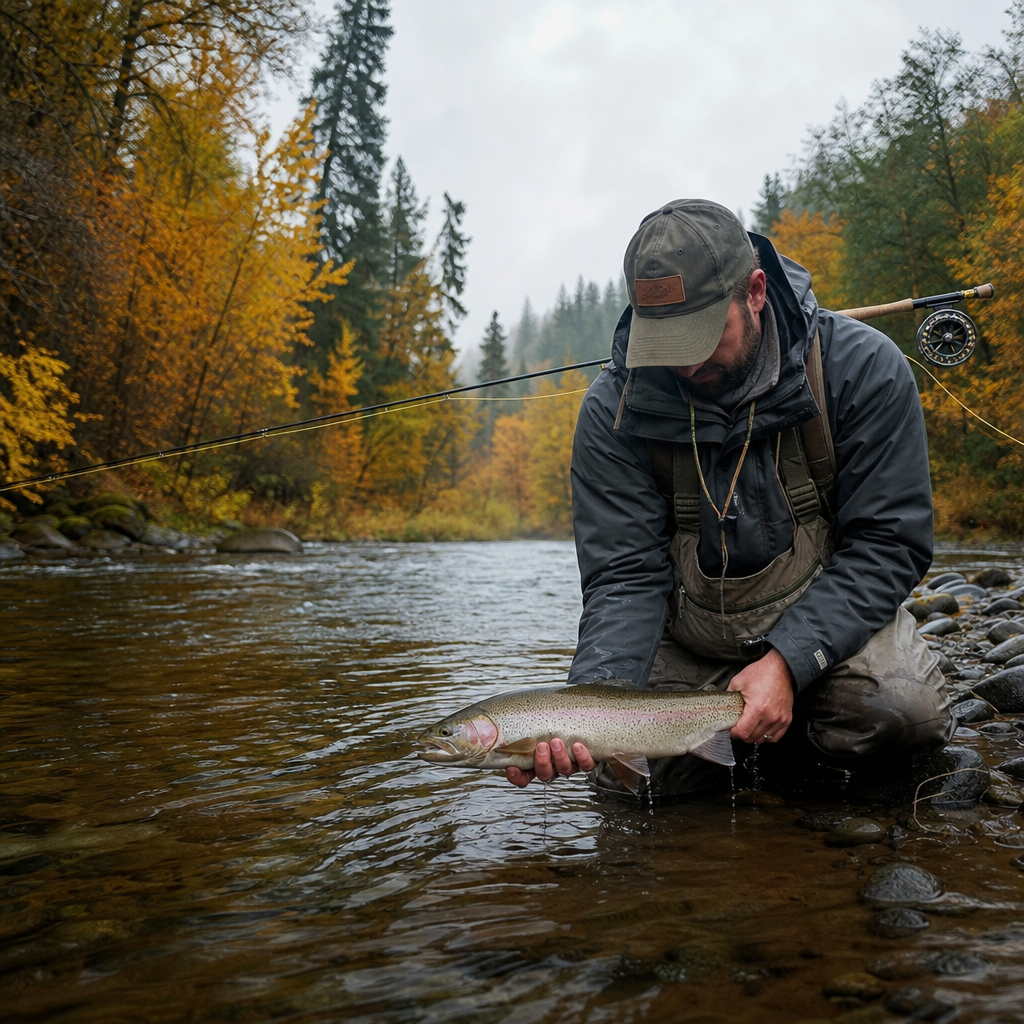
Cold water already stresses fish less in terms of oxygen, but handling still matters. Use barbless hooks where possible, fight fish efficiently, keep them in the water during release, and avoid laying them on snow or ice, which can damage their protective slime. Winter trout are often concentrated, so repeated pressure on one pool can affect multiple fish quickly. Catch a few, step out, and let the run rest.
Strategy for different winter waters and building a seasonal plan
A strong winter fly fishing strategy changes with the fishery. On tailwaters, focus on consistency: stable flows, midge and baetis cycles, and exact drifts through known feeding lanes. On freestones, hunt for the most temperature-moderated sections, often lower elevations, slower winter pools, or reaches with spring influence. On spring creeks, stealth and fine tippet can matter more than weight because fish see many natural midges in clear, slow water. On stocked urban trout waters, eggs, worms, and small flashy nymphs may outperform technical patterns, especially after a recent plant or weather event. Matching tactics to the system is more important than following a single winter formula.
As a hub for winter fly fishing, the clearest takeaway is that success comes from stacking small advantages. Fish the warmest window, target slow seams with depth, choose smaller flies, get them down, and maintain clean drifts. Wear layers that protect dexterity. Carry a thermometer. Respect changing ice and river access. Keep notes on productive water types and hatch timing. Winter rewards anglers who treat each trip as a data point rather than a referendum on one pattern or one pool. If you want more reliable winter trout days, start with these fundamentals, apply them deliberately, and build your cold-weather playbook one stable fish at a time.
Frequently Asked Questions
What changes most about fly fishing when the weather turns cold?
Cold weather changes nearly every part of the equation, starting with fish behavior. As water temperatures drop, trout and other coldwater species slow down because their metabolism slows down. They usually do not want to chase a fast-moving fly very far, and they often shift into softer, slower water where they can conserve energy while still having access to food. Instead of being scattered across long stretches of river, fish often gather in wintering lies such as deeper pools, slow seams, tailouts, sheltered runs, and softer edges near structure. That means success in winter is usually less about covering water aggressively and more about identifying a handful of high-percentage spots and fishing them carefully.
Food availability changes too. Insect activity is generally reduced, so fish tend to feed less often and more selectively on whatever is available. Midges, small mayflies, scuds, sow bugs, and eggs often become more important in winter than larger, more active food sources. Presentation becomes critical because fish have more time to inspect a fly in slow, clear water. A drift that is slightly too fast, too high in the water column, or just a little unnatural can be enough to turn fish off. In practical terms, cold-weather fly fishing rewards patience, accurate depth control, subtle strike detection, and a willingness to slow everything down.
Where should I look for trout in winter, and what types of water are usually most productive?
In winter, trout usually prioritize energy efficiency over feeding opportunity alone. The best lies are often places where fish can hold with minimal effort but still intercept food drifting by. Start by focusing on deeper, slower runs rather than fast riffles or shallow pocket water. Look for soft seams beside moderate current, the inside bends of rivers, tailouts below pools, deeper buckets with stable flows, and areas downstream of structure that reduce current speed. Fish frequently settle into water that offers depth, current protection, and enough nearby flow to deliver food without forcing them to move much.
Water temperature stability also matters. In many rivers, the warmest part of the day can improve activity, especially from late morning through midafternoon after the sun has had time to affect both air and water temperatures. Tailwaters can be especially productive in winter because dam releases often moderate temperatures and support more consistent insect activity. Spring creeks can also fish well for the same reason. If you are on a freestone river, avoid assuming fish are spread everywhere they were in fall. They are often concentrated in fewer wintering areas, so if one section looks barren, move strategically rather than randomly. Once you find the right depth, pace, and holding water, fish it thoroughly before moving on.
What flies and presentations work best for fly fishing in cold weather?
Winter fly selection is usually built around small, natural-looking patterns that match limited food sources and can be presented precisely at the right depth. Nymphs are often the most reliable choice, especially midges, pheasant tails, zebra midges, small hare’s ears, baetis nymphs, scuds, sow bugs, and egg patterns where appropriate. Sizes commonly trend smaller in cold conditions, and it is often smart to carry patterns in a range from about size 18 to 24 for midge and tiny mayfly imitations, along with a few slightly larger anchor flies to help get the rig down. In some waters, streamers can still produce, but they are usually more effective when fished slower and deeper than many anglers expect.
Presentation matters at least as much as fly choice. The primary goal is usually a dead drift very close to the bottom, where fish are holding and where most winter food is drifting naturally. Split shot, tungsten beads, and indicator adjustments are often necessary because many missed opportunities in winter come from fishing too high in the water column. Short drifts through prime holding water can outperform long, sloppy drifts. If fish are especially sluggish, small adjustments such as adding a little weight, lengthening tippet, downsizing the fly, or reducing drag can make a major difference. On days with surface activity, dry-fly opportunities do happen, especially during midge or blue-winged olive hatches, but even then the most productive approach is often technical and subtle rather than splashy or aggressive.
How should I adjust my timing, gear, and overall approach for better results in cold conditions?
Timing can be one of the simplest ways to improve winter success. In very cold weather, the early morning is often the slowest period because water temperatures are at their lowest. Many anglers do better by starting later and focusing on the window from late morning into midafternoon, when temperatures are most stable and fish may feed more actively. Pay attention to sunny days, warming trends, and stable weather patterns, because even a small temperature bump can make fish noticeably more willing to move to a fly. Abrupt cold fronts, snowmelt, or major flow changes can make fish more inactive and harder to locate.
Gear choices should support control, comfort, and safety. Layered clothing, good gloves, warm socks, and quality waders are essential because cold hands and feet reduce concentration and shorten your time on the water. A sensitive rod and a clear indicator or tight-line setup can help detect subtle winter takes, which are often much softer than warm-season strikes. Fluorocarbon tippet is popular for winter nymphing because it sinks well and can offer a stealthier presentation in clear water. Keep your approach methodical: fish slower, mend carefully, shorten your target list to likely holding water, and expect that a handful of good drifts in the right place can be more productive than an hour of fast casting through marginal water. Winter rewards efficiency and precision far more than speed.
What are the biggest mistakes anglers make when fly fishing in cold weather?
One of the most common mistakes is fishing too quickly. Anglers who are used to covering lots of river in spring or summer often continue moving at that pace in winter, even though fish are concentrated in fewer locations and are less willing to chase. Another major mistake is targeting water that looks attractive in warmer months but is too shallow, too fast, or too exposed for winter fish. Productive winter water can appear unremarkable at first glance, but it often holds the highest percentage of fish because it offers depth and reduced current speed. Missing the right depth is another frequent problem. If your flies are not getting close to the bottom, you may be drifting over fish all day without knowing it.
Anglers also lose opportunities by overlooking subtle takes. Winter strikes may be little more than a tiny hesitation, a slight twitch of the indicator, or a small change in leader angle. Setting on anything unusual is often the right habit. Beyond fishing technique, many people underestimate the importance of weather, safety, and comfort. Cold hands lead to poor knots, reduced line control, and less effective mending. Icy banks, numb feet, and frozen guides can cut a trip short or create real hazards. The best winter anglers prepare for all of it: they dress properly, monitor conditions, carry simple fly boxes built around proven patterns, and stay patient. Cold-weather fly fishing is rarely about dramatic action, but when you adapt to the season, it can produce some of the most satisfying and technically rewarding days of the year.