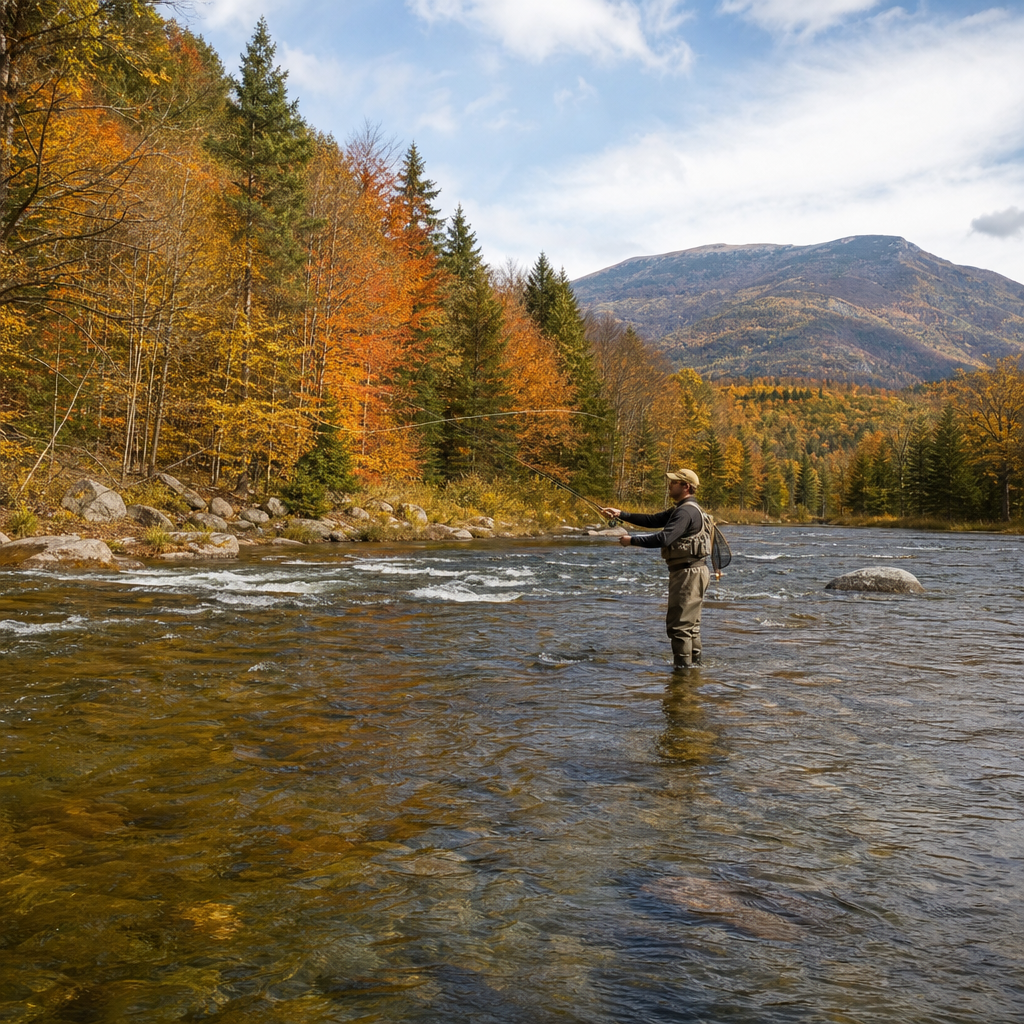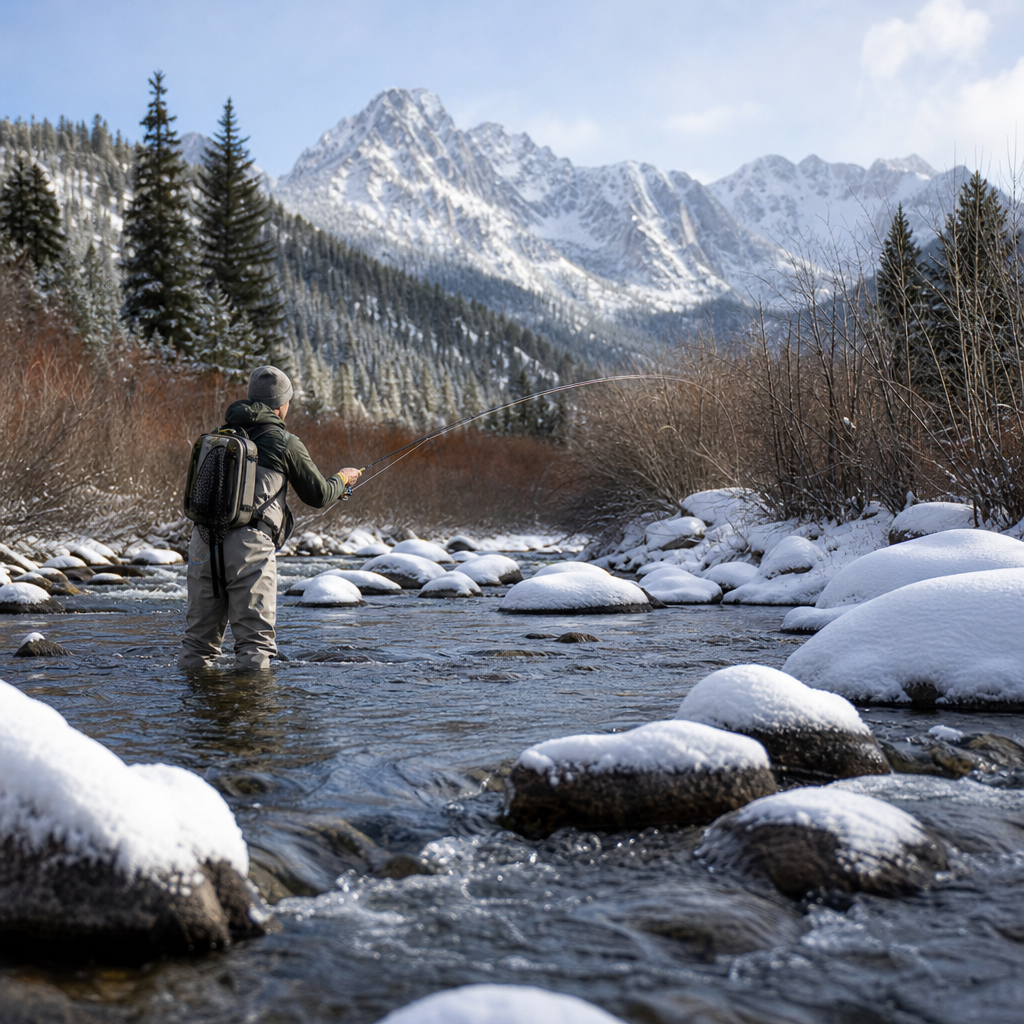
Fly fishing in high altitude streams during winter demands a different mindset than summer angling, because cold water, reduced insect activity, and volatile mountain weather change where trout hold, when they feed, and how safely anglers can reach them. Winter fly fishing in these streams usually means targeting freestone creeks and tailwaters above roughly 5,000 feet, where snowmelt systems, plunge pools, undercut banks, and short midday warming windows create small but dependable opportunities. As a hub topic under seasons and conditions, it helps to define the core variables clearly: water temperature controls trout metabolism, stream gradient affects holding lies, barometric shifts often influence feeding consistency, and altitude magnifies both physical exertion and weather exposure. I have spent many winter days on Rocky Mountain streams that looked lifeless at dawn but produced steady action for two hours near noon once the sun hit the canyon walls and water climbed a degree or two. That pattern is why the subject matters. High country trout are still catchable in winter, but success comes from understanding fish biology, reading subtle structure, selecting compact rigs, and managing risk in freezing conditions. Anglers who adapt can find uncrowded water, selective but willing fish, and some of the most technical, rewarding trout fishing of the year.
How Winter Changes Trout Behavior in High Altitude Streams
The first question most anglers ask is simple: where do trout go in winter? In high altitude streams, trout usually abandon fast summer lies and shift toward slower current seams, deeper buckets, spring inflows, woody cover, and any structure that offers security without forcing them to burn calories. Their metabolism slows as water temperatures approach the upper 30s and low 40s Fahrenheit, so they feed less often and move shorter distances to intercept food. That does not mean they stop eating. It means every drift must pass close to the fish.
Cold water also sharpens the importance of micro-habitat. A depth change of twelve inches can make a holding lie viable. A boulder that softens current by ten percent can hold multiple fish. In steep mountain streams, winter trout commonly stack in the deepest run in a short reach, especially where the tail of a pool transitions into a gentle glide. On bright days, I often find fish on the shaded side of a midstream ledge early, then slightly higher in the water column after direct sun warms the run. Those are small adjustments, but winter is a game of small adjustments.
Food availability narrows too. Midges dominate many winter systems, with blue-winged olives appearing during overcast spells and occasional stonefly nymphs remaining relevant near banks and pocket water. Because the menu shrinks, fish become both opportunistic and location dependent. Instead of roaming, they wait where current delivers manageable food. That is why experienced anglers think less about covering miles and more about thoroughly dissecting short, high-percentage water.
Best Times, Weather Windows, and Productive Winter Conditions
The best time for winter fly fishing in high altitude streams is usually late morning through midafternoon, not first light. Overnight cold suppresses water temperature, anchors trout to the bottom, and can freeze guides, wading boots, and access trails. Once sunlight reaches the stream and ambient air rises, insect activity increases slightly and trout often become more willing to feed. A narrow window from about 11 a.m. to 3 p.m. consistently outperforms the rest of the day on many mountain creeks.
Cloud cover can improve fishing when it moderates light and coincides with midge or blue-winged olive emergence, but severe fronts are another story. Sudden pressure drops, high winds, and blowing snow make line control difficult and can shut down already limited feeding. Stable weather is generally better than dramatic swings. Tailwaters at altitude may fish well through broader conditions because dam releases regulate temperature more than freestone streams, but access can still be hazardous after storms.
Water temperature is the most useful metric to watch. A cheap stream thermometer provides more value in winter than another fly box. If water is 34 to 36 degrees, expect fish to hold deep and eat infrequently. At 38 to 42 degrees, trout often feed more predictably, especially if that temperature is reached after a warming trend rather than a sudden cold snap. In practice, one or two degrees can transform the day.
Where to Find Trout in Mountain Water
High altitude winter trout rarely waste energy in heavy current. Focus on protected lies that balance depth, oxygen, and food delivery. In plunge-pool streams, the soft cushion below a drop can hold fish, but the better lie is often the quieter tailout where current smooths and depth remains sufficient. In meadow creeks, undercut banks and deeper outside bends are classic winter holding water. In boulder gardens, the slow lane beside or behind major rocks often outproduces the obvious riffle.
Confluences deserve special attention. A spring seep, tributary inflow, or tailwater release can create a modest temperature advantage that concentrates trout. On one Colorado stream I fish every January, a short section below a groundwater-influenced side channel repeatedly holds the highest density of browns in the entire canyon. The reason is not mystery; the water is slightly more stable, and the fish save energy there. Similar logic applies below beaver ponds, logjams, and bedrock shelves where current softens without becoming stagnant.
Depth matters, but depth alone is not enough. Fish still need a feeding lane. The ideal winter lie is a deep slot with adjacent moderate current or a slow seam next to a deeper pocket. If you only fish obvious holes, you will miss trout suspended at the edge of the seam or tucked against the bank under shelf ice. Make short drifts from several angles before moving on.
Fly Selection, Tippet, and Winter Rigging
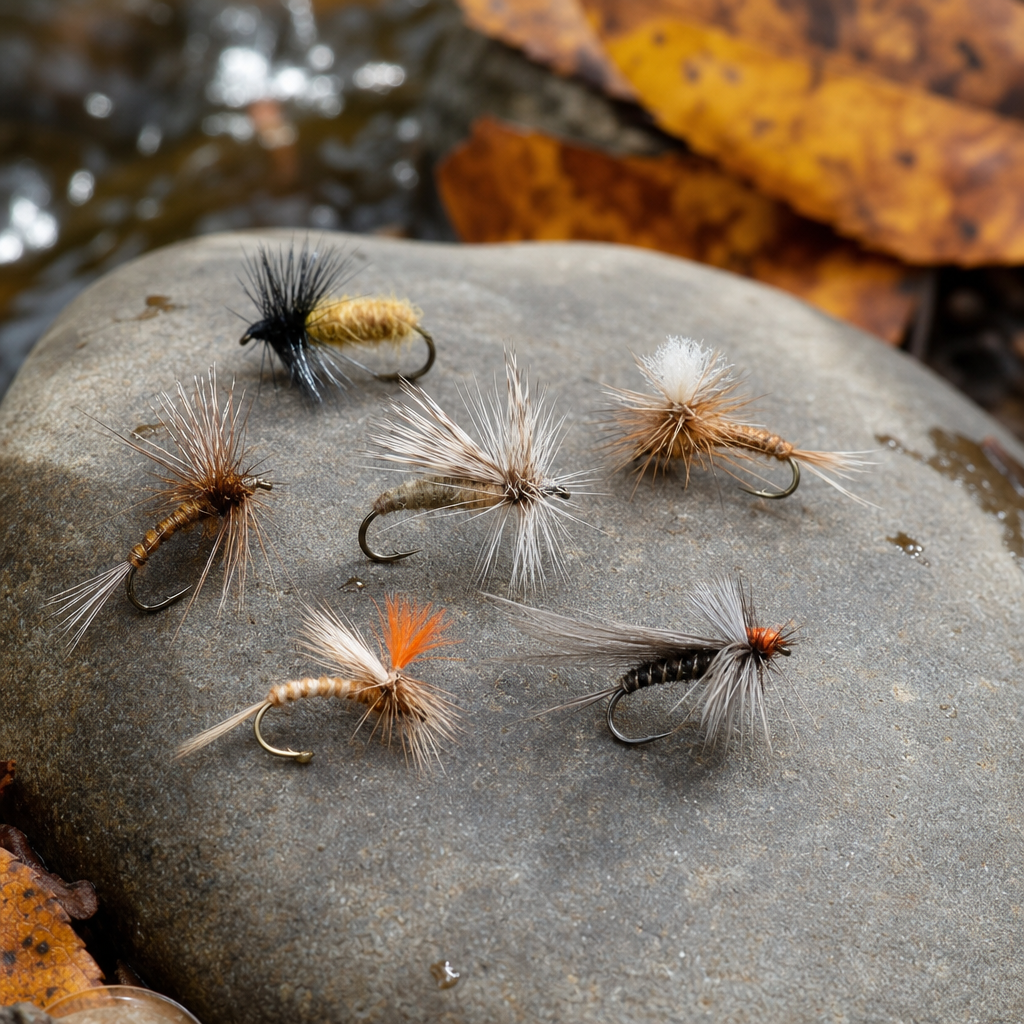
Winter fly selection should be narrow, deliberate, and grounded in the food base. Start with midge larvae and pupae in sizes 18 to 24, small mayfly nymphs such as baetis patterns in 18 to 22, and compact attractor nymphs like perdigons or pheasant tail variations when you need a slightly faster sink rate. Egg patterns can be effective where trout are keying on seasonal spawn residue, especially in mixed trout systems, but they should match local regulations and spawning ethics. In some streams, a tiny black leech or jig streamer can move the largest fish of the day, though that approach is usually more selective and slower paced.
Rigging must serve depth, strike detection, and drag-free drift. Most winter nymph setups work best with a tapered leader ending in 5X or 6X fluorocarbon, a small indicator or tight-line contact system, and enough weight to tick bottom occasionally without constant snagging. Split shot remains practical in steep streams because currents vary quickly from pocket to pocket. Tungsten beads help keep fly size small while reaching depth fast. If fish are feeding just under the film during a midge hatch, switch to a dry-dropper with a Griffith’s Gnat or small parachute and a trailing pupa. Keep false casting minimal; winter trout do not like repeated line shadow over confined lies.
| Winter Situation | Best Fly Type | Typical Size | Why It Works |
|---|---|---|---|
| Deep slow run | Midge larva or pupa | 20-24 | Matches dominant winter food and drifts naturally near bottom |
| Moderate seam with some current | Baetis nymph | 18-22 | Imitates small mayflies active during warmer overcast periods |
| Pocket water requiring fast sink | Tungsten perdigon | 16-20 | Gets down quickly in short drifts common to mountain streams |
| Spawn-influenced water | Egg pattern | 12-16 | Represents high-calorie food trout recognize immediately |
| Low-light ambush water | Micro streamer or leech | 8-12 | Targets larger fish willing to move for a substantial meal |
Presentation: Drift Control, Depth, and Hookups
If there is one winter fly fishing rule that matters most, it is this: your fly has to be at the trout’s level early in the drift. In short mountain runs, fish may have only a two-foot feeding window, so a fly that reaches depth halfway through the drift has already missed the target. Start closer than you would in summer, use upstream or high-stick presentations, and lead the rig just enough to maintain contact without dragging it unnaturally. Tight-line tactics shine in winter because they reduce slack and improve strike detection in complex currents.
Strikes are often subtle. The indicator may pause for a fraction of a second. The sighter may twitch. Contact may simply feel heavy. Set on anything unusual. Because cold trout sometimes clamp down without moving, many good takes look like bottom. The best anglers I know in winter are not the ones with the fanciest flies; they are the ones who maintain controlled drifts through the same lie repeatedly while making tiny weight, angle, and depth adjustments.
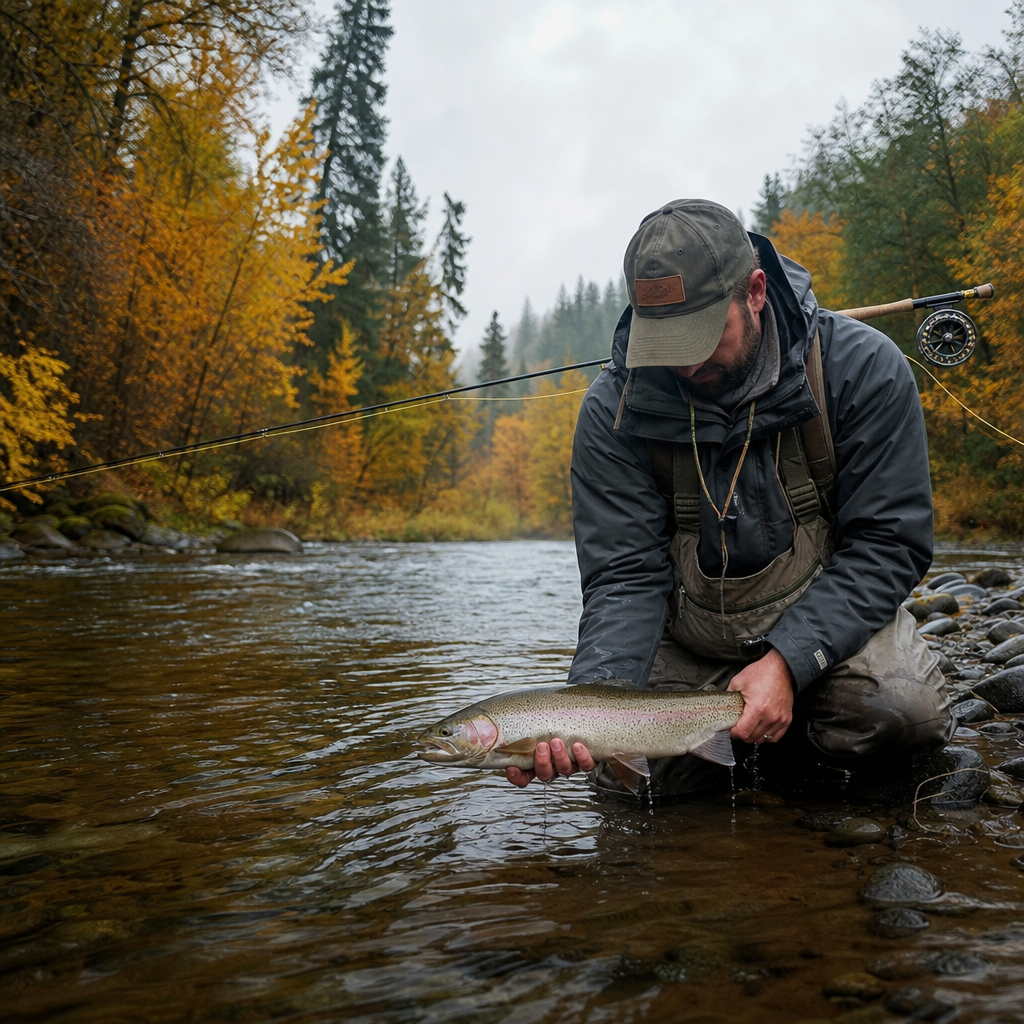
Hookups require restraint as well as speed. Light tippet and small hooks penetrate with a firm lift, not a violent trout set. Once connected, keep the fish low in the current and shorten the fight. Winter trout recover more slowly in icy water when played excessively, especially if they are handled with dry gloves or exposed to freezing air for photos.
Clothing, Wading, and Cold-Weather Safety
Winter fly fishing at altitude is as much a safety exercise as a fishing trip. Layering should begin with a moisture-wicking base, followed by an insulating midlayer and a windproof, waterproof shell. Breathable waders still work well, but insulation underneath must match both air temperature and exertion level. Overdressing causes sweat, and sweat becomes dangerous once you stop moving. Carry spare gloves, because wet hands and frozen stripping fingers reduce both dexterity and judgment.
Wading is usually riskier than casting. Shelf ice hides drop-offs, anchor ice shifts underfoot, and snow-covered cobble can be as slick as polished marble. Felt soles are restricted in some regions, so many anglers rely on sticky rubber soles with carbide studs. A wading staff is not optional on unfamiliar winter streams. I have turned around at reaches that looked fishable simply because the exit trail was glazed over and a fall would have meant a cold walk back in soaked layers. That is the right decision. No trout is worth compromised footing in freezing conditions.
Altitude adds another layer of caution. Dehydration, sun exposure, and fatigue are easy to underestimate in winter because cold masks thirst. Drink regularly, pack calories you can eat with gloves on, and monitor weather and daylight. Mountain canyons lose light fast, and a safe crossing at 1 p.m. can become treacherous by late afternoon once temperatures drop.
Gear Choices, Ethics, and How This Hub Supports Winter Fly Fishing
The ideal winter setup for high altitude streams is practical rather than specialized. A 9-foot 4-weight or 5-weight handles most nymphing and occasional dry-fly work, while a longer 10-foot rod improves line control and strike detection in tight seams. A reel with a smooth drag matters less for average trout than for protecting light tippet on sudden runs, but a large arbor helps when ice forces repeated stripping and retrieval. Keep fly boxes compact, nippers accessible, and leaders pre-rigged; retying with numb fingers takes twice as long as you expect.
Ethics matter more in winter because fish are concentrated and vulnerable. Avoid wading through obvious holding water, stay off redds and spawning zones, and limit repeated pressure on a small pool that contains multiple trout. If water temperatures are near freezing and fish are lethargic, consider shorter sessions with fewer photographs. Responsible winter fly fishing protects the same fisheries that make spring and summer trips possible.
As a hub for winter fly fishing, this page should guide anglers toward deeper topics including midge tactics, cold-weather gear, reading tailwaters, winter dry-fly strategies, and safe wading in snow and ice. The central lesson ties them together: winter success in high altitude streams comes from precision. Fish slower water, arrive near midday, measure temperature, downsize flies, control depth from the start, and put safety first. Do those things consistently and winter stops feeling like the offseason. It becomes one of the most technical and rewarding times on the trout calendar. Use this guide as your starting point, then build a winter plan for your local streams and fish the next stable weather window with intention.
Frequently Asked Questions
What makes fly fishing in high altitude streams during winter so different from summer fishing?
Winter fly fishing at elevation is fundamentally a game of conservation, precision, and timing. In summer, trout in high mountain streams often spread out, move farther to intercept food, and feed more consistently because water temperatures, oxygen levels, and insect activity are generally favorable throughout the day. In winter, those same streams become much less forgiving. Water temperatures hover near the lower edge of a trout’s comfort zone, current speed becomes more costly in terms of energy expenditure, and available food is limited. As a result, trout tend to slide into slower, deeper lies where they can hold with minimal effort while still having access to drifting nymphs, midges, or the occasional small baitfish.
Another major difference is how narrow the feeding window becomes. In many high altitude streams, the best action happens during a short midday period when sunlight and slightly warmer air temperatures nudge the water up just enough to stimulate trout metabolism. That does not mean fish cannot be caught early or late, but it does mean anglers usually do best by planning around the warmest, most stable part of the day rather than trying to maximize dawn and dusk the way they often would in warmer seasons. Winter success also depends more heavily on reading subtle holding water: plunge pool tailouts, soft seams beside main current, undercut banks, spring seeps, and slow pockets near structure can all concentrate fish.
Conditions above 5,000 feet also add a real layer of volatility. Snow, shelf ice, freezing guides, slippery approaches, and fast-changing weather can affect both safety and fish behavior within hours. In practical terms, winter at altitude rewards anglers who slow down, fish fewer spots more thoroughly, downsize presentations, and accept that a handful of quality chances may represent a very good day. It is less about covering miles of water and more about understanding where trout can comfortably survive cold conditions and placing a fly exactly where they can afford to eat it.
Where do trout typically hold in high altitude streams during winter?
In winter, trout in high altitude streams usually prioritize shelter from heavy current and access to stable water conditions. The most productive lies are often deeper than many anglers expect, but depth alone is not the whole story. Fish want positions that let them conserve energy while remaining close to food. That commonly means softer seams adjacent to faster current, the slower interior of plunge pools, protected pockets below boulders, undercut banks, tailouts with moderate depth, and channels where groundwater influence slightly moderates temperature. In freestone creeks, winter trout often stack into a surprisingly small amount of usable water, so unremarkable-looking slots can hold multiple fish if they provide depth, cover, and reduced current speed.
Tailwaters at elevation can behave a little differently because flows and temperatures tend to be more stable, but the same principles apply. Trout often settle near the bottom in slower runs, troughs, and edges where drifting midges and small nymphs pass consistently. In streams shaped by snowmelt and rock structure, plunge pools are especially important because they create depth, oxygen, and current breaks all in one place. The soft water just off the main chute, the inside bend below a drop, or the foam line where fast and slow water meet can all be excellent winter targets.
One mistake many anglers make is focusing only on the deepest water in the stream. Extremely deep holes can hold fish, but if current is too strong or food supply too inconsistent, trout may instead choose medium-depth lies with better balance between comfort and feeding opportunity. Another common oversight is neglecting sunny banks, dark-bottomed pools, and water near wood or rock that absorbs heat. Even slight temperature advantages matter in winter. If you approach the stream asking, “Where can a trout sit with the least effort and still eat?” you will usually start finding the right water much faster.
What flies and presentations work best for winter fly fishing in high altitude streams?
The most reliable winter approach in high altitude streams is usually a controlled, drag-free drift with small subsurface flies. Because insect activity is limited and trout are less willing to move far, nymphing tends to outperform dry-fly fishing on most days. Midges, small mayfly nymphs, winter stonefly patterns, scuds in tailwaters, and attractor-style flies in compact sizes are all dependable choices. In many streams, sizes 18 to 22 for midges and mayfly imitations are standard, though slightly larger anchor flies can still be useful in pocket water or off-color conditions. The key is not just matching what is available, but presenting it at the trout’s level and speed.
Depth matters enormously. In cold water, fish often hug the bottom, so your flies need to get down quickly and stay in the feeding lane. That usually means using enough split shot or a sufficiently weighted rig to tick bottom occasionally without constantly snagging. Indicator nymphing is highly effective because it helps maintain consistent depth and drift through short, technical seams. Tight-line or contact nymphing can also be excellent in smaller freestone streams, especially when you need to keep flies in a narrow pocket for as long as possible. In either case, slower is better: a dead drift with minimal unnatural movement is far more convincing than a fast, skating presentation.
Dry flies become relevant during midge or winter blue-winged olive activity, particularly during warmer midday periods, but hatches at elevation are often brief and subtle. When fish are rising, small parachutes, emergers, and cluster patterns can be effective, provided the tippet is fine enough and the drift is clean. Streamers can also produce surprisingly well, especially in tailwaters or larger winter pools, but they should generally be fished more slowly and methodically than in warmer months. Short strips, gentle swings, and targeted casts around structure often outperform aggressive retrieves. Overall, winter fly selection is less about carrying dozens of patterns and more about having the discipline to fish small flies, proper depth, and precise drifts in likely holding water.
When is the best time of day to fish high altitude streams in winter?
For most winter days in high altitude streams, the best fishing usually happens from late morning into midafternoon. That window often begins once direct sunlight reaches the water and air temperatures rise enough to slightly lift water temperatures or at least stabilize them. Even a small increase can improve trout activity, especially in freestone systems that get extremely cold overnight. Rather than thinking in terms of dramatic warmups, it is more accurate to think of winter trout responding to the least harsh period of the day. As conditions become marginally more comfortable, fish may slide from pure survival mode into short feeding bursts.
This timing is especially important in mountain environments where overnight lows can be severe and morning water can feel almost lifeless. Fishing too early often means dealing with sluggish trout, iced guides, dangerous banks, and very limited insect movement. Waiting an hour or two can make a significant difference. On sunny days, pools with southern exposure, dark substrates, or reduced snow cover around the banks may become productive first. On overcast days, the feeding window may be shorter or less obvious, but stable cloud cover can also sometimes prevent sharp temperature drops and keep fish comfortable enough to feed steadily for a few hours.
That said, there is no universal rule. Tailwaters with more consistent temperatures can fish well throughout more of the day, and weather fronts sometimes override normal patterns. A mild afternoon ahead of a storm can be excellent, while bright bluebird conditions after a brutally cold night may still fish slowly. The smartest strategy is to monitor water temperature if possible, arrive prepared to fish the middle of the day thoroughly, and remain flexible. In winter, one strong two-hour window can be far more valuable than an all-day grind in the wrong conditions.
How can anglers stay safe while fly fishing high altitude streams during winter?
Safety is not a side issue in winter mountain fishing; it is part of the skill set. High altitude streams can look manageable from a distance while hiding shelf ice, undercut snow, slick rocks, unstable banks, and shockingly cold water. A minor slip in summer may be an inconvenience, but in winter it can become dangerous very quickly. Before fishing, evaluate access points carefully and avoid steep, shaded descents that could be icy or avalanche-prone. Move slowly near the water, test every step, and treat snow-covered edges as suspect because they may conceal gaps, weak footing, or water flowing underneath.
Wading should be more conservative than usual. Many excellent winter lies can be reached from the bank or with minimal entry, and there is rarely a good reason to push into strong current when trout are already concentrated in softer water. Studded boots, a wading staff, layered clothing, waterproof outerwear, and dry gloves can make a major difference in both comfort and risk reduction. Carrying an extra set of gloves, socks, and a dry layer in your vehicle or pack is a smart precaution. Because cold affects dexterity and judgment, tasks like knot tying, climbing banks, and crossing side channels become harder than they seem on paper.
Mountain weather also changes fast in winter, so check forecast details rather than only the temperature. Wind chill, incoming snow, road conditions, and early darkness all influence how long and how safely you can fish. Let someone know where you are going, especially if you plan to explore