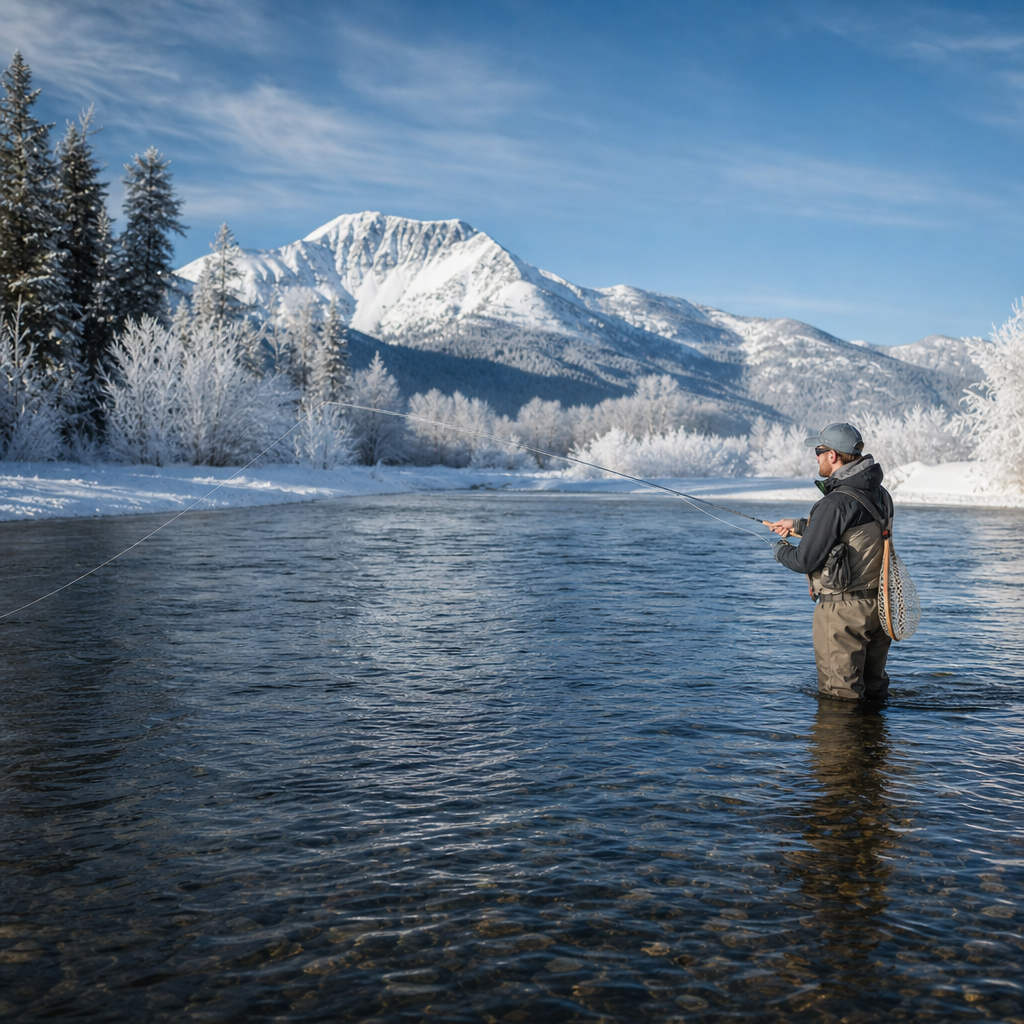
Fly fishing in tailwaters during winter is one of the most consistent ways to catch trout when freestone rivers are locked in ice, insect activity is sparse, and fish are forced into predictable holding water. A tailwater is a river section immediately below a dam where releases from the reservoir regulate flow and temperature, often keeping water colder in summer and more stable in winter than surrounding streams. Winter fly fishing refers to the techniques, tackle adjustments, and fish behavior patterns that matter when air temperatures plunge, daylight shortens, and trout feed in brief but reliable windows. I have spent many winter days on tailwaters watching guides, biologists, and veteran local anglers work the same seams with very deliberate methods, and the pattern is clear: success comes less from covering miles of river and more from understanding hydraulics, temperature bands, food sources, and presentation speed. This matters because tailwaters concentrate opportunities. While many anglers store their gear until spring, healthy winter tailwaters can produce strong midge hatches, dependable subsurface feeding, and surprisingly large fish willing to eat small flies presented precisely. As a hub within the broader Seasons and Conditions topic, this guide explains the core principles of winter fly fishing on tailwaters, from reading water and timing your session to choosing flies, adjusting rigs, staying safe, and linking your decisions to weather, dam operations, and trout metabolism.
Why tailwaters stay productive in winter
Tailwaters fish well in winter because dams buffer the most extreme temperature swings that make many freestone streams difficult or nearly dormant. Reservoir releases often keep downstream water in a narrower temperature range, commonly in the upper 30s to low 40s Fahrenheit, which is cold but stable enough for trout to feed regularly. Stability is the keyword. Trout are cold-blooded, so their metabolic rate falls as water cools, yet they still must eat. In a tailwater, they can do that without constantly relocating to avoid anchor ice, slush, or sudden overnight drops that happen on unregulated rivers. The result is not nonstop feeding, but a schedule that can be learned.
Food availability also favors tailwaters. Midges are the headline insect through much of winter, and many productive tailwaters support dense midge populations year-round because fine organic material and steady currents create ideal habitat. Blue-winged olives can appear on overcast afternoons, and scuds, sowbugs, annelids, and small mayfly nymphs remain available beneath the surface every day. On famous systems such as the South Platte, Bighorn, Green, and White rivers, winter trout often key on tiny drifting food items rather than large baitfish meals. That sounds intimidating, but it actually simplifies fly selection if you think in categories instead of chasing novelty patterns.
Another reason winter tailwaters deserve focused attention is crowd reduction. Well-known stretches can still attract anglers, especially on mild weekends, but pressure usually drops compared with spring and summer. Fish that see fewer bad presentations are easier to approach if you wade quietly and lengthen your leader. The tradeoff is that winter fish seldom move far to eat. A drift that is acceptable in June may fail completely in January because the trout will not slide three feet for a fly. Precision, depth control, and repeatable drifts become more important than aggressiveness.
How trout behave in cold tailwater conditions
Understanding winter trout behavior starts with energy economics. In cold water, trout conserve calories by holding where current is softer but food still arrives. They prefer moderate depth, walking-speed current, and nearby structure that breaks flow without eliminating drift. In practical terms, that means inside seams, buckets below riffles, slots beside gravel bars, ledges, tailouts with even current, and soft shelves along deeper runs. The center of a fast chute may look oxygen-rich and attractive, but in winter it often costs fish too much energy unless a release schedule or hatch pushes food through heavily enough to justify the effort.
Daily timing matters more than many anglers realize. On stable tailwaters, the best winter fishing often begins late morning after sunlight has had time to warm shallow margins and stimulate insect movement. The warmest part of the day can trigger midge pupal ascent or a brief olive hatch, especially under cloudy skies. However, “warmest” may mean a one-degree change, not a dramatic swing. Carry a stream thermometer and stop guessing. I have seen a reach come alive when water moved from 39 to 41 degrees, with fish rising in foam lines that looked empty an hour earlier.
Flow changes from the dam can override every other factor. A rise in generation can push fish toward banks, flood soft edges, and improve streamer opportunities, while dropping flows can expose gravel, concentrate fish, and make them selective. Before leaving home, check the controlling authority’s release data, whether that is the U.S. Army Corps of Engineers, Bureau of Reclamation, Tennessee Valley Authority, or a local water district. Then verify conditions with a gauge app such as USGS Water Data. Winter trout respond quickly to changing current velocity, and anglers who ignore release schedules usually misread the river.
Reading winter tailwater water effectively
Winter water reading is less about finding dramatic structure and more about identifying efficient holding lies. Start by eliminating water that is too fast, too shallow, or too slow to deliver food. Then focus on lanes where current speed changes over short distances. Trout want a protected lie and a conveyor belt. On many tailwaters, the best fish sit where a deep run feathers into a softer inside seam or where a shelf drops from knee-deep to waist-deep water with an even drift line overhead. These spots often look plain, which is why beginners step past them.
Look for consistency in the drift. In cold weather, fish often prefer smooth current because it allows them to feed with minimal movement. Pocket water can still produce, especially if a winter sun has warmed dark rock and the pockets are deep, but broad runs with defined seams usually dominate. Tailouts are underrated. A long, gradual tailout with moderate depth and a slightly darker tongue can collect nymphs and pupae all afternoon. During midge activity, trout may rise quietly there, just dimpling instead of slashing. If you are not watching carefully, you will miss the signal and continue nymphing through a dry-fly window.
Clarity changes your approach. Many tailwaters run clear in winter, which helps trout feed but forces anglers to be stealthy. Wear muted layers, approach from downstream, and limit false casts over likely lies. In low, clear water, your first quality drift is often the best opportunity. If the river carries a light stain after a release or weather event, fish may hold shallower and become more willing to chase a small streamer. Water color does not need to be muddy to improve confidence; six to twelve inches less visibility can materially change trout behavior.
Tackle, rigs, and fly selection for winter fly fishing
For most tailwaters, a 9-foot 4- or 5-weight rod covers winter nymphing and dry-fly work, while a 6-weight helps with weighted streamers or windy afternoons. Floating lines do nearly everything. Leaders matter more than many anglers think because winter flies are small and drifts must be drag-free. I commonly use 9- to 12-foot leaders ending in 5X to 7X for midge and olive work, then adjust tippet diameter based on current speed, fish size, and fly weight. If fish are rejecting good drifts, thinner tippet is often the right change before switching patterns.
Nymph rigs should be compact, controlled, and easy to adjust. In deep runs, a two-fly setup under a yarn indicator or small air-lock style indicator remains the standard: a heavier anchor fly above and a smaller trailing fly below. On technical water, tight-line methods can improve strike detection and depth precision, especially when fish hold in defined seams close to the wader. Dry-dropper rigs can work on mild afternoons during midge activity, but they are usually a niche option in true winter conditions because tiny subsurface flies are difficult to suspend naturally beneath small adults.
| Winter situation | Best fly category | Typical sizes | Presentation note |
|---|---|---|---|
| Cold clear morning | Midge larva, zebra midge, sowbug, scud | 18 to 24 | Drift deep and slow through soft seams |
| Late-morning bump in activity | Midge pupa, RS2, small pheasant tail | 18 to 22 | Target transition water below riffles and tailouts |
| Overcast afternoon hatch | Blue-winged olive emerger or dry | 18 to 24 | Fish rising lanes before obvious surface takes spread |
| Stained water or rising release | Small streamer, leech, worm pattern | 6 to 12 | Swing or strip near banks and structure |
Fly selection should reflect the river’s food base, not internet mythology. On many limestone-influenced or fertile tailwaters, scuds and sowbugs are essential. Below certain dams, thread midge patterns and zebra midges dominate because trout feed on abundant chironomids drifting all winter. In nutrient-rich systems with aquatic worms dislodged by fluctuating releases, simple annelid patterns can outfish more elegant flies. Match size first, then depth, then color. Anglers often obsess over exact shades of olive or black while fishing two feet above the trout. If your flies are not in the feeding lane, pattern nuance is irrelevant.
Presentation strategies that consistently catch winter trout
The central winter rule is simple: fish slower and deeper than you think, then refine from there. Trout in 39-degree water rarely sprint upward for a fast-moving nymph. Your indicator should drift at current speed, not drag ahead, and your flies should tick near the bottom often enough to confirm depth without hanging constantly. If you are not occasionally touching bottom, add split shot or lengthen the distance from indicator to fly. If you snag every third cast, remove a small amount of weight. Efficient winter nymphing is controlled experimentation, not blind repetition.
Mending is usually subtle. Big aggressive mends can move tiny flies off line and create micro-drag. Short upstream corrections, careful line management, and repositioning your body often matter more. In close seams, high-stick nymphing with minimal line on the water can be deadly because it keeps the drift direct and strike detection immediate. Set on anything unusual: a pause, a dip, a slight sideways slide, or a leader twitch. Winter eats are frequently soft. Many good fish feel like the bottom lifting rather than a decisive grab.
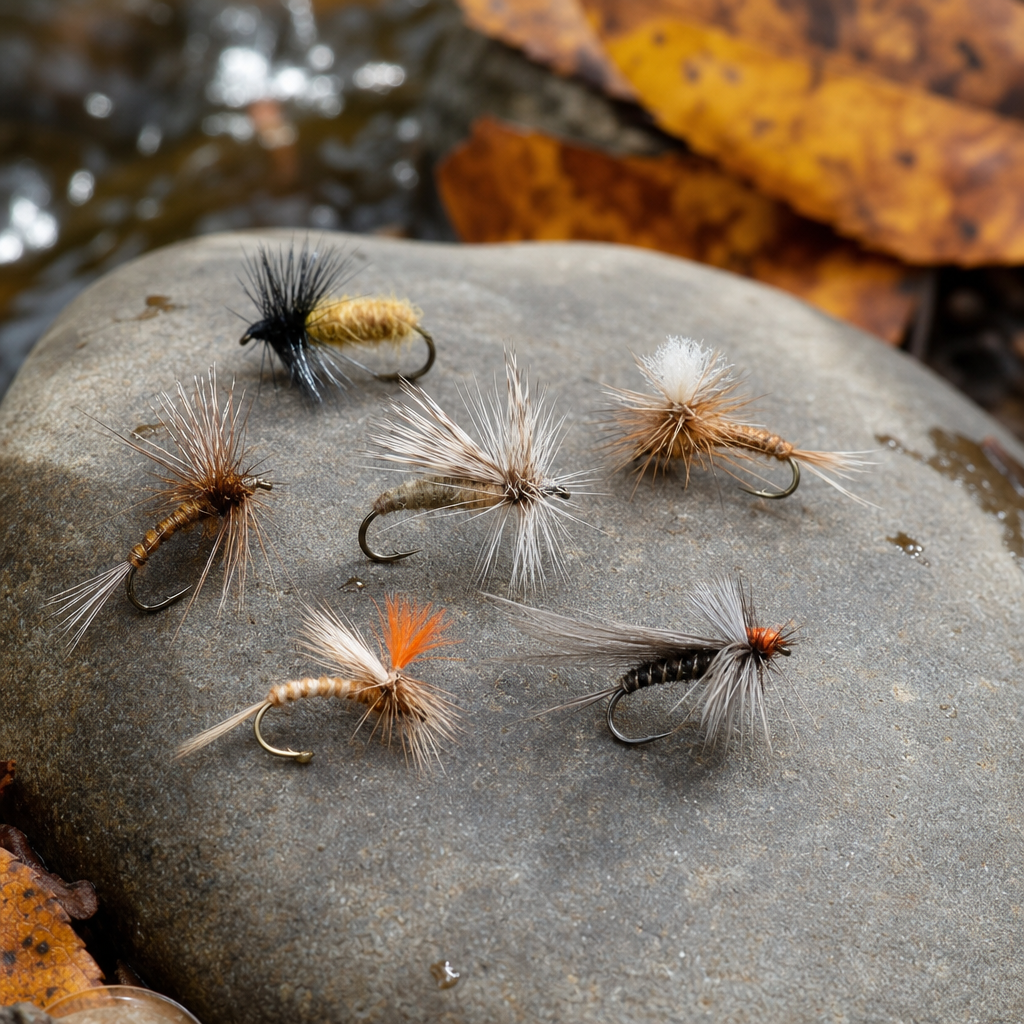
Dry-fly opportunities are real, but they are narrow. When midges gather, trout may feed selectively on emergers trapped in the film rather than on adults floating high. A Griffith’s Gnat can work, yet low-riding patterns, midge clusters, and sparse emergers often produce better results. With blue-winged olives, fish the emergence before the hatch looks obvious. The first few risers in a seam are usually less selective than the fish that settle into a rhythm after ten minutes of feeding. Streamers remain a valid winter tool, especially on larger tailwaters with browns or rainbows willing to ambush, but the approach should be downsized and deliberate. Think small sculpin, leech, or baitfish profiles, slow strips, and swing pauses near current breaks rather than erratic summer retrieves.
Planning, safety, and building a full winter fly fishing system
Successful winter tailwater anglers plan around conditions more than calendar dates. Start with generation schedules and overnight lows, then choose reaches that match your method. Wade-friendly side channels, gravel bars with soft inside seams, and runs with easy access are safer than committing to deep crossings in freezing weather. Layering is nonnegotiable. Merino or synthetic base layers, insulating midlayers, fingerless gloves or waterproof over-mitts, a warm hat, and quality wading boots with studs reduce fatigue and mistakes. Cold hands ruin knot tying, strike detection, and fish handling long before morale collapses.
Safety extends beyond comfort. Hypothermia risk increases when wind combines with wet clothing, and tailwaters can rise quickly without obvious local weather changes because the source is controlled upstream. Know the siren system, read posted signs, and keep an exit route in mind. Felt or rubber soles both work depending on local rules, but studs help on algae-slick rocks common below dams. Carry a thermometer, hemostats, extra split shot, indicators sized for tiny rigs, and tippet down to 6X or 7X. These are not luxuries in winter; they are problem-solving tools that keep you fishing efficiently.
As a hub for Winter Fly Fishing, this article points to the larger system you should build across the season. Learn midge life cycles, improve strike detection, study blue-winged olive timing, practice tight-line depth control, understand trout positions during low flows, and develop a tailored streamer approach for cold water. Just as importantly, keep notes. Record air temperature, water temperature, release level, insect activity, productive flies, and the exact type of water that held fish. After one winter, your log will reveal patterns more useful than generic advice. Tailwaters reward observation. If you want more fish during the hardest season, use this guide as your starting framework, then apply it on your local river with discipline and patience. Winter fly fishing becomes far less mysterious when you treat each outing as part of a connected plan, so pick a stable tailwater, check the flows, rig small, and fish the soft seams carefully.
Frequently Asked Questions
What makes tailwaters such a reliable option for winter fly fishing?
Tailwaters are especially dependable in winter because dam releases moderate both water temperature and flow in ways that many freestone rivers cannot. While freestone systems often fluctuate dramatically with air temperature, snowmelt, and ice formation, tailwaters tend to stay more stable. That consistency matters because trout are cold-blooded and closely tied to water temperature. In winter, stable water allows them to conserve energy, feed more predictably, and hold in known lanes rather than constantly adjusting to harsh conditions.
Another major advantage is fish behavior. In winter, trout generally avoid expending unnecessary energy, so they gravitate toward softer seams, moderate depths, and current breaks where food can drift to them. On a tailwater, those holding areas are often easier to identify and fish methodically. Add in the fact that tailwaters frequently support year-round midge and small mayfly activity, along with steady subsurface food like scuds, sowbugs, and aquatic larvae, and you have a fishery where trout still have regular feeding opportunities even when surface activity is minimal.
For anglers, this means fewer variables and more repeatable patterns. You can often focus on depth control, drift quality, and precise presentation rather than chasing constantly changing conditions. That does not make winter tailwater fishing easy, but it does make it more consistent. When nearby rivers are frozen over or running unpredictably, a healthy tailwater can offer fishable water, active trout, and a realistic chance at a productive day.
Where do trout typically hold in a tailwater during winter, and how should I approach those areas?
In winter, trout in tailwaters usually seek places that offer maximum food with minimum effort. That often means slower runs, gentle seams, inside bends, transition water below riffles, drop-offs, tailouts with depth nearby, and bankside slots protected from the main current. They are less likely to sit in heavy, fast water all day unless food is concentrated there. Instead, they prefer holding lies where they can remain comfortable and slide short distances to intercept drifting insects or crustaceans.
Depth is critical. Winter trout frequently hold close to the bottom because current speed is reduced there and because much of their food source drifts low in the water column. If you are not getting flies down, you are often not fishing effectively. That is why many anglers rely on indicator rigs, split shot, or tight-line presentations to keep flies near the fish. A run that looks only moderately deep can still hold trout if it has a soft bucket, a cushion current, or a subtle depression in the riverbed.
Approach matters just as much as location. Winter water is often low and clear, so trout can become cautious. Move slowly, wade as little as possible, and begin by fishing the water closest to you before stepping deeper. Cover a run thoroughly by adjusting depth, weight, and casting angle rather than rushing from spot to spot. In many cases, a handful of winter holding lies produce most of the fish in a day. A patient, methodical approach usually outperforms a fast-paced one.
What flies and rig setups work best for winter fly fishing in tailwaters?
Winter tailwater fly selection is usually built around small, natural-looking subsurface patterns. Midges are often the backbone of the hatch cycle, so larva, pupa, and emerger patterns in sizes 18 through 24 are common producers. Zebra Midges, thread midges, and simple pupa imitations are staples for good reason. In many tailwaters, trout also feed heavily on scuds and sowbugs, especially where aquatic vegetation or fertile bottom habitat supports those food sources. Small mayfly nymphs, particularly blue-winged olive imitations, can also be excellent during overcast days or periods of light hatch activity.
A standard winter rig often starts with a small strike indicator, enough split shot to get the flies into the lower third of the water column, and a two-fly setup. The point fly is usually slightly heavier or larger, while the dropper is a more delicate midge or emerger pattern. The exact spacing depends on water depth and speed, but the goal is straightforward: get the flies drifting naturally at trout level without constant snagging. If you are ticking bottom occasionally, you are often close to the right depth. If you never touch bottom and never get a take, you may be fishing too high.
Tight-line or Euro-style nymphing can also be extremely effective in winter because it improves contact, strike detection, and depth control in slower water. In some situations, a small streamer can move larger fish, especially during low-light periods or when flows increase, but nymphs are usually the most dependable choice. On warmer afternoons, it is also worth carrying a few dry flies and dry-dropper options in case midges or blue-winged olives bring fish to the surface. Winter surface windows can be brief, but they are often memorable.
How do dam releases, water temperature, and daily timing affect success on a winter tailwater?
Understanding flow schedules and water temperature is one of the biggest keys to winter tailwater success. Because a tailwater exists below a dam, generation and release patterns can dramatically change depth, current speed, clarity, and fish position. A run that is perfect at one flow may become too deep or too pushy at another. Before fishing, it is smart to check release data, generation forecasts, and local flow charts if they are available. Even modest changes in discharge can reposition trout from soft shelves into deeper seams or from mid-river buckets toward the bank.
Water temperature also shapes feeding behavior. Winter trout rarely feed with the intensity seen in warmer months, but even a slight temperature increase can improve activity. On many tailwaters, the most productive period is late morning through midafternoon, when sunlight has had time to influence the river and trout become a bit more willing to move for food. Early mornings can be slow, particularly after very cold nights, although stable overcast conditions sometimes level that out. If you only have a limited window to fish in winter, focusing on the warmest part of the day is often the smartest move.
Pay close attention to how trout respond as conditions change. Rising water may push fish tighter to structure or into softer edge water. Stable low flows may concentrate them in classic winter lanes. Slightly warmer afternoons can bring short but important midge or mayfly activity. The anglers who do best on winter tailwaters are usually the ones who combine solid fishing skills with close observation. Instead of fishing the same rig all day regardless of conditions, they make small adjustments based on flow, depth, and timing.
What are the most important winter-specific tips for catching more trout and staying safe on tailwaters?
The first tip is to slow down. Winter trout are rarely spread evenly across the river, and they are often unwilling to move far for a fly. That means success comes from precision more than coverage. Fish likely holding water carefully, refine your drift, and make repeated passes through productive seams. Subtle adjustments in indicator depth, split shot placement, or fly size can make a major difference. If fish are present but inactive, downsizing your flies, lengthening your leader section, or improving drift drag can turn refusals into takes.
Second, prioritize stealth and efficiency. Wear muted clothing, avoid heavy wading in clear shallow water, and keep false casting to a minimum if fish are rising. Cold water also affects your own performance. Numb fingers make knot tying harder, so it helps to organize your flies and leaders before you step into the river. Bring gloves you can fish in, extra layers, and a way to keep essentials dry. Winter fishing is far more enjoyable when you can stay warm enough to remain focused.
Safety is especially important below dams. Tailwater conditions can change quickly if releases increase, and what began as a simple crossing can become dangerous. Always know the generation schedule when possible, watch for warning sirens or rising water marks, and avoid wading into areas that could trap you if flows come up. Ice along banks and slick rocks also create added hazards. A wading staff, felt alternatives or quality rubber soles with traction, and a conservative approach to crossing are all wise choices. Winter tailwaters can offer some of the year’s best trout fishing, but the best day is always the one that ends safely.