Summer fly fishing often turns on a simple truth: when land insects fall into the water, trout, bass, and panfish stop thinking like selective midging feeders and start looking up for bigger, easier meals. Terrestrial fly patterns imitate those land-based insects and in many waters they become the most reliable warm-weather option from late June through early fall. In practical terms, terrestrials include grasshoppers, ants, beetles, crickets, cicadas, inchworms, and other nonaquatic bugs that reach the surface by accident. I lean on them every year once bankside grasses are tall, afternoon winds pick up, and fish begin cruising under overhanging branches instead of sitting deep on nymph lanes.
This matters because summer fishing changes the equation. Midday hatches can be sparse, water levels often drop, and fish become wary after seeing endless standard dries drift overhead. A well-chosen terrestrial breaks that pattern. It offers a high-calorie target, lands with the kind of slightly clumsy presence a real insect makes, and can be fished tight to structure where natural drift insects actually fall. On pressured rivers, I have watched trout ignore size 18 mayflies and then move two feet to eat a foam beetle. On meadow streams, hopper patterns routinely pull the largest fish of the day. On warmwater ponds, ants and beetles can save an evening when traditional poppers are refused.
As a hub page for fly reviews, this guide covers the top terrestrial fly patterns for summer fishing, what each pattern imitates, where each one shines, and how to choose between premium shop flies and budget packs. It is built to help you evaluate fly patterns the way experienced anglers do: by flotation, silhouette, trigger points, durability, hook quality, visibility, and fishability in real conditions. If you are building a summer dry-fly box, the right terrestrial selection is not a bonus category. It is a core system that can carry entire trips.
What makes a summer terrestrial pattern effective
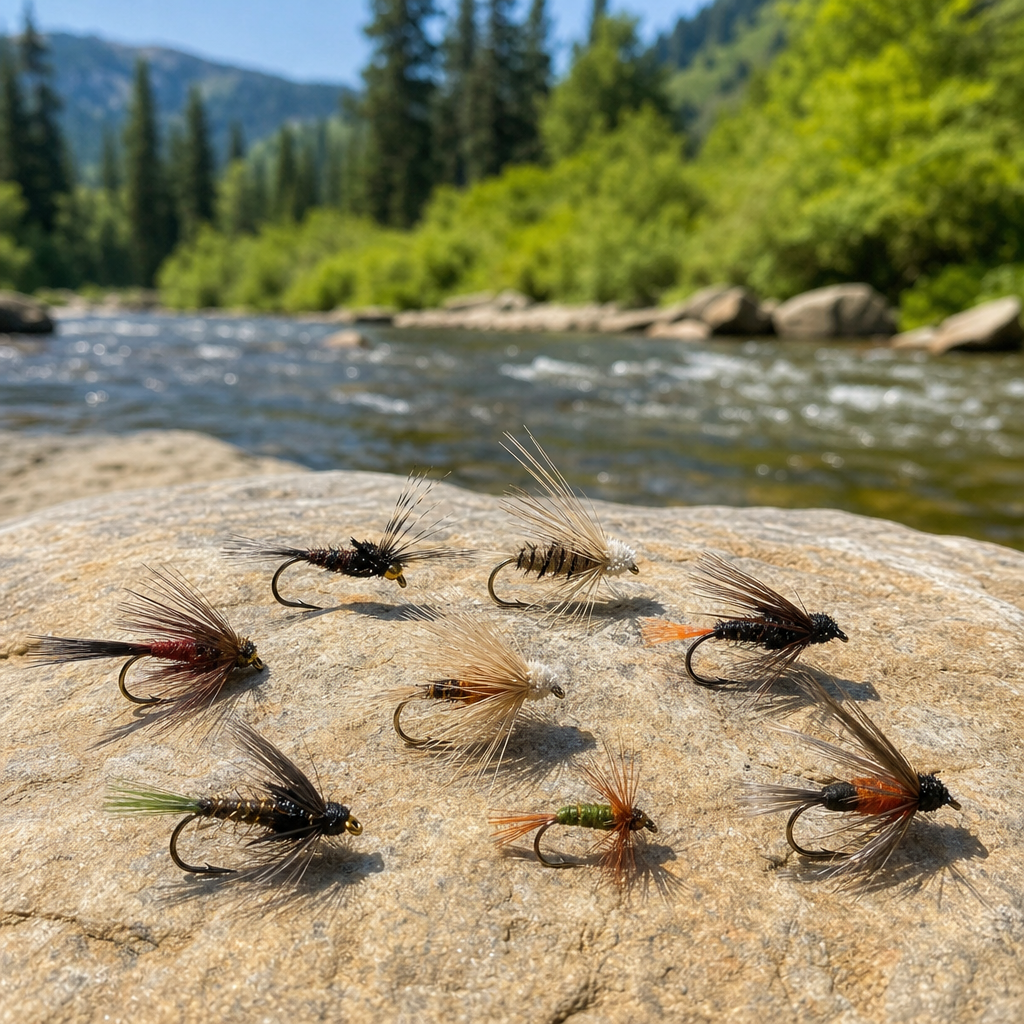
The best terrestrial patterns share several traits regardless of brand or tier. First, they present a recognizable silhouette. Fish rarely inspect a terrestrial with the same precision they bring to tiny mayflies, but profile still matters. A hopper should show a segmented body, tapered shape, and substantial legs. A beetle should read as compact and rounded. An ant needs clear separation between front and rear body sections. Second, the fly must float well after repeated casts, because summer fishing often means targeting grassy banks, cutbanks, and low branches where flies get slapped into water hard. Foam has become dominant for that reason, though well-dressed deer-hair and dubbed patterns still have a place.
Third, the pattern needs useful trigger points. Rubber legs, hi-vis posts, peacock herl, knotted pheasant-tail legs, and hot spots are not random decoration. They help fish key in on movement and help anglers track the drift. Fourth, hook quality matters more than many buyers realize. Terrestrials often draw explosive takes near logs, roots, and undercuts, so a strong, chemically sharpened hook is worth paying for. Brands such as Umpqua, Fulling Mill, Rainy’s, and Orvis generally outperform bargain assortments on consistency and hook reliability.
In reviews, I judge terrestrial flies by four field tests: whether they float through at least a dozen drifts without treatment, whether they land upright consistently, whether they survive one fish without unraveling, and whether they remain visible in mixed light. Those standards reveal which flies are actually worth space in a summer box.
Top hopper patterns and when to fish them
If one category defines summer terrestrial fishing, it is the hopper. Grasshopper patterns excel from midsummer through early fall on freestone rivers, meadow creeks, Western drift boat water, and any stream with grassy banks. The best-known modern options include the Chubby Chernobyl in hopper colors, Dave’s Hopper, Morrish Hopper, Parachute Hopper, and the Thunder Thighs Hopper. Each fishes differently.
The Chubby Chernobyl is less a strict hopper match than a high-floating attractor-terrestrial hybrid, but it is one of the best fish-catching summer flies ever designed. Its foam body, rubber legs, and poly wing make it easy to see and strong enough to suspend a dropper. In rough pocket water or fast seams, this is usually my first choice because visibility and buoyancy beat realism. The Morrish Hopper is more anatomically accurate, with a slimmer body and more natural posture, making it deadly on slower banks where trout have time to inspect. Dave’s Hopper remains a classic because spun deer hair creates a soft, buggy look, though many commercial versions sink faster than foam patterns after several fish.
For fly reviews, the key distinctions are practical. If you want one hopper to cover mixed water, buy a Chubby in tan, gold, and olive from sizes 8 to 12. If you fish spring creeks or calm edges, add Morrish Hoppers in sizes 10 to 14. If you like traditional tying and lower-profile presentations, carry Dave’s Hoppers, but treat them often with floatant. Hopper colors matter less than contrast and season; tan, yellow, pink, and olive all produce, while oversize patterns often shine during windy afternoons when naturals are getting knocked in aggressively.
Beetle and ant patterns for pressured trout
When fish refuse larger foam flies, beetles and ants become the precision tools of summer terrestrial fishing. Beetles are especially effective on streams lined with alder, willow, and hardwood cover because natural beetles drop from leaves all season. A foam beetle with peacock herl underbody remains one of the highest-value flies in the sport. It is simple, cheap, durable, and consistently productive. I fish them in sizes 12 to 18, usually with a small white post for visibility. The best commercial foam beetles sit low but not drowned, creating exactly the trapped-on-the-film look fish expect.
Ant patterns deserve even more attention than they get. Trout eat flying ants with unusual confidence, and on certain days an ant will outfish every mayfly imitation in the box. Effective patterns include the simple fur ant, foam ant, parachute ant, and cinnamon or black flying ant with spent wings. Black is the universal starting point, but cinnamon can be exceptional during regional ant falls. On technical rivers, a size 16 ant often succeeds because it is both believable and distinct. Fish do not need much detail; they need the segmentation and scale to read correctly.
In side-by-side use, foam ants and beetles usually win reviews for durability and flotation, while dubbed classics win for subtlety. If you fish small streams with broken currents, foam is the better buy. If you target selective trout in flat glides, carry both high-floating and low-riding versions so you can adjust to the fish rather than forcing one profile.
Cicadas, crickets, inchworms, and other overlooked summer producers
Cicada patterns are cyclical but can be spectacular. During periodical or regional annual cicada events, fish may become almost reckless, eating large black-and-orange or black-and-chartreuse bugs with audible takes. Outside those events, cicada flies still work as large attractor terrestrials near wooded banks. The best patterns feature dense foam, oversized silhouette, and visible wings or indicators because they often fish in shade. Hook gape is critical on cicadas; bulky bodies can block hookups if tied on poor hooks.
Crickets are underrated, particularly on meadow streams and undercut banks where natural black insects get blown in from tall grass. A compact black foam cricket in size 10 or 12 can be more effective than a hopper when fish have seen too many tan patterns. Inchworm and caterpillar patterns also deserve box space in the East and Midwest, especially on small creeks under dense tree cover. Green weenie style flies are technically simple but remain notorious fish catchers because they imitate multiple food sources at once, from inchworms to drowned larvae. They are not elegant, but they produce.
These niche flies are where fly reviews become genuinely useful. A budget hopper may be acceptable, but low-quality cicadas often twist leaders, land poorly, and miss fish because of bad hook design. For specialty terrestrials, premium tying is usually worth the extra cost. When you only carry two or three of a specific pattern, each fly needs to perform immediately.
How to choose the right terrestrial fly patterns
Choosing the right summer terrestrial fly pattern starts with the water, not the catalog. Match buoyancy to current speed, size to available food and fish confidence, and visibility to light conditions. Use this framework when building or reviewing a box:
| Situation | Best Pattern Type | Recommended Sizes | Why It Works |
|---|---|---|---|
| Fast freestone riffles | Foam hopper or Chubby style | 8–12 | High flotation, easy tracking, handles rough drifts |
| Slow banks and undercuts | Morrish Hopper or foam beetle | 10–14 | Lower profile looks more natural in calm water |
| Pressured trout flats | Ant or small beetle | 14–18 | Subtle silhouette, common food, less splash on landing |
| Wooded creeks | Beetle, ant, inchworm | 12–18 | Matches insects that commonly fall from overhanging cover |
| Warmwater ponds | Large beetle, cricket, cicada | 8–12 | Bigger surface target draws bass and bluegill aggressively |
Also review construction details before buying. Look for centered wings, evenly tied rubber legs, smooth foam layering, and hooks with adequate gape. A terrestrial that spins your leader or lands upside down wastes prime drifts. Color selection should stay simple: tan, yellow, olive, black, and cinnamon cover almost every situation. Buy multiples of proven patterns instead of one of everything.
Presentation, rigging, and review criteria that matter on the water
Even the top terrestrial fly patterns for summer fishing fail if they are presented poorly. Cast closer to the bank than feels comfortable. Real terrestrials do not appear in the middle of a river first; they fall from edges, grass, limbs, and rock faces. A deliberate splat can be productive, especially with hoppers and cicadas, because naturals often hit the surface hard. After the initial landing, allow a dead drift, then add an occasional twitch for beetles, ants, and crickets near structure. On stillwater, let the rings fade completely before moving the fly.
Rigging matters too. A 9-foot leader tapered to 4X or 5X covers most trout terrestrial work, while larger hoppers on windy rivers may fish better on 3X. Many anglers use terrestrials as dry-dropper anchors, and foam hoppers are ideal for that role. If reviewing flies for this use, test whether the pattern still floats with a beadhead nymph attached. Some slim hoppers look beautiful in the box but collapse under practical rigging.
My core review checklist is straightforward. Does the fly float after a fish? Can I see it at thirty feet in broken glare? Is the hook sharp enough to stick fish on a short eat? Does the pattern keep its shape after being chewed? Can it justify its price over a cheaper equivalent? When a fly answers yes to those questions, it earns permanent status in a summer box.
Build your hub selection around proven categories rather than novelty. Carry a high-floating hopper, a realistic hopper, a foam beetle, black and cinnamon ants, and one specialty pattern such as a cicada or cricket. That compact lineup covers most summer situations better than a box stuffed with untested designs. If you are expanding your fly reviews library, start by comparing those core patterns across brands, hook models, and foam quality. Summer fish reward practical choices. Stock the flies that float, stay visible, and survive hard eats, then fish them tight to the bank where the real mistakes happen. That is how terrestrial patterns turn slow summer days into the most memorable topwater sessions of the season.
Frequently Asked Questions
What are terrestrial fly patterns, and why are they so effective in summer?
Terrestrial fly patterns imitate land-based insects that accidentally end up on the water, including grasshoppers, ants, beetles, crickets, cicadas, and inchworms. Unlike mayflies, caddis, and other aquatic insects that hatch from the water, terrestrials come from bankside grasses, trees, brush, and overhanging vegetation. During summer, especially from late June through early fall, these insects become a major food source because wind, heat, mowing, rain, and simple clumsiness regularly knock them into streams, rivers, ponds, and lakes.
They are so effective because they represent a large, high-calorie meal that fish can recognize quickly and eat with very little effort. Trout that may ignore tiny, precise dry flies during selective feeding often become far less picky when a struggling hopper or ant drifts overhead. Bass and panfish are equally opportunistic and will often move aggressively for a well-presented terrestrial. In warm-weather fishing, when midday aquatic hatches may be sparse or inconsistent, terrestrials can keep producing from morning through afternoon and into evening. That makes them one of the most dependable fly categories of the season.
Another reason terrestrials work so well is visibility and profile. They are usually tied larger than many summer aquatic imitations, making them easier for anglers to see and easier for fish to find in broken current, under shady banks, or near structure. Many patterns also float well and can support a dropper nymph, giving anglers a two-fly setup that covers both surface and subsurface feeding. In practical terms, if summer fish are not obviously rising to a hatch, tying on a terrestrial is often one of the smartest and most consistent moves you can make.
Which terrestrial fly patterns should I carry for summer fishing?
A strong summer terrestrial box should cover the major food types fish see most often: grasshoppers, ants, beetles, and a few specialty patterns like crickets and cicadas. If you want the most useful core selection, start with foam hoppers, parachute or flying ants, foam beetles, and a reliable small black ant pattern. Those four categories alone can handle a huge percentage of summer situations on trout streams, warmwater creeks, farm ponds, and smallmouth rivers.
Grasshopper patterns are often the headline flies of late summer because they create a substantial silhouette and attract fish looking for a big meal. Foam hoppers are especially practical because they float well, remain visible, and hold up after repeated strikes. Ants are essential because fish feed on them more often than many anglers realize. Black ants, cinnamon ants, and flying ant patterns can be outstanding, especially after rain or during periods when winged ants are active. Beetles are another must-have because they are common, simple in shape, and frequently overlooked by anglers despite being highly effective. A basic black foam beetle with a visible post can be one of the best “nothing is happening” flies in the box.
Beyond those staples, crickets are excellent around grassy banks and undercut edges, cicada patterns can be deadly during regional cicada events or wherever larger buzzing insects are present, and inchworm or caterpillar-style flies can be useful beneath overhanging trees. Size and color matter, but not usually in an overly technical way. Hoppers in tan, yellow, olive, and pinkish-tan are common producers. Ants in black and cinnamon are smart choices. Beetles in black, peacock, or dark iridescent tones are reliable nearly everywhere. If you carry a range from about size 6 to 16, with emphasis on medium sizes that match local insects, you will be prepared for most summer terrestrial fishing.
How do I fish terrestrial flies effectively for trout, bass, and panfish?
The most important part of fishing terrestrials is presentation. These flies usually work best when they land close to the bank, near overhanging grass, under tree limbs, beside logjams, along cut banks, and tight to any place where land insects naturally fall into the water. Accuracy matters. A cast six inches from the grass line is often much better than one six feet away. Fish learn that food enters from the edges, so the highest-percentage drift is usually the one that starts right along that transition zone.
For trout, a dead drift is often the first and best approach. Cast upstream or up-and-across, mend as needed, and let the fly drift naturally with minimal drag. However, unlike delicate hatch fishing, terrestrials can also be effective with a little movement. A slight twitch, skate, or bump can imitate a struggling insect and trigger strikes from fish that ignore a perfectly static drift. Bass and panfish frequently respond even more aggressively to this style. Around ponds, banks, lily edges, and woody cover, let the fly sit briefly, then twitch it once or twice. That subtle disturbance often draws explosive takes.
Another productive tactic is using a terrestrial as the top fly in a dry-dropper rig. Because many foam hoppers and beetles float well, they can suspend a nymph, soft hackle, or small wet fly below. This is extremely effective when fish are willing to inspect the surface but not fully commit, or when some fish are feeding deeper while others look up. Pay close attention after the cast. Fish often strike terrestrials hard, but they can also sip ants and beetles surprisingly gently. If the fly disappears, pauses, tips, or veers, set the hook. In summer fishing, close casts to structure, drag-free drifts, and occasional subtle animation are usually the key combination.
When is the best time to use terrestrial flies during the summer?
Terrestrials can work all summer, but they are especially strong from late June through early fall, when bankside insect activity is high and fish have become accustomed to seeing land bugs fall into the water. Mid- to late summer is often peak hopper and beetle season, while ants can be effective throughout the warm months. Weather and surroundings matter as much as the calendar. Breezy afternoons, hot days, rain showers, and stretches of dry weather that make insects active in grass and brush can all increase terrestrial activity.
One of the biggest advantages of terrestrials is that they often fish well outside classic hatch windows. While many aquatic insect events peak early or late in the day, terrestrials can produce during the bright middle hours when fish still hold near undercut banks, shaded seams, grassy edges, and structure. In fact, summer afternoons are often ideal because wind tends to blow more insects onto the water, and fish begin to expect that easy surface food. If there has been recent rain, ant and beetle activity can be especially good, and windy conditions often make hoppers and crickets a smart bet.
That said, low-light periods still matter. Early morning and evening can be excellent, particularly when fish are comfortable feeding shallow. On heavily pressured waters, terrestrials may also shine when no obvious hatch is occurring and other anglers are cycling through standard dry flies. The best rule is simple: if you see grassy banks, overhanging limbs, streamside shrubs, meadow edges, or windy conditions, it is probably a good time to try a terrestrial. They are not just a backup pattern for summer; on many days, they are the main event.
How do I choose the right size, color, and pattern for local conditions?
Start by matching the general type of insect fish are likely seeing rather than worrying about exact imitation. In most summer situations, profile, placement, and drift matter more than perfect detail. If you are fishing a meadow stream with tall grass and exposed banks, a hopper pattern is an obvious first choice. If the water is lined with brush, trees, or overhanging limbs, beetles, ants, and inchworm patterns may be more natural. In pond or warmwater settings, crickets, beetles, and larger foam terrestrials often perform very well around edges and cover.
Size selection should follow what is actually present near the water. If you see tiny ants on streamside rocks or small beetles on leaves, do not throw a giant hopper all day just because it is easy to see. Conversely, when large grasshoppers are clicking around every step you take, a bigger fly in the size 6 to 10 range can be exactly right. Ants are often best in smaller sizes, commonly around 12 to 18, while beetles tend to fish well from about 10 to 16. Hoppers, crickets, and cicadas are usually more effective in the larger end of the spectrum. Carrying multiple sizes of the same pattern is often more valuable than carrying dozens of different styles.
Color should be chosen with confidence but not overcomplicated. Natural shades are the foundation: tan, olive, yellow, black, brown, and cinnamon cover most needs. Black beetles and black ants are almost universal producers. Tan or yellow hoppers are reliable on many rivers. Olive or chartreuse can help imitate inchworms or soft-bodied terrestrials around leafy streams. In off-color water or on rough surfaces, a fly with a bright indicator post can help you track it without changing the fish’s view significantly. If fish inspect but refuse, first change size, then drift, then pattern style. In many cases, downsizing slightly or switching