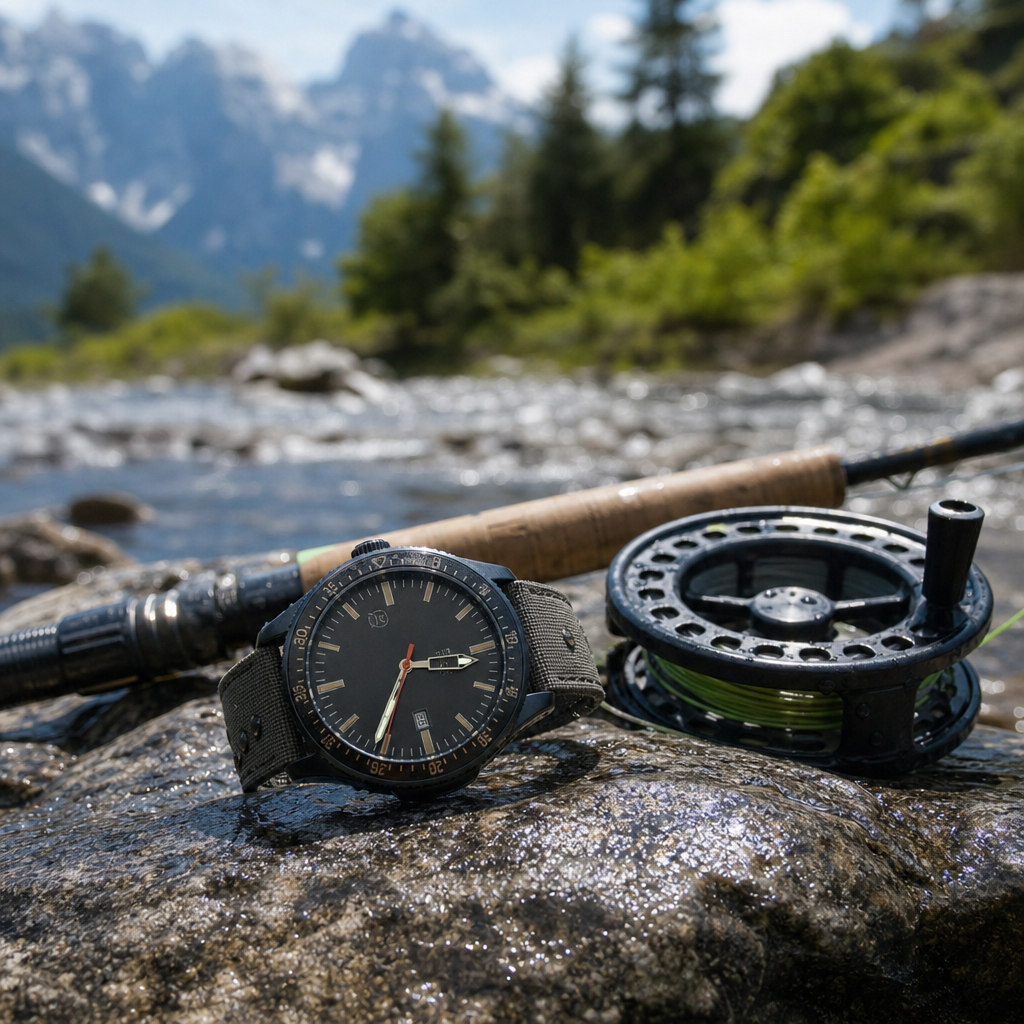
Fly fishing watches have evolved from simple timekeepers into specialized field tools, and choosing the right one can materially improve safety, timing, navigation, and comfort on the water. In this guide to the top fly fishing watches, I focus on technology reviews that matter to anglers: GPS accuracy, altimeters and barometers, sunrise and sunset data, tide support, durability, battery life, display legibility, and whether smart features help or distract. A fly fishing watch is best defined as a wrist-worn device that supports fishing decisions before, during, and after a day on the river, lake, or flats. That may mean tracking weather pressure changes during a hatch window, marking productive runs with GPS, timing drifts, or managing a full day without a recharge. This topic matters because many anglers buy either an overbuilt adventure watch they never fully use or a generic smartwatch that fails under wet, cold, high-glare conditions. I have tested watches on freestone rivers, tailwaters, and stillwater boats, and the pattern is consistent: the best model depends less on marketing and more on where you fish, how long you stay out, and which functions you actually trust enough to use with wet hands in current.
For most anglers, the core question is straightforward: what features are truly useful in a fly fishing watch? In practice, five matter most. First is environmental awareness, especially barometric trend data, storm alerts, temperature context, and elevation information. Second is navigation, including GPS trackback, waypoint marking, and coordinate reliability under tree cover or canyon walls. Third is battery endurance, because a watch that dies mid-trip is worse than one with fewer features but predictable runtime. Fourth is readability: a transflective screen often beats a brighter AMOLED display in harsh sun, while glove-friendly buttons usually outperform touchscreens around water. Fifth is build quality, including water resistance, sapphire or strengthened glass, and a bezel or case that tolerates knocks from raft frames, rocks, and boat hardware. If you are shopping this technology reviews hub to compare models, think in categories rather than branding alone: expedition GPS watches, fishing-specific smartwatches, hybrid outdoor watches, and value-focused durable wearables. Each category serves a real use case, and understanding those tradeoffs will save money and frustration.
What makes a watch genuinely useful for fly fishing
A useful fly fishing watch reduces uncertainty without demanding attention every minute. In field use, that means tactile buttons, fast access to timers, and data you can interpret instantly. A barometric altimeter watch can help identify incoming weather shifts, which matters on open water and in mountain drainages where storms build quickly. GPS waypoint marking helps when you want to log a productive seam, a trail junction, a boat launch, or a safe wading exit after fishing past sunset. Sunrise and sunset times are more valuable than many buyers expect because insect activity, water temperature, and travel logistics often cluster tightly around low-light periods. Watches that support breadcrumb navigation or course backtracking are especially valuable on large western river systems, salt flats, and alpine lakes where landmarks flatten out in poor weather.
Durability standards also deserve plain explanation. Many top models advertise 10 ATM water resistance, equivalent to 100 meters, which is sufficient for rain, wading, accidental submersion, and repeated wetting. That does not mean every watch is equally suited to long-term abuse. Stainless steel cases resist abrasion but add weight; fiber-reinforced polymers cut weight but vary in perceived toughness. Sapphire crystal remains the premium choice for scratch resistance, especially when your wrist regularly contacts rock, oarlocks, or truck tailgates. I strongly prefer button-based control systems for fishing because capacitive touchscreens can misread water drops and become frustrating in cold weather. A bright display helps, but visibility under polarized lenses matters more than raw brightness numbers.
Best overall picks and who they suit
The Garmin fēnix series remains the benchmark for anglers who want broad capability in one watch. Recent fēnix models combine multi-band GPS on select versions, barometric altimeter data, route navigation, sunrise and sunset information, storm alerts, strong battery management, and proven outdoor mapping support through the Garmin ecosystem. On the river, the advantage is not any single feature but the consistency of the platform. Buttons are reliable with wet fingers, tracks are easy to save, and battery modes can be adjusted for a full guide day or multi-day trip. The downside is cost and feature density; many anglers will never use training analytics, music, or advanced recovery metrics.
For anglers who prioritize battery life above all else, the Garmin Instinct 2 Solar is one of the smartest buys. It is lighter, less expensive than a premium fēnix, and exceptionally practical. The monochrome memory-in-pixel display is not flashy, but in direct sun it is outstanding. I have seen Instinct users finish long weekends with ample battery remaining even after steady GPS use, something many mainstream smartwatches cannot approach. It lacks the richer mapping interface of higher-end units, yet for waypoint marking, weather trend awareness, and dependable all-day use, it is excellent.
The Apple Watch Ultra line deserves consideration for anglers already committed to the iPhone ecosystem. Its display is superb, GPS performance is strong, and third-party app support is wider than in most competing watches. For inshore saltwater anglers, boat fishermen, and day-trip users who value communication, notifications, emergency features, and polished interface design, it works very well. Its limitations are familiar: shorter battery life than dedicated outdoor rivals and heavier dependence on charging habits. I recommend it most to anglers who want a premium smartwatch that also fishes well, not to anglers planning remote multi-day trips where charging is uncertain.
| Watch | Best for | Strengths | Limitations |
|---|---|---|---|
| Garmin fēnix 7 Pro | All-around river and travel anglers | Excellent GPS, ABC sensors, strong battery, robust ecosystem | High price, deep menus for casual users |
| Garmin Instinct 2 Solar | Battery-focused backcountry anglers | Outstanding endurance, light weight, simple controls | Basic mapping and less refined display |
| Apple Watch Ultra 2 | Day-trip anglers wanting premium smartwatch features | Great screen, strong app support, useful safety tools | Battery trails outdoor specialists |
| Suunto Vertical | Remote anglers who value navigation and endurance | Long battery life, quality route tools, durable build | Smaller app ecosystem than Apple or Garmin |
| COROS Vertix 2S | Expedition-style users and guides | Very long runtime, sturdy hardware, good GPS performance | Interface is competent rather than elegant |
Technology reviews by feature: GPS, sensors, and battery
GPS performance is the first place where price can be justified. In steep valleys, dense timber, and broken canyon country, cheaper chipsets may wander, smoothing tracks inaccurately or delaying position locks. Multi-band GNSS, now available on several premium watches, improves accuracy by using multiple satellite frequencies to reduce signal error from reflected paths. For a fly angler, that matters when marking access points, tracking bushwhack exits, or returning to a launch in low light. Garmin, COROS, and Suunto all offer competent outdoor navigation on upper-tier models, though Garmin still leads in overall ecosystem depth and mapping maturity.
ABC sensors—altimeter, barometer, and compass—are not gimmicks when calibrated correctly. The altimeter helps with mountain route awareness and can support more accurate pressure interpretation than GPS-only elevation estimates. The barometer is useful because rapid pressure drops often coincide with approaching weather shifts. That does not guarantee fish behavior changes in a simple cause-and-effect way, but it does help anglers plan exposure, boat positioning, and return timing. A digital compass is particularly handy when bushwhacking back from side channels, stillwater shorelines, or flats where the visual reference is repetitive.
Battery claims should be interpreted carefully. Manufacturers typically publish smartwatch mode, GPS mode, and expedition or low-power figures under ideal settings. Real results depend on screen brightness, notification load, map use, pulse oximeter frequency, cold weather, and whether you record every outing. In my testing habits, a watch with conservative battery settings and button-first controls consistently performs better for anglers than a more glamorous model with a vivid screen but daily charging needs. For guides and frequent travelers, charging predictability matters as much as maximum runtime.
Fishing scenarios: rivers, stillwater, saltwater, and travel
River anglers should prioritize readability, storm alerts, and easy timing tools. On moving water, you are often checking time between hatch stages, monitoring weather, and occasionally marking access points rather than navigating continuously. A durable mid-to-premium outdoor watch is ideal here. Stillwater anglers, especially those fishing large lakes from float tubes, pontoons, or boats, benefit more from GPS breadcrumb tracking and reliable compass tools because shore orientation can become surprisingly ambiguous in wind or fog. Saltwater fly anglers need corrosion-conscious hardware, dependable tide information through apps or paired devices, and enough brightness to remain readable in full sun.
Traveling anglers face another set of demands. If your fishing season includes destination trips, airport transits, rental vehicles, and unfamiliar trailheads, a watch becomes part logistics tool, part emergency backup. Offline route support, timezone handling, incident detection or emergency SOS options, and easy charging cables all matter. I have found that anglers who travel frequently appreciate watches with strong companion apps because trip planning often happens on a phone the night before. Garmin Connect, Apple Health plus third-party fishing apps, Suunto app routing, and COROS planning tools all have value, but their usefulness depends on how much digital prep you actually do.
Model recommendations by budget and user type
If you want the best premium fly fishing watch, buy the Garmin fēnix 7 Pro or its current equivalent in the line. It is the most balanced choice for anglers who fish often, travel to varied water, and want one device to handle navigation, weather context, and daily wear. If you want maximum value, the Garmin Instinct 2 Solar is hard to beat because it keeps the essentials, trims the luxury, and excels at battery life. If you are an Apple user who values communication, safety, and app flexibility as much as outdoor function, the Apple Watch Ultra 2 is the strongest choice in that ecosystem.
For remote anglers, guides, and anyone who routinely fishes beyond easy charging access, the Suunto Vertical and COROS Vertix 2S are serious alternatives. The Suunto Vertical stands out for endurance and navigation clarity, while the Vertix 2S appeals to users who want a rugged platform with very long runtime and a straightforward operating style. Buyers on tighter budgets should also consider older-generation premium models, especially prior fēnix and Instinct versions, which often deliver nearly all core fishing functionality at reduced prices. In this category, paying for the newest release only makes sense if you specifically need better GPS chipset performance, display improvements, or longer battery life.
How to choose the right fly fishing watch
Start with your fishing calendar, not the spec sheet. If most of your outings are half-day local trips with regular charging access, a premium smartwatch can be a pleasure to use. If you fish dawn-to-dark, camp, guide, or disappear into backcountry valleys, battery-first outdoor models are smarter. Next, rank your top three functions. Many anglers say they want mapping, weather, fitness, messaging, music, and payments, but on the water they repeatedly use only time, pressure trend, sunrise, and waypoint marking. Buying for real behavior is more effective than buying for imagined versatility.
Also consider comfort and wearability. Heavy watches catch cuffs, feel clumsy under rain shells, and can become annoying during repetitive casting. Band material matters more than spec sheets suggest; silicone dries quickly, while some woven straps stay damp and gritty. Finally, think in terms of system ownership. Charging cables, phone compatibility, app stability, and firmware support affect long-term satisfaction more than a single headline feature. The best fly fishing watch is the one you will trust, understand, and keep wearing every trip.
Top fly fishing watches are not defined by branding or price alone; they are defined by dependable performance in wet, bright, cold, and remote conditions where small conveniences become meaningful advantages. The strongest models for most anglers come from the outdoor category, led by the Garmin fēnix line for overall capability and the Garmin Instinct 2 Solar for practical value and endurance. Apple Watch Ultra models are excellent for connected day-trip anglers, while Suunto Vertical and COROS Vertix 2S serve remote users who prioritize battery life and navigation confidence. Across all of these recommendations, the buying principles stay the same: choose tactile controls over fragile complexity, prioritize battery life according to your longest trips, and pay for GPS and sensor quality only if you will use those tools regularly.
This technology reviews hub should help you narrow the field quickly. Match the watch to your water type, trip length, and tolerance for charging, then compare display style, mapping depth, and app ecosystem. If you are building out your gear systematically, use this page as your starting point for broader product reviews and recommendations across fishing electronics and field tools. Pick the model that fits your real fishing days, learn its core functions well, and it will become one of the few pieces of technology you genuinely rely on every time you step into the water.
Frequently Asked Questions
What makes a watch a good choice specifically for fly fishing?
A good fly fishing watch is more than a rugged wristwatch with water resistance. The best models are designed to support real decisions anglers make on the water, including when to move, how to navigate back safely, and how changing weather may affect conditions. For fly fishing, the most useful features usually include dependable GPS tracking, a readable display in bright sunlight, strong battery life, and real durability around water, rocks, mud, and repeated casting. If you fish rivers, streams, or backcountry access points, an altimeter and barometer can also be genuinely helpful. Altimeters help with elevation awareness in mountainous areas, while barometric trend data can give clues about approaching weather changes that may affect both safety and fish behavior.
Sunrise and sunset data is another surprisingly practical tool, especially for anglers who plan around low-light feeding windows or want to avoid getting caught hiking out after dark. For coastal or estuary anglers, tide support becomes especially important because movement, access, and fish positioning can all change with water level. Comfort also matters more than many anglers expect. A watch that feels bulky, traps moisture under the strap, or is awkward under jacket cuffs can quickly become irritating during long sessions. In short, the best fly fishing watch combines field usefulness, rugged construction, and easy readability without overloading the user with features that distract from actually fishing.
Are GPS and navigation features really worth paying extra for in a fly fishing watch?
For many anglers, yes, GPS and navigation features are absolutely worth the added cost, especially if you fish unfamiliar water, hike into remote access points, or regularly move through complex terrain. A watch with accurate GPS can track your route, mark productive spots, log mileage, and help you return to your vehicle or camp when visibility drops or the trail becomes unclear. On larger rivers, alpine lakes, and remote tributaries, that is not just convenient; it can be a meaningful safety advantage. Basic breadcrumb navigation and waypoint marking are often enough for most fly anglers, while more advanced mapping features are ideal for those who explore a lot of new water.
That said, GPS only justifies the price if it is accurate, fast to connect, and practical to use in the field. A watch that drains quickly or requires too much menu navigation can become more frustrating than helpful. Many anglers do not need full smartwatch complexity, but they do benefit from simple, dependable navigation tools. If most of your fishing is on well-known local streams close to roads, you may not need premium mapping functions. But if your fishing involves changing weather, dawn starts, evening exits, or any degree of backcountry travel, GPS can quickly go from luxury feature to core equipment. The key is matching navigation capability to how and where you actually fish.
How important are durability, water resistance, and battery life in a fly fishing watch?
They are critical, and in many cases they matter more than flashy smart features. Fly fishing is tough on gear. Watches get splashed constantly, exposed to rain, knocked against rocks, scraped by brush, and worn through mud, sand, and temperature swings. A quality fly fishing watch should feel built for that environment, with a strong case, secure buttons, a durable strap, and enough water resistance to handle repeated immersion and wet conditions without concern. Water resistance ratings should be taken seriously, but they should also be understood in context. A watch suitable for fishing should comfortably handle submersion, not just brief contact with water. Materials like reinforced polymer, stainless steel, sapphire crystal, or similarly scratch-resistant glass often hold up better over time.
Battery life is equally important because many of the features anglers care about most, especially GPS, are power intensive. A watch that requires constant charging can undermine the whole reason for wearing it in the field. If you fish full days, travel for weekend trips, or spend time in areas where charging is limited, long battery performance becomes a major buying factor. The best watches offer enough endurance to run GPS and core sensors without forcing you to ration use too aggressively. Good battery management modes are also useful, but only if they do not cripple the features you bought the watch for. In practical terms, the most valuable fly fishing watch is one you can trust to survive abuse, stay readable, and still have power when you need it at the end of the day.
Do smart features like notifications and apps help anglers, or are they mostly distractions?
That depends on the angler, but for fly fishing, simpler is often better. Some smart features are genuinely useful. Weather alerts, sunrise and sunset times, route tracking, storm warnings, and activity logging can all add value without taking your attention away from the water. If your watch integrates cleanly with mapping tools or lets you review trip data later, that can be a real advantage for planning and patterning future outings. For some anglers, subtle phone notifications are also useful for emergencies or important check-ins when fishing remote stretches alone.
However, too many smartwatch functions can easily become noise. Constant vibrations, crowded menus, touchscreens that behave poorly when wet, and battery drain from nonessential apps can make a watch feel more like a nuisance than a tool. Fly fishing rewards focus, observation, and rhythm, and the wrong watch can interrupt all three. That is why many experienced anglers prefer watches that emphasize field functions over general lifestyle features. The best balance usually comes from a model that offers practical outdoor data but allows you to limit distractions. In other words, smart features help when they support safety, timing, and navigation. They hurt when they turn your wrist into another screen competing for your attention.
Which features should buyers prioritize when comparing the top fly fishing watches?
Start with the features that directly affect your fishing style and environment rather than shopping by brand name alone. For most buyers, the first priorities should be display legibility, battery life, durability, and the accuracy of core outdoor tools such as GPS, altimeter, and barometer. A watch is only helpful if you can read it quickly in bright sun, low light, or bad weather without stopping to fiddle with settings. Screen clarity, contrast, button responsiveness, and simple menus often matter more on the water than having the most advanced spec sheet. If you fish all day or travel often, battery life should be near the top of your checklist. If you fish rough terrain, durability and case design deserve close attention as well.
From there, evaluate specialized features based on where you fish. River and backcountry anglers may benefit most from GPS, elevation data, weather trends, and route tracking. Saltwater or tidal anglers should place more emphasis on tide support and coastal timing tools. Sunrise and sunset data is broadly useful for nearly everyone because it helps with trip planning, safety margins, and targeting productive low-light periods. Comfort should not be overlooked either. A watch that is too heavy, too bulky, or unpleasant when wet may end up sitting in a gear bag instead of on your wrist. Finally, consider whether you want a purpose-built outdoor watch with selected smart features or a full smartwatch adapted for angling use. The best fly fishing watch is not simply the one with the most features; it is the one that reliably delivers the right information at the right time without getting in your way.