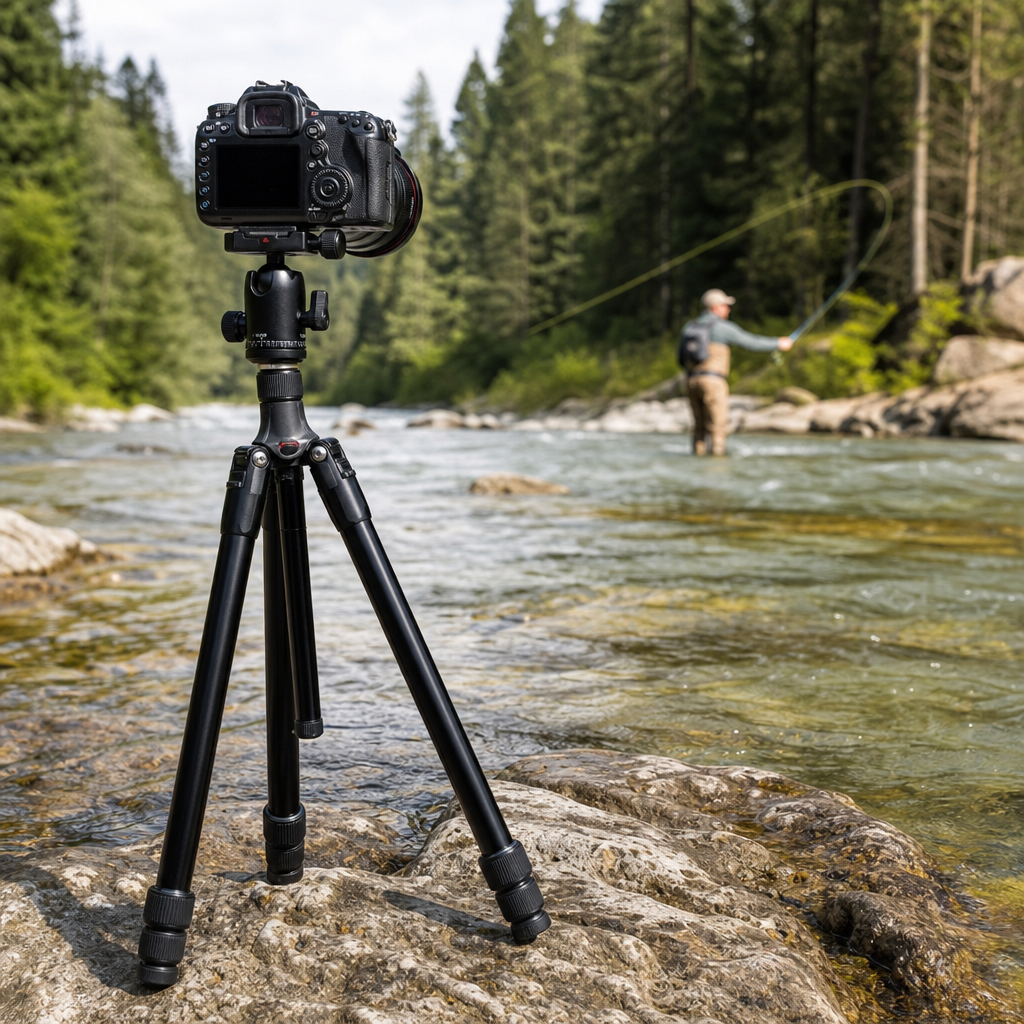
Fly fishing rewards patience, timing, and attention to small details, but capturing those moments on the water requires equipment that stays steady in wind, current, mud, and uneven banks. A fly fishing tripod is not just a camera accessory. It is a field tool designed to stabilize cameras, smartphones, action cams, spotting optics, and lighting while you tie flies streamside, document catches, record casting mechanics, or shoot low-light landscape frames before a hatch. In my own gear testing, the difference between a generic travel tripod and a purpose-suited fishing tripod has been dramatic: better footing on slick rocks, faster leg adjustments with cold hands, and fewer ruined clips from vibration.
When anglers search for the top fly fishing tripods for steady shots, they usually want answers to three practical questions. Which tripod stays stable on rough terrain? Which model is portable enough for backcountry wading? Which head and mounting system work best for cameras, phones, and action cameras? Those are the right questions, because tripod performance on the water comes down to four factors: stability, packability, corrosion resistance, and ease of setup. Materials such as carbon fiber reduce weight, aluminum lowers cost, and sealed twist locks generally outlast cheap flip locks after repeated exposure to grit and water. Load capacity matters too, but only when interpreted honestly. A listed 22-pound rating does not mean every tripod will remain vibration-free with a long lens in river wind.
This hub article covers the technology review side of fly fishing tripods comprehensively, from core buying criteria to the leading models worth considering today. It also serves as a guide to the broader review cluster around supports, mounting accessories, camera heads, and field-use workflows. If you create fishing content, want cleaner self-shot hero photos, or simply need a stable platform for optics and instruction clips, choosing the right tripod will improve both image quality and time efficiency. A steady shot is not luck. It is the result of matching tripod design to how and where you fish.
What makes a tripod good for fly fishing
The best fly fishing tripods combine low packed weight with a high stiffness-to-weight ratio, secure footing, and controls you can operate quickly with wet hands. On paper, many travel tripods look similar. On the water, small design details decide whether a tripod is useful or frustrating. Independent leg spread lets you level a camera on boulders. Replaceable rubber feet and metal spikes improve traction across boat decks, dirt banks, and submerged cobble. A center column can add height, but it also introduces flex, so the strongest field tripods rely on leg extension first and center column use second.
Material choice is one of the most important tradeoffs. Carbon fiber absorbs vibration better than aluminum and usually weighs less, which matters on long approaches to alpine streams. Aluminum remains a strong value option and often withstands abuse well, but it feels colder in winter and can become tiresome on all-day hikes. Corrosion resistance is essential regardless of material. Salt exposure, silty water, and fine grit attack locks and joints. For that reason, anglers should favor tripods with easy disassembly and parts availability from brands with established service support.
Head selection is just as important as the legs. Ball heads are compact and fast, making them ideal for solo hero shots and general still photography. Pan-and-tilt heads are slower but better for smooth instructional video and framing tackle demonstrations. If you use a smartphone, the quality of the phone clamp matters more than many buyers expect. A poor clamp slips under vibration and can turn an expensive phone into a river casualty. Arca-Swiss compatible systems are the safest long-term standard because they support plates, L-brackets, and accessory mounts across many brands.
Top fly fishing tripods worth buying
Several tripods consistently stand out for anglers because they balance portability, durability, and real-world stability rather than relying on inflated spec sheets. Peak Design’s Travel Tripod, available in carbon fiber and aluminum, is one of the most refined options for anglers who hike. Its slim packed shape stores easily in a pack side pocket, setup is fast, and the integrated phone mount is genuinely useful for quick riverbank shots. The carbon version is notably easier to carry on full-day trips, while the aluminum version is the better value for anglers who prioritize cost over shaving ounces.
Gitzo’s Traveler and Mountaineer lines remain premium benchmarks for stability and build quality. They are expensive, but experienced outdoor shooters know why Gitzo is respected: strong leg tubes, excellent torsional rigidity, and long-term serviceability. For fly fishers using mirrorless cameras with moderate telephoto lenses, a Gitzo setup can deliver sharper frames in wind than many cheaper alternatives. Manfrotto’s Befree Advanced is another practical option, especially for anglers who want established support and straightforward controls. It is common in outdoor creator kits because replacement parts and compatible heads are easy to source.
For buyers looking at value-focused performance, Leofoto and Sirui deserve attention. Both brands offer carbon travel tripods with respectable rigidity, Arca-compatible heads, and competitive weights. They often outperform bargain marketplace tripods that look similar in photos but fail under field vibration. Joby’s TelePod and GorillaPod products also have a place in this category, though not as primary tripods for serious stills. They work well for action cameras, close-up tying demos, or mounting on drift boat rails and tree limbs when standard legs are inconvenient.
| Tripod | Best for | Main strength | Main limitation |
|---|---|---|---|
| Peak Design Travel Tripod Carbon | Backcountry anglers and creators | Excellent packability and fast setup | Premium price |
| Gitzo Traveler | Maximum stability in a compact form | Top-tier rigidity and service life | Very expensive |
| Manfrotto Befree Advanced | Balanced mainstream choice | Strong brand support and simple handling | Less compact than top travel designs |
| Leofoto carbon travel models | Value-conscious enthusiasts | Good specs and Arca compatibility | Quality varies by model line |
| Joby GorillaPod | Action cams and close-range setup | Flexible mounting options | Limited height and stability |
How to choose the right tripod for your fishing style
The right fly fishing tripod depends less on brand prestige than on your dominant use case. If you are a backpacking angler carrying a tenkara rod, a compact mirrorless body, and minimal tackle, packed size and weight matter more than maximum height. A tripod around 2 to 3 pounds with a folded length under 18 inches is usually the sweet spot. If you film instruction, knot tying, and rod reviews beside a vehicle or lodge, a larger tripod with thicker leg sections may be preferable because stiffness improves footage more than saving a few ounces.
Wading anglers should pay special attention to leg locks and foot design. Twist locks are generally better at keeping out grit than budget flip locks, though high-end flip systems can perform well. Interchangeable spikes are valuable on river cobble and muddy banks. On drift boats, wider leg angles and rubber feet reduce slipping on textured decks. If your primary device is a phone, buy a serious clamp from Peak Design, Moment, or SmallRig rather than trusting a no-name spring clip. The clamp is a safety device as much as a mount.
Lens choice changes tripod needs. A phone or action camera can work on a light support, but a full-frame body with a 70-200mm lens demands greater torsional stiffness and a stronger head. Wind is often the hidden variable. Along open rivers, gusts cause soft images even when the tripod technically supports the weight. In those conditions, hanging a small pack from the center hook can help, but only if the bag does not swing. Better technique includes lowering the center column, widening the stance, and shielding the setup with your body when possible.
Technology review criteria that actually matter
Most tripod reviews fail because they repeat manufacturer specifications without testing how those specs translate outdoors. A useful technology review examines measurable and practical performance together. I assess setup time, lock consistency, vibration damping after shutter press, torsional flex when panning, packed efficiency, and cleaning difficulty after silt exposure. These factors tell you far more than a marketing load rating. For example, two tripods can both claim a 20-pound capacity, yet one will settle from vibration in under a second while the other continues wobbling long enough to blur an image at slower shutter speeds.
Compatibility is another underappreciated criterion. A tripod should fit into a broader content workflow that may include Arca plates, L-brackets, smartphone cages, action camera adapters, and compact LED lights. This is where ecosystem brands matter. SmallRig, Ulanzi, Peak Design, and Manfrotto all offer accessory paths that make a tripod more versatile over time. If a product locks you into proprietary plates without clear benefits, that is a long-term disadvantage. Good review methodology also checks whether replacement feet, leg sections, and clamps are sold separately, because fishing environments are hard on gear.
Finally, durable tripod design includes maintainability. River sand and glacial silt eventually work into every joint. Models that can be stripped, rinsed, dried, and reassembled with basic tools hold value longer. Gitzo, Really Right Stuff, and Leofoto all benefit here compared with disposable entry-level tripods. This matters for recommendation pages because readers are not just buying a product; they are choosing a system that should remain dependable through seasons of travel, weather, and repeated immersion near moving water.
Supporting gear and related review topics in this hub
Tripods sit at the center of a larger field-creation system, which is why this page functions as a hub for technology reviews within product reviews and recommendations. The next layer of content naturally includes tripod heads, phone mounts, action camera adapters, quick-release plates, waterproof storage, power banks, and compact lighting. A great set of legs can still disappoint if paired with a weak head or a flimsy clamp. In practice, many anglers improve shot quality more by upgrading the head and mounting hardware than by buying taller legs.
Related review topics also include action cameras such as GoPro and DJI Osmo Action, compact mirrorless bodies from Sony, Canon, and Fujifilm, and field audio tools like the Rode Wireless Micro or DJI Mic systems. For fly fishing content, sound quality matters when recording instruction beside moving water. Stabilization matters when filming releases. Battery endurance matters in cold weather. These categories connect directly to tripod choice because each changes load, balance, and mounting requirements. Internal review coverage should guide readers from the tripod hub to these supporting articles so they can build a complete, reliable kit.
There is also a strong crossover with optics. Some anglers use compact spotting scopes or binocular adapters to scout water and observe insect activity from a distance. That requires a different head style and often more stability than a phone-only setup. A well-built tripod can therefore serve multiple roles across photography, videography, observation, and instruction. That versatility is what makes this product class worth evaluating carefully rather than treating it as an afterthought purchase.
Practical setup tips for steadier river shots
Even the best tripod performs poorly if it is used carelessly. Start by extending the thickest leg sections first, because the thinnest lower sections flex most. Keep the center column down unless extra height is absolutely necessary. On rocky banks, place one leg upstream when working close to current so the tripod resists pressure and accidental bumps. Check that each foot is actually planted rather than resting on rolling gravel. For self-portraits with fish, pre-frame the scene, mark your standing spot, and use a remote shutter, interval timer, or watch-based trigger to reduce rushing.
For video, level the base before panning, especially when filming casting sequences or streamside narration. If your tripod has a ballast hook, add weight only when the bag will not sway. In strong wind, lower the entire setup and choose a wider composition instead of fighting physics at full height. After every wet outing, rinse the feet and lower leg joints with fresh water, dry the locks open, and periodically disassemble according to the manufacturer’s maintenance guide. That simple routine extends service life dramatically.
Steady shots also depend on matching camera settings to field conditions. Use a two-second timer for stills, electronic first curtain or full electronic shutter when appropriate, and image stabilization settings that suit tripod use on your specific camera system. Some in-body stabilization systems should be disabled on a locked tripod to prevent micro-corrections. In short, a tripod is part hardware and part technique. Master both, and your fly fishing images will look more deliberate, polished, and trustworthy.
The top fly fishing tripods for steady shots are the models that stay stable on uneven ground, pack efficiently, resist water and grit, and fit the way you actually fish. For most anglers, that means prioritizing carbon construction if you hike often, Arca-compatible mounting for flexibility, reliable leg locks, and a head that matches your camera or phone workflow. Premium options from Peak Design and Gitzo lead in refinement and stiffness, while Manfrotto, Leofoto, and select Sirui models offer strong alternatives at different price points. Smaller supports from Joby fill specialized roles for action cams and close-range content.
If you remember one principle, make it this: buy for conditions, not for marketing numbers. The tripod that looks best in a product grid may fail on slick cobble, while a slightly heavier model may deliver consistently sharper frames and smoother video. Consider your terrain, pack weight, device type, and tolerance for maintenance. Then build outward with a secure clamp, dependable quick-release system, and the right supporting accessories. That approach saves money over time because it reduces duplicate purchases and field frustration.
Use this hub as your starting point for deeper technology reviews across supports, mounts, cameras, audio gear, and accessories used in fly fishing content creation. A well-chosen tripod improves image quality immediately and makes solo shooting easier on every trip. Pick the model that fits your water, your camera, and your pace, then put it to work on your next outing.
Frequently Asked Questions
What features matter most when choosing a fly fishing tripod?
The best fly fishing tripod is the one that stays reliable when conditions are working against you, so stability should come first. On the water, that means looking beyond simple height and focusing on leg construction, locking mechanisms, foot design, and overall balance. Carbon fiber is popular because it is light to carry to remote access points and tends to dampen vibration better than aluminum, but aluminum can still be an excellent choice if durability and value are bigger priorities. A wide leg angle range is especially useful on uneven riverbanks, gravel bars, muddy edges, and slick rocks because it lets you spread the tripod low and wide when you need a more secure stance.
Leg locks also matter more than many anglers expect. Twist locks often resist grit and brush a little better in the field, while flip locks are quick to adjust with cold or wet hands. A center column can add height, but on windy banks or in current, extending it too far can reduce stability, so many anglers prefer a tripod that remains solid even with the center column down. Foot options are another key detail. Rubber feet work well on boat decks and hard ground, but spiked feet can help bite into mud, mossy banks, or loose gravel. If you plan to mount a camera, smartphone, action cam, or spotting optic, pay close attention to the head system too. A ball head is versatile and fast, while a pan-tilt head may offer more control for video and casting analysis. In short, the most important features are not flashy extras. They are the details that keep your setup steady when wind, water, and terrain make ordinary tripods feel unreliable.
Is a lightweight tripod better for fly fishing, or should I prioritize maximum stability?
For most fly fishing situations, the ideal answer is balance rather than choosing one extreme. A very lightweight tripod is easier to carry on walk-in trips, backcountry streams, and full days spent covering water, but if it is too light, it may shift in gusts, vibrate during video recording, or feel insecure on uneven ground. On the other hand, a heavy tripod can be wonderfully stable for filming from a fixed position, taking low-light river scenery, or recording detailed knot-tying and fly-tying content, but it may become a burden if you hike long distances or fish technical water where mobility matters.
A good practical approach is to think about how you actually fish and shoot. If you mostly document catches, take self-timer hero shots, and record occasional casting clips close to the vehicle, a slightly heavier and sturdier tripod may be the better tool. If you routinely bushwhack into smaller creeks, move constantly, and want something that disappears into your pack until needed, a lighter carbon fiber model often makes more sense. Many of the best fly fishing tripods sit in the middle: light enough to carry all day, but stout enough to stay planted when spread wide and used correctly. Features like a hook under the center column can help you add weight with a sling pack or gear bag when you need extra stability. So while portability is important, a tripod that is too light for real river conditions usually becomes frustrating fast. In fly fishing, steadiness under pressure is what makes a tripod worth packing in the first place.
Can I use one tripod for a camera, smartphone, action cam, and spotting optics?
Yes, and for many anglers that is the smartest way to buy. A well-chosen fly fishing tripod can act as a multi-use field platform for more than just a traditional camera. If you want to switch between a mirrorless camera, smartphone, action cam, small LED light, or a spotting scope, the key is choosing a tripod with a dependable load capacity and a head or mounting system that accepts interchangeable accessories. Standard tripod threads and quick-release plates make this much easier, and many anglers build a compact kit that includes a phone clamp, an action camera adapter, and a lightweight optic mount.
This kind of versatility is particularly useful on the water. You might use your phone for quick catch photos, mount an action cam to record chest-level streamside footage, then switch to a camera for sunrise landscape shots or close-up fly details. If you fish lakes or larger rivers and spend time glassing rises, birds, or distant structure, a tripod that can also support spotting optics adds even more value. Just make sure the tripod and head are sized appropriately for the heaviest item you plan to mount. A compact travel tripod may handle a phone and action cam perfectly but struggle with a larger camera body and telephoto lens or an optic that needs smooth panning. The best setup is one that lets you change tools quickly without feeling flimsy or overloaded. For fly anglers who want less gear redundancy and more flexibility, a single stable tripod with the right adapters is often the most practical solution.
How do I keep a tripod stable in wind, current, mud, and uneven riverbank conditions?
Field stability comes down to setup technique as much as tripod quality. Start by spreading the legs wider than you would on flat dry ground. A lower center of gravity is one of the easiest ways to improve steadiness on rough banks or in gusty weather. Keep the thickest leg sections extended first whenever possible, because the narrow lower sections are usually the least rigid. If your tripod has a center column, avoid raising it unless you truly need the height. Extending the center column can make the entire system more top-heavy and vulnerable to vibration, which is especially noticeable when filming or shooting at slower shutter speeds.
Foot placement matters a great deal near water. On mud or soft banks, press the legs down firmly so they seat into the surface rather than resting loosely on top. On rocks, look for natural pockets or contact points that reduce slipping. In current, be cautious about placing legs where moving water can push against them unevenly. Even shallow flow can create subtle movement that shows up in photos and video. If your tripod includes a ballast hook, hanging a pack from it can improve stability, but do this carefully so the added weight does not swing in the wind. In very windy conditions, shielding the tripod with your body or positioning it lower to the ground often helps more than simply adding height. Another overlooked factor is maintenance. Sand, silt, and grit can prevent leg locks from seating fully, which weakens stability over time. A tripod used around rivers should be cleaned and dried regularly so it performs the same way on your next trip. Good technique, thoughtful positioning, and routine care are what turn a decent tripod into a dependable fishing tool.
Are expensive fly fishing tripods really worth it for photos and video on the water?
They can be, but only if the performance benefits match how often and how seriously you use them. Premium tripods usually justify their cost through better materials, stronger locks, improved vibration control, smoother heads, and more confidence in rough conditions. When you are trying to capture sharp self-portraits after landing a fish, record clean casting footage in the wind, or shoot low-light river scenes during hatch windows, those differences become very real. A cheaper tripod may work fine in calm weather near the truck, but on slick banks or during repeated setup and breakdown over a long season, budget models often reveal weaknesses in rigidity, lock reliability, and long-term durability.
That said, not every angler needs the most expensive option. If your tripod use is occasional and focused on casual phone photos or simple action camera clips, a well-made mid-range model can provide excellent value. The real question is whether the tripod will be a frequent part of your fishing system or just an item that stays in the car. If you create regular content, analyze casting mechanics, fish solo and rely on self-timed shots, or want one support system for multiple devices, spending more often pays off in convenience and better results. A reliable tripod also tends to last longer, which can make the upfront cost easier to justify over time. In practical terms, the best value is not always the cheapest tripod. It is the one that remains stable, fast to deploy, and trustworthy in the exact conditions where fly anglers actually use it.