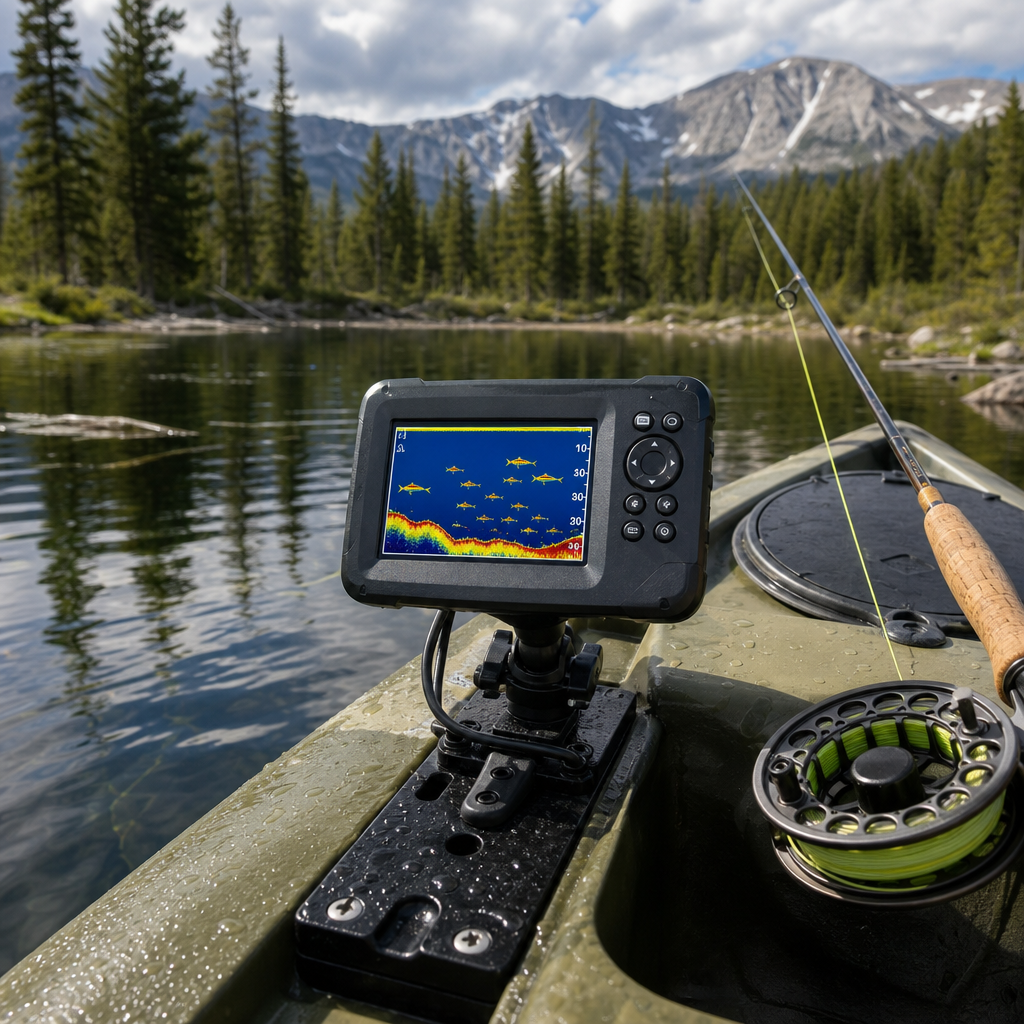
Choosing the best fly fishing fish finders for kayaks is less about buying the most expensive screen and more about matching sonar technology, battery life, mounting options, and map features to the realities of paddling, casting, and landing fish from a small craft. In kayak fly fishing, a fish finder is a compact sonar and GPS unit that helps anglers identify depth, bottom contour, vegetation, bait concentrations, and temperature changes without sacrificing deck space or stability. A true kayak-ready unit must be bright enough to read in direct sun, efficient enough to run from a lightweight battery, and simple enough to operate with wet hands while managing a paddle and fly rod. This matters because fly anglers rarely troll aimlessly; we hunt structure, seams, drop-offs, and transition zones where fish feed, and electronics shorten that search dramatically. After rigging and testing units on sit-on-top kayaks, pedal kayaks, and minimalist stillwater setups, I have seen how the right technology can turn a blind shoreline drift into a deliberate pattern based on contour lines, suspended marks, and temperature breaks. This guide serves as a hub for technology reviews within product reviews and recommendations, so it covers the major categories, the standout models, the strengths and tradeoffs of each, and how to choose the right tool for lakes, rivers, salt marshes, and inshore flats.
What makes a fish finder good for kayak fly fishing
The best kayak fish finder for fly fishing combines four essentials: clear sonar, practical GPS, compact mounting, and low power draw. Traditional powerboats can hide oversized transducers, 9-inch displays, and heavy lead-acid batteries, but kayak anglers need cleaner rigging. Fly line catches on protruding mounts, and every extra pound affects tracking and acceleration. That is why units in the 4- to 7-inch range dominate serious kayak setups. They provide enough detail to read contour changes while staying manageable on a track mount or center console.
Sonar matters more than flashy menus. CHIRP sonar sends a sweep of frequencies instead of a single ping, producing sharper target separation and better bottom definition. Down imaging adds a more picture-like view of brush piles, rock edges, and weed lines. Side imaging can be useful on wider water, but on many kayaks it is a luxury rather than a necessity because the transducer is larger, more exposed, and more power hungry. GPS mapping is equally important. Marking a shoal, spring seep, weed edge, or productive drift line lets you repeat success rather than rely on memory. If you fish reservoirs, Great Lakes bays, or tidal estuaries, preloaded mapping or compatibility with Navionics, C-MAP, or LakeVü is a major advantage.
Durability also separates good units from frustrating ones. A kayak fish finder must tolerate spray, rain, occasional paddle strikes, and frequent transport. Look for waterproof ratings, glove-friendly controls, and screens that remain readable through polarized lenses. Finally, battery efficiency cannot be overlooked. Lithium iron phosphate batteries have become the standard because they are lighter, safer, and hold voltage better than sealed lead-acid options. A well-matched 10Ah lithium battery often powers a modern 5-inch unit through a full day.
Top fish finder technologies and the models that lead this category
If you want the best all-around fish finder for kayak fly fishing, the Garmin Striker Vivid 5cv is one of the safest recommendations. It delivers CHIRP traditional sonar and ClearVü scanning sonar in a compact package, with a bright 5-inch display and a straightforward menu system. It lacks full cartography compared with Garmin’s Echomap line, but for anglers who prioritize target detection, waypoint marking, and ease of use over advanced mapping, it offers excellent value. I recommend it often to intermediate kayak anglers because setup is fast and the display remains legible in harsh midday glare.
For anglers who need serious mapping, the Garmin Echomap UHD2 53cv or 73sv is stronger. The UHD2 series pairs crisp sonar with charting support, touchscreen options on some models, and access to Garmin’s broader ecosystem. On larger pedal kayaks used for stillwater trout, bass, or pike, the 73sv gives enough screen space to split traditional sonar, ClearVü, and maps without crowding. The tradeoff is cost and footprint. A 7-inch screen is luxurious but can interfere with line management if mounted poorly.
Humminbird remains a leader for anglers who want side imaging. The Helix 5 CHIRP SI GPS G4 and Helix 7 models provide excellent structure scanning and strong LakeMaster compatibility. On open lakes, side imaging helps identify weed edges, submerged timber, and bait schools before you paddle directly over them. For fly anglers who blind-cast points, shoals, and flats, this can save significant time. The downside is that side imaging transducers are larger and can be vulnerable on shallow launches, rocky rivers, or cartopping routines.
Lowrance offers compelling options through the Hook Reveal and Elite FS lines. The Hook Reveal 5 SplitShot is a practical entry-level to midrange choice, combining CHIRP, DownScan, and autotuning sonar with useful mapping features on selected packages. The Elite FS adds Active Imaging and broader networking potential, making it better suited to anglers who want premium charting and future expansion. In my experience, Lowrance interfaces feel especially strong for users who like custom page layouts and finer sonar tuning.
For ultra-minimalist kayak fly fishers, castable and wireless systems deserve mention. The Deeper CHIRP 2 and Deeper PRO+ 2 can be deployed without a permanent transducer mount, and they pair with a smartphone for sonar and GPS logging. These are attractive on inflatable kayaks, packrafts, and stripped-down stillwater craft. However, they are not a perfect replacement for a dedicated head unit. Phones overheat in sun, battery life becomes an issue, and touchscreen use with wet hands is inferior to physical buttons. They work best for anglers who prize portability over continuous, all-day scanning.
Best fish finders for different kayak fly fishing scenarios
The right choice depends heavily on where and how you fish. Coldwater stillwater trout anglers often need precise depth control, temperature awareness, and the ability to locate suspended fish over deep basins. In that setting, a Garmin Echomap UHD2 or Humminbird Helix 7 offers enough screen detail to track shoals, thermoclines, and bait. Bass and warmwater fly anglers working ponds, reservoirs, and vegetated lakes benefit from CHIRP plus down imaging, making the Striker Vivid 5cv and Hook Reveal 5 excellent fits. They reveal weed edges, channels, and brush without forcing a premium budget.
River kayak fly fishing changes the equation. In moving water, side imaging often matters less than fast readability, simple controls, and a transducer mount that survives shallow gravel bars. A compact Garmin Striker 4 or Striker Vivid 4cv is often enough to read runs, ledges, and depth changes while keeping rigging tight. Inshore salt marsh and bay anglers usually gain more from mapping and tide-aware waypointing. Here, a Lowrance Elite FS or Garmin Echomap becomes more valuable because returning to oyster bars, troughs, and channel bends is critical.
| Fishing scenario | Best fit | Why it works |
|---|---|---|
| Stillwater trout and deep lakes | Garmin Echomap UHD2 73sv | Strong mapping, larger split-screen view, excellent sonar detail for suspended fish and contour tracking |
| General lake fly fishing | Garmin Striker Vivid 5cv | Balanced price, simple operation, clear CHIRP and scanning sonar in a compact format |
| Vegetation, brush, and bass structure | Humminbird Helix 5 CHIRP SI GPS G4 | Side imaging helps locate weed lines, timber, and edges before paddling overhead |
| Rivers and shallow launches | Garmin Striker Vivid 4cv | Small footprint, lower risk, easy-to-read depth and contour information |
| Minimalist or inflatable kayaks | Deeper CHIRP 2 | No fixed display or permanent transducer mount required |
These recommendations work because kayak fly fishing is situational. There is no universal best unit, only the best match between water type, budget, and deck layout. That is the core principle behind any technology review worth trusting.
Mounting, batteries, and rigging without ruining your casting deck
A great fish finder becomes a bad purchase if the installation snags fly line or destabilizes the kayak. The cleanest setups usually use track-mounted arms from YakAttack, Railblaza, or Scotty paired with a compact battery box and a transducer arm or recessed scupper mount. On many sit-on-top fishing kayaks, a retractable transducer arm is the most flexible option because it can be lifted during launches or shallow drifts. On kayaks designed for electronics, a scupper transducer mount offers better protection and less drag. Adhesive in-hull mounting is less common now because it can weaken sonar clarity, especially with scanning transducers.
Display placement should prioritize line control. I mount screens far enough forward that stripping line does not constantly hit the bracket, but close enough that I can tap controls while seated. Centerline mounting works on pedal kayaks with open cockpits, while offset mounting can be better on narrower paddle kayaks. Cable management is equally important. Loose wires catch flies, anchor trolleys, and net handles. Heat-shrink connectors, dielectric grease, and waterproof pass-through fittings reduce corrosion and intermittent power issues, especially in saltwater.
Battery selection affects performance more than many buyers expect. A 10Ah lithium iron phosphate battery from Amped Outdoors, Norsk, Dakota Lithium, or Nocqua is usually the sweet spot for a 5-inch unit. Seven-inch screens, side imaging, and high-brightness backlighting may justify 12Ah to 20Ah. Lithium batteries maintain stable voltage, which helps electronics run predictably through long days. They also weigh far less than sealed lead-acid batteries. The main caution is charger compatibility; use the manufacturer-specified lithium charger and protect terminals inside a waterproof box or bag.
How to evaluate sonar readings and turn electronics into more fish
Owning one of the best fly fishing fish finders for kayaks does not guarantee success unless you know how to interpret what appears on the screen. Start with bottom hardness. A strong, bright return with a thicker bottom line usually indicates rock, gravel, or compacted substrate, while a softer, thinner return suggests mud or silt. That matters because trout, bass, pike, redfish, and panfish all relate differently to bottom composition and adjacent cover. Weed lines appear as rising irregular growth from the bottom; bait balls look like clustered clouds or speckles; individual fish show as arcs or target marks depending on speed, frequency, and screen settings.
Depth changes are often more important than fish icons. I regularly ignore symbol mode and watch for points, saddles, submerged creek channels, and abrupt contour shifts. In reservoirs, even a two-foot break next to standing timber can hold bass. In natural lakes, cruising trout may suspend along a thermocline or over deep bait. In tidal systems, a subtle trough beside a grass flat can funnel feeding fish on moving water. Mark the spot, note the wind direction, and set your drift so your fly tracks naturally across that zone.
Tuning matters too. Auto settings are much better than they used to be, but manual sensitivity and chart speed adjustments still improve results. Match chart speed roughly to kayak speed, and increase sensitivity until the screen shows useful detail without overwhelming clutter. Use down imaging to separate brush from fish when traditional sonar looks crowded. Over time, the fish finder becomes less of a gadget and more of an underwater map you read continuously.
Buying advice, value picks, and when not to overspend
The smartest buying strategy starts with three questions: What water do you fish most, how much deck space do you have, and do you actually need advanced mapping? If you mostly fish small lakes, ponds, and straightforward warmwater water, a Garmin Striker Vivid 5cv or Lowrance Hook Reveal 5 will cover almost everything at a sensible price. If you fish larger reservoirs, unfamiliar lakes, or inshore water where route planning and repeatable waypoints matter, step up to a chart-capable unit like the Garmin Echomap or Lowrance Elite FS. If side-looking structure scanning would genuinely change how you search water, a Humminbird Helix with side imaging makes sense.
Do not overspend on features you will not use. Networking, live sonar compatibility, and giant displays are appealing on showroom floors, but they add cost, battery demand, and complexity. Live sonar systems such as Garmin LiveScope or Lowrance ActiveTarget can be installed on larger kayaks, yet they are often excessive for dedicated fly fishing where line management and uncluttered movement matter. In many cases, better value comes from spending less on the head unit and more on proper mounting hardware, a reliable lithium battery, and quality maps.
As a hub article for technology reviews in product reviews and recommendations, the key takeaway is simple: the best fish finder for a kayak fly angler is the one that delivers readable sonar, practical GPS, efficient power use, and a clean installation that supports casting instead of interfering with it. Choose for your water, not for marketing claims. Compare screen size, sonar type, mapping support, transducer shape, and battery needs before buying. Then rig it carefully, learn to read contour and cover, and use each trip to build a more precise picture of the water you fish. If you are upgrading your electronics this season, start by narrowing your top three models and matching them to your kayak’s layout and your most common fisheries.
Frequently Asked Questions
What features matter most when choosing a fly fishing fish finder for a kayak?
The most important features are compact size, easy readability, efficient power use, reliable sonar, and kayak-friendly mounting options. Unlike a larger bass boat, a kayak gives you very limited deck space, so a unit has to fit cleanly without interfering with paddling, fly line management, or your casting stroke. A screen that is too large can become awkward on a small craft, while one that is too small may be hard to read in bright sunlight or rough water. For most kayak fly anglers, the sweet spot is a display that is clear and bright enough to interpret quickly but still compact enough to mount within easy reach.
Sonar capability is another major factor. A good kayak fish finder should help you identify depth changes, bottom hardness, weed edges, drop-offs, suspended bait, and temperature shifts. Those details matter in fly fishing because they help you position the kayak where fish are likely to feed, even if you are not using the unit to stare at fish icons. GPS and mapping also add real value, especially when you want to mark productive flats, channels, points, launch sites, or safe return routes. Many anglers underestimate how helpful waypoint marking can be until they try to relocate a subtle ledge or transition line on a windy day.
Battery life matters more on a kayak than it does on larger boats because you are usually relying on a small, portable battery. Efficient units that can run all day without demanding a bulky power setup are often a better fit than power-hungry models with oversized screens and advanced features you may never use. Finally, mounting flexibility is essential. The best fly fishing fish finder for a kayak should install securely, keep cables tidy, and avoid creating snags for fly line. In practical terms, that usually means choosing a system that balances sonar clarity, simple controls, manageable battery draw, and a clean, low-profile mount rather than just chasing the most expensive model on the market.
Is GPS and mapping really necessary on a kayak fish finder, or is basic sonar enough?
Basic sonar is enough for some anglers, but GPS and mapping are often worth the upgrade, especially for serious kayak fly fishers. Sonar tells you what is under the kayak right now, such as depth, contour changes, vegetation, and bait activity. GPS and mapping tell you where you are in relation to structure, routes, and previously marked spots. That difference becomes important when you are trying to return to a productive seam, submerged point, creek mouth, or offshore hump after wind, current, or a long drift pushes you off target.
For fly fishing from a kayak, positioning is everything. You are often trying to hold the kayak just outside shallow grass, maintain a precise angle to a drop-off, or repeat drifts over fish-holding water. GPS makes that easier because you can save waypoints, monitor your track, and navigate efficiently without guessing. Mapping is especially valuable on larger lakes, reservoirs, and coastal areas where small depth changes can make a big difference in fish location. Even if preloaded maps are basic, contour information can help you understand how underwater structure connects and where fish are likely to move throughout the day.
There is also a safety advantage. Kayak anglers frequently launch before sunrise, fish into low light, or cover water in changing weather. GPS can help you trace a route back to the launch and maintain orientation when shorelines look similar. That said, if you fish very small ponds, shallow marshes, or simple water where you always stay close to shore, a basic sonar unit can still be effective. The best choice depends on how and where you fish, but for many anglers, GPS and mapping quickly become features they would not want to give up once they have used them on a kayak.
How do you mount a fish finder on a kayak without getting in the way of fly casting and line control?
The key is to prioritize a low-profile, snag-free layout. Fly fishing from a kayak creates a unique challenge because loose fly line needs a clean path across your lap, deck, and stripping area. If the fish finder, transducer arm, battery box, or exposed cables intrude into that space, line will catch constantly and turn a useful tool into a frustration. The best mounting position is usually close enough to read while seated but off to the side enough that it does not block your paddle stroke or interfere with stripping line.
Many kayak anglers mount the display on a gear track beside the seat, where it can be adjusted for visibility and removed easily for transport. Others prefer a forward mount near the knees if the deck design supports it and the unit remains low enough to avoid snagging. The transducer can be installed in several ways depending on the kayak and fish finder model. Common options include a scupper mount, a transducer arm over the side, or an internal hull mount if the kayak and sonar type allow it. Each method has trade-offs in performance, protection, and convenience, so the right choice depends on your hull design and the waters you fish.
Battery placement also deserves attention. A compact sealed battery stored inside the hull or in a small waterproof box can help keep weight centered and the deck uncluttered. Cable routing should be secured tightly along tracks or through hull openings so nothing loops into your line path. In short, the ideal setup is one that gives you quick visibility and dependable sonar performance while preserving a clean cockpit. If the fish finder works well but constantly tangles your fly line, it is not really the best setup for kayak fly fishing.
What sonar type is best for kayak fly fishing: traditional sonar, CHIRP, side imaging, or down imaging?
For most kayak fly fishers, CHIRP sonar with reliable traditional 2D performance offers the best overall value and practicality. Traditional sonar is useful because it gives a clear real-time view of depth, bottom shape, and fish or bait activity beneath the kayak. CHIRP improves on that by transmitting across a range of frequencies, which usually results in better target separation, sharper returns, and more useful detail. That matters when you are trying to distinguish bait from clutter, identify the edge of a weed line, or understand how fish relate to bottom transitions.
Down imaging can also be helpful because it gives a more photo-like view of structure directly under the kayak. It can make brush, rock piles, timber, and vegetation easier to interpret, which is useful if you fish lakes and reservoirs where structure-oriented fish hold tight to cover. Side imaging is powerful too, but whether it is necessary on a kayak depends on your fishing style and budget. It allows you to scan water to the sides, which can be valuable for finding drop-offs, grass edges, bait schools, and structure without paddling directly over them. That said, side imaging often adds cost, power draw, and transducer complexity, and some kayak anglers simply do not need it for the smaller waters they fish.
If your primary goal is to find likely fish-holding water, monitor depth and contours, and make efficient decisions from a small craft, a quality CHIRP unit is often the smartest choice. If you regularly fish larger lakes, open reservoirs, or expansive flats and want more search capability, then adding down imaging or side imaging may be worthwhile. The best sonar type is not automatically the most advanced one; it is the one that gives you useful information in real kayak fishing conditions without overcomplicating your setup.
How much should you spend on a kayak fish finder for fly fishing?
Most anglers do not need to buy the most expensive model to get an excellent kayak fish finder for fly fishing. In many cases, the best value sits in the mid-range, where you can get dependable CHIRP sonar, a bright readable screen, GPS, waypoint marking, and sometimes mapping without paying for oversized displays or advanced networking features that make more sense on larger boats. Spending too little can leave you with a dim screen, weak interface, limited sonar detail, and poor long-term durability. Spending too much can saddle you with features that add bulk, battery demand, and complexity without meaningfully improving your success on a kayak.
A smart budget should account for more than the head unit alone. You also need to consider the total system cost, including the transducer, battery, charger, mounting hardware, wiring, and any kayak-specific accessories needed for a clean installation. Sometimes a reasonably priced fish finder becomes less of a bargain once you factor in all the extras. On the other hand, a slightly more expensive model may prove to be the better buy if it includes stronger GPS features, better screen visibility in sunlight, and a more efficient overall setup.
As a general rule, invest enough to get clear sonar, solid battery efficiency, and practical navigation tools, but stay focused on how you actually fish. A fly angler on a compact kayak usually benefits more from a streamlined, reliable, easy-to-read system than from a premium unit loaded with tournament-level features. The best purchase is the one that helps you locate structure, understand water depth and contour, mark productive areas, and fish confidently without cluttering the kayak or draining your battery before the day is done.