Finding the right fly fishing rod holder for your vehicle can save expensive gear, reduce setup time at the river, and make travel far less stressful. A vehicle rod holder is any rack, tube, or interior mounting system designed to secure assembled or broken-down fly rods during transport. For anglers who move between access points, fish before work, or take long road trips to destination waters, this piece of equipment matters more than many expect. I have used roof racks, suction systems, headliner straps, locking tubes, and truck bed mounts over years of guiding, testing gear, and driving rough forest roads, and the differences are significant. The best fly fishing rod holders for your vehicle balance protection, speed, capacity, weather resistance, theft deterrence, and compatibility with your car, truck, SUV, or van. They also need to fit how you actually fish. Someone hopping between spring creek bridges needs a different setup than an angler driving twelve hours to a steelhead river with four rods and two people in the cab.
This equipment category has expanded quickly because fly anglers now travel with more specialized rods: euro nymphing rods over ten feet, saltwater setups, compact backup rods, and two-hand rods. At the same time, vehicle designs have changed. Modern SUVs have sloping roofs, panoramic glass, airbags in pillars, and less forgiving interiors than older wagons. That means a rod holder that worked perfectly in a pickup ten years ago may be awkward or unsafe in a crossover today. Good equipment reviews therefore need to do more than list products. They need to explain rod length limits, reel clearance, mounting strength, lock design, aerodynamic drag, corrosion resistance, and whether a system can survive washboard roads, freezing temperatures, and repeated loading with wet gear. This article serves as a hub for equipment reviews within product recommendations by covering the main holder types, the leading brands, key buying criteria, and the tradeoffs that determine the best choice for different anglers.
What Makes a Great Vehicle Fly Fishing Rod Holder
A great rod holder does three jobs consistently: it prevents breakage, preserves convenience, and matches the vehicle without creating new problems. Breakage usually happens from impact, flex stress, or loose movement. If a holder allows rod tips to bounce, presses guides against a hard surface, or lets reels swing freely, damage becomes a matter of time. Convenience matters just as much because anglers stop using cumbersome systems. If loading takes five minutes per rod, people start laying rods across seats or dashboards, which defeats the purpose. Vehicle fit is the third factor. A roof system that whistles loudly, blocks garage entry, or interferes with hatch opening will become annoying fast.
In testing and day-to-day use, I look first at capacity, rod length support, mounting interface, security, and environmental durability. Capacity is not just the advertised number of rods. It also includes whether rods can be loaded with large arbor reels attached and whether fighting butts or oversized stripping guides fit cleanly. Length support is critical for ten- to eleven-foot nymph rods and switch rods. Mounting interface determines stability: crossbar clamps, suction cups, bed rail bolts, and headrest straps all behave differently under vibration. Security covers both accidental release and theft. Environmental durability includes UV resistance, stainless hardware, drain design, and whether road grime or saltwater residue can be cleaned out easily.
Another overlooked point is access style. Some holders open from both ends, some from one end, and some rely on open cradles or straps. Tube-style carriers give the best weather protection but are slower. Open interior holders are fastest but expose rods to accidental contact from passengers, dogs, and gear bags. Locking roof carriers can be ideal for road trips, while quick-grab cabin systems are better for anglers making repeated short moves along a river corridor. When reading equipment reviews, use your actual fishing day as the benchmark. The best product is the one that supports your routine with the fewest compromises.
Roof-Mounted Rod Holders: Best for Capacity and Exterior Protection
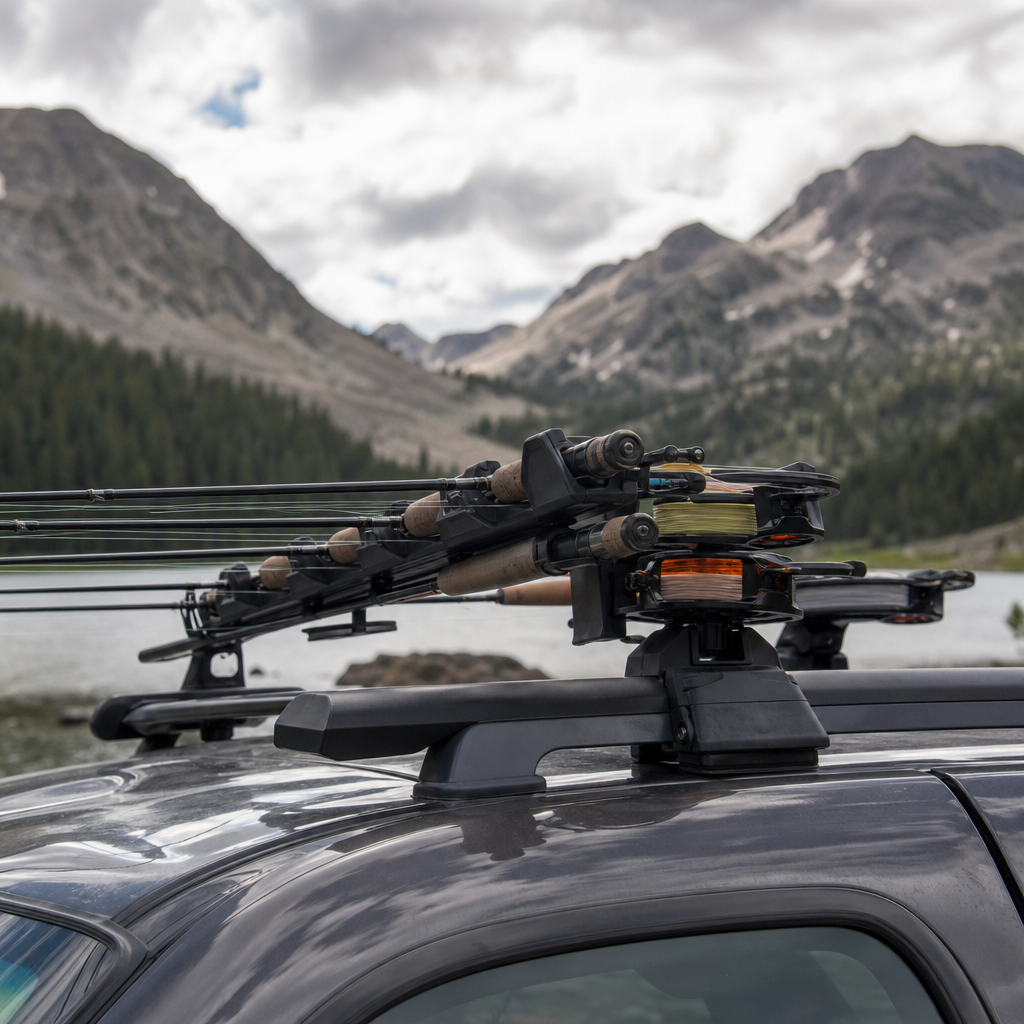
Roof-mounted rod holders are the most recognizable option and, for many anglers, the most practical when carrying multiple assembled rods. The benchmark products in this category come from brands such as River Quiver and Yakima. River Quiver popularized the premium fly rod vault: a lockable, aerodynamic tube system that mounts to roof crossbars and carries assembled rods in enclosed compartments. In real use, these systems shine on road trips, guide days, and situations where interior space is already occupied by coolers, waders, dogs, or passengers. A quality roof vault protects rods from direct weather, keeps the cabin uncluttered, and reduces the chance of someone stepping on gear during hurried stops.
The main advantages are capacity and protection. Depending on the model, a roof vault can hold two, four, or more rods, often up to ten feet or longer. Hard-shell construction shields rods from branches, rain, and most road debris. Locking end caps add basic theft deterrence, though no exterior system should be treated as completely theft-proof. The tradeoffs are height, cost, and loading complexity. Roof carriers can add enough height to matter in garages, drive-throughs, and trailhead branches. They also create some wind noise and fuel economy penalty, although aerodynamic designs minimize both. Premium models are expensive, especially once crossbars and locks are included.
Yakima’s TopWater is slightly different from a full tube vault. It uses a padded enclosed tray design and fits conventional rack systems well, making it attractive for anglers who already own Yakima or Thule crossbars. It handles shorter assembled rods effectively and is easy to integrate into multi-sport roof setups, but it generally offers less enclosed rigidity than a dedicated fly rod vault. For anglers who split time between fly fishing, skiing, and paddling, that flexibility can outweigh the specialized design of a tube carrier. For a dedicated fly angler who regularly transports premium rods over distance, a purpose-built vault remains the stronger long-term choice.
Interior Rod Holders: Fast Access and Better Fuel Efficiency
Interior rod holders are ideal for anglers who want quick access, lower cost, and no added roof height. These systems usually mount to grab handles, headrests, coat hooks, or rear cargo points using straps, clips, or telescoping bars. Brands such as Tuf-Line, Trout Mount, and various truck-specific makers offer versions that suspend rods near the headliner or along the rear window area. In practice, they work best in SUVs, wagons, vans, and pickups with extended cabs, where there is enough uninterrupted length to store rods safely without sharp bends.
The biggest advantage is speed. You can slide a rod into an interior rack in seconds and keep reels protected from road grime, rain, and theft visibility. Fuel efficiency stays unchanged because nothing is on the roof. Interior holders are also quieter and usually cheaper than roof-mounted vaults. The downside is space conflict. Rods occupy cabin or cargo volume, and in some vehicles they can interfere with passengers, child seats, rear visibility, or side-curtain airbag zones. That last issue matters. Any strap or mount placed near airbag deployment paths must be evaluated carefully using the vehicle manual. Convenience is not worth compromising safety.
Interior systems also vary widely in rod support quality. The best designs immobilize both butt and tip sections and separate rods so guides do not tangle. Basic bungee setups may seem economical but often allow enough movement to chip guides or rub blanks. I strongly prefer systems with defined anchor points and soft contact surfaces, especially for graphite rods with light swing-weight designs. If your fishing involves frequent short relocations between runs, however, an interior holder can be the most efficient option available. It keeps rods assembled, accessible, and protected without any need to climb on door sills or roof rails.
Truck Bed, Window, and Specialty Mounts for Niche Setups
Truck owners have additional choices that can be excellent in the right use case. Bed-mounted holders, vertical cab-back racks, and locking tubes attached to bed rails all appeal to anglers with pickups. These systems work especially well when the truck is already outfitted for hunting, overlanding, or drift boat towing. A bed rail mount can carry rods without occupying cab space, and some tube-based systems are highly secure and weather resistant. The challenge is dust, vibration, and exposure. An open bed is a harsh environment, especially on gravel roads. If rods are not in a rigid enclosed tube, expect accelerated wear and contamination.
Window and suction-cup systems are another specialty category. They can be useful for temporary travel, rental vehicles, or guides who switch rigs often. High-quality suction mounts used on clean glass can hold surprisingly well, but they are less confidence-inspiring in temperature swings, on dirty surfaces, or over long rough-road drives. I treat them as situational solutions rather than primary long-term systems. They solve a problem, but they rarely provide the durability and theft resistance that serious anglers want from a permanent vehicle rod holder.
| Holder type | Best for | Main advantage | Main drawback |
|---|---|---|---|
| Roof vault | Road trips, multiple rods, premium protection | Weather shielding and lockable storage | High cost and added vehicle height |
| Interior rack | Frequent river moves, fast access | Quick loading with no drag penalty | Uses cabin space and may limit passengers |
| Truck bed tube | Pickup owners with dedicated setups | Strong capacity without crowding cab | Dust and vibration if not fully enclosed |
| Suction or temporary mount | Rental vehicles, occasional use | Easy installation and removal | Lower long-term confidence and security |
Specialty mounts make sense when they match a specialized vehicle routine. A drift boat guide with a pickup may love a locking bed tube. A traveling angler in a rental SUV may prefer removable interior straps. A dedicated review should always judge these products within their intended context rather than against a universal standard.
Top Brands and Standout Products Worth Reviewing
Among premium brands, River Quiver remains one of the strongest references because it built a category around roof-mounted fly rod vaults. Its products are known for aluminum construction, clean fit and finish, and rod lengths tailored to modern fly setups. They are expensive, but the durability is real. I have seen them survive years of sun exposure and rough travel with only routine hardware checks. Yakima deserves equal attention for broader rack ecosystem compatibility. Its fishing-focused carriers integrate well if you already run bike trays, ski boxes, or kayak mounts and want one roof system to handle everything.
For interior storage, product quality is more fragmented, and that is exactly why equipment reviews matter. Many interior holders sold online look similar but differ in strap material, buckle strength, reel clearance, and long-term sag. Reviews should measure whether a ten-foot four-weight with reel mounted can sit level, whether guides catch when loading, and whether repeated tension changes loosen anchor points. In truck applications, local fabricators and niche brands sometimes outperform mass-market options because they design around specific rail systems or cab dimensions. That makes fit verification essential before purchase.
When evaluating standout products, I use a simple standard: would I trust this holder with a premium fly rod on a washboard access road at highway speed? If the answer is not clearly yes, it does not belong near the top of the category. Marketing language is easy. Reliable retention, corrosion-resistant hardware, quality padding, and predictable loading are what separate genuinely good products from accessories that look useful in a catalog.
How to Choose the Best Rod Holder for Your Vehicle and Fishing Style
Start with rod length and vehicle shape. Measure your assembled rods from butt to tip and compare that to both the holder’s usable length and your vehicle’s real interior dimensions. Do not estimate. A system that claims ten-foot compatibility may not accommodate a long fighting butt, large reel, or oversized stripping guide placement. Next, define how many rods you truly carry. Many anglers buy for a theoretical maximum instead of a normal day. If you usually carry two rods, a smaller faster-loading system may serve you better than a bulky four-rod carrier.
Then consider where you fish. Urban anglers should prioritize locking features and discreet appearance. Saltwater anglers need corrosion resistance and easy rinsing. Backcountry anglers on rough roads need rigid mounts with minimal vibration. Guides should value loading speed, one-handed access, and durability under constant use. Families need to think about passenger comfort and safety more than solo anglers do. Finally, calculate full-system cost. Roof holders may require crossbars, locks, and vehicle-specific towers. Interior systems may need adapters or custom anchor points. The right buying decision comes from total fit, not the base price alone.
The core takeaway is simple: the best fly fishing rod holder for your vehicle is the one that protects rods consistently while matching your travel habits, vehicle layout, and security needs. Roof-mounted vaults lead for capacity and weather protection. Interior holders win on speed, simplicity, and efficiency. Truck bed and specialty systems can be excellent when tailored to the vehicle. Use equipment reviews to verify real fit, loading ease, and durability instead of relying on product photos alone.
As the hub for equipment reviews in product recommendations, this guide should help you narrow the field before diving into brand-specific comparisons. Identify your vehicle type, longest rod, normal trip length, and tolerance for cost and installation. Then choose the holder style that removes friction from your fishing day rather than adding it. A good rod holder protects expensive gear, shortens transition time, and lets you focus on reading water instead of untangling rods in a parking lot. If you are building a better fly fishing travel setup, start by selecting the holder category that fits your routine, then compare the leading products within that class.
Frequently Asked Questions
What is the best type of fly fishing rod holder for a vehicle?
The best type of fly fishing rod holder depends on how you travel, how often you fish, and whether you want to carry rods assembled or broken down. In general, vehicle rod holders fall into three main categories: roof-mounted systems, interior holders, and portable suction- or strap-based options. Roof-mounted holders are popular for anglers who want quick access and need to move between spots efficiently with fully rigged rods. They keep the cabin clear and can hold multiple setups, but they expose gear to weather, road grime, low branches, and theft risk if you leave the vehicle unattended. Interior holders, such as ceiling-mounted or headrest-based systems, offer better protection from the elements and often make more sense for anglers driving trucks, SUVs, vans, or wagons with enough cabin length. These are especially useful if you want to protect expensive fly rods and reels during long drives. Portable systems can be convenient for occasional use or for anglers who switch vehicles, but long-term durability and security vary by brand and design.
For most anglers, the “best” holder is the one that balances security, ease of use, and compatibility with the vehicle you already own. If you regularly fish before work or hop from one access point to another, a holder that lets you leave rods strung and ready can save a surprising amount of time. If you drive long distances to destination water, protecting rods from vibration, impact, and weather may matter more than instant access. It is also smart to consider reel clearance, the number of rods you typically carry, whether your vehicle fits in garages or parking decks, and how easy the system is to install and remove. A great rod holder should not just carry your rods—it should reduce hassle, protect costly gear, and make your day on the water smoother from the first mile to the last.
Are roof-mounted fly rod holders safe for expensive rods and reels?
Roof-mounted fly rod holders can be safe, but only when they are well-built, properly installed, and used with realistic expectations. High-quality roof systems designed specifically for fishing rods typically use enclosed tubes or padded channels that limit movement and protect rods during travel. These can work very well for assembled rods, especially for anglers who cover short to moderate distances between local spots. The main advantage is convenience: you can keep rods rigged, avoid constant assembly and breakdown, and get on the water faster. That said, “safe” does not mean risk-free. Roof transport exposes rods and reels to wind, rain, dust, road debris, UV exposure, temperature swings, and accidental impacts from tree limbs, drive-throughs, garages, and low overhangs. Those risks increase significantly on highways and on long road trips.
If you use a roof-mounted holder for premium fly gear, it is worth being disciplined about how and when you use it. Make sure the rod holder is securely attached to the crossbars or roof system, confirm that rods are locked or retained tightly enough to prevent shifting, and check that reels are protected from banging against hard surfaces. Remove loose flies, indicator rigs, or long leaders that could whip around in the wind. It is also wise to inspect the setup at every stop, especially after rough roads or high-speed driving. For daily commuting to nearby rivers, a roof holder can be a major convenience. For expensive rods on multi-hour highway drives, many experienced anglers still prefer an interior system or a travel case for extra peace of mind. In other words, roof-mounted holders are absolutely useful, but their safety depends as much on how you use them as on the product itself.
Can I transport fully assembled fly rods inside my vehicle?
Yes, many anglers transport fully assembled fly rods inside their vehicle, and in many cases it is one of the safest and most practical options available. Interior rod holders are especially useful in SUVs, crossovers, trucks with extended cabs, vans, and wagons where there is enough length to span the cabin without putting stress on the rod. Common setups include ceiling-mounted racks, headrest-supported horizontal holders, and rear cargo-area systems that secure rods above passengers or along one side of the vehicle. The biggest advantage is protection: rods stay out of the weather, away from road debris, and far less vulnerable to theft or accidental impacts from outside hazards. If you fish frequently and want to keep a couple of rods ready to go, an interior holder can make your routine much easier while offering better overall protection than many external options.
That said, interior transport only works well when the holder is designed to keep rods stable and clear of passengers, pets, and everyday cargo. You do not want rod tips bouncing with every bump or reels getting snagged by bags and jackets. Good interior systems should keep rods suspended or braced so they cannot slide, flex unnaturally, or get crushed by other gear. Before buying, measure your cabin carefully and think about how the holder will affect rear-seat access, visibility, and use of cargo space. Also consider your longest rod length, especially if you fish longer euro nymphing or stillwater setups. For anglers with the right vehicle layout, transporting assembled rods inside is often the sweet spot between speed and security. It saves time at the river, reduces wear from constant rigging, and keeps costly rods and reels better protected during everyday travel.
How many fly rods should a vehicle rod holder carry?
The right capacity depends on your fishing style, not just on how many rods a product can physically hold. A solo angler who carries one dry-fly setup and one nymph rig may be perfectly served by a two-rod holder. Someone who fishes with a partner, guides part-time, or likes to keep multiple line weights ready may need space for four or more rods. Capacity matters because overloaded rod holders are more likely to create tangles, pressure points, and unnecessary wear on blanks, guides, and reels. A holder that advertises room for many rods may not handle them well if larger reels, fighting butts, or bulkier setups crowd the available space. In practice, usable capacity is often lower than the maximum number listed on the box.
It is usually better to choose a rod holder with a little extra room rather than one you have to pack tightly every trip. That gives you flexibility for different techniques, backup rods, or fishing with a partner, and it makes loading and unloading much easier. Think beyond the rod count and evaluate spacing, reel clearance, access speed, and whether the holder works with the rod lengths you actually fish. If you often change setups throughout the day, a holder that keeps rods separated and easy to grab is far more useful than one that simply crams in the highest number possible. In other words, buy for real-world use, not just stated capacity. A slightly larger, better-organized holder will usually protect your gear better and make your time on the road and at the river much less frustrating.
What should I look for when choosing a fly fishing rod holder for my vehicle?
Start with fit and compatibility. The first question is whether the holder matches your specific vehicle type and your preferred way of transporting rods. A roof-mounted tube or rack may be ideal for one angler and completely impractical for someone who parks in a garage every day. An interior ceiling rack might be excellent in a full-size SUV but awkward in a compact sedan. Once you narrow down the style, focus on how the holder secures rods, how much vibration control it provides, and whether it protects reels as well as blanks. Materials matter too. Look for corrosion-resistant hardware, UV-stable components, quality padding or liners where rods contact the system, and mounting points that will not loosen over time. If the holder is removable, ease of installation is important. If it is more permanent, long-term durability becomes even more critical.
You should also pay close attention to practical details that affect daily use. Consider rod length capacity, number of rods, locking or security features, weather resistance, noise while driving, and how quickly you can load and unload gear. If you travel long distances, stability at highway speed is essential. If you fish before work or stop at multiple access points in a day, quick access may matter most. Theft deterrence is another overlooked factor, especially with visible roof systems. Finally, think about the total ownership experience: does the holder protect the rods you actually own, fit the way you actually fish, and reduce stress instead of creating extra steps? The best fly fishing rod holder is not simply the most expensive or the most popular. It is the one that protects valuable gear, fits your vehicle cleanly, and makes every trip to the water easier, faster, and more reliable.