Choosing the best fly fishing boat is less about finding a single perfect hull and more about matching water type, casting style, storage needs, and transport limits to the right platform. In equipment reviews, boats deserve hub-level treatment because they influence every other purchase, from anchor systems and oars to rod storage, electronics, and safety gear. A fly fishing boat can mean a frameless inflatable raft, a drift boat, a skiff, a pram, a pontoon craft, or a compact jon boat adapted for clean fly presentations. Each design solves a different problem. After years of testing boats on tailwaters, freestone rivers, warmwater reservoirs, and shallow flats, I have learned that the best choice usually comes from constraints first and preferences second.
That distinction matters because many anglers shop by brand reputation alone and end up with a boat that is excellent on paper but frustrating on the water. A technical drift boat rows beautifully through standing waves yet can be excessive for a solo angler who mostly fishes stillwater launches. A lightweight inflatable packs small and opens access to remote reaches, but it may not track well in afternoon wind on open lakes. The core review question is simple: where will you fish most often, how will you launch, and what compromises are acceptable? Answer those clearly and the best fly fishing boats become easier to compare objectively.
For this equipment reviews hub, the goal is to cover the main categories, explain how they perform, and identify who should buy each one. Good reviews should assess hull design, stability, draft, rowing efficiency, standing confidence, durability, carrying capacity, maintenance, and resale value. They should also consider standards and materials such as welded aluminum, rotomolded polyethylene, PVC, urethane coatings, drop-stitch floors, and marine-grade hardware. Price matters, but ownership cost matters more. A boat that is easy to trailer, clean, and repair often proves cheaper over five seasons than a lower-priced model that wears quickly or limits fishing opportunities.
If you are building out a complete gear plan, this article serves as the starting point for deeper reviews on rods, reels, anchors, fish finders, life jackets, trailers, and boat bags. The categories below cover the boats most fly anglers actually use and the practical criteria that separate good designs from expensive mistakes.
What Makes a Boat Good for Fly Fishing
The best fly fishing boats share several traits regardless of category. First, they provide a clean casting environment. That means uncluttered decks, minimal line-catching hardware, good rod management, and enough open space to shoot line without constant tangles. Second, they balance stability with efficient movement. Primary stability keeps an angler comfortable when stepping aboard or false casting from a standing position. Secondary stability matters when the hull heels in current or chop. Third, they support controlled boat positioning. Fly fishing is often about angle and drift, so rowing geometry, anchor compatibility, and responsiveness to oars or trolling motors count more than top speed.
Material choice is equally important. Aluminum remains a favorite for river boats because it is stiff, repairable, and durable around rocks. Polyethylene hulls can be quieter and lower maintenance, though heavier for their size. Inflatables vary widely: quality PVC with welded seams can last many seasons if stored properly, while inexpensive glued boats often fail at stress points. For saltwater use, corrosion resistance, sealed electrical systems, and hardware quality become essential. A useful review also checks weight ratings honestly. Manufacturers may publish generous capacity numbers, but practical fishing capacity is lower once batteries, coolers, anchors, rods, and two adult anglers are aboard.
Transport and launch style shape the decision as much as fishing performance. Some anglers have a garage, trailer space, and easy ramps. Others need a rooftop option, a truck-bed solution, or something that rolls into a closet. The best boat is the one you launch often. I have seen anglers buy beautiful technical skiffs and use them six times a year, while a compact raft or pram gets used every week because setup is simple. Frequency of use is a major value metric in any boat review.
Best Boat Types for Different Waters
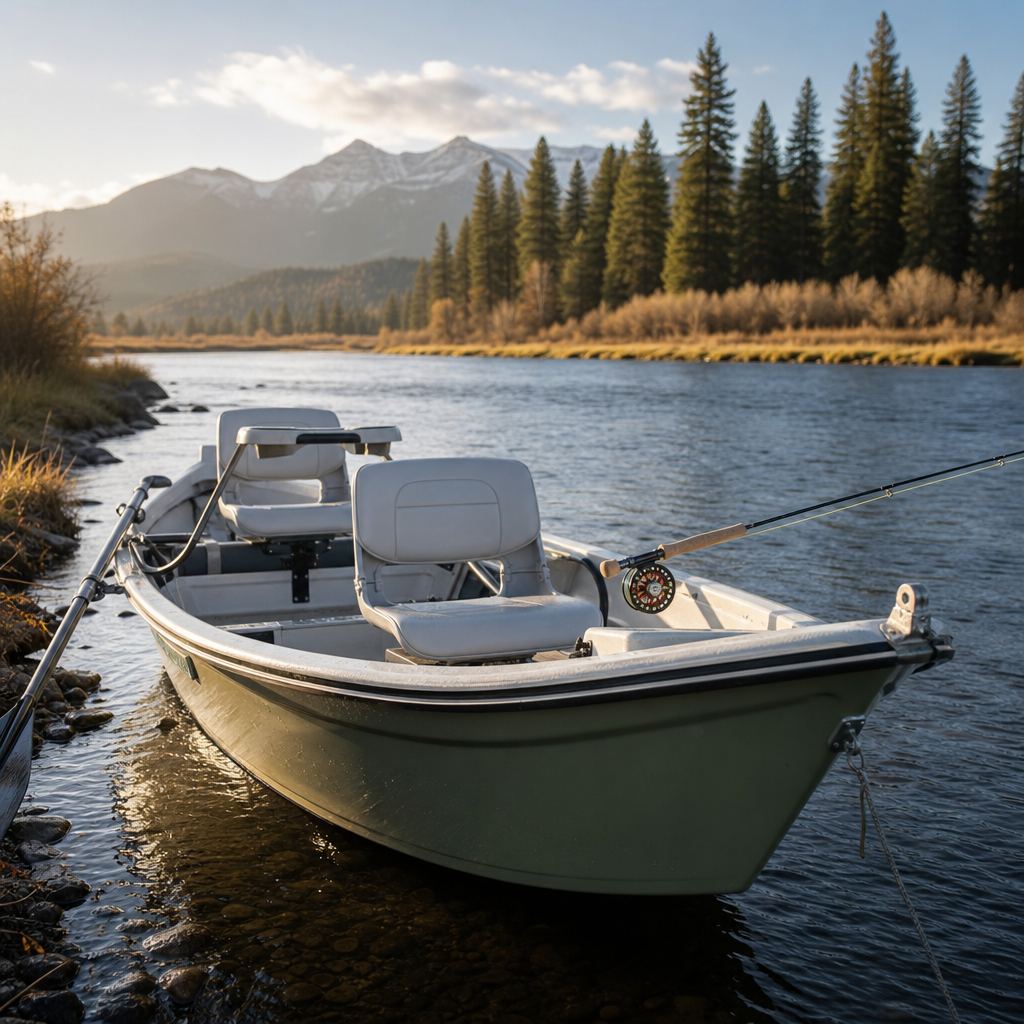
Fly fishing boats fall into clear use cases, and those use cases are more useful than marketing labels. Drift boats are the benchmark for moving rivers. They row precisely, draft shallow enough for many Western systems, and let anglers fish while the rower controls speed and angle. Brands such as ClackaCraft, Hyde, and StealthCraft have built strong reputations because they focus on hull balance, chines, and interior layout that support actual fishing, not just transport. If your priority is floating rivers with one or two anglers and a dedicated rower, a drift boat is often the best tool available.
Inflatable rafts and catarafts excel where access is rough, gradients are technical, or storage is limited. NRS, Aire, and Outcast have proven designs that tolerate rocky launches and can be customized with fishing frames. These boats shine on rivers where impact resistance and portability matter more than hard-hull tracking. Pontoon boats occupy the solo niche well, especially on smaller rivers and lakes. They are maneuverable, affordable relative to larger craft, and easier to store, though they expose the angler more to wind and weather.
For lakes and warmwater fisheries, prams, skiffs, and modified jon boats often outperform river-specific craft. A pram from makers such as Riverboat Works offers compact stillwater utility with excellent fishability. Technical poling skiffs dominate on flats because they draft shallow, pole quietly, and provide elevated casting decks. On reservoirs, an aluminum jon boat or purpose-built microskiff can be a smart crossover option if fitted with stable decks, smart storage, and a quiet electric setup. These boats are not glamorous in every case, but they can be extremely effective for bass, pike, carp, and large stillwater trout.
| Boat type | Best use | Main advantage | Main limitation |
|---|---|---|---|
| Drift boat | Rivers with current | Precise rowing and controlled drifts | Needs trailer and river access |
| Inflatable raft/cataraft | Rough access and rocky rivers | Portable and impact tolerant | More wind affected on flat water |
| Pontoon boat | Solo river and lake fishing | Affordable and easy to store | Limited passenger and gear capacity |
| Pram or skiff | Lakes, ponds, flats, calm water | Stable casting platform | Less capable in technical whitewater |
| Jon boat | Reservoirs and warmwater fisheries | Versatile and budget friendly | Can be noisy without thoughtful rigging |
Drift Boats: The Benchmark River Choice
When anglers ask for the best fly fishing boat for rivers, I usually start with drift boats because the category is so specialized and so refined. A good drift boat rows from the middle seat, keeps anglers elevated at bow and stern, and slips sideways efficiently for mends, nymph drifts, and streamer swings. Hull shape matters enormously. A wide bottom improves stability and standing comfort. Higher sides add security in waves but increase wind profile. Chine design influences how sharply the boat responds when ferrying or pivoting into seams.
ClackaCraft models are often praised for fit and finish, while Hyde has long been respected for practical fishability and river manners. StealthCraft expanded expectations by integrating modern storage, cleaner lines, and guide-friendly layout choices. In use, the best models reduce fatigue for the rower. That sounds small until a full day of backrowing through fast current proves otherwise. Efficient geometry saves energy and improves safety. Hard floors, grippy decking, and sensible seat placement also matter because clients or fishing partners stand, strip line, and move unexpectedly.
The limitations are straightforward. Drift boats require a trailer, decent launch access, and a rower who understands current. They are not ideal for big open lakes in heavy wind, and they demand off-season storage. Still, if most of your fishing happens on floatable rivers, this category remains the standard against which others are judged.
Inflatable Boats and Pontoons for Flexibility
Inflatables appeal to practical anglers because they solve real logistics problems. A raft or cataraft can handle primitive launches, absorb contact with rocks, and store more easily than a hard boat. Modern drop-stitch floors improve rigidity, while modular frames let owners add anchor systems, casting braces, cooler mounts, and dry boxes. I have used NRS and Aire setups that transformed from family float rigs into effective fishing platforms with only a few hardware changes. That versatility is a major reason these boats perform so well in reviews.
Pontoon boats are the simplest entry point for many solo anglers. Outcast, Scadden, and other brands have offered compact models that fit in a pickup bed and can be assembled quickly at the water. They are excellent for covering banks on lakes, sneaking down mellow rivers, and reaching water inaccessible to trailers. Fins can even turn some models into efficient stillwater kick boats. For anglers who fish alone often, that independence is hard to beat.
The tradeoffs are real. Inflatables are more vulnerable to wind drift, slower on flat water, and generally less refined for standing casts unless the frame is designed well. They also require drying and proper storage to avoid mildew, UV degradation, and valve issues. Budget models can disappoint quickly, so seam construction, denier rating, floor design, and warranty support deserve close scrutiny before purchase.
Skiffs, Prams, and Jon Boats for Lakes and Flats
Stillwater and shallow saltwater demand a different review lens. Here, quietness, draft, deck layout, and motor integration become central. Prams are exceptionally useful for trout lakes because they launch easily, drift predictably, and allow one or two anglers to fish in comfort. Their compact size keeps costs manageable and simplifies storage. If your home water is a chain of lakes or a large reservoir with developed ramps, a pram can deliver more fishing efficiency than a bigger boat that sits unused.
On the flats, technical skiffs and microskiffs dominate because they pole shallow, carry fly line cleanly, and create stable elevated casting positions. Maverick, Hells Bay, and similar builders have shaped this category with advanced hulls designed for sight fishing redfish, bonefish, and permit. These boats are specialized and expensive, but for poling over grass or sand they are unmatched.
Modified jon boats deserve more respect in fly fishing equipment reviews than they usually get. A well-rigged aluminum jon with a front deck, quality trolling motor, lithium battery system, line-friendly flooring, and organized storage can be a superb platform for bass, pike, carp, and panfish. The key is reducing noise and clutter. Bare aluminum echoes every dropped plier. Exposed cleats and hinges grab fly line constantly. Smart rigging fixes both problems and turns an inexpensive hull into a highly effective fly fishing boat.
How to Review Features Before You Buy
The most reliable boat reviews look beyond brochure claims and test specific features under fishing conditions. Start with layout. Stand where you will actually cast and check whether line can snag under seats, on latches, around cup holders, or near anchor rope. Look at rod storage length, access to dry compartments, and whether net placement blocks back casts. Then assess boat control. Oar position, seat height, hull response, and anchor placement determine how well you can hold seams, pivot on fish, or slow a drift through productive water.
Safety deserves equal weight. Capacity plates, personal flotation device storage, non-slip surfaces, and transom integrity are basic checks. If the boat uses electronics, inspect wiring quality, fuse protection, battery mounting, and waterproofing. For trailers, evaluate bunks, winch alignment, tongue weight, and brake requirements. The National Marine Manufacturers Association certification can indicate adherence to established manufacturing standards, though it is not the only sign of quality. On inflatables, ask about seam construction, fabric weight, pressure recommendations, and patch procedures.
Ownership questions often reveal more than showroom impressions. How easy is the boat to clean after zebra mussel inspections or saltwater use? Can one person launch it? Are replacement parts easy to get in season? Is the resale market strong? These are the questions experienced owners ask because they determine whether a boat remains an asset or becomes a storage headache.
Best Buying Strategy for This Equipment Reviews Hub
If this page is your starting point for equipment reviews, narrow the field by fishery first, crew second, and transport third. A river angler with two regular partners should shortlist drift boats and framed rafts. A solo angler with limited storage should compare pontoon boats and compact inflatables. A stillwater trout angler should focus on prams, electric-ready microskiffs, and practical cartop options. A warmwater angler on reservoirs may get the best value from a modified jon boat with fly-specific rigging upgrades.
Budget should include the full system, not only the hull. Oars, anchors, trailer upgrades, registration, pumps, batteries, life jackets, casting braces, and maintenance supplies can add thousands of dollars. In my experience, the smartest buyers leave room for setup improvements after a few trips instead of spending every dollar on the base boat. Reviews are most useful when they help you buy for your real water, not your imagined future. Match the platform to the fishing you already do, then build the rest of your equipment around that core decision.
The best fly fishing boats are the ones that increase time on the water, improve boat control, and create cleaner casting opportunities without adding unnecessary hassle. Drift boats remain the top river choice for guided-style floats and precise rowing. Inflatables and pontoons win on access, portability, and flexibility. Prams, skiffs, and well-rigged jon boats excel on lakes, reservoirs, and flats where stable decks and quiet positioning matter more than whitewater performance. Across every category, the right review criteria are consistent: hull design, stability, layout, durability, launch practicality, safety, and real ownership cost.
As the hub for equipment reviews under product reviews and recommendations, this page should guide your next steps, not end the process. Use it to identify the boat category that fits your fisheries, then compare brand-specific reviews, accessory guides, and maintenance recommendations with that use case in mind. A thoughtful boat purchase improves every trip and makes every other gear decision easier. Start with your water, shortlist the right hull style, and review the details before you buy.
Frequently Asked Questions
What type of fly fishing boat is best for different kinds of water?
The best fly fishing boat depends heavily on where you fish most often. If you spend your time on moving rivers, especially technical trout water, a drift boat or inflatable raft is often the most practical choice. Drift boats excel in controlled downstream fishing, offer stable casting platforms, and usually provide room for multiple anglers, rods, anchor systems, and dry storage. Inflatable rafts, especially frameless or modular models, are lighter, easier to transport, and more forgiving around rocks, which makes them ideal for remote access, shallow runs, and anglers who need flexibility over polish.
For lakes, reservoirs, and calm backwaters, a pram, skiff, or compact jon boat may make more sense. These boats typically provide better stillwater positioning, cleaner tracking under motor or oars, and more deck space for stripping line and managing gear. A skiff is especially useful if you fish windy flats, larger lakes, or mixed freshwater and light inshore environments. Prams are popular with solo anglers who want portability and simplicity without giving up hull stability. Compact jon boats are often favored by anglers who want a highly adaptable platform that can be customized with casting decks, storage, electric motors, and electronics.
If your priority is solo fishing and easy transport, a pontoon craft or small inflatable can be the smartest option. These are not always the most spacious or fastest boats, but they are practical, affordable, and often much easier to launch without help. In short, the best boat is not the one with the most features on paper. It is the one that fits your primary water type, your launch conditions, your tow and storage limitations, and how you actually fish day to day.
How important is stability when reviewing a fly fishing boat?
Stability is one of the most important factors in any fly fishing boat review because it directly affects casting comfort, safety, and confidence on the water. Fly anglers are not just sitting and traveling. They are standing, shifting weight, making repeated casts, stripping line, reaching for nets, and often dealing with wind, current, or uneven footing. A boat that feels unstable can ruin presentations, limit where you stand, and make even experienced anglers fish more cautiously than they should.
That said, stability should be evaluated in context. There is initial stability, which is how steady a boat feels at rest, and secondary stability, which is how well it resists rolling as weight shifts or conditions change. Wider boats and flatter hulls often feel very secure when standing still, which is appealing for stillwater anglers or those who want a confident casting platform. But some hulls with excellent tracking or rowing performance may feel a bit more lively at first, even though they remain safe and capable in motion. Reviews that focus only on how solid a boat feels at the dock can miss how it behaves in current, chop, or turns.
The most useful reviews look at real fishing scenarios: can two anglers cast without interfering with each other, can you stand to sight fish, how does the boat react when someone steps to one side, and does it remain predictable while anchoring or landing fish? Stability should also be considered alongside load capacity and deck layout. A boat may feel stable empty, then fish very differently once loaded with coolers, rods, batteries, anchors, and safety gear. For fly fishing specifically, stability is not a luxury feature. It is a core performance trait that shapes every minute on the water.
What should I look for in storage, layout, and rigging options on a fly fishing boat?
Storage and layout matter more than many buyers realize because a fly fishing boat is not just transportation. It is the central platform that determines how efficiently you manage rods, fly boxes, rain gear, anchor lines, pumps, tools, electronics, and safety equipment. A smart layout reduces clutter, prevents line snags, and keeps essential items accessible without forcing anglers to dig through bags or step around loose gear. When reviewing boats, pay close attention to where rods can be secured, whether dry storage is built in or optional, and how much open deck or cockpit space remains once the boat is rigged for a real fishing day.
Rod storage is especially important for fly anglers. Long rods, multiple setups, and fragile tips do not mix well with cramped designs. Dedicated rod tubes, side storage, elevated racks, or secure strap systems can make a major difference, especially on rivers where frequent transitions between floats and fishing spots are common. Anchor systems should also be reviewed carefully. A boat may seem well designed until you realize the anchor line interferes with casting lanes or the pulley placement creates awkward rope management. The same goes for oar storage, stripping aprons, battery compartments, and mounting points for fish finders or trolling motors.
Customization is another major consideration. Many anglers want a platform they can adapt over time, whether that means adding lean bars, elevated seats, casting braces, cooler mounts, transducers, or gear tracks. Boats with modular frames or straightforward rigging options often age better as your fishing style evolves. The best layout is not always the one with the most compartments. It is the one that supports clean casting, balanced weight distribution, fast access to gear, and a safer, less chaotic day on the water.
How do transport, launching, and storage affect which fly fishing boat I should buy?
Transport and storage limitations are often the deciding factor between a boat that looks ideal in a review and one that actually works in real life. Before comparing hull materials or deck features, think honestly about where the boat will live, how often you will move it, what vehicle you own, and whether you typically fish alone or with help. A drift boat may be outstanding on the water, but if you cannot store the trailer, launch it efficiently, or tow it comfortably, ownership becomes inconvenient very quickly. The same is true for skiffs, jon boats, and larger inflatables with heavy frames and rigging packages.
Inflatable rafts, pontoon craft, and compact prams appeal to many fly anglers because they lower the barrier to access. Some can be cartopped, broken down for garage storage, or launched at rough access points where trailers struggle. That can open up more fishing opportunities, especially for anglers targeting small rivers, remote put-ins, or waters with primitive launches. However, compact transportability can come with tradeoffs in setup time, load capacity, rowing efficiency, or all-day comfort. A boat that stores easily but requires lengthy assembly before every trip may not feel convenient after repeated use.
Launching is equally important. Ask whether the boat can be launched solo, whether the hull tolerates unimproved ramps or rocky shorelines, and whether the draft suits the waters you fish. A boat with excellent fishability but difficult handling off the water may get used less than a simpler model. The best buying decision usually comes from balancing on-water performance with realistic ownership logistics. If a boat is easy to store, easy to tow, and easy to launch, you will fish it more often, and that alone can make it the better choice.
What features separate a great fly fishing boat from a general-purpose fishing boat?
A great fly fishing boat is designed around the unique demands of casting line, managing space, and maintaining balance during active fishing, rather than simply carrying anglers and gear from one spot to another. General-purpose fishing boats can certainly be adapted for fly fishing, but the best fly fishing platforms reduce line tangles, offer unobstructed casting lanes, and support standing anglers without feeling cramped or unstable. Clean decks, thoughtful seating positions, and minimal snag points are major advantages because fly line finds every cleat, hinge, latch, and exposed corner in a poorly designed layout.
Purpose-built or fly-friendly boats also tend to prioritize fishability over sheer accessory count. Elevated casting positions, line-friendly flooring, integrated anchor control, lean bars, rod management, and practical oar placement all contribute to a smoother experience on the water. In river situations, responsiveness under oars and predictable boat control are especially important because positioning is everything. On lakes and flats, stealth, tracking, and the ability to manage wind while maintaining casting access can separate a merely usable boat from an excellent one.
Another difference is how the boat supports the rest of your setup. A true fly fishing boat acts as a hub for anchors, electronics, safety gear, dry bags, nets, spare rods, and weather layers without becoming cluttered. It allows you to expand your system intelligently, whether that means adding a trolling motor, storage modules, or specialized seating. In other words, the best fly fishing boats are not just boats you can fish from. They are platforms that actively improve your casting efficiency, boat control, gear management, and overall time on the water.