Best fly fishing rafts for remote waters are defined by one simple standard: they must carry anglers, gear, and confidence into places where mistakes become expensive. In remote trout country, a raft is not just a floating platform. It is transportation, storage, safety equipment, and often the difference between reaching untouched runs and turning back at the launch. I have spent enough days rigging frames in cold parking lots, bumping over shallow riffles, and repairing pinholes in camp to know that choosing the right raft is less about glossy catalog claims and more about matching hull design, load capacity, and rigging options to the water you actually fish.
For fly anglers, the term raft usually refers to an inflatable craft built from PVC, urethane, or Hypalon-like materials, often paired with a rowing frame, anchor system, casting braces, and modular storage. Remote waters means rivers and stillwaters with limited access, fewer services, rougher launches, and greater weather exposure. That can include Alaska float trips, high desert tailwaters reached by dirt roads, western freestones with braided channels, and backcountry lakes where a trailerable hard boat is impractical. Equipment reviews matter here because remote fishing amplifies every tradeoff. Extra weight affects transport. Thin fabric affects durability. Poor frame geometry affects tracking, fatigue, and the way two anglers cast without tangling each other.
This hub article covers the best fly fishing rafts for remote waters by examining the major raft categories, the features that separate dependable platforms from mediocre ones, and the brands and rigging systems that consistently perform. It is designed as the central guide for equipment reviews in this subtopic, so it also points toward the decision criteria you should use when comparing specialty articles on one-person rafts, framed fishing packages, oar systems, dry storage, anchors, and repair kits. If you want a short answer, the best remote-water fly fishing raft is the one with enough rocker to handle technical current, enough internal space to carry camp gear, enough frame stability to support standing casts, and enough material quality to survive repeated abuse far from a shop.
What makes a fly fishing raft suitable for remote water?
A remote-water fly fishing raft must do five things well: float shallow, track predictably, carry weight efficiently, resist abrasion, and allow clean fishing movement. General-purpose whitewater rafts can excel at two or three of those needs but still frustrate anglers because they lack practical frame layouts, anchor compatibility, or stable casting positions. Fishing-specific rafts address those issues with wider beam-to-length proportions, elevated seats, lean bars or casting braces, gear platforms, and frame sections that distribute weight without blocking line control.
Length is the first filter. In my experience, 10- to 12-foot rafts suit solo anglers or very light two-person day trips, 12- to 14-foot rafts fit the broad middle of one-rower-two-anglers setups, and 14- to 15-foot rafts become the best choice for multiday remote expeditions. Smaller rafts pivot faster and draft less, which helps on technical rivers such as the upper reaches of western freestones. Larger rafts track better, carry coolers and dry boxes more comfortably, and maintain trim under camp loads. Tube diameter matters just as much. Bigger tubes increase buoyancy and dryness, but they also reduce interior floor space if overall raft width does not increase proportionally.
Material and construction separate premium boats from disposable ones. PVC dominates many price-conscious packages because it is weldable, strong, and comparatively affordable. Urethane offers excellent abrasion resistance and lower weight in some designs, which is valuable when bush-plane payload or long shuttle mileage matters. Hypalon, now more accurately discussed through modern equivalents such as CSM, remains respected for UV resistance and field longevity, though it often costs more. Seams may be welded, glued, or heat-fused. In remote settings, proven seam integrity matters more than marketing language. A well-built welded PVC raft from a reputable maker is often a better tool than a cheaper imitation built with inconsistent fabric coatings.
Top raft categories and where each one shines
The best fly fishing rafts for remote waters fall into three practical categories: frameless personal rafts, compact framed fishing rafts, and expedition-capable framed rafts. Frameless personal rafts include designs from companies such as Outcast, NRS, and Kokopelli. These excel on stillwaters, gentle rivers, and hike-in access where low packed weight matters. They are easy to transport and quick to inflate, but they usually limit cargo, standing stability, and big-water control. If your remote fishing means alpine lakes or protected river stretches with a light overnight kit, a frameless model can be enough.
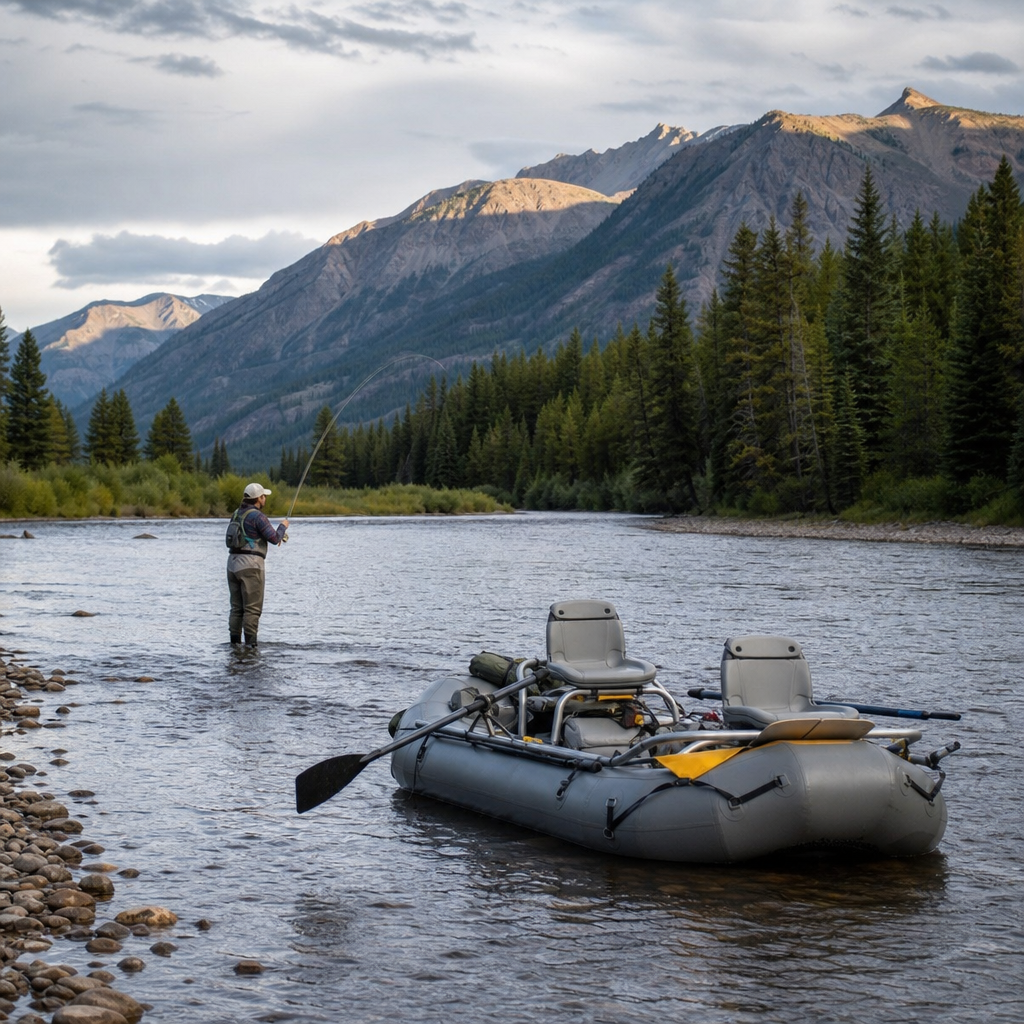
Compact framed fishing rafts are the most versatile category for serious anglers. Think of 12- to 13-foot boats from NRS, STAR, RMR, Aire, and Flycraft-style fishing platforms. With a proper frame, these rafts can carry a rower, two anglers, rods in holders, dry storage, and anchor hardware while still fitting modest launches and narrow channels. They are ideal for western trout rivers where a day trip may involve long drifts, changing flows, and repeated stops to fish banks, seams, and side channels. This category is where most anglers should begin their equipment review process because it balances fishability, transport, and cost.
Expedition-capable framed rafts are the right answer when remote means self-supported travel. Fourteen-foot and larger platforms from Aire, NRS, Sotar, and Maravia earn their keep on multiday floats in Alaska, the Yukon, or canyon systems where weather delays, extra food, and satellite safety gear are part of the plan. These rafts carry more, row more efficiently in loaded conditions, and feel calmer in heavy wave trains. Their tradeoff is obvious: more weight, more trailer dependence, and less agility on low-volume technical water. For anglers combining camp logistics with serious fishing, that tradeoff is usually acceptable.
| Raft category | Typical length | Best use | Main advantage | Main limitation |
|---|---|---|---|---|
| Frameless personal raft | 8 to 11 feet | Lakes, mellow rivers, hike-in access | Low weight and fast setup | Limited cargo and standing room |
| Compact framed fishing raft | 12 to 13 feet | Day trips and light overnight river fishing | Best balance of control and fishability | Less capacity for long expeditions |
| Expedition framed raft | 14 to 15+ feet | Multiday remote river trips | High load capacity and stability | Heavier, bulkier, and slower to maneuver |
Best brands, standout models, and real buying considerations
NRS remains one of the safest recommendations because its frame ecosystem is extensive, replacement parts are easy to source, and its boat designs are proven across whitewater and angling use. The NRS Otter series is a dependable benchmark for anglers who want predictable handling and broad outfitting support. Aire stands out for its bladder-based construction and excellent warranty reputation. Models such as the Super Puma or larger fishing-ready packages are especially compelling for anglers who value durability and serviceability. RMR has gained attention by delivering strong value in welded PVC boats that hold up well for the price, making them attractive to anglers who need function over premium branding.
Sotar and Maravia sit in the premium tier. Sotar is known for lighter, high-performance boats with excellent material quality, while Maravia has a long-standing reputation for ruggedness and a distinctive coated finish that resists abrasion. For pure fishing-focused packages, Flycraft deserves attention because it emphasized standing stability and modular angling layouts earlier than many traditional raft companies. Still, buyers should compare fishability against payload and durability if their trips involve rocky rivers or full camp kits. Outcast remains influential in personal inflatable fishing craft and is often the first stop for anglers moving up from float tubes, though not every model is designed for truly isolated river travel.
When I evaluate a raft package, I look beyond the boat and into the full system. Oars should match frame width and expected current, usually in the 8.5- to 10-foot range for fishing rafts. Frames should use marine-grade aluminum and adjustable crossbars, not welded geometry that locks you into one seating plan. Casting braces need to be secure without crowding stripping space. Anchor systems should be used selectively and never as a substitute for boat control in heavy current. Dry boxes, coolers, and drop bags should fit the frame dimensions rather than forcing awkward weight distribution. A mediocre raft with a smart frame can outperform a premium hull rigged poorly.
How to choose the right raft for your water, travel style, and budget
The clearest way to choose is to start with the hardest condition you regularly face. If you fish braided, low-water trout rivers with sharp turns and frequent drag-overs, prioritize lighter weight, smaller size, and responsive handling. If you run broad western tailwaters with two anglers, coolers, and occasional overnight loads, choose a 12- to 13-foot framed raft with a stable floor and room for modular storage. If you plan weeklong remote floats, go bigger and accept the extra transport burden. Buying too small is the most common mistake I see, closely followed by buying a budget package whose frame cannot evolve as your trips become more ambitious.
Budget deserves a realistic discussion. Entry-level personal inflatables may begin around the price of a premium fly rod setup, while complete framed fishing rafts can move into several thousand dollars before you add a trailer, PFDs, dry bags, and safety equipment. Premium boats from top manufacturers cost more because fabric quality, seam consistency, valve reliability, and warranty support are better. That does not mean every angler needs the most expensive option. It means remote-water buyers should put more money into the hull and frame than cosmetic extras. Oars, pumps, patch kits, and a good trailer can be upgraded later; a weak hull cannot be wished into durability.
Also consider storage, maintenance, and transport from day one. If the raft must live inflated in a garage, measure the footprint with the frame attached. If it must be rolled after every trip, check packed size and fabric stiffness in cold weather. If your access roads are rough, trailer suspension and tie-down strategy become part of the equipment review. Remote-water performance starts before the launch. The best buying decision is the raft you can transport safely, rig consistently, repair in the field, and trust when weather shifts or a takeout gets delayed. Use this hub as your baseline, then compare detailed reviews by size, frame type, and trip length to narrow the right platform.
Essential accessories and safety gear that complete the system
No raft review is complete without the accessories that turn a hull into a reliable fishing platform. A high-volume pump with a pressure gauge is mandatory because underinflation hurts tracking, load carrying, and seam longevity. Spare valves, a manufacturer-approved patch kit, adhesive suited to your raft material, and fabric patches cut in advance should always ride in the boat. Oars need spare blades or a full spare oar, plus rights, locks, and retention that can be serviced on the river. I also recommend a compact frame tool kit with wrenches, cam strap replacements, zip ties, and hose clamps because seat mounts and anchor pulleys fail more often than anglers expect.
Safety gear should be selected with the same seriousness as the raft itself. Every passenger needs a properly fitted PFD, not one tossed under a seat. For remote trips, add a throw bag, rescue knife, whistle, first-aid kit, pin kit, satellite communicator, and river maps or offline GPS. Cold-water anglers should think about immersion risk even in summer, especially on snowmelt rivers. Waders inside rafts are common, but they do not replace proper rescue planning. Anchors deserve special caution: they are useful for controlled stops in suitable current, but dangerous when dropped in fast or complex water. Good rowing, not anchor dependence, keeps anglers safe and effective.
Rod management and storage also affect fishing success. Horizontal rod racks reduce breakage when floating under trees, while vertical holders can be convenient on open rivers but catch wind and branches. Waterproof gear bags should protect cameras, layers, and fly boxes from repeated splash, not just rain. If the trip is multiday, dry boxes organized by camp, kitchen, and repair functions save time and reduce gear loss. These details may sound secondary, yet on remote waters they often decide whether a raft feels dialed or improvised. A well-rigged raft fishes harder, rows straighter, and lets anglers focus on reading water instead of managing preventable problems.
The best fly fishing rafts for remote waters combine durability, practical fishing layout, load capacity, and dependable handling in the conditions you actually face. For most anglers, a compact framed raft from a proven manufacturer offers the strongest mix of versatility and value. For multiday wilderness travel, larger expedition platforms justify their size with better cargo management and safer performance under load. For minimalist access, personal inflatables still have a place, but only when their limitations match the water.
If there is one lesson repeated across years of equipment reviews, it is that raft choice should be system-based, not hull-based. Frame design, oars, safety gear, storage, repairability, and transport all influence whether a boat succeeds in remote country. Premium materials and proven construction matter because far from roads, warranty language does not help you finish a float. Matching raft size and rigging to river type, trip length, and casting style does.
Use this hub as your starting point for equipment reviews under Product Reviews and Recommendations, then move deeper into the related guides on raft sizes, frames, anchors, oars, storage, and repair kits. Build your setup around the water you fish most, invest where failure would hurt most, and test every rigging decision before your next remote trip.
Frequently Asked Questions
What makes a fly fishing raft suitable for remote waters?
A fly fishing raft built for remote waters needs to do much more than simply float and cast well. In isolated fisheries, the raft becomes your transport system, gear hauler, safety platform, and backup plan all at once. The best models combine durability, load capacity, stability, and practical fishability in one package. That usually means a rugged PVC or urethane construction, strong welded seams, abrasion resistance for rocky launches and shallow riffles, and a frame system that stays solid after repeated assembly and takedown. In remote country, soft materials, weak valves, or lightly built floors tend to show their limits quickly.
Capacity is another major factor. A raft may feel fine on a day float near home, but remote trips often require dry bags, camp gear, repair kits, spare oars, food, extra layers, and emergency supplies. Once that gear is loaded, a raft that looked spacious on paper can suddenly ride low and lose responsiveness. A good remote-water fly fishing raft should carry anglers and equipment without sacrificing tracking, maneuverability, or freeboard. Stable casting platforms, thoughtful frame layouts, and enough room to organize rods, tackle, and dry storage all matter because clutter becomes a liability on technical water.
Just as important is serviceability. In remote trout country, you want a raft that can be repaired in the field, rigged efficiently, and trusted when conditions turn against you. A dependable repair kit, accessible frame hardware, and proven design count for a lot when the nearest road is hours away. In short, the right raft for remote waters is not the lightest, cheapest, or most feature-heavy option. It is the one that balances toughness, fishability, and reliability well enough that you can focus on the river instead of worrying about the boat.
How big should a fly fishing raft be for remote trips?
The right size depends on how you fish, how much gear you carry, and whether your typical trip is a day float, an overnight, or a multi-day backcountry run. For many anglers, rafts in the 12- to 14-foot range hit the best balance for remote fishing. They are large enough to carry two anglers, a rower, dry bags, and essential safety gear, while still staying nimble in tighter channels and easier to trailer, launch, and store. That size range also tends to provide enough floor space and frame flexibility to keep tackle, rods, and camp gear organized rather than piled on top of each other.
Smaller rafts can work well if portability is the top priority and your gear load is light, but they become less forgiving once you add another angler, a cooler, anchor system, and overnight equipment. In shallow or technical water, an overloaded small raft drafts deeper, responds slower, and can become frustrating to row. On the other hand, larger rafts offer more carrying capacity and comfort, but they can be heavier, more difficult to maneuver in narrow braids or boulder gardens, and less practical for solo setup. Bigger is not automatically better, especially if your remote access points involve rough ramps, hand launches, or frequent frame breakdown.
A useful rule is to size the raft for your real-world load, not your idealized one. Think about full dry bags, spare clothing, food, water, repair supplies, and any weather gear you are likely to bring when conditions are unpredictable. Manufacturers publish load ratings, but for remote trips, it is smart to stay comfortably below those maximums. A raft performs best when it has enough reserve capacity to stay lively, balanced, and dry. If you regularly fish with two people and camp gear, a thoughtfully rigged medium-size raft usually outperforms an undersized boat pushed to its limits.
Are self-bailing rafts better than floor-style or non-self-bailing rafts for remote fly fishing?
For most remote fly fishing situations, a self-bailing raft is the better choice because it provides a wider safety margin and requires less babysitting in changing water conditions. Self-bailing designs let water drain out through ports or gaps rather than collecting inside the boat, which becomes especially valuable when you hit wave trains, heavy rain, splashy rapids, or repeated shallow drops. In remote areas where you may cover long miles and encounter mixed water types, not having to stop and remove pooled water is a major advantage. It also keeps gear drier, footing more predictable, and the raft more efficient under load.
That said, self-bailing rafts are not automatically superior in every single respect. Some anglers prefer floor-style or more enclosed interiors because they can feel more secure underfoot, especially when standing to fish. Depending on the design, they may also reduce the sensation of gear shifting around or provide a more enclosed feel in cold weather. But those benefits come with tradeoffs. In remote environments, a raft that holds water after a wave hit or storm can become heavier, colder, and less manageable right when you need it at its best. Safety and simplicity usually outweigh small comfort advantages.
The smartest approach is to match the raft to the water you actually fish. If your remote trips include long drifts, unpredictable flows, rocky channels, and occasional whitewater features, self-bailing models generally provide the best mix of practicality and security. If your water is consistently mellow and fishing comfort is the top concern, other designs may still have appeal. Even then, many experienced anglers still lean toward self-bailing options because remote trips rarely stay as controlled as planned. When distances are long and rescue is limited, a raft that recovers quickly and sheds water on its own is usually the more dependable tool.
What features should anglers prioritize when choosing a fly fishing raft for remote trout country?
The first feature to prioritize is material and construction quality. In remote trout country, your raft is going to scrape rocks, grind against gravel bars, and spend long days exposed to sun, cold, and repeated inflation cycles. Strong fabric, reinforced wear patches, quality seams, and dependable valves matter more than flashy accessories. A rugged hull is the foundation of every other performance benefit. After that, focus on frame compatibility and layout. The best remote fishing rafts allow you to build a frame system that supports efficient rowing, secure gear storage, comfortable seating, and enough open space to manage rods and landing nets without creating a mess.
Stability and hull shape should be high on the list as well. Fly anglers often stand to cast, shift weight unexpectedly, or move quickly when fighting fish around the boat. A stable platform inspires confidence and reduces fatigue over a long day. At the same time, the raft needs to row cleanly and respond well in current. Good remote-water boats strike that balance by offering enough width and buoyancy for fishing comfort without becoming sluggish in technical water. Floor design, tube diameter, rocker profile, and frame placement all contribute to how well the raft handles when loaded with both people and gear.
Storage and rigging points are often underestimated, but they become critical the farther you get from easy access. You want secure places for dry bags, spare oars, repair kits, first-aid supplies, and extra layers. Rod holders, anchor compatibility, and modular frame options can all improve fishability, but they should support safety rather than compromise it. Finally, consider transport and setup. A great raft on the water can still be the wrong choice if it is so heavy or cumbersome that remote launches become a chore before the trip even starts. The best fly fishing raft for remote waters is the one that remains durable, organized, and easy to trust when the river is far from forgiving.
How important are repair kits, spare parts, and maintenance for remote fly fishing raft trips?
They are absolutely essential. On remote trips, repair capability is not an optional extra; it is part of the raft system itself. Even premium rafts can suffer pinholes, valve issues, frame hardware problems, or abrasion damage after hard use. When the nearest shop, road, or cell signal is far away, a simple leak can shift from inconvenience to trip-ending problem very quickly. A proper repair kit should include manufacturer-approved patch material, adhesive suitable for the raft’s fabric, valve tools if applicable, sandpaper or prep supplies, cleaning wipes, and a reliable pump. Many experienced anglers also carry spare frame bolts, straps, oarlock components, and at least one backup method for securing gear if a rigging point fails.
Maintenance before the trip matters just as much as what you pack. Every remote outing should begin with a full inspection of seams, floor, valves, frame joints, straps, oars, and inflation pressure. Check for slow leaks, worn spots, loose hardware, and fraying tie-downs while you are still at home, not at a cold launch miles from the nearest hardware store. It is also smart to know how your raft behaves under varying temperatures and elevations, since pressure can change significantly and affect performance. A boat that starts the morning underinflated or overstressed is already at a disadvantage.
Field awareness is the final piece. Good raft maintenance on remote water means choosing careful lines through shallow rock gardens, avoiding unnecessary dragging, protecting high-wear areas at camp, and drying or cleaning gear properly after the trip. The best anglers treat preventive care as part of seamanship. That mindset saves time, money, and frustration, but more importantly, it protects your margin for error in places