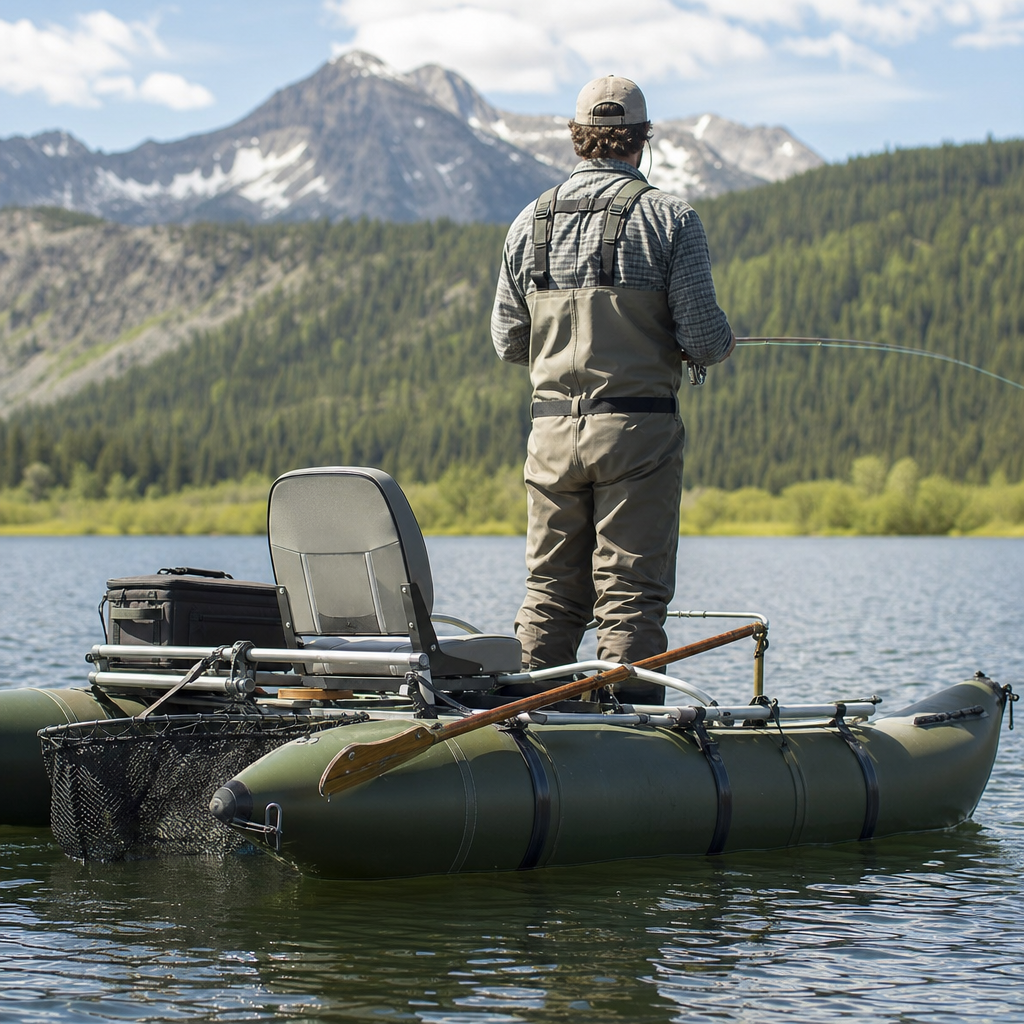
Choosing the right fly fishing pontoon can transform how you fish, where you launch, and how comfortably you cover water. In product reviews and recommendations, equipment reviews matter most when they connect design details to actual use on rivers, lakes, and stillwaters. A fly fishing pontoon is a compact, inflatable or framed personal watercraft built to carry one angler, organized gear, and sometimes a small motor, while maintaining enough maneuverability for controlled drifts and precise casting. Unlike float tubes, pontoons typically sit higher, track better, and carry more weight. Unlike full drift boats, they are easier to transport, store, and launch alone. I have rigged, rowed, and maintained these boats in everything from slow reservoirs to boulder-strewn tailwaters, and the differences between models become obvious after a few long days on the water.
This hub article covers the top fly fishing pontoons, how to compare them, and which models suit specific fishing styles. It also serves as a central guide within equipment reviews, helping readers understand core buying criteria before diving into narrower comparisons such as ultralight pontoons, motor-ready models, or boats for whitewater rivers. The most important terms are simple. Length affects speed, capacity, and tracking. Tube diameter influences buoyancy and stability. Frame design determines rigidity, attachment options, and rowing efficiency. Weight capacity includes the angler, tackle, anchors, batteries, coolers, and safety gear, not just body weight. Materials matter too: PVC is durable and abrasion resistant, while urethane and denier-rated fabrics often balance puncture resistance with lower weight. These details matter because the wrong pontoon is not merely inconvenient; it can limit access, reduce casting efficiency, and create avoidable safety problems in moving water.
For anglers shopping under the broad category of equipment reviews, a pontoon is one of the most consequential purchases after rods, reels, and waders. A good boat extends your reach to weed lines, drop-offs, side channels, and bankless stretches that shore anglers simply cannot fish effectively. It can also help you fish longer because a stable seat, better storage, and easier fin-free movement reduce fatigue. Cost varies widely, from entry-level boats around several hundred dollars to premium modular platforms above two thousand, so informed recommendations are essential. The best choice is rarely the most expensive. It is the boat whose frame, portability, storage layout, and on-water behavior match how you actually fish.
What makes a great fly fishing pontoon
The best fly fishing pontoons combine stability, efficient tracking, thoughtful rigging options, and practical transport weight. Stability starts with tube shape and diameter. Larger tubes generally increase buoyancy and reassure beginners, especially on lakes or broad rivers with afternoon wind. A well-designed frame keeps the seat centered and high enough for visibility without making the boat feel tippy during aggressive casting or while reaching for a net. On moving water, frame rigidity matters more than many first-time buyers realize. A flexy frame wastes rowing energy and can amplify small corrections into inefficient zigzags.
Storage and layout separate good boats from frustrating ones. Anglers need accessible side pockets, stripping aprons or clear lap space, rear cargo platforms, and secure attachment points for anchors, rod holders, and fish finders. If you plan to troll stillwaters or cover large reservoirs, compatibility with a transom mount can be important. If you fish technical rivers, a clean frame with fewer snag points is usually better. I strongly prefer pontoons with straightforward valve access, quality oars, and replacement parts from established manufacturers such as Outcast, NRS, and Classic Accessories. Good support after the sale matters because bladders, oar locks, straps, and cargo platforms wear over time.
Top fly fishing pontoon reviews and recommendations
Several models consistently stand out in equipment reviews because they match their stated purpose and hold up over seasons of use. The Outcast Fish Cat 9-IR is one of the safest recommendations for anglers who want a proven, no-nonsense fishing pontoon. At roughly nine feet, it balances manageable weight with enough hull length for decent tracking on lakes and moderate rivers. The frame is simple, parts availability is strong, and the boat has earned a reputation for durability. It is not the fastest rower in its class, but for general fly fishing it remains a benchmark because it does almost everything competently.
The Classic Accessories Colorado XT is a popular value choice. It includes useful fishing features out of the box, often with swivel seating, generous storage pockets, and a transport wheel system that helps solo anglers move from truck to launch. For lakes, ponds, and slow rivers, it offers impressive convenience for the price. The tradeoff is that some hardware and frame components are not as refined as premium boats. Serious anglers who fish hard every weekend may eventually want sturdier oars or upgraded fittings, but many casual and intermediate users find it more than adequate.
The Outcast Stealth Pro occupies a more premium niche. It is designed for anglers who prioritize a higher seating position, strong organization, and a polished rowing platform. On flatwater, it feels efficient and composed, and the integrated storage works well for fly boxes, layers, and lunch without cluttering the casting area. It is heavier and more expensive than entry-level options, but for anglers who spend full days on larger lakes or broad tailwaters, the comfort and fishability justify the cost.
The NRS Pike Pro is another standout, especially for anglers who value modularity and frame strength. NRS frames are widely respected in the river world, and that pedigree shows in the fit, adjustability, and long-term serviceability of the boat. The Pike Pro handles customization better than many dedicated fishing packages. If you want to add anchor systems, electronics mounts, or specialized cargo solutions, it offers a platform that grows with your setup. It is less of an impulse purchase and more of a long-term equipment investment.
| Model | Best for | Key strengths | Main tradeoff |
|---|---|---|---|
| Outcast Fish Cat 9-IR | All-around fly fishing | Reliable, durable, balanced performance | Not the quickest boat |
| Classic Accessories Colorado XT | Budget-conscious anglers | Strong feature set, good storage, easy transport | Hardware quality below premium models |
| Outcast Stealth Pro | Comfort on bigger water | High seat, efficient layout, refined fishability | Higher price and weight |
| NRS Pike Pro | Customization and long-term use | Excellent frame, modular rigging, serviceability | Expensive for new buyers |
How to choose by water type and fishing style
The right pontoon depends first on where you fish. For lakes and reservoirs, tracking and wind management matter more than quick pivots. Longer boats with rigid frames and good oars reduce fatigue when crossing open water. Storage also matters because stillwater anglers often carry sinking lines, extra reels, indicators, balanced leeches, and weather layers. For this use, the Outcast Stealth Pro and NRS Pike Pro perform especially well because they support full-day organization and steady rowing.
For rivers, maneuverability and clean rigging become more important. On small to midsize moving water, you need a boat that ferries predictably, clears obstacles, and keeps essential gear secured. A compact nine-foot pontoon often hits the sweet spot. The Outcast Fish Cat 9-IR is a practical river choice because it is stable without feeling oversized in technical channels. If you fish shallow riffle sections and must launch frequently from rough banks, overall carry weight deserves more attention than buyers usually give it.
Fishing style matters just as much as water type. Nymph anglers carrying indicators, split shot, spare leaders, and anchor systems benefit from boats with better organization and rear cargo platforms. Dry fly anglers who prioritize casting freedom may prefer simpler layouts with fewer frame accessories near stripping space. Anglers who kick around small lakes only occasionally may not need a premium frame at all. In contrast, guides, tournament stillwater anglers, and frequent tailwater fishers should buy for durability first because repeated setup, transport, and UV exposure quickly reveal weak construction.
Key buying factors: capacity, materials, transport, and safety
Weight capacity is one of the most misunderstood specifications in equipment reviews. Manufacturers may list a high total number, but practical performance declines before you reach the maximum. A 250-pound angler carrying fins, waders, anchor, battery, cooler, and camera gear can easily add another 60 to 100 pounds. When overloaded, pontoons row poorly, sit lower, and lose margin in rough conditions. I advise buyers to leave a healthy buffer rather than shopping right at the limit.
Material quality determines lifespan. PVC-coated fabrics resist abrasion and are common on premium boats, while lighter bladder-and-cover systems can reduce weight and cost. Neither approach is automatically better. Bladder systems are often easier to repair in the field because a damaged bladder can be replaced without replacing the whole outer shell. Weld quality, stitching on straps, corrosion resistance on metal components, and oarlock durability often matter more in daily use than marketing language about toughness.
Transport and assembly are practical issues that directly affect how often you fish. A boat that takes forty minutes to build and requires two people to move will see less use than a slightly less capable model you can launch alone before work. Check packed dimensions, wheel compatibility, and whether the frame fits assembled in a truck bed. Safety is nonnegotiable. Every pontoon angler should wear a properly fitted life jacket, carry a whistle, understand river hazards, and treat anchor systems cautiously in current. Anchoring in fast water can flip even a stable boat, and no product recommendation should ignore that reality.
Where these recommendations fit within equipment reviews
As a hub page in product reviews and recommendations, this guide sits above more specific equipment reviews that readers often need next. After choosing a general pontoon category, most anglers compare anchor systems, personal flotation devices, fish finders for small craft, electric motors, breathable waders for seated use, and storage accessories. Internal comparison articles should branch from this page because pontoon performance depends on the full system, not the hull alone. For example, upgrading from stock oars to stiffer composite shafts can noticeably improve tracking and reduce fatigue, while a poor anchor setup can make an excellent pontoon frustrating or unsafe.
It is also important to understand what a pontoon cannot do. These boats are not drift boats, rafts for multi-day whitewater, or bass boats with standing decks. They excel at solo access, stealth, moderate gear hauling, and controlled presentation on water that rewards mobility. In that lane, the best fly fishing pontoons deliver exceptional value. If you fish alone, want to reach productive water without a trailer, and need a craft that stores at home, a well-chosen pontoon can be one of the smartest purchases in your equipment lineup. Start by matching the boat to your water, your load, and your launch routine, then focus on proven models with durable frames and dependable support. That approach leads to better days on the water and fewer regrets at the ramp.
Frequently Asked Questions
What should I look for when choosing the best fly fishing pontoon?
The best fly fishing pontoon depends on where you fish, how much gear you carry, and how you prefer to move across the water. Start with the frame and hull design. Longer pontoons generally track better and offer more speed and stability on larger rivers and lakes, while shorter models are easier to transport and can feel more nimble in tighter water. Weight capacity is also critical because it affects not just whether the boat can hold you and your gear, but how well it performs once loaded. A pontoon that technically supports your total weight but sits low in the water may row poorly and feel sluggish.
Seat height and seating style matter more than many buyers expect. A higher, supportive seat improves visibility, comfort, and casting position, especially on long days. Storage layout is another major factor. Good fly fishing pontoons make it easy to reach fly boxes, tippet, tools, anchor controls, and extra layers without awkward twisting or standing up. Look closely at stripping aprons, rear cargo decks, side bags, rod holders, and attachment points for accessories.
Portability is equally important. If you regularly launch alone, total assembled weight and setup time can determine how often you actually use the boat. Inflatable systems with lightweight frames can be ideal for anglers who transport their pontoon in a car or truck bed, while heavier framed models may offer better durability and rigidity. Finally, consider whether you need features like motor mounts, anchor systems, standing platforms, or upgraded oars. The right pontoon is the one whose design details match your actual fishing conditions, not just the one with the longest feature list.
Are fly fishing pontoons better for rivers or lakes?
Fly fishing pontoons can work extremely well on both rivers and lakes, but the best models are usually optimized toward one environment or the other. On rivers, maneuverability, responsive tracking, and stability in current are the priorities. A good river pontoon allows you to make controlled drifts, adjust position quickly, and row with confidence through seams, riffles, and light technical water. Features like a solid anchor system, durable frame, elevated seat, and efficient oars become especially valuable when you need fast corrections and predictable handling.
On lakes and stillwaters, efficiency over distance often becomes more important than quick directional changes. You may spend more time covering open water, kicking or rowing to weed edges, shoals, and drop-offs, so a pontoon with good glide and comfortable seating makes a noticeable difference. Storage also matters more on stillwaters because anglers often carry multiple fly boxes, extra rods, sonar, fins, layers, and food for full-day outings.
That said, many top-rated fly fishing pontoons are versatile enough to handle both. If you split your time between moving water and stillwater, look for a balanced design with enough hull length for decent lake performance but enough responsiveness for river control. What matters most is matching the craft to the type of water you fish most often. If your article includes reviews and recommendations, this is where model-by-model comparisons are especially useful, because small design differences can strongly influence real-world performance depending on whether you drift rivers or patrol stillwater flats.
How much weight capacity do I really need in a fly fishing pontoon?
A common mistake is choosing a fly fishing pontoon based only on body weight. In practice, you need to account for your full fishing load: rods, tackle bags, anchor system, fins, pump, cooler, rain gear, waders, boots, batteries, and any mounted accessories. If you plan to add a small motor or fish finder, those items can significantly increase total load. For that reason, it is wise to select a pontoon with comfortably more capacity than your expected all-in weight.
Higher weight capacity does more than improve safety. It directly affects how the pontoon rides in the water, how efficiently it rows, and how stable it feels when you shift positions to cast or reach gear. A boat loaded near its maximum capacity may sit lower, become harder to maneuver, and lose some of the crisp handling that makes pontoons attractive in the first place. By contrast, a properly matched pontoon will ride higher, respond better, and give you more confidence in current or wind.
As a practical rule, many experienced anglers prefer having a meaningful buffer rather than operating close to the limit. That buffer helps preserve performance and leaves room for seasonal changes in gear load. If your article reviews several models, this is an important comparison point: two pontoons may look similar on paper, but the one with better real-world load handling often proves more useful for anglers who carry organized gear and fish long sessions in varying conditions.
Do I need a motor on a fly fishing pontoon, or is rowing enough?
For many anglers, rowing is more than enough, especially on rivers, smaller lakes, and waters where stealth and simplicity matter. A well-designed fly fishing pontoon rows efficiently, lets you control drifts, and allows precise positioning without adding much complexity. Rowing also keeps the setup lighter, easier to transport, and easier to launch. If your fishing style emphasizes short moves, careful presentations, and frequent repositioning, a non-motorized setup is often the most practical choice.
A small motor can be useful, however, if you regularly fish larger stillwaters, deal with persistent wind, or need to cover longer distances between productive zones. In those situations, a motor mount can add real value by reducing fatigue and making it easier to reach offshore structure, shoreline lanes, or distant shoals. Some anglers also appreciate a motor when returning to the launch after a long day or when managing changing weather.
The tradeoff is added weight, more setup time, battery management or fuel considerations, and a less minimalist rig. Motor-compatible pontoons should have a frame and transom area designed to handle that load without compromising balance. If you are comparing top fly fishing pontoon reviews, pay attention to whether the boat feels purpose-built for motor use or merely motor-capable on paper. For many fly anglers, the best recommendation is still a lightweight rowing-focused pontoon unless their home waters clearly justify the added complexity of powered assistance.
What features matter most for comfort, safety, and long-term durability?
Comfort begins with the seat, leg position, and overall fishing ergonomics. A supportive seat with good height can reduce fatigue, improve visibility, and create a more natural casting position. Adjustable footrests, a usable stripping apron, and easy gear access also make a major difference over a full day on the water. You should not have to fight your boat to manage line, switch fly boxes, or reach tools. The most comfortable pontoons are the ones that feel organized and intuitive once you are seated and fishing.
For safety, look for stable hull design, durable construction materials, secure valves, quality oar locks, and a frame that feels rigid under load. Reliable inflation chambers and abrasion-resistant pontoon material are especially important if you fish rocky launches, shallow rivers, or snag-filled shorelines. Anchor systems deserve careful attention as well. They can be very helpful, but they must be used intelligently and with awareness of current conditions. In moving water, safety depends at least as much on sound judgment as on equipment quality.
Long-term durability often comes down to details that are easy to overlook in product photos. Reinforced wear zones, corrosion-resistant hardware, strong welds or seams, and quality powder coating can significantly extend the life of a pontoon. Storage bags, strap attachment points, and frame joints should also feel robust because they see constant use. If you are building recommendations for readers, it helps to emphasize that the most durable pontoon is not always the heaviest or most expensive one. It is the one whose materials, construction, and design are suited to how and where it will actually be used season after season.