Choosing the best fly fishing float tubes for lakes starts with understanding how lake conditions, tube design, and angler comfort affect a full day on the water. A float tube is a compact, inflatable or foam-supported personal fishing craft that lets one angler sit low in the water and kick quietly across stillwater structure, weed edges, shoals, drop-offs, and cruising lanes where trout, bass, panfish, and carp feed. In practical terms, it is one of the most efficient ways to fish lakes without owning a boat. I have used float tubes on alpine reservoirs, fertile farm ponds, and large western stillwaters, and the right model always changes how long I can fish, how safely I can handle weather shifts, and how well I can cover productive water.
For lake anglers, float tubes matter because they bridge the gap between shore fishing and full-sized watercraft. Shoreline access often limits casting angles, depth options, and the ability to follow wind lanes or hatches. A good float tube solves those problems by giving controlled mobility, stealth, and hands-free positioning. It also lowers the cost of entry compared with pontoon boats, kayaks, or prams. Yet not every float tube is suited to lakes. Some are built for occasional use on small ponds, while others are designed for long kicks, cold water, and gear-heavy stillwater sessions. Shape, seat height, bladder construction, cargo layout, valve quality, and fin compatibility all matter more than marketing terms suggest.
This hub article covers equipment reviews and recommendations comprehensively so readers can judge categories, features, and tradeoffs before drilling into individual product pages. It answers the questions anglers actually ask: What tube shape tracks best on lakes? Which materials last? Is a V-boat better than a classic round tube? What safety gear is nonnegotiable? How much storage is enough for stillwater fly fishing? By the end, you should know not only which styles deserve consideration, but also how to match a float tube to your waters, budget, and fishing style. That makes this page the foundation for every lake-focused float tube review in a serious gear research process.
What Makes a Float Tube Good for Lake Fishing
The best fly fishing float tubes for lakes share five traits: stability, efficient tracking, comfort over several hours, durable construction, and useful storage. Stability matters because lake fishing often involves sidearm casts, retrieving sinking lines, reaching for fins, and handling fish with a net in one hand. A tube that rolls or sags wastes energy and creates safety risk. Efficient tracking matters because lakes amplify every weakness in hull design. If a tube yaws badly with each fin kick, you cover less water and fight the craft all day. In my experience, this is where better designs justify their higher price.
Comfort is not a luxury item. On lakes, anglers often sit in a tube for four to eight hours. A higher seat keeps more of your body out of cold water, improves visibility, and creates a stronger kicking angle with fins. Back support is equally important. Cheap tubes often feel acceptable in a parking lot but become punishing after two hours, especially when managing indicators or long retrieves. Durable construction usually means heavy-duty PVC or urethane bladders inside a robust shell, abrasion-resistant bottoms, welded or reinforced seams, and valves that inflate and deflate cleanly without leakage. Storage must accommodate fly boxes, leaders, pump, rain shell, water, forceps, and sometimes a small anchor system.
Lake-specific usefulness also includes practical details many buyers miss. D-rings should be placed where they can actually secure accessories without tangling fly line. Pocket openings should be reachable while seated and large enough for standard stillwater boxes. Stripping aprons should drain quickly and hold line without letting coils blow away. Tube weight affects whether you can hike into remote lakes or simply carry the craft from truck to launch. Finally, repairability matters. Any serious float tube should accept patch kits easily and use components from a company with reliable after-sale support.
Round, U-Shape, and V-Boat Designs Compared
Three configurations dominate the category: classic round tubes, U-shaped tubes, and V-boats. Round tubes are the old standard. They are generally compact, stable at rest, and often affordable. For small lakes and short sessions, they still work, but they sit lower in the water and usually push more water ahead of the angler. That means slower movement and colder legs. U-shaped tubes improve entry and exit, often provide better side pocket placement, and feel more open. They are a sensible middle ground for anglers who want portability without stepping up to a larger platform.
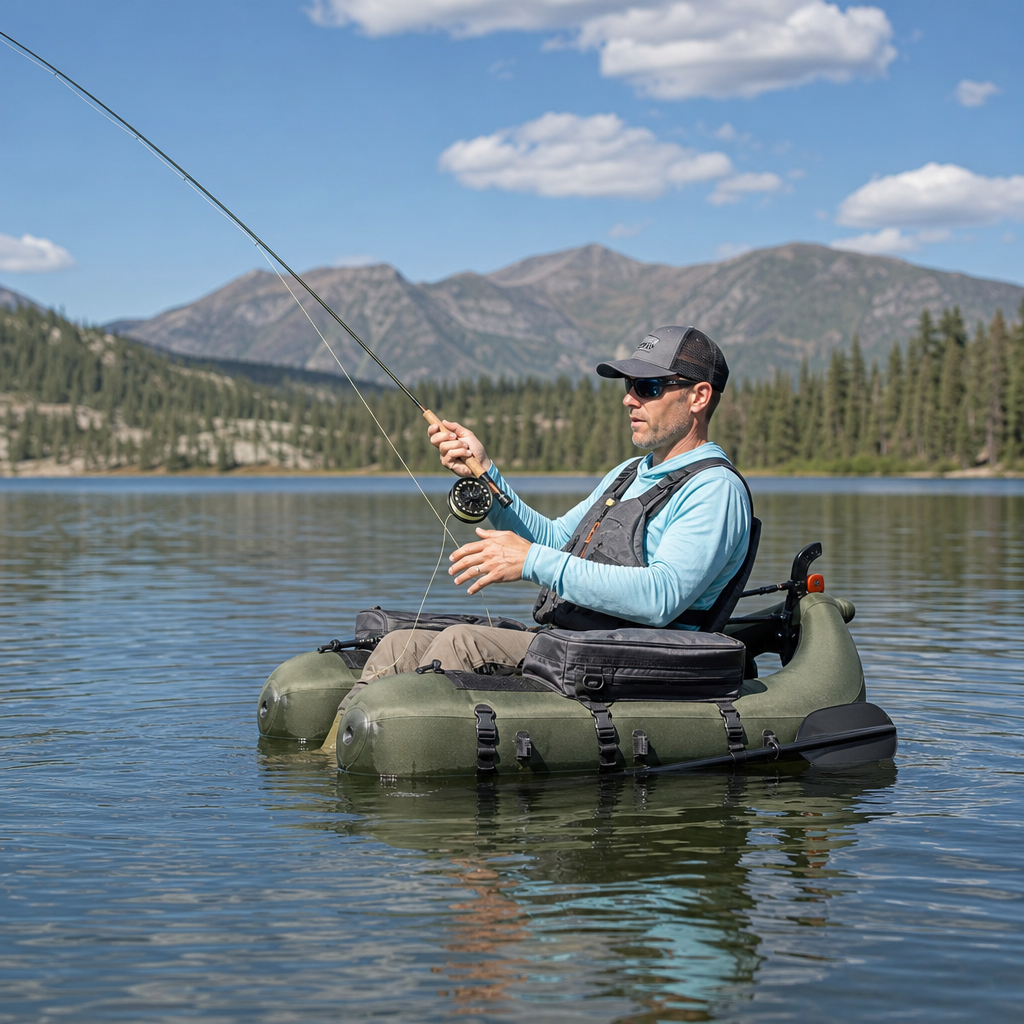
V-boats are usually the strongest option for dedicated lake fly fishing. They sit higher, track straighter, and create less drag because the bow shape parts the water more efficiently. Many also include elevated foam or inflatable seats that keep the angler drier and warmer. On larger lakes where you may need to kick half a mile to a shoal, the efficiency difference becomes obvious. The tradeoff is bulk, cost, and setup space. A V-boat can be less convenient for fast, spontaneous trips, and some models are awkward in dense shoreline brush.
| Design | Best Use | Main Strength | Main Limitation |
|---|---|---|---|
| Round tube | Small lakes, occasional trips | Affordable and stable | Lower seating and slower tracking |
| U-shaped tube | General lake fishing | Balanced portability and access | Midrange efficiency |
| V-boat | Large lakes, frequent use | Higher seat and better propulsion | Heavier and more expensive |
If you are building a review shortlist, start with V-boats for serious stillwater work, then compare the best U-shaped models if portability or budget is a stronger concern. Round tubes remain relevant for anglers who fish sheltered ponds a few times each season, but they are rarely the top recommendation for demanding lake conditions.
Key Features to Evaluate in Equipment Reviews
When reading equipment reviews, focus on measurable performance rather than broad claims. Load capacity is critical. A tube rated around 250 to 350 pounds generally fits most anglers plus layered clothing and tackle, but higher capacities often correlate with better flotation and larger storage bays. Seat design deserves special scrutiny. Foam seats provide reliable buoyancy and instant setup, while inflatable seats pack smaller but depend on valve integrity and correct pressure. I generally prefer elevated foam-supported seating for cold lakes because it keeps the angler noticeably drier.
Bladder material separates premium products from disposable ones. Urethane bladders resist punctures and temperature swings better than thin vinyl, though they cost more. Shell denier, bottom reinforcement, and seam finishing all affect lifespan when launching on gravel or dragging over rough banks. Valve quality matters more than buyers expect. Boston valves and similar high-flow designs simplify inflation and reduce accidental air loss. Pockets should close securely and shed water. Good reviews should comment on zipper corrosion, fabric stiffness in cold weather, and whether pocket tops interfere with your stripping motion.
Pay attention to accessories included versus required. Some float tubes ship with a stripping apron, carry straps, and pump; others require separate purchases. Fins and waders are almost always extra, and they should be budgeted from the start. For hub-level equipment recommendations, it helps to compare total fishing-ready cost, not just sticker price. A moderately priced tube with poor apron design and weak shoulder straps may be less useful than a premium model that arrives well thought out and lake ready.
Best Float Tube Brands and Standout Models
Several brands consistently appear in serious lake angler discussions because their products hold up under repeated use. Outcast has built a strong reputation with stillwater fly fishers for durable materials, smart cargo layouts, and dependable V-boat designs. The Outcast Fish Cat 4 is a long-standing benchmark in the midrange category because it balances price, buoyancy, and fishable comfort. The Fish Cat 5 Max pushes further toward all-day lake performance with a higher seating position and more storage. Anglers who fish large waters regularly often shortlist these models first for good reason.
Classic Accessories remains visible because it offers affordable entry points, especially for newer anglers. Models such as the Cumberland have been popular for general lake use thanks to respectable storage and a higher seat than bargain basement tubes. They are not built to the same standard as premium stillwater craft, but they often provide solid value for anglers fishing moderate distances a few dozen days each year. Caddis and Nevada-style tubes also fill the budget and midrange market, though buyers should inspect materials and warranty terms closely because specifications can vary widely.
In the premium end, anglers sometimes move beyond float tubes entirely into compact pontoon or hybrid kick-boat platforms. That is a valid progression, but it does not reduce the relevance of top-tier tubes. A well-designed V-boat remains easier to transport, faster to launch, and quieter around fish than many alternatives. The best reviews within this subtopic should therefore compare not only tube against tube, but also when a lake angler should upgrade categories based on distance, gear load, and physical comfort.
Safety, Setup, and Essential Accessories
No article about the best fly fishing float tubes for lakes is complete without direct safety guidance. A float tube is a personal watercraft, not a pool toy. Wear a properly fitted personal flotation device every trip, even on warm summer ponds. Weather changes quickly on lakes, and tube anglers are especially exposed to wind. I have cut trips short when afternoon gusts turned a calm launch into a difficult return. If whitecaps are building, do not negotiate with conditions. Get off the water early.
Waders, boots, and fins must work as a system. Stockingfoot breathable waders paired with wading boots and quality float tube fins usually provide the best control. In cold water, layering matters because even high-seat tubes keep your lower body near the waterline. Carry a pump, repair kit, whistle, water, and a waterproof phone or VHF option where appropriate. An anchor can help in moderate wind, but only if used carefully and with quick-release rigging. On snaggy bottoms or steep chop, poor anchor management creates more problems than it solves.
Setup discipline extends tube life. Inflate to the manufacturer’s pressure guidance, check valves before launch, and avoid leaving a fully inflated tube baking in direct sun for hours. Rinse after use, especially if the lake has invasive species inspection requirements or heavy sediment. Dry the shell before long storage to prevent mildew and zipper damage. These simple habits preserve expensive gear and improve reliability when you launch at dawn on a cold stillwater session.
How to Choose the Right Lake Float Tube for Your Fishing Style
The right choice depends on how often you fish, how far you travel on the water, and how much gear you carry. If you fish neighborhood ponds a handful of times each year, a well-reviewed U-shaped or round tube may be enough. If you target trout on larger lakes, use multiple fly lines, and spend full days kicking shoals and drop-offs, buy a V-boat with an elevated seat. If packability matters because you hike into lakes, prioritize moderate weight and simple inflation over maximum cargo capacity.
Budget should be realistic, not minimal. A cheap tube plus poor fins, weak straps, and inadequate insulation often leads to shorter trips and an early replacement. A better buying framework is cost per season of actual use. For anglers fishing twenty or more lake days annually, paying more for durability and comfort is usually cheaper over time. Use this hub as the starting point for deeper equipment reviews, compare models against your waters, and choose a float tube that helps you fish longer, safer, and with better control.
Frequently Asked Questions
What should I look for when choosing the best fly fishing float tube for lakes?
When choosing the best fly fishing float tube for lakes, start with stability, comfort, and how well the tube matches the type of water you plan to fish most often. Lakes can look calm from shore, but once you are out on open water, even light wind can create chop and push you off productive structure. A good lake float tube should have a stable hull shape, enough buoyancy to support you and your gear comfortably, and a seating position that keeps you balanced during long sessions. U-shaped and V-shaped designs are common, but many anglers prefer modern high-riding tubes with improved back support and better tracking because they reduce fatigue and make it easier to cover water efficiently.
Storage and organization matter more than many beginners expect. Lake fishing often means carrying fly boxes, extra leaders, tippet, forceps, snacks, water, a pump, and sometimes layers for changing weather. Look for large, easy-to-reach side pockets, secure attachment points, and a stripping apron that gives you a clean place to manage line. Good pocket layout helps you stay efficient and prevents constant twisting or reaching, which becomes tiring after several hours on the water.
Material quality and durability are also important. Strong outer fabrics, reliable bladders or well-built air chambers, and abrasion-resistant bottoms hold up better during launching, landing, and transport. If you fish lakes with rocky shorelines, rough access points, or heavy vegetation, durability becomes even more important. Finally, think about portability. One of the biggest advantages of a float tube is access without needing a boat ramp, so a model that is reasonably easy to carry, inflate, and pack will likely get used more often. The best tube is the one that fits your fishing style, feels comfortable for a full day, and gives you confidence when conditions change.
Are float tubes a good choice for lake fishing compared with pontoon boats or kayaks?
Yes, float tubes are an excellent choice for lake fishing, especially for anglers who want a simple, affordable, and highly effective way to reach productive water quietly. For stillwater fly fishing in particular, float tubes offer a unique advantage: stealth. Because you sit low in the water and move with fins rather than a paddle or motor, you can approach fish and structure with very little disturbance. That makes float tubes especially useful for targeting trout along drop-offs, bass near weed lines, panfish around shoals, and carp cruising shallow flats.
Compared with pontoon boats, float tubes are generally lighter, easier to transport, and faster to set up. A pontoon boat can provide more speed, more storage, and better performance in wind, but it also takes up more space, often costs more, and can be less convenient for quick trips. Compared with kayaks, float tubes are often more compact and can be easier to manage for anglers who want a purpose-built fly fishing platform rather than a general paddling craft. The lower profile of a float tube also means less wind resistance in some situations, although strong wind is still a major factor on lakes.
That said, float tubes do have limitations. They are slower than kayaks and pontoon boats, and covering very large lakes can be physically demanding. They are best suited to stillwater fishing where mobility is important but not at the scale of a full-sized boat. If you routinely fish expansive reservoirs, regularly face heavy wind, or want to haul a large amount of gear, a pontoon or kayak may be a better fit. But for many lake anglers, especially fly fishers who value access, quiet presentation, and simplicity, a float tube remains one of the most efficient and enjoyable tools available.
How important are seat height and comfort in a float tube for long days on the lake?
Seat height and comfort are extremely important, and they often make the difference between a productive day and an exhausting one. On a lake, you may spend hours kicking slowly along weed edges, hovering over shoals, or maintaining position near a drop-off while working flies at different depths. If the seat is too low, your hips and legs can sit deeper in the water, which increases drag, reduces kicking efficiency, and often leaves you colder and more fatigued. A higher seat typically improves visibility, casting posture, and finning efficiency while helping keep more of your body out of the water.
Back support is just as important as seat height. Many anglers focus on weight capacity and storage but overlook how much strain a poor seat can place on the lower back and hips. A supportive seat with a stable backrest helps you maintain good posture while casting, stripping line, landing fish, and reaching into side pockets. This becomes especially important on full-day trips where repeated small movements add up. Better ergonomics also improve concentration, and that can directly affect how well you fish.
Comfort features should be evaluated as performance features, not luxuries. A well-designed seat, breathable materials, a balanced seating angle, and enough room to move naturally all contribute to better time on the water. If you are less tired, less cramped, and less cold, you will fish more effectively and stay out longer. For lake anglers, where patience and coverage often matter, that advantage is significant. In short, if two float tubes seem similar on paper, the one with better seating and support is often the smarter long-term choice.
What safety features and precautions matter most when using a float tube on lakes?
Safety is critical when fishing from a float tube on lakes because conditions can change quickly, and your low position on the water means you are more exposed than many anglers realize. The first priority is buoyancy and construction quality. Choose a float tube with dependable air retention, durable materials, and a design that remains stable when entering, exiting, and shifting your weight. Many anglers also prefer models with multiple air chambers because they add a margin of safety if one section is compromised.
Beyond the tube itself, always wear a properly fitted personal flotation device. Even experienced anglers should not treat this as optional. A float tube is a safe tool when used correctly, but cold water, sudden wind, fatigue, or entanglement can turn a manageable situation into a dangerous one. Fins should fit securely, and your waders, if used, should be in good condition and appropriate for the temperature. Layering for changing weather is especially important on lakes, where wind exposure can cool you down faster than expected.
Weather awareness is one of the biggest safety factors. Before launching, check wind speed, forecast changes, water temperature, and how far you may need to travel to get back to shore. Avoid crossing open sections of water if the wind is building, and always fish with a plan for return. Staying close to productive areas near launch points is often smarter than venturing too far. It also helps to carry a whistle, a phone or communication device in a waterproof case, and basic repair supplies. In practical terms, the safest lake float tubers are the ones who treat trip planning, weather judgment, and personal flotation with the same seriousness they give to gear selection.
Which features make a float tube better for targeting trout, bass, panfish, and carp on lakes?
The best features depend somewhat on your target species, but certain design traits consistently improve lake fishing across the board. For trout, especially on larger stillwaters, tracking and efficient finning are major advantages. Trout anglers often need to move steadily along drop-offs, suspend over deeper water, or maintain a precise position while fishing indicators, leeches, chironomids, or balanced flies. A float tube that rides high, moves cleanly through the water, and supports long hours of line management will make that style of fishing much easier.
For bass and panfish, access and maneuverability near cover become especially important. Lakes with reeds, lily edges, submerged timber, and broad weed flats reward anglers who can move quietly and stop exactly where they want. In those situations, a tube with excellent stability, roomy storage, and a practical stripping apron helps you fish streamers, poppers, and nymphs without constantly reorganizing gear. Side pockets that are easy to access while seated are particularly useful when changing flies frequently or carrying multiple fly boxes for different depths and forage patterns.
For carp, stealth and positioning are everything. Carp often cruise shallow margins, flats, and transition zones, and they can be extremely sensitive to noise and sloppy movement. A float tube that allows smooth, subtle fin control gives you an advantage because you can make small corrections without splashing or drifting badly out of range. Across all species, useful features include durable construction, comfortable seating, secure attachment points for tools, and enough capacity to carry essentials without clutter. The best lake float tube is not just one that floats well; it is one that helps you fish methodically, quietly, and comfortably in the exact water types your target species use most.