Choosing the right fly fishing canoe can change a day on the water from a constant fight for position into a controlled, comfortable, and productive trip. In this review of the top fly fishing canoes, the goal is not simply to list popular models, but to explain which designs work best for different anglers, water types, and fishing styles. A fly fishing canoe combines the quiet approach and carrying capacity of a traditional canoe with the stability, seat support, storage layout, and maneuverability needed for casting, drifting, and landing fish. That distinction matters because not every recreational canoe performs well when an angler is managing fly line, rod length, tackle bags, and changing wind conditions.
Fly anglers usually care about a few practical questions first: Can I stand safely, can I reach productive water without a trailer, will the boat track in wind, and can it carry camping gear as well as fishing equipment? After testing fishing canoes on lakes, slow rivers, and sheltered backwaters, I have found that the best models solve these questions through hull shape, width, rocker, seat design, and weight rather than marketing language. A flat, ultra-wide hull may feel secure at the launch, but it can become sluggish in current. A narrow touring canoe may paddle efficiently, yet frustrate anglers who need primary stability for stripping line or changing flies. Good equipment reviews must connect design choices to real fishing outcomes.
This hub article covers equipment reviews within the broader product reviews and recommendations category, with a focus on the canoe platforms most relevant to fly fishing. It also helps readers understand where each canoe fits in a larger gear system that includes paddles, personal flotation devices, anchor trolleys, rod holders, carts, dry bags, and seat upgrades. If you are researching the best canoe for fly fishing, use this guide as the starting point for deeper model-specific reviews, side-by-side comparisons, and accessory recommendations. The canoes below were selected because they are widely recognized, consistently available, and strong examples of the main categories anglers actually shop: solo fishing canoes, tandem canoes that fish well solo, and hybrid canoe-kayak designs.
What makes a canoe good for fly fishing
A good fly fishing canoe balances stability, efficient paddling, manageable weight, and a layout that reduces line snags. The most important design concept is the difference between primary and secondary stability. Primary stability describes how steady the canoe feels when sitting flat on calm water. Secondary stability describes how the hull resists tipping when leaned onto its side. For anglers, both matter. Primary stability helps while casting and handling fish. Secondary stability matters when reaching for gear, landing a fish beside the hull, or edging the canoe in current. Canoes with shallow arch or slightly rounded hulls often feel livelier at first but become more secure once moving and leaned properly.
Length and width also shape performance. Canoes in the 12- to 14-foot range are easier to cartop, launch alone, and maneuver around woody shorelines. Models from 15 to 17 feet usually track better and carry more gear, especially for tandem trips. Width around 34 to 38 inches often works well for fishing because it creates a stable platform without turning the canoe into a barge. Weight is equally important. A 90-pound polyethylene canoe can be durable and affordable, but many anglers fish alone and must load the boat without help. In practice, hull materials such as T-Formex, Royalex replacements, Kevlar composites, and thermoformed plastics often justify their cost through easier transport and better paddling efficiency.
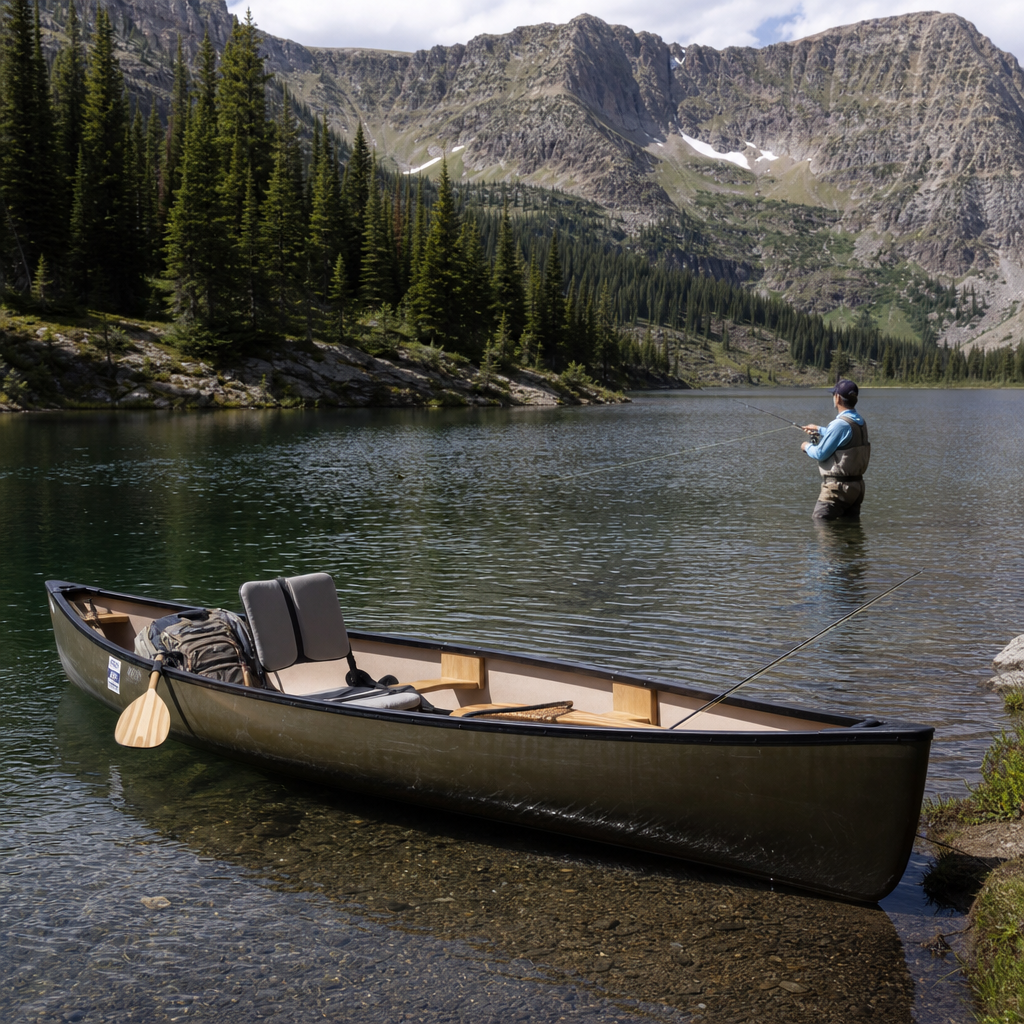
Seat height, thwart placement, and interior openness are details many reviews miss. Fly line catches on sharp hardware, coolers, cleats, and exposed seat brackets. Canoes with cleaner interiors and supportive seats perform better for actual fishing. Some anglers add kneeling pads, removable stripping baskets, or small gear tracks, but the base boat still determines comfort and control. The right setup depends on whether you fish ponds, big lakes, warmwater rivers, or remote trout water reached by portage.
Top fly fishing canoe models worth considering
The best fly fishing canoe for one angler is often different from the best canoe for a pair, so broad claims are not useful. The models below stand out because each fills a clear role. The Old Town Discovery 119 Solo Sportsman is one of the strongest compact fishing options for anglers who need a stable solo platform for ponds, marshes, and easy-moving water. At roughly 11 feet 9 inches, it is short enough for easy handling yet wide enough to inspire confidence while casting. Its polyethylene construction adds weight, but the durability is excellent for rocky launches and hard use. Anglers who value ruggedness over speed usually rate it highly.
The Esquif Adirondack is a better choice for paddlers who want a traditional solo canoe with noticeably better glide. Built in T-Formex, it is lighter than many polyethylene competitors and handles mixed fishing and tripping well. It does not feel like a dedicated platform boat, which is exactly why many experienced anglers like it. It paddles efficiently across a windy lake, carries enough gear for a full day, and still offers enough stability for seated casting and careful standing by skilled paddlers. For people who fish remote water, the weight savings alone can justify the price.
For tandem anglers, the Old Town Discovery 158 remains a practical benchmark. It is not elegant, but it is durable, predictable, and widely available on the used market. Two anglers can fish comfortably from it on lakes and lazy rivers, and one paddler can still manage it solo from the center with some practice. Families also like it because it can double as a general recreation canoe. The downside is weight. Loading, dragging, and accelerating this canoe takes effort, especially in wind.
The Wenonah Heron 15 and other fishing-friendly recreational tandems deserve attention for anglers wanting a lighter, more responsive canoe than entry-level polyethylene boats. Wenonah’s hulls typically paddle more efficiently, and anglers who cover distance on larger lakes notice that difference quickly. Meanwhile, hybrid designs such as the Native Ultimate 12 blur the line between canoe and kayak. Although technically a hybrid craft, it belongs in this conversation because many fly anglers want open-deck access, high-low seating, and exceptional initial stability. It excels in sheltered water where stealth and comfort matter more than rough-water performance.
| Model | Best Use | Main Strength | Main Tradeoff |
|---|---|---|---|
| Old Town Discovery 119 Solo Sportsman | Solo ponds and slow rivers | High stability and durability | Heavy for its length |
| Esquif Adirondack | Solo day trips and backcountry fishing | Better glide with lower carry weight | Higher purchase price |
| Old Town Discovery 158 | Tandem lake and river fishing | Capacity and proven toughness | Very heavy to transport |
| Wenonah Heron 15 | Tandem anglers covering distance | Efficient paddling and lighter build | Less forgiving than ultra-wide hulls |
| Native Ultimate 12 | Calm-water sight fishing | Open layout and excellent seat comfort | Limited in wind and rough chop |
How hull design affects casting, tracking, and fishability
Hull design determines whether a canoe feels helpful or frustrating once you start fishing. Flat-bottom hulls offer strong initial stability, which is why beginners often prefer them. They can be excellent on protected ponds where anglers mostly sit and cast short to medium distances. Their weakness appears in chop and quartering wind, where they may slap, drift, and feel harder to control. Shallow-arch hulls usually represent the sweet spot for serious fishing. They provide enough stability for confidence while improving glide and secondary stability. In real use, that means less wasted effort correcting course and more time focused on presenting flies.
Rocker, the upward curve of the hull from center to ends, affects turning. More rocker helps on twisting rivers and around logjams. Less rocker improves tracking on lakes. Fly anglers fishing rivers for smallmouth or trout often benefit from moderate rocker because positioning is dynamic. Lake anglers covering shorelines, weed edges, and points typically prefer straighter tracking. Depth and freeboard matter too. Higher sides can keep water out in chop, but they also catch more wind. Lower-profile canoes are easier to manage while casting, yet they can be wetter under rough conditions. There is no perfect hull, only the best compromise for your water.
Another overlooked factor is noise. Some hulls resonate more when struck by dropped pliers, split shot, or anchor hardware. Quiet approaches matter in shallow water, especially for carp, pike, and spooky trout near shore. Foam pads, rubberized gear contact points, and careful rigging help, but material and interior shape still influence how stealthy a canoe feels on the water.
Choosing by fishing environment and angler profile
The best fly fishing canoe should match where and how you fish most often, not the widest possible set of conditions. For small lakes, farm ponds, and protected marshes, compact solo models shine. They launch easily, slip into tight access points, and let one angler fish without excess boat around them. If your trips involve portages, rough launch sites, or carrying the canoe from a parking area to the water, every pound matters. In that case, lighter composite or T-Formex boats frequently outperform cheaper heavy models over the long term because they get used more often. The best canoe is the one you can launch without dread.
For broad lakes and reservoirs, efficiency becomes more important. Wind exposure increases, distances lengthen, and a hull that tracks well saves energy all day. Tandem canoes with refined recreational or light-touring shapes perform best here, especially when one angler paddles while the other fishes. On moving rivers, maneuverability and recovery matter most. Moderate rocker, dependable secondary stability, and a forgiving hull shape make current seams, eddies, and quick course changes easier to manage. Whitewater-specific open canoes exist, but most fly anglers do better with versatile river-friendly recreational designs unless they regularly run technical rapids.
Body size, flexibility, and experience should influence the decision. Taller anglers may prefer slightly wider hulls or seat setups that make entry and exit easier. Older anglers often prioritize seat comfort and low loading weight over ultimate speed. Beginners generally succeed faster with stable canoes that keep early trips relaxed. Experienced paddlers can exploit narrower, more efficient hulls and may even stand in boats that beginners would never attempt. Be realistic about your own skill level. Buying too much canoe or too little stability usually leads to regret.
Key buying criteria, setup tips, and value considerations
When comparing equipment reviews, start with five criteria: weight, capacity, hull shape, seat design, and transport logistics. Capacity figures from manufacturers can be misleading because maximum load does not equal practical fishing load. A canoe rated for 600 pounds may technically float at that weight, but fish poorly when loaded near its limit. For fly fishing, practical capacity includes room to move, strip line, store rods safely, and keep the trim balanced. I usually recommend leaving a generous margin between manufacturer capacity and actual load, especially on open water.
Seat design affects endurance more than many anglers expect. Web seats support kneeling and classic paddling posture. Framed elevated seats improve comfort for long sessions and make standing transitions easier. However, higher seating can raise the center of gravity and reduce perceived stability. Before buying accessories, paddle the canoe in stock form if possible. Many aftermarket additions create clutter that hurts fly line management. The best setup is usually simple: comfortable seat, paddle leash if desired, dry bag, compact crate or soft tackle bag, anchor solution used carefully, and clean deck space.
Value should be judged over years of use rather than sticker price alone. Used Old Town Discovery canoes often represent outstanding value because they last, parts are easy to find, and resale remains strong. Premium materials from Esquif or Wenonah cost more up front but reduce transport fatigue and improve on-water efficiency. That difference is not theoretical. Anglers who fish weekly tend to appreciate lighter, better-paddling boats every single trip. If this page is your starting point for equipment reviews, the next step is to compare individual models against your launch style, storage space, vehicle, and home water. Make a shortlist, test paddle when possible, and choose the canoe that supports your actual fishing habits rather than your idealized ones.
The top fly fishing canoes all solve the same core problem in different ways: they help anglers reach fishable water quietly, cast comfortably, and return safely with less effort. Some, like the Discovery 119 Solo Sportsman, emphasize stability and toughness. Others, like the Esquif Adirondack or Wenonah options, lean toward lighter weight and better paddling efficiency. Tandem workhorses such as the Discovery 158 remain excellent for shared trips, while hybrids like the Native Ultimate 12 appeal to anglers focused on calm-water comfort and open access. None is universally best, but each becomes a strong choice when matched to the right water and user.
As a hub for equipment reviews under product reviews and recommendations, this article is meant to give you a reliable framework for evaluating every canoe article that follows. Focus on hull behavior, realistic load, transport demands, and how cleanly the interior supports fly fishing. Those factors matter more than brand reputation alone. Start with your most common fishing environment, narrow your options to two or three proven models, and test them with the same discipline you would apply to rods, reels, or waders. Pick the canoe that fits your real trips, then build the rest of your fishing system around it.
Frequently Asked Questions
What makes a canoe good for fly fishing compared with a standard recreational canoe?
A good fly fishing canoe is designed around stability, fishability, and efficient gear management rather than simple flatwater paddling. While a standard recreational canoe may be perfectly fine for casual outings, a fly fishing canoe usually offers a wider, more stable hull, better secondary stability when you shift your weight, and seating that keeps you comfortable during long hours of casting. These features matter because fly anglers are constantly rotating, reaching, stripping line, and adjusting position, all of which place different demands on a boat than basic paddling does.
Another major difference is layout. The best fly fishing canoes make it easier to manage rods, tackle, anchors, and extra layers without cluttering the floor or tangling fly line. Open but organized interiors, secure storage options, elevated or supportive seats, and smart placement of gear all contribute to a cleaner fishing platform. Many of the top models also track well while still turning predictably, which is important when working shorelines, eddies, weed edges, or slow-moving current. In short, a fly fishing canoe is not just a canoe you happen to fish from; it is a canoe whose shape, seating, and functionality support the way fly anglers actually move and fish on the water.
How stable does a fly fishing canoe need to be for standing and casting?
Stability is one of the most important factors in any review of top fly fishing canoes because it directly affects confidence and fishability. For many anglers, especially those fishing lakes, slow rivers, or backwaters, a canoe with strong initial stability is ideal because it feels steady the moment you step in or shift to cast. This kind of hull inspires confidence and reduces the sense that the boat is constantly rocking beneath you. However, stability is not just about how flat and solid a canoe feels at rest. Secondary stability, or how well the canoe resists tipping as it leans, is equally important when you reach for a landing net, set the hook, or reposition during a drift.
If standing and casting is a priority, look for wider hulls, flatter bottoms or shallow-arch designs with good beam, and thoughtful seat placement that keeps your center of gravity manageable. That said, not every angler needs to stand. Many fly fish very effectively from a seated position, especially in moving water where a lower center of gravity improves safety and control. The best choice depends on where you fish and how you cast. If you regularly sight fish on calm water, standing capability may be worth prioritizing. If you spend more time on rivers, wind-prone lakes, or technical water, a canoe that offers excellent seated casting stability and efficient paddling may be the better overall tool.
What size and weight should I look for in a fly fishing canoe?
The right size and weight depend on how you fish, how much gear you carry, and whether you fish solo or with a partner. Longer canoes generally track better, carry more gear, and provide more room for two anglers, which makes them appealing for full-day trips, larger waters, and anglers who want space for coolers, tackle bags, spare rods, and safety equipment. On the other hand, shorter canoes are often easier to load, transport, and maneuver in tighter water such as narrow rivers, small lakes, and wooded access points. A solo fly angler who values portability may prefer a compact model that can be car-topped and launched alone without much effort.
Weight matters just as much as length. A canoe can perform beautifully on the water but still be a poor fit if it is too heavy for one person to carry from vehicle to launch. Lightweight materials make a major difference for anglers who frequently fish alone or need to portage. However, very light canoes can cost more, and some anglers are perfectly happy accepting extra weight in exchange for durability and lower price. The best approach is to balance on-water performance with real-world ownership. Think about how often you launch solo, the condition of your access points, the size of your vehicle, and whether you need enough capacity for camping gear or just a day’s worth of fly fishing essentials.
Are fly fishing canoes better for lakes or rivers?
Fly fishing canoes can work extremely well on both lakes and rivers, but the ideal design changes depending on the environment. On lakes and ponds, anglers often benefit from canoes that track straight, handle wind reasonably well, and provide excellent stability for repeated casting. Because lake fishing often involves covering shoreline structure, weed beds, drop-offs, and flats, a canoe that holds course efficiently and offers a comfortable seating position for long sessions can be a major advantage. Quiet hull movement is another plus, especially in clear or shallow water where stealth matters.
On rivers, maneuverability becomes more important. A canoe used for river fly fishing should respond predictably to corrective strokes and remain stable when current pushes against the hull at odd angles. If you fish moving water, especially shallow rivers or stretches with turns, seams, and mild obstacles, you want a canoe that balances tracking with agility. Extremely long, lake-oriented hulls may feel cumbersome in these conditions, while highly maneuverable designs can make river positioning easier. The best reviews of fly fishing canoes usually do not name one environment as universally better; instead, they identify which canoe designs suit stillwater anglers, which favor current, and which offer enough versatility for anglers who fish both regularly.
What features should I prioritize when choosing from the top fly fishing canoe models?
Start with the features that affect safety and comfort first: stability, seat design, weight capacity, and hull shape. If a canoe is uncomfortable after an hour or leaves you feeling unsteady every time you cast, the rest of the features matter far less. Supportive seating is especially valuable for fly anglers because long periods of paddling are often mixed with long periods of sitting still, watching water, and making repeated casts. A good seat height and angle can also improve line control and make it easier to transition between paddling and fishing.
After those essentials, focus on fishability. Look for clean interior space that will not constantly grab fly line, enough room for rod storage, practical tie-down points, and easy access to tackle and safety gear. Some anglers also value compatibility with small anchors, trolley systems, electronics, or aftermarket storage solutions. Durability is another key factor, especially if you launch from rocky banks or fish shallow rivers with frequent bottom contact. Finally, match the canoe’s strengths to your style rather than chasing a model simply because it is popular. The best fly fishing canoe for a minimalist solo angler on quiet lakes may be very different from the best choice for two anglers drifting rivers with a full load of gear. The right model is the one that supports your actual fishing habits, not just the one with the longest feature list.