Choosing the best fly fishing anchors for stability starts with understanding how an anchor behaves in current, wind, and changing bottom conditions. In fly fishing, stability means more than keeping a drift boat or raft from floating away; it means holding safely enough to cast accurately, manage line cleanly, land fish without chaos, and protect both anglers and river structure. I have spent long days rowing western rivers, anchoring on cobble bars, muddy edges, and slow tailouts, and the same lesson always comes back: the right anchor system is as important as your oars, frame, and personal flotation device. This equipment reviews hub explains the main anchor types, the materials and rigging details that matter, and the tradeoffs between weight, holding power, noise, and durability so you can choose the best setup for your boat and home water.
Fly fishing anchors are usually discussed as a single product, but stability depends on a complete system. That system includes the anchor itself, the rope, pulley or anchor wizard style retrieval unit, the stern mount, the release method, and the boat’s hull design. A 30-pound pyramid anchor may feel perfect on a drift boat fishing broad western rivers, yet be excessive on a compact raft or dangerous on technical water where quick release matters more than maximum hold. By contrast, a lightweight coated anchor can protect aluminum from scratches and reduce noise, but it may skate across hard rock if the shape does not bite. Because this page serves as the hub for equipment reviews in this category, it covers the criteria you should use before comparing individual products: boat size, anchoring environment, retrieval effort, corrosion resistance, storage, and safety.
Why does this matter so much? Stable positioning improves presentation. When a boat swings unexpectedly, drag forms instantly and fly placement suffers. A secure anchor also reduces fatigue because the rower is not constantly correcting position while anglers cast. Just as important, a poorly matched anchor can create serious hazards. Anchoring in heavy current from the wrong angle can swamp a boat. Inferior rope can fray where it runs through pulleys. Cheap hardware can deform under repeated shock loads. Product reviews are only useful when they place these risks in context, so the sections below focus on how the best fly fishing anchors perform in real conditions and what features separate dependable gear from disappointing purchases.
What makes a fly fishing anchor stable
The best anchor for fly fishing is the one that creates predictable holding power without introducing unnecessary danger or complexity. In practical terms, stability comes from four factors: anchor shape, anchor weight, bottom composition, and the angle of pull. Shape controls how the anchor contacts rock, gravel, mud, or sand. Weight determines how firmly it settles and how resistant it is to bounce or drag. Bottom composition decides whether the anchor can bite at all. Pull angle matters because a low, controlled angle increases holding power, while a steep angle tends to break the anchor loose. When I test anchor setups, I look first at whether the boat stops smoothly and stays aligned rather than surging side to side. That smooth stop is often the clearest sign that the anchor and rope system are matched correctly.
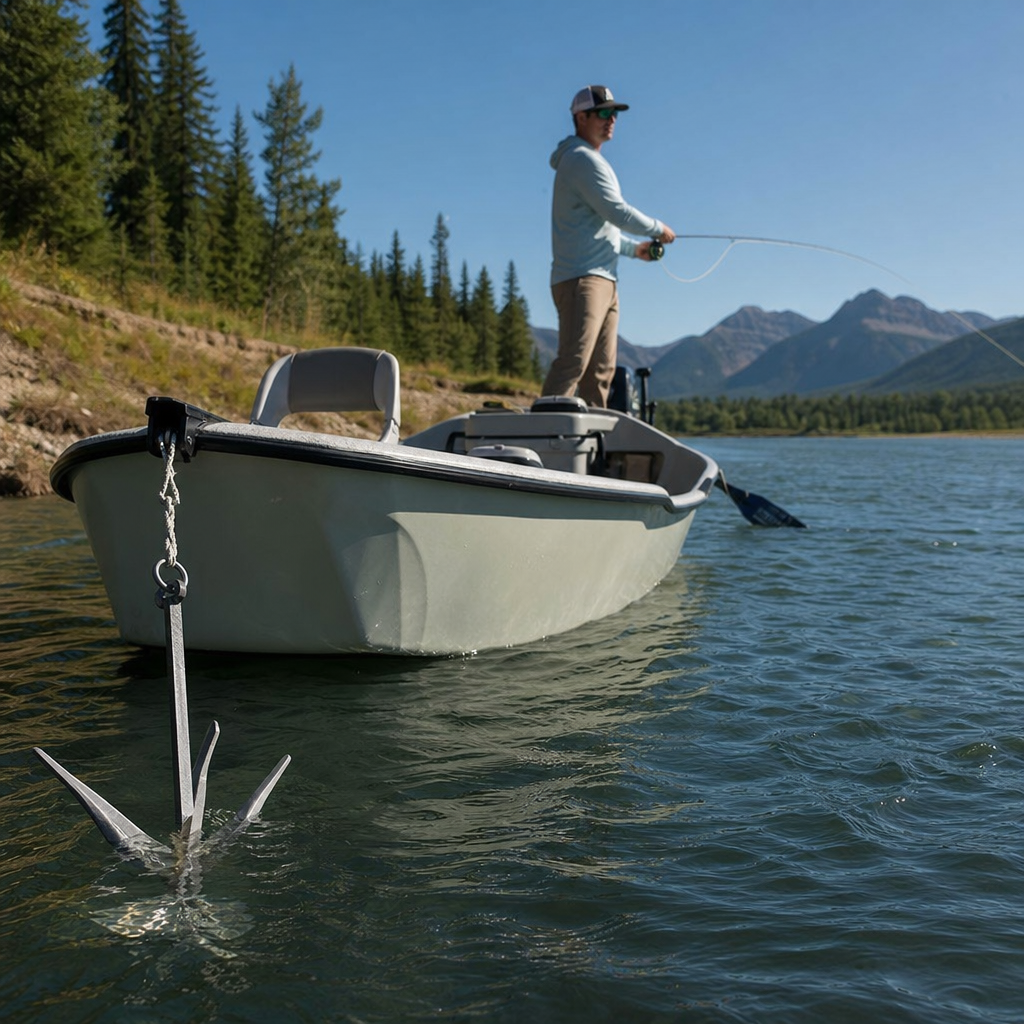
For most fly fishing boats, the common anchor styles are pyramid anchors, lead-filled anchors, coated river anchors, and molded designs intended to reduce hang-ups. Pyramid anchors remain popular because they are compact, sink quickly, and hold well in mixed river bottoms. Their pointed geometry gives them enough bite for gravel and softer substrates while still working acceptably on cobble. Lead-filled anchors often concentrate more weight into a smaller form, which helps in faster current and makes storage easier. Vinyl-coated models reduce clang against the hull and can be easier on raft materials and painted surfaces, though the coating can wear if dragged repeatedly over sharp rock. Mushroom anchors and many general boating anchors are usually poor choices for moving rivers because they are designed for lakes or static mooring rather than frequent controlled drops from a drift fishing platform.
Rope and hardware deserve equal attention. A stable setup typically uses sinking anchor rope with low stretch and high abrasion resistance. Many experienced rowers prefer 3/8-inch rope because it balances grip, pulley compatibility, and strength. Polypropylene floats, which can be useful in some marine uses, but floating rope near oars and current seams can create line management problems. Stainless pulleys, secure eye bolts, and reinforced stern brackets matter because anchor loads are repetitive and often dynamic. If your anchor grabs suddenly while the boat is moving, hardware sees a sharp shock. That is why reputable systems use robust mounts and quality fasteners instead of light utility components.
Best anchor types by boat and water conditions
Drift boats, rafts, and inflatable fishing boats do not need the same anchor. For a standard hard-sided drift boat used on moderate to large rivers, a 30-pound pyramid or compact lead-filled anchor is the benchmark. That weight provides enough authority to hold in current without becoming impossible to retrieve repeatedly through a full day of fishing. On wide western rivers such as the Yellowstone, Deschutes, or lower Madison, many anglers move to 35 pounds when they frequently stop in heavier current or fish with two standing casters. The extra weight improves stability, but it also increases wear on pulleys and raises the physical demand of retrieval if no mechanical assist is installed.
Rafts generally require a different balance. Because inflatables sit differently in current and often fish shallower, rougher, or more technical water, many guides choose 20- to 30-pound coated anchors, sometimes paired with quick-release systems. The coating reduces the chance of abrasive contact with tubes and frame components. More importantly, raft anglers need to think harder about entrapment and sudden current loads. A heavier anchor can hold impressively, but if the boat swings broadside in turbulent water, that holding power becomes a liability. In technical rivers, controlled temporary positioning is often preferable to absolute lock-in.
Small stillwater fly craft, including prams, pontoons, and jon boats used on lakes, often benefit from lighter anchors or even two-anchor setups rather than one heavy river anchor. In wind, a bow and stern arrangement can stop the boat from weather-vaning, which improves casting lanes. On lakes, mushroom and fluke styles may work, but this hub focuses on river-oriented fly fishing anchors, where pyramid and compact river designs dominate because they reset reliably after small drifts.
| Boat or Use Case | Typical Anchor Choice | Best Conditions | Main Tradeoff |
|---|---|---|---|
| Drift boat | 30-35 lb pyramid or lead-filled river anchor | Moderate to strong current, gravel, cobble | Heavier retrieval and more hardware stress |
| Fishing raft | 20-30 lb coated river anchor | Mixed current, inflatable-friendly setups | May drag sooner in very heavy flow |
| Stillwater pram or pontoon | Lighter anchor or dual-anchor system | Wind control, slower water | Less suitable for strong river current |
| Technical shallow river | Moderate-weight quick-release setup | Frequent repositioning, safety-focused rowing | Reduced maximum holding power |
If you want a direct recommendation framework, start with the boat maker’s anchor range, then adjust for your river. Heavier current, harder stops, and bigger boats push you upward. Technical water, shallow rock gardens, and inflatable craft push you toward moderated weight and easier release. That simple hierarchy prevents most buying mistakes.
Features that separate top-rated fly fishing anchors from average options
In product reviews, anglers often focus on weight first, but the best fly fishing anchors for stability stand out because of material quality and shape consistency. Cast iron anchors are common and affordable, but coatings, welds, and eyelet construction vary widely. A well-made cast or poured anchor has a centered attachment point, smooth edges where rope contact may occur, and a durable finish that does not chip excessively after a few outings. Lead-filled anchors are denser and often more compact, which improves drop speed and holding efficiency for their size. The downside is cost and, in some cases, environmental concern if the product is damaged or poorly encapsulated. Quality manufacturers address this with sealed designs and thick outer coatings.
Noise reduction is a practical feature, not a luxury. On low water and pressured fisheries, the clank of bare metal against aluminum can alert fish in shallow holding water. Coated anchors and rubberized contact points help. So does a retrieval system that lifts the anchor clear before it swings into the transom. I have seen otherwise excellent anchors become annoying because their shape caused them to bang constantly during row-outs between stops.
Another separator is how the anchor sheds snags. No river anchor is truly snag-proof, but good designs avoid unnecessary fins, protrusions, or awkward geometry that wedge tightly between rocks. Compact pyramids and rounded river anchors usually release better than shapes with broad hooks or side flanges. In reviews, I pay close attention to how an anchor resets after brief dragging. The strongest anchor on paper is not necessarily the best on the water if it hangs every third stop and forces the rower to back down dangerously to free it.
Compatibility also matters. Top-rated anchors work with common pulley systems, anchor nests, and powered retrieval units from manufacturers such as Anchor Wizard, ClackaCraft, Hyde, and NRS-compatible frame systems. A great anchor that does not fit your anchor nest, rides too high, or fouls your stern bracket is not a great buy. The best equipment reviews account for the whole setup, not just the metal weight at the end of the rope.
Safety, rigging, and maintenance for dependable performance
The safest fly fishing anchor is one you can deploy deliberately and release instantly when conditions change. Anchors should almost always be run from the stern on drift boats designed for that system, because stern deployment keeps the boat oriented correctly when stopping from a downstream drift. Anchoring from the side can create a dangerous broach. Anchoring in fast chutes, at the head of drops, or in hydraulics is poor judgment regardless of anchor quality. The best setup cannot overcome bad placement.
Quick-release capability is essential, especially for rafts and rivers with woody debris or sudden current transitions. Many experienced anglers rig a knife within reach as a last resort, but the preferred solution is a clean release mechanism and disciplined rope management. Rope should be inspected frequently for glazing, flattening, or abrasion near pulleys and knots. Replace it before failure, not after visible damage becomes severe. Hardware should be rinsed, dried, and checked for loosened fasteners and pulley wear. Bearings that grind or seize do more than annoy; they increase retrieval effort and can cause uncontrolled movement during deployment.
Maintenance extends anchor life and preserves stability. Repaint chipped anchors if they are bare metal. Inspect coatings for tears that expose underlying material. Check attachment eyes for deformation. If you fish silty rivers, clean pulley tracks and retrieval systems often because fine sediment accelerates wear. For winter storage, dry rope fully to prevent mildew and stiffness, and store the anchor where it cannot swing and crack gelcoat, aluminum, or garage flooring. These are small habits, but they are exactly the habits that make an anchor system reliable through hundreds of stops.
How to choose the best fly fishing anchor for your setup
If you are buying one anchor for general use, choose based on boat type first, current speed second, and bottom composition third. Most drift boat owners are best served by a 30-pound river anchor from a reputable manufacturer, paired with abrasion-resistant rope and a proven stern pulley system. Most raft anglers should prioritize a coated 20- to 30-pound option with clean quick-release capability. If your home water is mostly cobble and moderate current, pyramids remain the safest default recommendation because they are versatile, available, and easy to review objectively across brands.
Brand selection matters less than system fit and manufacturing quality, but established names usually earn their reputation. In real equipment reviews, the most dependable products tend to come from companies that build around fishing boats rather than generic marine catalogs. They understand anchor nesting, transom clearance, rope routing, and the way fly anglers stop and start dozens of times in a day. Read reviews that mention actual river use, not just unboxing impressions. Look for comments on drag in current, retrieval smoothness, coating wear after a season, and how the anchor behaves on different bottoms.
The key takeaway is simple: stable anchoring improves casting, fish fighting, and overall safety, but only when the anchor, rope, hardware, and boat are matched correctly. Treat this equipment reviews hub as your starting point for every anchor decision. Compare weight, shape, coating, retrieval compatibility, and release safety before price. Then choose a setup built for your river, not someone else’s. A well-matched fly fishing anchor will make every stop calmer, every presentation cleaner, and every day on the water more controlled. Use these criteria to narrow your options, then move into specific product reviews with confidence and upgrade the part of your boat system that most directly controls stability.
Frequently Asked Questions
What makes a fly fishing anchor stable in current, wind, and changing river bottoms?
A stable fly fishing anchor is one that can bite quickly, hold consistently, and release predictably when you need to move. In practical terms, stability comes from a combination of anchor design, anchor weight, rope setup, and the type of bottom you are fishing over. Current and wind both pull on a boat in different ways, and an anchor that performs well in soft mud may skid or roll on rounded cobble. That is why the best fly fishing anchors for stability are chosen with real river conditions in mind, not just a number stamped on the anchor.
For drift boats and rafts, shape matters as much as weight. Pyramid and claw-style anchors are common because they tend to dig or settle well in many freshwater conditions. A heavier anchor can improve holding power, but only if the bottom allows it to seat properly and the rope angle helps it stay engaged. If the line is too vertical, even a heavy anchor may drag because it is being lifted instead of pulled low across the bottom. That is also why anglers pay attention to rope length, anchor pulleys, and how smoothly the anchor deploys from the stern.
Bottom composition changes everything. On muddy edges, an anchor may sink and hold deeply. On gravel or mixed cobble bars, it often relies more on shape and weight to wedge and resist movement. In slow tailouts, wind may become the dominant force, especially with higher-sided boats. In those situations, stability means reducing swing, keeping the casting platform controlled, and avoiding sudden slips that ruin line management or put the boat in a bad position. The most reliable setups are the ones matched to the boat, the river, and the angler’s actual fishing style.
How heavy should a fly fishing anchor be for a drift boat or raft?
The right anchor weight depends on boat size, hull design, passenger load, river speed, and where you fish most often. There is no universal number that works for every fly fishing setup. A lightly loaded raft on a moderate river may hold well with less anchor weight than a fully rigged drift boat carrying two anglers, coolers, and gear. As a general rule, anglers increase anchor weight as boat mass and river force increase, but they also stay within the limits of the boat manufacturer’s recommendations and the anchor system’s safe operating range.
Heavier is not automatically better. An oversized anchor can create problems during deployment and retrieval, put unnecessary stress on pulleys and anchor lines, and encourage anglers to anchor in places where they should not. Stability should feel controlled, not brute-forced. If an anchor is so heavy that it is difficult to raise safely, especially after a long day on the oars, it may become a liability. On the other hand, an anchor that is too light tends to skip or drag, causing the boat to drift off position at the worst possible moment, such as during a cast, while netting a fish, or near structure.
The best approach is to choose an anchor weight proven for your exact boat class and the rivers you row most. Many experienced anglers settle on a setup after testing in real conditions rather than guessing from online specs alone. If you frequently fish western rivers with mixed cobble, moderate current, and windy afternoons, you will usually want a system with enough weight and a bottom-friendly shape to hold without constant adjustment. If you fish smaller, slower water, a slightly lighter but well-designed anchor may provide all the stability you need with easier handling and less strain on your equipment.
Which anchor styles work best for fly fishing boats on cobble, gravel, and muddy bottoms?
Different anchor styles shine on different bottom types, and that matters a lot in fly fishing because river conditions can change from one bend to the next. On muddy bottoms or silty edges, pyramid-style anchors often perform well because they sink and seat firmly. In gravel and mixed rock, claw-style or similarly contoured anchors can offer better grip by catching irregularities and resisting lateral movement. Some anglers also prefer coated anchors or designs built specifically for river boats because they balance durability with a shape that behaves predictably in freshwater currents.
Rounded cobble is one of the harder bottom types for any anchor. Instead of digging in, the anchor may slide, bounce, or settle awkwardly between rocks. In those places, weight helps, but shape is still critical. An anchor that can wedge, roll into a holding position, or maintain contact without tumbling is usually more reliable than a simple shape that only works by sinking. Gravel bars are often more forgiving because they give the anchor more texture to bite into, while muddy banks can produce excellent hold if the current is not so strong that it pulls the anchor free before it sets.
The key is to think in terms of consistency, not just raw stopping power. Fly anglers need an anchor that holds the boat quietly and steadily enough to cast accurately, strip line cleanly, and manage fish without sudden repositioning. The ideal style is often the one that gives you repeatable performance across the range of bottoms you actually fish. If your home water includes cobble bars, muddy inside bends, and slow tailouts all in the same day, a versatile anchor style with a proven river reputation is usually the smartest choice over a specialty design that excels only in one condition.
Is anchoring from a fly fishing boat always safe, and what are the biggest mistakes to avoid?
Anchoring is not always safe, and one of the most important things any fly angler can learn is that an anchor is a positioning tool, not a guarantee of control in every section of river. Anchoring in fast current, heavy hydraulics, steep drops, or technical channels can be dangerous, especially if the anchor grabs suddenly and turns the boat broadside. Most experienced rowers are selective about where they anchor. They look for moderate current, manageable depth, enough downstream room, and a bottom likely to hold without creating unpredictable boat movement.
One of the biggest mistakes is anchoring where the current is stronger than the boat and anchor system can safely handle. Another is deploying too late, when the boat is already moving into trouble. Using damaged rope, weak pulleys, or a poorly mounted anchor system is also risky. So is failing to keep the anchor line clear of tangles, feet, and loose gear. In fly fishing, line management matters, and a messy stern can create a bad chain reaction when the anchor drops, the boat swings, and fly line wraps around equipment. Good stability begins with an organized boat and a rower who is always thinking ahead.
Another common mistake is assuming that if the anchor holds once, it will hold indefinitely. Bottom conditions change, wind shifts, and boats can slowly drag without everyone noticing right away. That is why smart anglers monitor the boat after anchoring and stay ready to release quickly if the position becomes unsafe. Anchoring should improve control for casting, landing fish, and protecting the boat from drifting into structure, but it should never replace good judgment. In many situations, rowing, holding with oars, or beaching the boat is the safer option than dropping anchor.
What should I look for in a complete fly fishing anchor system besides the anchor itself?
The anchor is only one part of the system. For real stability, you also need a dependable rope, a smooth pulley arrangement, solid mounting hardware, and a layout that lets the anchor deploy and retrieve without snags. Rope quality matters more than many anglers realize. It needs to be strong, abrasion-resistant, easy to grip when wet, and sized appropriately for the pulley and cleat system. Too much stretch can make the boat feel less controlled, while a rope that kinks or frays easily creates both frustration and safety concerns.
Pulleys and anchor trolleys or stern systems should operate smoothly under load. If the anchor hangs up during deployment, it may not set properly. If retrieval is jerky or awkward, anglers are more likely to delay raising the anchor when conditions change. Hardware should be corrosion-resistant and mounted securely enough to handle repeated use on rough roads, cold mornings, and long river days. A clean routing path for the rope is important too. The best systems keep the rope away from fly line, feet, net handles, and anything else that can become entangled when action gets fast.
It is also worth considering ease of use from the rowing seat. In fly fishing, you are often making quick positional adjustments to set up drifts, hold on a seam, or stop near a bank without disturbing the water too much. A well-designed anchor system makes those adjustments efficient and predictable. It helps the rower place the boat quietly, keeps anglers stable enough to fish effectively, and reduces the chaos that happens when an anchor drags, jams, or drops unevenly. In the end, the best fly fishing anchor for stability is not just a good piece of metal at the end of a rope. It is part of a complete, reliable system that works with the boat, the river, and the way you actually fish.