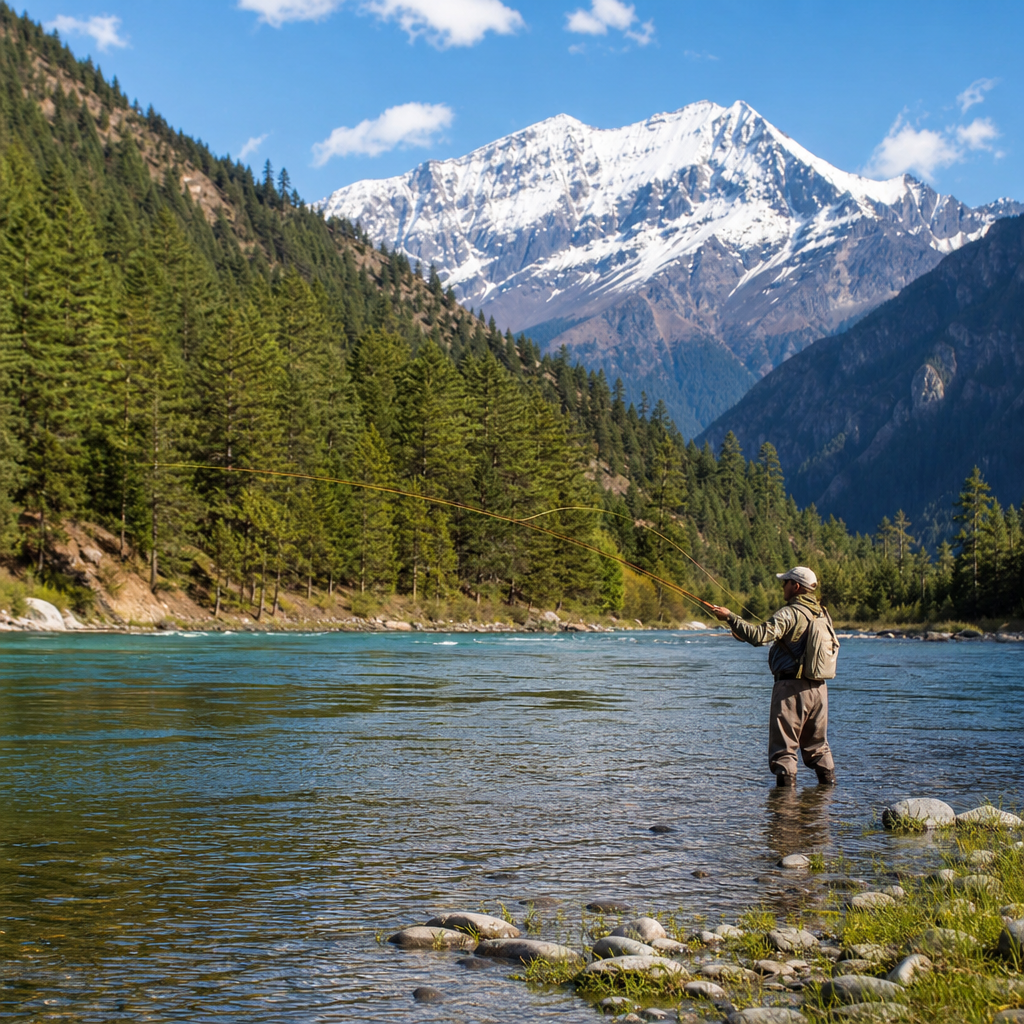
Asia has become one of the most compelling regions on earth for anglers who want technical fly fishing, wild scenery, and a broader range of species than most traditional destination lists admit. When people talk about elite fly fishing travel, they often default to Montana, Patagonia, or New Zealand. After planning, fishing, and reviewing trips across Asian watersheds and coastlines, I can say that view is outdated. The top fly fishing destinations in Asia include Himalayan trout rivers, taimen country in Mongolia, Japanese mountain streams, tropical saltwater flats, and jungle fisheries where mahseer can test both tackle and patience.
For travelers researching fly fishing travel and destination reviews, Asia matters because it combines biodiversity with cultural depth. A single region can offer cherry salmon in Japan, golden mahseer in India, giant trevally on Indian Ocean flats, and freshwater predators in remote steppe rivers. The term fly fishing destination here means more than a productive river. It includes fish quality, seasonality, guiding standards, access logistics, conservation pressure, safety, permit systems, and whether the trip experience matches the price. A beautiful river with weak management and difficult transport may be exciting, but it should be reviewed differently than a mature destination with reliable lodging and catch-and-release practices.
This hub article covers the leading fly fishing destinations in Asia from a traveler’s perspective, with plain-language evaluations of what each place does best, who it suits, and where the tradeoffs lie. It is designed to help anglers compare coldwater and warmwater options, understand realistic expectations, and identify destinations worth deeper research. If you are building an Asia fly fishing shortlist, start with the places below.
Mongolia: the benchmark for taimen and true wilderness river expeditions
Mongolia is the destination most serious anglers mention first when discussing iconic fly fishing in Asia, and for good reason. Its reputation rests on taimen, the world’s largest salmonid, a predatory fish that can exceed 30 kilograms in exceptional systems. The country’s best-known waters, including the Delger Muron, Eg-Uur, and tributaries within the Selenge and Arctic drainages, deliver something increasingly rare in global fishing travel: large, wild fish in landscapes that still feel sparsely inhabited.
The appeal is not only size. Taimen fishing is visual, physical, and demanding. Anglers cast large streamers on 9- to 10-weight outfits, often from rafts or by wading broad runs, undercut banks, and woody structure. Strikes can be explosive, but success rates vary sharply with water temperature, seasonal conditions, and angler stamina. On my better Mongolian weeks, a handful of follows or eats in a day felt normal; on slower days, every cast was still justified by the chance at a truly exceptional fish.
Mongolia’s strengths are clear: unmatched wilderness character, high adventure value, and a species that defines bucket-list fishing. Its weaknesses are equally important. Trips are expensive, weather volatility is real, and travel can involve long vehicle transfers, domestic flights, and camp-based logistics. Responsible operators emphasize strict handling, barbless hooks, and rapid release because taimen populations are vulnerable to overfishing and habitat pressure. For anglers who want luxury first, Mongolia can feel austere. For anglers who value rarity and authenticity, it remains Asia’s flagship fly fishing destination.
Japan: refined trout fishing, precise methods, and exceptional access
Japan offers one of Asia’s most complete fly fishing experiences because it combines high-quality trout and char waters with excellent infrastructure. In contrast to Mongolia’s expedition format, Japan rewards anglers who appreciate technical fishing, punctual travel, and polished local services. Hokkaido and Honshu are the main centers, with species such as yamame, iwana, amago, rainbows in some systems, and the highly prized sakhalin taimen in a limited conservation context. Many visiting anglers focus on mountain streams, spring creeks, and managed rivers rather than chasing the rarest species.
What stands out in Japan is the diversity of styles. Small-stream dry-fly fishing in forested headwaters can feel intimate and highly tactical, while larger rivers support nymphing and streamer presentations. There is also deep cultural value in tenkara, the fixed-line method developed for mountain streams, which remains highly effective in tight water. In destination review terms, Japan scores especially well for transport, cleanliness, food, safety, and the ability to combine fishing with broader travel. An angler can fish in the morning and still enjoy first-rate accommodations, public transport, and regional cuisine that elevate the entire trip.
The main constraints are regulation complexity, language barriers in more local fisheries, and the fact that some waters are heavily managed or pressured relative to their size. Peak seasons can be crowded near major population centers. Still, for anglers who want reliable logistics and nuanced trout fishing, Japan is one of the best-reviewed fly fishing destinations in Asia.
India and Bhutan: Himalayan rivers and the pull of golden mahseer
For anglers drawn to powerful freshwater game fish rather than classic trout alone, India’s and Bhutan’s Himalayan-influenced rivers deserve serious attention. The marquee species is golden mahseer, often called the tiger of the river because of its strength, speed, and tendency to hold in heavy current. Productive fisheries have historically included the Ramganga, Saryu, and Cauvery systems in India, though conditions and regulations vary over time. Bhutan, with lower fishing pressure and dramatic mountain valleys, has emerged as a particularly appealing option for anglers seeking wild settings and less crowded water.
Mahseer fishing is rarely easy. Water levels, monsoon timing, and river clarity can shift a trip from excellent to difficult. Effective fly approaches often involve large baitfish patterns, surface flies during active windows, and strong tackle capable of turning fish away from boulders and current seams. I advise travelers to think of mahseer less like trout and more like a hybrid challenge combining steelhead patience, carp awareness, and saltwater-strength tackle decisions.
The upside is clear: few freshwater fish in Asia offer a more memorable fight, and the surrounding landscapes can be extraordinary. The downside is inconsistency. Access, permits, political changes, conservation closures, and heat can all affect trip quality. Choose outfitters with recent river-specific information, not generic regional claims. When conditions align, India and Bhutan belong near the top of any Asia fly fishing destination list.
Thailand, Malaysia, and Sri Lanka: overlooked warmwater and jungle options
Not every top fly fishing destination in Asia revolves around trout or taimen. Southeast Asia offers distinctive warmwater fishing that many review roundups ignore. In Thailand and Malaysia, anglers can pursue snakehead, gourami, jungle perch, and in some systems giant freshwater species that demand accurate casting around structure. Sri Lanka has developed a quieter reputation for reservoir and river fishing, with opportunities for snakehead and other aggressive warmwater species, plus travel appeal well beyond the fishing itself.
These destinations are best for anglers who enjoy sight fishing, explosive surface takes, and species discovery. Snakehead in particular have become a favorite among experienced fly anglers because they reward stealth, accurate presentation, and fast decision-making. Fishing often involves targeting fry-guarding fish, edges of weedbeds, and shaded banks with poppers, divers, and baitfish patterns. It is exciting, but also situational; weather, water level, and fish behavior can collapse a pattern quickly.
From a destination review standpoint, these countries are strongest as mixed-purpose trips. They are ideal for anglers traveling with partners or families because major tourism infrastructure already exists. Their weakness is inconsistency in wild fisheries compared with more established coldwater destinations. If your priority is species variety and memorable topwater eats rather than predictable numbers, they deserve a place on your shortlist.
Maldives and Seychelles access via Asia: elite saltwater flats within regional itineraries
When anglers search for top fly fishing destinations in Asia, they often mean the broader travel market accessible from Asian hubs, and that is where the Maldives enters the conversation. While geographically discussed in different ways, it functions as a premier fly fishing destination for travelers moving through Asia. The main draw is saltwater flats fishing for giant trevally, bonefish in selected zones, triggerfish, bluefin trevally, and reef-associated species. Fishing is often done from skiffs and on foot across coral flats, channels, and atoll edges.
Success in the Maldives depends heavily on conditions and angler competence. Long casts in wind, quick target identification, and precise strip speed matter. Guides will often ask for immediate shots at moving fish, especially giant trevally, and missed opportunities come fast. The destination’s advantages include spectacular scenery, strong lodge standards in upper-tier operations, and the chance at visually dramatic saltwater encounters. Its disadvantages are price, weather exposure, and the technical learning curve. It is not the best first saltwater fly trip for everyone, but for experienced anglers it can be exceptional.
| Destination | Signature species | Best for | Main tradeoff |
|---|---|---|---|
| Mongolia | Taimen | Expedition anglers seeking wilderness | High cost and remote logistics |
| Japan | Yamame, iwana, trout | Technical trout anglers wanting easy travel | Regulation complexity and crowding |
| India/Bhutan | Golden mahseer | Powerful freshwater sport in dramatic rivers | Seasonal inconsistency |
| Thailand/Malaysia/Sri Lanka | Snakehead and warmwater species | Topwater action and species variety | Less predictable wild fisheries |
| Maldives | Giant trevally, triggerfish | Advanced saltwater flats anglers | Expense and wind |
How to evaluate fly fishing destination reviews before you book
The biggest mistake travelers make is choosing a destination based on hero photos rather than fishery structure. A useful travel and destination review should answer six questions directly: what species are realistically available, what season is best, how many effective fishing hours exist each day, what level of casting skill is required, what conservation rules are enforced, and what happens if conditions turn poor. If a lodge or outfitter cannot answer those clearly, keep looking.
I also recommend separating fishability from beauty. Some of the most beautiful rivers in Asia are poor bets at certain water levels. Conversely, less photogenic stretches can fish extremely well because of temperature stability, forage concentration, or lower pressure. Ask for recent trip timing, not old promotional anecdotes. Review flight chains, transfer times, medical access, satellite communication, and wading demands with the same seriousness you apply to fly selection.
Gear matters, but destination fit matters more. A Japan trout trip can be ruined by overpacking heavy rods and ignoring small-fly presentations. A Mongolia taimen trip can be compromised by showing up without the stamina to cast large flies all day. The best-reviewed fly fishing destinations in Asia are the ones where your expectations, budget, and skill set align with the fishery’s real demands.
Building your Asia fly fishing shortlist by trip style and budget
If you want one simple framework, match the destination to the experience you actually want. Choose Mongolia for a once-in-a-lifetime expedition built around a single legendary species. Choose Japan for polished, technically satisfying trout fishing with minimal travel friction. Choose India or Bhutan for a river adventure centered on powerful mahseer and dramatic scenery. Choose Southeast Asia for warmwater variety and topwater excitement. Choose the Maldives for premium saltwater visual hunting.
Budget changes the ranking. Japan can be surprisingly efficient because independent travel works well and domestic transport is excellent. Mongolia and the Maldives usually sit at the upper end because of charter components, specialized camps, or skiff operations. India, Bhutan, Thailand, and Sri Lanka can range widely depending on remoteness and service level. For most anglers, the best value comes from picking a destination whose logistics are realistic rather than chasing the rarest fish at any cost.
Asia is no longer an obscure alternative in fly fishing travel. It is a serious global category with destinations that stand on their own merits. Start by identifying your target species, preferred trip style, and tolerance for uncertainty, then use that filter to compare reviews and operators. Do that well, and Asia will reward you with some of the most distinctive fly fishing on the planet.
Frequently Asked Questions
What makes Asia such a standout region for fly fishing compared to more established destinations like Montana, Patagonia, or New Zealand?
Asia stands out because it combines technical fishing, extraordinary biodiversity, dramatic landscapes, and a level of exploration that many long-celebrated fly fishing destinations can no longer offer in the same way. In one broad region, anglers can target wild trout in Himalayan freestone rivers, pursue giant taimen in remote northern systems, and shift to saltwater flats or reef edges for species that are rarely mentioned in traditional fly fishing travel conversations. That range alone is remarkable, but what really elevates Asia is the feeling that many of its fisheries still reward curiosity, adaptability, and a genuine sense of adventure.
Unlike highly standardized destination circuits, many of Asia’s best fly fishing opportunities are tied to complex mountain watersheds, seasonal migrations, monsoon rhythms, and locally specific access conditions. That means anglers are often engaging with places that feel less packaged and more alive. The fishing can be highly visual, highly technical, and highly rewarding, especially for those who enjoy reading water, making precise presentations, and adjusting tactics to variable flows and species behavior. For experienced fly fishers, that challenge is a major part of the appeal.
Another reason Asia deserves serious attention is species diversity. The region is not limited to a single iconic fishery type. Depending on where you go, you may encounter snow-fed trout rivers, jungle streams, vast taimen waters, or tropical saltwater systems with powerful, aggressive fish. This breadth allows Asia to appeal to anglers who value both classic river fishing and unconventional destination planning. In practical terms, Asia is no longer a niche option for the well-traveled few. It is one of the most compelling fly fishing regions in the world for anglers who want wild scenery, distinctive species, and a more expansive idea of what elite fly fishing travel can be.
Which countries or regions in Asia are considered top fly fishing destinations, and what species can anglers expect to target?
Several parts of Asia have emerged as genuinely world-class fly fishing destinations, each with its own character, challenges, and target species. The Himalayan region is one of the most important, especially in areas of India, Nepal, Bhutan, and parts of surrounding mountain watersheds where cold, oxygen-rich rivers support wild trout fisheries. These rivers often deliver the kind of technical dry-fly and nymph fishing that experienced anglers associate with classic trout destinations, but in a setting defined by steep valleys, remote villages, and striking altitude-driven terrain. Depending on the river system, anglers may encounter brown trout, rainbow trout, and in some areas native or regionally distinct cold-water species.
Mongolia is another premier destination, particularly for taimen. Often described as one of the world’s great freshwater predators, taimen draw anglers who want oversized flies, aggressive surface takes, and the kind of remote expedition atmosphere that is increasingly rare. Taimen fishing is often paired with opportunities for lenok and grayling, making the overall experience richer than a single-species trip. These fisheries are typically associated with large, wild rivers and low angling pressure, but they also require careful planning and a conservation-minded approach.
Beyond the mountains and taiga, tropical and coastal Asia offer outstanding options that are still underappreciated in mainstream fly fishing media. Depending on the destination, anglers may find productive saltwater flats and inshore fisheries for species such as giant trevally, queenfish, milkfish, triggerfish, and other hard-fighting tropical game fish. Parts of Southeast Asia also present opportunities in jungle rivers and estuaries, where local conditions can create highly specialized sight-fishing scenarios. The best destination for any angler ultimately depends on whether the priority is trout, taimen, or saltwater species, but the broader point is clear: Asia is not one fishery type. It is a continent-scale collection of fly fishing experiences with real global significance.
When is the best time to plan a fly fishing trip in Asia?
The best time to plan a fly fishing trip in Asia depends heavily on the country, elevation, watershed type, and target species, because the continent’s fisheries are shaped by snowmelt, monsoons, regional climate shifts, and local water conditions. There is no single ideal season for all of Asia. Instead, successful trip planning comes from matching the destination to the correct window of stability, clarity, and fish activity. This is especially important in mountain regions, where runoff and seasonal weather can dramatically affect both access and fishing quality.
For Himalayan trout fisheries, many anglers focus on pre-monsoon and post-monsoon periods, when flows are more manageable and water clarity improves. Early season can offer cool water and active fish, while autumn often brings stable conditions and excellent visibility. That said, exact timing varies from river to river and from one country to another. Snowpack, road access, and local weather patterns can all shift the effective season. In practical terms, anglers should avoid assuming that a good trout month in one Himalayan valley automatically translates to another nearby system.
For taimen destinations in northern Asia, timing is often built around water temperatures, seasonal fish behavior, and logistical access to remote camps and rivers. Summer and early autumn can be productive, but the best window depends on the specific drainage and the style of fishing being emphasized, whether that is streamer fishing, surface presentations, or mixed-species angling. In tropical and saltwater destinations, monsoon cycles, wind, tidal movement, and water visibility become central planning factors. Some locations fish best in relatively dry, calm periods, while others depend on specific seasonal bait movements or current patterns.
The smartest approach is to work backward from the species and experience you want. If your priority is technical trout fishing in high-gradient rivers, your timing should differ from someone chasing taimen in a remote northern camp or sight-casting in tropical saltwater. In Asia, timing is not a minor detail. It is one of the most important factors in determining whether a trip is merely scenic or truly exceptional.
Is fly fishing in Asia better suited for experienced anglers, or can beginners also enjoy these destinations?
Fly fishing in Asia is often especially rewarding for experienced anglers, but that does not mean beginners are excluded. What it does mean is that many of the region’s most famous fisheries tend to favor anglers who are comfortable with variable conditions, precise casting, and adapting quickly to different water types and fish behavior. Himalayan trout rivers, for example, can involve fast pocket water, complex seams, changing insect activity, and presentations that need to be accurate on the first drift. Taimen fisheries may demand large-fly casting, long days, and a willingness to cover water methodically. Saltwater venues often add wind, moving targets, and quick-shot opportunities that reward preparation and composure.
For newer anglers, the key is choosing the right destination and the right support structure. A beginner does not need to avoid Asia altogether. In fact, many destinations can be highly enjoyable for less experienced fly fishers when guided well. A knowledgeable outfitter can dramatically reduce the learning curve by selecting forgiving water, adjusting tactics to the angler’s skill level, and focusing on realistic, productive scenarios rather than maximizing technical difficulty. Someone early in their fly fishing journey might do very well on trout rivers with clear instruction, or in saltwater settings where fish numbers and visibility create exciting learning opportunities.
It is also worth noting that “beginner-friendly” should not be confused with “easy.” Asia’s fisheries are often at their best when approached with patience and openness to learning. Even skilled anglers are challenged by unfamiliar species, local hatches, weather swings, and cultural or logistical differences from home waters. That challenge is part of the appeal. For experienced anglers, Asia offers depth and complexity. For beginners, it can offer unforgettable scenery, rapid improvement, and a far broader view of fly fishing than they might gain from staying within more conventional destinations. The deciding factor is not whether you are a novice or expert, but whether the trip is matched intelligently to your current ability and expectations.
What should anglers consider before booking a fly fishing trip to Asia?
Before booking a fly fishing trip to Asia, anglers should think beyond the fish themselves and evaluate the full structure of the trip: destination fit, seasonal timing, travel logistics, conservation standards, physical demands, and guide or outfitter quality. Asia contains some truly exceptional fisheries, but many of them are not plug-and-play destinations. Reaching the best water may involve multiple flights, long overland transfers, weather-dependent access, or remote lodging arrangements. That is not a drawback for many anglers; in fact, it is part of the attraction. But it does mean expectations need to be realistic from the beginning.
The first major consideration is matching the destination to your fishing goals. If you want classic river wading and technical trout presentations, you should be looking at mountain systems rather than tropical coasts. If you are drawn to large predators and expedition-style travel, taimen country is a different commitment entirely. If your ideal trip involves visual hunting for aggressive fish in warm water, then saltwater Asia may be the better fit. Being clear about the type of fishing you actually enjoy will help you avoid booking a destination simply because it sounds exotic or prestigious.
The second major consideration is who you are booking with. In a region as diverse as Asia, local expertise matters enormously. A strong outfitter or guide service should understand seasonal