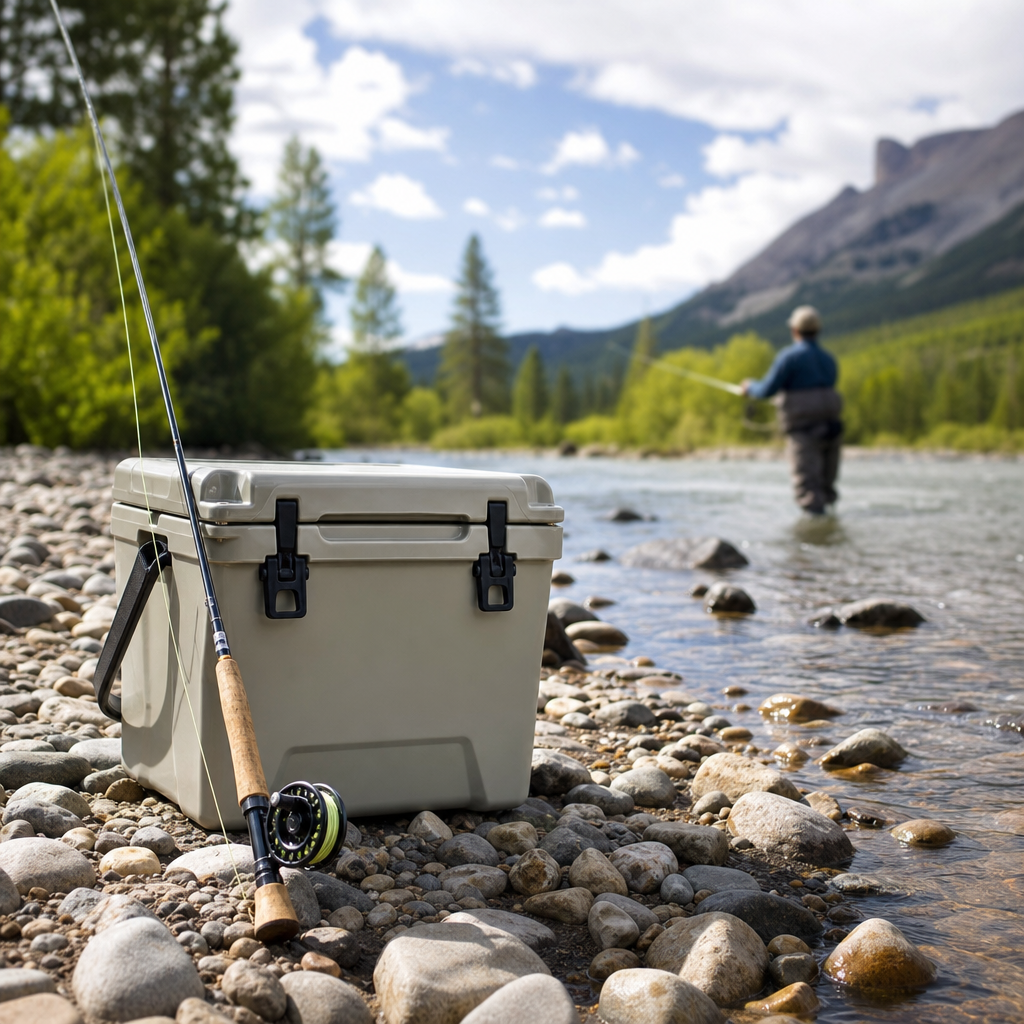
Choosing the right fly fishing cooler can determine whether your lunch stays crisp, your drinks stay cold, your bait remains usable, and your catch gets home in prime condition. In fly fishing, a cooler is not just a picnic box. It is part of a broader equipment system that includes packs, waders, boats, nets, and weather protection, and it has to perform under long hours of sun, rough transport, wet gear, and limited space. After years of packing coolers into drift boats, truck beds, rafts, and backcountry camps, I have learned that the best option is rarely the biggest or the most expensive. The best fly fishing cooler is the one sized for your trip length, matched to your transport method, and built with insulation, sealing, and durability that fit the way you actually fish.
This equipment reviews hub covers the main types of fly fishing coolers, what features matter most, and which products stand out for day trips, boat fishing, walk-in access, and multi-day travel. It also serves as a gateway topic within product reviews and recommendations because coolers intersect with nearly every other gear decision. A hard cooler affects boat layout. A soft cooler changes how you organize packs and lunch storage. A backpack cooler matters if you hike to alpine lakes or remote river banks. Understanding cooler performance helps you make smarter choices across your entire fly fishing setup, from vehicle loading to food safety to fish care.
Key terms matter here. Ice retention is the length of time a cooler keeps contents at safe cold temperatures. Rotomolded means the cooler body is formed as a single durable shell, usually with thick insulation and strong seals. A soft-sided cooler uses flexible fabric and foam insulation, trading maximum cold retention for lighter weight and easier carrying. Capacity is typically measured in quarts or by can count, but practical capacity for anglers depends more on how much ice, food, and gear you need to carry. In real use, a thirty-quart cooler packed with block ice and meal containers may outperform a larger but poorly organized model.
Why does this matter so much? Because fly fishing trips often combine long travel times, heat exposure, and uneven access to resupply. If you launch at dawn and return after dark, warm food and melted ice become more than inconveniences. They can shorten a trip, waste money, and create health risks. A quality cooler also protects expensive provisions on destination trips, supports better hydration in summer conditions, and gives you a reliable place to store harvested fish where regulations allow retention. In short, a cooler is one of the most practical pieces of fishing equipment you will buy, and choosing well pays off every time you hit the water.
What makes a fly fishing cooler worth buying
The best fly fishing coolers balance insulation, portability, footprint, and toughness. In testing gear over many seasons, I start with insulation quality and gasket performance because those determine whether a cooler maintains temperature after repeated opening and closing. Rotomolded models from brands such as YETI, RTIC, Engel, Pelican, and Orca generally lead in ice retention because they use thicker polyurethane insulation and freezer-style gaskets. Soft coolers from YETI Hopper, Fishpond, Simms, Patagonia, and AO Coolers can still perform well for single-day use, especially if pre-chilled and packed with dense ice.
The next factor is how the cooler travels. A drift boat angler can carry a heavier hard cooler with non-slip feet and tie-down slots. A walk-and-wade angler usually needs a compact soft cooler or insulated backpack that fits into a larger gear system. For raft anglers, shape matters as much as volume. A bulky square cooler may waste space under a seat frame, while a lower-profile design keeps weight centered and improves access. Good handles, shoulder straps, and latch design matter because coolers are handled constantly, often with wet hands.
Durability is another separator. Fly fishing environments are hard on gear: gravel bars, sand, UV exposure, hooks, boat ramps, and truck loading all take a toll. Hard coolers should have hinge systems that do not loosen quickly, drain plugs that seal cleanly, and latches that can be replaced if damaged. Soft coolers need abrasion-resistant shell fabric, welded or leak-resistant liners, and zippers or magnetic closures that tolerate dirt. I have seen cheap coolers fail in exactly the places anglers rely on most: strap anchors ripping out, hinges cracking, and lids warping enough to break the seal.
Finally, value is not just sticker price. Premium coolers often cost more upfront but can last for many seasons and hold ice long enough to reduce refill needs on travel days. Still, not every angler needs expedition-grade insulation. If your typical trip is six hours on a local trout stream, buying a heavy premium sixty-five-quart cooler may add cost and weight with little real benefit. The smartest purchase is driven by trip profile, not brand prestige.
Best cooler categories for different fly fishing trips
Different trips demand different cooler styles. For local day fishing with vehicle access, a twenty-to-forty-quart hard cooler is usually the sweet spot. It holds lunch, drinks, extra water, and a modest amount of ice without taking over your car or boat. Models like the YETI Roadie 24, RTIC 32 Ultra-Light, and Engel 35 are popular because they combine manageable size with dependable insulation. The Roadie 24, for example, is tall enough for many wine bottles and upright drink storage, which sounds minor until you are packing efficiently for two anglers.
For drift boats and rafts, many anglers prefer a larger hard cooler in the forty-five-to-sixty-five-quart range. These serve double duty as a seat, dry storage platform, and meal station. YETI Tundra 45, RTIC 52, Pelican Elite 45, and Canyon Coolers Outfitter series are common choices because they fit standard boat layouts and tolerate rough handling. Guides often choose coolers with tie-down points and bear-resistant certifications because they need repeatable performance and often leave gear staged overnight in camp or at put-ins.
For hike-in trout fishing and alpine missions, a soft cooler or insulated backpack is usually better. Fishpond, Simms, and YETI all offer compact options that carry snacks and drinks while keeping mobility high. These are not ideal for multi-day ice retention, but they are practical when every pound matters. I have used small soft coolers inside raft bags and truck organizers where a hard cooler would have been awkward, and the convenience can easily outweigh the loss in thermal performance on a single day outing.
For destination travel, especially road trips to Montana, Alaska, Patagonia, or coastal saltwater lodges, larger premium hard coolers earn their keep. They handle extended ice retention, checked gear abuse, and fish transport more reliably. Anglers who keep salmon, steelhead, or saltwater species often move beyond food storage and use one cooler for provisions and another dedicated to catch. At that point, details like drain design, internal dimensions, and dry ice compatibility become important.
| Trip type | Best cooler style | Typical size | Why it works |
|---|---|---|---|
| Local day trip | Compact hard cooler | 20-40 quarts | Good ice retention, easy vehicle loading, enough room for meals and drinks |
| Drift boat or raft | Mid-size hard cooler | 45-65 quarts | Stable footprint, doubles as seat or platform, strong durability |
| Walk-in or alpine fishing | Soft cooler or backpack cooler | 10-25 liters | Lighter weight, easier to carry, better mobility on trails |
| Multi-day road trip | Premium rotomolded hard cooler | 50-75 quarts | Longer ice retention, better sealing, improved food safety |
Top fly fishing cooler brands and models to consider
YETI remains the benchmark many anglers use when judging premium coolers. The Tundra line is durable, proven, and widely available, while the Roadie series suits anglers who need compact dimensions. YETI coolers tend to excel in fit, finish, latch quality, and resale value. Their main drawback is price. RTIC has become a strong alternative by delivering similar rotomolded construction and respectable ice retention at lower cost. The RTIC Ultra-Light series also reduces weight, which matters when you are loading in and out of boats or carrying gear from parking areas.
Engel deserves attention because the brand has a long reputation in boating and fishing. Several Engel coolers offer excellent sealing, strong hardware, and practical marine-oriented design. Pelican Elite coolers are known for rugged construction and often include features like built-in bottle openers and sturdy handles, though they can be heavy. Canyon Coolers has built a loyal following among river users, particularly in the West, thanks to dimensions tailored to raft frames and an emphasis on real river utility rather than generic outdoor marketing.
For soft coolers, YETI Hopper models are premium choices with strong materials and reliable insulation for their class, but they are expensive. AO Coolers often provide strong value and flexible storage for anglers who mainly fish short sessions. Fishpond and Simms are especially relevant for fly anglers because their products integrate better with fishing-specific gear systems. These brands understand boat bags, waterproof accessories, and pack organization, so their coolers often work better in fishing contexts even if they are not trying to compete with hard coolers on three-day ice retention.
One practical rule from field use: ignore exaggerated can-count marketing unless you know exactly how much ice the claim assumes. A cooler advertised for twenty-four cans may only hold that amount with minimal ice, which is not how anglers should pack. In real conditions, prioritize usable interior dimensions, latch reliability, drain ease, and how the cooler fits your vehicle, boat, or pack system. Spec sheets matter, but fit in your actual fishing setup matters more.
How to choose the right cooler size and features
Cooler size should be based on trip duration, crew size, and whether the cooler is for food, drinks, fish, or all three. For one or two anglers on a day trip, twenty to thirty-five quarts is often enough. For three or four people on a full day boat float, forty-five to sixty quarts is more realistic. For overnight camps, add room for at least a two-to-one ratio of cold mass to air space, because empty space speeds warming. Block ice lasts longer than cubes, and pre-chilling both the cooler and contents can improve retention significantly.
Important features include a true gasket seal, sturdy latches, reliable drainage, and hardware that can be replaced. Non-slip feet help in boats. Tie-down points matter in rafts, skiffs, and truck beds. UV-resistant shells hold up better during summer seasons. On soft coolers, look for waterproof or highly water-resistant exterior fabric, closed-cell insulation, and carry systems that do not twist under load. Zippers are a common failure point, so oversized and corrosion-resistant components are worth paying for.
Food safety is often overlooked in equipment reviews, but it should guide your decision. The U.S. Food and Drug Administration recommends keeping perishable foods at or below 40 degrees Fahrenheit. That means a cooler used for dairy, meat, or prepared meals must do more than feel cool to the touch. A thermometer is cheap insurance, especially on summer float trips. If you plan to store harvested fish, pack them separately from lunch items and use adequate drainage or fish bags to manage meltwater and cleanliness.
Weight is the biggest tradeoff. Heavier hard coolers usually insulate better and last longer, but they can be frustrating for solo anglers, older users, or anyone launching without help. I have seen anglers buy expedition coolers, then leave them home because lifting them fully loaded was a chore. If portability is likely to limit actual use, choose a smaller cooler or lighter construction. The best equipment is the gear you consistently bring.
Using this equipment reviews hub to build your kit
As a hub within product reviews and recommendations, this page should help you narrow the field and connect your cooler choice to other gear decisions. If you fish mostly from a drift boat, pair your cooler research with articles on boat bags, dry storage, anchor systems, and seat layout. If you hike into small streams, look next at sling packs, waterproof backpacks, hydration systems, and lightweight rain shells. The cooler should never be selected in isolation because every piece of equipment affects carry comfort, storage efficiency, and how smoothly your day unfolds.
A smart review process starts with your fishing calendar. List your most common trip types, temperature ranges, number of anglers, and access style. Then decide whether you need one versatile cooler or two specialized options, such as a hard cooler for car and boat use plus a small soft cooler for walk-in days. Many experienced anglers end up with exactly that combination because it covers the widest range of conditions without forcing compromises on every trip.
The key takeaway is simple: top fly fishing coolers are defined by fit for purpose, not just premium branding. Hard coolers from YETI, RTIC, Engel, Pelican, and Canyon excel when durability and long ice retention matter. Soft coolers from YETI, Fishpond, Simms, and AO Coolers shine when mobility and lighter weight are priorities. Match cooler style to trip type, size it around real packing needs, and pay attention to sealing, carry comfort, and layout compatibility. If you are building out your equipment reviews shortlist, start with the trips you fish most often, compare dimensions against your boat or vehicle, and choose the cooler that will get used every week rather than admired in the garage.
Frequently Asked Questions
What should I look for when choosing a fly fishing cooler?
The best fly fishing cooler starts with matching the cooler to the way you actually fish. A walk-in angler covering small streams all day has very different needs than someone loading a drift boat for a full-day float or packing a truck for a weekend trip. Size matters first. You want enough internal capacity for drinks, lunch, maybe a few extra food items, and in some cases bait or harvested fish, but not so much bulk that the cooler becomes awkward to carry, stow, or lash down. In fly fishing, space is usually limited by other gear such as waders, packs, rain shells, dry bags, nets, rod tubes, and boat accessories, so a cooler that is too large can quickly become more frustrating than useful.
Insulation performance is another major factor. A fly fishing cooler should be able to hold ice reliably through long days in sun, wind, and repeated opening and closing. Hard coolers generally offer better ice retention and more structure, which is helpful in rafts, drift boats, and truck beds. Soft coolers are lighter, easier to carry, and often better for short sessions or mobile anglers who need flexibility. Build quality also matters more than many people expect. Look for durable latches, solid hinges, reinforced handles, a leak-resistant drain system, and materials that can handle mud, gravel bars, wet decks, and constant movement. A cooler used in fishing is going to be dragged, bumped, splashed, and exposed to UV, so toughness is not optional.
Practical details make a big difference on the water. A good fishing cooler should fit where you need it to fit, whether that is behind a truck seat, under a raft frame, in the bow of a drift boat, or beside a camp kitchen. Non-slip feet, tie-down points, and a shape that stacks cleanly with other gear are all valuable. If you plan to keep fish in it, easy cleaning becomes a priority. Smooth interiors, stain resistance, and odor control are worth paying for. In short, the right cooler is not just the coldest one on the shelf. It is the one that balances capacity, insulation, portability, durability, and fit within your overall fly fishing setup.
Is a hard cooler or a soft cooler better for fly fishing trips?
Neither is universally better. The right choice depends on how long you are fishing, how much gear you carry, and how you travel. Hard coolers are usually the best option for anglers who need maximum ice retention, stronger protection, and multipurpose utility. On a drift boat, raft, or road-based trip, a hard cooler can double as a seat, a casting platform in some setups, or a stable surface for lunch and tackle organization. It also handles rough transport better, especially when it is being tossed into truck beds, strapped to frames, or exposed to constant sun and water. If you are bringing food for a full day or several days, or if you may bring fish home, a hard cooler is often the safer and more dependable choice.
Soft coolers shine when portability and space efficiency matter more than absolute cold retention. If you are hiking to access points, moving along the bank, or fishing lighter and faster, a soft cooler is easier to carry and easier to pack around the rest of your gear. Many soft coolers fit well in tight spaces and are less awkward in smaller vehicles or inflatable setups. They are also great for day trips where you mainly want to keep lunch, a few drinks, and maybe some snacks cold without dedicating a large chunk of your loadout to a rigid box.
The tradeoff is performance under stress. Soft coolers usually lose ice faster, especially in hot weather and with frequent opening. They also provide less protection for delicate items and can be more prone to puncture or abrasion if used carelessly around hooks, knives, or rough boat hardware. For many fly anglers, the answer is to own both: a hard cooler for long days, floats, and multi-day travel, and a soft cooler for quick trips, walk-and-wade sessions, or as a supplemental food and drink bag. The better option is the one that supports your fishing style without becoming dead weight.
How much cooler capacity do I really need for a fly fishing trip?
Most anglers need less capacity than they think, but enough to avoid cramming. For a solo half-day or full-day outing, a small to medium cooler is usually sufficient. That typically gives you room for drinks, lunch, ice packs or loose ice, and maybe a few extra items like fruit, jerky, or a sandwich container. If the goal is just personal food and drink management, oversized coolers waste space and often encourage inefficient packing, which can actually reduce cooling performance by leaving too much warm air inside.
Capacity needs increase quickly when you are fishing with a partner, sharing food, carrying more beverages in hot weather, or planning to store fish. A two-person float trip may call for a medium hard cooler with enough room for a full day’s provisions and extra ice. Multi-day trips, car camping, or group fishing setups can justify larger capacities, especially if the cooler is part of a broader camp system. Still, the key is to think in terms of use case rather than just buying the biggest model available. Ask yourself whether the cooler is for food only, drinks only, fish storage only, or a combination of all three. That answer changes the ideal size dramatically.
It also helps to think about exterior dimensions, not just interior volume. A cooler can have decent capacity but still be a poor fit if it will not ride securely in your raft frame, sit properly in your drift boat, or leave enough room in your truck for rods, waders, and dry bags. For fly fishing, a cooler’s footprint often matters as much as its liters or quarts. A compact, well-insulated cooler that fits your system is usually more useful than a larger model that is always in the way. If you are undecided, choose the smallest size that comfortably handles your typical trip and supplement with a second cooler only when needed.
How can I keep ice longer in a fly fishing cooler during hot weather?
Long ice life starts before you ever leave home. Pre-chilling the cooler is one of the most effective steps and one of the most overlooked. If you load ice into a warm cooler right before departure, a lot of that cooling power is wasted bringing the cooler itself down to temperature. Put sacrificial ice or frozen bottles in the cooler several hours in advance, then replace them with fresh ice before the trip. Pre-chill the food and drinks too. Room-temperature cans, water bottles, and lunch items will melt ice quickly, especially on summer fishing days.
Packing method matters almost as much as insulation. Full coolers stay cold longer than half-empty ones because there is less warm air circulating inside. Use block ice for long retention and supplement with cubed ice to fill gaps around food and drinks. Frozen water bottles work well for keeping items cold with less mess, and they give you cold drinking water as they thaw. Try to organize contents so you are not digging around with the lid open every hour. Put frequently used items on top, group drinks together, and separate food from fish or bait if possible. Every extra lid opening lets in heat and speeds up melt.
Once you are on the water, protect the cooler from direct sun whenever possible. Even premium coolers lose efficiency if they sit baking on a deck or in a truck bed all day. Keep it under a seat, under a frame bag, beneath a light-colored towel, or in whatever shaded position your setup allows. Make sure the drain plug is sealed tightly, because leakage and air exchange reduce performance. Finally, use the right cooler for the job. A lightweight soft cooler may be perfectly fine for a morning trip but will struggle on a full summer float with repeated access. Good habits can dramatically extend ice life, but they work best when paired with a cooler designed for real-world fishing conditions.
Can I use the same cooler for food, bait, and keeping fish, or should I separate them?
You can use one cooler for multiple purposes, but in most serious fly fishing situations, separating them is the better approach. Food, bait, and harvested fish all have different handling needs. Food should stay clean, dry, and easy to access. Bait may require a different temperature range, moisture control, or containment depending on what you are carrying. Fish need cold, sanitary storage and enough room to avoid being crushed or sitting in warm meltwater for too long. Combining all three in one cooler can create problems with hygiene, odor transfer, organization, and temperature management.
If you are keeping fish, the ideal setup is usually a dedicated fish cooler or at least a separated compartment system. Fish should be chilled promptly and kept cold consistently to preserve quality. That often means using plenty of ice, drainage management, and easy-clean surfaces. If fish are stored in the same cooler as sandwiches and drinks, everything becomes less convenient and much messier. Bait presents a similar issue. Even sealed containers can leak odors or moisture, and some bait types simply do not belong in the same cooler as food. On shorter trips, anglers sometimes get away with careful separation using dry bags, waterproof containers, or individual hard cases inside one cooler, but it is still a compromise.
For most fly