Mentorship is one of the most effective forces in fly fishing conservation because it turns ethics from abstract principles into repeatable habits on the water. In practical terms, mentorship means an experienced angler, guide, club leader, biologist, or volunteer helping a newer participant learn not only how to cast, read currents, and select flies, but also how to protect fish, habitat, and public access. Conservation in fly fishing includes catch-and-release best practices, stream restoration, invasive species prevention, science-based advocacy, and respectful participation in local communities. Community and advocacy sit at the center of that work. Regulations can set limits, and nonprofits can fund projects, but rivers improve fastest when skilled people teach others why stewardship matters and how to act responsibly every trip.
I have seen this firsthand in chapter meetings, youth clinics, restoration days, and guided trips where one calm conversation changed an angler’s behavior for years. A mentor can show a beginner how to keep trout wet, pinch barbs, avoid stepping on redds, report pollution, or speak at a public hearing about access. Those lessons compound. One mentored angler often becomes a volunteer, donor, citizen advocate, or future mentor. That multiplier effect is why mentorship deserves hub-level attention within Community and Advocacy. It connects individual conduct with collective outcomes, strengthens local institutions, and helps conservation values survive generational change. In fly fishing, healthy fisheries rarely come from information alone; they come from communities that deliberately pass on standards, skills, and responsibility.
Why mentorship matters in fly fishing conservation
Mentorship matters because conservation depends on behavior, and behavior changes fastest through trusted relationships. Most anglers do not learn stream ethics from regulation booklets. They learn by watching how respected people handle fish, move through spawning water, pack out tippet, clean boots, and talk about river policy. In my experience, anglers remember a five-minute bank-side correction more clearly than a long online article. That is especially true for nuanced topics where the right answer depends on season, water temperature, species sensitivity, and local pressure.
Mentors also reduce the gap between technical competence and ecological judgment. A person may cast well yet mishandle fish in warm water, crowd other anglers, or ignore aquatic insect habitat during river access. Good mentors explain the reasoning behind each choice. They connect dissolved oxygen, thermal stress, redd protection, native fish priorities, and watershed health to everyday decisions. Organizations such as Trout Unlimited, Backcountry Hunters & Anglers, the American Fly Fishing Trade Association, and state fish and wildlife agencies all rely on this human transmission layer, even when they publish excellent formal guidance. Without mentorship, conservation messaging stays broad. With mentorship, it becomes local, memorable, and enforceable through social norms.
How mentors teach ethics on the water
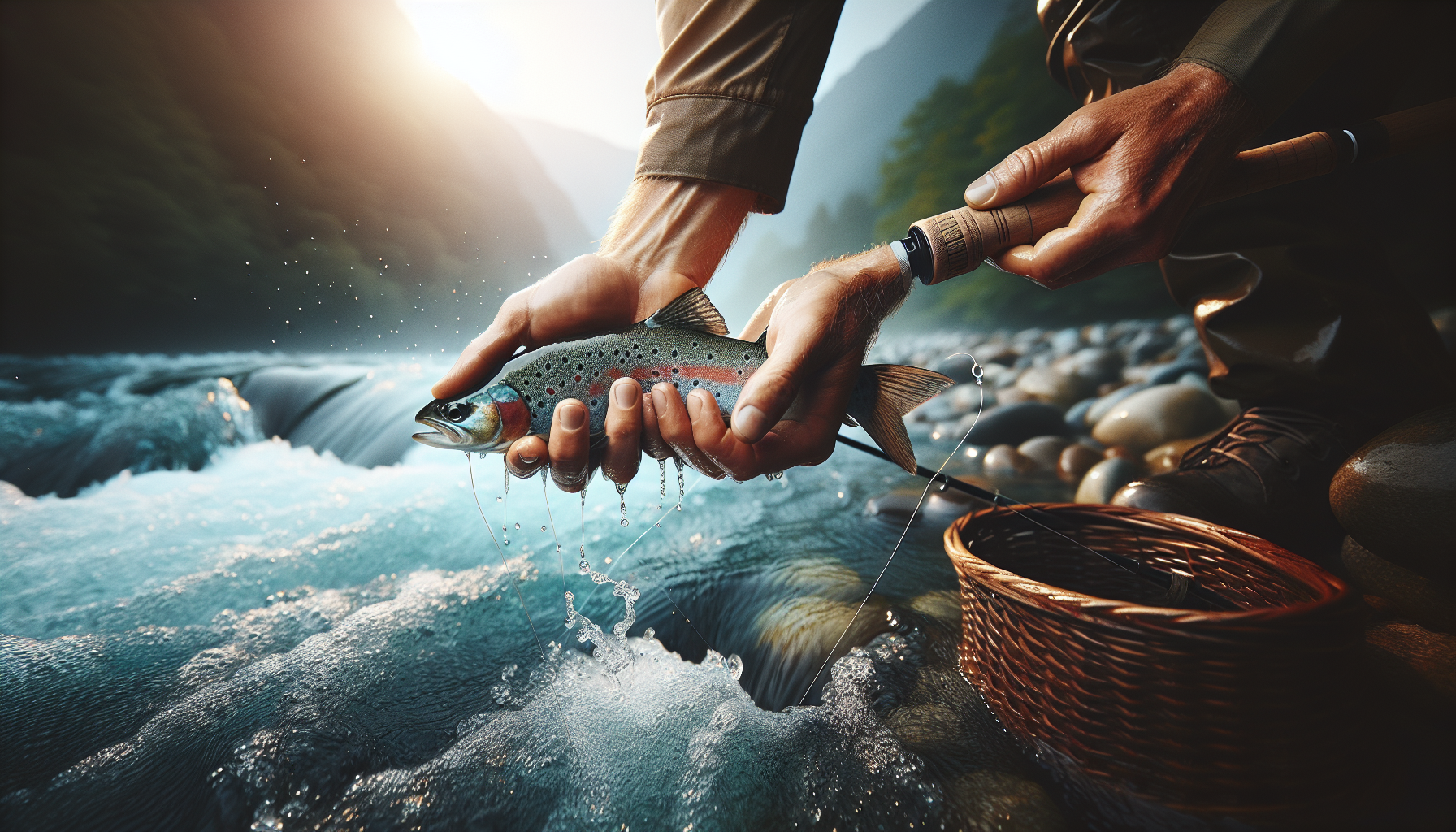
The most durable fly fishing conservation lessons are taught in context. On the river, mentors can point to a side channel and explain why trout are spawning there, then show exactly where not to wade. They can demonstrate a rubber landing net, wet hands before handling fish, forceps for fast hook removal, and the value of keeping fish submerged during release. They can decide to stop fishing when water temperatures rise above a safe threshold for trout, explaining that post-release mortality increases with heat and low oxygen. These are not theoretical ethics. They are immediate, observable practices.
Effective mentors use clear language and consistent standards. They explain why felt sole restrictions exist in some areas, how whirling disease or didymo can spread on gear, and why cleaning waders matters as much as tying knots. They discuss lead alternatives where relevant, local baitfish regulations, and species-specific concerns such as bull trout handling rules or steelhead encounters during redd periods. They also model courtesy: rotating through runs, giving space, asking before stepping into water another angler is fishing, and sharing access information carefully when a fragile fishery is already stressed. In conservation and ethics, etiquette is not separate from biology. Crowding, repeated pressure, and careless information sharing can damage fisheries just as surely as poor fish handling.
Community organizations turn mentorship into conservation infrastructure
Mentorship becomes scalable when it is embedded in clubs, chapters, shops, guide networks, and watershed groups. Local fly shops often provide the first point of entry. A good shop employee does more than recommend flies; they explain river conditions, closure notices, invasive species protocols, and productive alternatives when a popular reach is under pressure. Guides often serve the same role. The best guide days I have observed include a quiet stream of conservation coaching alongside instruction on line control and presentation.
Nonprofit chapters create a deeper structure. Trout Unlimited chapters, watershed councils, and local conservation groups pair newcomers with experienced volunteers on tree plantings, culvert surveys, macroinvertebrate counts, and public comment campaigns. Through repeated participation, people learn that conservation is not a single cleanup day but a long process involving habitat, policy, fundraising, and community relationships. FFI clubs, youth programs, and school partnerships can reinforce this by connecting casting instruction to entomology, water quality, and public land stewardship. When these groups work well, mentorship is not accidental. It is designed into meetings, outings, volunteer recruitment, and leadership succession.
| Mentorship setting | What is taught | Conservation impact |
|---|---|---|
| Guided trip | Fish handling, river etiquette, local regulations | Immediate reduction in harmful practices |
| Fly shop clinic | Seasonal closures, gear cleaning, access norms | Better compliance and lower spread of invasives |
| Club outing | Reading water, redd avoidance, volunteer pathways | Stronger retention and recurring stewardship |
| Youth camp | Aquatic insects, habitat basics, respect for wildlife | Early formation of lifelong conservation values |
| Restoration day | Riparian planting, monitoring, partnership building | Visible habitat gains and community ownership |
| Advocacy workshop | Public comments, policy literacy, coalition tactics | More effective defense of fisheries and access |
Mentorship builds advocates, not just anglers
Community and Advocacy reaches beyond streamside ethics into civic participation. This is where mentorship often has its highest conservation return. Many anglers care deeply about rivers but do not know how decisions are made. Mentors can explain the real machinery: state wildlife commission meetings, federal land planning, dam relicensing, water withdrawals, mine permitting, hatchery debates, instream flow policy, and municipal stormwater enforcement. Once anglers understand where leverage exists, they become more useful to fisheries than if they remain passive supporters.
I have watched new volunteers become effective advocates after a few targeted introductions. A mentor forwards the hearing agenda, explains the background, helps draft testimony, and shows how to cite agency data rather than emotion alone. Another mentor teaches someone how to contact legislators, comment on a travel management plan, or support a local bond for watershed restoration. This matters because conservation victories usually depend on organized, informed persistence. The public often notices fish kills or access losses only when damage is obvious. Mentored advocates learn to engage earlier, when science, public record, and coalition pressure can still shape the outcome.
Strong advocacy mentorship also teaches balance. Not every issue has a simple answer. Stocking programs can support participation while complicating wild fish management. Access improvements can spread use while increasing pressure. Habitat projects can help one species and alter conditions for another. Good mentors do not hide those tradeoffs. They teach anglers to ask better questions, read agency documents carefully, and support management that matches local ecological reality rather than ideology.
Passing on local knowledge without harming fisheries
One of the most sensitive parts of fly fishing mentorship is sharing information responsibly. Local knowledge is valuable: seasonal timing, insect hatches, safe access points, and water types that suit certain skill levels. But careless spot promotion can overwhelm small fisheries, especially in the social media era. Mentors play a critical role in setting boundaries. They can teach newcomers to focus on learning water types and watershed patterns instead of collecting a list of exact locations. They can recommend durable, higher-capacity waters for beginners and avoid directing traffic toward fragile native trout streams, spawning reaches, or places with limited bank stability.
This is a conservation issue, not a gatekeeping exercise. Fisheries have carrying capacity for angling pressure, and some waters are less resilient than others. Mentors should explain why discretion protects both fish and community relationships. Posting a hero shot with identifiable backgrounds, sharing private access details, or geotagging a tiny stream can create real harm. The better approach is educational. Teach reading gradient, temperature, flow, substrate, canopy, and insect activity so anglers can find suitable water independently. That method builds confidence while reducing concentrated pressure.
Youth, inclusion, and the future of stewardship
If conservation culture is going to endure, mentorship must reach beyond the traditional pathways that have dominated fly fishing. Youth programs are essential, but so is broader inclusion across gender, race, income, geography, and physical ability. When more people can enter the sport through welcoming, well-structured mentorship, the conservation base gets larger, more representative, and more resilient. This is not charity. It is smart movement building.
Barriers are often practical. Gear cost, transportation, uncertainty about etiquette, and fear of not belonging can prevent participation long before skill becomes the issue. Mentors and organizations can address this by offering loaner gear, low-cost clinics, accessible meeting times, beginner-friendly waters, and clear instruction without jargon. Programs such as Casting for Recovery, Project Healing Waters, school conservation clubs, and local community rod loan initiatives show how mentorship can connect personal healing, outdoor access, and stewardship. When participants feel ownership, they are more likely to volunteer, donate, and defend public resources later.
Experienced mentors should also learn from the people they teach. Different communities bring different knowledge about land, water, and local history. Listening improves conservation strategy. It strengthens partnerships with tribes, landowners, urban watershed groups, and neighborhood organizations that may not identify first as fly anglers but still shape river outcomes. The best community and advocacy work grows outward from mutual respect, not inward from club culture alone.
What effective mentorship programs look like
Successful mentorship in fly fishing conservation is structured, measurable, and tied to real opportunities for action. Informal guidance matters, but programs produce better results when they define goals. A chapter can match beginners with experienced members for a season, set expectations for ethics instruction, require one volunteer event, and follow up after outings. A fly shop can host monthly classes that combine casting, aquatic insect identification, and local conservation briefings. A guide service can include handling standards and conservation education in every trip script. These systems make quality less dependent on one charismatic person.
Measurement matters too. Good programs track retention, volunteer conversion, cleanup participation, restoration hours, public comments submitted, and leadership development. They also track whether newcomers feel welcome and informed. In my experience, the strongest signal is whether a participant returns not just to fish, but to help. When mentees begin teaching others, attending watershed meetings, or supporting a stream access campaign, the program is working. Conservation culture is reproducing itself.
Quality control is equally important. Not every skilled angler is a good mentor. The role requires patience, humility, accurate information, and the discipline to model best practices consistently. Clubs should train mentors on local regulations, fish handling, inclusion, and communication. Agencies and nonprofits can help by supplying current science, signage, and volunteer toolkits. Done well, mentorship is not soft outreach. It is a conservation delivery system.
Mentorship is the bridge between loving fly fishing and protecting the places that make it possible. It teaches ethics in real situations, gives community organizations durable structure, and turns interested anglers into effective advocates for habitat, access, and sound management. It also solves a problem every conservation effort faces: how to make values persist beyond one campaign, one season, or one generation. When experienced people intentionally pass on practical knowledge, local context, and civic responsibility, fisheries gain defenders rather than spectators.
For a sub-pillar hub on Community and Advocacy, that is the central takeaway. Conservation succeeds when anglers are connected to each other, to local institutions, and to the decision-making processes that shape rivers. Mentorship strengthens each of those links. It improves fish handling, reduces pressure on fragile waters, broadens participation, and creates volunteers who can plant trees, collect data, attend meetings, and speak credibly for wild fish. If you want stronger fly fishing conservation in your area, start with one concrete step: join a local chapter, club, shop event, or watershed group and either find a mentor or become one.
Frequently Asked Questions
Why is mentorship so important in fly fishing conservation?
Mentorship matters in fly fishing conservation because it turns good intentions into consistent, real-world behavior. Many anglers understand conservation in theory, but newer participants often need practical guidance to apply those ideas correctly on the water. A mentor shows how to handle fish quickly and gently, why water temperature affects fish survival, how to avoid damaging spawning areas, and what respectful use of public access actually looks like. That kind of direct instruction is far more memorable than reading a rule sheet or hearing a general reminder.
Mentorship also builds a conservation culture. When an experienced angler, guide, club leader, or biologist models ethical decisions, newer anglers begin to see stewardship as part of fly fishing itself rather than as an optional extra. They learn that conservation includes every part of the experience: proper catch-and-release technique, streambank protection, participation in restoration projects, reporting invasive species concerns, following regulations, and supporting habitat advocacy. In that sense, mentorship creates continuity between generations of anglers and helps ensure that conservation values are passed down as habits, not just ideals.
What conservation skills can a mentor teach a new fly angler beyond casting and fly selection?
A strong mentor teaches much more than fishing mechanics. One of the most important areas is fish handling. New anglers can learn how to keep fish in the water as much as possible, wet their hands before contact, minimize air exposure, use barbless hooks when appropriate, and release fish without unnecessary stress. These practices may seem small, but they can have a major effect on post-release survival, especially on heavily pressured waters.
Mentors also teach habitat awareness. That includes recognizing fragile streambanks, avoiding trampling redds during spawning seasons, entering and exiting the water carefully, and understanding how sediment, litter, and careless foot traffic affect aquatic ecosystems. In addition, mentors often introduce anglers to the broader conservation picture: water quality issues, native versus non-native species concerns, the role of riparian vegetation, and how land use upstream influences fish populations downstream. They may also help newcomers understand regulations, seasonal closures, ethical spacing from other anglers, and the value of volunteering for river cleanups, habitat projects, and local conservation groups. Together, these lessons help a new angler become not just more skilled, but more responsible.
How does mentorship improve catch-and-release practices in fly fishing?
Mentorship improves catch-and-release practices by giving anglers immediate, practical examples of what to do before, during, and after landing a fish. A mentor can explain why heavier tippet may reduce fight time, how to use rod angles to control a fish efficiently, when to avoid fishing during extreme heat, and why landing nets with fish-friendly materials are often a better choice. These details are important because even well-meaning anglers can unintentionally stress or injure fish if they have never been shown proper technique.
Perhaps even more importantly, mentors provide context. They help newer anglers understand that catch-and-release is not simply about letting a fish go; it is about maximizing the fish’s chances of survival afterward. That means limiting air exposure during photos, avoiding contact with dry surfaces, not squeezing the fish, and recognizing when conditions make fishing itself less ethical. During low flows or high water temperatures, for example, a responsible mentor may recommend targeting other species, fishing at safer times of day, or not fishing at all. This kind of judgment is a core part of conservation-minded fly fishing, and it is often best learned through the guidance of someone experienced enough to explain not only the rule, but the reason behind it.
Can mentorship help protect public access and local fisheries over the long term?
Yes, mentorship plays a major role in protecting public access and the long-term health of fisheries. Public access depends not just on legal rights, but on angler behavior. When newcomers are taught to respect property boundaries, close gates, pack out trash, avoid blocking roads, and interact courteously with landowners and other users, they help preserve access opportunities for everyone. Poor behavior by only a few people can lead to conflict, restrictions, or permanent closures, so mentoring anglers in access etiquette is a direct investment in the future of the sport.
Mentorship also strengthens fisheries over time by encouraging informed participation in conservation efforts. Experienced mentors often connect newer anglers to watershed groups, local chapters of conservation organizations, stream monitoring programs, restoration days, and public meetings related to fisheries policy. As a result, anglers become active stakeholders instead of passive users. They begin to understand that healthy fisheries depend on habitat protection, science-based management, responsible stocking decisions where relevant, clean water, and civic involvement. This long-term engagement is one of mentorship’s greatest strengths: it develops anglers who are more likely to advocate for rivers, volunteer in their communities, and support policies that sustain fish populations for future generations.
How can someone become an effective conservation mentor in fly fishing?
Becoming an effective conservation mentor starts with leading by example. A mentor does not need to know everything, but they do need to demonstrate strong habits consistently. That means following regulations carefully, handling fish properly, respecting seasonal conditions, leaving access points cleaner than they found them, and speaking openly about why those choices matter. New anglers pay close attention to behavior, so a mentor’s actions often teach more than their words.
Good conservation mentors are also patient, practical, and inclusive. They explain not only how to do something, but why it matters to fish, habitat, and the broader angling community. They avoid gatekeeping and instead create a welcoming environment where questions are encouraged. Effective mentors tailor lessons to the experience level of the person they are teaching, introduce conservation concepts gradually, and connect on-the-water decisions to larger ecological realities. They might show a beginner how to identify stressed fish conditions, explain the significance of insect life and water quality, or invite them to help with a cleanup or restoration event. Over time, the most effective mentors help others see conservation not as a separate activity, but as a natural and essential part of every day spent fly fishing.