Fly fishing conservation sits at the intersection of ecology, recreation, and public policy, and that intersection is under growing strain. Anglers who spend real time on trout streams, warmwater rivers, salmon estuaries, and stillwaters can see the changes directly: warmer summer temperatures, lower flows, invasive species moving upstream, bank erosion from heavier use, and fish populations that no longer respond the way they did even a decade ago. Conservation challenges in fly fishing are not abstract environmental talking points. They shape where people can fish, when catch-and-release is truly responsible, which species remain viable, and how resilient entire watersheds will be in the future.
In practical terms, fly fishing conservation means protecting fish populations, aquatic habitat, water quality, and the social systems that support ethical angling. It includes stream restoration, riparian protection, flow management, science-based regulations, hatchery policy, invasive species control, and angler behavior on the water. The phrase conservation challenges refers to the obstacles preventing those goals: climate change, habitat fragmentation, pollution, overuse, weak enforcement, political conflict over water, and the gap between what fisheries science recommends and what management agencies can fund or implement. For a sport that depends on healthy aquatic ecosystems, these are foundational issues.
This matters because fly fishing relies on ecological margins. Trout, salmon, steelhead, grayling, char, and many aquatic insects thrive only within specific temperature, dissolved oxygen, sediment, and flow conditions. A river can still look fishable from the bank while functioning poorly below the surface. I have watched seemingly healthy reaches produce stressed fish once water temperatures pushed past the safe range for extended periods. That disconnect is one reason this topic deserves a hub article. To understand modern conservation challenges in fly fishing, anglers need a broad view that connects streamside observations with watershed-scale pressures and practical solutions.
Climate Change and Warming Water
The most immediate challenge in many fly fisheries is rising water temperature. Coldwater species such as trout and salmon depend on narrow thermal windows, and once water warms, dissolved oxygen drops while fish stress rises. Agencies across North America increasingly issue hoot owl restrictions, which close fishing during the hottest afternoon hours to reduce mortality. That is not symbolic management. Research on salmonids consistently shows that handling stress compounds thermal stress, especially when fish are played too long or exposed to air. In rivers dominated by tailwaters or spring creeks, localized cold inputs can still provide refuges, but those refuges are shrinking or becoming crowded.
Climate impacts extend beyond summer closures. Reduced snowpack, earlier runoff timing, more intense rain events, and longer drought periods alter hydrographs that insect life cycles and spawning fish evolved around. In western watersheds, peak runoff now arrives earlier in many basins, which can leave lower summer flows during the period of highest recreational demand. In maritime systems, warmer oceans affect salmon survival before fish ever return to freshwater. The result is a conservation problem with no single on-river fix. Riparian planting, floodplain reconnection, and water conservation help, but they cannot fully offset regional warming trends. Anglers need to treat temperature as a primary ethical signal, not a minor inconvenience.
Habitat Loss, Fragmentation, and Flow Depletion
Fish need connected habitat, but rivers are routinely interrupted by dams, culverts, levees, diversions, and channelized reaches. Fragmentation blocks migration, isolates populations, and reduces access to spawning and rearing habitat. Even small perched culverts can prevent fish passage at low flows. Larger barriers alter sediment transport, flatten seasonal flow patterns, and disconnect floodplains that once buffered drought and supported juvenile fish. On heavily managed rivers, the channel may still carry water, yet the ecological functions that made it productive have been simplified or removed.
Flow depletion is equally serious. Agriculture, municipal demand, hydropower operations, and groundwater withdrawals can all reduce instream flows below biologically protective levels. In my experience, anglers often notice low water as a tactical problem before recognizing it as a habitat problem. Shallow riffles become impassable, side channels dry out, and juvenile fish lose cover. Spawning gravels can be dewatered if flows drop after eggs are laid. Effective conservation therefore depends on water rights reform, environmental flow standards, irrigation efficiency, and coordinated reservoir releases where possible. Healthy fisheries are inseparable from enough cold, clean water moving through connected habitat at the right times of year.
Pollution, Sediment, and Water Quality Decline
Water quality problems rarely come from one source. Nutrient runoff from farms and suburbs can trigger algal growth, lower oxygen, and change invertebrate communities. Fine sediment from roads, logging, wildfire, construction, and unstable banks smothers spawning gravel and reduces habitat complexity. Legacy mining can leave streams impaired by heavy metals, while wastewater discharges and stormwater pulses add contaminants that are hard to detect without monitoring. Even when a river avoids obvious fish kills, chronic water quality decline can reduce recruitment and shift species composition over time.
For fly anglers, one of the clearest indicators is the bug life. A stream with fewer mayflies, stoneflies, and caddisflies is not just harder to fish; it may be signaling broader ecological stress. Bioassessment programs use macroinvertebrate diversity because these organisms integrate conditions over time better than a single water sample. Modern conservation work increasingly combines chemical testing, temperature logging, turbidity monitoring, and biological surveys to identify root causes. Regulation under laws such as the Clean Water Act has improved many fisheries, but enforcement gaps remain, especially where nonpoint pollution is involved. Restoring water quality is often slower than degrading it, which makes prevention far more cost-effective than repair.
Invasive Species and Disease Pressure
Invasive species challenge fly fishing conservation by changing food webs, competing with native fish, and transporting pathogens between watersheds. Didymo, New Zealand mudsnails, zebra mussels, northern pike outside native range, smallmouth bass in vulnerable coldwater systems, and various aquatic plants have all forced managers to rethink access and decontamination protocols. Whirling disease and proliferative kidney disease are additional concerns, especially where warming water increases stress and susceptibility. These threats are difficult because once established, eradication is rare and expensive.
Prevention works better than reaction. Cleaning boots, boats, nets, and waders; drying gear fully; avoiding felt soles in some regions; and respecting local inspection rules are practical, high-value steps. Agencies and conservation groups now emphasize the Clean, Drain, Dry standard because simple negligence spreads organisms faster than most anglers realize. Stocking decisions also matter. Introducing or favoring nonnative fish can create lasting pressure on native cutthroat, bull trout, grayling, or wild brook trout systems. Conservation is not just about preserving fish abundance. It is about preserving native assemblages, genetic integrity, and ecological function in the places where those fish evolved.
Fishing Pressure, Access, and Ethical Strain
Fly fishing participation, destination travel, and social media visibility have intensified pressure on many waters. More anglers can support conservation funding and public advocacy, but concentrated use can erode banks, trample redds, crowd thermal refuges, and normalize poor fish handling. The challenge is not simply numbers. It is timing, distribution, and behavior. A river may absorb moderate use across a season yet suffer serious damage when everyone targets the same reach during a spawning run or low-water period.
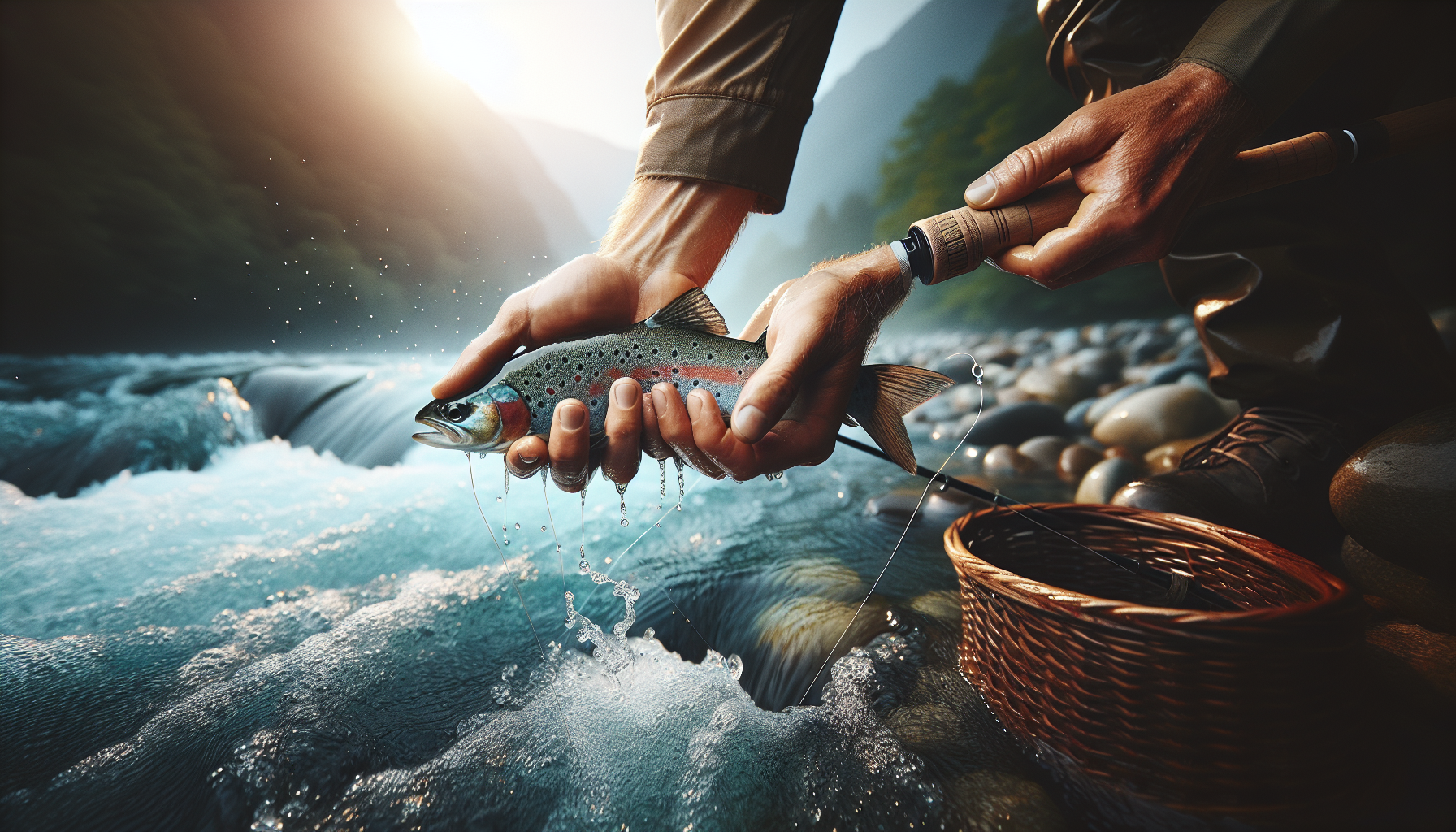
Catch-and-release remains a valuable conservation tool, but it is not automatically harmless. Mortality rises with warm water, extended fights, deep hooking, and excessive air exposure. Barbless hooks, rubber nets, heavier tippet, and keeping fish submerged materially reduce risk. Ethical anglers also avoid targeting fish stacked on redds, stop fishing during dangerous temperature windows, and give limited fisheries space to recover. Access adds another layer. Public access can build constituency for river protection, yet unmanaged access points can cause localized habitat damage. The best management balances access with infrastructure, education, seasonal closures, and clear expectations for responsible use.
| Challenge | How It Affects Fisheries | Practical Conservation Response |
|---|---|---|
| Warm water and drought | Higher fish stress, lower oxygen, increased mortality | Temperature closures, riparian shade, water conservation, thermal refuge protection |
| Habitat fragmentation | Blocked migration, isolated populations, reduced spawning success | Culvert replacement, dam removal, floodplain reconnection, passage design |
| Pollution and sediment | Smothered gravels, insect declines, chronic water quality impairment | Buffer strips, stormwater controls, erosion reduction, compliance monitoring |
| Invasive species and disease | Food web disruption, competition, pathogen spread | Gear decontamination, inspections, targeted removal, careful stocking policy |
| Heavy angling pressure | Bank damage, redd disturbance, handling mortality | Education, seasonal restrictions, improved access design, ethical catch-and-release |
Hatcheries, Wild Fish, and Genetic Integrity
Few topics generate more debate than hatcheries. In some places they support put-and-take fisheries, buffer harvest pressure, or maintain angling opportunity where habitat can no longer support historic abundance. In other systems, hatchery fish can compete with wild fish, interbreed with local stocks, alter selection pressures, and obscure population trends that managers need to measure accurately. The right policy depends on species, watershed condition, and management objective, but one principle is consistent: hatcheries are not a substitute for habitat.
Wild fish conservation prioritizes self-sustaining populations adapted to local conditions. That local adaptation matters. A trout population shaped by a specific flow regime, temperature profile, and migration pattern is not biologically interchangeable with stocked fish from another source. Where hatchery supplementation is used for salmon and steelhead, managers increasingly rely on genetic monitoring, mark-selective fisheries, and broodstock protocols to reduce harm, yet tradeoffs remain. Anglers should understand whether a fishery is being managed for harvest, wild recovery, native preservation, or mixed use, because those goals can conflict. Conservation succeeds when objectives are explicit and when stocking decisions follow ecology rather than short-term demand.
Policy, Enforcement, and Funding Gaps
Many of the biggest conservation challenges in fly fishing are governance problems. Fish and wildlife agencies are expected to manage climate impacts, habitat restoration, access, monitoring, invasive species, and public education, often with budgets tied disproportionately to license sales and excise taxes. That funding model leaves critical work under-resourced, particularly for nongame species, small watersheds, and long-term monitoring. Enforcement can be equally thin. Regulations on seasonal closures, bait restrictions, fish handling, and access are only effective when anglers understand them and wardens can enforce them.
Water policy is especially contentious because rivers compete with cities, farms, industry, and energy. Environmental flow protections often require negotiation across legal systems that were built around extraction, not ecological resilience. Successful examples do exist. Dam removals on rivers such as the Elwha demonstrated how quickly habitat and migratory pathways can reopen when policy, science, and funding align. Local watershed councils, Trout Unlimited chapters, state agencies, tribes, and land trusts have also produced measurable gains through easements, fencing, riparian restoration, and barrier removal. Still, conservation outcomes improve fastest where policy treats fisheries as public assets worth protecting before collapse, not after.
What Anglers Can Do Now
The most useful response is to connect daily behavior with long-term stewardship. Check water temperatures before fishing. Carry a thermometer. Stop when conditions become unsafe, even if regulations have not changed yet. Learn spawning timing for local species and avoid redds. Disinfect gear between watersheds. Support native fish priorities when they limit convenience. Volunteer for stream cleanups, culvert surveys, planting days, or angler education events. Join a watershed group or conservation organization that works where you actually fish, because local projects often produce the clearest results.
This hub on conservation challenges should also guide deeper reading across the broader conservation and ethics topic. Every major issue connects to another: climate links to flow, flow links to habitat, habitat links to wild fish resilience, and angler ethics influence all of them. The central lesson is simple. Fly fishing depends on functioning ecosystems, not just fishable water. When anglers understand current challenges in fly fishing conservation and act accordingly, they protect the future of the sport and the waters that make it possible. Review your home water, identify its main stressors, and support one concrete conservation action this season.
Frequently Asked Questions
Why is fly fishing conservation becoming more difficult right now?
Fly fishing conservation is getting harder because several pressures are hitting the same waters at the same time. Climate change is raising water temperatures, shortening periods of cold, well-oxygenated flows, and increasing the frequency of drought, wildfire, and extreme runoff events. Those shifts directly affect trout, salmon, and other game fish that depend on stable habitat conditions. At the same time, many rivers and lakes are seeing heavier recreational use, which can mean more bank trampling, crowding at access points, stress on fish during warm periods, and greater pressure on sensitive spawning or nursery areas. Add in land-use change, water withdrawals, aging dams and culverts, invasive species, and inconsistent policy enforcement, and the conservation picture becomes much more complicated than simply protecting fish from harvest.
What makes the current moment especially challenging is that these problems interact. A stream already running low in late summer becomes far more vulnerable when temperatures spike. A fish population weakened by habitat fragmentation may be less able to withstand invasive competitors or disease. Even well-intentioned anglers can unintentionally add pressure when they continue targeting fish during heat events or repeatedly fish heavily used stretches. In other words, modern fly fishing conservation is no longer just about preserving scenic waters or maintaining public access. It is about managing whole ecosystems under stress, often across private and public land boundaries, while balancing recreation, agriculture, development, hydropower, and municipal water demand. That combination of ecological complexity and competing human interests is what makes conservation so difficult today.
How do warming water temperatures and low flows affect fish populations important to fly anglers?
Warming water and reduced streamflow are among the most serious conservation issues in fly fishing because they directly change how fish survive, feed, migrate, and reproduce. Coldwater species such as trout and salmon are especially vulnerable. As temperatures rise, water holds less dissolved oxygen, and fish must work harder just to maintain basic metabolic function. That means less energy available for growth, spawning, and recovery after being hooked and released. In prolonged warm spells, fish may concentrate in a few colder refuges such as spring seeps, deep pools, or tributary mouths. Those refuges can become overcrowded and easy to target, which increases stress on already vulnerable populations.
Low flows make the problem worse. Shallower water warms faster, exposes fish to predators, reduces cover, and limits access to spawning habitat. It can also strand juvenile fish, disconnect side channels, and change insect production, which affects feeding patterns that anglers notice immediately. For migratory species, low and warm rivers can delay movement upstream and reduce spawning success. In some systems, repeated years of poor summer conditions are leading to long-term shifts in species composition, with coldwater fisheries shrinking or moving farther upstream while warmwater species expand their range. For anglers, this often shows up as fewer fish in traditional runs, shorter windows of ethical fishing, and a need to adapt tactics, timing, and target species. From a conservation standpoint, protecting streamflow, restoring riparian shade, reconnecting cold tributaries, and supporting temperature-based angling restrictions are becoming essential tools rather than optional measures.
What role do invasive species and habitat degradation play in fly fishing conservation challenges?
Invasive species and habitat degradation are major drivers of fishery decline because they weaken ecosystems from two directions at once. Invasive plants, invertebrates, and fish can outcompete native species, alter food webs, spread disease, and transform habitat in ways that reduce resilience. In some waters, non-native predators prey heavily on juvenile fish. In others, invasive mussels, aquatic weeds, or parasites change water chemistry, clog spawning gravels, or disrupt the insect life that supports wild fish and the fisheries built around them. Warmer conditions can also help invaders expand into places that used to be protected by colder temperatures, which is one reason anglers are increasingly seeing invasive species move upstream and into previously stable systems.
Habitat degradation compounds that pressure. Bank erosion from unmanaged foot traffic, poorly designed access areas, livestock impacts, road runoff, sedimentation, channelization, and loss of woody cover all reduce the quality of the places fish need at different life stages. Spawning beds can be smothered by fine sediment. Undercut banks and riparian vegetation that once provided shade and cover can disappear. Floodplains may become disconnected, and culverts or dams can block movement between feeding, spawning, and thermal refuge habitat. For fly anglers, these changes often appear as simpler, less productive water with fewer insects, fewer age classes of fish, and less consistent seasonal behavior. Conservation responses have to be just as layered: cleaning gear to prevent transport of invasives, improving access design, restoring streambanks and riparian buffers, removing barriers, and managing watersheds as connected systems rather than isolated fishing spots. The key point is that habitat quality and species integrity are inseparable; once both decline together, recovery becomes slower and more expensive.
How is increased angling pressure influencing conservation decisions in popular fisheries?
Increased angling pressure is forcing managers, guides, conservation groups, and anglers to think more carefully about what sustainable use actually looks like. More people on the water can be a positive sign because it builds public support for conservation and creates a larger community invested in healthy fisheries. But heavy use also has real biological and social consequences. Fish in highly pressured waters may be hooked repeatedly, especially during low-water or high-temperature periods when they are already stressed. Popular access points can suffer from bank erosion, vegetation loss, litter, and crowding. Spawning areas may be waded unintentionally. On stillwaters and small streams, even catch-and-release fisheries can experience cumulative stress when pressure is constant and concentrated over long seasons.
That is why managers increasingly rely on tools such as seasonal closures, hoot-owl restrictions, gear rules, limited entry, spawning-area protections, and improved angler education. These measures can be controversial because they affect where, when, and how people fish, but they are often intended to spread out use and reduce mortality during vulnerable periods. Conservation groups are also focusing more on infrastructure, such as hardened access sites, defined trails, and signage that protects habitat while preserving public opportunity. For anglers, the bigger shift is cultural as much as regulatory. Ethical decision-making now matters more: avoiding warmwater stress periods, rotating away from crowded reaches, handling fish quickly, keeping them wet, and recognizing when not fishing is the best conservation choice. In many places, the challenge is no longer getting people to care about rivers; it is helping a growing number of passionate users engage with them in ways the fishery can actually sustain.
What can anglers, organizations, and policymakers do to address current fly fishing conservation problems?
Effective conservation requires action at multiple levels because no single fix can solve watershed-scale problems. Anglers can make an immediate difference by practicing low-impact behavior: respecting temperature closures, reducing handling time, pinching barbs where appropriate, cleaning and drying gear to prevent the spread of invasives, staying off redds, using established access points, and supporting local restoration efforts. They can also become better observers and advocates. Anglers are often among the first people to notice low flows, fish kills, unusual algae blooms, migration barriers, or invasive species outbreaks. Reporting those issues and participating in citizen science, habitat projects, and local watershed groups turns time on the water into real conservation value.
Organizations and agencies need to pair education with restoration and enforcement. That includes riparian planting, barrier removal, culvert replacement, wetland and floodplain reconnection, streamflow protection, and science-based fish population monitoring. It also means designing access in ways that protect habitat, investing in outreach that explains why restrictions are necessary, and coordinating management across jurisdictions rather than treating each river reach as a separate problem. Policymakers play a critical role by securing water for ecological needs, funding restoration at meaningful scale, updating infrastructure, and integrating fisheries concerns into broader land-use and climate planning. Ultimately, the future of fly fishing conservation depends on accepting that healthy fisheries are tied to healthy watersheds. The most successful strategies will be the ones that connect recreation with stewardship, local observations with long-term science, and short-term regulations with lasting habitat improvement.