Sustainable fly fishing practices protect fish, rivers, and access while preserving the quiet appeal that draws anglers to moving water in the first place. In practical terms, sustainability means catching fish without degrading habitat, spreading invasive species, stressing vulnerable populations, or leaving lasting damage on the places and communities that support the sport. As a hub within conservation and ethics, environmental impact sits at the center of every decision an angler makes, from where to step and what gear to carry to how long to fight a trout in midsummer. After years spent guiding, scouting public water, and helping with stream cleanups and redd counts, I have learned that ethical intent alone is not enough; good outcomes depend on informed technique. The goal is simple: reduce harm across the full fishing cycle so healthy fisheries remain productive for future seasons and future anglers.
Why Environmental Impact Matters in Fly Fishing
Fly fishing is often framed as a low-impact sport, and compared with many forms of resource use that is true, but low impact is not the same as no impact. Repeated pressure on popular rivers changes fish behavior, compacts streambanks, damages riparian vegetation, and can increase mortality even when regulations require release. Studies on catch-and-release have shown that survival varies widely by species, water temperature, hook placement, handling time, and air exposure. Trout released in cold, well-oxygenated water generally survive at high rates, yet mortality rises sharply when fish are played to exhaustion or handled poorly during warm conditions. Warmwater species and saltwater species present their own stress patterns, especially when dissolved oxygen is low.
Environmental impact also includes indirect effects beyond the fish itself. Felt-soled boots were restricted in many places because they can transport invasive organisms between watersheds. Monofilament, split shot, food wrappers, and discarded tippet accumulate in access areas and can injure wildlife. Informal trails to favored runs widen over time, increasing erosion and sending more sediment into spawning gravel. Even the drive to a remote stream carries a footprint, which is why many anglers now combine trips, share vehicles, or focus on local waters. A sustainable approach recognizes this full chain of consequences and treats each choice as part of fishery stewardship rather than personal recreation alone.
Fish Handling, Water Temperature, and Release Survival
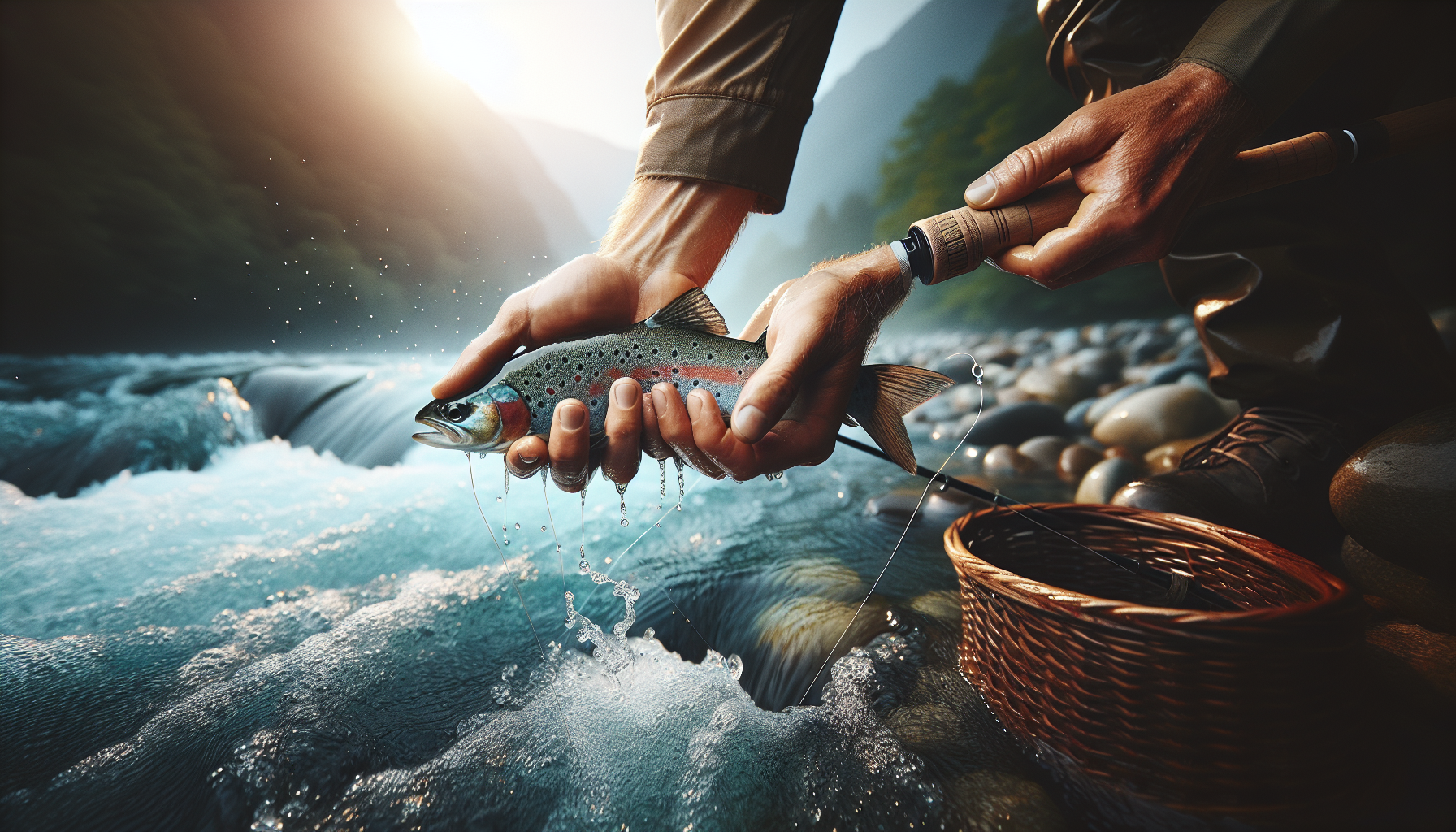
The single most important environmental issue most anglers can control on any given day is release survival. If you fish catch-and-release water, your methods determine whether released fish continue feeding and spawning or become delayed mortalities. Best practice starts before the cast. Use tackle heavy enough to land fish quickly, pinch barbs when regulations allow, and carry hemostats or forceps where you can reach them without rummaging through a pack. When a fish is hooked, keep steady pressure and avoid prolonged fights that build lactate and reduce recovery capacity. Once the fish is near hand, keep it in the water, support it gently, and remove the hook efficiently.
Air exposure is a major risk factor. A common field rule is simple: if the fish cannot breathe, the clock is running against it. Keep photographs brief, ideally with the fish partly submerged, and skip hero shots altogether during stressful conditions. Water temperature matters just as much. Many trout anglers use 68 degrees Fahrenheit as a practical caution point, and some fisheries managers urge anglers to stop targeting salmonids well before conditions become severe. On hot afternoons, I carry a thermometer and check several runs, because shallow tailouts can be warmer than the main channel. If temperatures climb, switching to carp, bass, or panfish on more resilient water is often the most responsible decision.
Habitat Protection Starts with Wading and Access Behavior
Healthy fisheries depend on intact habitat, and habitat damage often happens one careless step at a time. Wading through spawning beds can crush eggs or dislodge them from gravel. On trout streams, redds usually appear as lighter, cleaned patches of gravel in riffles or tailouts, and they should be given a wide berth. Bank trampling is another overlooked issue. Repeated entry and exit at the same unofficial spots kills stabilizing vegetation, undercuts banks, and increases siltation downstream. Whenever possible, use established access points, hardened trails, and public easements instead of cutting new routes to the water. This is not only better for the river; it also helps maintain landowner goodwill and long-term access.
Boat anglers have parallel responsibilities. Dragging a drift boat over fragile banks, beaching on vegetated islands, or powering through shallow spawning areas can damage habitat that took years to form. Anchoring should be done with attention to current, substrate, and other users, and on some rivers anchoring while fishing is regulated for safety and fish protection. The principle is straightforward: move through the landscape as if the place must look unchanged after you leave. That means packing out litter that is not yours, avoiding loud crowding in small runs, closing gates, respecting seasonal closures, and staying off restored streamside plantings. Conservation begins with restraint, not just with enthusiasm.
Gear Choices That Reduce Ecological Harm
Gear selection has real environmental consequences, and the best sustainable fly fishing practices often involve small, inexpensive changes. Barbless hooks reduce handling time and tissue damage. Rubber landing nets are less abrasive than knotted nylon and help protect scales and fins. Non-toxic split shot made from tin or tungsten reduces the risk associated with lead loss in waterways, especially where waterfowl feed. Modern wading boots without felt lower the chance of transporting invasive species such as didymo or New Zealand mudsnails, though they still require cleaning and drying. Even fly materials deserve scrutiny. Some tiers now limit hard-to-source feathers, avoid materials linked to unsustainable wildlife trade, and favor durable synthetics where they perform better.
Leaders and tippet are another area where thoughtful choices matter. Thicker tippet can shorten fight times, especially in fast water, yet it must be balanced against presentation and fish selectivity. In my own fishing, moving up one size in warm conditions often lands fish faster without meaningfully reducing takes. Durability matters too. Cheap gear that fails frequently creates waste and can leave line or hooks in fish. Well-built waders, repairable boots, and reels with available parts usually have a smaller lifetime footprint than disposable alternatives. Sustainability is not about buying the most expensive equipment; it is about choosing gear that minimizes harm in use, lasts longer, and can be maintained rather than replaced.
Preventing the Spread of Invasive Species and Aquatic Disease
One contaminated boot sole, anchor rope, or landing net can move invasive species between watersheds. That is why biosecurity should be treated as standard practice, not as an optional extra. Algae, snails, plant fragments, and pathogens can survive in damp gear long enough to reach the next river. Whirling disease, didymo, and invasive aquatic vegetation have all reshaped fisheries management in affected regions. The most reliable field protocol is inspect, clean, drain, and dry every item that touched the water. Pay close attention to boot seams, gravel guards, net bags, boat carpets, live wells, and the foam in vest back panels, which stays wet longer than most anglers realize.
When drying time is limited, use approved disinfecting methods recommended by local agencies. Many state fish and wildlife departments publish clear decontamination guidance for boats and wading gear, and those instructions should override generic internet advice because risks vary by region and species. The comparison below summarizes practical options anglers can apply before moving to a new watershed.
| Risk Area | Primary Threat | Best Practice | Why It Works |
|---|---|---|---|
| Boots and waders | Didymo, mudsnails, plant fragments | Rinse debris, scrub soles, dry completely between trips | Removes attached material and denies moisture needed for survival |
| Nets and tools | Pathogens and algae transfer | Disinfect or soak per agency guidance, then air dry | Reduces viable organisms on high-contact surfaces |
| Boats and trailers | Invasive plants, mussels, standing water | Drain compartments, wash hull and trailer, inspect bunks and rollers | Prevents transport of water and hitchhiking organisms |
| Clothing and packs | Seeds, spores, damp contamination | Check seams and pockets, wash when needed, dry thoroughly | Targets overlooked areas that stay wet after fishing |
Travel Footprint, Crowding, and Pressure on Popular Fisheries
Environmental impact is shaped not only by what happens in the river but also by how anglers distribute themselves across landscapes. Social media hotspots and online reports can concentrate pressure on a few rivers while equally suitable nearby waters remain lightly used. Heavy traffic increases litter, bank erosion, parking conflicts, and cumulative stress on fish that are hooked repeatedly through a season. In some famous trout towns, guides and local shops now intentionally promote shoulder-season ethics, dispersed use, and less-sensitive fisheries to reduce crowding. This is a meaningful conservation tool. A fishery can be legally open and still ecologically strained if every easy access point receives nonstop pressure.
Travel decisions matter too. Long drives and flights increase the carbon footprint associated with destination angling, especially when trips are short. That does not mean anglers must stop traveling; it means they should make travel more efficient and more valuable. Combine scouting and fishing, share transportation, stay longer rather than making repeated weekend flights, and support lodges or outfitters that participate in habitat restoration rather than merely market scenery. Fishing close to home is often the most sustainable option and can deepen skill because local water teaches seasonal nuance. It also builds a constituency for nearby conservation work, from dam removal support to watershed council meetings and volunteer planting days.
Regulations, Seasons, and the Role of Angler Judgment
Fishing regulations set the baseline for sustainable behavior, but they are minimum standards, not complete ethical instruction. Seasons protect spawning periods, gear rules limit injury, and harvest limits help maintain population structure. Yet there are many moments when the most responsible choice goes beyond what is legally required. A river may be open during a heat wave even though trout are visibly stressed. A run may be legal to fish while salmon are stacked tightly and repeatedly snagged by careless casting. An access road may be passable after heavy rain, but driving it may create deep ruts and sediment runoff. In each case, good judgment should outrank technical permission.
Serious anglers learn to read management intent, not just rule text. If a state agency imposes hoot owl closures, limits on boat launches, or emergency restrictions during drought, those signals reflect biological stress that often begins before closures expand. Following local fly shop reports, agency temperature dashboards, and watershed group alerts can help anglers make better real-time decisions. So can keeping personal records. I log water temperature, fight times, and fish condition notes in midsummer, and those details often reveal patterns before they become obvious. Ethical fly fishing is less about claiming virtue than about responding to conditions honestly. Regulations matter, but stewardship depends on self-restraint when conditions deteriorate.
Building a Long-Term Conservation Mindset
Sustainable fly fishing practices work best when they become routine rather than exceptional. The anglers who do the least harm are usually not the ones making dramatic statements at the boat ramp; they are the ones who have quietly built sound habits. They carry a thermometer, pinch barbs, avoid redds, clean gear, and stop fishing when the river says stop. They buy licenses knowing that funding supports management, and they support groups such as Trout Unlimited, Backcountry Hunters & Anglers, local watershed councils, or regional salmon recovery partnerships because habitat work requires organized effort. They also mentor newer anglers in practical ethics, explaining not only what to do but why it matters biologically.
This environmental impact hub should guide every related topic in conservation and ethics because all of them connect back to daily choices on the water. Fish handling, invasive species prevention, access etiquette, gear selection, travel habits, and voluntary restraint are not separate ideas; they are one system of responsibility. The benefit is clear: healthier fish, stronger habitat, better relationships with landowners and communities, and a sport that remains credible in a world increasingly skeptical of outdoor recreation that claims innocence without evidence. If you want to fish sustainably, start with one trip. Check conditions before you leave, carry the right tools, tread lightly, and make every release and every step count.
Frequently Asked Questions
What does sustainable fly fishing actually mean in day-to-day practice?
Sustainable fly fishing means making choices that allow anglers to enjoy the resource without diminishing it for fish, wildlife, local communities, or future generations. In day-to-day practice, that starts with understanding that every decision on the water has an environmental effect. The flies you use, the way you wade, how long you fight a fish, whether you fish during periods of high water temperature, and even how you travel between rivers all influence overall impact. Sustainable fishing is not just about following regulations, although rules are an essential baseline. It also involves going beyond minimum compliance by actively reducing stress on fish, avoiding damage to habitat, and respecting seasonal and biological limits.
In practical terms, sustainable fly fishing includes using tackle appropriate for the target species so fish can be landed quickly, handling fish as little as possible, keeping them in the water during release, and choosing barbless hooks or crimping barbs to minimize injury. It also means avoiding spawning fish and redds, staying off fragile riverbanks, packing out all waste including tippet clippings and leader material, and cleaning gear thoroughly to prevent the spread of invasive species and aquatic pathogens. Just as important, sustainability includes social responsibility: respecting private property, supporting local access agreements, listening to closures and restrictions, and recognizing that crowding, conflict, and poor etiquette can damage the culture around fisheries as surely as pollution damages water quality.
At its core, sustainable fly fishing is a mindset of restraint, awareness, and stewardship. The goal is not simply to catch fish efficiently, but to participate in the sport in a way that protects the places that make it possible. When anglers view themselves as temporary visitors rather than entitled users, they tend to make better decisions for rivers and fisheries over the long term.
How can anglers reduce stress and mortality when practicing catch and release?
Effective catch and release begins before the cast. One of the best ways to reduce stress on fish is to use gear that matches the conditions and the species. Rods, reels, and tippet should be strong enough to land fish quickly rather than prolonging the fight. Long battles can exhaust fish, increase lactic acid buildup, and reduce survival after release, especially in warm water or low-flow conditions. Choosing hook patterns that are easier to remove, such as single barbless hooks, also helps reduce tissue damage and handling time.
Once a fish is hooked, anglers should focus on efficient landing and calm, deliberate handling. A rubberized landing net is far better than abrasive mesh because it protects scales, fins, and slime coating. Wet hands before touching a fish, avoid squeezing the body, and support it gently if handling is necessary. In most cases, the safest release happens with the fish kept in the water the entire time. If a photo is taken, it should be quick and only after the camera is ready. A good rule is to limit air exposure as much as possible, since even short periods out of water can significantly increase post-release mortality.
Water temperature is another major factor. Fish are far less resilient when streams are warm and dissolved oxygen is lower. During summer heat or drought, anglers should check local temperature thresholds and voluntary hoot owl restrictions, and be willing to stop fishing altogether when conditions become dangerous. Catch and release is only ethical when fish have a strong chance of survival. If environmental conditions make survival unlikely, the sustainable choice is not to fish. That willingness to adapt is one of the clearest signs of responsible angling.
Why is habitat protection such an important part of sustainable fly fishing?
Fish populations depend on far more than good catch-and-release technique. Healthy fisheries require intact habitat at every stage of a fish’s life cycle, from spawning beds and nursery water to deep holding runs, cool tributaries, woody cover, and connected migration corridors. Even if anglers release every fish perfectly, a river can still decline if banks erode, streamside vegetation is trampled, sediment smothers spawning gravel, or water quality deteriorates. That is why habitat protection sits at the center of sustainable fly fishing rather than at the margins.
Anglers affect habitat directly through their behavior on the water. Repeatedly walking through spawning areas can crush eggs or disturb active redds. Climbing unstable banks can accelerate erosion and strip away vegetation that shades streams and stabilizes soil. Dragging boats through shallow riffles, cutting unofficial access trails, or leaving monofilament and other trash behind creates long-term damage that often extends beyond one trip. Responsible anglers learn to identify sensitive areas, use established access points, spread out pressure where appropriate, and minimize disturbance to the river corridor.
Habitat protection also includes broader stewardship beyond the fishing day itself. Supporting watershed restoration, streambank planting, barrier removal, water conservation, and science-based management all contribute to resilient fisheries. So does advocating for clean water policies and sensible development practices that protect flow regimes and riparian zones. In other words, sustainable fly fishing is not only about fish handling; it is also about defending the ecological systems that produce wild fish in the first place. Without habitat, there is no ethical fishery to sustain.
How do fly anglers prevent the spread of invasive species and fish diseases?
Preventing the spread of invasive species and aquatic diseases is one of the most important and most overlooked parts of sustainable fly fishing. Organisms such as didymo, New Zealand mudsnails, zebra mussels, and various pathogens can hitchhike on boots, nets, waders, boats, fly boxes, and other gear. Once introduced to a new watershed, they can alter food webs, outcompete native species, damage infrastructure, and create expensive, long-term ecological problems. Because anglers often move between rivers, they can unintentionally become vectors unless they follow strict cleaning practices.
The standard approach is simple: clean, drain, and dry all gear after every outing, especially before fishing a different water body. Remove visible mud, plants, and debris from boots, nets, waders, anchors, and boats. Drain water from boats, coolers, and equipment that can hold moisture. Then disinfect gear when recommended by local agencies and allow it to dry completely for the required period. Extra caution is warranted with absorbent materials and hard-to-dry items. Many anglers now avoid felt-soled boots because felt can retain moisture and organisms more easily than other materials, and felt is restricted or banned in some places for that reason.
Staying informed matters just as much as cleaning gear. Different regions have different invasive threats, quarantine rules, and decontamination recommendations. Responsible anglers check local regulations before traveling, never transport live bait or fish between waters, and avoid moving water, plants, or sediment from one drainage to another. Sustainable fly fishing depends on treating every river as biologically connected to a larger system. A few extra minutes spent cleaning gear can prevent years of ecological harm.
What role do ethics, local regulations, and community respect play in sustainable fly fishing?
Sustainable fly fishing is shaped as much by ethics and community behavior as by fish biology. Regulations set the legal framework for seasons, gear restrictions, bag limits, closures, and protected waters, and every angler should know and follow them closely. But sustainability often requires more than legal compliance. There are times when the ethical choice is to refrain from fishing even when it remains technically allowed, such as during extreme heat, low flows, spawning periods, or unusually heavy pressure on a fragile fishery. Good anglers understand that the spirit of conservation can demand more than the letter of the law.
Community respect is also essential because access and fishery quality depend heavily on public trust. Poor etiquette can quickly create conflict among anglers, landowners, guides, and local residents. Crowding another angler, blocking access points, trespassing, being careless with gates, leaving trash, or publicizing sensitive locations irresponsibly can damage relationships that took years to build. Sustainable anglers communicate courteously, give others space, respect private land boundaries, support local businesses, and recognize that small communities often bear the costs of maintaining access to popular rivers.
In the long run, ethics, regulations, and respect all work together. Regulations protect fisheries at a population level, ethics guide decisions in gray areas, and community-minded behavior preserves the social license that keeps angling access open. When anglers combine all three, they help protect not just fish and habitat, but also the quiet, low-impact culture that makes fly fishing meaningful. That broader view is what turns a recreational activity into a durable conservation practice.