Fly fishing in protected areas demands more than technical skill; it requires a clear understanding of rules, ethics, and environmental impact. Protected areas include national parks, wildlife refuges, marine reserves, wilderness areas, and locally managed conservation lands where habitat protection has legal priority. In these waters, anglers are not simply visitors pursuing trout, char, grayling, or native salmonids. They are temporary participants in sensitive ecosystems shaped by spawning cycles, water temperature, insect hatches, riparian vegetation, predator-prey relationships, and public policy.
Environmental impact is the central issue because even low-harvest recreation can alter fish behavior, stress wild populations, spread invasive organisms, damage streambanks, and affect other species that rely on the same habitat. I have seen this firsthand on spring creeks and alpine lakes where a path widened by careless boot traffic turned into bank erosion within one season, and where one angler with felt soles moved between drainages without disinfecting gear. Protected areas often allow fishing precisely because managers believe use can remain compatible with conservation goals. That compatibility depends on compliance and restraint.
Rules set the minimum legal standard: permits, seasonal closures, catch-and-release mandates, tackle restrictions, access limits, and species protections. Ethics go further. They guide decisions when the law is silent, such as leaving a run after repeated refusals, avoiding redds before signs appear, or stopping at midday during extreme heat. For anglers researching fly fishing in protected areas, the practical question is simple: how do you fish effectively while reducing harm? The answer begins with understanding why these regulations exist and how everyday choices on the water create cumulative environmental consequences.
Why protected areas regulate fly fishing so closely
Protected areas are managed for conservation outcomes first and recreation second. That order matters. Fisheries regulations inside parks or reserves are usually more restrictive than statewide rules because managers are protecting specific values: native fish recovery, intact food webs, water quality, threatened species, wilderness character, or scientific reference conditions. A stream may support recreational angling and still be closed during spawning because trampling can crush eggs in redds. A lake may require barbless hooks not because barbs always kill fish, but because they increase handling time and tissue damage when many anglers encounter the same population.
Managers rely on established frameworks from agencies such as the U.S. National Park Service, U.S. Fish and Wildlife Service, state fish and wildlife departments, Parks Canada, and equivalent authorities worldwide. They also use biological indicators including age-class structure, recruitment, redd counts, water temperature, macroinvertebrate abundance, and catch-per-unit-effort data. When anglers understand that regulations are tied to measurable ecological thresholds, compliance becomes easier to accept. A closure is not arbitrary. It is often a direct response to stressors that could reduce survival, reproduction, or habitat integrity.
In practice, rules in protected waters commonly cover entry permits, designated access points, wading restrictions, bait prohibitions, leader and fly limitations, daily quotas, and seasonal windows. Some protected areas prohibit boats to reduce shoreline disturbance and invasive species transfer. Others ban fishing entirely in sanctuary zones while allowing it downstream. These site-specific rules reflect the biological reality of each watershed, and responsible anglers check them before every trip because protected-area regulations change more often than many general freshwater rules.
Environmental impact: the core issue for anglers
The environmental impact of fly fishing in protected areas can be direct, indirect, immediate, or cumulative. Direct impacts include hooking injury, air exposure, stress from long fights, trampling of banks and spawning habitat, and accidental mortality after release. Indirect impacts include disturbance to nesting birds, displacement of amphibians, spread of whirling disease or didymo, litter from tippet and packaging, and the creation of social trails that fragment riparian cover. Cumulative effects are especially important. One careful angler may do little harm, but a thousand careful anglers can still change an ecosystem if timing, density, and access are poorly managed.
Fish stress is strongly linked to water temperature and dissolved oxygen. Coldwater species such as trout face elevated mortality risk when temperatures rise, especially above the upper 60s Fahrenheit, with local thresholds varying by species and watershed. That is why many protected fisheries impose “hoot owl” restrictions, ending angling during warm afternoon hours. Catch-and-release is not impact-free. Studies consistently show that survival depends on hook location, handling time, air exposure, and environmental conditions. A quickly landed fish kept in the water and released in cool temperatures has a high chance of survival; the same fish played to exhaustion in warm water may die later.
Habitat effects are equally important. Repeated entry and exit at the same bank collapses vegetation that stabilizes soil and shades water. Wading through shallow gravel during incubation can destroy eggs that are invisible to the untrained eye. Even photography choices matter. Kneeling on wet moss or dragging nets across fragile stream edges can damage plant communities that recover slowly in alpine or spring-fed systems. In protected areas, the ethical angler treats every step as an ecological decision.
Reading the rules before you fish
If you want to avoid violations and reduce environmental impact, read the protected-area rules from the managing authority, not from a forum, map app comment, or tackle shop rumor. Start with the official park or refuge page, then review state or provincial fishing regulations, emergency orders, and species advisories. Many conflicts happen because anglers assume a general license covers a special management unit. It often does not. I have worked with anglers who arrived with valid licenses but missed a separate conservation stamp, a seasonal closure order, or a native fish sanctuary boundary that began at a signed bridge.
The most important regulations to verify are species restrictions, methods of take, access boundaries, seasonal closures, and decontamination requirements. Protected waters may allow fly fishing only, artificial lures only, catch-and-release only, or no fishing from spawning tributary mouths within a stated distance. Some require mandatory kill of invasives such as brook trout in native cutthroat recovery waters, while others prohibit targeting listed species entirely. These distinctions matter because protected-area management is often aimed at species composition, not just angler opportunity.
| Rule category | What to check | Why it matters environmentally |
|---|---|---|
| Seasonal closures | Dates, spawning closures, time-of-day restrictions | Protects fish during reproduction and heat stress |
| Tackle limits | Barbless hooks, fly-only rules, no split shot or indicators in some zones | Reduces injury, snagging, and user pressure patterns |
| Access controls | Trails, parking, wading bans, boat restrictions | Limits bank erosion, vegetation loss, and wildlife disturbance |
| Species protections | Native fish handling rules, prohibited target species, harvest exceptions | Supports recovery plans and prevents misidentification harm |
| Gear cleaning | Drain-dry-disinfect procedures, felt-sole restrictions | Prevents transport of invasive organisms and pathogens |
Checking rules should be a pre-trip habit, not a last-minute formality. Conditions change after wildfire, flood, low-flow declarations, algal blooms, or endangered species monitoring. In protected areas, “open” does not always mean “appropriate to fish,” and the best anglers know when to walk away even if the regulations technically allow entry.
Low-impact techniques that protect fish and habitat
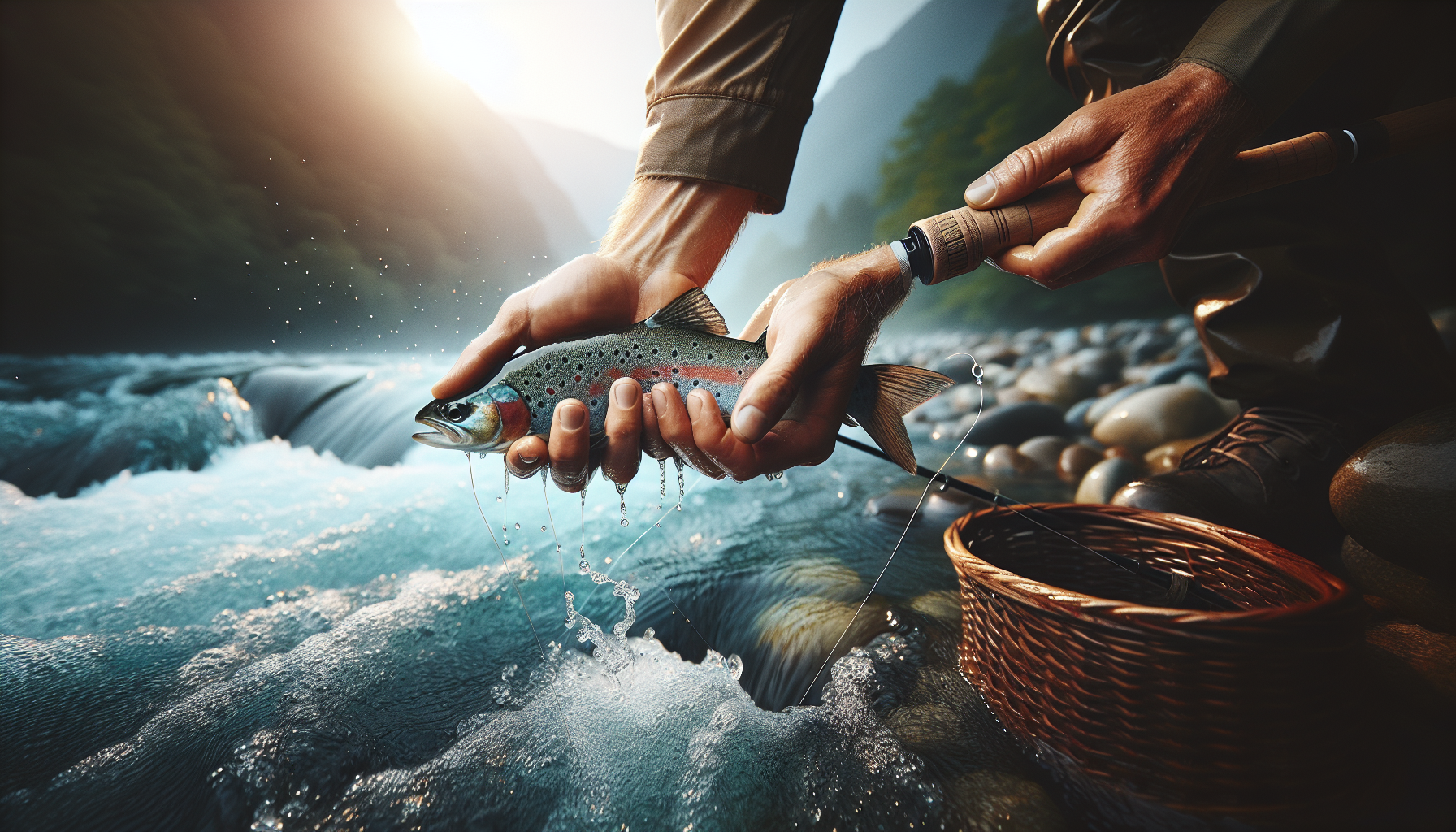
Technique affects conservation outcomes. Use tackle heavy enough to land fish quickly, especially in current or warm water. Long fights increase lactate buildup and recovery time. Rubber or knotless landing nets are preferable because they reduce scale loss and fin damage. Pinch barbs completely rather than partially. Keep fish in the water while unhooking, wet your hands before contact, and skip hero shots if the fish is struggling. If a fish rolls on its side or cannot maintain balance at release, hold it facing moderate current only until it swims off under its own power; pushing it back and forth can damage gills.
Approach and positioning also matter. Enter and exit on durable surfaces when possible. Avoid undercut banks with nesting birds, wet meadows, and side channels used by juvenile fish. Learn to recognize redds: cleaned, lighter patches of gravel in suitable spawning areas. Then give them a wide margin, not just a single careful step. In small streams, fish upstream to reduce repeated disturbance and avoid lining fish in confined pools. On lakeshores, break down your rod before bushwhacking less, not more; forcing shortcuts through reeds or willow edges is a classic way to enlarge unauthorized access.
Gear hygiene is another foundational practice. Clean, drain, and thoroughly dry waders, boots, nets, and boats between watersheds. Many agencies recommend hot water or approved disinfectants for hard-to-kill organisms. Felt soles remain controversial because they provide traction but retain moisture and debris; where legal, they still demand extra cleaning discipline. In protected areas with rare amphibians, mussels, or isolated native fish stocks, gear contamination is not a minor concern. It is one of the most preventable environmental impacts in angling.
Ethics when the law is silent
Good ethics begin where regulations end. The legal framework cannot cover every on-water judgment, so anglers need personal standards rooted in conservation. If water temperatures are climbing and fish are visibly stressed, stop fishing before a closure is imposed. If a pool is crowded, do not rotate through it all day because catch-and-release pressure can repeatedly disturb the same fish. If you discover a concentrated spawning run, leave the area and avoid sharing precise location details online. Sensitive waters can be overwhelmed by attention long before agencies can respond.
Respect for other people is part of environmental ethics because crowding changes behavior. Cutting in below another angler, low-holing a run, or forcing repeated drifts through visible fish encourages competitive fishing and poor handling decisions. In protected areas, the social norm should be lower intensity, not maximum extraction of opportunity. Guides and experienced anglers set the tone here. I have seen a single courteous guide move clients away from a stressed side channel and, by example, shift everyone else’s conduct for the afternoon.
Ethics also include honesty about skill level. If you cannot identify native versus nonnative trout, learn before fishing mixed waters. If you are not confident landing fish quickly on fine tippet, do not fish tiny dries to large trout in warm conditions for the sake of sport. Conservation-minded angling is not less serious fishing. It is more disciplined fishing, with success measured by minimal impact as much as by presentation or catch rate.
Balancing recreation with long-term conservation
The strongest argument for fly fishing in protected areas is that responsible anglers can become durable allies for conservation. License fees, stamps, excise-funded programs, volunteer restoration, citizen science, and political support for habitat protection all matter. Many stream temperature loggers, redd surveys, barrier removals, and native trout recovery projects have benefited from angler involvement. That said, conservation value does not excuse bad conduct. The privilege of access survives only when recreation remains compatible with ecological goals.
Protected-area management works best when anglers accept tradeoffs. You may lose access to a favorite reach during spawning season. You may need to hike farther because streamside parking was removed to restore riparian cover. You may be limited to barbless single hooks even if another setup is more efficient. These constraints are not anti-angler. They are how fisheries persist without sacrificing the habitats that make them possible. The long view is simple: healthy watersheds produce resilient fisheries, better insect life, cleaner water, and more authentic experiences.
For anyone treating this page as a conservation and ethics hub, the main lesson is clear. Environmental impact should guide every decision in protected waters, from trip timing and rule checks to landing methods, access routes, and what you post afterward. Fish where it is appropriate, stop when conditions deteriorate, and leave habitat better than you found it. Read the latest regulations before your next trip, carry the right gear, and model the kind of fly fishing that protected areas were designed to allow: careful, informed, and truly compatible with conservation.
Frequently Asked Questions
1. What rules should I check before fly fishing in a protected area?
Before fishing in any protected area, confirm the specific regulations for that exact waterbody and management unit rather than assuming the rules are the same as nearby public waters. Protected areas can include national parks, wildlife refuges, wilderness areas, marine reserves, and local conservation lands, and each may have its own legal framework, seasonal closures, access restrictions, gear limitations, and species protections. Start by checking whether angling is allowed at all, because some protected waters are fully closed to fishing in order to protect spawning habitat, endangered fish, birds, amphibians, or broader ecosystem recovery goals.
You should also verify licensing and permit requirements. In many places, a state or provincial fishing license is not enough on its own. You may also need a park entry pass, refuge permit, backcountry permit, day-use reservation, tribal access permission, or special tag for certain species. Review catch limits, size restrictions, fly-only regulations, single-hook requirements, barbless hook rules, bait bans, and whether catch-and-release is mandatory. In especially sensitive waters, regulations may prohibit wading, limit fishing from shore only, close side channels, or establish no-entry buffer zones around spawning beds, nesting areas, or restoration sites.
Pay close attention to timing. Protected areas often use seasonal restrictions to reduce pressure during spawning runs, incubation periods, low-flow summer stress, or wildlife breeding seasons. A stream that is open in early summer may be closed in fall to protect redds and migrating fish. Some rules are also triggered by real-time environmental conditions such as high water temperature, wildfire damage, flood recovery, or invasive species concerns. For that reason, the best practice is to check official agency sources shortly before your trip, not just once during planning. Ranger stations, conservation authority websites, fisheries departments, and posted access signs are all important sources, and when there is any conflict, the most restrictive current rule is the safest interpretation to follow.
2. Why are ethics especially important when fly fishing in protected areas?
Ethics matter everywhere in angling, but they carry extra weight in protected areas because the primary purpose of those landscapes is habitat conservation, species recovery, and ecological integrity. In other words, you are entering a place where the fish, the water, and the surrounding wildlife are supposed to come first. Legal compliance is only the starting point. Ethical fly fishing means making choices that reduce stress on fish, avoid damage to habitat, and respect the broader conservation goals that justified protection in the first place.
That includes thinking beyond whether you can fish and asking whether you should fish under current conditions. For example, even if a river is technically open, fishing during extreme heat, very low flows, or obvious spawning activity may place too much stress on vulnerable fish populations. Ethical anglers recognize that protected waters often hold native trout, char, grayling, or salmonids that may be locally adapted, genetically distinct, or already under pressure from climate change, habitat fragmentation, and historical overuse. Catching one fish may feel small in isolation, but cumulative pressure from many visitors can be significant.
Ethical conduct also includes how you move through the landscape. Stay on designated trails, avoid trampling bankside vegetation, do not cut informal access paths, and keep noise and disturbance low around wildlife. If other visitors are hiking, birdwatching, paddling, or simply seeking solitude, share the space respectfully. In protected areas, good angling ethics are inseparable from outdoor ethics more broadly. The best anglers leave no trace, handle fish as little as possible, pack out every piece of line and tippet, and willingly pass up opportunities when pursuing them would compromise the resource. That mindset is what separates simple recreation from genuine stewardship.
3. How can I practice catch-and-release responsibly in sensitive fisheries?
Responsible catch-and-release begins well before the hook-up. Use tackle strong enough to land fish quickly, because long fights build exhaustion and increase mortality risk, especially in cold-water species that are already stressed by warm temperatures or low oxygen. Choose single, barbless hooks when possible, even if they are not legally required, because they make release faster and reduce tissue damage. Avoid overly complex rigs that increase the chance of deep hooking, and match your gear to the size and strength of the fish you may encounter. In protected waters, efficiency and fish welfare should take priority over maximizing sport.
Once you hook a fish, keep it in the water as much as possible. Wet your hands before touching it, support it gently, and do not squeeze the body or grip the gills. A rubberized landing net is far better than abrasive mesh, and beaching a fish on rocks, sand, or dry grass should be avoided. If you want a photo, prepare in advance, lift the fish only briefly if at all, and return it immediately. Many fish that swim away can still die later from handling stress, so minimizing exposure time really matters. If the fish is deeply hooked or badly exhausted, cutting the tippet close to the fly may be better than trying to force a difficult removal.
Water temperature is another major consideration. In sensitive fisheries, many ethical anglers stop fishing voluntarily when water temperatures rise into dangerous ranges for trout and other cold-water species, even before agencies issue official closures. You should also avoid targeting fish that are visibly spawning, paired on redds, or holding in shallow spawning habitat. Catch-and-release is not automatically harmless; it is only defensible when practiced with restraint, good judgment, and a clear understanding of fish physiology. In protected areas, responsible release means treating each fish as part of a fragile population, not just as an individual catch.
4. What environmental impacts can anglers have in protected areas beyond the fish they catch?
Anglers can affect far more than target fish. Wading through shallow gravel can crush eggs in redds, displace juvenile fish, damage aquatic plants, and increase sedimentation in already sensitive habitat. Repeated foot traffic on streambanks can erode soil, widen unofficial paths, and degrade riparian vegetation that stabilizes banks, shades water, and supports insects, birds, and amphibians. Even small disturbances become meaningful when they are repeated by many visitors over a season. That is why protected area managers often regulate access routes, restrict wading, or close side channels and wetlands that may look harmless but function as critical habitat.
There is also the issue of wildlife disturbance. A quiet angler may still flush nesting birds, interrupt feeding mammals, or crowd shorelines used by reptiles and amphibians. In marine or coastal protected zones, foot traffic on tidal flats, estuary margins, and dune systems can damage nursery habitats and disturb roosting areas. Waste is another concern. Lost monofilament, tippet, flies, split shot, and food packaging can injure wildlife and persist in the environment. Lead tackle, where still legal, raises additional contamination concerns and is often discouraged or prohibited in conservation-focused waters.
One of the biggest modern risks is spreading invasive species and pathogens between watersheds. Mud on boots, felt soles, nets, boats, and waders can transport invasive plants, invertebrates, fish diseases, and microscopic organisms that alter ecosystems for years. In protected areas, biosecurity is not a minor detail. Clean, drain, and dry all gear between waters, and follow any mandatory decontamination requirements. The most responsible anglers think in ecosystem terms: where they step, what they carry, how they travel, and what they might unintentionally transfer all matter. Protecting habitat means understanding that your impact is cumulative, not just personal.
5. How should I approach fly fishing in protected areas if I want to be both legal and genuinely respectful?
The best approach is to treat the outing as participation in conservation first and recreation second. Begin with careful planning: study the site-specific regulations, understand the conservation purpose of the area, and learn which species, habitats, and seasonal events are most sensitive. If the water supports native fish, active spawning, wildlife recovery, or low-density populations, build your day around minimizing pressure rather than maximizing catch numbers. That may mean fishing fewer hours, skipping certain reaches, avoiding peak stress periods, or deciding not to fish at all under marginal conditions.
On the ground, move slowly and observe before entering the water. Look for redds, juvenile fish, amphibians, nesting birds, posted closures, and signs of habitat restoration. Use established access points, avoid trampling streamside vegetation, and give other visitors plenty of space. Keep your gear simple, your handling careful, and your footprint light. If you are unsure whether an action is acceptable, choose the lower-impact option. That principle applies to wading, photography, fish handling, route selection, and even conversations about location sharing. Publicizing fragile waters online can increase traffic and pressure, so discretion is often part of respectful angling.
Finally, think like a steward after the trip, not just during it. Report poaching, habitat damage, or invasive species concerns to the appropriate agency. Support conservation groups working in the watershed. Follow updates from managers and adapt your habits as conditions change. Respect in protected areas is not performative and it is not limited to following posted rules. It means understanding why those rules exist and behaving in ways that help the area remain ecologically healthy for fish, wildlife, and future visitors. When anglers adopt that mindset, fly fishing becomes fully compatible