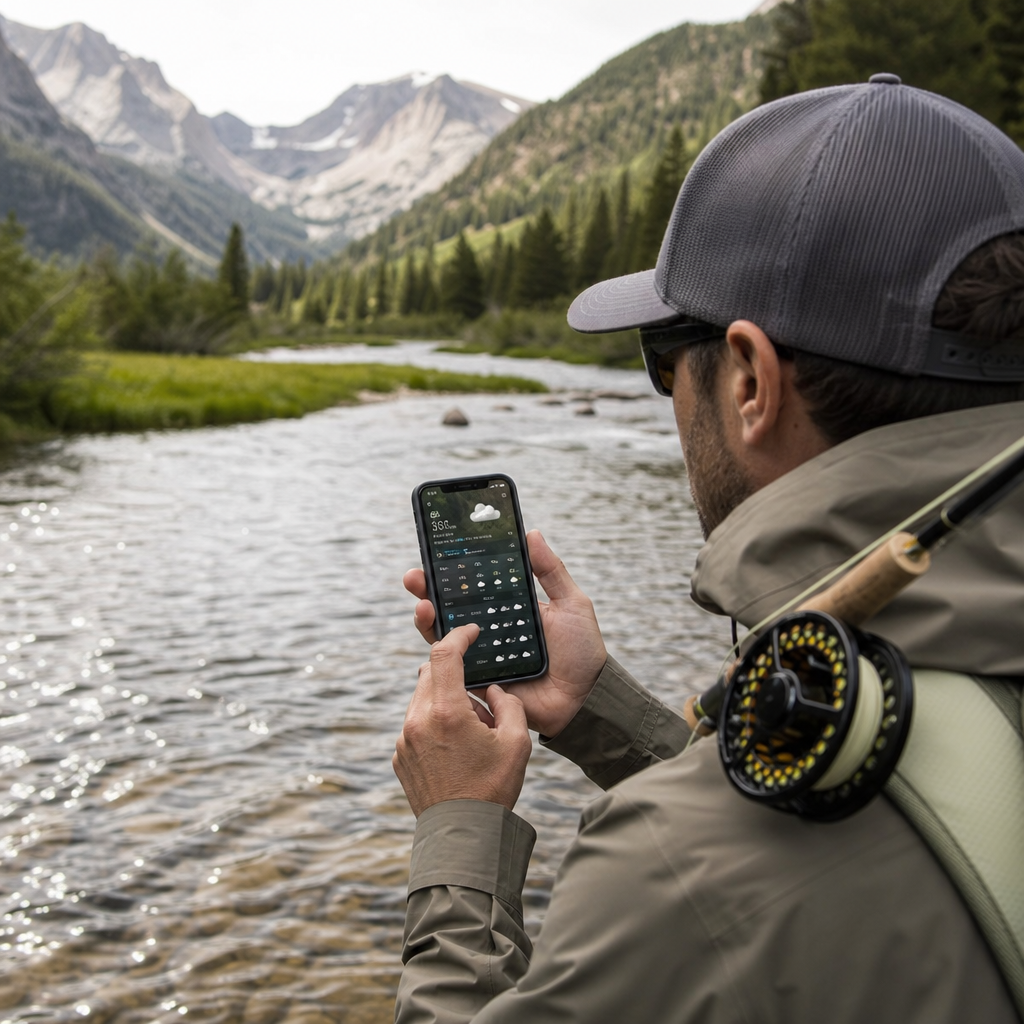
Fly fishing success depends on timing, and timing depends on weather, water, and hatch activity more than almost any other variable an angler can control. A fly fishing weather app is a mobile tool that combines standard forecasts with fishing-specific data such as river flow, barometric pressure, wind direction, moon phase, radar, water temperature, and in some cases insect hatch predictions. For anglers who fish rivers, spring creeks, lakes, tailwaters, and salt flats, the right app can shorten scouting time, improve safety, and help decide whether to rig a dry fly, swing streamers, or stay home. That is why a serious review of the top fly fishing weather apps matters.
I have tested weather and fishing apps before dawn on western freestones, on windy reservoirs, and on crowded tailwaters where a ten mile per hour forecast turning into twenty changes everything. In practice, no single app does it all. Some excel at hyperlocal radar. Others shine with streamflow integration from the U.S. Geological Survey or pressure trend charts that help predict fish behavior around fronts. The best choice depends on where you fish, how technical your decisions are, and whether you need general weather forecasting, river intelligence, or a full fishing log tied to conditions.
This article reviews the leading options used by fly anglers today and explains where each fits. It also serves as a hub for technology reviews within product reviews and recommendations, because weather apps sit at the center of modern fishing technology. A phone can now function as forecast center, GPS, barometer dashboard, river gauge reader, knot guide, mapping unit, and trip journal. That convenience is useful, but it also creates a problem: too many apps promise insight while offering recycled weather data in a fishing-themed interface. Good review criteria therefore matter.
When evaluating a fly fishing weather app, I focus on six standards. First is forecast accuracy, especially wind speed, precipitation timing, and hourly temperature. Second is hydrology, including gauge access, flow trend, and water level context. Third is usability on the water, meaning clean design, offline support, and fast loading. Fourth is fishability insight, such as pressure changes, solunar tables, or hatch cues. Fifth is mapping quality, because access points and drainage context matter. Sixth is value, including subscription cost versus meaningful capability. Using those standards, several apps stand out for different reasons rather than one universal ranking.
What Fly Anglers Should Look for in a Weather App
The best fly fishing weather apps answer practical questions directly. Will wind ruin a hopper rig on an exposed bank? Will afternoon thunderstorms make a float dangerous? Did a dam release spike flows overnight? Is the water warming enough to trigger a caddis hatch or stress trout? A useful app should help answer those questions in less than a minute. If the interface hides key metrics behind too many taps, it fails in field conditions where wet hands, bright glare, and limited service are normal.
Hourly wind is often the most important element for fly anglers, especially on lakes, saltwater flats, and larger rivers. A ten to twelve mile per hour breeze may be manageable with heavier leaders and adjusted casting angles, but gusts above fifteen can collapse loops, reduce accuracy, and make dry fly presentations frustrating. Radar is the next must-have feature. Summer convection can build faster than broad forecasts suggest, and real-time radar often determines whether an evening hatch is fishable. River anglers should also prioritize stream gauges. A great weather forecast is meaningless if flows are blown out or dangerously high.
Pressure trend deserves a balanced view. Fish do not stop feeding simply because the barometer moves, but rapidly falling pressure often accompanies fronts, wind shifts, and light changes that alter feeding windows. Water temperature is similarly nuanced. Trout anglers know that midafternoon temperatures above about 68 degrees Fahrenheit require caution, while smallmouth, carp, and warmwater species may become more active. Good apps present this data clearly without pretending any single metric guarantees success.
Top Fly Fishing Weather Apps Compared
| App | Best For | Key Strengths | Main Limitation |
|---|---|---|---|
| Weather Underground | Hyperlocal forecasts | Personal weather stations, strong hourly detail, reliable radar | Not fishing specific |
| Windy | Wind and storm planning | Model comparison, radar, gust visualization, air pressure maps | Can overwhelm casual users |
| Fishbrain | Social catch intelligence | Catch reports, maps, species activity, community data | Less useful in lightly fished areas |
| onWater Fish | River access and fishing forecasts | Fishing focused conditions, map overlays, regulations support | Coverage quality varies by region |
| MyRadar | Fast radar checks | Speed, clean interface, storm tracking | Limited river data |
| USGS Water Data mobile web | Streamflow verification | Authoritative gauge data, hydrographs, recent flow trends | No all-in-one app experience |
Weather Underground remains one of the best baseline choices because hyperlocal forecasting matters near canyons, mountain valleys, and coastal weather boundaries. Its network of personal weather stations can reveal meaningful differences between the town forecast and the actual conditions near a reach you intend to fish. I use it to verify morning temperature swings, wind shifts, and precipitation probabilities before deciding whether to fish dries or nymph deeper runs. Its weakness is specialization: you still need another source for streamflow and fish-oriented context.
Windy is the strongest app for anglers who make go or no-go decisions based on wind, storm movement, and changing pressure fields. It displays forecast models such as ECMWF and GFS in a way that helps experienced users compare scenarios. For stillwater fly fishers, striper anglers, and saltwater sight casters, that matters. I have used Windy before reservoir trips where one model showed manageable sustained wind and another predicted whitecaps by noon. Seeing the difference early changed launch plans and likely improved safety.
Fishbrain is better known as a fishing social platform than a pure weather app, but it deserves attention because crowd-sourced catch data can validate whether conditions are actually producing. If weather looks promising but recent reports show no activity, it may signal muddy inflow, heavy pressure, or a missed hatch. For warmwater and multi-species anglers, this is useful. For secluded trout water, its value drops because sparse user data produces weak conclusions.
onWater Fish targets anglers more directly with forecasts, water information, maps, and access features. Its strength is reducing app switching. For anglers exploring unfamiliar rivers, combining weather, public access, and regulations in one place is genuinely helpful. My experience is that it performs best in well-covered regions and less consistently in remote waters where local knowledge still wins. Even so, it represents the direction this category is moving: integrated decision tools rather than plain forecasts with fish icons.
Best Apps for Specific Fly Fishing Scenarios
Different water types demand different tools. Trout river anglers should prioritize a combination of Weather Underground or MyRadar for precipitation timing and the USGS Water Data service for real gauge readings. This pairing works because rain matters less than how quickly tributaries respond and whether releases or runoff change clarity. On a freestone stream, a modest storm can create a short-lived spike that improves streamer fishing. On a tailwater, the same storm may do little while dam operations dictate fishability.
Stillwater anglers benefit most from Windy paired with a standard hourly forecast app. Wind controls boat positioning, chironomid presentations, and safe travel more than nearly any other factor. When I fish lakes, I want gust forecast, direction by hour, and cloud cover trend. Windy handles those variables exceptionally well. If you fish from a float tube, pontoon, or kayak, this becomes a safety tool first and a fishing tool second.
Saltwater fly anglers need tide tables, radar, and wind visualization. Although this review focuses on weather apps, many inshore anglers supplement with dedicated tide tools because weather apps rarely provide enough tide detail for flats, marsh drains, and beach structure. In practice, a strong setup is Windy for wind and storm planning plus a tide-specific app and local marine forecast from the National Weather Service. No general fishing app fully replaces that stack.
Traveling anglers should emphasize offline maps and fast-loading interfaces. Mountain valleys, backcountry access roads, and remote canyons regularly weaken service. An app that looks polished at home but stalls riverside is not a top app in real use. Before destination trips, I preload map areas, screenshot gauges, and save likely weather windows the night before. That habit matters more than any premium feature list.
How to Use These Apps Together for Better Decisions
The most effective approach is not choosing one winner but building a repeatable workflow. Start with a broad hourly forecast the night before. Check temperature, precipitation timing, and cloud cover. Next, verify wind using Windy or a similar specialized tool if casting conditions are critical. Then confirm hydrology using USGS gauges, dam release pages, or local river dashboards. Finally, scan radar before leaving and again at the trailhead. This sequence takes minutes and catches the forecast failures that ruin many trips.
For example, imagine you plan to fish a western tailwater with tricos in the morning and streamers if clouds build later. A standard weather app says ten percent rain, five mile per hour wind, and partly cloudy skies. Windy shows gusts rising to fourteen by midday. The river gauge is steady, but the dam page announces a release increase at noon. Radar shows a small storm line building upstream. That combined read tells you to fish early, expect tougher dry fly conditions after lunch, and move off the water before the weather or flows deteriorate. One app alone would not provide that full picture.
This hub article also points toward a wider technology review mindset. Weather apps should connect with other digital tools, including mapping apps, fish finders for stillwater, digital logs, and knot or entomology references. The best technology reviews look at ecosystems, not isolated products. In fly fishing, the practical question is always the same: does this tool help you make better, faster, safer decisions on the water?
Limitations, Costs, and the Best Overall Picks
No fly fishing weather app is perfectly accurate, because all forecasting relies on models, station density, and update frequency. Mountain weather remains especially difficult. Small valleys create microclimates that broad forecasts miss, and river conditions can change faster than app refresh cycles suggest. That is why experienced anglers treat apps as decision aids, not guarantees. If thunderheads are visible or flows look unsafe, real observation overrides the phone every time.
Cost is another tradeoff. Free versions often provide enough value for occasional anglers, especially when paired intelligently. Premium tiers typically unlock ad-free radar, longer forecast windows, extra map layers, and advanced model views. Those upgrades are worth paying for if you fish often enough that one avoided wasted trip offsets the fee. They are less compelling if you only check weekend conditions for a local pond.
For most fly anglers, the best overall setup is Weather Underground plus USGS Water Data, with Windy added if wind meaningfully affects your fishing. That combination covers local forecast accuracy, authoritative streamflow, and advanced storm or gust planning. If you want an all-in-one fishing-oriented experience, onWater Fish is the most promising integrated option, while Fishbrain adds value where community catch data is active and relevant. MyRadar remains an excellent utility choice for anglers who simply want fast, dependable radar without clutter.
The key takeaway is simple: the top fly fishing weather apps are the ones that match your water, species, and decision style. Choose tools that answer real fishing questions, verify flows with trusted sources, and build a pre-trip routine you can repeat. If you are upgrading your fishing technology, start by testing two or three of the apps reviewed here on your next trips, compare them against what you actually see on the water, and keep the combination that consistently helps you fish smarter.
Frequently Asked Questions
What should I look for in the best fly fishing weather app?
The best fly fishing weather app should do more than show a basic hourly forecast. For fly anglers, the most useful apps combine standard weather data with fishing-specific information that directly affects fish behavior and on-water conditions. That usually includes wind speed and direction, barometric pressure trends, precipitation timing, radar, air temperature, and cloud cover, along with river flow, water temperature, stream levels, and sometimes solunar data or hatch-related insights. If you fish moving water, flow gauges and release schedules can be especially important because a good weather forecast means very little if the river is blown out or a tailwater is suddenly rising.
Ease of use matters just as much as the raw data. A strong app should make it easy to check conditions quickly before a trip and also drill down into details when you need them. Custom alerts are a major advantage, especially for changes in rain, wind, water level, or storms. Location accuracy is another key feature, particularly for anglers moving between access points, tributaries, lakes, or flats. Offline access can also be valuable in remote areas where service is weak. In short, the best fly fishing weather app is the one that helps you make practical fishing decisions faster, not just the one with the longest feature list.
How do weather apps help improve fly fishing success?
Fly fishing weather apps improve success by helping anglers match their timing and tactics to real conditions rather than guesswork. Fish behavior is heavily influenced by weather and water variables, and even small shifts can change where fish hold, when they feed, and what they are willing to eat. For example, falling temperatures, rising river levels, heavy wind, bright sun, or dropping barometric pressure can each push anglers toward a different approach. A good app helps you see those patterns before you leave home and adjust your plan accordingly.
These apps are particularly useful because they condense several decision-making tools into one place. Instead of checking separate sources for rain, stream flow, radar, and water temperature, you can evaluate everything together. That is important because conditions rarely work in isolation. A mild day may look perfect until you notice high flows from overnight rain, or a promising hatch window may disappear under strong afternoon wind. By combining weather and fishing-related data, the app gives anglers a more complete picture of when to fish, where to fish, and whether to expect rising fish, streamer conditions, nymphing opportunities, or a day better suited for waiting out a front. Over time, using this information consistently can help anglers spot patterns and become more efficient trip planners.
Are fly fishing weather apps accurate enough to trust on the water?
Fly fishing weather apps can be very accurate, but they are best used as decision-support tools rather than absolute predictors. Forecast accuracy tends to be strongest in the short term, especially for hourly weather, radar movement, and temperature trends. However, local conditions around rivers, canyons, mountain valleys, spring creeks, and coastal flats can change quickly and may not always match broad regional forecasts. That means even the best app can miss small but important shifts such as a sudden upstream thunderstorm, a canyon wind event, or colder water entering a system from dam releases or tributaries.
The most reliable way to use these apps is to compare multiple data points rather than rely on a single number or forecast icon. Radar, river gauges, wind direction, recent rainfall, and temperature trends together usually tell a more useful story than any one metric alone. It also helps to compare app predictions with your own local knowledge. If a stretch of river becomes tough in strong east winds or a certain flat muddies after relatively little rain, that personal experience adds value the app cannot fully replace. In other words, a quality fly fishing weather app is highly trustworthy when used intelligently, but it works best in combination with observation, flexibility, and on-the-ground judgment.
Do I need a dedicated fly fishing weather app, or will a standard weather app work?
A standard weather app can be enough for casual trip planning, but serious fly anglers usually benefit from a dedicated fly fishing weather app or a hybrid tool with water-data integration. General weather apps are often good at delivering forecasts, wind, hourly rain chances, and storm alerts. Those are all useful, especially if you fish close to home or in stable conditions. But they typically stop short of the details that matter most to fly anglers, such as stream flow, water temperature, release schedules, turbidity indicators, moon phase, or species-specific fishing activity data.
If you fish rivers, tailwaters, lakes, or saltwater environments where changing water conditions matter as much as weather, a specialized app becomes far more valuable. It can help you avoid wasted trips by showing when flows are too high, when water is too warm for trout, when offshore winds may affect casting, or when a hatch window lines up with cloud cover and temperature changes. That said, the right choice depends on how and where you fish. Many anglers use both: a strong mainstream weather app for forecasting and radar, plus a fishing-focused app for river and fishability data. That combination often provides the clearest, most practical picture.
Which weather factors matter most when comparing top fly fishing weather apps?
The most important factors depend on the type of water you fish, but a few categories consistently stand out. Wind is a major one because it affects casting, drift quality, surface activity, and visibility. Barometric pressure trends can also matter, particularly when fish behavior shifts around approaching fronts. Precipitation timing and radar are essential for safety and for predicting runoff, water clarity changes, and sudden flow increases. Temperature matters in two ways: air temperature influences insect activity and angler comfort, while water temperature often has a direct impact on feeding windows, fish stress, and where fish position themselves.
For river anglers, stream flow and water level data are often the most critical features of all. A river can be fishable at one flow and nearly impossible a day later. Tailwater anglers may also need dam release schedules, while stillwater anglers may care more about wind exposure, surface temperatures, and approaching pressure changes. Saltwater fly anglers often place added emphasis on tides, cloud cover, moon phase, and directional wind. When comparing top fly fishing weather apps, the real question is not just which app has the most features, but which one presents the most relevant conditions clearly, accurately, and in time for you to act on them. The best apps help anglers connect raw data to practical fishing decisions, which is ultimately what matters most.