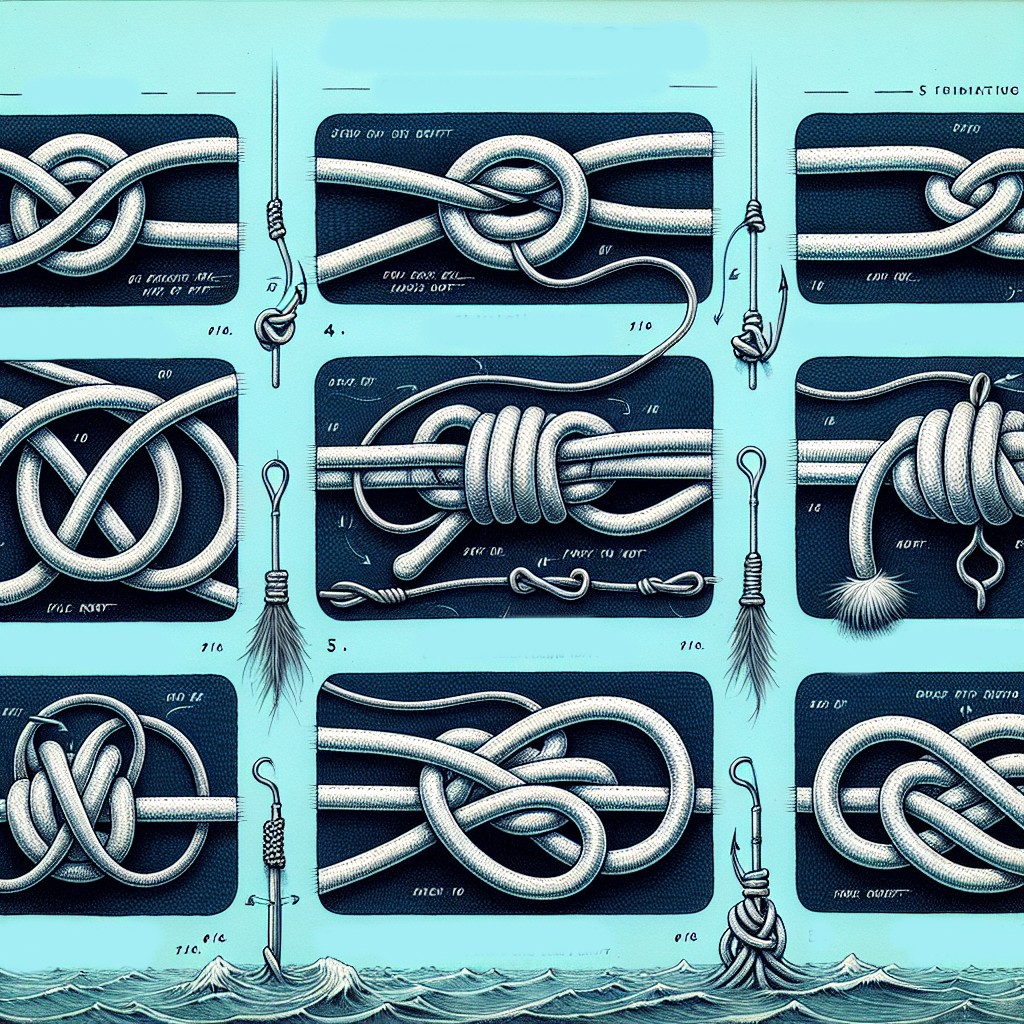
Fly fishing is more than just casting a line into the water – it’s an art that requires finesse, patience, and knowledge. One fundamental aspect often overlooked by beginners is knot tying. Tying secure and reliable knots can be the difference between landing the catch of the day or watching it slip away. Understanding various knots for fly fishing leaders and tippets is crucial for any angler aiming for success.
The intelligence invested in knots dates back centuries, with each type serving a specific purpose in the angler’s toolkit. From connecting lines of different thicknesses to ensuring flies stay attached under pressure, the art of knot tying can seem intimidating due to the plethora of options and techniques available. However, with some practice and familiarity, you’ll find that mastering these knots becomes not just a useful skill but also an enjoyable aspect of the sport.
This comprehensive guide will dive into essential knots every fly fisherman should know. We’ll break down the purpose, strength, and step-by-step tying process of each knot. As we progress, you’ll gain confidence in your knot-tying abilities, setting a solid foundation for your fly fishing adventures.
Importance of Choosing the Right Knots
Choosing the right knot is vital not just for the integrity of your setup but also for the sustainability of the fish you catch. Weak knots can easily break under strain, leading to lost fish and wasted time. More so, different fishing situations and target species necessitate different knots. For example, a strong and durable knot is essential when targeting larger, more powerful fish, whereas a more delicate and subtle knot might be preferred for smaller, easily spooked species.
Selecting the appropriate knot can also affect the presentation of your fly, which is critical especially in clear waters where fish can be easily deterred by unnatural movements. A well-chosen knot ensures the fly moves seamlessly in the water, mimicking natural prey and increasing your chances of a successful catch.
Furthermore, a good knowledge of various knots helps in quick troubleshooting on the water. Circumstances such as break-offs or switching flies can arise unexpectedly, and being adept at tying different knots swiftly can save precious fishing time. For eco-conscious anglers, using proper knots minimizes the risk of line breaking and leaving harmful debris in the water, promoting cleaner, safer habitats for fish.
Basic Knots for Leaders and Tippets
Let’s start with some foundational knots that every fly fisherman should be familiar with. These knots primarily connect leaders to the tippet and also secure the fly to the tippet.
The Clinch Knot
The Clinch Knot is one of the most widely used fishing knots. It is simple yet extremely effective for securing the tippet to the fly. Here’s how you can tie this knot:
- Pass the end of the tippet through the eye of the fly.
- Wrap the end around the standing line five to seven times.
- Thread the tag end through the small loop just above the eye.
- Moisten the knot and pull tight.
The Surgeon’s Knot
The Surgeon’s Knot is excellent for joining two lines of different diameters, making it perfect for connecting your leader to your tippet. Here’s the process:
- Overlap the ends of the two lines. Form a simple loop with both tag ends facing the same direction.
- Pass the tag ends and the entire leader through the loop twice.
- Moisten the knot and pull tight from both ends.

The Improved Clinch Knot
This knot is a stronger version of the standard Clinch Knot, adding more security for your fly attachment:
- Pass the end of the tippet through the eye of the fly.
- Wrap the end around the standing line five to seven times.
- Thread the tag end through the small loop just above the eye, then back through the bigger loop.
- Moisten the knot and pull tight.
Advanced Knots for Fly Fishing
As you grow more confident, you’ll find it beneficial to learn a few advanced knots. These knots are used for more specific situations and can enhance your fly fishing expertise.
The Blood Knot
The Blood Knot is perfect for connecting two pieces of similar diameter lines, giving a smooth transition between the leader and the tippet:
- Overlap the ends of the lines to be joined.
- Wrap one tag end around the standing part of the other line five or six times.
- Do the same with the other tag end in the opposite direction involving the standing part of the first line.
- Thread both tag ends through the center loops formed between the wraps.
- Moisten the knot and pull gently to tighten.
The Double Surgeon’s Knot
This knot builds upon the Surgeon’s Knot by adding an extra loop, making it more secure while still being easy to tie:
- Overlap the ends of the two lines. Form a loop with both tag ends facing the same direction.
- Pass the tag ends and the entire leader through the loop three times.
- Moisten the knot and pull tight from both ends.
The Albright Knot
The Albright Knot is excellent for connecting lines of significantly different diameters, such as backing and fly line:
- Make a loop with the larger diameter line (e.g., backing).
- Pass the smaller diameter line (e.g., fly line) through the loop, wrapping it around both parts of the loop and itself 10 times.
- Pass the tag end back through the loop.
- Moisten the knot and pull it tight, ensuring all wraps are neat.
Tips for Tying Strong Knots
While learning different knots is crucial, understanding how to tie them properly ensures they perform to their maximum potential.
One key tip is to always moisten your knots before pulling them tight. This reduces friction and helps the knot sit correctly, thus maintaining its strength. It’s also essential to trim the tag ends close but not too close – leave a tiny bit of tag to prevent slippage.
Practicing knots with thicker ropes or cords at home can help develop muscle memory before transitioning to thinner lines on the water. Repetition is key to fluency and speed in knot tying.
When you’re actually on the water, ensure you’re tying your knots in good light and where you’re comfortable. This could mean sitting down on the bank or in your boat rather than trying to do it mid-stream.
Troubleshooting Common Knot Failures
Despite best efforts, knot failures can still occur. Recognizing and addressing common issues can keep your gear in top shape.
Knots can fail due to improper tying, such as missing wraps, cinching incorrectly, or not moistening before tightening. Always take your time, double-check your work, and test the knot under load before casting.
Another issue is line abrasion. Avoid tying knots in frayed or damaged line segments. If you notice wear, cut that section out and start fresh.
Environmental factors like cold, wet conditions can also affect knot integrity. Keep hands warm and dry whenever possible for the best dexterity. Lastly, regularly inspect knots throughout your fishing day and re-tie if anything looks amiss.
Resources for Continued Learning
Learning knot tying is an ongoing journey, with plenty of resources to deepen your understanding and refine your skills.
Several books and websites offer detailed step-by-step instructions and diagrams. Websites like Animated Knots by Grog offer visual guides that can be invaluable. Fly fishing forums and local fishing clubs are also great places to share tips and get advice from experienced anglers.
YouTube is another fantastic resource, providing video tutorials for virtually every knot. Watching these can help visualize the process and nuances that static images may miss.
Consider investing in knot tying tools and practice kits which provide a hands-on, practical approach to learning. The more time you dedicate to understanding and practicing these knots, the more efficient and successful your fly fishing will become.
Conclusion
Mastering the art of knot tying is a lifeline for any fly fisherman. It forms the backbone of successful angling by ensuring your gear operates seamlessly together and your prized catches stay on the line. From basic knots like the Clinch and Surgeon’s Knot to more advanced connections like the Blood and Albright Knots, each serves a vital purpose in different fishing scenarios.
By choosing the right knot and practicing it meticulously, you ensure stronger, more reliable connections. Incorporating these skills translates to fewer tackles lost and more efficient, enjoyable fishing outings. Remember, every knot tied brings you closer to becoming an adept and confident fly fisherman.
Use the resources at your disposal, persist in practicing, and soon, knot tying will be second nature. Not only will your technique improve, but your appreciation for the precision and craftsmanship involved in fly fishing will deepen. Whether you’re a novice looking to get started or an experienced angler aiming to refine your skills, the journey through the world of knots is a rewarding one that enhances every fishing adventure. Tight lines!