Fly fishing in drought conditions demands a different mindset from normal seasons because low water changes fish behavior, shrinks habitat, raises temperatures, concentrates angling pressure, and magnifies every ethical decision an angler makes. In practical terms, drought means prolonged periods of below-average precipitation, reduced streamflow, lower reservoir levels, diminished groundwater recharge, and stressed aquatic ecosystems. For trout, bass, panfish, and the insects they depend on, those changes are not abstract hydrology; they are survival pressures. I have fished tailwaters running at a trickle, freestones reduced to disconnected pockets, and spring creeks where a two-degree afternoon increase shut fish down completely. In each case, success depended less on clever casting than on understanding conservation challenges and adjusting tactics accordingly. This matters because drought now affects many famous fisheries with increasing frequency, from Rocky Mountain trout streams to Western tailwaters and Southern warmwater rivers. Anglers who ignore drought can unintentionally increase mortality, damage redds and banks, spread disease between stressed waters, and accelerate pressure on already fragile fish populations. Anglers who adapt can still fish responsibly, protect wild fish, and support long-term resilience.
This hub article explains the core conservation challenges tied to fly fishing in drought conditions and the practical solutions that belong in every angler’s decision process. It covers water temperature, dissolved oxygen, habitat compression, seasonal closures, species-specific risk, access and crowding, low-water presentation, handling standards, gear selection, and the role anglers play beyond the riverbank. It also serves as the central guide for deeper articles on trout stress, warmwater opportunities, river etiquette, and climate-driven fishery management. The key idea is simple: during drought, the best angler is the one who can recognize when to change methods, when to change species, and when not to fish at all. That balance of effectiveness and restraint is the foundation of ethical fly fishing under water scarcity.
How Drought Changes Fish, Water, and Fishing Pressure
Drought alters fisheries through a chain reaction that starts with reduced flows and ends with biological stress. Lower water means shallower channels, slower current in some reaches, and less available cover. Pools become the only refuge, undercut banks lose depth, riffles dry out, and migration routes can become difficult or impossible. Water also warms faster in low flows because there is less volume to buffer temperature swings. Warm water holds less dissolved oxygen, so fish face a double burden: higher metabolic demand at the exact moment oxygen is less available. For trout, especially rainbow, brown, brook, and cutthroat populations in marginal summer habitat, this can push fish beyond recoverable stress thresholds.
In the field, I watch drought effects first in the edges. Weed lines collapse, side channels disappear, juvenile fish lose rearing water, and trout stop feeding openly after midmorning. Midges and mayflies still emerge, but feeding windows shorten. Fish concentrate in deeper seams, shaded banks, spring inflows, plunge pools, and oxygen-rich riffle heads. That concentration makes them easier to find yet more vulnerable. A dozen anglers rotating through one low-water pool can affect a surprisingly high percentage of the fish in that reach. This is why drought is both a fishing challenge and a conservation challenge: reduced habitat increases catchability at the same time fish have less energy to spare.
Pressure compounds the biological stress. When flows drop, many access points become less usable, forcing anglers into fewer public stretches. Social media can intensify this by spotlighting “surviving” holes during bad water years. On heavily visited rivers, repeated wading in narrow channels can trample spawning gravels, disturb juvenile fish, and erode banks already weakened by low moisture. Guides and outfitters face hard decisions too. A river that can support normal traffic in June may not support the same use in August. Responsible operations adjust start times, target species, trip lengths, and sometimes cancel bookings. That is not lost business alone; it is fisheries triage.
Water Temperature, Dissolved Oxygen, and Ethical Thresholds
The most important drought-related variable for fly anglers is water temperature. It is measurable, actionable, and strongly linked to fish stress. Trout generally perform best in cold, well-oxygenated water, often in the range of roughly 50 to 60 degrees Fahrenheit, though exact tolerances vary by species, strain, acclimation, and local habitat. As temperatures rise into the upper 60s, stress increases, fight recovery slows, and post-release mortality risk climbs. Around 68 degrees Fahrenheit, many trout anglers begin voluntary restrictions; by 70 degrees and above, especially with prolonged exposure and low flows, the ethical case for stopping becomes strong. Some states and provinces issue official afternoon closures, “hoot owl” restrictions, or full emergency closures when temperatures and flows reach dangerous levels.
Carrying a reliable stream thermometer is not optional in drought. I check temperature at arrival, again before noon, and anytime cloud cover, reservoir releases, or spring influence make conditions variable. A single number is not enough. A river at 64 degrees at 7 a.m. can exceed 69 by early afternoon during heat waves. Dissolved oxygen meters offer more detail, but temperature remains the practical field tool most anglers can use. Readings should be taken in the main current, out of direct sun if possible, and interpreted with local knowledge. Tailwaters may stay cool below dams but warm abruptly farther downstream; spring creeks can be stable; freestones may spike within hours.
Ethical thresholds are not rigid universal laws, but they should be conservative. Fight time, handling time, species sensitivity, and fish size matter. A large brown trout played on a light 5X tippet in 69-degree water experiences more stress than a small rainbow landed quickly in 64-degree water. Warmwater species such as smallmouth bass or carp tolerate higher temperatures better, making them good alternatives when coldwater streams are at risk. The disciplined approach is straightforward: fish early, fish cooler tributaries only when regulations allow and habitat can handle pressure, shorten fights, minimize handling, and walk away when temperatures cross the line. Restraint protects fisheries more than any fly pattern ever will.
Low-Water Tactics That Reduce Harm and Improve Success
Low water rewards precision and punishes heavy-handed angling. Fish see more, move less, and spook at greater distances because there is less depth and fewer broken currents to hide anglers. The first solution is stealth. Approach from downstream where possible, keep a low profile, avoid skyline exposure, and use streamside cover. False casting over fish is costly in clear drought water. Longer leaders, finer tippets within safe landing limits, and accurate first presentations matter more than repeated casts. On many rivers I shift from aggressive searching to targeted, one-fish-at-a-time fishing. If a trout refuses twice, I usually rest the lie rather than educate the entire pool.
Fly selection should match reduced flows and available forage without overcomplication. Smaller nymphs, sparse emergers, unweighted or lightly weighted patterns, and terrestrials often outperform bulky attractors in clear low water. Hopper-dropper rigs remain effective where bankside grasses are active, but oversized foam patterns can push fish down when water is extremely thin. On technical spring creeks and tailwaters, midges, PMD emergers, tricos, and small caddis patterns become central. For warmwater alternatives, deer hair bugs at dawn, baitfish streamers in shaded banks, and crayfish patterns around deeper structure can shift effort away from heat-stressed trout.
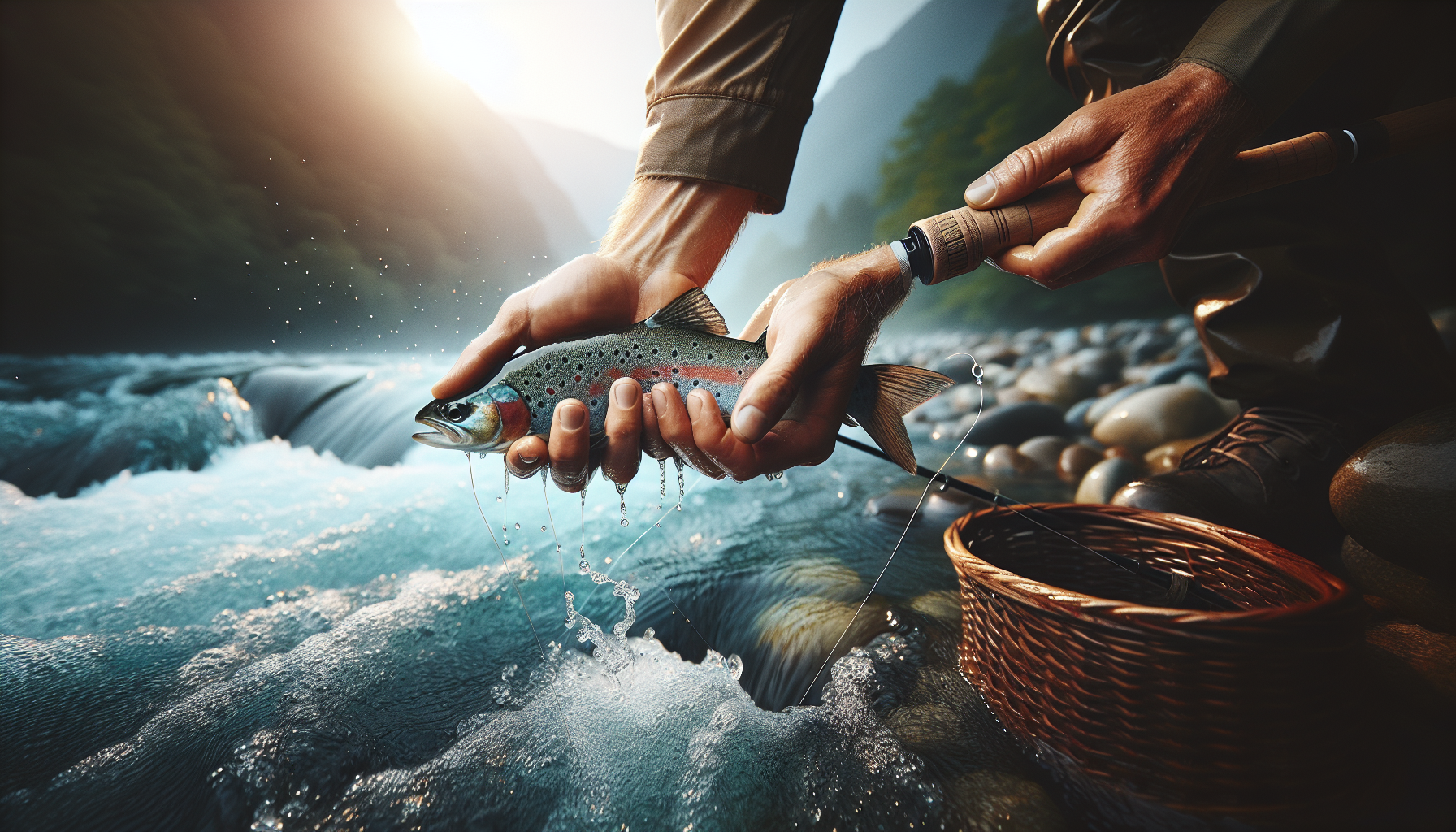
Landing efficiency is the conservation bridge between tactics and ethics. During drought I fish stronger tippet than many anglers expect, because quickly landed fish recover better than fish fought delicately for too long. Rubber-mesh nets reduce scale loss and fin abrasion. Barbless hooks speed release and often improve hook removal in awkward low-water positions. I avoid beaching fish on dry rocks, kneeling in redd-like gravel, or lifting fish for prolonged photography. If I cannot unhook a fish while it remains submerged and controlled, I reconsider the entire setup. Good drought tactics do not just catch fish in difficult conditions; they lower cumulative stress on every fish touched.
| Condition | Primary Risk | Best Angler Response |
|---|---|---|
| Water below normal but cool | Spooking fish and concentrated pressure | Use stealth, longer leaders, early starts, rotate water carefully |
| Water warm by late morning | Rising post-release mortality | Stop targeting trout early and switch to warmwater species |
| Extremely low, clear pools | Overfishing refuge habitat | Avoid repeatedly casting to grouped fish; rest or leave the area |
| Hoot owl or emergency restrictions | Compounding stress on vulnerable fish | Follow closures exactly and choose legal alternative waters |
| Tailwater with variable releases | Misreading safe temperature windows | Monitor dam schedules, check temperatures downstream, adapt by reach |
Species Choices, Seasonal Closures, and Smarter Trip Planning
One of the most effective conservation solutions during drought is changing the target species. Many anglers frame the decision as giving up trout fishing, but in practice it is often gaining a wider fly-fishing season. Smallmouth bass, carp, bluegill, panfish, pike, gar, and even saltwater species in some regions provide excellent alternatives when coldwater systems become fragile. Smallmouth in warm rivers can be spectacular on poppers and streamers at dawn. Carp thrive in low clear water where careful presentations become technical and rewarding. Panfish offer accessible action for families and newcomers with minimal stress on trout streams that need a break.
Trip planning should start before leaving home. Check USGS streamflow gauges, state agency advisories, dam release schedules, weather forecasts, and local fly shop reports. Gauges reveal more than whether a river is “fishable.” They show trend lines, and trend lines matter. A stable low flow after cool nights may be manageable during a short morning window; a river dropping daily through a heat dome is a warning sign. Agencies such as Montana Fish, Wildlife & Parks, Colorado Parks and Wildlife, Idaho Fish and Game, and many others regularly publish restrictions and temperature-related guidance. Ignoring that information is not independence; it is negligence.
Closures deserve strict compliance because they protect fish at the population level, not just individual encounters. Afternoon restrictions are common where mornings remain fishable but afternoons become dangerous. Full closures may protect migration bottlenecks, spawning tributaries, or reaches with critically low oxygen. Even where no formal rule exists, voluntary avoidance can be the right call. I have turned around after seeing crowded coldwater refuge mouths packed with trout and anglers because legal pressure was still biologically harmful. Smart planning also means distributing effort. Instead of hammering a famous tailwater every weekend of a drought year, mix in lakes, ponds, warm rivers, private stillwaters where permitted, and non-angling conservation days.
Habitat Protection, River Etiquette, and the Angler’s Role in Conservation
Drought exposes how much fishery health depends on habitat quality. Healthy riparian zones shade water, stabilize banks, filter sediment, and support insect life. Connected floodplains recharge groundwater and moderate low flows. Large woody debris creates cover and hydraulic diversity. Beavers, often controversial, can increase water storage, reconnect wetlands, and create complex habitat mosaics that buffer drought impacts in some systems. Anglers do not control watershed-scale hydrology alone, but they influence outcomes through behavior, advocacy, and funding. Purchasing licenses, supporting Trout Unlimited, Backcountry Hunters & Anglers, watershed councils, and local conservation districts, and showing up for public comment on water management can materially affect fisheries.
River etiquette becomes more important when water is scarce. Do not crowd visible refuge water simply because fish are concentrated. Give other anglers extra space because there may be only a handful of viable runs in a reach. Limit repeated passes through spawning gravel and shallow side channels. Clean boots, nets, and waders between waters to prevent spreading invasive species, whirling disease spores, didymo, or other pathogens into stressed systems. In drought years, diseases can hit harder because fish are already compromised. If guiding, writing, or posting online, avoid geotagging vulnerable small waters. Popularity can overwhelm creeks that barely have enough water for fish, let alone a surge of visitors.
The broader conservation challenge is allocation. Agriculture, municipalities, hydropower, industry, and ecosystems compete for finite water, and drought makes every tradeoff sharper. Anglers should understand concepts like instream flow rights, thermal refuge mapping, environmental water leasing, and dam release management because those policies shape fish survival more than any individual outing. Effective advocacy is specific. Support riparian restoration, culvert removal, irrigation modernization that leaves more water instream, science-based temperature triggers, and monitoring programs that combine flow, temperature, and fish population data. The long-term solution to fly fishing in drought conditions is not merely better angling technique. It is healthier rivers, better water governance, and a fishing culture willing to put the resource first.
Conclusion
Fly fishing in drought conditions is ultimately a test of judgment. Low flows, warm water, compressed habitat, and concentrated pressure create real conservation challenges that no amount of skill can wish away. The practical response is clear: monitor temperature and flow, fish early, use stealth and efficient tackle, handle fish minimally, obey closures, switch to warmwater species when trout are stressed, and avoid pounding refuge water simply because fish are easy to locate. Those choices improve fishing outcomes in the short term, but more importantly, they protect fish populations during the periods when they are least resilient.
As the hub for conservation challenges within the broader ethics conversation, this guide points to a standard every serious angler should adopt. Responsible fly fishing is not defined by catching fish under any condition; it is defined by knowing the condition of the fishery and responding accordingly. If you want better rivers and better fishing in the years ahead, use this article as your starting point, build your trips around science and restraint, and support the habitat and water-policy work that keeps drought from becoming a permanent crisis for wild fish.
Frequently Asked Questions
How does drought change fish behavior and feeding patterns for fly anglers?
Drought changes far more than water depth. It alters the entire rhythm of a fishery. As streamflows drop and reservoirs recede, fish lose access to the wider range of holding water they rely on during normal conditions. Riffles become thin, runs shorten, side channels dry up, and deep pools become even more important because they provide the best combination of cover, oxygen, and temperature stability. That concentration effect makes fish easier to locate in theory, but often much harder to catch consistently because they become wary, pressured, and selective.
Low, clear water usually means fish can see more clearly and detect danger sooner. Trout in particular tend to shift into defensive behavior. They hold tighter to structure, undercut banks, submerged wood, boulders, shaded seams, and the deepest available slots. They may feed in shorter windows, especially at dawn and dusk, when light levels are low and water temperatures are less stressful. During hot afternoons, feeding often slows dramatically, especially if water temperatures rise into a dangerous range. Insect activity can also change under drought conditions, with fewer robust hatches in some systems and more importance placed on terrestrials such as ants, beetles, and hoppers falling into the water from dry bankside vegetation.
Bass and panfish also respond to reduced water and heat, though often differently than trout. Warmwater species may remain active longer, but they still reposition according to oxygen, shade, and depth. On rivers, they may stack in deeper holes and around current breaks. On lakes and reservoirs, they frequently move to drop-offs, submerged timber, weed edges, spring-fed pockets, or areas with even slight inflow. The key takeaway for fly anglers is that drought does not simply make fish scarce; it compresses habitat, shortens feeding windows, and increases the importance of timing, stealth, and precise presentation.
What are the biggest challenges of fly fishing during drought, and how should anglers adapt?
The biggest challenge is that drought compresses the margin for error. Fish are dealing with less water, less cover, higher temperatures, lower dissolved oxygen, and often much more angling pressure. That means techniques that work in average water years can become ineffective or even irresponsible in severe drought. A casual approach to wading, sloppy casting, heavy foot traffic near banks, and repeated targeting of stressed fish can quickly reduce catch rates and increase harm to the fishery.
The first adjustment should be strategic rather than technical: fish at the right time of day. Early morning is often the most productive and the least stressful period for coldwater species because overnight cooling improves conditions. In many places, late evening can also be worthwhile. Midday, especially during heat waves, may be best avoided entirely on trout water. The second adjustment is stealth. Low water magnifies noise, vibration, shadows, and drag. Approach from downstream when possible, stay low, wear muted clothing, limit unnecessary false casts, and avoid entering the water if you can make the presentation from the bank. In drought, every step can displace fish or alert the entire pool.
Tackle and fly selection should also become more refined. Longer leaders, finer tippets where appropriate, and smaller or more natural-looking flies often outperform louder, heavier setups in clear, skinny water. At the same time, anglers should not become so light that fights are prolonged. In drought, landing fish quickly matters. For trout, think small mayfly and midge patterns, sparse nymphs, and terrestrials. For bass and panfish, focus on shaded banks, deeper edges, and low-light periods with flies that can be presented slowly and precisely. Most importantly, adapt your goals. Drought fishing is not the time to maximize numbers at any cost. It is the time to fish smarter, move more, handle fewer fish, and prioritize the long-term health of the water.
How can anglers fish ethically and protect trout, bass, and panfish when water levels are low?
Ethical fly fishing in drought starts with recognizing that legality and responsibility are not always the same thing. A waterbody may remain open to fishing, but fish can still be under severe environmental stress. Low flows, elevated temperatures, and reduced oxygen make capture and release more dangerous, especially for trout. In these situations, anglers should monitor water temperatures with a stream thermometer, understand species-specific stress thresholds, and be willing to stop fishing before conditions become harmful. Many experienced trout anglers use the upper 60s Fahrenheit as a caution zone and treat 68 degrees and above as a signal to quit, though exact thresholds vary by species, strain, and local conditions.
Fish handling practices matter even more during drought. Use barbless hooks or pinch the barbs down to reduce injury and speed up releases. Fight fish firmly and efficiently rather than playing them to exhaustion on overly light gear. Keep the fish in the water as much as possible, wet your hands before touching it, avoid squeezing the body, and skip hero shots if conditions are poor. If a fish appears especially stressed, revive it gently facing into moderate current only long enough for it to recover on its own rather than forcing prolonged handling. If multiple fish seem slow to recover, that is a strong sign to end the session.
There is also a broader conservation ethic beyond individual fish. Avoid repeatedly targeting concentrated fish in obvious drought refuges such as isolated pools, spring seeps, thermal refugia, or bottlenecked holding water where fish have few alternatives. Respect temporary closures and voluntary hoot owl restrictions. Stay off fragile banks that are more vulnerable to erosion when vegetation is stressed. Clean gear thoroughly to prevent spreading invasives or pathogens between already weakened systems. Ethical drought angling means asking not just, “Can I catch fish here?” but also, “Should I?” That mindset protects fisheries during the periods when they are most vulnerable.
What fly patterns, presentations, and tactics work best in low, clear, drought-affected water?
Success in drought conditions usually comes from subtlety, realism, and efficiency. In low, clear water, fish often reject anything that lands hard, drags unnaturally, or appears oversized for the conditions. For trout, productive dry flies commonly include small parachute mayflies, comparaduns, midges, spent patterns, and terrestrial imitations such as beetles, ants, and hoppers. Sparse nymphs, lightly weighted perdigons, pheasant tails, zebra midges, and small caddis larvae can be excellent when fished carefully through the few remaining feeding lanes. In many drought scenarios, a single dry or a dry-dropper with a very small nymph is more effective than a bulky, heavily weighted rig that crashes through a shallow run.
Presentation is usually more important than pattern. Long leaders, accurate first casts, and drag-free drifts are critical. Because fish are concentrated and alert, you often get one or two quality chances before the pool is put down. Target the edges of the best water first, then work inward methodically. Focus on shaded seams, bubble lines entering pools, undercut banks, boulder pockets, logjams, and any place where a fish can hold with minimal effort. On spring creeks or tailwaters affected by low releases, downsize tippet carefully, but balance stealth with the need to land fish quickly.
For bass and panfish, drought tactics often revolve around shade, depth, and structure. Small streamers, baitfish patterns, poppers fished during low light, and slow-sinking flies around wood, weed lines, and drop-offs can be highly effective. In rivers, probe the deepest runs and pools; in lakes, focus on early and late windows when fish leave deeper holding zones to feed. Strip slower than you might in normal conditions, and pay attention to pauses. Drought fish frequently respond to flies that appear vulnerable and easy to catch rather than aggressively moving long distances. In all cases, the best tactic is usually to simplify: fewer false casts, cleaner drifts, shorter sessions, and precise attention to the highest-percentage water.
When should anglers stop fly fishing during a drought and look for alternatives?
Anglers should stop when environmental stress reaches the point that catch-and-release is likely to cause excessive delayed mortality or when their presence adds disproportionate pressure to a compromised fishery. The clearest warning sign on trout water is high temperature combined with low flow. If water temperatures climb into a stressful range, especially in the afternoon, it is time to walk away. Other signs include fish visibly gulping in slow water, unusually lethargic behavior, repeated poor recovery after release, algae-heavy stagnant conditions, or obvious crowding of fish into tiny refuges. Even if fish are still catchable, those signals indicate a system under strain.
Another reason to stop is cumulative pressure. Drought often funnels many anglers into the same remaining productive stretches, and repeated catch-and-release on concentrated fish can have a real impact. If you arrive at a small stream and find multiple anglers rotating through a few deep pools, the most responsible choice may be to leave it alone. Closures, hoot owl restrictions, and local fishery guidance should always be treated as a minimum standard, not a maximum permission slip. Agencies and local shops often have current insight into which waters can still handle fishing pressure and which should be rested.
Fortunately, stopping does not mean giving up the season entirely. It often means